Service Guide
Pools & Backyard
in California
From plunge pools to infinity edges, your complete guide to designing, building, and maintaining the perfect pool for your California home.
$25K–$200K+
Cost range
3–6 Months
Design to swim
280+ Days
Pool weather / year
$50K–$150K+
Value added
Understanding Pools
Why a Pool Is the Ultimate California Home Investment
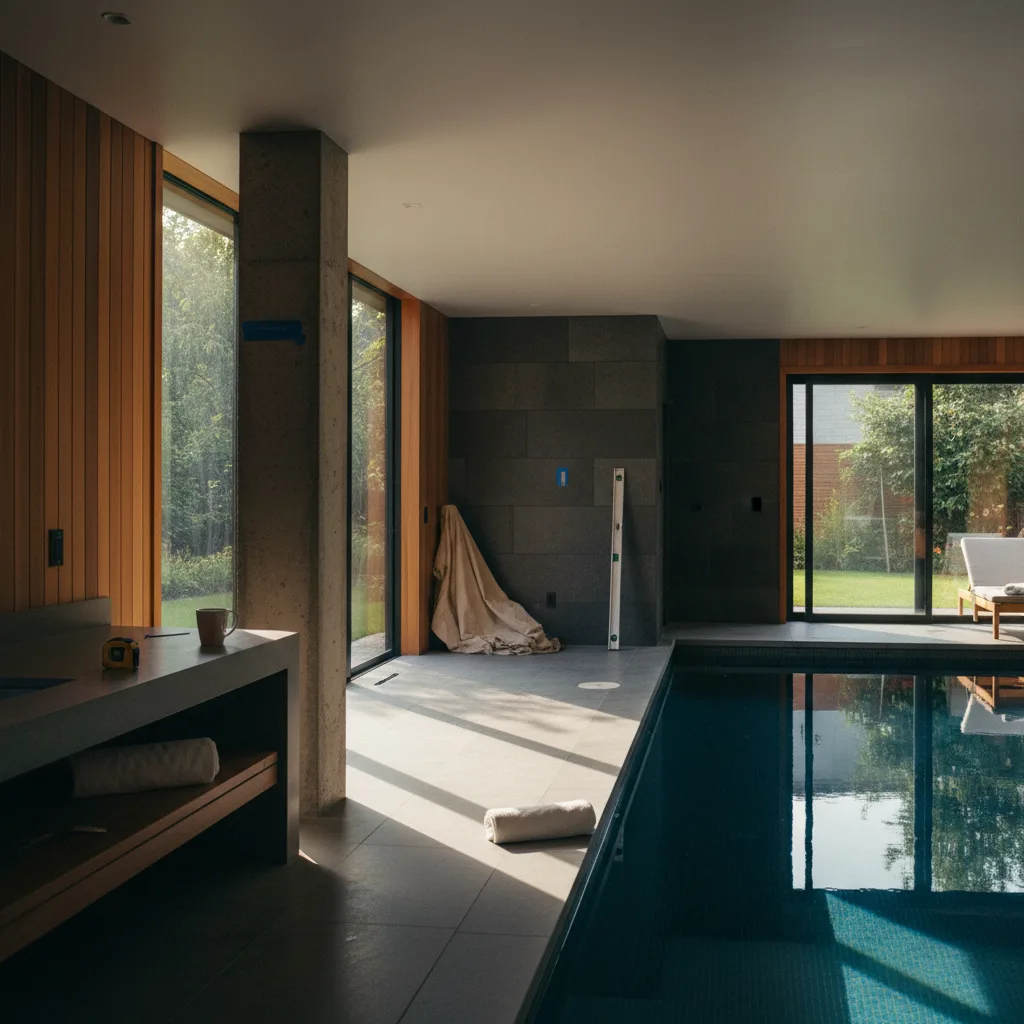
A swimming pool in California is not a seasonal luxury — it's a year-round lifestyle amenity. With over 280 days of usable pool weather per year, California offers arguably the best pool climate in the continental United States.
Today's California pools emphasize energy efficiency through variable-speed pumps and solar heating, water conservation through smart chemical management, and intelligent automation from your smartphone.
Did You Know?
California has over 280 days per year of comfortable pool weather — more than almost any other major U.S. state. With solar heating, year-round swimming is entirely feasible.
How Much Does It Cost to Build a Pool in California?
A new in-ground swimming pool in California costs $40,000 to $60,000 for a basic gunite installation, $60,000 to $100,000 for mid-range with spa and features, and $100,000 to $200,000+ for custom with infinity edge and premium finishes. Plunge pools start at $25,000–$40,000.
Pro Tip: Try our Pool Cost Calculator for a personalized estimate based on pool type, features, and finishes.
Pool Types: Gunite vs. Fiberglass vs. Vinyl
The material you choose for your pool shell is the single most consequential decision in the entire build process, affecting cost, construction timeline, design flexibility, and long-term maintenance expenses. In California, three primary pool types dominate the market, and each serves a different homeowner profile. Understanding the tradeoffs is essential before committing to a builder or design, because switching materials mid-project is not feasible.
Gunite / Concrete Pool
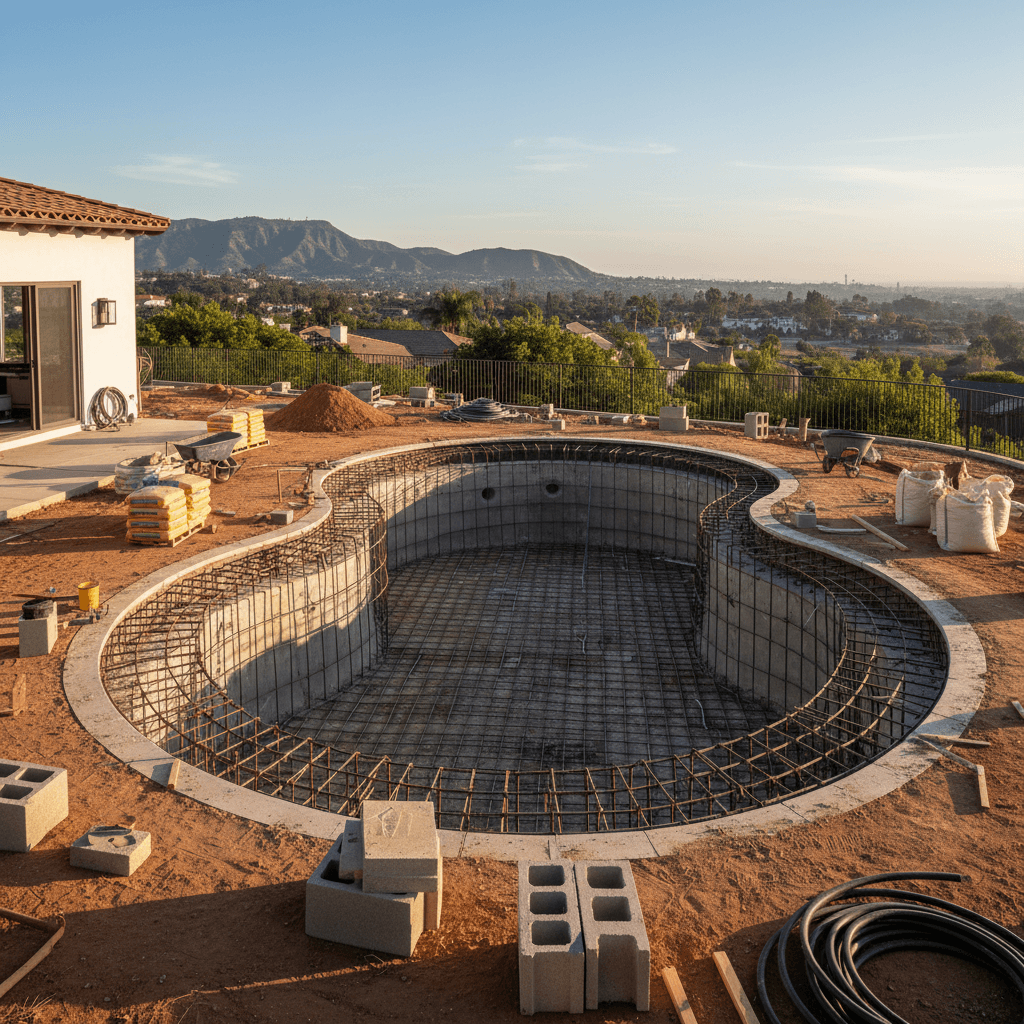
Gunite (also called shotcrete) is the gold standard for custom pool construction in California. A gunite pool offers unlimited shape, size, and depth customization. The shell is formed by spraying a concrete mixture over a rebar framework, then finishing with plaster, pebble, or tile. Gunite pools dominate high-end California residential construction because they accommodate infinity edges, beach entries, integrated spas, and complex geometric designs that prefabricated shells cannot replicate.
Cost Range
$40K - $80K
Build Time
3 - 6 months
Lifespan
25+ years
Customization
Fully custom
Fiberglass Pool
Fiberglass pools are manufactured off-site as a single pre-molded shell, then delivered and installed in an excavated hole. The primary advantage is speed: installation takes just 2 to 4 weeks once the shell arrives. The smooth gelcoat surface resists algae growth, reducing chemical consumption and maintenance time. However, fiberglass pools are limited to the manufacturer's pre-set shapes and sizes, typically maxing out around 16 feet wide due to transportation constraints on California highways.
Cost Range
$25K - $60K
Install Time
2 - 4 weeks
Lifespan
25+ years
Customization
Pre-molded shapes
Vinyl Liner Pool
Vinyl liner pools use a custom-fabricated vinyl sheet stretched over a frame of steel, polymer, or wood walls. They offer the lowest upfront cost of any in-ground pool type, but the liner itself is the weak point: it requires replacement every 7 to 10 years at a cost of $4,000 to $8,000 per liner. Vinyl liner pools are less common in California than in other states, partly because the year-round UV exposure accelerates liner degradation and partly because homeowners in the California market tend to prioritize long-term durability.
Cost Range
$20K - $40K
Install Time
1 - 2 weeks
Liner Lifespan
7 - 10 years
Customization
Limited shapes
For most California homeowners, the decision comes down to gunite versus fiberglass. If you want a fully custom design, plan to stay in the home long-term, and have a budget above $50,000, gunite is the superior choice. If speed and lower maintenance are priorities and you can work within pre-set dimensions, fiberglass offers excellent value. Vinyl liner pools, while budget-friendly upfront, are rarely recommended in California due to the recurring liner replacement cost and shorter effective lifespan in the state's intense sun.
California Pool Safety Requirements
California pool safety requirements are among the strictest in the nation, and for good reason: the state leads the country in residential pool ownership. The California Swimming Pool Safety Act (Health and Safety Code Sections 115920-115929) mandates that every new residential swimming pool or spa must incorporate at least two approved safety features from a defined list before the building department will issue a final inspection approval.
The approved safety features include: a pool fence that must be at least five feet tall with no footholds and with gaps no wider than four inches; self-closing and self-latching gates that open outward from the pool; a powered safety cover that meets ASTM standard F1346; pool alarms that detect unauthorized entry into the water; and door/window alarms on all home exits that open directly to the pool area. Homeowners must select a minimum of two from this list, though many builders recommend three or more for comprehensive protection.
At the federal level, the Virginia Graeme Baker Pool and Spa Safety Act requires all public and residential pools to use compliant drain covers that prevent entrapment. Single-drain pools must also have a secondary anti-entrapment system such as a safety vacuum release system (SVRS) or a gravity drainage system. California enforces this federal mandate through its local building departments, and inspectors will verify drain cover compliance during the final pool inspection.
Beyond construction requirements, California law imposes disclosure obligations. When selling a home with a pool, the seller must disclose the pool's safety features and their condition. If the pool does not meet current safety standards, the buyer may negotiate for upgrades or the seller may be required to bring the pool into compliance before closing, depending on local ordinance. For homeowners adding a pool to an existing property, the permitting process will include a safety plan review where the building department verifies that the proposed safety features meet code requirements before issuing a building permit.
Safety Compliance Checklist
All new California pools require: minimum 2 approved safety features, 5-foot fencing with self-closing/self-latching gates, VGBA-compliant drain covers, and a safety plan approved during permitting. Most builders recommend exceeding minimums with 3 or more safety features.
Pool Maintenance Costs & Seasonal Tips
Owning a pool in California is a year-round commitment, and understanding the ongoing pool maintenance cost before you build prevents budget surprises down the road. Unlike pool owners in northern states who winterize for four to five months, California homeowners maintain their pools 12 months a year, though the advantage is obvious: you also get to swim 12 months a year.
The monthly pool running costs that California homeowners should budget for break down into three categories. Chemicals and cleaning run $100 to $250 per month, covering chlorine or salt cell replacement, pH balancers, algaecide, and filter cleaning. Energy costs for the pump, heater, and automation system add $50 to $150 per month, though a variable-speed pump (now required by California Title 20 energy standards) can reduce pump energy use by 60 to 80 percent compared to older single-speed models. Professional pool service, if you prefer a weekly technician visit for testing, cleaning, and equipment checks, costs $200 to $400 per month depending on pool size and service level.
On an annual basis, basic maintenance totals $1,200 to $3,600 for a DIY approach and $2,400 to $4,800 with professional service. Equipment maintenance adds another $400 to $800 per year for items like filter cartridge replacements, o-ring seals, and minor pump repairs. Major equipment replacements occur on longer cycles: pool pumps last 8 to 12 years ($800 to $2,500 to replace), salt cells last 3 to 7 years ($400 to $1,200), and pool heaters last 10 to 15 years ($2,500 to $5,000).
California-specific considerations add a few nuances. During drought years, some water districts impose pool-related water restrictions, though most agencies exempt pools with covers since a pool cover reduces evaporation by up to 95 percent and is the single most effective water conservation measure a pool owner can adopt. A standard California pool loses 3,000 to 7,000 gallons per year to evaporation without a cover. Solar pool covers serve double duty by reducing evaporation and passively heating the water, cutting heater energy costs by 50 to 70 percent during the shoulder months of March through May and September through November.
Annual Cost Summary
DIY maintenance: $1,200-$3,600/year. Professional service: $2,400-$4,800/year. Equipment maintenance: $400-$800/year. Total annual cost of ownership (excluding mortgage): $2,000-$6,000 depending on pool size, features, and service level.
Why a Pool
6 Reasons California Homeowners Build Pools
280+ Days of Pool Weather Per Year
California's climate means your pool isn't a three-month investment. Swim comfortably from March through November, and with solar heating, year-round.
Significant Property Value Increase
A quality pool adds $50,000 to $150,000+ to a California home's value. In luxury neighborhoods, a pool is virtually mandatory for competitive listings.
Smart Technology Cuts Costs 50–70%
Modern pool automation, variable-speed pumps, LED lighting, and solar heating cut operating costs dramatically. Your phone becomes your pool control center.
Health & Wellness at Home
Swimming is one of the best full-body exercises. A backyard pool eliminates gym commutes and provides a daily wellness retreat steps from your door.
The Ultimate Entertainment Space
A pool transforms your backyard into the go-to gathering spot. In California's outdoor social culture, your pool area becomes your living room.
Designed for Any Lot Size
From compact plunge pools for small yards to expansive resort-style pools for large estates, modern pool design adapts to any California lot size and topography.
The Process
How a Pool Project Works
Total timeline: 3–6 months from design to first swim
Design Consultation & Site Evaluation
Day 1The builder evaluates the site, measures space, assesses soil conditions, checks for underground utilities, and discusses your vision, budget, and lifestyle needs.
Custom Pool Design & Engineering
Week 1-3Detailed plans including pool shape, dimensions, depth, features, equipment specs, and landscaping. 3D color renderings from multiple angles including day and night views.
Permitting & Approvals
Week 3-8All new pools in California require building permits from LADBS plus plumbing, electrical, and mechanical permits. Everything is prepared and submitted. Processing takes 3-6 weeks.
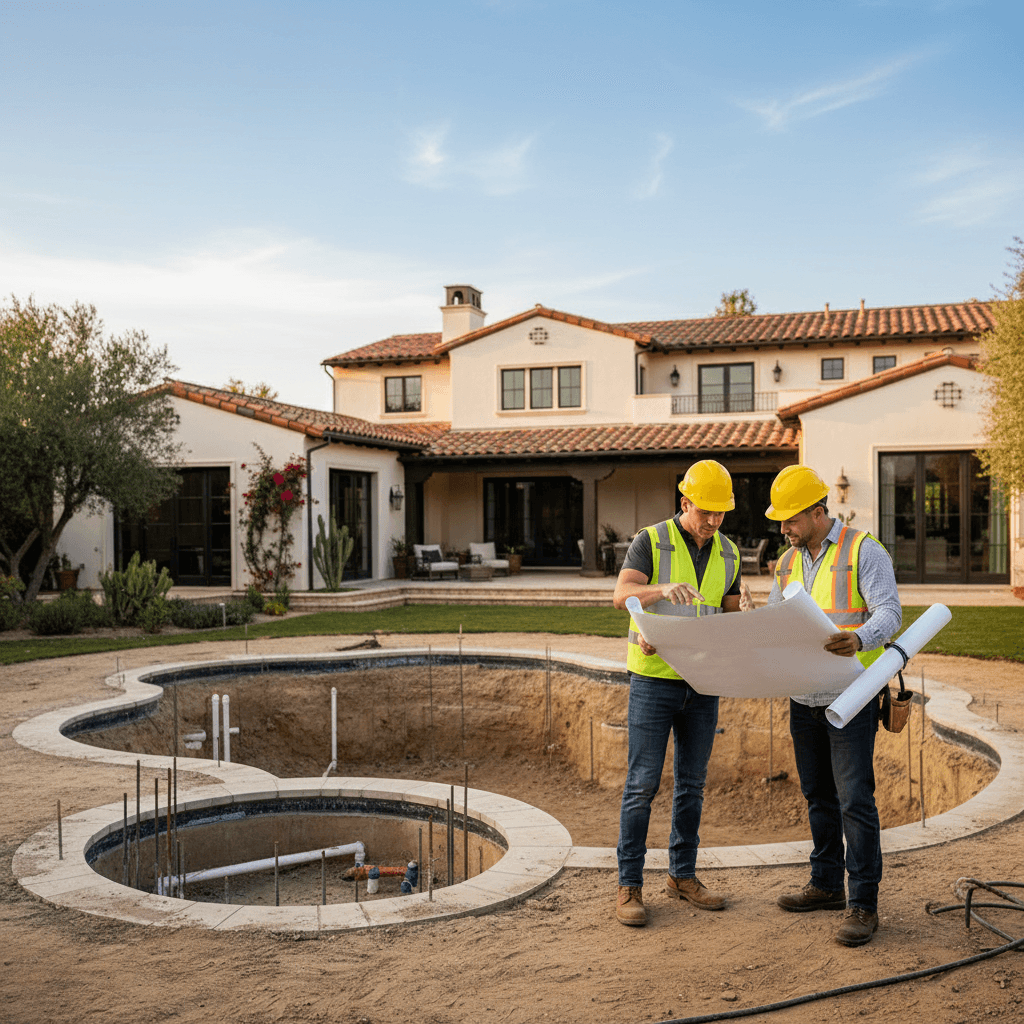
Excavation & Shell Construction
Week 1-4Excavation, steel reinforcement, plumbing and electrical, gunite or shotcrete shell, waterproofing tile. Includes all underground work and equipment pad.
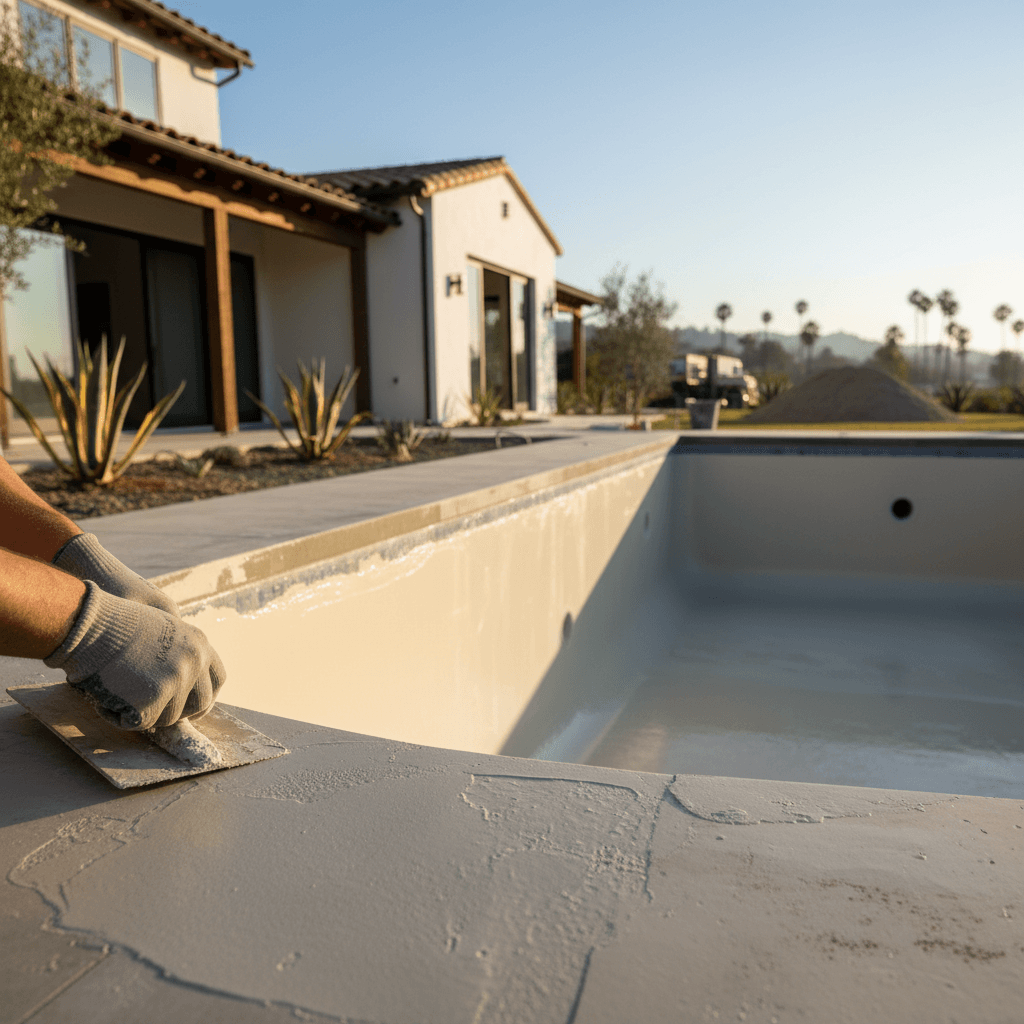
Finish Work & Decking
Week 4-8Interior finish (PebbleTec, plaster, tile), coping and decking, equipment installation, LED lighting, water features, fire features, and surrounding landscape.
Fill, Start-Up & First Swim
CompletionFill the pool, balance water chemistry, program automation, test all features, and receive a comprehensive owner's manual and maintenance schedule.
Reviews
What California Homeowners Say
"Our contractor built our dream pool and completely transformed our backyard. We have a geometric pool with a raised spa, tanning ledge, fire bowls, and a travertine deck. The automated system lets us control everything from our phones. We went from never using our backyard to spending every evening out there. It's like having a private resort."
David & Rachel S.
Sherman Oaks · Pool + Spa + Full Backyard, 18×36 ft
"Our plunge pool was the perfect solution for our small Venice lot. The team maximized every inch."
Alex K. · Venice
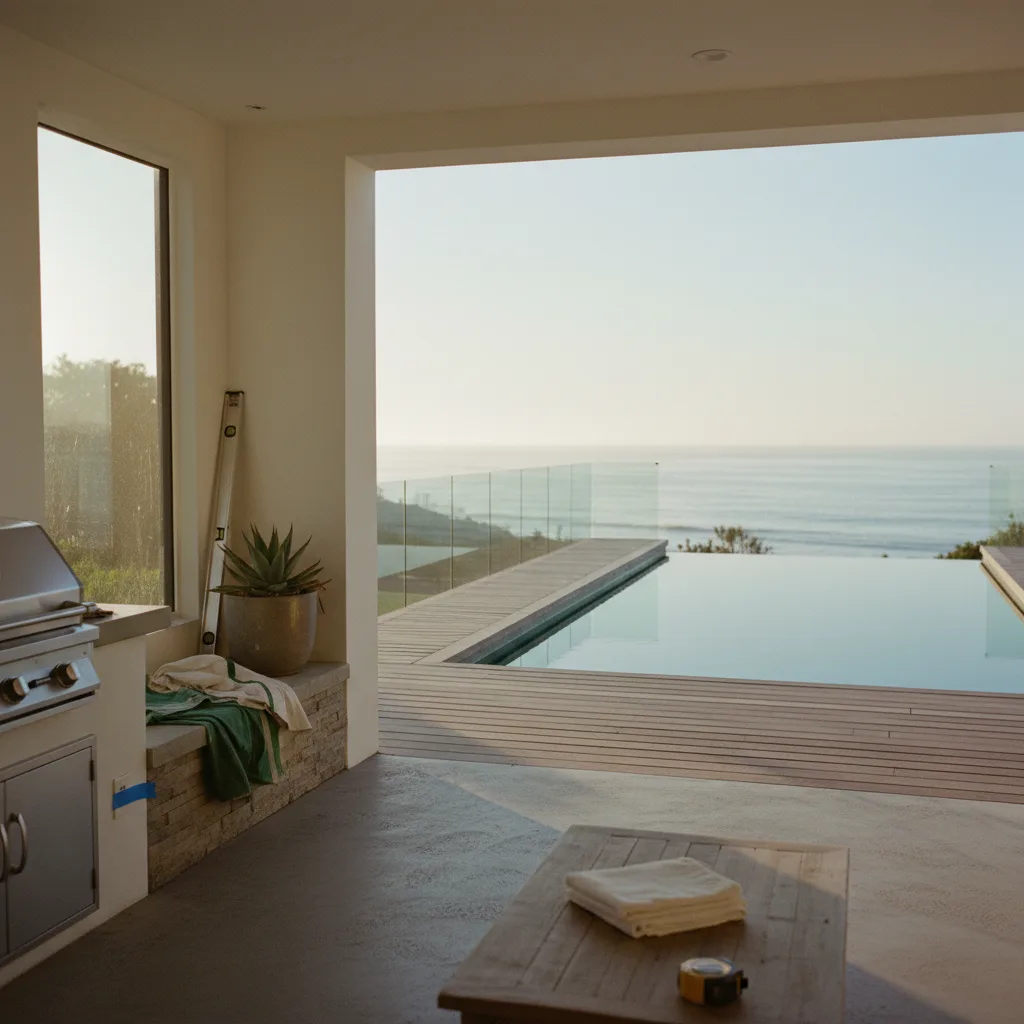
"The infinity edge overlooking the canyon is breathtaking. Worth every penny."
James & Sara M. · Hollywood Hills
"Permitting was our biggest worry, but our builder handled everything seamlessly."
Christine L. · Bel Air
"The PebbleTec finish is stunning and so easy to maintain."
Roberto & Maria G. · Glendale
"From first call to first swim took exactly 4 months. Professional and on schedule."
Michelle T. · Tarzana
"The solar heating system means we swim year-round. Even in January."
Peter W. · Pasadena
FAQ
Frequently Asked Questions
Ready to start your pool project?
Get matched with 2-3 vetted California contractors. 100% free, no obligation.
Find My ProsKeep Reading
Explore More California Guides
Your Next Step: Getting a Pool Quote in California
Browse top-rated pool builders in California, compare quotes, and get matched for free.
Free to use · Independent reviews · We respond within 24 hours