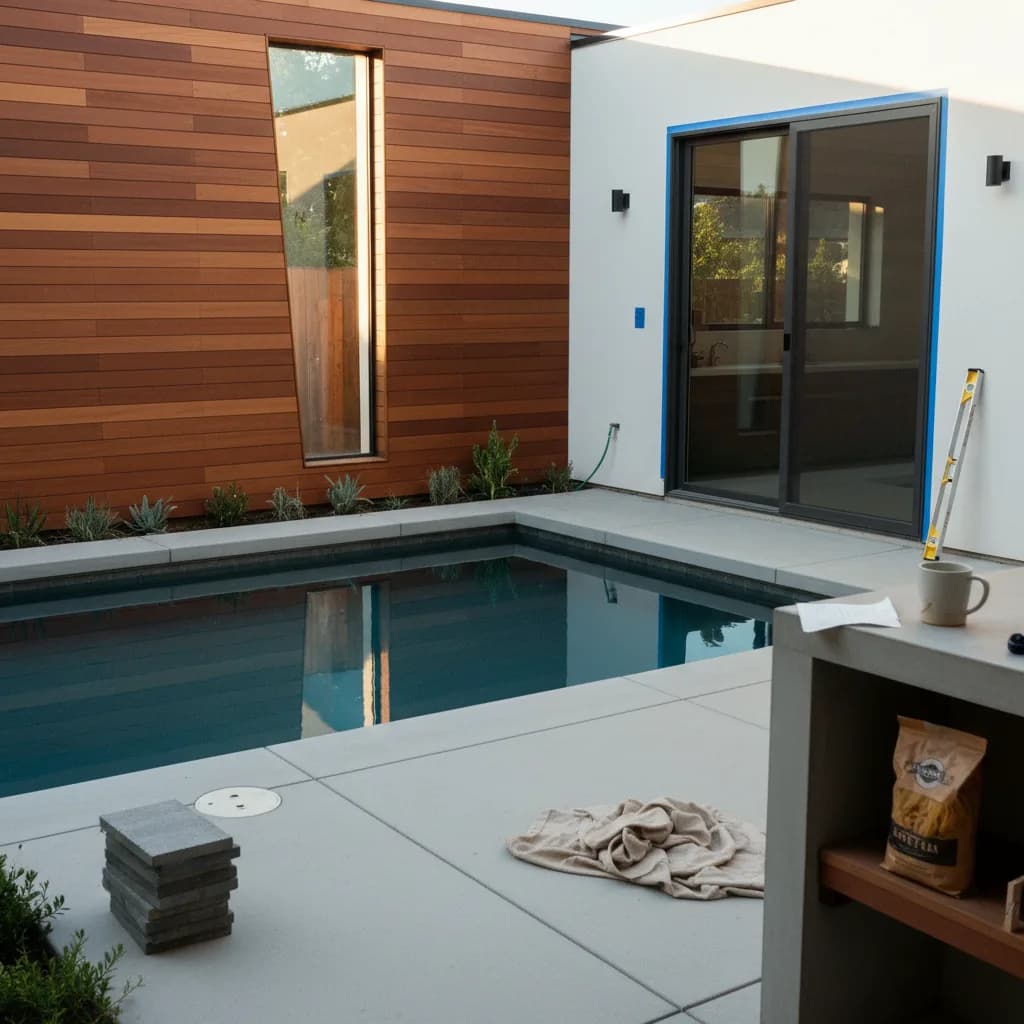
A new inground saltwater pool in San Jose in 2026 costs between $95,000 and $160,000 for a standard project. That price can start lower for a small cocktail pool or a simple refresh of an existing shell, but for a typical suburban backyard in Willow Glen or Almaden Valley, this range covers the core build: gunite shell, basic hardscape, and the equipment pad. The real budget story, however, is told in the line items most homeowners miss: the seismic engineering for clay soil ($4,500), the 200-amp main panel upgrade ($4,800), and the MWELO-compliant landscaping ($7,000 to $12,000). A saltwater pool project in San Jose isn't just about the water; it's about the significant site and utility work required to support it.
In a Nutshell
- All-In San Jose Cost (2026): Expect to spend $95,000 to $160,000 for a typical mid-range saltwater pool. High-end projects with spas, automation, and extensive hardscaping can exceed $250,000.
- Hidden Costs Are Key: The budget surprises aren't the pool finishes. They are the non-negotiable upgrades like electrical subpanels, gas line extensions for heaters, and soil engineering for the region's expansive clay.
- Permitting and MWELO: The City of San Jose's permitting process is thorough. Your project must also comply with California's Model Water Efficient Landscape Ordinance (MWELO), requiring a water-wise landscape plan around the new pool.
- Contractor Diligence: Choosing a licensed, insured saltwater pool contractor in San Jose who understands local soil conditions and building codes is the single most important decision you will make.
Why is a Saltwater Pool More Expensive in San Jose?
Three factors drive the high cost of a saltwater pool in San Jose: specialized labor, complex site conditions, and rigorous permitting. The Bay Area has one of the highest construction labor costs in the country. According to the California Department of Industrial Relations prevailing wage data for Santa Clara County, skilled trades like electricians and plumbers command premium rates, which are passed directly into the project budget. Second, the region's expansive clay soil requires costly geotechnical reports and over-engineered foundations to prevent the pool shell from cracking over time. Finally, navigating the City of San Jose Planning, Building & Code Enforcement department adds administrative hours and fees that don't exist in other markets.
The Real San Jose Saltwater Pool Cost in 2026
A typical budget breaks down into three core components. The gunite shell is $65k. The deck and coping is another $28k. The equipment pad, including a Pentair Intelliflo VSF variable-speed pump, a high-efficiency heater, and a Pentair IntelliChlor IC40 Salt Chlorine Generator, adds $18k to $25k. This baseline doesn't include fencing, lighting, landscaping, or the utility upgrades often required.
Three representative projects from 2026, scoped similarly, reconstructed from Golden Yards Magazine's Project of the Day network and used here in aggregate form:
- The Rose Garden Cocktail Pool: A small, 10x18-foot saltwater pool with a simple paver deck and basic equipment. The tight lot access required smaller machinery, increasing labor hours. Total Cost: $98,500.
- The Almaden Valley Family Pool: A 15x30-foot freeform pool with a PebbleTec finish, an integrated spa, and Hayward OmniLogic automation. Project required a new 60-amp subpanel and a gas line extension for the 400k BTU heater. Total Cost: $142,000.
- The Willow Glen Entertainer's Yard: A 20x40-foot geometric pool with a large Baja shelf, raised spa with a spillway, and extensive travertine decking. The budget included significant grading, retaining walls due to a slight slope, and a full MWELO-compliant landscape plan. Total Cost: $215,000.
Step 1: Lock In Your Design and Engineering
Ready to compare vetted project options?
Use Project Match privately when your scope is clear enough for contractor conversations.
Start Project MatchYour first step is to commission a full set of plans from a pool designer or landscape architect. This is the blueprint for everything that follows, from permitting to final inspection. Why? A detailed plan specifying materials, dimensions, and equipment prevents costly mid-project changes and ensures every contractor is bidding on the exact same scope of work. Watch out for: Designs that fail to include a geotechnical soil report, which is essential in San Jose to engineer the pool shell against movement from expansive clay soil.
Step 2: Vet Your Saltwater Pool Contractor
With engineered plans in hand, you can solicit bids from at least three qualified contractors. Look for a C-53 Swimming Pool Contractor license, check references, and visit past projects. Why? An experienced saltwater pool contractor in San Jose will manage the entire process, from submitting plans to the city to coordinating all inspections, which is a complex job. Watch out for: Any bid that seems significantly lower than the others, as it likely omits crucial items like demolition, soil hauling, or the cost of the electrical subpanel. For a full breakdown of the city's requirements, see our San Jose Saltwater Pool Permit Playbook for 2026.
Step 3: Plan for the Hidden Costs: Utilities and Site Prep
Before the first scoop of dirt is moved, confirm your home's utility capacity. A modern pool equipment pad is an energy-intensive operation. Why? Upgrading your gas and electrical service is a common and expensive surprise, but it's non-negotiable for running a variable-speed pump, heater, and lighting safely. Watch out for: Assuming your existing 1-inch gas line can support a new 400k BTU pool heater; the gas line upsize to 1.25 inches is rarely in the first quote, so budget another $1,800 to $3,000 if your meter is far from the equipment pad.
Step 4: Select Your Equipment and Finishes
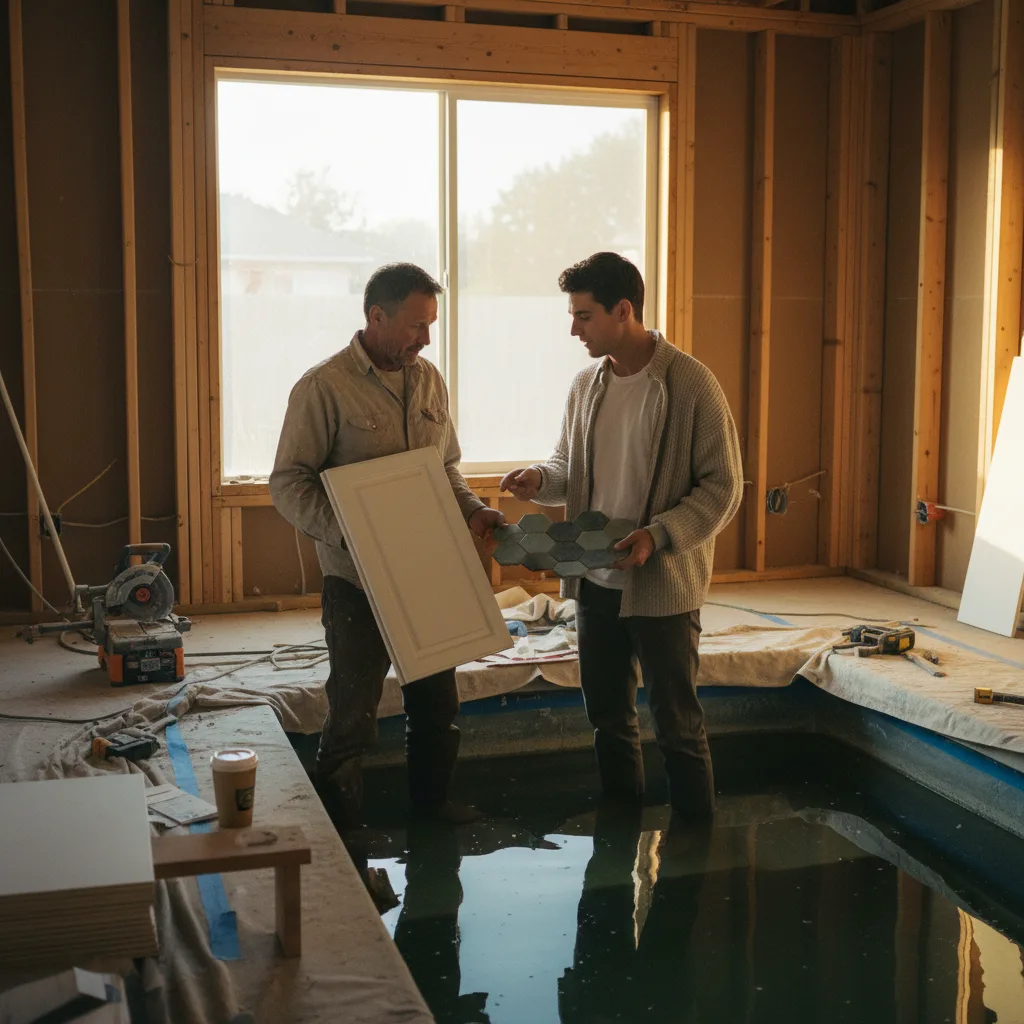
This is the stage where you choose the components you'll interact with daily. Your key decisions are the saltwater chlorine generator (SWCG), the pump, and the interior finish. Why? Your choice of a brand like Pentair, Hayward, or Jandy for the core equipment pad will determine your long-term energy costs, ease of use, and maintenance schedule. Watch out for: Opting for traditional plaster to save money upfront. Saltwater can be more abrasive to standard plaster, making a more durable PebbleTec or quartz finish a better long-term investment, though it adds $6,000 to $10,000 to the initial cost.
Step 5: Work through MWELO and Landscape Integration
Your pool project is not complete until the surrounding area is finished and compliant with state water laws. California's Model Water Efficient Landscape Ordinance applies to all new construction projects with over 500 square feet of landscape. Why? MWELO compliance is a permit requirement, forcing a holistic approach to your backyard that includes drought-tolerant plants, high-efficiency irrigation, and a hydrozone breakdown by sun exposure. Watch out for: Pool builders who treat landscaping as an afterthought. You will need a separate landscape plan and budget, which can add $7,000 to $20,000 depending on the scope of planting and irrigation required.
The Unavoidable Overruns: Your San Jose Budget Buffers
Even with a fixed-price contract, unexpected issues can arise. The most common in San Jose are discovering hard rock during excavation that requires hydraulic breaking, or dealing with limited backyard access that slows down construction. The National Association of Home Builders recommends a ten to fifteen percent contingency on renovations in homes over thirty years old. For a $120,000 pool project, this means having an extra $12,000 to $18,000 set aside for surprises. Other potential overruns include last-minute material upgrades (e.g., swapping concrete pavers for travertine) or adding scope like an outdoor sound system.
Your 2026 San Jose Saltwater Pool Checklist
- [ ] Obtain a geotechnical soil report for your property.
- [ ] Commission a full set of engineered plans.
- [ ] Verify your C-53 contractor's license and insurance.
- [ ] Audit your home's main electrical panel and gas meter capacity.
- [ ] Get a separate quote for a MWELO-compliant landscape design.
- [ ] Select a durable interior finish like quartz or pebble instead of standard plaster.
- [ ] Choose a top-tier variable-speed pump to comply with California Title 20.
- [ ] Budget a 15% contingency fund for unforeseen site conditions.
- [ ] Confirm the bid includes all costs for fencing, alarms, and safety covers required by code.
Frequently Asked Questions
How much does a saltwater pool cost in San Jose?
In 2026, a new inground saltwater pool in San Jose typically costs between $95,000 and $160,000. This range covers the essential construction of the shell, decking, and equipment. However, the final price often rises with additions like spas, automation, lighting, and required utility upgrades, which can push the total cost above $200,000.
The price floor around $95,000 is for a smaller, simple pool with minimal hardscaping and straightforward site access. The higher end of the range reflects larger pools, integrated hot tubs, premium finishes like PebbleTec, and automated control systems from brands like Hayward or Pentair. The most significant variable is often site-specific costs, including grading, soil removal, and engineering for San Jose's expansive clay soils.
Is a saltwater pool cheaper to maintain than a traditional chlorine pool?
A saltwater pool has lower annual chemical costs but higher upfront and long-term equipment costs. Instead of buying liquid chlorine or tablets, you spend about $80-$100 per year on 50-pound bags of salt. The main expense is the salt chlorine generator (SWCG) cell, which costs $700 to $1,100 and must be replaced every three to seven years.
Traditional chlorine pools cost more in annual chemicals, typically $300 to $800. Over a ten-year period, the total cost of ownership is often very similar. Homeowners choose saltwater systems primarily for the softer-feeling water and reduced skin and eye irritation, not for major cost savings. Both pool types require the same attention to water balance, filtration, and cleaning.
Do I need a permit for a pool in San Jose?
Yes, an inground swimming pool is considered a major construction project and absolutely requires a permit from the City of San Jose Planning, Building & Code Enforcement department. The process involves submitting detailed structural, electrical, and plumbing plans for review. Your contractor will also need to show compliance with local zoning, safety, and energy efficiency codes.
The permitting process in San Jose can take anywhere from six weeks to several months, depending on the complexity of your project and the department's workload. Your contractor typically manages this process. The permit package also includes requirements for safety features like fencing of a certain height, self-latching gates, and door alarms if the house opens directly to the pool area.
How long does it take to build a pool in San Jose?
From signing a contract to swimming, the entire process to build a pool in San Jose takes four to nine months in 2026. This timeline can be broken into three phases: design and permitting (six to sixteen weeks), excavation and construction (eight to twelve weeks), and landscaping and final details (four to six weeks).
Delays are common and can be caused by the city's plan review backlog, inspection scheduling, or unexpected site conditions like hitting rock during excavation. Weather is less of a factor in San Jose than in other climates, but it can still impact concrete and plaster work. A realistic homeowner should plan for a six-month project from start to finish.
What are the best pool surface materials for a saltwater system?
The best interior finishes for a saltwater pool are aggregate materials like PebbleTec or QuartzScapes, or a full tile surface. These materials are dense, non-porous, and highly resistant to the slightly corrosive nature of saltwater, offering a lifespan of 15 to 25 years or more. They are, however, the most expensive options upfront.
While standard plaster is the most affordable option, it is also the most susceptible to etching and scaling if the water chemistry in a saltwater pool is not perfectly maintained. Many builders in saltwater-heavy markets now recommend a quartz or pebble finish as the minimum standard to ensure the longevity of the pool surface and reduce the likelihood of costly resurfacing down the line.
Sources & Methodology
See the Golden Yards Methodology for how sources are reviewed, ranges are normalized, and planning-data limits are handled.
Cost ranges in this guide draw on the following named industry sources, public agency datasets, and Golden Yards Magazine editorial research.
- City of San Jose, Planning, Building & Code Enforcement, Permit Services (2026)
- California Department of Industrial Relations, Santa Clara County Prevailing Wage Data (January 2026)
- Pool & Hot Tub Alliance, ANSI/PHTA/ICC-7 Standard for Suction Entrapment Avoidance (2021)
- California Code of Regulations, Title 24, Part 6 (California Energy Code) (2022)
- National Association of Home Builders (NAHB), Construction Cost Survey (2025)
- California Department of Water Resources, Model Water Efficient Landscape Ordinance (MWELO) (2023)
Golden Yards Magazine Take
The central misunderstanding about building a saltwater pool in San Jose is focusing on the pool itself. The real project, and the real source of budget risk, is the site. Homeowners get excited about picking tile and water features, but the costly challenges are buried underground. Expansive clay soil requires expensive over-engineering. Aging homes in neighborhoods like the Rose Garden often need a full main panel upgrade, not just a subpanel. Small lots mean difficult access, driving up labor costs. The most successful projects are led by homeowners who obsess over the geotechnical report and the electrical plan before they even think about the color of the PebbleTec. The pool is the easy part; preparing the canvas is the hard part.
Ready to start your pool project?
Find My ProsFrequently Asked Questions
How much does a saltwater pool cost in San Jose?
In 2026, a new inground saltwater pool in San Jose typically costs between $95,000 and $160,000. This range covers the essential construction of the shell, decking, and equipment. However, the final price often rises with additions like spas, automation, lighting, and required utility upgrades, which can push the total cost above $200,000. The price floor around $95,000 is for a smaller, simple pool with minimal hardscaping and straightforward site access. The higher end of the range reflects larger pools, integrated hot tubs, premium finishes like PebbleTec, and automated control systems from brands like Hayward or Pentair. The most significant variable is often site-specific costs, including grading, soil removal, and engineering for San Jose's expansive clay soils.
Is a saltwater pool cheaper to maintain than a traditional chlorine pool?
A saltwater pool has lower annual chemical costs but higher upfront and long-term equipment costs. Instead of buying liquid chlorine or tablets, you spend about $80-$100 per year on 50-pound bags of salt. The main expense is the salt chlorine generator (SWCG) cell, which costs $700 to $1,100 and must be replaced every three to seven years. Traditional chlorine pools cost more in annual chemicals, typically $300 to $800. Over a ten-year period, the total cost of ownership is often very similar. Homeowners choose saltwater systems primarily for the softer-feeling water and reduced skin and eye irritation, not for major cost savings. Both pool types require the same attention to water balance, filtration, and cleaning.
Do I need a permit for a pool in San Jose?
Yes, an inground swimming pool is considered a major construction project and absolutely requires a permit from the City of San Jose Planning, Building & Code Enforcement department. The process involves submitting detailed structural, electrical, and plumbing plans for review. Your contractor will also need to show compliance with local zoning, safety, and energy efficiency codes. The permitting process in San Jose can take anywhere from six weeks to several months, depending on the complexity of your project and the department's workload. Your contractor typically manages this process. The permit package also includes requirements for safety features like fencing of a certain height, self-latching gates, and door alarms if the house opens directly to the pool area.
How long does it take to build a pool in San Jose?
From signing a contract to swimming, the entire process to build a pool in San Jose takes four to nine months in 2026. This timeline can be broken into three phases: design and permitting (six to sixteen weeks), excavation and construction (eight to twelve weeks), and landscaping and final details (four to six weeks). Delays are common and can be caused by the city's plan review backlog, inspection scheduling, or unexpected site conditions like hitting rock during excavation. Weather is less of a factor in San Jose than in other climates, but it can still impact concrete and plaster work. A realistic homeowner should plan for a six-month project from start to finish.
What are the best pool surface materials for a saltwater system?
The best interior finishes for a saltwater pool are aggregate materials like PebbleTec or QuartzScapes, or a full tile surface. These materials are dense, non-porous, and highly resistant to the slightly corrosive nature of saltwater, offering a lifespan of 15 to 25 years or more. They are, however, the most expensive options upfront. While standard plaster is the most affordable option, it is also the most susceptible to etching and scaling if the water chemistry in a saltwater pool is not perfectly maintained. Many builders in saltwater-heavy markets now recommend a quartz or pebble finish as the minimum standard to ensure the longevity of the pool surface and reduce the likelihood of costly resurfacing down the line.