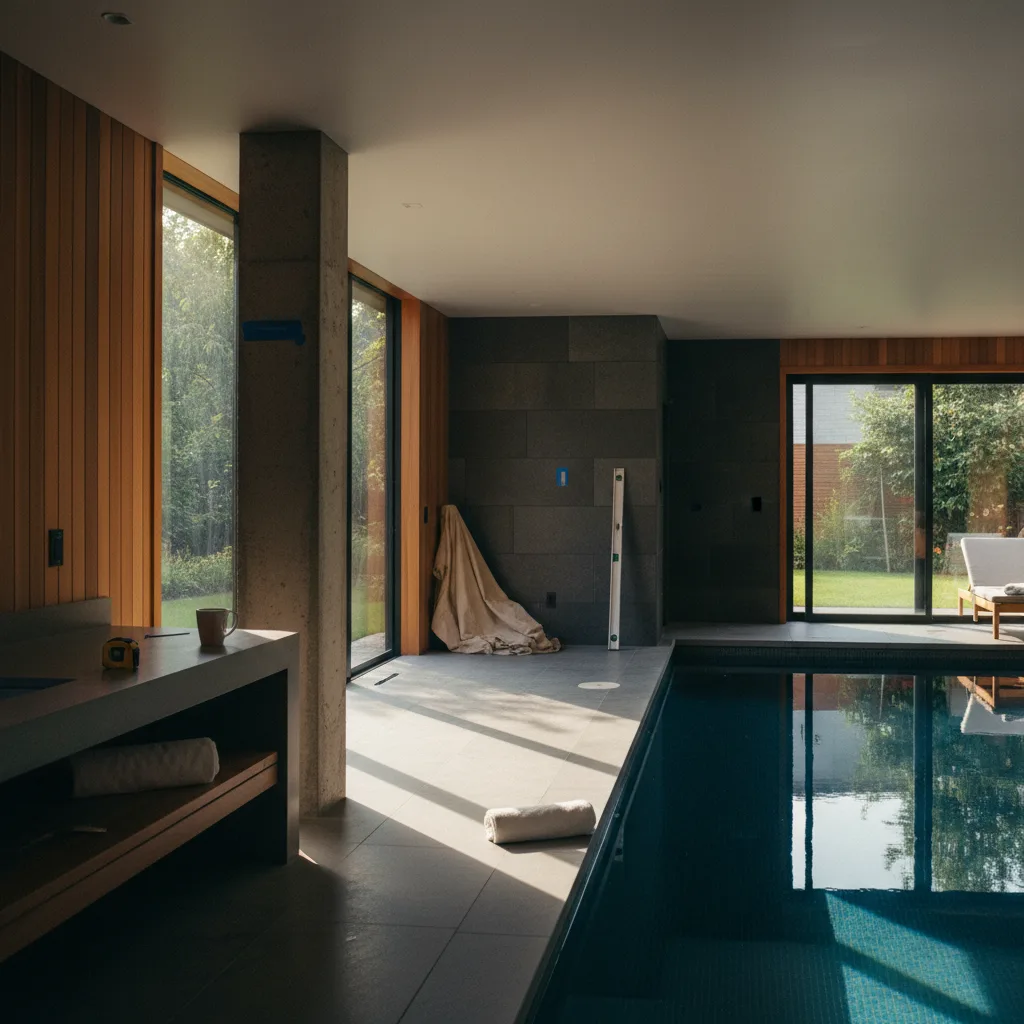
Seattle’s approach to outdoor living has fundamentally shifted. Homeowners are no longer building for three months of sun; they are engineering four-season backyard destinations. The installation of high-BTU pool heaters has increased by over 30 percent in the last two years, signaling a decisive move away from seasonal-use pools toward year-round aquatic spaces. This isn't about ignoring the drizzle; it's about designing a space so compelling that the weather becomes irrelevant.
In a Nutshell
- The Big Idea: The All-Weather Backyard Retreat. Pools are now the anchor for integrated, year-round outdoor living spaces, engineered specifically for the Pacific Northwest climate.
- Top Trends: High-efficiency heating with integrated spas, mandatory automatic safety covers for heat retention, and dark-bottom finishes that passively absorb solar energy.
- What's Being Replaced: The simple, uncovered, light-plaster kidney bean pool that sits dormant for nine months of the year.
- What's Next: A focus on energy efficiency, with geothermal heating systems and solar-ready equipment pads becoming the new standard for luxury builds.
Trend 1: The Integrated Spa is Now Standard Equipment
The standalone hot tub is being replaced by gunite spas built directly into the pool's structure. This creates a single body of water with a shared equipment pad, allowing for a smooth aesthetic and unified control via systems like the Pentair IntelliCenter. We're seeing invoices where the spa portion adds $18,000 to $25,000 to the gunite shell cost, a premium homeowners in Medina and Laurelhurst are readily paying for the convenience and design cohesion. This trend is moving from a luxury add-on to a baseline expectation for any new inground pool in Seattle.
Trend 2: Automatic Covers are a Non-Negotiable Feature
An automatic safety cover is the single most important feature for a Seattle pool. It's not about safety alone; it's about energy. A high-quality vinyl cover from a brand like Cover-Pools can reduce heat loss by up to 70 percent, drastically cutting the run time for a 400K BTU gas heater. An inground pool contractor in Seattle we spoke with confirmed that over 90 percent of their 2025 projects included an auto-cover in the initial scope, a feature that adds $14,000 to $22,000 to the total cost. This is now considered essential infrastructure, not an option.
Trend 3: Dark Interior Finishes for Passive Heat Gain
Ready to compare vetted project options?
Use Project Match privately when your scope is clear enough for contractor conversations.
Start Project MatchThe classic sky-blue pool plaster is out. Homeowners are choosing dark quartz and pebble finishes, like PebbleTec's Black Pearl or Midnight Blue, to create a dramatic, lagoon-like aesthetic. More importantly, these dark surfaces absorb sunlight and can raise the water temperature by three to five degrees on sunny days, a meaningful gain in the PNW. High-end projects on Mercer Island are pairing these dark interiors with basalt or slate coping for a cohesive, naturalistic look. This is a purely aesthetic choice that doubles as a practical energy-saving feature.
Trend 4: The Rise of the Compact Plunge Pool
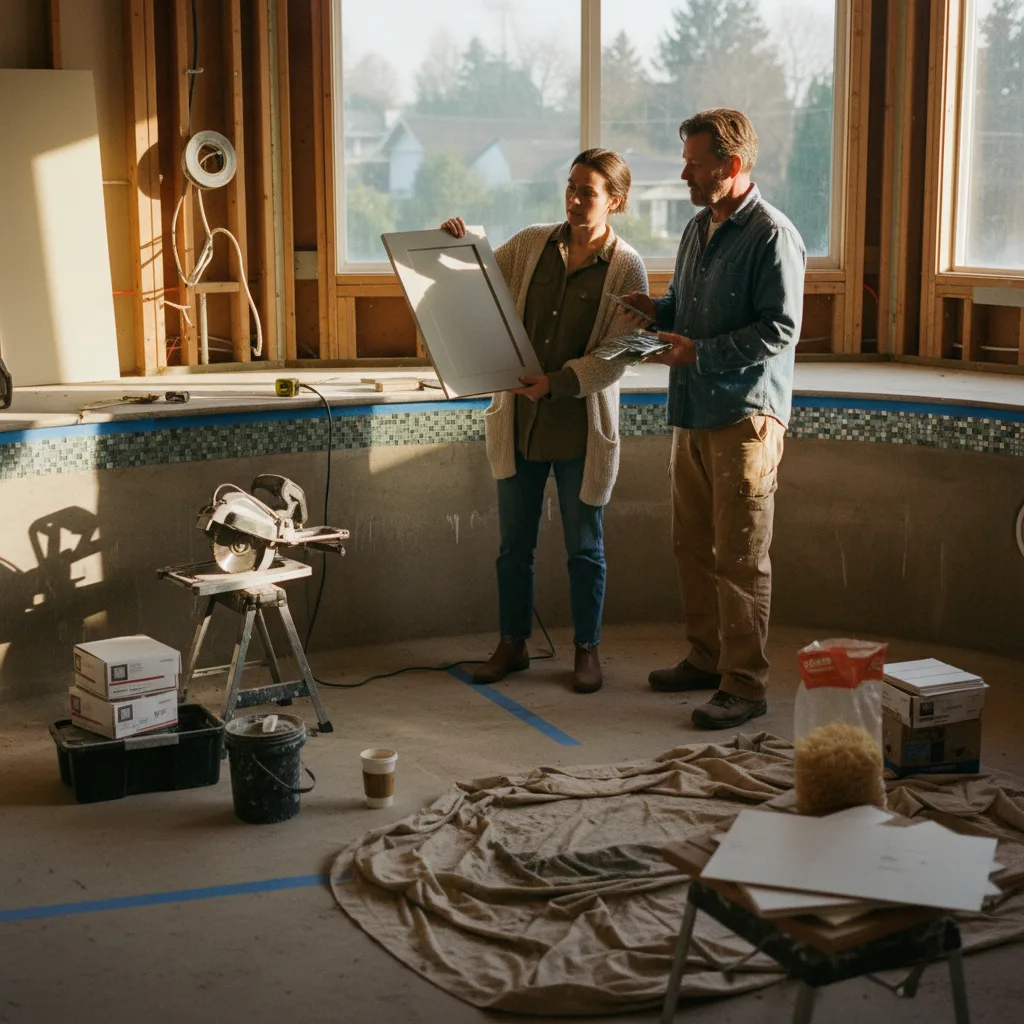
On smaller urban lots in Queen Anne and Ballard, the full-sized swimming pool is giving way to the “spool” or plunge pool. These are typically under 400 square feet and focus on relaxation and social gatherings rather than lap swimming. The smaller volume of water makes them significantly cheaper and faster to heat, making a spontaneous evening soak feasible. The cost for a plunge pool shell can start lower, but the high-end finishes and powerful equipment required often bring the all-in price close to that of a conventional pool. The trend is toward luxury and hydrotherapy in a compact, efficient footprint.
Trend 5: Subsurface Drainage is Part of the Pool Budget
In the past, extensive drainage was often an surprise change order. Now, experienced homeowners and top-tier builders scope it from day one. Given Seattle's clay-heavy soil and significant rainfall, managing groundwater is critical to protecting the pool shell from hydrostatic pressure. A solid system of French drains, sump pits, and proper grading around the pool deck is now a standard line item, adding $7,000 to $15,000. This is a hidden cost that savvy homeowners are now budgeting for upfront, preventing costly structural issues down the line.
Trend 6: Covered, Heated Patios as a Poolside Extension
The pool is no longer a standalone feature; it’s the centerpiece of a larger outdoor room. We're seeing a surge in covered structures, like StruXure louvered pergolas, equipped with built-in radiant heaters and lighting, installed adjacent to the pool. This creates a functional, comfortable zone for lounging and dining, regardless of a passing shower. This integration extends the usability of the entire backyard investment. The cost for a high-end covered patio space often rivals the pool equipment budget, adding another $20,000 to $40,000 to the project.
Why is an Inground Pool More Expensive in Seattle?
The primary drivers of the high inground pool seattle cost are labor, materials, and site conditions. Specialized labor for excavation, rebar, gunite, and plumbing is in high demand, with rates informed by Washington State L&I contractor licensing and labor rate data. Beyond labor, the region's geology is a major factor. Many lots require extensive excavation to remove unstable soil, significant subsurface drainage systems to manage groundwater, and occasionally, retaining walls engineered to support the pool shell on a slope. These earthwork and water management systems are not optional and can add 20 to 30 percent to the project cost compared to a project in a drier climate with more stable soil. Lastly, the standard equipment package is more solid. A 400K BTU heater, a heavy-duty automatic cover, and advanced automation are considered baseline requirements, not luxury upgrades.
What Seattle Homeowners are Spending on Pools in 2026
The total cost for an inground pool in Seattle in 2026 is a wide range, but most projects land between $120,000 and $250,000. A project's final price tag can start lower, particularly for small-footprint fiberglass shells on flat lots with no access issues. Three representative projects from 2026, scoped similarly, reconstructed from Golden Yards Magazine's Project of the Day network and used here in aggregate form:
- The Ballard Plunge Pool ($135,000): A 10x20 foot gunite spool with an integrated spa, PebbleTec finish, a Pentair MasterTemp 400K BTU heater, an automatic cover, and minimal travertine decking. The tight access required a mini-excavator, adding $8,000 to the excavation budget.
- The Mercer Island Rectangle ($195,000): A classic 15x35 foot geometric pool with a large Baja shelf, dark interior finish, and an automated control system. The budget included $15,000 for a comprehensive French drain system and grading, plus a gas line upsize to 1-inch to support the heater's BTU load.
- The Medina All-Weather Oasis ($275,000+): A 20x40 foot freeform pool with an attached eight-person spa, a high-end Pentair Intelliflo VSF pump, salt sanitization, and a Cover-Pools automatic cover. This project also included a 20x20 covered pavilion with radiant heaters and a full outdoor kitchen, making the backyard a true year-round destination.
Where Pool Budgets Go Wrong
The most common budget surprises are not in the pool itself, but in the required supporting infrastructure. Homeowners often get a quote from an inground pool contractor in Seattle that covers the shell, basic coping, and equipment, but overlooks three key areas. First, the electrical work. A modern equipment pad with a large heater or heat pump, multiple pumps, and an automatic cover requires a dedicated 60 to 100-amp subpanel, a job that can run from $3,500 to $7,000. Second is gas line capacity. A 400K BTU heater requires a high-volume gas line, often a 3/4-inch or 1-inch pipe run directly from the meter, which can cost an additional $2,000 to $4,500. Finally, site work and access. If your yard has a slope, a retaining wall might be required, which is an engineered structure costing $10,000 to $30,000 or more. The National Association of Home Builders recommends a ten to fifteen percent contingency on renovations in homes over thirty years old. Before you sign a contract, get a clear scope of work that includes these items; you can find a checklist in our Seattle Pool Permit Playbook.
Sources & Methodology
See the Golden Yards Methodology for how sources are reviewed, ranges are normalized, and planning-data limits are handled.
Cost ranges in this guide draw on the following named industry sources, public agency datasets, and Golden Yards Magazine editorial research.
- Puget Sound Pool Builders Guild 2026 Survey (January 2026)
- Washington State L&I Contractor Licensing and Labor Rate Data (Q4 2025)
- Pool & Hot Tub Alliance (PHTA) Construction Trends Report (2025)
- Bellevue Patio & Hearth Showroom Sales Data (2024-2025)
- Golden Yards Magazine Project of the Day Network Data (2024-2026)
Golden Yards Magazine Take
The evolution of the Seattle inground pool is a direct response to a changing climate and a homeowner desire for year-round utility. The defining trend is not aesthetic, but functional: engineering a backyard that defies the gray and damp. This isn't about denial. It's about thoughtful design. The emphasis on powerful heating, heat-retaining covers, and adjacent sheltered living spaces transforms the pool from a seasonal novelty into a daily wellness tool. Homeowners are investing in infrastructure to guarantee usability, turning what was once a 90-day amenity into a 365-day retreat. The high cost reflects this new reality: you're not just buying a pool, you're buying predictable, on-demand access to outdoor comfort, whatever the weather.
Ready to start your pool project?
Find My ProsFrequently Asked Questions
How much does an inground pool cost in Seattle in 2026?
A typical inground gunite pool in the Seattle area costs between $120,000 and $250,000 for a complete installation in 2026. This range includes the pool shell, decking, and a solid equipment package suited for the PNW climate. The final price is heavily influenced by site conditions, access, and material choices. The budget breaks down into three main parts. The gunite shell, excavation, and plumbing typically run $70,000 to $95,000. The deck and coping add another $25,000 to $40,000. The equipment pad, including a high-BTU heater, pump, filter, and mandatory automatic cover, will be $25,000 to $35,000. Hidden costs for drainage, electrical subpanels, and potential retaining walls can add another $15,000 to $50,000 or more to the total inground pool seattle cost.
Is a swimming pool a worthwhile investment in Seattle's climate?
Yes, a pool can be a worthwhile investment in Seattle if it's designed for year-round use. The modern approach focuses on creating an all-weather amenity with powerful heaters, integrated spas, and automatic covers that retain heat. This transforms the pool from a summer-only feature into a daily wellness and entertainment hub. The key is budgeting for the infrastructure that makes it practical. A high-efficiency gas heater or electric heat pump is essential. An automatic cover is non-negotiable for minimizing heat loss and debris. By pairing the pool with a covered, heated patio, homeowners create a complete outdoor living space that is comfortable even on cool, drizzly days, maximizing the return on their investment through consistent use.
What are the biggest hidden costs when building a pool in Seattle?
The most significant hidden costs for a Seattle inground pool are related to earthwork and utilities. Subsurface drainage to manage groundwater is a major expense, often running $7,000 to $15,000. Additionally, many projects require a dedicated electrical subpanel ($3,500-$7,000) and a gas line upgrade ($2,000-$4,500) to power the equipment. Beyond utilities, site access and topography can create major costs. If your property is on a slope, an engineered retaining wall may be required, which can cost $15,000 to $30,000+. Difficult access for excavation equipment can also add thousands. It's critical to hire an inground pool contractor in Seattle who provides a comprehensive quote that includes these potential site-specific requirements from the beginning.
How long does it take to build an inground pool in Seattle?
The construction timeline for a gunite pool in Seattle is typically four to six months, from excavation to final plaster. This does not include the design and permitting phase, which can take an additional two to four months. The rainy season can introduce significant delays, so it is wise to plan for potential weather holds. The process begins with permitting and excavation. This is followed by framing the steel rebar, plumbing, and then spraying the gunite shell, which needs to cure for about 28 days. After curing, crews install the tile, coping, and decking. The final steps are plastering the interior and installing the equipment. A good contractor will build a schedule that attempts to perform critical outdoor work during drier periods.