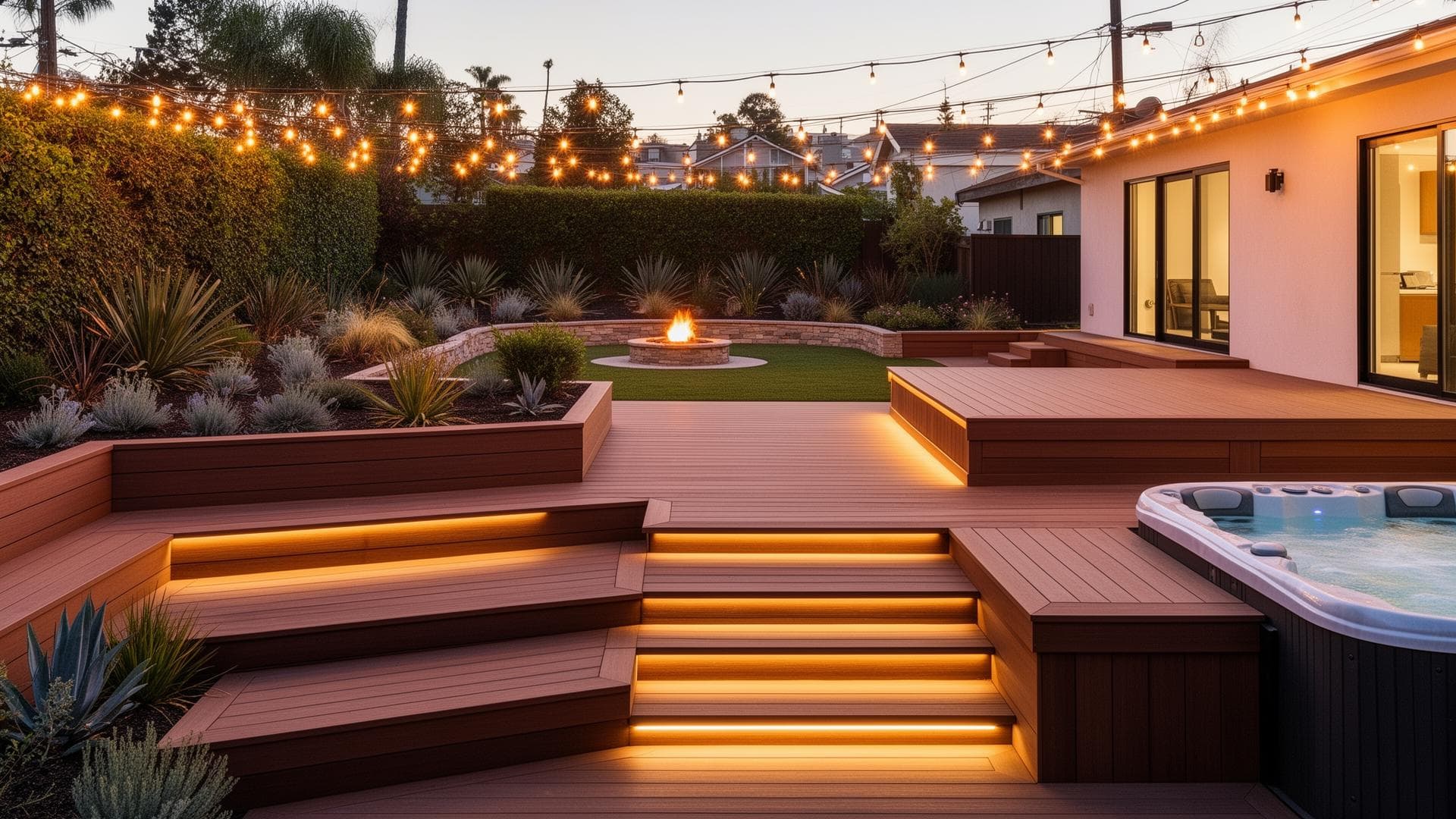
Service Guide
Deck Construction
in California
Composite, hardwood, and custom decks designed for year-round outdoor living. From backyard platforms to hillside view decks, your complete guide.
$25-$75
Per sq ft installed
Hillside
Specialist designs
Zero
Maintenance (composite)
30-50 Yrs
Composite lifespan
Understanding California Decks
Why a Deck Is the Ultimate Outdoor Living Platform
A deck is the quintessential outdoor living platform, a dedicated space that transitions seamlessly from indoor living area to the outdoors. In California, where outdoor living is a year-round way of life, a well-designed deck extends a home's functional living area by hundreds of square feet.
California presents unique opportunities for deck construction. The region's remarkable topography means that many of the state's most desirable properties are uniquely suited to dramatic deck designs. A hillside deck in the Hollywood Hills can transform an unusable slope into a cantilevered viewing platform with panoramic city views.
Did You Know?
California's hillside topography makes it one of the best states in America for dramatic deck designs. A properly designed hillside deck can add $50K to $150K to property value.
How Much Does a Deck Cost in California?
Deck construction in California costs $25 to $40 per square foot for pressure-treated wood, $35 to $55 per square foot for premium composite (Trex, TimberTech), and $50 to $75 per square foot for hardwood (Ipe, Cumaru). A standard 300 square foot deck typically costs $7,500 to $22,500. Multi-level, elevated, hillside, and rooftop decks cost significantly more due to structural engineering and deeper foundations.
California Wood Choices: Redwood, Composite & Fire-Resistant Options
Choosing the right decking material for California is a decision that affects cost, maintenance, lifespan, and fire safety. The state's intense UV exposure, dry summers, and wildfire risk make material selection more consequential here than in most other regions. Each option comes with trade-offs that depend on your budget, location, and how much time you want to spend on upkeep.
Redwood is the classic California deck material, and for good reason. At $8 to $15 per square foot for material alone, redwood is naturally resistant to rot, decay, and insect damage thanks to its tannin-rich heartwood. It is native to California and has been used in the state's residential construction for over a century. Redwood ages to a beautiful silver-gray patina if left untreated, or it can be sealed to preserve its warm reddish-brown tone. FSC-certified redwood is available from sustainably managed forests in Northern California, making it one of the most environmentally responsible lumber choices. The main drawback is that redwood requires periodic sealing or staining every 2 to 3 years and will eventually split and check without maintenance.
Composite decking from brands like Trex and TimberTech has become the dominant choice for deck building in California. Priced at $10 to $20 per square foot for materials, composite boards are made from a blend of recycled wood fiber and plastic polymer. They carry 25-year warranties against fading, staining, and structural defects. Composite decking never needs staining, sealing, or sanding. Premium lines like Trex Transcend and TimberTech Advanced PVC include cool-touch technology that keeps surface temperatures up to 30% lower than standard composite, an important consideration given California's 90-plus-degree summer days. The composite deck cost is higher upfront but lower over the lifetime of the deck because maintenance is essentially zero.
Pressure-treated pine is the budget option at $4 to $8 per square foot for material. It is the most affordable way to build a deck in California, but it comes with significant trade-offs. Pressure-treated lumber requires annual maintenance including cleaning, sealing, and stain application. In California's dry climate, it is prone to cracking, warping, and splitting. Typical lifespan is 10 to 15 years, roughly half that of composite. For homeowners building a temporary or low-budget deck, it remains a viable option, but the long-term cost of maintenance often closes the price gap with composite.
Fire-Resistant Decking for WUI Zones
If your property is in a Wildland-Urban Interface (WUI) zone or a Very High Fire Hazard Severity Zone (VHFHSZ), California building codes mandate ignition-resistant materials. Class A fire-rated composite decking (such as Fiberon and certain Trex lines) meets this requirement. Fire-retardant-treated (FRT) wood is another option, where lumber is pressure-treated with fire-retardant chemicals to achieve a Class A or B rating. Aluminum decking is non-combustible and carries the highest fire resistance of any decking material, though it costs $15 to $25 per square foot for materials. In fire-prone areas of the Hollywood Hills, Malibu, and the San Gabriel foothills, fire-resistant deck materials are not optional; they are code-mandated.
Deck Permits & California Building Codes
Building a deck in California without the proper permits is a risk no homeowner should take. Unpermitted construction can result in fines, mandatory demolition, and complications when selling your home. California's deck permit requirements are governed by a combination of the California Building Code (CBC), local municipal codes, and fire-zone regulations that vary by jurisdiction.
When is a deck permit required? In most California jurisdictions, any deck that is more than 30 inches above grade at any point requires a building permit. Decks attached to the house (ledger-mounted) also typically require permits regardless of height, because the attachment affects the structural integrity of the home. Freestanding ground-level decks under 30 inches may be exempt from permits in some cities, but this varies. Always verify with your local building department before starting construction.
Hillside Ordinance requirements apply to properties located on slopes of 15% or greater in many California jurisdictions. These ordinances impose additional restrictions on grading, retaining walls, and structural construction. Hillside deck projects often require geotechnical reports, soils engineering, and drainage plans in addition to standard structural engineering. In cities like Los Angeles, the Baseline Hillside Ordinance (BHO) limits the total floor area and impervious surface coverage on hillside lots, which can affect deck size and placement.
Structural engineering is required for any elevated deck, cantilevered design, or deck that will support significant loads such as hot tubs or outdoor kitchens. A licensed structural engineer will produce stamped calculations and drawings that demonstrate the deck meets California's seismic safety requirements (CBC Chapter 16) and load-bearing standards. Engineering fees typically range from $1,500 to $5,000 depending on complexity.
WUI Zone Compliance
Properties in Wildland-Urban Interface (WUI) zones must use ignition-resistant materials for all exterior construction, including decks. California Building Code Chapter 7A governs construction in fire hazard zones and requires materials to meet specific flame-spread and fire-resistance ratings. Your deck builder should verify your property's fire zone designation before specifying materials.
Typical permit timeline and costs: Plan for 2 to 6 weeks for permit approval in most California jurisdictions. Permit fees range from $200 to $1,500 depending on the scope of the project and the municipality. Los Angeles LADBS permits tend to be on the higher end. Expedited plan check services are available in some jurisdictions for an additional fee. Your deck contractor should handle the permit application process, but as the homeowner, you are ultimately responsible for ensuring the work is permitted and inspected.
Why It Matters
6 Reasons to Build a Deck in California
Extends Living Space 200 to 500+ sq ft
A deck adds dedicated outdoor living area that functions as a dining room, lounge, or entertainment space. In California's year-round outdoor climate, this is usable space nearly every day.
Tames California's Hillside Topography
Decks are the most effective way to create usable flat space on sloped, hillside, and uneven lots. A cantilevered deck transforms an unusable slope into your favorite room.
Zero Maintenance with Composite
Premium composite decking requires no staining, sealing, or sanding. Just occasional washing. No annual maintenance routine means more time enjoying the deck and less time working on it.
Cool-Touch Technology
Modern composites include heat-reflective technology that keeps surfaces up to 30% cooler than traditional wood on hot California summer days. Comfortable barefoot even in direct sun.
Significant Property Value
A quality deck is one of the highest-ROI outdoor investments, recovering 60 to 80% of cost at resale. Hillside view decks in premium California neighborhoods can return 100%+ of their investment.
Fire-Resistant Options Available
Class A fire-rated composite and aluminum decking materials are available for VHFHSZ properties. These provide the outdoor living space desired with the fire protection the location demands.
The Process
From Concept to Your Dream Deck
Consultation & Site Evaluation
Day 1The property is evaluated for available area, slope and soil conditions, underground utilities, and the homeowner's vision. For hillside and elevated decks, structural requirements and construction equipment access are assessed.
Design & Engineering
Week 1 to 3The design team creates detailed plans including deck shape, levels, railing style, material selection, lighting layout, and structural engineering. Elevated and hillside decks require structural engineering by a licensed engineer. 3D renderings show the finished deck from multiple perspectives.
Permitting
Week 2 to 6All decks over 30 inches above grade and all attached decks require building permits from LADBS. Structural calculations are prepared and submitted. Hillside decks may require additional review under the Hillside Ordinance. Permit processing typically takes 2 to 4 weeks for standard decks.
Construction
1 to 4 WeeksFootings are installed (concrete piers or helical piles), the structural frame is built (treated lumber or steel), joist systems are installed, decking boards are laid, railings are built, lighting is installed, and stairs and access points are completed.
Final Walkthrough & Warranty
CompletionA thorough inspection, city building inspection, site cleanup, and warranty documentation. Composite manufacturers offer 25-year to lifetime warranties covering structural and installation quality.
Compare Options
Decking Materials at a Glance
| Attribute | Pressure-Treated | Standard Composite | Premium Composite ★ | Ipe Hardwood | Aluminum |
|---|---|---|---|---|---|
| Cost / sq ft | $25 to $40/sqft | $35 to $50/sqft | $45 to $55/sqft | $50 to $75/sqft | $40 to $65/sqft |
| Lifespan | 10 to 15 years | 25 to 30 years | 30 to 50 years | 40 to 75+ years | 50+ years |
| Maintenance | High (stain annually) | Very Low | None | Moderate (oil annually) | None |
| Heat Retention | Moderate | Moderate | Low (cool-touch) | Moderate | High (gets hot) |
| Fire Rating | Not rated | Class B | Class A available | Class A natural | Non-combustible |
| UV Resistance | Poor (grays/splits) | Good | Excellent | Grays naturally | Excellent |
| Best For | Budget decks | Value + low maintenance | Premium no-maintenance | Luxury natural beauty | Fire zones/rooftop |
Editorial recommendation: Premium composite (Trex Transcend, TimberTech Pro) offers the best balance of beauty, durability, and zero maintenance for most California homes. For luxury applications, Ipe hardwood is unmatched. For VHFHSZ properties, aluminum or Class A composite provides fire safety with style.
California Local Guide
What California Homeowners Need to Know
Permits & Building Code
All decks over 30 inches above finished grade require a building permit from LADBS. Attached decks also require permits regardless of height. Requirements include structural plans, engineering calculations for elevated decks, and compliance with the California Building Code for live loads, guardrails (42 inches minimum), and stair specifications. Guardrail balusters must be spaced no more than 4 inches apart. Hillside decks face additional review under the California Hillside Ordinance.
Hillside & Elevated Deck Engineering
California's hillside topography creates tremendous opportunities for dramatic deck designs, but these projects require specialized engineering. Hillside decks typically need caisson or pier foundations drilled into stable soil or bedrock. Steel moment frames may be required for cantilevered sections. A soils report and structural engineering are mandatory. Despite the higher investment, hillside view decks in neighborhoods like Hollywood Hills, Mount Washington, and Eagle Rock generate exceptional returns.
Fire Zone Decking
In Very High Fire Hazard Severity Zones, decking materials must meet enhanced fire resistance standards. Non-combustible materials like aluminum decking are ideal. Class A fire-rated composites and treated hardwoods also qualify. The underside of elevated decks must also be enclosed or treated with fire-resistant materials to prevent ember accumulation. Check your fire zone at zimas.lacity.org.
Neighborhood Insights
Hollywood Hills / Bird Streets: cantilevered view decks with steel and cable railing. Westside (Santa Monica, Venice): ground-level and rooftop decks in modern aesthetics. Valley (Sherman Oaks, Encino): expansive ground-level decks, cool-touch composite essential. Northeast California (Eagle Rock, Mt. Washington): hillside view decks with artistic mixed-material design.
Real Homeowner Stories
What California Homeowners Say
"The contractor built a two-level composite deck on our hillside property that completely changed how we use our home. The upper level is our outdoor dining room with views of downtown. The lower level is a lounge with built-in seating. The cable railing keeps the views completely open. We've lived here for 12 years and never used the backyard until now."
"The Trex Transcend deck looks incredible and we literally do nothing to maintain it."
Sarah K. · Culver City
"Our rooftop deck added a whole new room to our house. Best money we've ever spent."
Marcus T. · West California
"The cool-touch composite stays comfortable even in August. We're on it barefoot daily."
Diana L. · Woodland Hills
"Professional engineering, beautiful design, flawless construction. Above and beyond."
Chris P. · Silver Lake
"The fire-rated aluminum deck gave us the outdoor space we wanted in our fire zone."
Elena M. · Pacific Palisades
Ready to start your deck project?
Get matched with 2-3 vetted California contractors. 100% free, no obligation.
Find My ProsCommon Questions
Deck FAQ
Cost Index
Decks budget ranges
See 2026 planning ranges, cost drivers, budget tiers, and timeline notes for this project type.
Open cost dataMethodology
How Golden Yards builds ranges
Review how we normalize California costs, site conditions, source limits, and editorial updates.
Read methodologyGlossary
Terms that change bids
Define base prep, drainage, allowances, setbacks, permits, and other outdoor project terms.
Browse termsTerms in this guide
Quick definitions for the bid language that changes scope, cost, and contractor comparison.
Keep Reading
Explore More California Guides
Your Next Step: Finding a Deck Builder in California
Browse top-rated deck builders in California, compare options, and get matched for free.
Start Project MatchFree to use · Independent reviews · We respond within 24 hours
Recent articles in this topic
Specific reporting and how-to from the Decks beat across California.
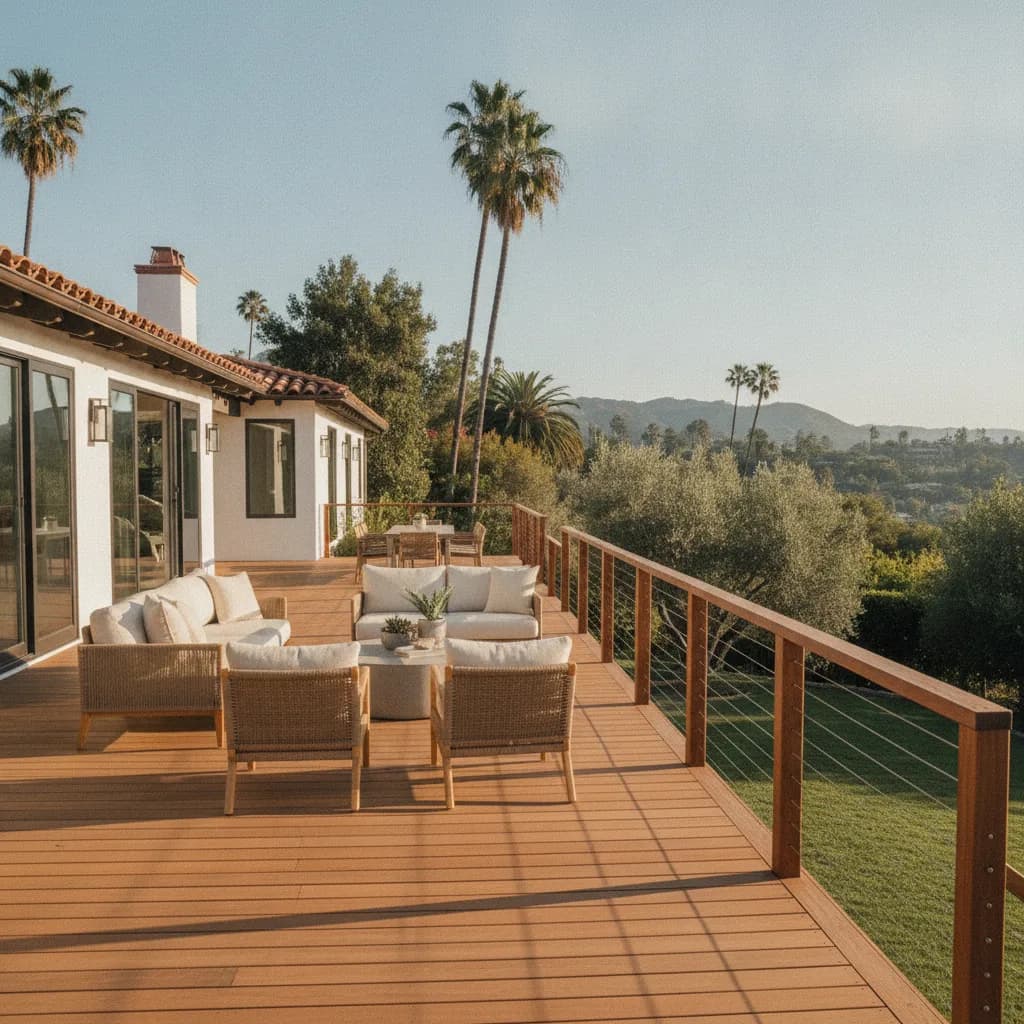
Cost Guide
The Real Price of a Deck in Beverly Hills for 2026
A mid-range 400 sq. ft. composite deck in Beverly Hills costs $45k-$95k in 2026. We break down the hidden costs of hillside engineering, permitting, and premium materials driving local project budgets.
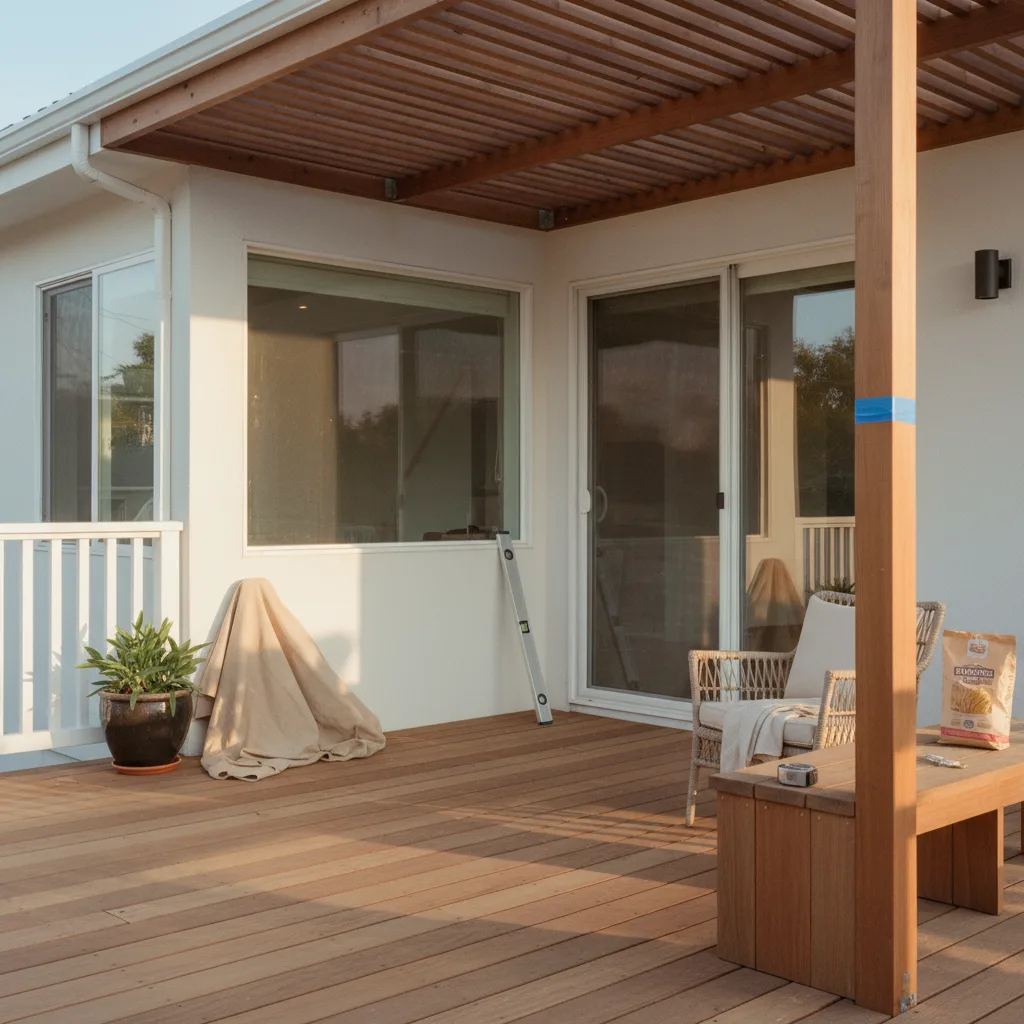
Cost Guide
Deck Cost in Newport Beach (2026): What Homeowners Actually Pay
A new deck in Newport Beach in 2026 costs between $45,000 and $98,000. Learn about the hidden costs driven by coastal materials, local labor rates, and complex permitting that every homeowner should know.
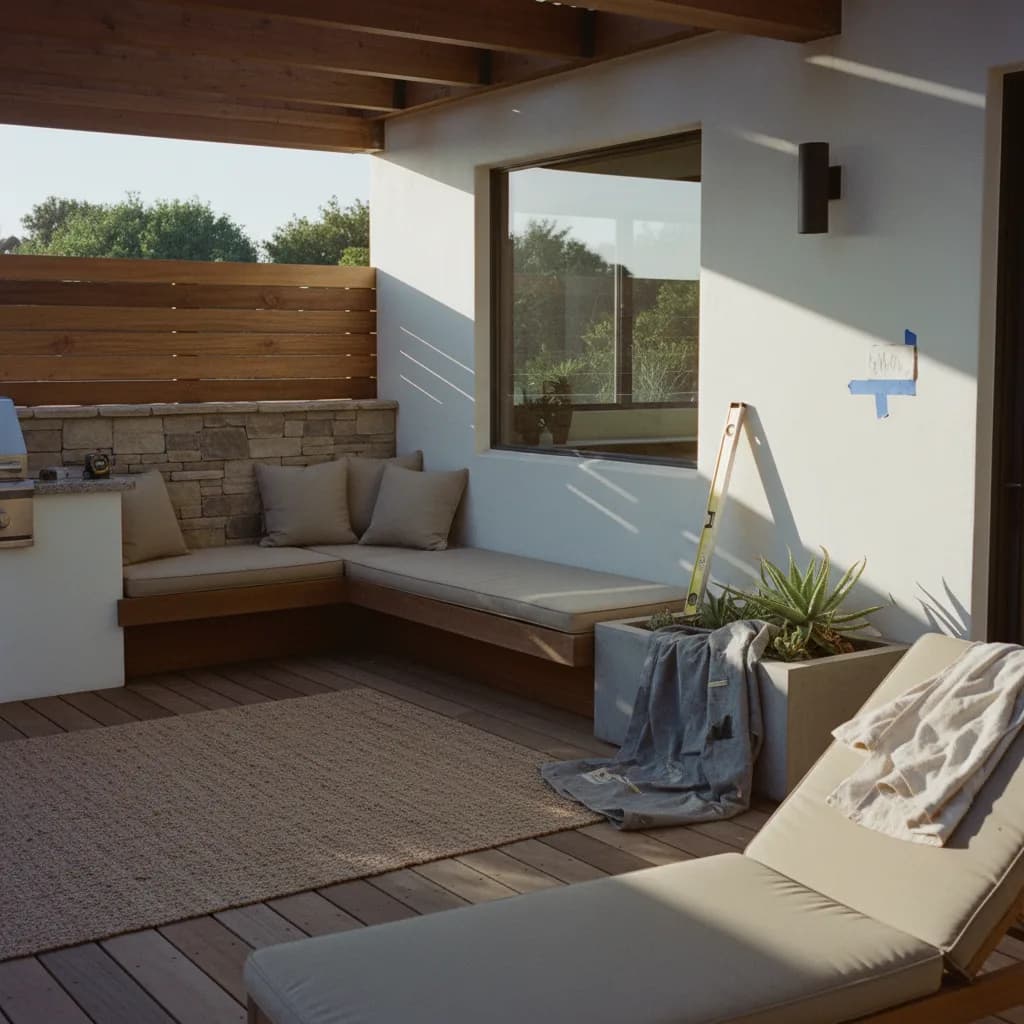
Process
How a Deck Build in Malibu Actually Goes
Building a deck in Malibu in 2026 is a 6- to 12-month journey, dominated by the lengthy Coastal Development Permit process. Learn the real timeline, from design and permitting to the final build.
Comparison
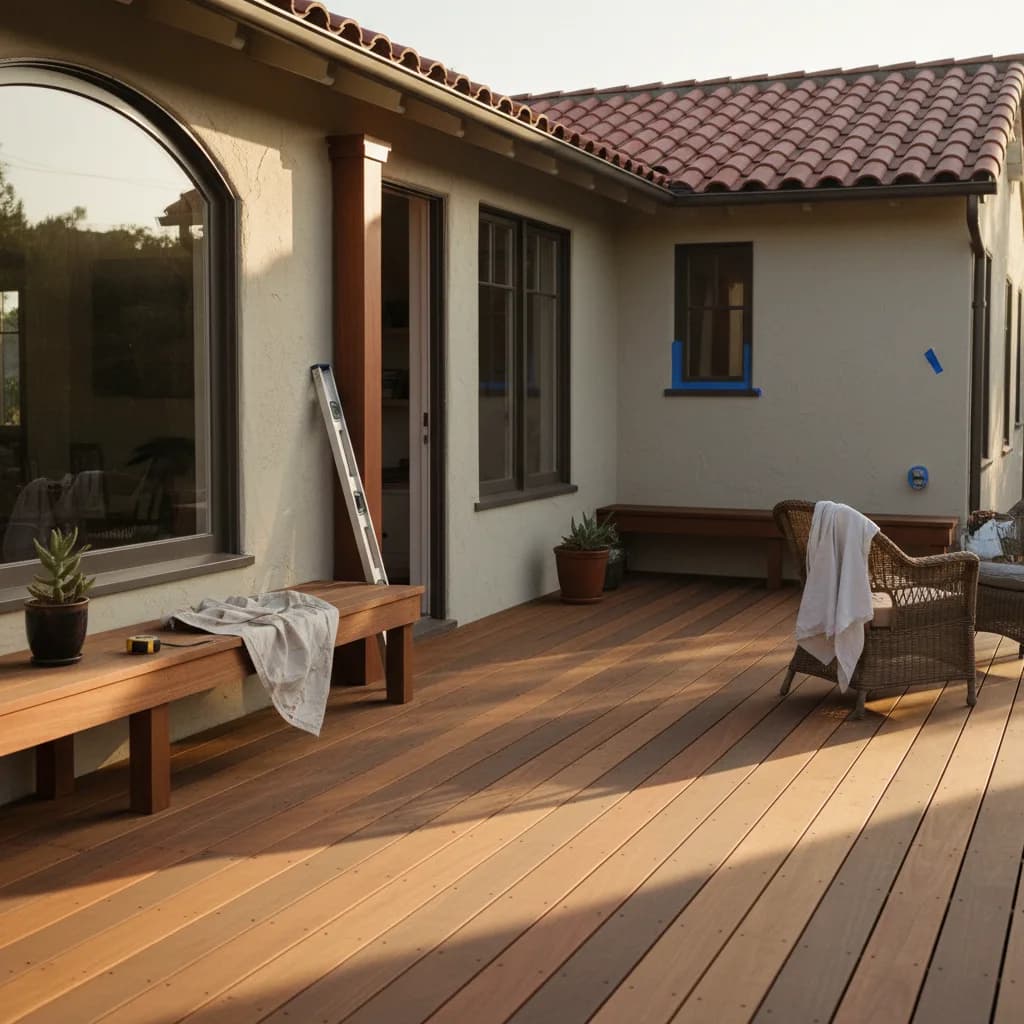
Deck: Premium vs. Mid-Tier in Pasadena
A real-world 2026 cost comparison for building a deck in Pasadena. We break down the budget, maintenance, and hidden fees for premium Ipe hardwood versus mid-tier Trex composite decking.
Trends
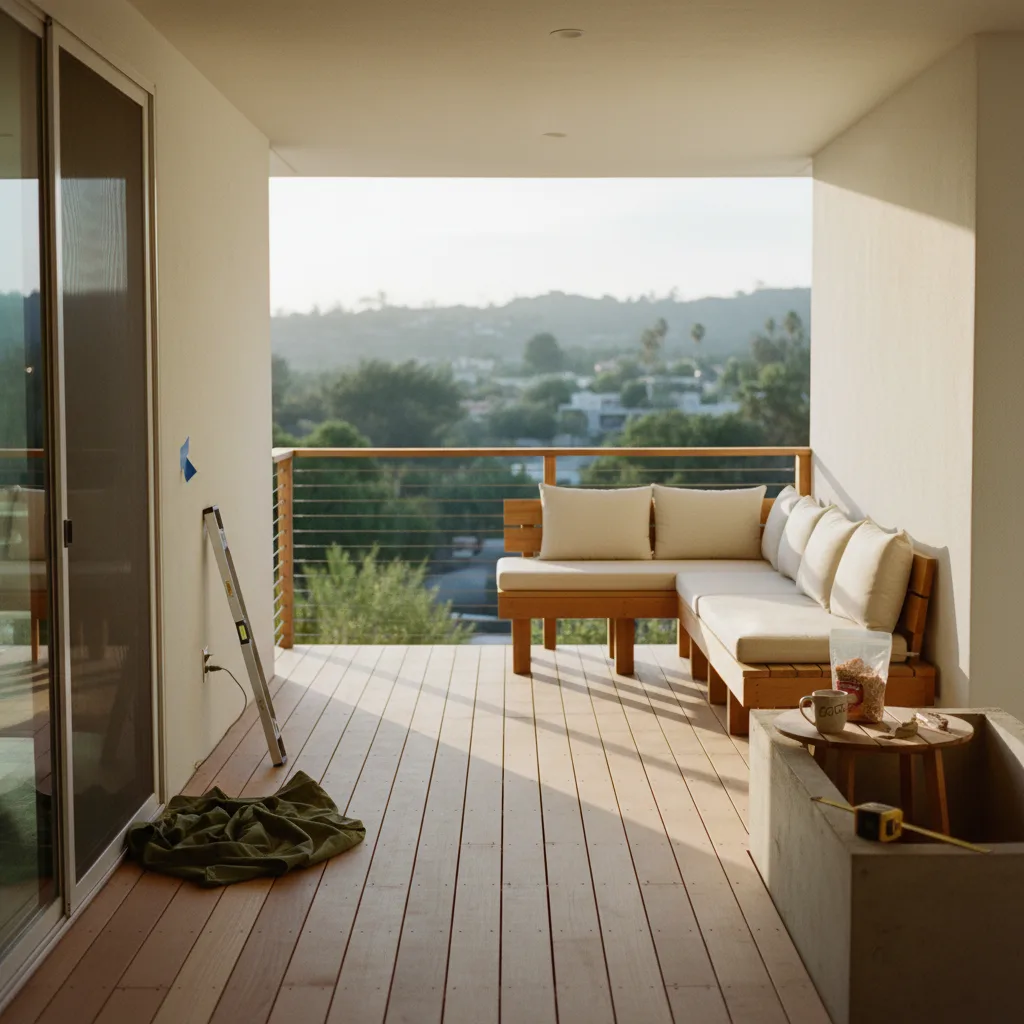
What's Changing in Los Angeles Decks for 2026
In 2026, Los Angeles decks are being redefined by resilience. Discover the top trends, from fire-resistant steel framing and heat-reflective PVC decking to the hidden costs of hillside engineering.
Mistakes
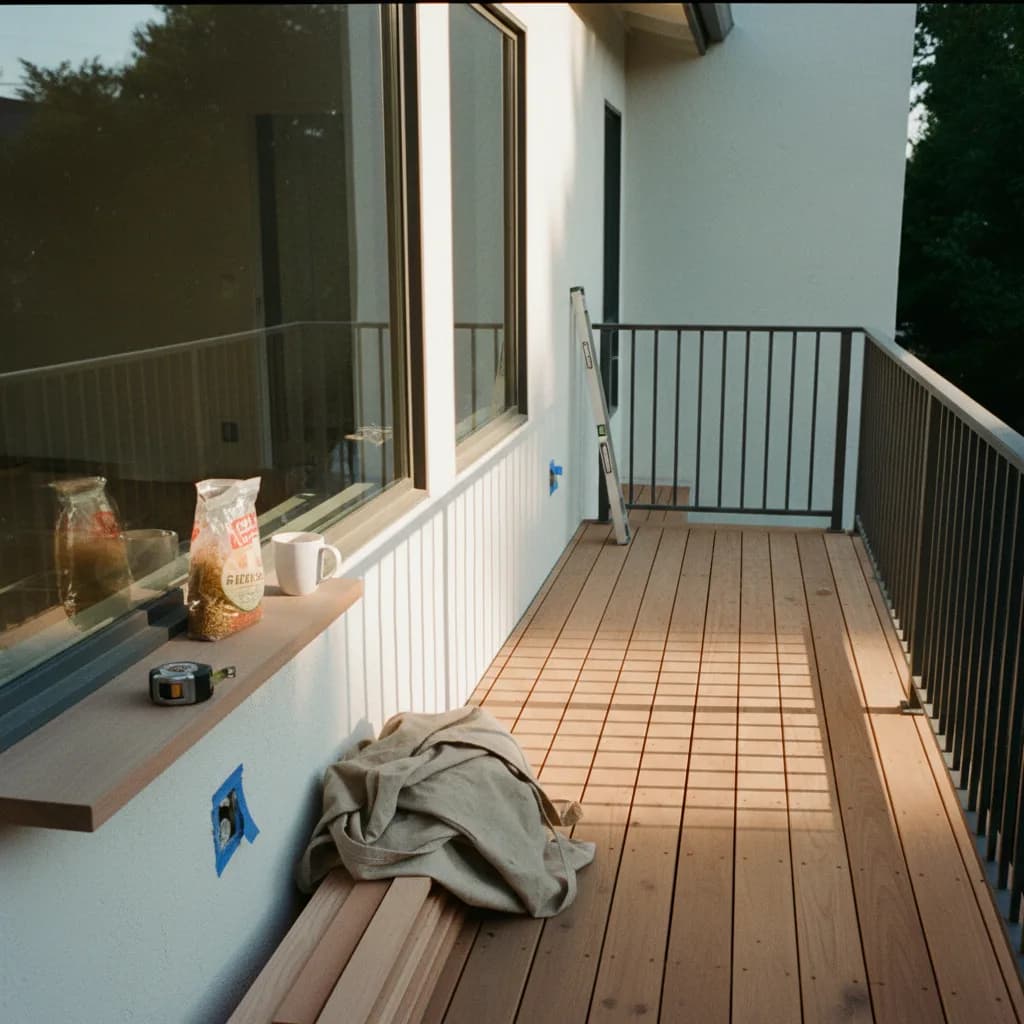
Why a Deck Project in San Jose Goes Over Budget
A San Jose deck project often goes over budget not because of materials, but due to unquoted site prep for clay soil, permit fees, and utility work. Here’s how to stop the budget creep.
Process
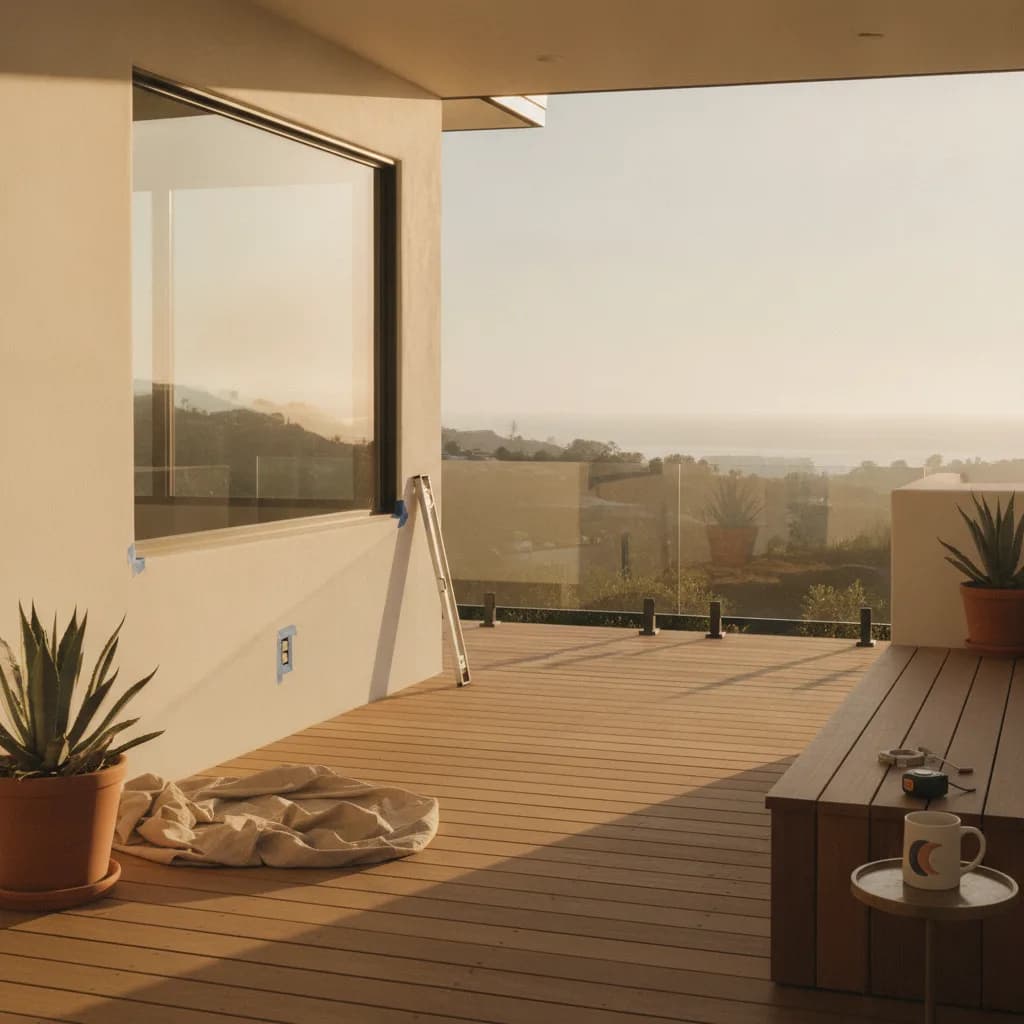
The 4-Phase Deck Build in San Diego
Building a deck in San Diego takes 12 to 24 weeks, not the 4 weeks brochures suggest. We break down the four phases, from permitting delays at the DSD to the real cost of construction in 2026.
Mistakes
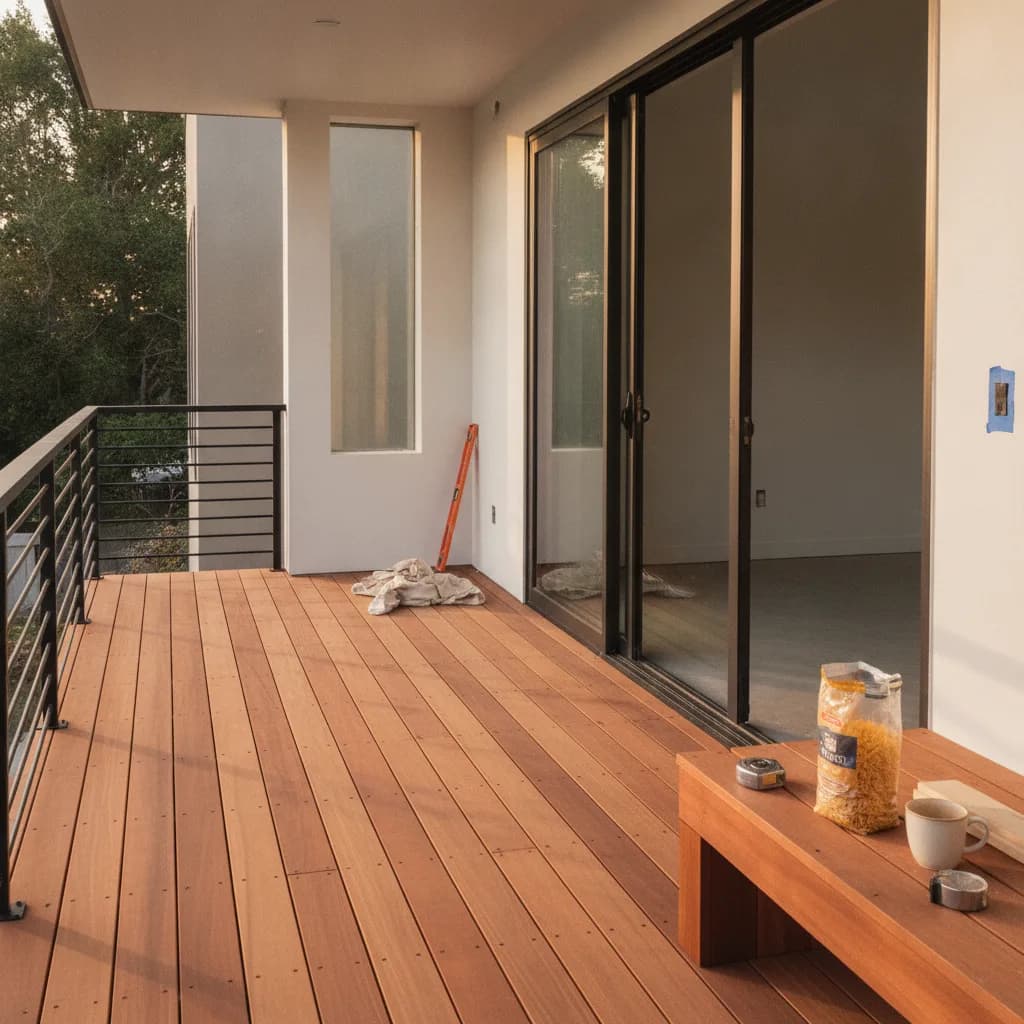
What Most Oakland Homeowners Get Wrong About Decks
Building a deck in Oakland? The biggest mistakes homeowners make are underestimating hillside engineering costs, choosing the wrong materials for the microclimate, and skipping permits. Here's how to avoid a budget disaster.
Comprehensive Guide
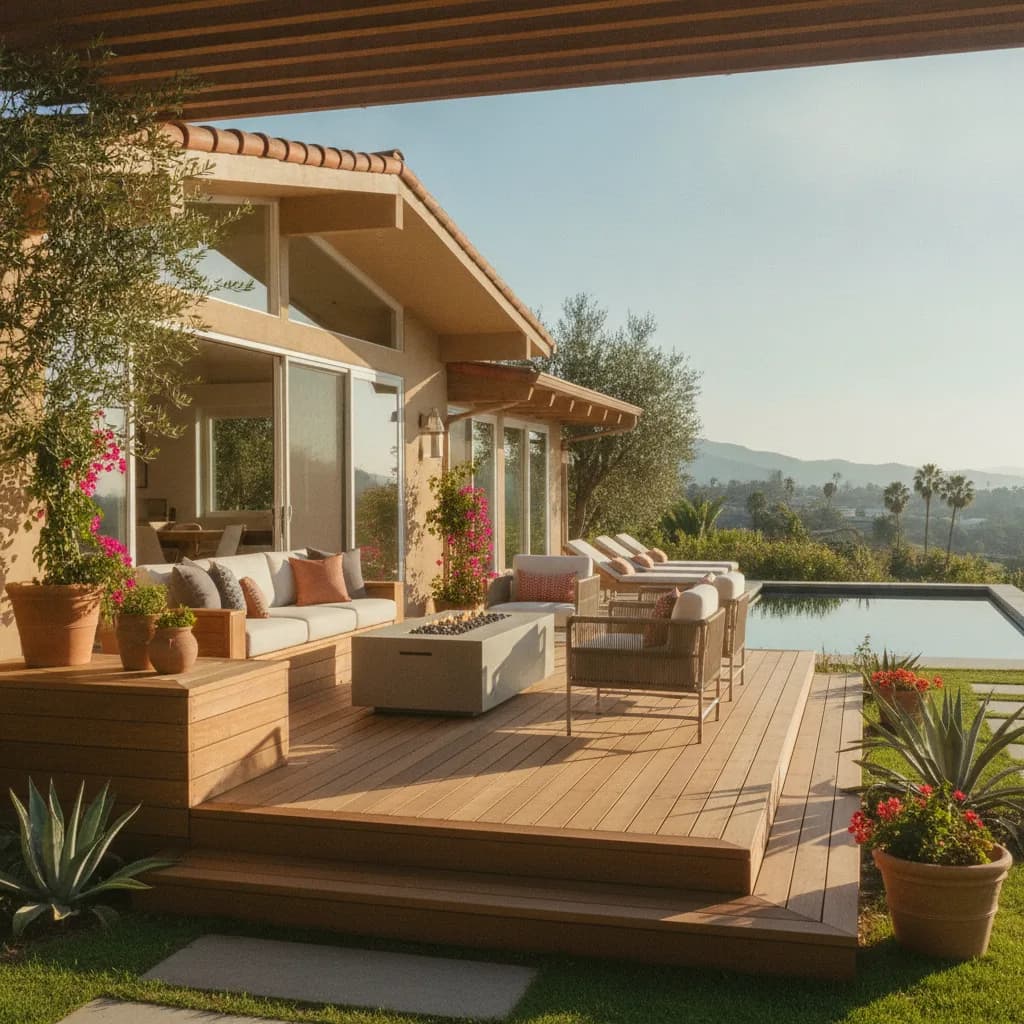
Los Angeles Deck Building: Your Comprehensive Guide to Design, Materials, Permits, and Costs for Southern California Outdoor Living
Los Angeles Deck Building: Your Comprehensive Guide to Design, Materials, Permits, and Costs for Southern California Outdoor Living - practical 2026 guide wi...