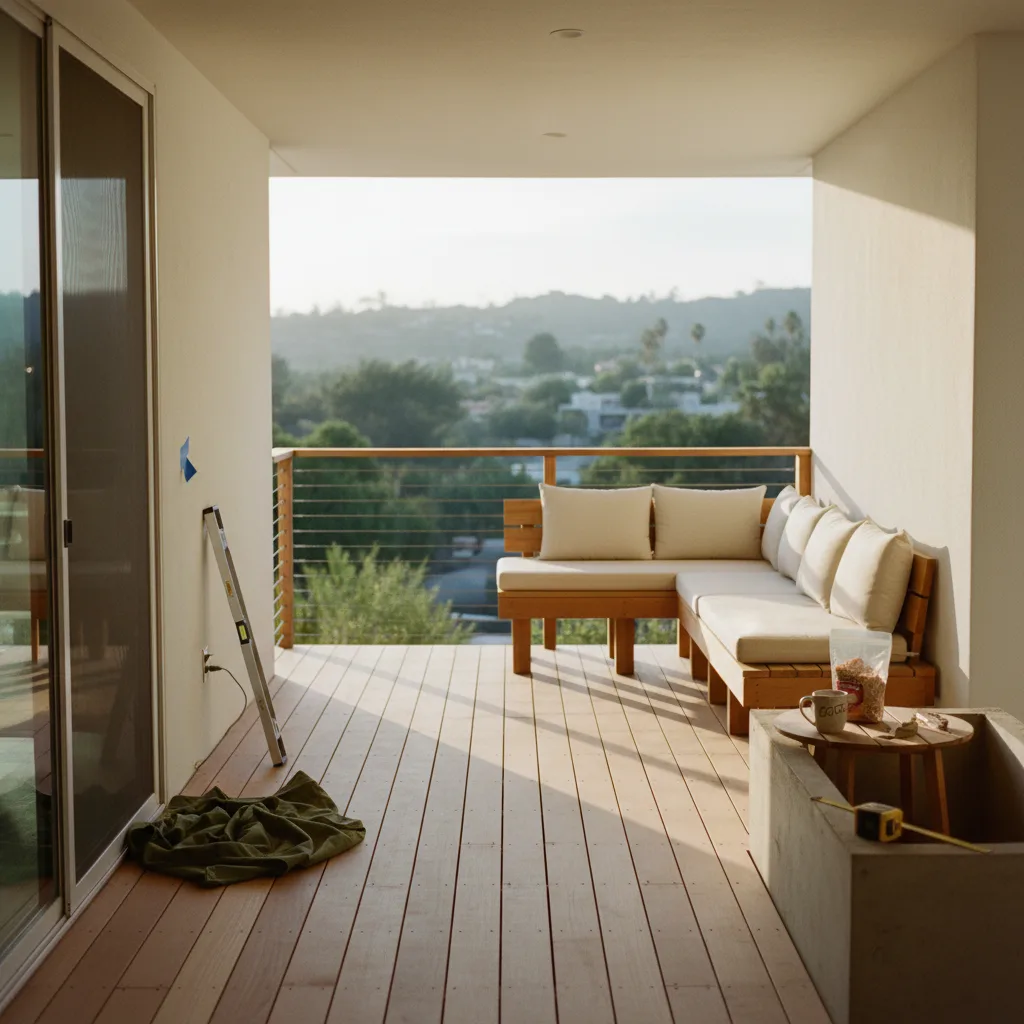
The backyard deck in Los Angeles is no longer a simple redwood platform for a grill. It has become a non-negotiable extension of the home’s living space, engineered for resilience against fire, heat, and densification. In 2026, building a new 400-square-foot composite deck costs over 30 percent more than it did just three years ago, driven by a fundamental shift from wood framing and basic decking to steel structures and climate-adapted materials that last a lifetime.
In a Nutshell
- Umbrella Theme: The Resilient Outdoor Room. Decks are now designed as permanent, multi-zone extensions of the home, built to withstand Southern California’s specific climate and urban challenges.
- What's Trending: Non-combustible steel framing, heat-reflective composite and PVC decking, and integrated privacy screens.
- What's Being Replaced: Pressure-treated wood framing, basic composite decking without cooling tech, and afterthought privacy solutions.
- What's Next: Decks fully integrated with landscape compliance, featuring built-in planters for MWELO, and pre-engineered for hillside stabilization and seismic codes from day one.
Trend 1: Steel Framing is the New Standard, Not an Upgrade
For decades, pressure-treated lumber was the default for deck substructures. In 2026, light-gauge steel framing is the clear successor, particularly in the Wildland-Urban Interface (WUI) zones covering the Hollywood Hills and parts of the San Gabriel Valley. Homeowners are choosing steel systems like Fortress Evolution or Trex Elevations for their superior fire resistance, dimensional stability, and longevity. A recent project we tracked in Sherman Oaks saw the framing bid for steel come in only 18 percent higher than lumber, a premium buyers are willing to pay for peace of mind. As lumber prices remain volatile and fire codes tighten, expect steel to become the baseline requirement for any permitted deck project in high-fire-risk areas by 2028.
Trend 2: Heat-Reflective Decking Goes Mainstream
The urban heat island effect is a tangible reality in the San Fernando Valley, and standard composite decks can become unusable in direct summer sun. This has pushed heat-mitigating technology from a niche feature to a must-have. Decking lines like TimberTech’s AZEK Advanced PVC collection and Trex's Transcend Lineage series are now the top sellers in Los Angeles showrooms. They use proprietary polymer blends and lighter color palettes to reflect solar radiation, staying significantly cooler to the touch. In a Mar Vista project, a homeowner measured a 25-degree surface temperature difference between her old composite deck and her new TimberTech AZEK boards in 'Coastline'. This is no longer an invisible feature; it's a primary driver of brand selection.
Trend 3: The 'Deck-to-Grade' Patio Transition
Ready to compare vetted project options?
Use Project Match privately when your scope is clear enough for contractor conversations.
Start Project MatchHigh, railed-off decks are giving way to low-profile structures that flow directly into patios and gardens. In neighborhoods with flat lots like Culver City and West Adams, designers are creating 'deck-to-grade' transitions where the deck surface is less than 18 inches off the ground. This design choice cleverly avoids the need for costly guardrails, which can add $150 to $400 per linear foot to a project. The result is a more integrated, expansive outdoor living area that blurs the lines between deck, patio, and lawn. It’s a budget-savvy move that also feels more open and connected to the landscape, a trend driven by the desire for smooth indoor-outdoor flow.
Trend 4: Integrated Planters for MWELO Compliance
California's Model Water Efficient Landscape Ordinance (MWELO) applies to new landscape projects over 500 square feet, a threshold many deck projects cross. Smart deck contractors in Los Angeles are now designing decks with integrated perimeter planters from the start. These built-in features, often framed with the same steel and clad in the same composite material, house a drought-tolerant plant palette that helps the entire project meet its water budget requirements. A recent Eagle Rock project used this strategy, incorporating a long planter with agaves and salvias to satisfy MWELO without sacrificing usable deck space. This turns a regulatory hurdle into a beautiful, functional design element.
Trend 5: Cable Railing Gives Way to Glass and Vertical Balusters
For years, stainless steel cable railing was the go-to for a modern look. Today, its popularity is waning in favor of two alternatives. In view-centric hillside homes in Silver Lake and the Pacific Palisades, tempered glass panels offer an even more unobstructed perspective and superior wind blocking. For the popular modern farmhouse and Spanish revival styles found across the city, slim, vertical powder-coated aluminum balusters provide a clean, contemporary look without the tensioning maintenance that cable systems require. Decking contractors report that while glass is a premium at around $350 per linear foot installed, the vertical baluster systems are often cost-competitive with cable.
Trend 6: The Outdoor Kitchen 'Outpost' Replaces the Full Grill Island
The monolithic, stucco-and-granite BBQ island is officially dated. The 2026 trend is the 'outpost' concept: smaller, dedicated stations for specific cooking functions. Instead of a single massive built-in, a homeowner might install just a high-end built-in side burner, like a Lynx Sedona, for searing and wok cooking, paired with a freestanding pellet smoker like a Traeger Timberline that uses a dedicated GFCI outlet. This approach is more flexible, cost-effective, and space-efficient. It acknowledges how people actually cook outdoors, often using multiple specialized appliances rather than a single oversized gas grill. Budgeting for the gas line and electrical service (often a $2,500 surprise) remains critical.
Trend 7: Privacy Screens are a Non-Negotiable Add-On
With densification from SB 9 lot splits and ADU construction, privacy is no longer an assumed luxury in Los Angeles. Deck designs now incorporate privacy solutions from the initial concept. We are seeing fewer lattice panels and more sophisticated, architectural screens. Popular options include laser-cut powder-coated aluminum panels, horizontal slat screens made from ipe or matching composite fascia boards, and integrated trellis walls designed for climbing plants. These are not afterthoughts; they are quoted as a primary line item, often adding $4,000 to $9,000 to a project, depending on the material and linear footage.
Trend 8: Hillside Deck Engineering Faces Deeper Scrutiny
The Los Angeles Department of Building and Safety (LADBS) is applying stricter review standards to hillside construction, and decks are no exception. For homes in areas like Mount Washington or Laurel Canyon, the days of simple post-and-pier footings are over. Structural engineering plans now routinely specify deeper, reinforced concrete caissons to ensure stability in seismic events and prevent soil creep. This has a significant impact on budget and timeline. The structural engineering fees alone can run $4,000 to $8,000, and the cost of drilling and pouring 15-foot-deep caissons can add $20,000 or more to the project. This is the single biggest hidden cost that surprises homeowners building on a slope.
Representative Los Angeles Deck Projects from 2026
Three representative projects from 2026, scoped similarly, reconstructed from Golden Yards Magazine's Project of the Day network and used here in aggregate form:
- Eagle Rock Refresh ($28,500): A 250-square-foot project involving the removal of old wood decking and railing. The existing frame was salvaged. The homeowner chose Trex Enhance decking in a standard color and a simple powder-coated aluminum railing. The cost reflects materials and labor for a straightforward re-skinning.
- Silver Lake Hillside Deck ($92,000): A new 400-square-foot deck on a moderate slope. This project required a full structural engineering plan, four 12-foot-deep concrete caissons, and a Fortress Evolution steel frame. The decking was TimberTech AZEK with a glass panel railing system to preserve views. The price includes engineering, geological report, and extensive labor for the foundation work.
- Sherman Oaks Entertainer's Deck ($145,000): A 650-square-foot multi-level deck replacing an old concrete patio. The project used a steel frame, Trex Transcend Lineage decking, a custom-built privacy screen, integrated planters, and a small kitchen outpost with a dedicated gas line and electrical subpanel run by LADWP. This represents a full outdoor room replacement.
Sources & Methodology
See the Golden Yards Methodology for how sources are reviewed, ranges are normalized, and planning-data limits are handled.
Cost ranges in this guide draw on the following named industry sources, public agency datasets, and Golden Yards Magazine editorial research.
- North American Deck and Railing Association (NADRA), 2026 Market Report (2026)
- Fortress Building Products, 2026 Dealer Survey (2026)
- California Department of Industrial Relations, Los Angeles County Prevailing Wage Data (2026)
- Los Angeles Department of Building and Safety (LADBS), Plan Check Correction Sheets (2025-2026)
- Golden Yards Magazine, Project of the Day Network (2026)
- Trex Company, Inc., Q4 2025 Investor Report (2026)
Golden Yards Magazine Take
The evolution of the Los Angeles deck is a direct response to the city’s environmental and social pressures. The unifying thread across these trends is a move toward permanence and resilience. Homeowners are no longer building for a decade; they are building for a generation. The investment in non-combustible steel framing is a direct hedge against wildfire risk. The demand for heat-reflective decking is a practical adaptation to rising temperatures. The integration of privacy screens and MWELO-compliant planters shows a sophisticated response to urban density and water scarcity. This isn't about fleeting aesthetics. It's about making a long-term, high-performance investment in your home's core infrastructure, creating functional living space that can withstand the specific challenges of Southern California in the decades to come.
Frequently Asked Questions
How much does a new deck cost in Los Angeles in 2026?
For a professionally installed deck, homeowners in Los Angeles can expect to pay between $90 and $200 per square foot. A simple 200-square-foot composite deck can start lower, around $18,000 for a re-decking project on an existing frame, but a new build is more typical. A mid-range 400-square-foot deck with a steel frame, PVC decking, and aluminum railings will typically cost between $48,000 and $65,000. High-end projects on hillsides with engineering requirements, premium materials, and features like lighting or privacy screens can easily exceed $100,000. These costs are higher in Southern California due to labor rates, detailed in the California Department of Industrial Relations prevailing wage data for Los Angeles County, and stringent building codes.
What's the difference between composite and PVC decking?
While often grouped together, they are different products. Standard composite decking, like Trex's Enhance line, is made from a mix of recycled wood fibers and plastics. It's durable and low-maintenance compared to wood, but can be susceptible to staining and retains more heat. PVC decking, like TimberTech's AZEK line, contains no wood fiber at all. It's made purely from polyvinyl chloride. This makes it more resistant to moisture, mold, and stains, and it generally stays cooler to the touch. PVC is typically at a higher price point, costing 15 to 25 percent more than entry-level composites, but its performance in hot, sunny climates often justifies the investment for Los Angeles homeowners.
Do I need a permit for a deck in Los Angeles?
Almost certainly, yes. The Los Angeles Department of Building and Safety (LADBS) requires a permit for any deck that is more than 30 inches above grade, attached to the house, or serves an exit door, regardless of height. Given that most functional decks meet at least one of these criteria, you should plan for the permitting process. This involves submitting architectural and structural plans for review. The process can add four to eight weeks and several thousand dollars to your project timeline and budget. A qualified deck contractor in Los Angeles will handle this process for you. You can learn more in our complete guide to deck permits.
How should I budget for hidden deck costs?
The initial quote from a deck contractor Los Angeles often covers the visible structure: framing, decking, and railings. Homeowners need to budget for several common scope items that are often excluded. These include structural engineering plans ($3,000-$8,000, especially for hillside properties), soil reports ($2,000-$4,000), and permit fees ($1,500-$3,000). Electrical work for lighting and outlets can add another $2,000, while a gas line for a grill or fire pit can cost $2,500. The National Association of Home Builders recommends a ten to fifteen percent contingency on renovations in homes over thirty years old. This fund covers unforeseen issues like discovering poor soil conditions or needing to upgrade your main electrical panel to support new outdoor features.
Ready to start your deck project?
Find My ProsFrequently Asked Questions
How much does a new deck cost in Los Angeles in 2026?
In Los Angeles, a new deck costs between $90 and $200 per square foot. A simple 200-square-foot re-decking project starts around $18,000. A mid-range 400-square-foot deck costs $48,000 to $65,000, while high-end hillside projects with premium features can easily exceed $100,000.
A basic project, such as re-decking a 200-square-foot area on an existing frame, can begin around $18,000. A more common new build, like a 400-square-foot deck with a steel frame, PVC decking, and aluminum railings, will typically cost between $48,000 and $65,000.
High-end projects easily surpass $100,000, especially on hillsides requiring engineering, premium materials, and features like lighting or privacy screens. Costs in Southern California are higher due to labor rates, detailed in the California Department of Industrial Relations prevailing wage data for Los Angeles County, and stringent building codes.
What's the difference between composite and PVC decking?
Composite decking is a mix of recycled wood fibers and plastic, while PVC decking is pure polyvinyl chloride with no wood. This makes PVC, like TimberTech's AZEK line, more resistant to moisture, mold, and stains. Composites, such as Trex's Enhance line, can stain and retain more heat, while PVC generally stays cooler.
Although both are durable, low-maintenance options compared to wood, their composition affects performance. Standard composite decking contains wood fibers, which can make it susceptible to staining. Because it has no organic material, PVC decking is highly resistant to moisture and mold, making it a strong choice for damp environments.
PVC is typically at a higher price point, costing 15 to 25 percent more than entry-level composite boards. However, its performance in hot, sunny climates often justifies the investment. For many Los Angeles homeowners, PVC's ability to stay cooler to the touch is a significant advantage.
Do I need a permit for a deck in Los Angeles?
Yes, you almost certainly need a permit for a deck in Los Angeles. The Los Angeles Department of Building and Safety (LADBS) requires one for any deck over 30 inches above grade, attached to the house, or serving an exit door. Since most decks meet at least one of these criteria, you should expect to get a permit.
Because most functional decks meet at least one of the LADBS requirements, you should plan for the permitting process. This involves submitting architectural and structural plans for review, which can add four to eight weeks and several thousand dollars to your project timeline and budget. A qualified deck contractor in Los Angeles will handle this process for you.
How should I budget for hidden deck costs?
Budget for hidden deck costs in Los Angeles beyond the initial contractor quote. Plan for structural engineering ($3,000-$8,000), soil reports ($2,000-$4,000), and permit fees ($1,500-$3,000). Electrical work can add $2,000 and a gas line $2,500. The National Association of Home Builders also recommends a contingency fund for older homes.
A contractor's quote often covers only the visible structure: framing, decking, and railings. The added costs for engineering and soil reports are particularly common for hillside properties. For homes over thirty years old, the National Association of Home Builders recommends a ten to fifteen percent contingency. This fund is for unforeseen issues, like discovering poor soil conditions or needing to upgrade an electrical panel to support new outdoor features.