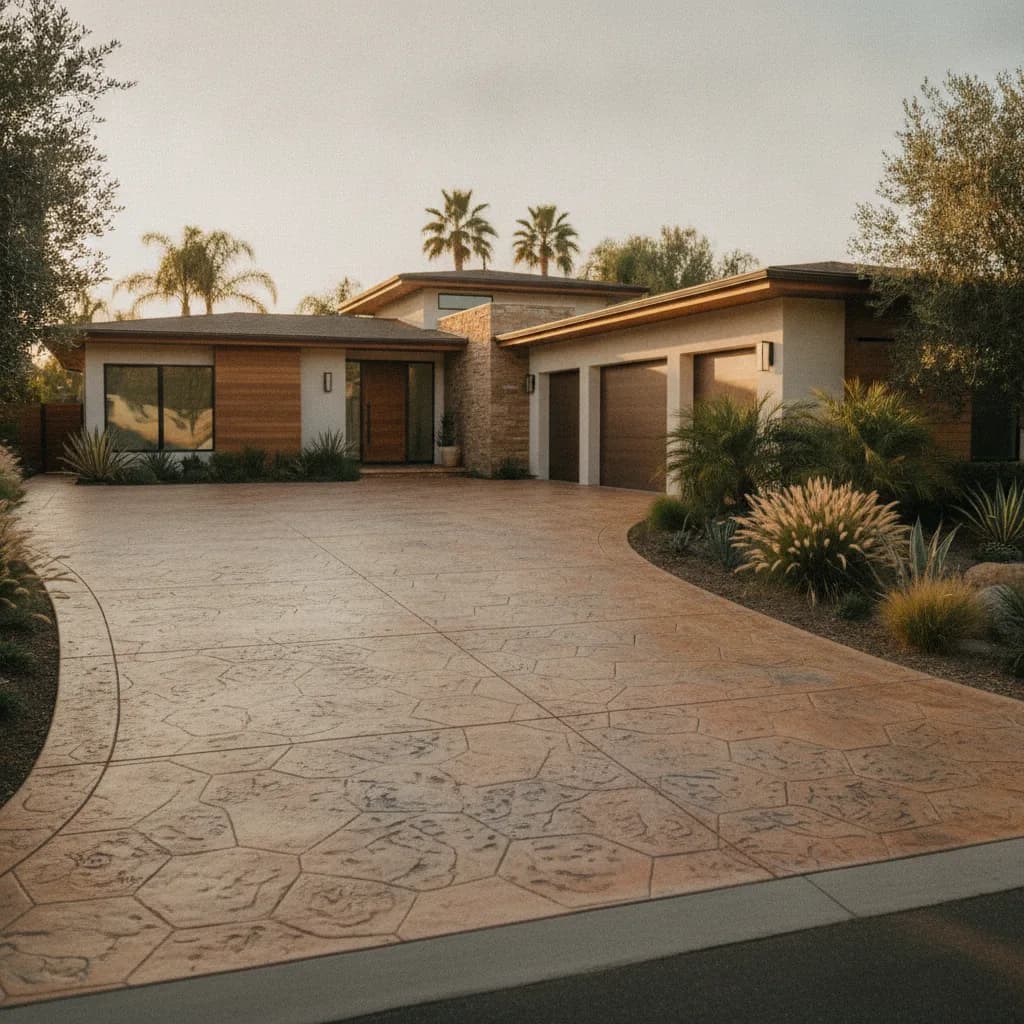
Your Guide to Stamped Concrete Driveway Costs in Los Angeles: A Golden Yards Magazine Exclusive
In the sprawling, vibrant landscape of Los Angeles, where architectural styles range from classic Spanish Colonial to sleek modern marvels, every detail of a home contributes to its unique character and curb appeal. For homeowners in Beverly Hills, Pasadena, Santa Monica, West Adams, Silver Lake, Encino, Hollywood Hills, Brentwood, Sherman Oaks, and Glendale, the driveway is more than just a path to the garage; it's a critical element of the home's first impression and an investment in its overall value.
Among the myriad options for driveway surfacing, stamped concrete has emerged as a particularly attractive choice, offering an unparalleled blend of aesthetic versatility, durability, and cost-effectiveness. It allows you to mimic the luxurious look of natural stone, brick, or even wood at a fraction of the price, making it a popular upgrade for discerning Los Angeles residents. However, navigating the costs associated with a stamped concrete driveway in a market as dynamic as LA can feel complex. This comprehensive guide from Golden Yards Magazine will demystify the pricing, explore the factors influencing your investment, and equip you with the knowledge to make an informed decision for your Los Angeles home.
What is Stamped Concrete and Why is it Popular in Los Angeles?
Stamped concrete is a concrete surface that has been specially treated to replicate the appearance of other materials, and it is popular in Los Angeles due to its aesthetic flexibility, durability, and value. This innovative technique involves pouring a concrete slab, then, while the concrete is still wet, applying patterns and textures using rubber stamps. These stamps are designed to mimic a wide array of natural and manufactured materials, including cobblestone, slate, brick, wood planks, and flagstone. Integral color, surface-applied color hardeners, and release agents are used to achieve realistic hues and depth, creating a convincing illusion that can dramatically enhance a property's visual appeal.
The popularity of stamped concrete in Los Angeles stems from several key advantages perfectly suited to the city's diverse architectural heritage and homeowner desires. Firstly, its aesthetic versatility is unmatched; whether you own a Mediterranean-style villa in Hollywood Hills, a Craftsman bungalow in Pasadena, a contemporary residence in Brentwood, or a historic home in West Adams, there's a stamped concrete pattern and color scheme to complement your property. Imagine a rich, earthy cobblestone pattern for a traditional home in Encino, or a sleek, modern slate look for a coastal property in Santa Monica.
Secondly, durability is a major draw. Concrete is inherently strong and resilient, capable of withstanding the heavy traffic and varying weather conditions that can occur even in sunny Southern California. Once properly sealed, stamped concrete resists oil stains, tire marks, and general wear and tear far better than many alternative materials, requiring minimal maintenance. This longevity translates into a smart, long-term investment for homeowners in high-value areas like Beverly Hills and Sherman Oaks.
Finally, stamped concrete offers significant value. While it provides the luxurious look of premium materials, its installation cost is typically much lower than that of genuine stone or brick. This cost-effectiveness, combined with its ability to significantly boost curb appeal and property value, makes it an attractive proposition for anyone looking to upgrade their home in competitive real estate markets across Los Angeles, from Glendale to Silver Lake.
What Factors Influence Stamped Concrete Driveway Costs in Los Angeles?
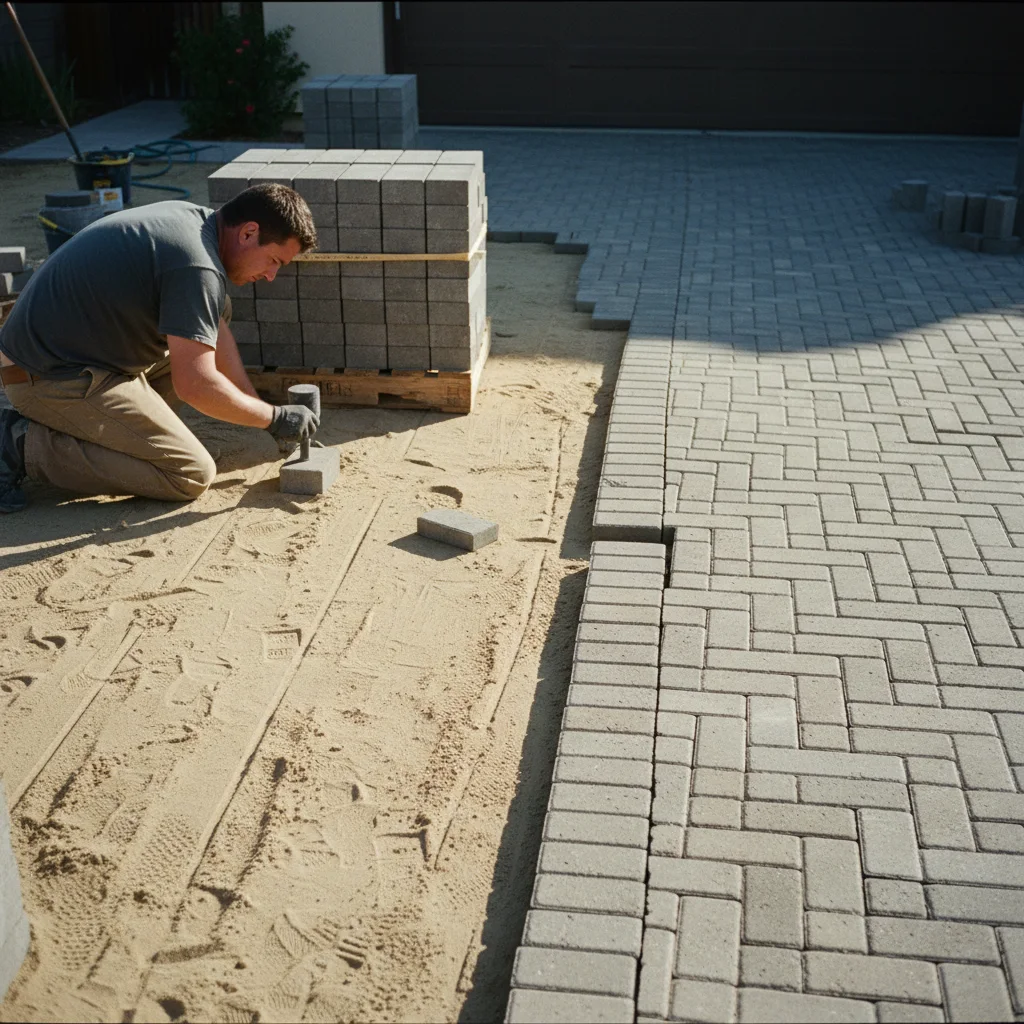
The cost of a stamped concrete driveway in Los Angeles is not a one-size-fits-all figure; it is heavily influenced by a multitude of factors, each contributing to the overall complexity and price of the project. Understanding these variables is crucial for any homeowner seeking an accurate estimate.
How Does Driveway Size and Complexity Affect Cost?
The total square footage of your driveway is the primary determinant of cost, and its complexity, including irregular shapes, curves, or slopes, will further increase the price per square foot. Larger driveways naturally require more materials and labor, leading to a higher overall project cost. However, the cost per square foot might slightly decrease with larger projects due to economies of scale. Driveways with intricate designs, multiple curves, or those built on challenging terrains – such as the steep, winding driveways often found in the Hollywood Hills or parts of Encino – demand more specialized labor, additional forming materials, and advanced techniques, all of which elevate the cost. A straightforward, rectangular driveway in a flat area like Sherman Oaks will generally be less expensive per square foot than a custom-designed, multi-tiered approach in Brentwood.
What Role Do Material Quality and Type of Stamp/Pattern Play in Pricing?
The choice of stamp pattern and the quality of coloring materials significantly impact the final cost, with more intricate designs and premium finishes commanding higher prices. Basic, common patterns like a simple brick or ashlar slate, often chosen for their classic appeal in neighborhoods like Pasadena, are typically less expensive than highly detailed or custom patterns, such as a realistic wood plank or an elaborate European fan stone. The number of different patterns and the complexity of their arrangement also add to labor time and material use. Furthermore, the quality and type of coloring agents, including integral colors (mixed into the concrete batch), color hardeners (applied to the surface), and release agents (used to prevent stamps from sticking and add secondary color), all vary in price. Achieving multi-tonal effects or specific, custom colors will increase material costs and the labor required for precise application. For instance, a homeowner in Beverly Hills might opt for a sophisticated blend of colors and a custom pattern, naturally pushing the cost higher than a single-color, standard pattern in Glendale.
How Does the Chosen Coloring Method Impact Cost?
The method used to color the stamped concrete directly affects the project's price, with integral coloring often being more expensive than surface-applied methods for deep, consistent color. Integral color involves adding pigment directly to the concrete mix before it's poured, ensuring a uniform color throughout the slab. This method offers excellent fade resistance and depth but comes at a higher material cost. Surface-applied methods include color hardeners, which are broadcast onto the wet concrete surface and troweled in, and concrete stains or dyes, applied after the concrete has cured. Color hardeners provide a durable, vibrant surface color, while stains offer translucent, varied effects. Multiple colors, whether through different integral mixes or layered surface applications, will increase both material costs and the labor required for careful application and blending.
What Are the Costs Associated with Site Preparation and Demolition?
Site preparation and demolition are often significant cost drivers, particularly if an existing driveway needs to be removed or if extensive grading is required. If you have an old asphalt, concrete, or paver driveway, its removal and disposal will add to the project cost. The type of material, its thickness, and the ease of access for demolition equipment all influence this price. Beyond demolition, proper site preparation is paramount for a durable driveway. This includes excavation, grading the land for proper drainage, and compacting the sub-base to prevent settling and cracking. Properties with significant slopes, such as those in Hollywood Hills, or those requiring extensive earthwork may incur substantial additional costs for grading and retaining walls. Accessibility issues, common in densely populated areas like Silver Lake or West Adams, where heavy machinery might struggle to maneuver, can also increase labor costs for manual work.
Why Do Base Material and Reinforcement Affect Driveway Costs?
The quality and type of base material and reinforcement significantly influence the structural integrity and longevity of the driveway, and thus its cost. A stable and well-drained sub-base (typically compacted gravel or crushed stone) is essential to prevent shifting and cracking. The thickness of this base, determined by soil conditions and expected traffic load, will impact material and labor costs. Reinforcement is also critical; options include steel rebar, wire mesh, or synthetic fibers. Rebar provides the strongest reinforcement, especially for heavier loads or larger slabs, but is the most expensive and labor-intensive to install. Wire mesh offers good crack control for standard driveways, while synthetic fibers are often used in conjunction with other reinforcement or for lighter applications. The specific requirements for your driveway will depend on local building codes and the advice of your concrete contractor, but generally, higher-grade reinforcement adds to the initial investment.
How Do Sealing and Finishing Contribute to the Overall Cost?
The final sealing and finishing processes are crucial for the aesthetic appeal and long-term durability of a stamped concrete driveway, and they represent a distinct component of the overall cost. After the concrete has cured and the stamping process is complete, a high-quality sealer is applied. This sealer protects the surface from stains, UV damage, water penetration, and abrasion, while also enhancing the color and sheen of the stamped pattern. There are various types of sealers, including acrylic, epoxy, and polyurethane, each with different price points, durability, and aesthetic finishes (e.g., matte, satin, high-gloss). Some sealers also incorporate anti-slip additives, which are highly recommended, especially for sloped driveways or areas prone to moisture, and these can slightly increase the cost. The thoroughness of cleaning and preparation before sealing, as well as the number of sealer coats, also contribute to labor and material expenses. Skipping or skimping on sealing can lead to premature wear and fading, making it a critical investment for any Los Angeles homeowner.
What Are Typical Labor Costs for Stamped Concrete Installation in LA?
Labor costs are a significant component of any construction project in Los Angeles, and stamped concrete installation is no exception, often representing 50-70% of the total project price. The high cost of living and demand for skilled trades in Southern California means that labor rates are generally higher here than in many other parts of the country. Experienced concrete contractors, especially those specializing in decorative concrete, command premium rates due to their expertise in pattern application, coloring techniques, and quality finishing. The complexity of your chosen design, the site conditions, and the efficiency of the crew all influence the total labor hours required. Furthermore, navigating local permitting and inspection processes, mandated by the Los Angeles Department of Building and Safety (LADBS), adds administrative labor costs. Always ensure your contractor is licensed (C-8 Concrete Contractor license in California), insured, and reputable to guarantee quality work and compliance.
How Does Accessibility and Logistics Influence Project Pricing?
Accessibility to your property and the logistical challenges of material delivery and waste removal can significantly influence the overall project cost. In dense urban neighborhoods like Silver Lake, West Adams, or parts of Santa Monica, tight streets, limited parking, and restricted access for concrete trucks and heavy equipment can increase labor time and potentially require special arrangements or smaller equipment, driving up costs. Similarly, properties in the Hollywood Hills or Encino with long, winding driveways or limited staging areas might face additional charges for extended delivery distances or complex material handling. The cost of disposing of old driveway materials (concrete, asphalt, dirt) also varies based on volume and distance to disposal sites. Contractors factor these logistical complexities into their bids, so homeowners should be aware that their specific property's location and layout can impact the final price.
What are the Typical Stamped Concrete Driveway Costs per Square Foot in Los Angeles?
Ready to compare vetted project options?
Use Project Match privately when your scope is clear enough for contractor conversations.
Start Project MatchSee what your driveway actually costs in 4 questions.
We pull cost ranges from invoiced California driveway contractor projects, then narrow them to your scope, ZIP, and finish level. No first-call sticker shock.
Open the driveway cost calculatorFree. Takes under 2 minutes. No email required to see your range.
The typical cost for a stamped concrete driveway in Los Angeles generally ranges from $12 to $25+ per square foot, depending heavily on the factors discussed above. This broad range accounts for varying levels of complexity, material choices, and labor intensity.
Let's break down these costs further based on the project's scope:
- Basic Stamped Concrete Driveway: For a single-color, simple pattern (e.g., ashlar slate, basic brick) with minimal site preparation, you can expect to pay approximately $12 - $16 per square foot. This option offers a significant upgrade from plain concrete but keeps the design elements straightforward. It's a popular choice for homeowners in areas like Glendale or Sherman Oaks looking for an attractive, durable surface without extensive customization.
- Mid-Range Stamped Concrete Driveway: This category includes projects with multiple colors, more complex patterns (e.g., cobblestone, European fan), and perhaps some border details. Costs for these driveways typically fall between $16 - $20 per square foot. This level of customization allows for a more personalized aesthetic, often chosen by homeowners in Pasadena or Encino who want to complement their home's architectural style with a distinctive touch.
- High-End Stamped Concrete Driveway: For intricate, custom patterns, multiple sophisticated colors, hand-coloring techniques, advanced sealers, and extensive site preparation or custom design work, costs can range from $20 to $25+ per square foot. This premium option is frequently selected by homeowners in Beverly Hills, Brentwood, or Hollywood Hills who prioritize unique designs, exceptional realism, and the highest quality finishes to match their luxury properties. Projects requiring significant demolition, complex grading, or specialized reinforcement will also push costs into this higher bracket.
Total Project Cost Examples for Los Angeles Homes:
To provide a more concrete understanding, let's consider typical driveway sizes:
- Small Driveway (e.g., 2-car, approx. 400 sq ft):
* Mid-Range: $6,400 - $8,000
* High-End: $8,000 - $10,000+
- Medium Driveway (e.g., 3-car, approx. 600 sq ft):
* Mid-Range: $9,600 - $12,000
* High-End: $12,000 - $15,000+
- Large Driveway (e.g., estate, approx. 1,000 sq ft):
* Mid-Range: $16,000 - $20,000
* High-End: $20,000 - $25,000+
It's important to remember that these are estimates. Your actual cost will depend on the specific details of your project, the contractor you choose, and the current market conditions in your particular Los Angeles neighborhood. Always obtain multiple detailed bids to compare.
Are There Specific California Regulations or Permitting Requirements for Driveways?
Yes, there are indeed specific California regulations and local permitting requirements that Los Angeles homeowners must adhere to when installing or significantly altering a driveway. Navigating these rules is a crucial step in any successful project.
Firstly, the Los Angeles Department of Building and Safety (LADBS) is the primary authority for building permits and inspections within the city. Any new driveway installation or substantial alteration to an existing driveway, especially if it involves changing the footprint, altering drainage patterns, or affecting public right-of-way, will likely require a permit. This ensures that the construction meets local zoning ordinances, structural integrity standards, and safety codes. For instance, if you're expanding your driveway in Santa Monica or adding a new access point in Silver Lake, you'll almost certainly need a permit. Failing to secure the necessary permits can lead to fines, project delays, or even requiring you to remove and rebuild the structure.
Secondly, California's stringent stormwater management regulations significantly impact driveway design. With a strong emphasis on reducing urban runoff and improving water quality, especially in coastal areas like Santa Monica or watershed-sensitive regions, permeable surfaces are often encouraged. While stamped concrete itself is an impervious surface, your project might need to incorporate specific drainage solutions, such as trench drains, catch basins, or even permeable paver sections elsewhere on your property, to manage runoff effectively. This is particularly relevant for larger driveways or those on sloped properties in areas like Hollywood Hills, where runoff could impact neighboring properties or public infrastructure.
Thirdly, contractor licensing is mandatory in California. Any contractor performing concrete work exceeding a certain value (currently $500) must hold a valid C-8 Concrete Contractor license issued by the Contractors State License Board (CSLB). This ensures they have met specific experience, examination, and bonding requirements. Always verify your contractor's license number on the CSLB website to protect yourself from unlicensed operators, which is a common issue even in affluent areas like Beverly Hills.
Finally, while less common for purely residential driveways, ADA (Americans with Disabilities Act) compliance might be a consideration if any part of the driveway is considered a path of travel to a multi-family dwelling or a commercial property. Even for single-family homes, ensuring gentle slopes and proper transitions can enhance accessibility for all users.
Your chosen contractor should be knowledgeable about all relevant local codes and permit requirements and should be able to guide you through the application process. Always factor in the time and potential costs associated with permits and inspections into your project timeline and budget.
How Can Los Angeles Homeowners Save Money on a Stamped Concrete Driveway?
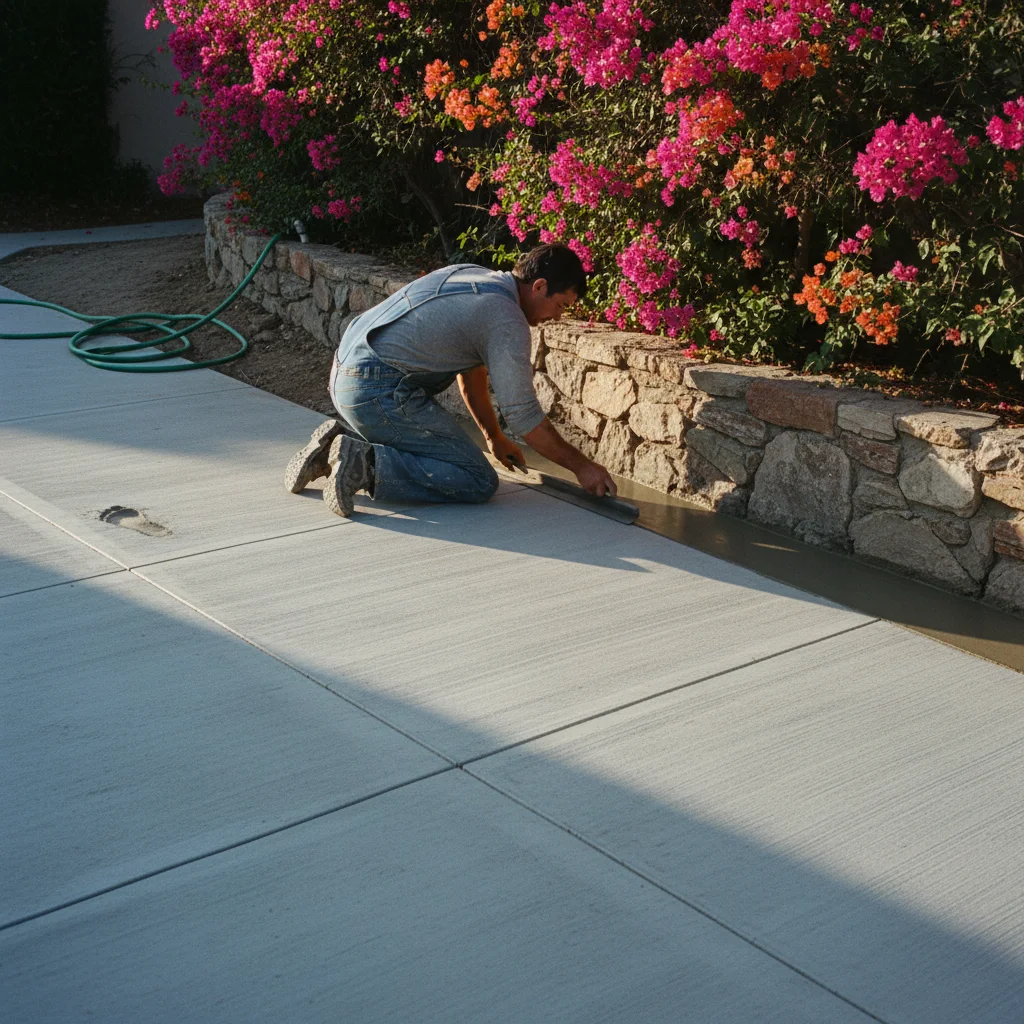
While investing in a stamped concrete driveway is a significant upgrade, Los Angeles homeowners can employ several strategies to manage costs without compromising too much on quality.
Firstly, keep the design simple. Intricate patterns, multiple contrasting colors, and custom border work add to both material and labor costs. Opting for a single, attractive pattern and a complementary base color will significantly reduce your per-square-foot price. A classic ashlar slate or a simple brick pattern in a single earth tone can still provide immense curb appeal for homes in Pasadena or Glendale without the premium price tag of complex designs.
Secondly, consider DIY demolition if feasible and safe. If your existing driveway is asphalt or a thin concrete slab, and you have the necessary tools, physical capability, and time, you might be able to handle its removal and disposal yourself. This can save hundreds, if not thousands, of dollars in labor and demolition costs. However, be realistic about the effort involved and ensure you can safely dispose of the debris. For thick concrete or areas with utilities, professional demolition is always recommended.
Thirdly, obtain multiple, detailed bids from reputable contractors. Don't settle for the first quote you receive. Contact at least three licensed and insured stamped concrete specialists in your area. Ensure each bid specifies the exact scope of work, materials, patterns, colors, and sealing to allow for a true apples-to-apples comparison. This competitive bidding process can reveal significant price differences and help you negotiate for a better deal.
Fourthly, while less pronounced in LA's year-round temperate climate, consider scheduling your project during off-peak seasons. Concrete contractors might have more availability and be more willing to offer slight discounts during traditionally slower periods, such as late fall or winter (excluding major holidays), when demand might be slightly lower compared to the busy spring and summer months.
Finally, plan ahead and avoid rush jobs. Last-minute projects often incur expedited fees or limit your choice of contractors, potentially forcing you to pay a premium. By planning your driveway project well in advance, you can secure better pricing, allow ample time for material ordering, and ensure your chosen contractor has sufficient time to execute the work meticulously.
What is the Return on Investment (ROI) for a Stamped Concrete Driveway in Los Angeles?
Get 3 driveway contractor bids in 48 hours.
Our editors already screened California driveway contractors. Answer 4 questions; we send 3 written bids inside 48 hours, with the real price for your scope, not their inflated first-call number.
Send my 3 bidsFree. No commission. If a match doesn't fit, we'll send another.
A stamped concrete driveway offers a significant return on investment (ROI) for Los Angeles homeowners, enhancing both the aesthetic and financial value of their property.
Firstly, and most visibly, a well-designed stamped concrete driveway dramatically enhances curb appeal. In competitive real estate markets like Beverly Hills, Brentwood, or Hollywood Hills, first impressions are paramount. A beautiful, distinctive driveway elevates the entire exterior of a home, making it stand out from others on the block. This immediate visual impact can attract more potential buyers and generate greater interest when your property is on the market.
Secondly, this enhanced curb appeal directly translates into an increase in property value. While specific ROI percentages can vary, many real estate experts agree that significant exterior improvements like a high-quality driveway can recoup a substantial portion of their cost, often ranging from 70% to over 100%, especially in desirable neighborhoods across LA. The perception of quality and attention to detail that a stamped concrete driveway conveys can justify a higher asking price.
Thirdly, the durability and low long-term maintenance costs of stamped concrete contribute to its ROI. Unlike asphalt, which requires frequent resealing, or pavers, which can shift and allow weed growth, properly installed and sealed stamped concrete is extremely robust. It resists cracking, fading, and staining, meaning fewer repair costs and less upkeep over its lifespan of 25-30 years or more. This long-term cost-effectiveness adds to its value proposition.
Finally, the aesthetic appeal to potential buyers is undeniable. Homebuyers in areas like Pasadena, Santa Monica, or Encino are often looking for move-in ready homes with desirable features. A stunning stamped concrete driveway adds a touch of luxury and sophistication that can be a deciding factor for buyers, signaling a well-maintained and thoughtfully upgraded property. In essence, a stamped concrete driveway is not just an expense; it's an investment that pays dividends in both enjoyment and equity.
Is Stamped Concrete a Good Choice for My Los Angeles Home?
Stamped concrete is an excellent choice for many Los Angeles homeowners, offering a compelling blend of aesthetic flexibility, durability, and value that aligns well with the diverse architectural styles and discerning tastes found across the city. If you're looking to significantly upgrade your home's curb appeal, increase its property value, and enjoy a long-lasting, low-maintenance surface, then stamped concrete is certainly worth strong consideration.
Its ability to mimic the look of more expensive materials like natural stone or brick at a fraction of the cost makes it a smart financial decision, especially in high-value areas like Beverly Hills or Brentwood where aesthetics are paramount. Whether you envision a rustic cobblestone path for your Craftsman in Pasadena, a sleek slate finish for your modern home in Santa Monica, or a warm wood plank texture for your ranch in Encino, stamped concrete can deliver.
However, it's also important to consider the initial investment, which, while offering good ROI, is higher than plain concrete or asphalt. Ensure you factor in the full scope of the project, including site preparation, design complexity, and necessary permits. For homeowners who prioritize customization, longevity, and a distinctive entrance that truly complements their Los Angeles lifestyle, stamped concrete stands out as a superior and highly desirable option.
Sources & Methodology
See the Golden Yards Methodology for how sources are reviewed, ranges are normalized, and planning-data limits are handled.
Cost ranges, regulatory references, and design guidance in this article draw on the following public datasets, industry standards, and Renology editorial research.
- Interlocking Concrete Pavement Institute (ICPI), Tech Specs for Residential Driveways
- American Concrete Institute (ACI) 332, Residential Concrete Construction
- California Contractors State License Board (CSLB), C-8 Concrete Contractor scope
- California Department of Water Resources, MWELO Permeable Surface Guidelines
- Renology editorial methodology, invoiced California driveway projects, 2025–2026
Related Articles
Ready to start your driveway project?
Find My ProsFrequently Asked Questions
How long does a stamped concrete driveway last?
A stamped concrete driveway can last 25 to 30 years or even longer in the Los Angeles climate. Achieving this lifespan depends directly on the quality of the initial installation, the concrete mix used, proper sealing, and a consistent maintenance schedule. These factors are essential for ensuring the driveway's durability and appearance over decades.
The 25 to 30 year lifespan for a stamped concrete driveway is an expectation for a properly handled project in a climate like Los Angeles. The longevity is not automatic. It begins with a high-quality installation and a suitable concrete mix. After installation, the driveway's durability relies on homeowner care. This includes periodic sealing to protect the surface from moisture and wear, plus regular maintenance to clean the surface and address any small cracks or issues before they worsen. Without these steps, the driveway may not reach its full potential lifespan.
What maintenance does a stamped concrete driveway require?
Stamped concrete driveways require low maintenance, primarily regular cleaning with soap and water and re-sealing every 2-5 years. This protective sealant guards the surface from wear, stains, and UV damage. Following this schedule is the best way to preserve the driveway's original color and decorative finish for years to come.
The most frequent task for maintaining a stamped concrete driveway is simple cleaning with soap and water to remove dirt and grime. The more crucial step is the periodic re-sealing, which should happen every two to five years depending on weather and traffic. Applying a new coat of sealant provides essential protection. It creates a barrier against surface wear, prevents stains from spills, and blocks UV rays that can cause the color to fade. This single step is key to preserving the driveway's appearance and integrity.
Can stamped concrete be repaired if it cracks?
Yes, stamped concrete can be repaired if it cracks. The main challenge is perfectly matching the original color and pattern. Minor cracks can typically be filled and sealed. Larger cracks might require more extensive work, such as patching or replacing sections, with the objective of blending the repair into the existing surface.
When stamped concrete cracks, repairs are feasible, but homeowners should set realistic expectations about the final appearance. Achieving an exact match for both the color and the intricate pattern of the original installation is very difficult. For smaller cracks, specialized fillers and sealants can be used for a straightforward fix.
More significant cracks demand a more involved approach. This can include patching the damaged area or, in some cases, cutting out the cracked section and pouring new concrete. In these situations, the contractor's goal is to make the repaired area blend in with the surrounding surface as well as possible.
How long does the installation process take?
A standard stamped concrete driveway installation takes 3 to 7 days, not including the curing time. This active work includes site preparation, pouring the concrete, stamping, coloring, and sealing. The concrete then needs several days before supporting heavy vehicles, and a full cure can take up to 28 days.
The 3 to 7 day installation period covers all active construction work on your property. This multi-step process involves preparing the ground, pouring the concrete, applying the desired patterns and colors, and finishing with a protective sealant. After the installation is complete, the concrete begins its crucial curing phase. It is important to wait several days before parking heavy vehicles on the surface. The full chemical hardening process, which gives the driveway its final strength, can take up to 28 days.
Is stamped concrete slippery when wet?
Yes, stamped concrete can be slippery when wet, particularly if finished with a high-gloss sealer. To counteract this, special anti-slip additives can be mixed into the sealer to significantly improve traction. Contractors often recommend this solution for sloped driveways or any areas that are frequently exposed to moisture.
The texture of stamped concrete itself provides some grip, but the sealer applied on top is the main factor in its slipperiness. A high-gloss finish can create a slick surface when wet. Fortunately, incorporating an anti-slip additive into the sealer is a standard and effective safety measure that creates a safer, textured surface without altering the appearance.
This is especially important for areas with inclines or consistent water exposure. For a project in Los Angeles, you can ensure both beauty and safety. Golden Yards Magazine connects homeowners with trusted local specialists who can provide a free, no-obligation estimate for your stamped concrete driveway.