Concrete vs. Asphalt Driveway in Los Angeles: A Golden Yards Magazine Guide for Homeowners
Choosing the right driveway material is one of the most significant decisions a Los Angeles homeowner can make, impacting everything from curb appeal and maintenance to long-term value and environmental footprint. In a city as diverse as ours, where architectural styles range from the historic charm of Pasadena and West Adams to the modern luxury of Beverly Hills and Hollywood Hills, and climates vary from the coastal breezes of Santa Monica to the valley heat of Encino and Sherman Oaks, the concrete versus asphalt debate is particularly nuanced. This comprehensive guide from Golden Yards Magazine will equip you with the knowledge to make an informed choice for your LA property, considering costs, durability, aesthetics, and local regulations.
What Are the Fundamental Differences Between Concrete and Asphalt Driveways?
The fundamental differences between concrete and asphalt lie in their composition, installation, and performance characteristics. Concrete is a rigid paving material made from a mixture of cement, aggregates (sand, gravel), and water, which cures to form a solid, stone-like surface. Asphalt, on the other hand, is a flexible paving material composed primarily of aggregate mixed with bitumen (a petroleum-based binder), applied hot and compacted to form a durable, dark surface. These distinct compositions lead to significant variations in their initial costs, maintenance requirements, longevity, and aesthetic potential, making the choice a critical one for homeowners across Los Angeles, from Glendale to Silver Lake.
Which Driveway Material is Cheaper Upfront for Los Angeles Homeowners?
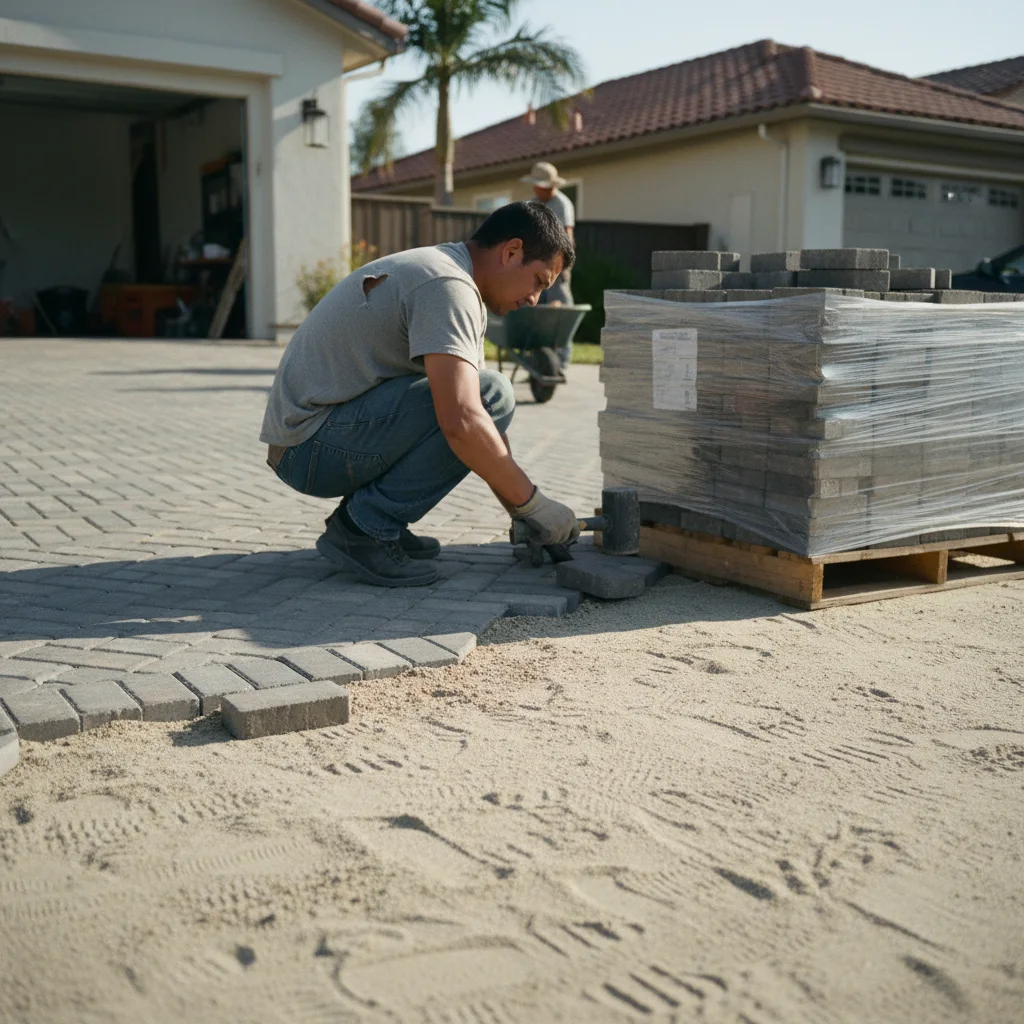
Asphalt is generally cheaper upfront for Los Angeles homeowners compared to concrete. The initial installation cost for an asphalt driveway in LA typically ranges from \$3.00 to \$7.00 per square foot, while concrete driveways usually cost between \$6.00 and \$15.00 per square foot for standard finishes. For a typical 500-square-foot driveway, this translates to an asphalt project costing roughly \$1,500 to \$3,500, whereas a concrete driveway of the same size could range from \$3,000 to \$7,500. However, these are base costs; decorative concrete finishes like stamping or coloring can push the price much higher, sometimes exceeding \$20.00 per square foot.
Several factors influence these initial costs, including the size and complexity of your driveway, the need for extensive site preparation or existing driveway removal, and the chosen finish. For instance, a long, winding driveway in the Hollywood Hills or a property requiring significant grading in Encino will naturally incur higher costs. Homeowners in more established neighborhoods like West Adams or Glendale might find asphalt's lower upfront cost more appealing for budget-conscious renovations, while those in Beverly Hills or Brentwood might more readily invest in the higher initial cost of concrete, given its perceived luxury and alignment with property values. Always obtain multiple quotes from licensed LA contractors to get a precise estimate for your specific project.
Which Material Offers Better Long-Term Value and Requires Less Maintenance?
Ready to compare vetted project options?
Use Project Match privately when your scope is clear enough for contractor conversations.
Start Project MatchSee what your driveway actually costs in 4 questions.
We pull cost ranges from invoiced California driveway contractor projects, then narrow them to your scope, ZIP, and finish level. No first-call sticker shock.
Open the driveway cost calculatorFree. Takes under 2 minutes. No email required to see your range.
Concrete often offers better long-term value due to its superior durability and significantly lower maintenance requirements over its lifespan, despite a higher initial cost. A well-installed concrete driveway can last 30 years or more with minimal upkeep, while an asphalt driveway typically lasts 15 to 20 years before requiring more substantial repairs or resurfacing. This longevity and reduced need for frequent intervention translate into long-term savings for homeowners.
What Maintenance Does a Concrete Driveway Require?
A concrete driveway primarily requires occasional cleaning, sealing, and prompt crack repair to maintain its integrity and appearance. Sealing is recommended every 2-5 years to protect against stains and weather, with costs ranging from \$0.20 to \$0.50 per square foot, or \$100-\$250 for a typical driveway. Cleaning usually involves power washing, which can be a DIY task or cost \$150-\$300 for professional service. While concrete is durable, it can develop cracks due to ground movement (a common concern in earthquake-prone LA), heavy loads, or improper installation. Repairing minor cracks can cost \$50-\$200 using specialized sealants, but extensive cracking might require section replacement, costing \$500-\$1,500 or more per section. Homeowners in areas like Hollywood Hills or Encino, often with busy schedules, tend to appreciate concrete's lower maintenance demands.
What Maintenance Does an Asphalt Driveway Require?
An asphalt driveway requires more frequent and consistent maintenance, primarily regular sealing and immediate crack/pothole repair, to maximize its lifespan and appearance, especially in Los Angeles's sunny climate. Asphalt needs to be sealed every 2-5 years to protect against UV damage, oxidation, and water penetration, with costs typically ranging from \$0.30 to \$0.70 per square foot, or \$150-\$350 for a standard driveway. This is particularly crucial in areas like Sherman Oaks or Pasadena, where intense summer heat can accelerate wear. Cracks and potholes should be addressed promptly to prevent further deterioration; crack filling can cost \$75-\$250, while pothole repairs might range from \$100-\$400 depending on size. Eventually, an asphalt driveway will require resurfacing (overlay) every 10-15 years, which involves applying a new layer of asphalt over the existing one, costing \$2.00 to \$5.00 per square foot, or \$1,000-\$2,500 for a typical driveway. While more hands-on, the maintenance tasks for asphalt are often simpler for DIY enthusiasts.
How Do Concrete and Asphalt Stand Up to LA's Sun and Seismic Activity?
Both concrete and asphalt are durable materials, but they react differently to Los Angeles's specific climate, including intense sun exposure and the potential for seismic activity. Concrete is generally more resilient to high temperatures and UV radiation, while asphalt's flexibility offers an advantage against minor ground shifts.
Is Concrete Durable Enough for Los Angeles Weather?
Concrete is highly durable and performs exceptionally well in Los Angeles's sunny, warm climate, resisting heat and UV degradation better than asphalt. Its lighter color naturally reflects sunlight, reducing surface temperatures and contributing to a cooler property, which is a significant advantage in areas like Encino or the San Fernando Valley where temperatures soar. Concrete is less prone to softening or rutting under heavy vehicle loads, making it ideal for driveways that see frequent use or accommodate larger vehicles. While rigid, concrete can crack under significant seismic activity or extreme ground shifts. However, proper sub-base preparation and expansion joints can help mitigate this. California's building codes often specify requirements for seismic resilience, and reputable contractors will ensure your concrete driveway meets these standards.
Is Asphalt Durable Enough for Los Angeles Weather?
Asphalt is durable, but its performance in Los Angeles's climate requires specific attention to maintenance to ensure longevity. The dark surface of asphalt readily absorbs heat, which can lead to higher surface temperatures, contributing to the urban heat island effect, especially in dense areas like Glendale or West Adams. Prolonged sun exposure and heat can cause asphalt to soften, leading to rutting under heavy vehicle traffic, and accelerate oxidation, making it brittle and prone to cracking. Regular sealing is critical to protect against UV rays and prevent premature aging. A key advantage of asphalt, however, is its flexibility; it can tolerate minor ground movement and seismic shifts better than concrete, often developing hairline cracks rather than large, rigid breaks. This flexibility can be a benefit in an earthquake-prone region like LA. Furthermore, California and many LA municipalities are encouraging "cool pavement" technologies, which include lighter-colored asphalt sealants or treatments to reduce heat absorption.
Which Material Offers More Aesthetic Appeal and Customization for LA Homes?
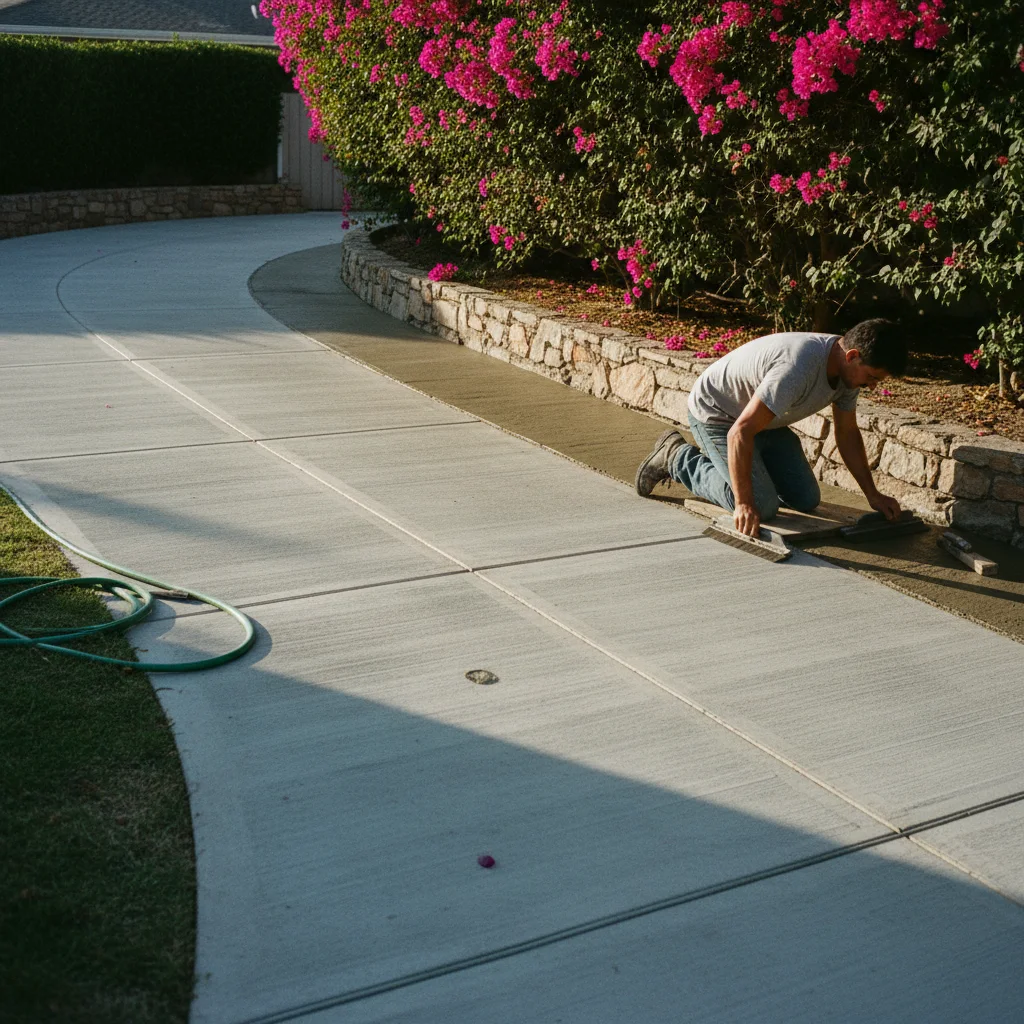
Concrete offers significantly more aesthetic versatility and customization options, allowing homeowners to tailor their driveway to complement diverse architectural styles found across Los Angeles. While asphalt provides a classic, dark, and practical look, concrete can be transformed in numerous ways.
What Are the Aesthetic Options for Concrete Driveways?
Concrete driveways offer a vast array of aesthetic options, allowing them to enhance the curb appeal of any Los Angeles home, from a Spanish-style estate in Pasadena to a modern masterpiece in Silver Lake. It can be colored with pigments to match or contrast your home's exterior, stained for a translucent, rich finish, or stamped to mimic natural stone, brick, or even wood. Exposed aggregate finishes, revealing the decorative stones within the concrete, are popular for a textured, natural look. These customization capabilities make concrete a preferred choice for homeowners in high-value neighborhoods like Beverly Hills or Brentwood, where curb appeal directly impacts property value. A well-designed concrete driveway can become an integral part of your home's overall design, reflecting its unique character.
What Are the Aesthetic Options for Asphalt Driveways?
Asphalt driveways offer a more uniform and classic aesthetic, typically characterized by their smooth, dark finish, which can provide a clean and understated look. While less customizable than concrete, asphalt's dark color can create a striking contrast with lighter home exteriors or lush landscaping. Regular sealing helps maintain its deep black color, giving it a fresh, well-maintained appearance. For added visual interest, asphalt can be edged with pavers, bricks, or natural stone, integrating it seamlessly with garden beds or walkways, a popular approach in areas like West Adams where historic homes often benefit from subtle enhancements. While it lacks the stamping or coloring options of concrete, its simplicity can be a deliberate design choice for homeowners seeking a traditional or minimalist aesthetic.
What is the Environmental Impact and Are There Sustainable Options in LA?
Get 3 driveway contractor bids in 48 hours.
Our editors already screened California driveway contractors. Answer 4 questions; we send 3 written bids inside 48 hours, with the real price for your scope, not their inflated first-call number.
Send my 3 bidsFree. No commission. If a match doesn't fit, we'll send another.
Both concrete and asphalt have environmental considerations, but advancements in sustainable practices and materials now offer greener options for Los Angeles homeowners. Permeable alternatives for both materials are gaining traction due to California's focus on stormwater management.
Is Concrete an Environmentally Friendly Driveway Option?
Concrete's environmental footprint is a mixed bag, but modern practices and materials are making it a more sustainable option for LA driveways. The production of cement, a key ingredient in concrete, is energy-intensive and contributes to greenhouse gas emissions. However, concrete is highly durable, reducing the need for frequent replacement, and can incorporate recycled materials like fly ash or slag, which are industrial byproducts. More importantly for Los Angeles, permeable concrete is an excellent sustainable choice. This specialized concrete allows rainwater to filter through its porous structure into the ground below, reducing stormwater runoff, replenishing groundwater, and mitigating urban heat island effects. While more expensive (often \$10-\$20+ per square foot), permeable concrete aligns with California's stringent stormwater management regulations and can be a significant benefit for homeowners in environmentally conscious areas like Santa Monica or Silver Lake, potentially offering local incentives or rebates for installation. Lighter-colored concrete also reflects more sunlight, contributing to "cool pavement" initiatives.
Is Asphalt an Environmentally Friendly Driveway Option?
Asphalt has notable environmental aspects, particularly its ability to be recycled, making it a surprisingly sustainable choice for driveways in Los Angeles. Asphalt pavement is North America's most recycled material, with reclaimed asphalt pavement (RAP) commonly incorporated into new asphalt mixes, reducing the demand for virgin materials and conserving natural resources. The production of asphalt uses petroleum, a non-renewable resource, but the recycling process significantly offsets this impact. Similar to concrete, permeable asphalt is also available. This porous mix allows water to drain through, mimicking natural absorption and reducing runoff, which is crucial for meeting California's water quality standards and managing urban flooding. While asphalt's dark color absorbs more heat than lighter concrete, contributing to the urban heat island effect, new "cool pavement" technologies, including reflective coatings and sealants, are being developed and encouraged in LA to mitigate this. For homeowners prioritizing recycled content and flexible stormwater solutions, especially in areas like Glendale, asphalt can be a very viable green option.
What Should I Expect During the Installation Process and How Long Does It Take?
The installation process for concrete and asphalt driveways differs significantly in terms of time and steps, directly impacting how long your driveway will be unusable. Asphalt installation is generally quicker, while concrete requires a longer curing period.
How Long Does Concrete Driveway Installation Take in Los Angeles?
Concrete driveway installation in Los Angeles typically takes several days to a week for the active construction phase, followed by a crucial curing period of multiple days or weeks before full use. The process begins with excavation and sub-base preparation, ensuring a stable foundation. Forms are then set, and the concrete is poured, leveled, and finished. This initial pour and finishing can take 1-3 days depending on size and complexity. The most critical part is the curing; while you can often walk on it after 24-48 hours, vehicles should generally be kept off for at least 7 days, and ideally 28 days, to allow the concrete to reach its full strength. Weather plays a role; extreme heat can speed up curing but requires careful moisture management, while cooler temperatures slow it down. Homeowners in the Hollywood Hills planning a new concrete driveway should factor this curing time into their schedule, especially if it's their primary access point. Remember that permits from the City of Los Angeles Department of Public Works or your local city (e.g., Pasadena, Santa Monica) are usually required for driveway modifications or new installations, which can add to the overall timeline.
How Long Does Asphalt Driveway Installation Take in Los Angeles?
Asphalt driveway installation in Los Angeles is significantly faster than concrete, often completed within one to two days, with the driveway typically ready for light use shortly thereafter. The process involves excavation, preparing a stable aggregate sub-base, and then applying the hot asphalt mix in layers. Each layer is compacted with a roller to create a dense, smooth surface. Because asphalt cools and hardens relatively quickly, you can usually drive on it lightly within 24-72 hours, though it's best to avoid heavy vehicles for a few days to allow it to fully set. The speed of installation makes asphalt an attractive option for homeowners in areas like Sherman Oaks or Encino who need a quick turnaround. However, like concrete, proper permits are essential. Also, while quick to install, asphalt should ideally be left to "cure" in the sun for several months before applying the first sealant, allowing volatile oils to dissipate.
How Does My Driveway Material Impact My Home's Resale Value in LA?
A well-maintained driveway, regardless of material, positively impacts your home's resale value by boosting curb appeal, but concrete often provides a higher perceived value due to its durability and aesthetic versatility. For homeowners in Los Angeles, particularly in competitive markets, the driveway is a significant first impression.
In high-value neighborhoods such as Beverly Hills, Brentwood, or the Hollywood Hills, a premium concrete driveway with decorative finishes can significantly enhance a home's luxury appeal and justify a higher asking price. Buyers often associate concrete with longevity, lower maintenance, and a more upscale aesthetic. However, a meticulously maintained asphalt driveway, especially one that has been regularly sealed and repaired, will also contribute positively to resale value. A dilapidated or cracked driveway, whether concrete or asphalt, will undoubtedly detract from a home's value and may even necessitate a price reduction to cover future repair costs for the buyer. The key is condition and appropriate material choice for the neighborhood's expectations; in a charming Craftsman area of Pasadena, a well-done asphalt driveway might be perfectly suitable, while a modern concrete design might be expected in Silver Lake.
Making the Right Choice for Your Los Angeles Home
Choosing between concrete and asphalt for your Los Angeles driveway is a significant decision that should align with your specific needs, budget, and aesthetic preferences. Consider your upfront budget versus long-term maintenance tolerance: asphalt is cheaper initially but requires more frequent upkeep, while concrete costs more to install but demands less over time. Think about the aesthetic you desire; concrete offers unparalleled customization, perfect for unique homes in Silver Lake or the modern estates of Hollywood Hills, while asphalt provides a classic, understated look. Evaluate your local climate and environmental priorities; concrete excels in heat reflection, and both offer permeable options crucial for LA's water management. Finally, don't forget the practicalities of installation time and how the material choice might impact your home's resale value in competitive markets like Beverly Hills or Santa Monica. By weighing these factors, you can make an informed decision that enhances your property for years to come.
---
Sources & Methodology
See the Golden Yards Methodology for how sources are reviewed, ranges are normalized, and planning-data limits are handled.
Cost ranges, regulatory references, and design guidance in this article draw on the following public datasets, industry standards, and Renology editorial research.
- Interlocking Concrete Pavement Institute (ICPI), Tech Specs for Residential Driveways
- American Concrete Institute (ACI) 332, Residential Concrete Construction
- California Contractors State License Board (CSLB), C-8 Concrete Contractor scope
- California Department of Water Resources, MWELO Permeable Surface Guidelines
- Renology editorial methodology, invoiced California driveway projects, 2025–2026
Related Articles
Ready to start your driveway project?
Find My ProsFrequently Asked Questions
What permits do I need for a new driveway in LA?
You will almost always need permits for a new driveway in Los Angeles. These typically come from the City of Los Angeles Department of Public Works, Bureau of Engineering, for work in the public right-of-way, and the Department of Building and Safety for structural changes or drainage plans. Requirements can vary.
In the City of Los Angeles, the Department of Public Works, Bureau of Engineering, issues permits for work affecting the public right-of-way, including curb cuts and apron modifications. The Department of Building and Safety may also require permits for structural changes or specific drainage plans associated with the project.
Permit requirements are not uniform across the region. Independent cities such as Santa Monica, Pasadena, and Glendale have their own local rules and procedures. To ensure compliance, it is essential to consult with your contractor and the applicable local planning department before starting any work on your driveway.
How long does a new driveway need to cure before I can drive on it?
A new concrete driveway needs at least 7 days to cure before light vehicle use, reaching full strength in about 28 days. Asphalt driveways cure faster, typically ready for light traffic in 24 to 72 hours. For both types, it is best to avoid heavy vehicles for the first few days.
The curing time for a new driveway depends on its material. Concrete, a rigid pavement, requires a longer period. You should wait a minimum of 7 days before driving light vehicles on it, and it will not achieve its full structural strength until about 28 days have passed. Asphalt is a flexible pavement and sets more quickly. It can typically handle light vehicle traffic within 24 to 72 hours. However, it is wise to avoid parking heavy vehicles or making sharp turns on new asphalt for the first several days to prevent indentations while it fully compacts and hardens.
Does the color of my driveway matter for heat in LA?
Yes, your driveway's color significantly matters for heat in Los Angeles. Lighter surfaces like concrete reflect sunlight and stay cooler, while dark asphalt absorbs more heat. This choice can cool your property and mitigate the urban heat island effect, aligning with LA's sustainability goals. New cool pavement options exist.
In Los Angeles, the surface material of a driveway directly affects local temperatures. Darker surfaces, like traditional asphalt, absorb a high degree of solar radiation, leading to hotter surface temperatures that contribute to the urban heat island effect. Conversely, lighter-colored surfaces, such as standard concrete, reflect more sunlight and absorb less heat.
This principle keeps the immediate area cooler. To address the heat absorption of asphalt, emerging solutions include special "cool pavement" technologies and lighter-colored sealants. These options support the city of LA's broader sustainability objectives by reducing localized heat.
What's the best way to clean my concrete/asphalt driveway?
Clean concrete driveways by sweeping regularly and power washing with a mild detergent, using specific cleaners for tough stains. For asphalt, sweep debris and wash gently with a hose and mild soap. Avoid high pressure and harsh chemicals on asphalt. Address oil or fluid spills immediately on both surfaces to prevent staining and deterioration.
Concrete surfaces are durable and can handle regular sweeping and occasional power washing with a mild detergent to remove dirt. For difficult stains that persist, you may need to apply a cleaner specifically designed for concrete.
Asphalt driveways require a more gentle method. While sweeping off debris is always important, washing should be done with a standard hose and mild soap. Using excessive pressure from a power washer or applying harsh chemicals can damage the asphalt's surface or strip away protective sealants.
For both driveway types, it is critical to clean up any oil or automotive fluid spills as soon as they happen. Prompt removal helps prevent the spills from setting in as permanent stains and causing the material to break down over time.
Are there rebates or incentives for permeable driveways in LA?
Yes, rebates and incentives for permeable driveways may be available in Los Angeles. Agencies like the Los Angeles Department of Water and Power (LADWP) and the Metropolitan Water District of Southern California sometimes offer these programs to manage stormwater and support California's water conservation goals. Always check with these agencies for current eligibility.
Permeable surfaces help manage stormwater runoff and replenish groundwater, which aligns with state conservation efforts. Rebate programs can come from the Los Angeles Department of Water and Power (LADWP) or regional bodies like the Metropolitan Water District of Southern California. Since program availability and requirements can change, you should confirm details with these agencies and your specific city’s public works department. For a free estimate tailored to your home in Beverly Hills, Pasadena, Santa Monica, or elsewhere, contact a trusted local contractor.