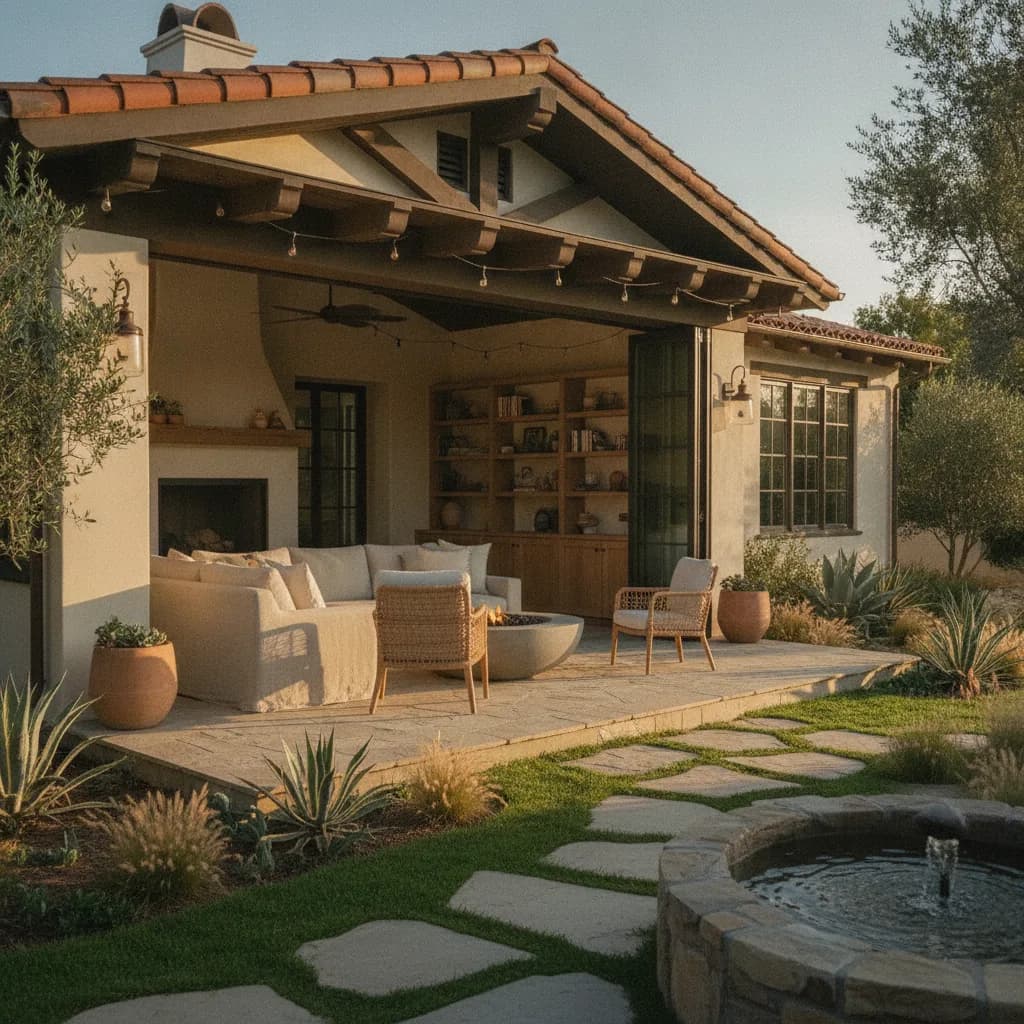
Adding a room to your Chino Hills home in 2026 involves securing both city permits and Homeowners Association (HOA) architectural approval, with typical costs ranging from $150 to $1,800 for permit fees alone, and overall project timelines from design to completion often spanning 8-14 months. This guide provides Chino Hills homeowners with a clear, actionable roadmap to navigate the unique local requirements, ensuring a smooth and compliant expansion of your living space.
What are the essential permit requirements for a room addition in Chino Hills?
Essential permit requirements for a room addition in Chino Hills include submitting detailed architectural and structural plans, adhering to the Chino Valley Independent Fire District standards, and ensuring compliance with California's energy codes. Unlike some neighboring cities, Chino Hills' permit process at the Building and Safety Division typically takes 15 business days for initial plan review, emphasizing thorough preparation from the outset. You'll need a comprehensive set of documents, including a site plan, floor plans, elevations, structural calculations, and energy calculations (Title 24/CalGreen).
For additions up to 200 sq ft, a standard permit application might suffice, but anything over this size or involving multi-story construction will require more detailed, engineered plans. Properties in Chino Hills often have larger lots, ranging from 7,000 to 15,000+ sq ft, which can lead to more ambitious scope expansions once a project begins. This often necessitates more extensive planning and engineering upfront. The Chino Hills Building and Safety Division can be reached directly at (909) 364-2780 for specific questions regarding your project.
How do Chino Hills' HOA architectural approvals integrate with city permits?
In Chino Hills, HOA architectural approval typically precedes the city permit application, as the entire city is master-planned with strict HOA oversight. Homeowners must first submit their proposed room addition plans to their community's Architectural Review Committee (ARC) for approval. This committee will evaluate the design, materials, setbacks, and overall aesthetic impact to ensure it aligns with community guidelines and maintains neighborhood consistency, particularly in gate-guarded communities.
Once your HOA's ARC grants approval, you can then proceed with the City of Chino Hills permit application. It's crucial to understand that city approval does not supersede HOA rules; both are mandatory. HOA approval timelines can vary widely, from a few weeks to several months, and some HOAs may charge a review fee, typically ranging from $100 to $500, to cover administrative costs. Coordinating these two processes is vital to avoid delays, making the HOA approval the critical first step before engaging with the city's Building and Safety Division. For more insights on navigating similar processes, consider our guide on The Ultimate Room Addition Permit and HOA Guide for Long Beach in 2026.
What specific zoning procedures apply to room additions in Chino Hills?
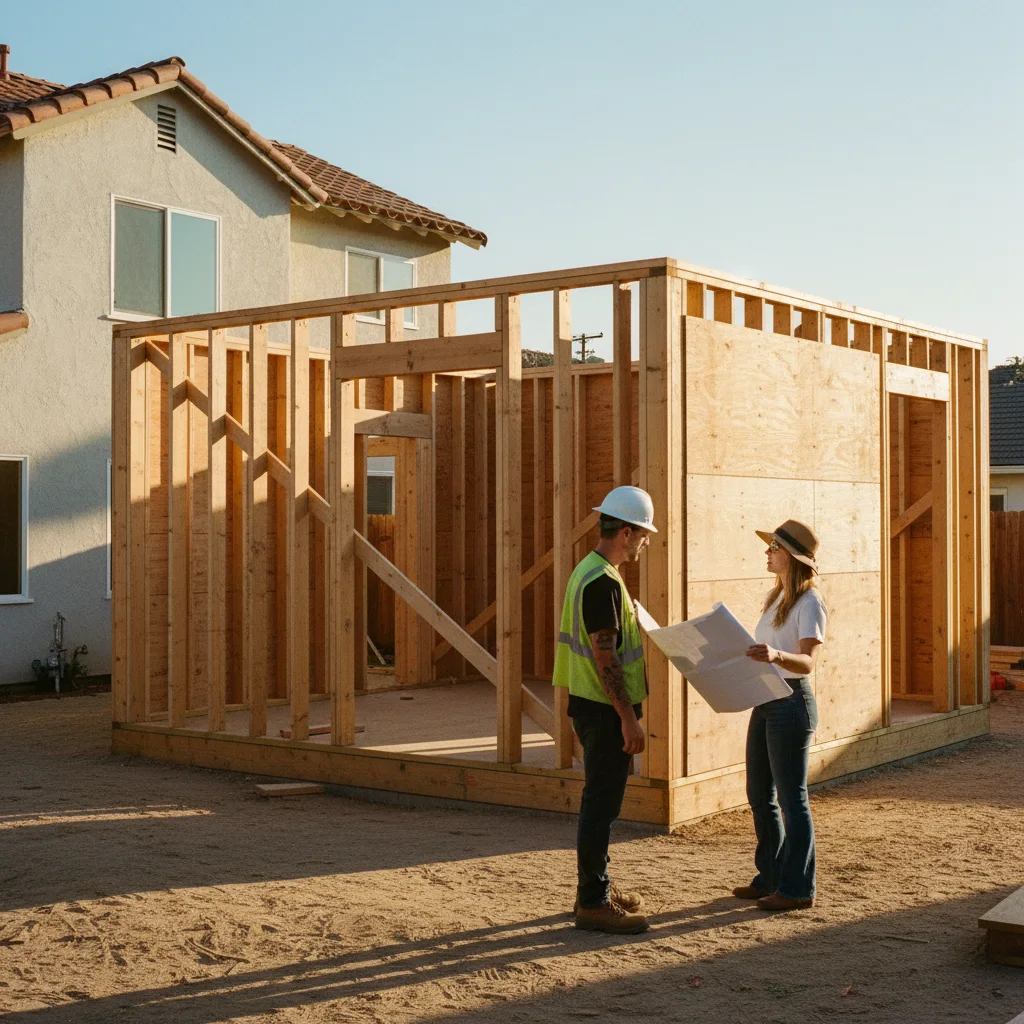
Chino Hills has specific zoning procedures that homeowners must navigate for room additions, particularly regarding Design Review and Minor Exceptions. If your proposed room addition equals 50% or more of your existing floor area, it will likely trigger a mandatory Design Review process with the City's Planning Department. This review ensures the addition is compatible with the existing neighborhood character, adheres to design guidelines, and respects property setbacks and open space requirements.
Homeowners can apply for a Minor Exception under specific conditions, typically when a minor deviation from standard zoning requirements (like a small setback encroachment) is necessary due to unique property characteristics and does not negatively impact adjacent properties. The likelihood of approval for a Minor Exception depends heavily on the scale of the deviation and the ability to demonstrate minimal impact, often requiring a public hearing. It's advisable to consult with a local architect or the Chino Hills Planning Department early in your design process to understand these thresholds and avoid costly redesigns.
How do Chino Hills' hillside building envelope standards impact room addition designs?
Ready to compare vetted project options?
Use Project Match privately when your scope is clear enough for contractor conversations.
Start Project MatchSee what your ADU actually costs in 4 questions.
We pull cost ranges from invoiced California ADU builder projects, then narrow them to your scope, ZIP, and finish level. No first-call sticker shock.
Open the ADU cost calculatorFree. Takes under 2 minutes. No email required to see your range.
Chino Hills' hillside building envelope standards significantly impact room addition designs, especially for properties located in the Wildland-Urban Interface (WUI) zones, which cover much of the city. These standards mandate specific construction materials and design considerations to mitigate fire risk and manage unique topographical challenges. For instance, WUI fire code requires Class A roof assemblies and ignition-resistant exterior finishes, such as stucco, fiber cement, or non-combustible siding, for most projects in these areas. This directly influences material choices for your addition's exterior walls and roofing, moving beyond purely aesthetic preferences to critical safety requirements.
Furthermore, the city's terrain, characterized by clay and decomposed-granite soils, necessitates engineered drainage solutions for any new patios, retaining walls, or pool decking to prevent heaving and settling. Summer temperatures routinely hit 105-110°F, making material choices for outdoor living spaces critical for usability. Dark-colored hardscape materials, for example, can become excessively hot, so lighter, more reflective options or ample shade structures are often recommended. These environmental factors, combined with fire and wind event considerations, drive material choices like Class A fire-rated roofing and non-combustible fence materials near wildland areas, adding layers of complexity to design and construction that are unique to Chino Hills. For more details on local climate impacts on roofing, see our guide on Roofing and Climate Considerations in Chino Hills: A 2026 Homeowner's.
What are the typical costs and timelines for a room addition in Chino Hills?
The typical costs for a room addition in Chino Hills in 2026 can vary significantly based on size, complexity, and finishes, but homeowners should budget for permit fees ranging from $150 to $1,800. The total project cost, including design, materials, and labor, generally falls between $300-$600 per square foot for standard additions, potentially higher for luxury finishes or complex structural work. Architectural and structural engineering plans alone typically cost between $5,000 and $15,000, depending on the scope. It is always wise to include a 15-20% contingency budget to cover unexpected issues like outdated wiring or unforeseen structural elements discovered during demolition.
Regarding timelines, the entire process from initial design to final inspection typically spans 8-14 months. The City of Chino Hills' initial plan review takes approximately 15 business days. However, this doesn't account for revisions, HOA approval, or the construction phase itself. Construction timelines vary, but a well-managed project can see framing and rough-ins completed within 2-4 months, followed by finishes and inspections. Remember that permit processes at San Bernardino County and individual cities like Chino Hills can vary; Chino Hills utilizes an online portal for some submissions, but complex projects may still require in-person submittals.
Detailed Breakdown of Permit Fees for Chino Hills Room Additions
Permit fees for room additions in Chino Hills are calculated based on the valuation of the construction, the square footage, and specific inspections required. While a precise, universal fee schedule is not publicly available without a specific project valuation, homeowners can expect to pay a base building permit fee, plan check fees (often 65% of the building permit fee), and various impact fees (e.g., school fees, park fees) if the addition significantly increases the habitable square footage. Electrical, plumbing, and mechanical permits are typically separate, ranging from $50-$200 per trade. For a 400 sq ft addition, total city fees could easily reach $1,000-$3,000, not including potential HOA review fees. Always contact the Chino Hills Building and Safety Division for a project-specific fee estimate.
What is the exact process for integrating HOA architectural approvals with the City of Chino Hills' permit application, and which approval should be sought first?
The exact process for integrating HOA architectural approvals with the City of Chino Hills' permit application dictates that HOA approval should always be sought first. Since Chino Hills is entirely master-planned, the community-level Architectural Review Committee (ARC) approval is a prerequisite for city permit submission.
- HOA Submission: Prepare detailed plans (site plan, elevations, materials list) according to your HOA's specific guidelines and submit them to the ARC. Be prepared for potential revisions based on their feedback. This phase can take 4-12 weeks.
- HOA Approval Letter: Once approved, your HOA will issue an approval letter, which you will need for your city application.
- City Permit Application: With HOA approval in hand, you can then submit your complete permit package to the City of Chino Hills Building and Safety Division. This package will include architectural and structural plans, engineering reports, energy calculations, and the HOA approval letter. The city will then conduct its review, focusing on building codes, zoning, and safety.
Failing to get HOA approval first can lead to significant delays and potential redesign costs if the city approves something your HOA later rejects.
How do Chino Hills' hillside building envelope standards specifically impact room addition designs and approvals?
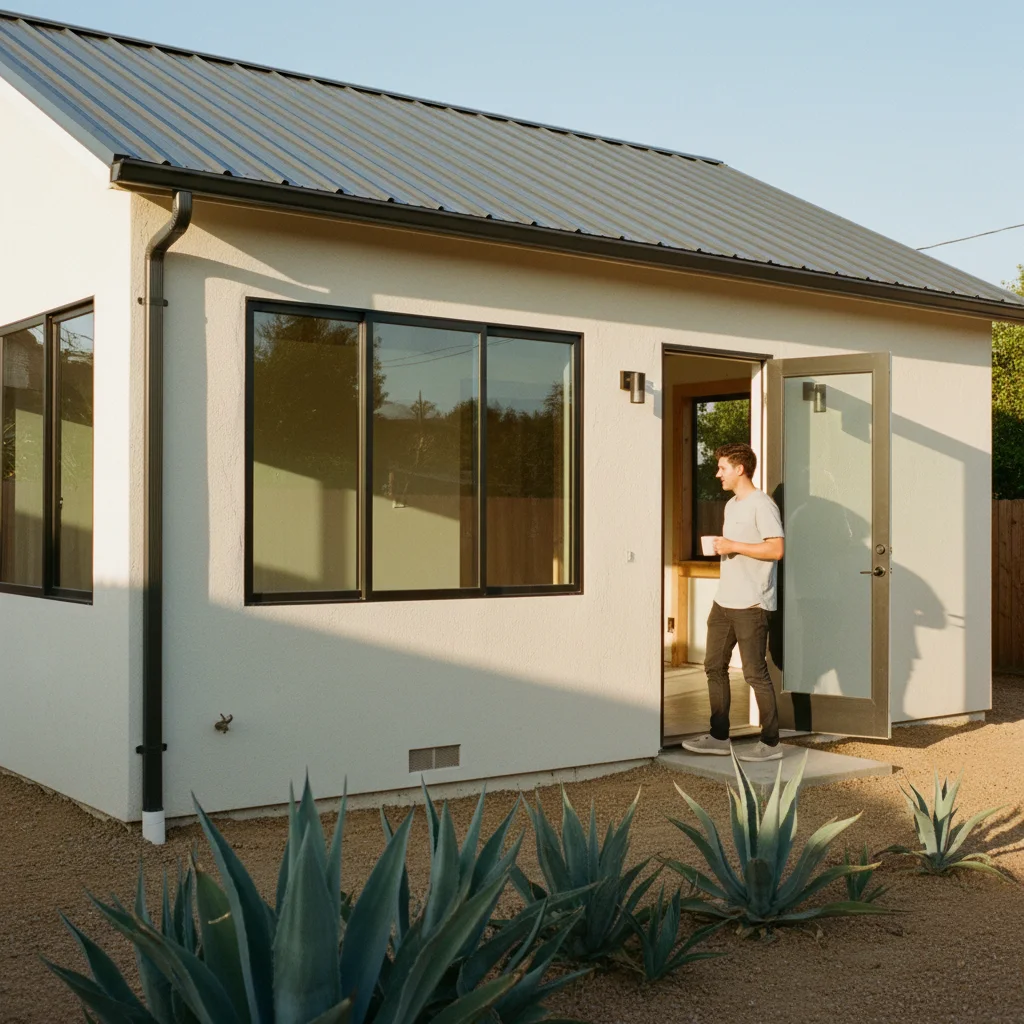
Chino Hills' hillside building envelope standards specifically impact room addition designs and approvals by imposing stringent requirements on construction materials, site grading, and structural engineering to address fire safety and geological stability. For homes on hillsides, the design must incorporate specific fire-resistant materials, such as non-combustible siding and Class A fire-rated roofing, due to the Wildland-Urban Interface (WUI) fire code. This often means higher material costs and a more limited selection of aesthetic options compared to non-WUI areas.
Furthermore, the city requires detailed geological and soils reports for hillside construction to ensure the stability of the foundation and any retaining walls. Engineered drainage plans are critical to manage stormwater runoff and prevent erosion, a common concern with Chino Hills' clay and decomposed-granite soils. These reports and plans add to the design phase complexity and cost. Approvals will hinge on demonstrating strict adherence to these safety and environmental standards, often involving additional reviews from the Planning Department and potentially the Public Works Department for grading and drainage.
Under what specific conditions can a homeowner apply for a Minor Exception for room additions in Chino Hills, and what is the likelihood of approval?
Get 3 ADU builder bids in 48 hours.
Our editors already screened California ADU builders. Answer 4 questions; we send 3 written bids inside 48 hours, with the real price for your scope, not their inflated first-call number.
Send my 3 bidsFree. No commission. If a match doesn't fit, we'll send another.
A homeowner can apply for a Minor Exception for room additions in Chino Hills primarily when a proposed design slightly deviates from standard zoning requirements, such as a minor encroachment into a setback or a slight exceeding of height limits, and strict adherence would create an undue hardship. These conditions typically involve unique property characteristics, such as an unusual lot shape or existing non-conforming structures, that make it impractical to meet all code requirements without significantly compromising the project's feasibility or design.
To apply, you must demonstrate that the exception is minimal, will not adversely affect adjacent properties, and is consistent with the general intent of the zoning ordinance. The likelihood of approval for a Minor Exception in Chino Hills is moderate, generally higher for minor deviations with clear justifications and strong neighborhood support. However, it is never guaranteed. The process involves a formal application, often a public hearing, and a review by the Planning Commission or Zoning Administrator. Consulting with the Planning Department before applying is crucial to assess the viability of your request.
Conclusion
Embarking on a room addition in Chino Hills is a significant investment that promises to enhance your home's value and functionality. By understanding the intricate interplay between city permit requirements, strict HOA architectural approvals, and Chino Hills' unique zoning and environmental considerations, you can navigate the process with confidence. Prioritizing HOA approval, preparing comprehensive plans, and budgeting for the specific local costs and timelines are key to a successful project. For personalized guidance and to ensure your vision aligns with all local regulations, always consult with the City of Chino Hills Building and Safety Division and your HOA's Architectural Review Committee early in your planning process.
FAQ
Q: Do I need a permit for a small room addition in Chino Hills?
A: Yes, any room addition, regardless of size, requires a building permit from the City of Chino Hills to ensure it meets safety, structural, and zoning codes. Even small additions must comply with local regulations.
Q: How long does it take to get a room addition permit in Chino Hills?
A: The initial plan review by the City of Chino Hills Building and Safety Division typically takes 15 business days. However, the overall timeline, including HOA approval, revisions, and construction, can extend to 8-14 months from design to completion.
Q: What are the typical permit fees for a room addition in Chino Hills?
A: Permit fees for a room addition in Chino Hills generally range from $150 to $1,800, depending on the project's valuation, size, and specific inspections required. This does not include potential HOA review fees or separate trade permits.
Q: Is HOA approval required before applying for a city permit in Chino Hills?
A: Yes, due to Chino Hills' master-planned communities, HOA architectural approval is typically required and should be obtained before submitting your permit application to the City of Chino Hills. Your HOA approval letter will likely be a required document for the city's review.
Q: How do Chino Hills' fire codes affect room addition materials?
A: Chino Hills' Wildland-Urban Interface (WUI) fire codes often require specific ignition-resistant materials for room additions, including Class A roof assemblies and non-combustible exterior finishes, to mitigate fire risk, especially for properties in designated WUI zones.
Q: Can I build a two-story addition in Chino Hills?
A: Yes, two-story additions are generally permitted in Chino Hills, but they require detailed engineered plans, adherence to specific height limits, setbacks, and a thorough Design Review if the addition is 50% or more of the existing floor area. HOA approval will also be critical for multi-story projects.
Frequently Asked Questions
Do I need a permit for a small room addition in Chino Hills?
Yes, any room addition, regardless of size, requires a building permit from the City of Chino Hills to ensure it meets safety, structural, and zoning codes. Even small additions must comply with local regulations.
How long does it take to get a room addition permit in Chino Hills?
The initial plan review by the City of Chino Hills Building and Safety Division typically takes 15 business days. However, the overall timeline, including HOA approval, revisions, and construction, can extend to 8-14 months from design to completion.
What are the typical permit fees for a room addition in Chino Hills?
Permit fees for a room addition in Chino Hills generally range from $150 to $1,800, depending on the project's valuation, size, and specific inspections required. This does not include potential HOA review fees or separate trade permits.
Is HOA approval required before applying for a city permit in Chino Hills?
Yes, due to Chino Hills' master-planned communities, HOA architectural approval is typically required and should be obtained before submitting your permit application to the City of Chino Hills. Your HOA approval letter will likely be a required document for the city's review.
How do Chino Hills' fire codes affect room addition materials?
Chino Hills' Wildland-Urban Interface (WUI) fire codes often require specific ignition-resistant materials for room additions, including Class A roof assemblies and non-combustible exterior finishes, to mitigate fire risk, especially for properties in designated WUI zones.
Can I build a two-story addition in Chino Hills?
Yes, two-story additions are generally permitted in Chino Hills, but they require detailed engineered plans, adherence to specific height limits, setbacks, and a thorough Design Review if the addition is 50% or more of the existing floor area. HOA approval will also be critical for multi-story projects.
Ready to start your room addition project?
Find My ProsFrequently Asked Questions
Do I need a permit for a small room addition in Chino Hills?
Yes, a building permit from the City of Chino Hills is required for any room addition, regardless of its size. This process is mandatory to ensure that all construction, even for small additions, complies with essential safety, structural, and zoning codes established by the city for residential projects.
In the City of Chino Hills, the requirement for a building permit applies to all room additions without exception for size. The city enforces this to confirm that every project adheres to local regulations. Obtaining a permit ensures that your small addition is reviewed for compliance with current safety, structural, and zoning codes. This oversight is a critical step for any construction, guaranteeing the new space is built correctly and legally.
How long does it take to get a room addition permit in Chino Hills?
The initial plan review for a room addition permit by the Chino Hills Building and Safety Division typically takes 15 business days. However, the complete project timeline is much longer. From initial design to final construction, including time for revisions and HOA approval, the entire process usually takes 8 to 14 months.
The 15 business day timeframe refers specifically to the first plan check conducted by the City of Chino Hills Building and Safety Division. This is only one part of the pre-construction process. The much longer overall estimate of 8 to 14 months accounts for the entire project from design to completion. This extended schedule includes other necessary steps, such as obtaining HOA approval and addressing any plan corrections requested by the city, before construction can start.
What are the typical permit fees for a room addition in Chino Hills?
Permit fees for a room addition in Chino Hills typically range from $150 to $1,800. The final cost depends on the project's valuation, size, and the specific inspections needed. This estimate does not include potential Homeowners Association (HOA) review fees or separate permits for trades like electrical or plumbing.
The cost for a room addition permit in Chino Hills varies because fees are calculated based on several factors. A project's total valuation, its square footage, and the number of required inspections all influence the final price, which generally falls between $150 and $1,800.
It is important to remember that this range is for the primary building permit only. Homeowners should also budget for other potential costs. These can include separate permits for electrical, plumbing, or mechanical work, as well as any review fees required by a local HOA.
Is HOA approval required before applying for a city permit in Chino Hills?
Yes, HOA architectural approval is typically required in Chino Hills before you apply for a city permit. Due to the area's master-planned communities, you should obtain your HOA approval letter first. The City of Chino Hills will likely require this document as a necessary part of its official review process.
In Chino Hills, the city's permitting process is closely linked with the rules of its many master-planned communities. Before submitting plans to the City of Chino Hills, you must first get formal approval from your Homeowners Association for the proposed architectural work. This step is not optional, it is a prerequisite for the city's own evaluation. When you assemble your permit application package, make sure to include the official HOA approval letter. Submitting an application without this required document will likely lead to delays or an outright rejection by the city.
How do Chino Hills' fire codes affect room addition materials?
Chino Hills' fire codes require specific materials for room additions in Wildland-Urban Interface (WUI) zones to mitigate fire risk. These codes mandate ignition-resistant materials, including Class A roof assemblies and non-combustible exterior finishes, for any property located within these designated high-risk areas to improve a structure's chance of survival.
For homeowners in Chino Hills planning a room addition, the Wildland-Urban Interface (WUI) fire codes are a critical consideration, especially for properties in designated zones. These regulations aim to reduce the risk of fire spreading from wildlands to homes. The codes specify the use of ignition-resistant construction materials throughout the project.
Key requirements include installing Class A roof assemblies, which offer the highest level of fire protection. Furthermore, the codes mandate non-combustible exterior finishes. Following these building standards is essential for project approval and for enhancing the safety of the structure against wildfire threats common to the area.
Can I build a two-story addition in Chino Hills?
Yes, two-story additions are generally permitted in Chino Hills. Projects require detailed engineered plans and must follow specific height limits and setbacks. A thorough Design Review is mandatory if the addition is 50% or more of the existing floor area, and obtaining HOA approval is also a critical step for multi-story projects.
In Chino Hills, any two-story addition proposal must be supported by detailed engineered plans. These plans must demonstrate compliance with all city regulations, including strict height limits and property line setbacks. If your planned addition is significant, defined as 50% or more of your home's existing floor area, it will automatically trigger a thorough Design Review process with the city.
Separately, you must also secure permission from your Homeowners Association. HOAs often have their own distinct rules governing multi-story structures to maintain neighborhood character. Gaining this approval is a critical requirement before construction can begin.