Service Guide
Outdoor Kitchen Cost
in California
$10K to $75K+ depending on layout, appliances, and materials. Get a detailed cost breakdown to plan your outdoor kitchen build.
$10K–$75K+
Cost range
6–12 Weeks
Total timeline
60–200%
ROI at resale
365 Days
Year-round use in California
Understanding Outdoor Kitchens
Why Outdoor Kitchens Are California's #1 Outdoor Upgrade
With 284 days of sunshine per year and average winter temperatures in the low 60s, California homeowners can realistically cook and entertain outdoors every month. This year-round usability makes outdoor kitchens the number one requested outdoor living upgrade.
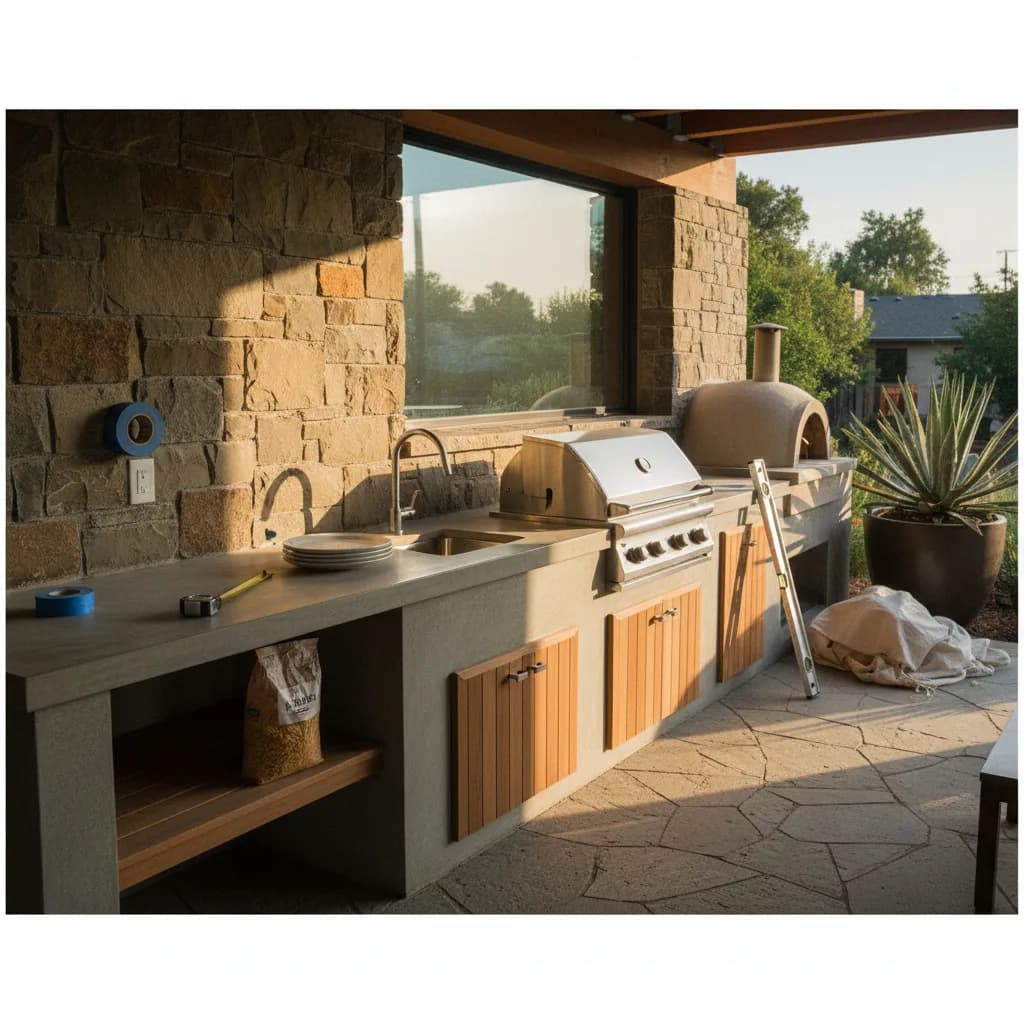
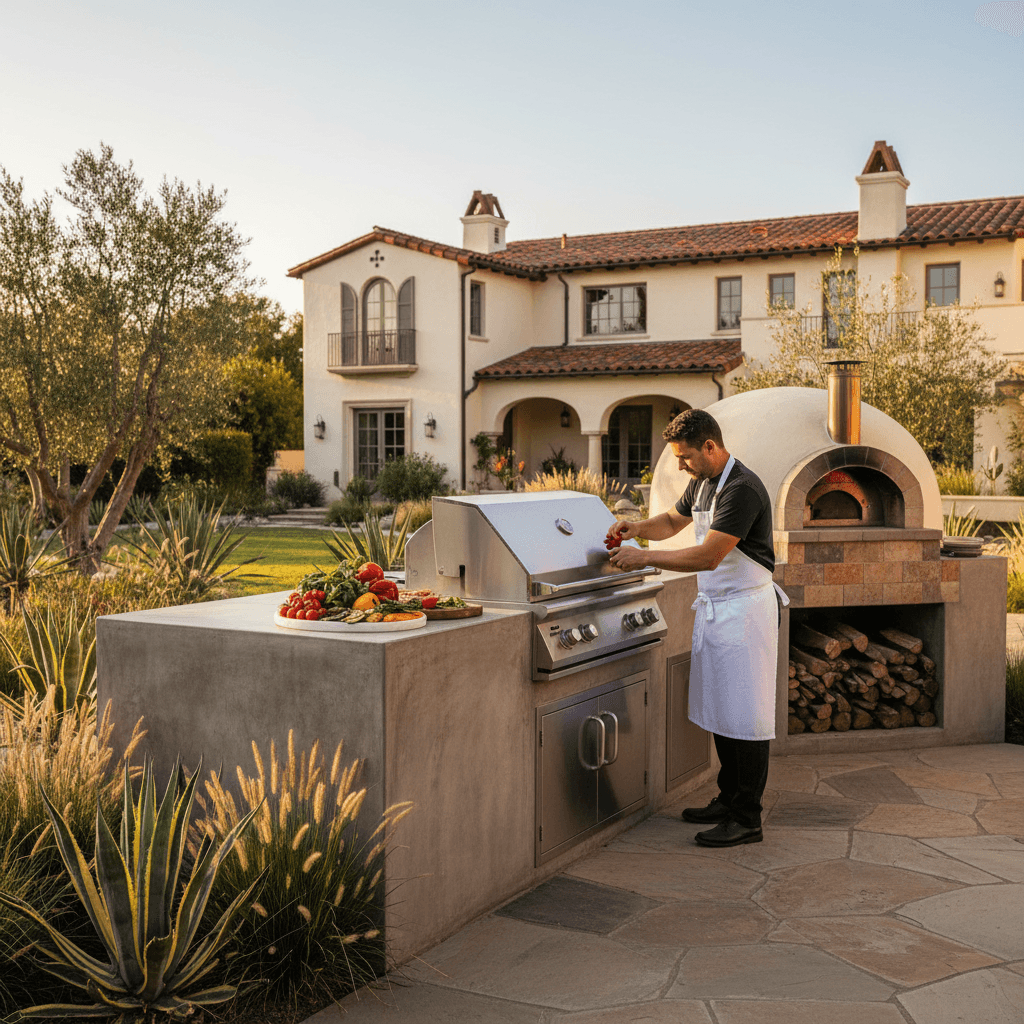
Modern outdoor kitchen design goes far beyond grilling. Today's installations often include wood-fired pizza ovens, built-in smokers, teppanyaki griddles, and bar-quality beverage centers. The best outdoor kitchens are designed as complete entertainment zones where the cook is always part of the party.
Did You Know?
California has 284 days of sunshine per year, making it one of the best states in the U.S. for year-round outdoor cooking and entertaining.
How Much Does an Outdoor Kitchen Cost in California?
Outdoor kitchens in California range from $10,000 to $25,000 for a basic grill island, $25,000 to $50,000 for a mid-range kitchen with grill, refrigerator, sink, and countertops, and $50,000 to $75,000+ for a premium installation with pizza oven, full utilities, custom cabinetry, and covered structure.
Outdoor Kitchen Layouts: L-Shape, U-Shape, Island & Linear
The right outdoor kitchen design starts with choosing a layout that fits your space, budget, and cooking style. Four configurations account for the vast majority of residential outdoor kitchens built in California: linear, L-shape, U-shape, and freestanding island. Each layout has distinct advantages depending on your patio footprint, how often you entertain, and whether you prioritize cooking versatility or social flow.
Linear Layout
The linear (or straight-run) layout is the simplest outdoor kitchen design and the most affordable to build. It arranges the grill, countertop, and storage along a single wall or fence line, typically spanning 6 to 10 feet. Expect to invest $10,000 to $20,000 for a well-built linear kitchen in California. This layout is ideal for narrow patios, side yards, or balconies where depth is limited. Despite its compact footprint, a linear kitchen can comfortably fit a 36-inch built-in grill, 30 inches of prep counter, and an under-counter refrigerator.
L-Shape Layout
The L-shape is the most popular outdoor kitchen layout in California, and for good reason. By turning the counter at a 90-degree angle, this design naturally separates the cooking zone from the serving and prep area, which improves traffic flow and keeps guests away from the heat. Typical L-shape kitchens require a minimum footprint of roughly 10 by 8 feet and cost between $20,000 and $40,000 installed. The additional counter run provides space for a sink, side burner, or beverage station without crowding the grill.
U-Shape Layout
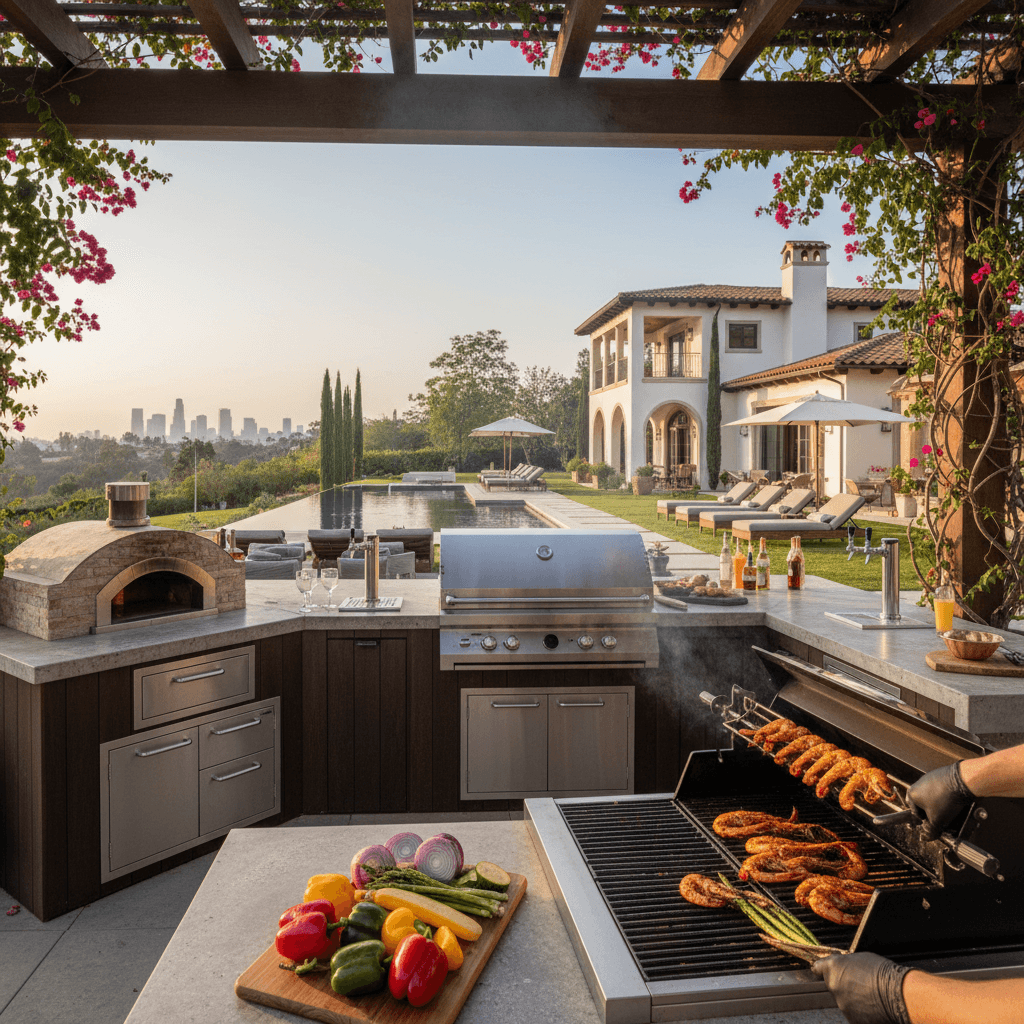
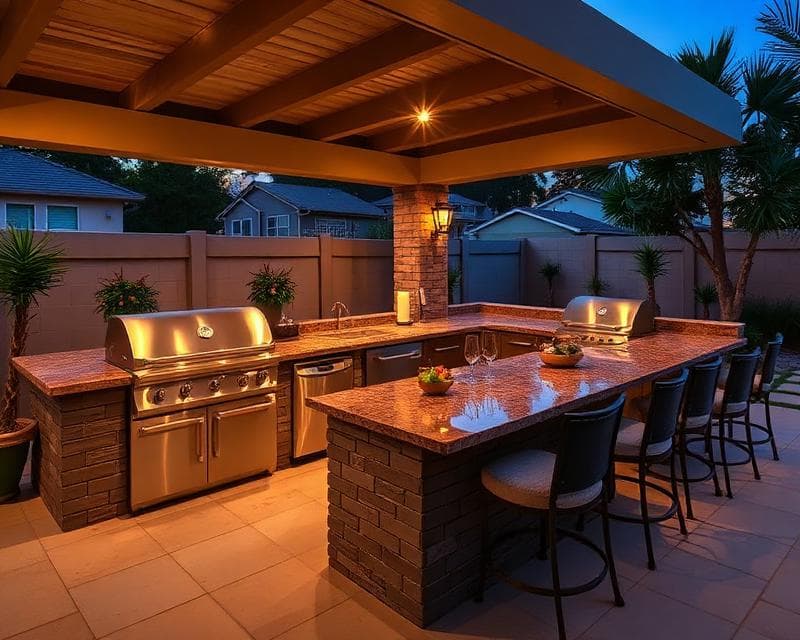
For serious home cooks who want maximum counter space and appliance capacity, the U-shape layout delivers. Three connected runs of cabinetry create an enclosed workspace that mirrors a professional kitchen. You will need a minimum footprint of 12 by 12 feet to build a functional U-shape, and installed costs range from $30,000 to $60,000 in California. This layout comfortably accommodates a full appliance suite: grill, pizza oven, smoker, sink, refrigerator, and ample storage. The enclosed design also provides wind protection for burner flames, which is practical in foothill and coastal areas.
Freestanding Island Layout
A freestanding island sits away from walls and fences, making it the most flexible and social outdoor kitchen layout. Guests can gather on all sides, and the cook faces outward toward the yard or pool rather than staring at a wall. Islands range from compact 7-foot units to expansive 14-foot setups and cost $15,000 to $50,000 depending on size and materials. Because islands are not attached to the house, they require underground utility runs for gas, water, and electrical, which can add $2,000 to $5,000 to the project.
Quick Layout Comparison
| Layout | Cost Range | Min. Space | Best For |
|---|---|---|---|
| Linear | $10K–$20K | 6×4 ft | Small patios, tight budgets |
| L-Shape | $20K–$40K | 10×8 ft | Most homeowners, entertaining |
| U-Shape | $30K–$60K | 12×12 ft | Serious cooks, full appliance suite |
| Island | $15K–$50K | 8×5 ft | Social gatherings, pool areas |
Must-Have vs. Nice-to-Have Outdoor Kitchen Appliances
Appliance selection is where outdoor kitchen budgets either stay on track or spiral. A practical approach is to organize your wish list into three tiers: essentials that every outdoor kitchen needs, upgrades that meaningfully improve the cooking experience, and premium additions that are worth considering only after the fundamentals are covered. This framework helps you prioritize spending and plan for phased installation if budget is a concern.
Must-Have Tier: The Foundation
Built-in grill ($1,000–$5,000): This is the centerpiece of any outdoor kitchen. A quality 36-inch built-in grill from a brand like Weber, Lynx, or Bull provides 600 to 900 square inches of cooking surface and 40,000 to 60,000 BTUs. Stainless steel construction rated 304-grade or higher resists California's coastal salt air.
Countertop space (30 sq ft minimum): Outdoor cooking demands more prep surface than indoor kitchens because you are transporting food, tools, and plates from inside. Plan for at least 15 inches of landing space on each side of the grill.
Storage cabinets: Marine-grade stainless steel or powder-coated aluminum cabinets keep tools, charcoal, and accessories organized and protected from weather. Budget $1,500 to $4,000 for a basic cabinet set.
Task lighting: Outdoor cooking does not stop at sunset. LED under-counter lights and a grill hood light are essential for safety and visibility. Budget $300 to $800 for hardwired LED lighting on a dedicated circuit.
Nice-to-Have Tier: Meaningful Upgrades
Side burner ($300–$800): A single or double side burner lets you heat sauces, boil water for corn, or sear in a cast iron pan without going back inside. Power side burners with 25,000+ BTUs handle wok cooking.
Outdoor-rated refrigerator ($500–$2,000): UL-listed outdoor refrigerators are built with 304 stainless steel, sealed electrical components, and stronger compressors that maintain temperature in ambient heat up to 110 degrees Fahrenheit, common in California's inland valleys during summer.
Sink with running water ($400–$1,200 plus plumbing): Hot and cold running water transforms convenience and food safety. Plumbing a sink requires a water supply line, drain line, and potentially a grease trap, adding $1,500 to $3,000 in plumbing costs.
Pizza oven ($1,000–$5,000): Wood-fired or gas pizza ovens reach 700 to 900 degrees Fahrenheit and cook a Neapolitan pizza in 90 seconds. Countertop models start around $1,000, while built-in brick ovens run $3,000 to $5,000 installed.
Premium Tier: For the Complete Setup
These additions push your built-in BBQ island into full outdoor living territory: kegerator ($600–$1,500) for draft beer on tap, warming drawer ($1,000–$2,000) to hold dishes at serving temperature, built-in smoker ($1,500–$4,000) for low-and-slow barbecue, ice maker ($500–$1,500) that produces 25 to 50 pounds of ice per day, and outdoor-rated TV ($1,500–$4,000) with a sunlight-readable screen rated to IP55 or higher for dust and water resistance.
California-Specific Requirements
Gas line: Natural gas is the most common fuel for outdoor kitchens in California and requires a licensed plumber (C-36 license) to install a dedicated gas line from your meter. A typical 30- to 50-foot gas line run costs $500 to $1,500. If natural gas is unavailable, propane is the alternative, requiring a tank (typically 100 to 500 gallons) and annual refills averaging $300 to $600 per year.
Electrical: Most outdoor kitchens need at least one dedicated 20-amp circuit for refrigerators, lighting, and outlets. A GFCI-protected circuit run from your main panel costs $500 to $1,200 for a licensed electrician. Premium setups with heaters, TVs, or multiple appliances may need two or three circuits.
Countertop Materials for Outdoor Kitchens
The best outdoor kitchen countertop material balances durability, heat resistance, maintenance, and aesthetics. Unlike indoor countertops, outdoor surfaces must withstand UV radiation, temperature swings from 40 to 110 degrees Fahrenheit, rain, and direct contact with hot grill grates and pans. Here is how the four most common outdoor kitchen materials compare in California conditions.
Granite
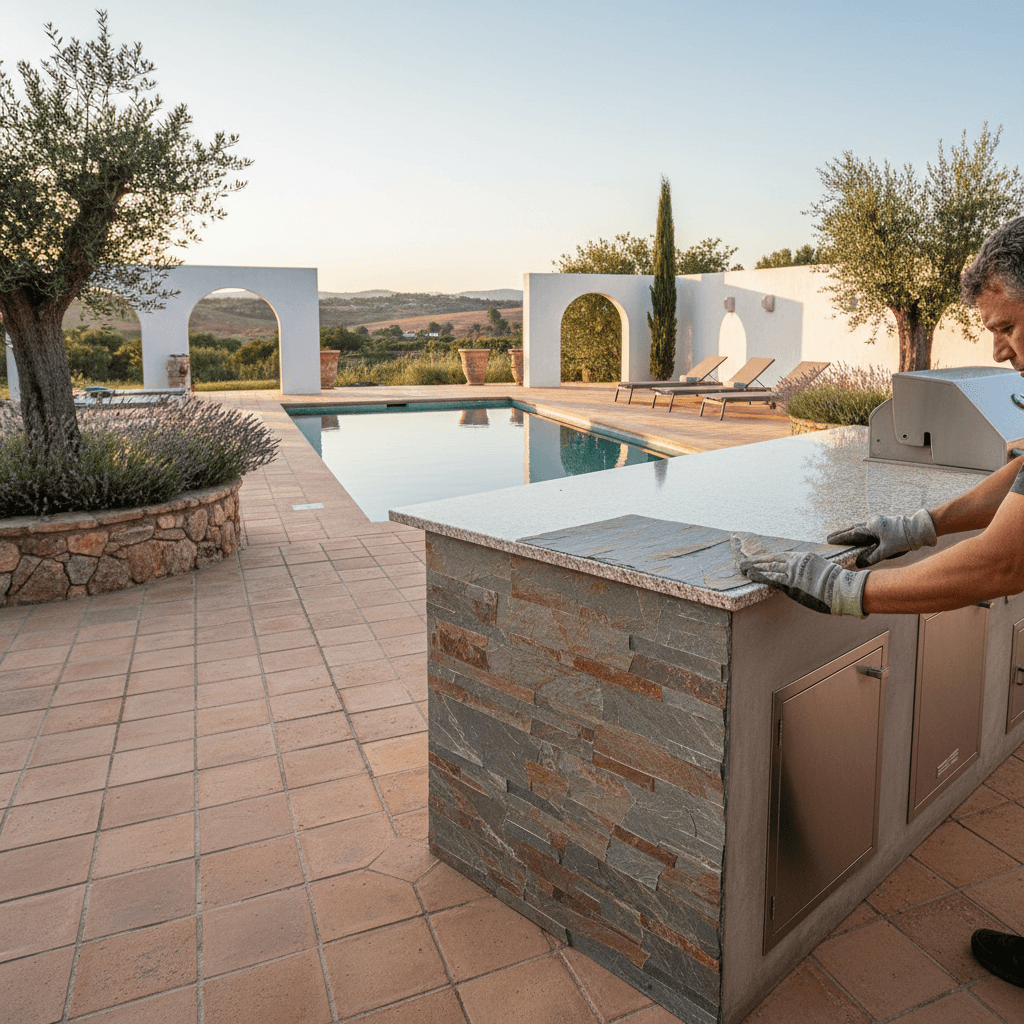
At $50 to $100 per square foot installed, granite remains the most popular outdoor kitchen countertop in California. It is naturally heat resistant up to 1,200 degrees Fahrenheit, comes in hundreds of colors and patterns, and resists scratches better than almost any alternative. The trade-off is weight (roughly 18 pounds per square foot at 3 cm thickness, requiring sturdy base cabinets) and maintenance: granite requires annual sealing with a penetrating impregnating sealer to prevent staining from oils and acidic marinades. Darker granite colors like Absolute Black and Ubatuba perform better outdoors because they show less UV fading over time.
Concrete
Cast-in-place or precast concrete countertops cost $65 to $135 per square foot and offer the most design flexibility of any outdoor material. Concrete can be poured into any shape, integrally colored to match your hardscape, embedded with decorative aggregates, or finished with a hand-troweled texture. It handles heat well and develops a natural patina over time. However, concrete is porous and requires sealing every one to two years. Hairline cracks are common (and generally cosmetic), especially in California's dry inland climate where rapid temperature changes between day and night cause thermal stress.
Tile
Tile is the most budget-friendly outdoor kitchen countertop option at $10 to $80 per square foot, depending on whether you choose ceramic, porcelain, or natural stone tile. Porcelain tile rated for outdoor use (water absorption under 0.5%) is the best choice for California kitchens. The variety is enormous: you can achieve the look of marble, wood, or concrete at a fraction of the cost. The downside is grout lines, which require regular cleaning and periodic resealing to prevent staining and mildew. Individual tiles can crack under heavy impact, though replacement is straightforward and inexpensive.
Stainless Steel
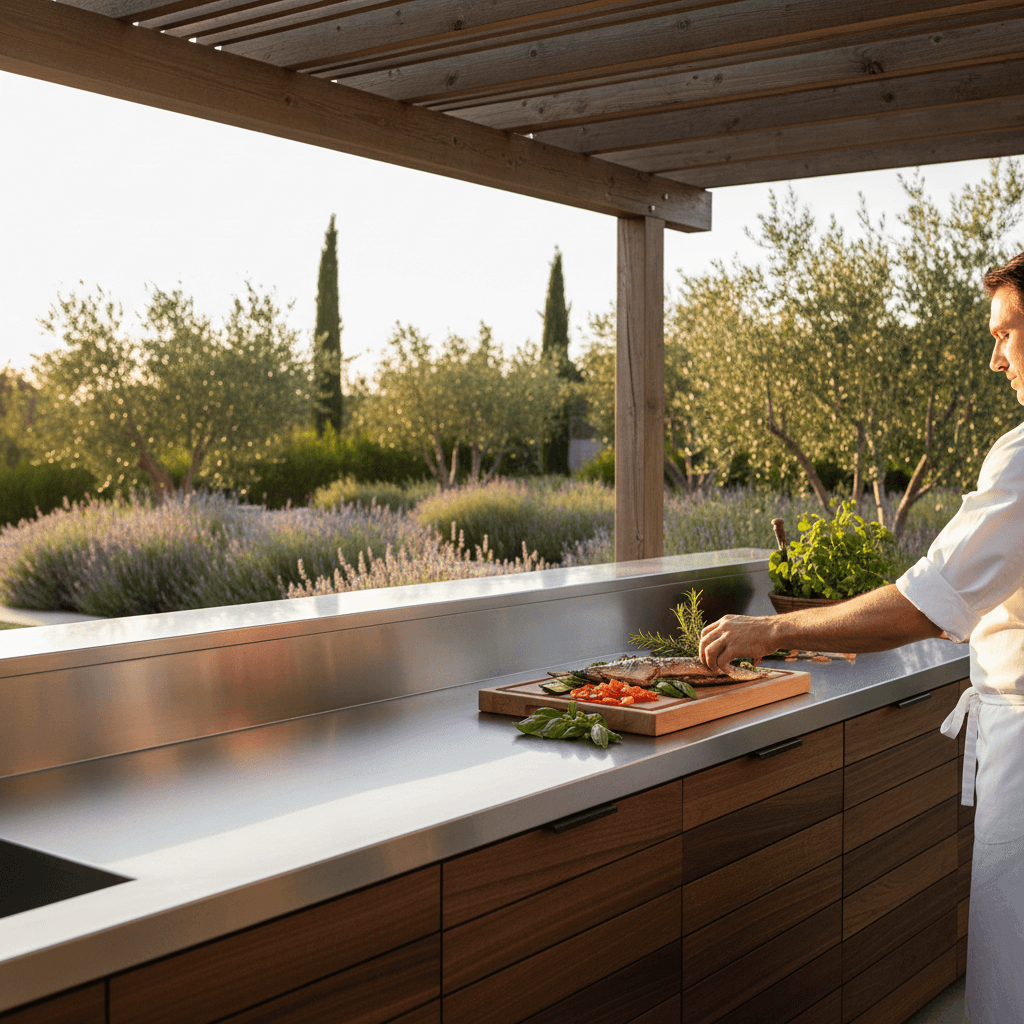
At $75 to $150 per square foot, stainless steel delivers a commercial kitchen look and the most hygienic surface available. It is completely non-porous, impervious to water, and easy to sanitize. Stainless does not crack, chip, or stain, and it never needs sealing. The practical downsides are visibility of fingerprints and water spots (choose a brushed or matte finish rather than mirror polish), noise when placing items on the surface, and the fact that it gets extremely hot in direct California sun. A pergola or shade structure is strongly recommended if you choose stainless steel countertops.
California UV Consideration
UV resistance is a critical factor for outdoor kitchen countertops in California. The state receives 5.5 to 7.5 peak sun hours per day, depending on location. Materials like quartz (engineered stone) are not recommended for outdoor use because the resin binders break down and discolor under prolonged UV exposure. Granite, concrete, tile, and stainless steel all hold up well to California sun, though lighter-colored granite and concrete may develop a slight warm patina over several years.
Countertop Material Comparison
| Material | Cost/sq ft | Heat Resistant | Sealing | UV Rating |
|---|---|---|---|---|
| Granite | $50–$100 | Excellent | Annual | Excellent |
| Concrete | $65–$135 | Good | Every 1–2 yrs | Good |
| Tile | $10–$80 | Good | Grout only | Good |
| Stainless Steel | $75–$150 | Excellent | None | Excellent |
Why an Outdoor Kitchen
6 Reasons California Homeowners Build Outdoor Kitchens
Cook & Entertain 365 Days a Year
California's year-round mild climate means your outdoor kitchen isn't seasonal — it's a daily-use living space. No other city offers this level of usability.
60–200% ROI at Resale
Outdoor kitchens are one of the highest-return home investments in the California market. Buyers expect outdoor living spaces, and a quality kitchen significantly increases value.
Keep Heat & Smoke Outside
Cooking outdoors keeps your indoor kitchen cool during California's hot months, reduces indoor grease and odors, and lowers air conditioning costs.
Designed for Your Cuisine
From wood-fired pizza to Korean BBQ to classic American grilling, your outdoor kitchen can be customized with the exact appliances for your cooking style.
Built with SoCal-Made Brands
Access to premium manufacturers like Lynx (Downey), Twin Eagles (Compton), and Alfresco (City of Industry) means shorter lead times and local support.
The Heart of Your Outdoor Living Space
An outdoor kitchen becomes the natural gathering point — integrating seamlessly with your pool, patio, fire pit, and dining area.
The Process
How an Outdoor Kitchen Is Built
Design Consultation
Day 1A pro evaluates the space, discusses your cooking style, entertainment needs, and budget. Utility access for gas, water, and electrical is assessed.
Custom Design & Appliance Selection
Week 1-3The design team creates a detailed layout showing kitchen configuration, appliance placement, and countertop material. Brands like Lynx, Twin Eagles, and Alfresco are popular SoCal choices.
Permitting
Week 2-6Outdoor kitchens with gas lines, plumbing, and electrical require permits from LADBS. Applications are prepared and managed through the approval process. Fees range $400-$2,000.
Construction & Installation
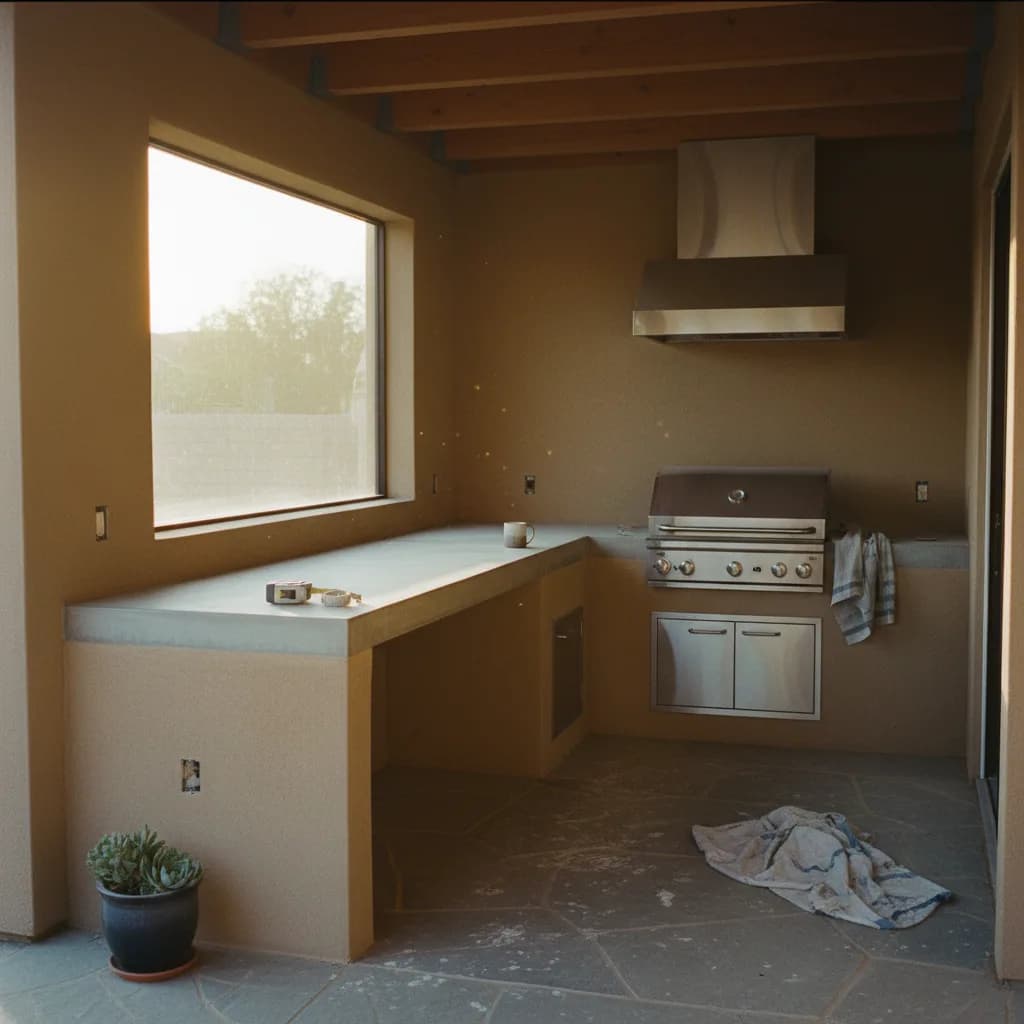
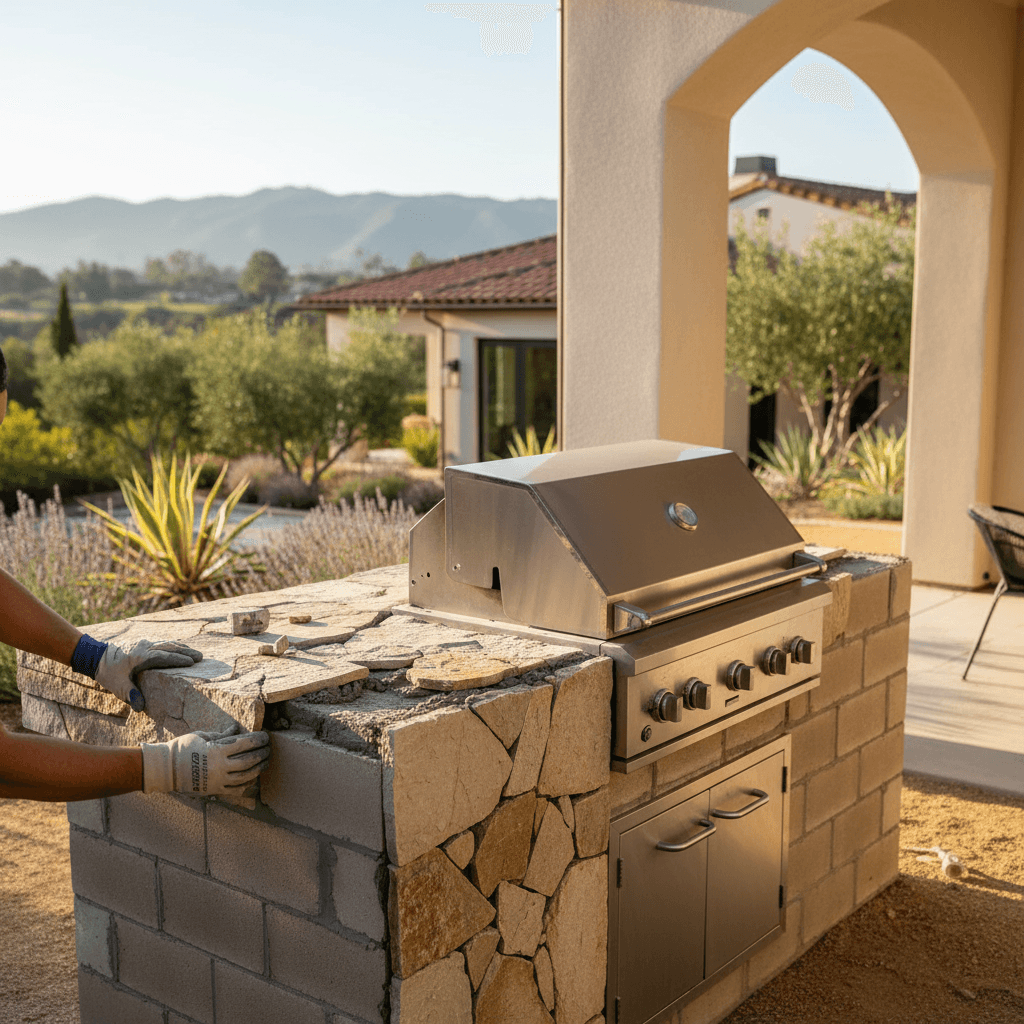
2-6 WeeksThe crew constructs the kitchen frame, runs utilities, installs countertops, sets appliances, and completes finish work including stone veneer, tile, or stucco.
Final Walkthrough & Activation
Completion DayEvery component is walked through and tested. Gas and water connections are verified, and warranty documentation is provided. Ready for your first outdoor dinner party.
Countertop Guide
Comparing Outdoor Kitchen Countertops
| Material | Cost / linear ft | Durability | Heat Resistance | Maintenance | California Climate |
|---|---|---|---|---|---|
GraniteRECOMMENDED | $80–$200/lf | Excellent | Very Good | Seal annually | |
Concrete | $60–$150/lf | Excellent | Good | Seal 1–2×/year | |
Porcelain Slab | $100–$250/lf | Excellent | Excellent | Virtually none | |
Tile | $30–$80/lf | Good | Moderate | Re-grout periodic | |
Stainless Steel | $150–$300/lf | Excellent | Excellent | Wipe clean |
Granite
RECOMMENDEDCost / linear ft
$80–$200/lf
Durability
Excellent
Heat Resistance
Very Good
California Climate
Seal annually
Concrete
Cost / linear ft
$60–$150/lf
Durability
Excellent
Heat Resistance
Good
California Climate
Seal 1–2×/year
Porcelain Slab
Cost / linear ft
$100–$250/lf
Durability
Excellent
Heat Resistance
Excellent
California Climate
Virtually none
Tile
Cost / linear ft
$30–$80/lf
Durability
Good
Heat Resistance
Moderate
California Climate
Re-grout periodic
Stainless Steel
Cost / linear ft
$150–$300/lf
Durability
Excellent
Heat Resistance
Excellent
California Climate
Wipe clean
Our recommendation: Granite offers the best combination of durability, heat resistance, UV stability, and aesthetics for California outdoor kitchens. Porcelain slab is an excellent modern alternative with virtually zero maintenance.
California Local Guide
Permits, Brands & Design Tips
Permits & Gas Lines
Most outdoor kitchens in California require at least one permit. Gas connections, plumbing for sinks, and electrical work each require their own permits from LADBS.
Your kitchen will need a dedicated gas line sized for the total BTU load of all appliances. Only a licensed plumber should install outdoor gas lines.
Permit costs range from $400 to $2,000 depending on scope. LADBS processes most permits within 2–4 weeks.
Year-Round Design Tips
Shade & Cover: A covered structure dramatically increases comfort during midday cooking. Motorized louvered roofs offer the best flexibility.
Lighting: Proper task lighting over cooking surfaces and ambient lighting for dining extend use into the evening.
Wind Protection: Position your grill with Santa Ana winds at your back. Consider glass wind screens for exposed locations.
SoCal Appliance Brands
Lynx Professional Grills
Downey, CA
Commercial-grade stainless steel with ceramic burners
Twin Eagles
Compton, CA
Premium grills with hexagonal cooking grates
Alfresco
City of Industry, CA
Fully integrated outdoor kitchen systems
Reviews
What California Homeowners Say
"Our contractor designed and built the outdoor kitchen of our dreams. We have a Lynx grill, pizza oven, full sink, beverage center, and granite bar seating for six. The quality of the construction is exceptional, and we use it literally every week. It's completely transformed how we entertain."
Steven & Nina R.
Studio City · Custom U-shape outdoor kitchen with pergola
"The pizza oven alone was worth the investment. We make pizzas every Friday night."
Brian L. · Westchester
"Professional from permits to completion. The gas line work was handled perfectly."
Catherine W. · Pasadena
"We've had our outdoor kitchen for two years and it still looks brand new."
Ricardo M. · Eagle Rock
"Our builder helped us choose appliances that fit our budget without compromising quality."
Jenny & Mark T. · Marina del Rey
FAQ
Frequently Asked Questions
Ready to start your outdoor kitchen project?
Get matched with 2-3 vetted California contractors. 100% free, no obligation.
Find My ProsKeep Reading
Explore More California Guides
Your Next Step: Finding an Outdoor Kitchen Builder in California
Browse top-rated outdoor kitchen builders in California, compare options, and get matched for free.
Find a Trusted ProFree to use · Independent reviews · We respond within 24 hours