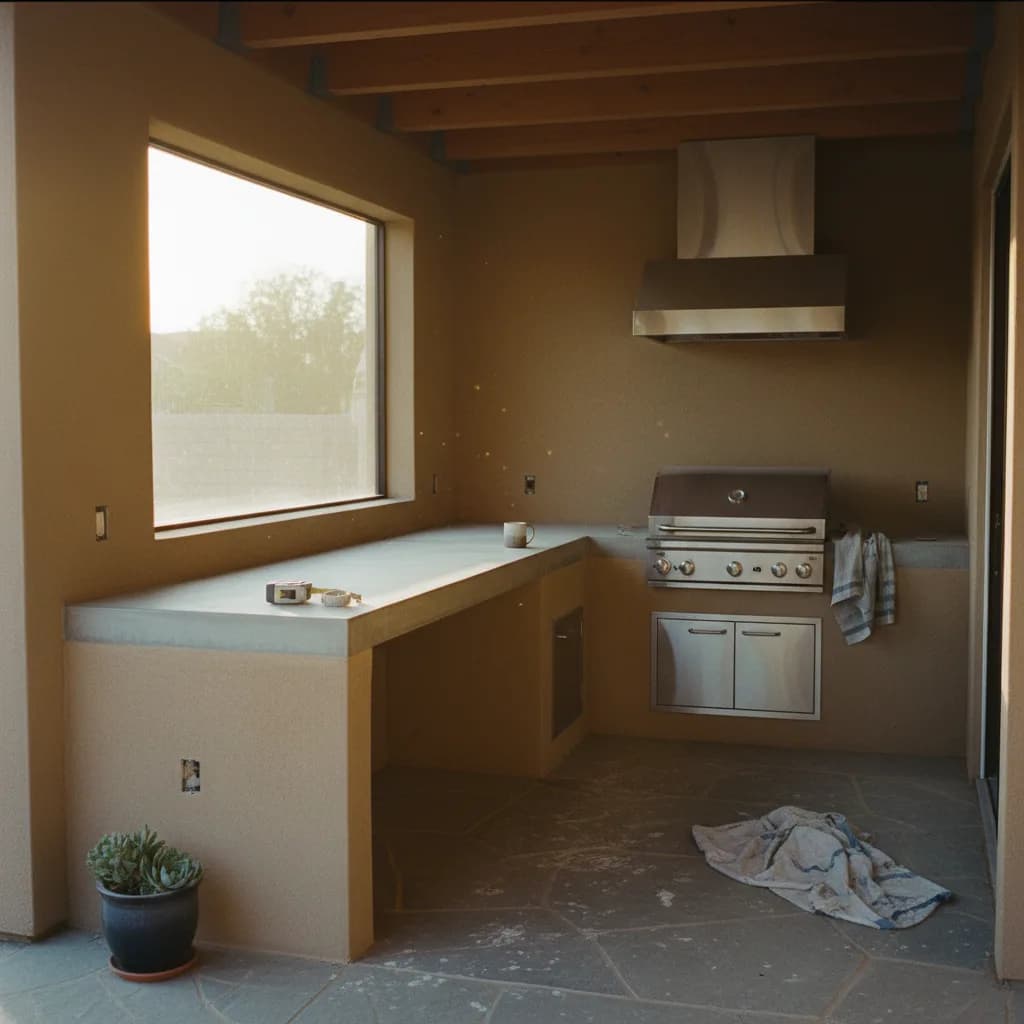
A complete, built-in outdoor kitchen in Riverside costs between $22,000 and $65,000 in 2026, with most homeowners landing near the $38,500 median for a functional, mid-range setup. The price can start lower, around $9,000 to $14,000, for a simpler project like a prefab island with a drop-in grill on an existing concrete patio. But for a custom masonry island with granite countertops, a sink, and refrigeration, the budget quickly climbs past the $30,000 mark once you account for essential utility runs and city permits.
In a Nutshell: Riverside Outdoor Kitchen Costs
- Total Cost Range: $9,000 to $85,000+
- Typical Mid-Range Spend: $32,000 to $45,000
- Project Timeline: 6 to 14 weeks from design approval to completion.
- Biggest Surprise Cost: The electrical subpanel and gas line trenching. Homeowners consistently underestimate this, often adding $4,000 to $7,500 to the initial budget.
What an Outdoor Kitchen Actually Costs in Riverside in 2026
The final price tag for a Riverside outdoor kitchen depends entirely on the scope: the size of the island, the quality of the appliances, the countertop material, and the complexity of the utility connections. We've broken down three common project tiers.
| Tier | Cost Range | What You Get |
|---|---|---|
| Basic | $12,000, $22,000 | A small (6-8 linear feet) prefabricated or simple masonry island with a stucco finish. Includes a mid-tier 30-inch drop-in grill (like a Napoleon Prestige 500), access doors, and a tile countertop. Typically uses a propane tank and has no running water or electricity. |
| Mid-Range | $25,000, $45,000 | A custom 10-14 foot linear or L-shaped masonry island with stone veneer. Features a 36-inch built-in grill (like a Lynx 36-inch Sedona), an outdoor-rated refrigerator, a sink with a cold water line, GFCI electrical outlets, and granite countertops. |
| Premium | $50,000, $85,000+ | An expansive L- or U-shaped island with extensive counter space and bar seating. Includes a professional-grade 42-inch+ grill (like a Hestan GMBR42), a power side burner, a pizza oven, an outdoor ice maker, a full sink with hot/cold water, extensive LED lighting, and premium quartzite or Dekton countertops. Often includes a pergola or other overhead structure. |
For a typical $38,500 mid-range project, the budget allocation looks something like this:
- Appliances (Grill, Fridge, Doors): 30% ($11,550)
- Structure & Finish (Frame, Veneer): 25% ($9,625)
- Countertops: 15% ($5,775)
- Utilities (Gas, Electric, Water): 15% ($5,775)
- Labor & Installation: 10% ($3,850)
- Permits & Design: 5% ($1,925)
The bottom of the range, around $9,000, typically represents a standalone grill island purchased from a big-box store and placed on an existing patio, with no permanent utility connections. It is not representative of a custom, contractor-built project.
Why Is an Outdoor Kitchen More Expensive in Riverside?
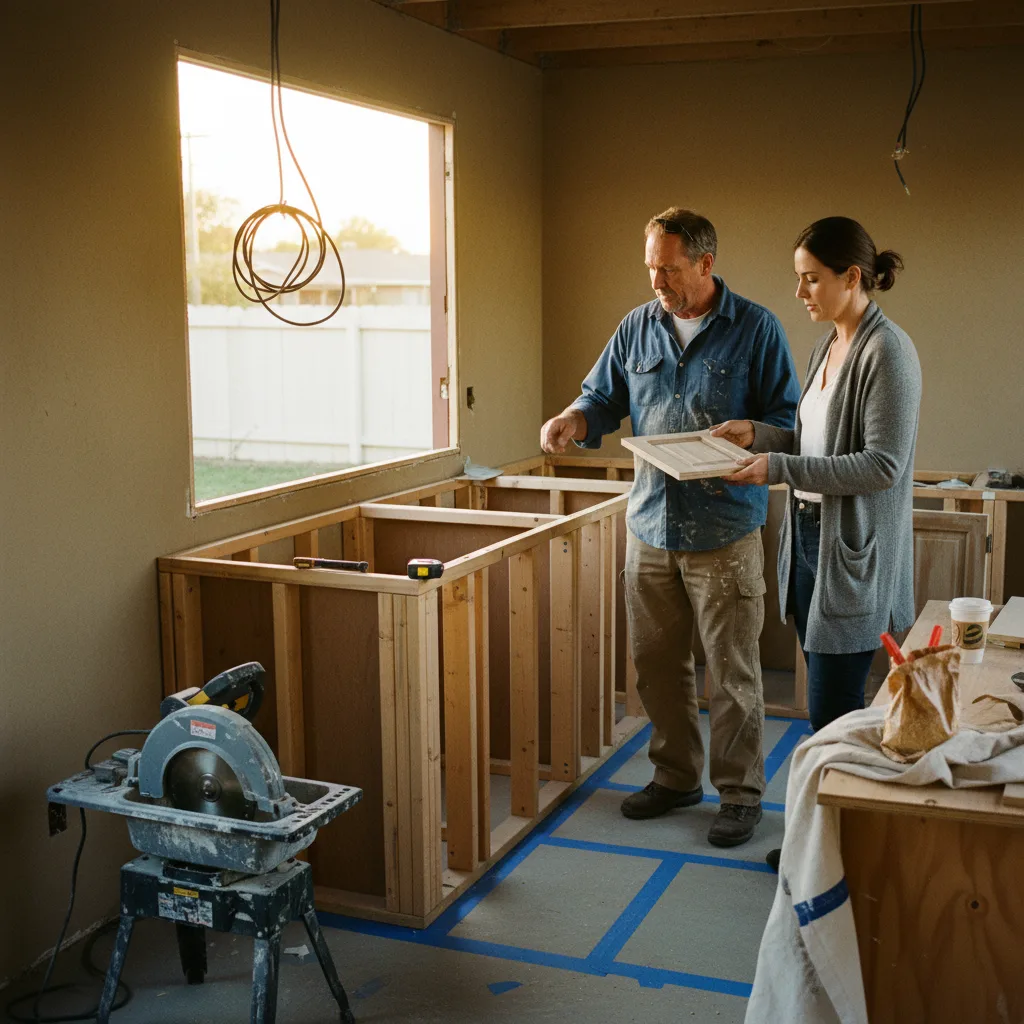
While not as costly as coastal Los Angeles, building costs in Riverside are higher than the national average due to a combination of labor rates, climate-driven material needs, and specific local conditions.
1. Skilled Labor Rates: The Inland Empire has a solid construction market, and skilled trades are in high demand. According to the California Department of Industrial Relations prevailing wage data for Riverside County, licensed electricians, plumbers, and masons command hourly rates that are 15-25% above the national average. This premium on skilled labor directly impacts the cost of safely and correctly installing the gas, electrical, and water lines that are the backbone of any functional outdoor kitchen.
2. Climate-Resistant Materials: Riverside's hot, dry summers and significant temperature swings demand materials that can withstand the elements without cracking, fading, or warping. This means specifying marine-grade stainless steel for appliances (like a Twin Eagles 36-inch grill), using thermally stable countertop materials like quartzite over standard granite, and choosing durable masonry and veneer. These upgraded materials carry a 10-20% cost premium over standard-grade options that might suffice in milder climates.
3. Neighborhood and Site Conditions: The cost can also vary by neighborhood. Projects in areas with larger lots and higher property values like Hawarden Hills or Mission Grove often involve more extensive hardscaping, higher-end finishes, and more complex designs to match the scale of the home., many Riverside properties have tough, rocky soil or hardpan, which can increase the cost of trenching for utility lines by $1,000 to $2,500 compared to digging in softer soil.
What Do Real Riverside Homeowners Spend in 2026?
Ready to compare vetted project options?
Use Project Match privately when your scope is clear enough for contractor conversations.
Start Project MatchThree representative projects from 2026, scoped similarly, reconstructed from Golden Yards Magazine's Project of the Day network and used here in aggregate form:
- The Canyon Crest Entertainer ($42,500): A fifteen-foot L-shaped island built with concrete block and a stacked stone veneer. The project included a Blaze 40-inch professional grill, a double side burner, an outdoor refrigerator, and a sink. The granite countertop had an extended overhang for bar seating for four. The budget included a new 40-amp subpanel and a 60-foot gas line run from the meter.
- The Orangecrest Family Hub ($34,000): This project focused on a twelve-foot linear island with a stucco finish to match the home. The appliance package was a Lion L75000 32-inch grill and a matching refrigerator. The homeowner opted for a durable porcelain tile countertop. The primary cost drivers were trenching through hard soil for the utilities and installing a new concrete footing to support the structure.
- The Victoria Woods Compact Kitchen ($26,800): For a smaller backyard, this eight-foot island provided maximum function in a small footprint. It featured a 30-inch KitchenAid built-in grill, an under-counter fridge, and a small prep sink. By connecting to an existing gas stub and water line on the back of the house, the homeowner saved significantly on utility installation costs.
Where Does the Money Actually Go? The Hidden Costs
The appliances and stonework are what you see, but the infrastructure is what makes an outdoor kitchen functional and safe. An outdoor kitchen contractor in Riverside often has to add these items after the initial quote once site conditions are fully assessed.
- Gas Line Installation: A new natural gas line, trenched from your meter to the kitchen island, is a major expense. Budget $1,800 to $4,500 depending on the distance and complexity. The gas line upsize from 1/2 inch to 3/4 inch is rarely in the first quote, budget another $1,200 to $2,400 if your meter doesn't support the BTU load of a high-power grill and side burner.
- Electrical Subpanel: Outdoor kitchens require dedicated GFCI circuits for refrigerators, outlets, and lighting. If your main panel is full, you'll need a new 60-amp subpanel. This adds $2,500 to $4,000.
- Water and Drain Lines: Trenching for a sink's supply and drain lines can cost $1,500 to $3,500, especially if it requires cutting through an existing patio.
- Concrete Footings: A heavy masonry island requires a proper concrete footing to prevent shifting and cracking. This can add $1,200 to $2,800 to the site preparation costs.
- Permit Fees: The City of Riverside requires permits for gas, electrical, and plumbing work. Expect to pay between $900 and $2,200 for plan review and inspections.
- Landscape and Hardscape Repair: Trenching for utilities will tear up your lawn and potentially your patio. Budget $1,000 to $3,000 for restoring sod, sprinklers, or pavers after the heavy work is done.
- Overhead Structure: A simple shade sail might be $800, but a custom-built wood pergola that meets wind-load requirements can easily add $12,000 to $25,000 to the project.
What Stops a Riverside Outdoor Kitchen From Running Over Budget?
Three main factors typically cause budget overruns on outdoor kitchen projects: unforeseen site conditions, mid-project changes, and under-specified utility needs.
First, hitting unexpected rock or hardpan during trenching can halt progress and require expensive specialized equipment. Second, homeowners changing their minds on appliance models or countertop materials after orders have been placed can incur restocking fees and labor charges for rework. Finally, discovering that the home's existing gas meter or electrical panel cannot support the new kitchen's load is a common and costly surprise. A thorough site assessment by your contractor is critical. To protect your investment, it's wise to hold back a portion of your funds. The National Association of Home Builders recommends a ten to fifteen percent contingency on renovations in homes over thirty years old.
How Can I Estimate My Project's Cost?
To get a preliminary, data-driven estimate for your specific project, our outdoor kitchen cost calculator can provide a ballpark figure based on your desired size, appliances, and finishes. This helps set a realistic budget before you start interviewing contractors.
What Should Your Riverside Contractor Include in the Quote?
A vague quote is a red flag. A professional bid for a Riverside outdoor kitchen should be itemized and clear. Insist on a proposal that includes the following fourteen points:
- Site preparation, including demolition and grading.
- Concrete footing specifications (depth and rebar).
- Framing materials (e.g., galvanized steel or concrete block).
- Sheathing and moisture barrier details.
- Veneer material and installation method (e.g., stone veneer, stucco).
- Countertop material, thickness, and edge detail.
- Make, model, and part number for all appliances (grill, fridge, doors, etc.).
- Gas line installation details, including pipe size, trenching depth, and pressure test.
- Electrical scope, including subpanel, conduit, wire gauge, and number of outlets/switches.
- Plumbing scope, including supply and drain line materials and connection points.
- All permit acquisition costs and management. A detailed scope of work is essential for the city; our Riverside outdoor kitchen permit guide explains the process.
- Waste removal and site cleanup.
- A clear payment schedule.
- Warranty information for both labor and materials.
Golden Yards Take
The most common point of failure in an outdoor kitchen budget is treating it like a furniture purchase instead of a small construction project. Homeowners fall in love with a $6,000 grill and a beautiful quartzite countertop, budgeting for the visible components. They forget they are essentially building a small, open-air utility room. The real cost of an outdoor kitchen is not in the appliances; it is in the permanent, code-compliant infrastructure required to power them. The gas lines, the electrical panel, the water hookups, and the concrete footings are the unglamorous, expensive truth of the project. If you budget for the infrastructure first and the appliances second, you will stay on track. If you do it the other way around, you are setting yourself up for a painful surprise.
Sources & Methodology
See the Golden Yards Methodology for how sources are reviewed, ranges are normalized, and planning-data limits are handled.
Cost ranges in this guide draw on the following named industry sources, public agency datasets, and Golden Yards Magazine editorial research.
- City of Riverside Community & Economic Development Department, Permit Services (2026)
- California Department of Industrial Relations, Riverside County Prevailing Wage Data (2026)
- National Association of Home Builders (NAHB), Remodeling Market Index (Q1 2026)
- Hearth, Patio & Barbecue Association (HPBA), Market Research Data (2025)
- California Contractors State License Board (CSLB), Licensee Survey Data (2025)
- Golden Yards Magazine, Editorial Project Database (2024-2026)
Ready to start your outdoor kitchen project?
Find My ProsFrequently Asked Questions
Do I need a permit for an outdoor kitchen in Riverside?
Yes, a permit is usually required for an outdoor kitchen in Riverside with permanent utility connections like natural gas, hard-wired electricity, or plumbing. The City of Riverside Community & Economic Development Department issues these. While a simple island with a propane grill may be exempt, trenching for lines makes it a construction project.
Any project that involves trenching for utility lines is considered construction and becomes subject to code and inspection. A qualified outdoor kitchen contractor in Riverside can handle the permitting process, which confirms all work is done safely and complies with California building codes. Failing to get a required permit can lead to fines and cause problems when you sell your home, as unpermitted work may be discovered during an inspection.
What is the best countertop material for Riverside's intense summer heat?
For Riverside's intense summer heat, the best countertop materials are ultra-compact surfaces like Dekton or sintered stone, which are UV-stable and nearly indestructible. Quartzite, a natural stone harder than granite, is another excellent premium option. Granite is a popular mid-range choice, but dark colors can get very hot in direct sun.
In the Inland Empire's climate, durability and heat resistance are the most important factors for countertops. Ultra-compact surfaces and quartzite are top recommendations because they withstand high heat and direct sunlight without damage. Granite is also a very durable and popular material for this environment.
We advise against using quartz in areas with prolonged sun exposure. The resins used to manufacture quartz can yellow or warp over time from the high heat and direct sunlight common in Riverside, compromising its appearance and integrity.
How much value does an outdoor kitchen add to a Riverside home?
An outdoor kitchen can add significant value to a Riverside home, with homeowners recouping between 55% and 70% of their investment upon resale, according to the National Association of Realtors. In a lifestyle-focused market like Riverside, it is a powerful selling feature, though its primary return is often measured in personal enjoyment.
While the return on investment can vary, industry data offers a strong guideline. The National Association of Realtors reports that homeowners can expect to recover 55% to 70% of their costs. For a community such as Riverside, where outdoor living is highly valued, a well-designed outdoor kitchen makes a home much more attractive to potential buyers. The main benefit, however, is frequently the lifestyle enhancement and enjoyment the space provides, rather than a purely financial calculation.
Can I save money by building an outdoor kitchen myself?
Yes, you can save on labor for certain tasks, but the project has significant risks. A skilled homeowner might handle framing, sheathing, and veneer application. However, any work involving natural gas or electricity must be performed by a licensed professional due to the high risk of fire, explosion, or electrical shock.
A mistake with a gas line is a life-safety issue, and improper electrical work carries similar dangers. While a homeowner with construction skills can reduce costs on structural elements, the utility connections are not a DIY job. For this reason, we strongly recommend hiring a licensed outdoor kitchen contractor. A professional can manage the entire project, ensuring all utility work is done to code and passes required city inspections, which is critical for safety and compliance.
How long does it take to build an outdoor kitchen in Riverside?
Building an outdoor kitchen in Riverside typically takes six to fourteen weeks. This total timeline includes one to three weeks for design and material selection, two to four weeks for city permitting, and three to seven weeks for construction. Projects with more complex features will require more time to complete.
The project timeline consists of several stages. After one to three weeks for design, obtaining permits from Riverside can take two to four weeks. The construction phase itself, which lasts three to seven weeks, is the most variable part of the schedule.
Factors like weather, the complexity of utility runs, and the availability of specific appliances or materials can extend construction time. Projects that include custom features, extensive masonry, or an associated pergola will naturally fall on the longer end of the estimated six to fourteen week timeline.