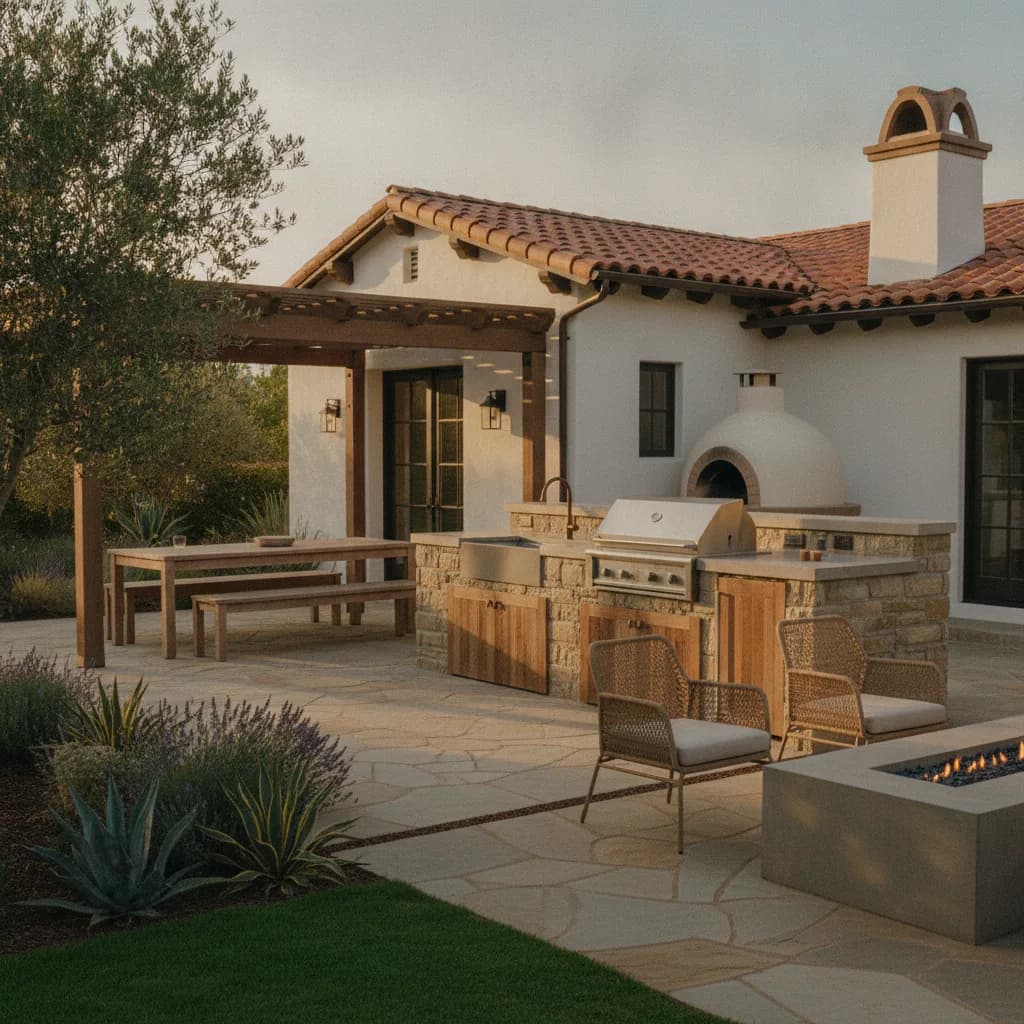
Dreaming of a backyard oasis where culinary adventures meet the great outdoors? An outdoor kitchen is more than just a grill; it's an investment in lifestyle, entertainment, and home value. As we navigate 2026, the demand for sophisticated, durable, and stylish outdoor cooking spaces continues to surge.
Choosing the right materials is paramount for an outdoor kitchen that withstands the elements, looks fantastic, and functions flawlessly for years to come. This comprehensive guide from Golden Yards will help you navigate the top contenders, ensuring your investment pays dividends in both joy and longevity.
Why Material Choice Matters More Than Ever in 2026
The outdoor living trend shows no signs of slowing down. Homeowners are increasingly seeking extensions of their indoor comforts outdoors, pushing manufacturers to innovate with more resilient and aesthetically pleasing materials. In 2026, the focus is on sustainability, smart integration, and extreme durability.
Selecting materials that can endure harsh weather, resist UV damage, and stand up to heavy use is crucial. A poorly chosen material can lead to premature wear, costly repairs, and a diminished outdoor experience. Let's dive into the best options available today.
What Are the Top Contenders for Outdoor Kitchen Materials in 2026?
From sleek modern finishes to rustic charm, the material landscape for outdoor kitchens is diverse. Each option brings its own set of advantages and considerations regarding cost, maintenance, and aesthetic appeal. Understanding these nuances is key to making an informed decision.
Stainless Steel: The Modern Workhorse
Stainless steel remains a cornerstone of outdoor kitchen design, particularly for appliances, cabinetry, and even countertops. Its sleek, professional appearance is timeless, fitting seamlessly into contemporary outdoor spaces.
Why Choose Stainless Steel for Your Outdoor Kitchen?
Stainless steel, specifically marine-grade 316L, offers unparalleled corrosion resistance, making it ideal for coastal areas or humid climates. It’s incredibly hygienic, easy to clean, and resistant to pests and rot. The material's non-porous surface prevents staining and bacterial growth, a significant advantage for food preparation areas.
In 2026, advancements in powder-coating technology also allow for colored stainless steel options, expanding design possibilities beyond the traditional silver finish. Expect to pay between $200-$500 per linear foot for high-quality stainless steel cabinetry, with countertops ranging from $100-$300 per square foot.
What are the Downsides of Stainless Steel?
While highly durable, stainless steel can show fingerprints and smudges easily, requiring regular wiping to maintain its pristine look. It can also get very hot in direct sunlight, which might be a concern for countertops in extremely warm climates. Dents and scratches are possible with heavy impact, though minor ones can often be buffed out.
Natural Stone: Timeless Elegance and Resilience
Natural stone brings an unmatched level of sophistication and organic beauty to any outdoor kitchen. Its inherent strength and unique patterns make it a popular choice for countertops and structural elements.
Granite: The Indestructible Classic
Granite continues to be a top choice for outdoor kitchen countertops due to its exceptional hardness and resistance to heat, scratches, and UV radiation. Once properly sealed, it’s largely stain-resistant and requires minimal maintenance.
With a vast array of colors and patterns, granite can complement any design aesthetic, from rustic to refined. Expect costs for granite countertops to range from $75-$200 per square foot installed in 2026, depending on the slab's rarity and complexity of installation.
Quartzite: The New Stone Star
Often mistaken for marble due to its elegant veining, quartzite is significantly harder and more durable, making it an excellent outdoor option. It offers superior resistance to scratching, etching, and UV fading compared to marble.
Quartzite provides a luxurious look with better practical performance for outdoor use. Pricing typically falls between $80-$250 per square foot, reflecting its premium qualities and increasing popularity.
Soapstone: Unique Charm and Heat Resistance
Soapstone offers a distinctive, soft matte finish that darkens beautifully over time, developing a rich patina. It's non-porous, meaning it doesn't require sealing and is highly resistant to stains, bacteria, and heat.
While softer than granite or quartzite, scratches can be easily buffed out with mineral oil. Its unique aesthetic makes it a favorite for those seeking a vintage or artisan feel. Expect soapstone to cost around $70-$180 per square foot.
What are the Considerations for Natural Stone?
While incredibly durable, natural stone can be heavy, requiring robust structural support for installation. Some stones, like granite, require periodic sealing to maintain their stain resistance. Choosing a reputable installer is crucial to ensure proper fabrication and longevity.
Concrete: Industrial Chic and Customization
Concrete has evolved far beyond basic sidewalks, becoming a highly sought-after material for outdoor kitchen countertops and bases. Its versatility allows for endless customization in shape, color, and finish.
Why is Concrete a Popular Choice for Outdoor Kitchens?
Concrete offers incredible strength and durability, standing up to heavy use and diverse weather conditions. It can be integrally colored or stained, polished, or textured, providing a unique, bespoke look. Integrated sinks or drainboards are easily incorporated during the pouring process.
Its thermal mass helps it retain heat, which can be a benefit in cooler climates. Custom concrete countertops typically range from $80-$250 per square foot, depending on complexity and finish. Pre-fabricated concrete panels for bases are more budget-friendly, starting around $40-$80 per square foot.
What Challenges Does Concrete Present?
Concrete is porous and requires regular sealing to prevent staining and moisture absorption. Without proper sealing, it can develop hairline cracks over time, though these are often cosmetic. It's also very heavy, necessitating strong underlying support, and professional installation is highly recommended for quality results.
High-Density Polyethylene (HDPE) / Marine-Grade Polymer: The All-Weather Cabinet Solution
HDPE, a durable plastic polymer, has emerged as a superior material for outdoor kitchen cabinetry. Originally used in marine applications, it's engineered to withstand the harshest outdoor environments.
What Makes HDPE Ideal for Outdoor Cabinets?
HDPE is impervious to moisture, rot, insects, and UV degradation, making it virtually maintenance-free. It won't swell, warp, or fade, even in extreme temperatures or salt-air environments. Available in a wide range of colors and finishes, it offers excellent design flexibility.
Its lightweight nature compared to stone or concrete simplifies installation. HDPE cabinetry typically costs between $150-$400 per linear foot, offering a long-lasting, worry-free solution. Market research for 2026 indicates a 15% increase in HDPE outdoor kitchen sales due to its proven resilience.
Are There Any Drawbacks to HDPE?
While highly durable, HDPE can scratch, and deep scratches are difficult to repair. It may not offer the same high-end aesthetic as natural stone or stainless steel for some homeowners, though its clean, modern look is increasingly popular. Some darker colors can absorb heat in direct sunlight.
Stucco and Masonry: Foundation for Classic Designs
Stucco and various forms of masonry (brick, stone veneer, concrete block) are traditional choices for building the structural base of outdoor kitchens. They provide a solid, durable foundation that can be customized with various finishes.
Why Use Stucco or Masonry for Your Outdoor Kitchen Base?
These materials offer exceptional structural integrity and fire resistance, crucial for housing grills and other heat-producing appliances. Stucco provides a smooth, versatile finish that can be painted any color, while stone or brick veneers offer classic, rustic, or territorial aesthetics.
They are highly durable and, when properly installed, can last for decades with minimal maintenance. Costs vary widely: stucco finishes might be $10-$20 per square foot, while natural stone veneer can range from $30-$80 per square foot, excluding the structural block beneath.
What Should You Consider with Stucco and Masonry?
Installation of masonry and stucco is labor-intensive and typically requires professional expertise. They are permanent structures, making future layout changes difficult. Stucco can develop cracks over time if not properly applied or if the foundation shifts. Masonry can be porous and may require sealing to prevent efflorescence or moisture penetration.
Porcelain Tile & Slabs: Versatility and Modern Appeal
Porcelain, particularly large-format porcelain slabs, is gaining significant traction for outdoor kitchen countertops, backsplashes, and even cabinet cladding. Its technical properties make it exceptionally suited for outdoor use.
What are the Benefits of Porcelain for Outdoor Kitchens?
Porcelain is non-porous, highly resistant to stains, scratches, heat, frost, and UV fading. It's incredibly easy to clean and maintain, requiring no sealing. Modern manufacturing techniques allow porcelain to mimic the look of natural stone, wood, or concrete with remarkable realism, offering vast design flexibility.
Its relatively lighter weight compared to natural stone can simplify installation. Porcelain countertops typically cost between $60-$150 per square foot, offering a high-end look at a competitive price point. The market for porcelain outdoor applications is projected to grow by 12% in 2026.
Are There Any Limitations to Porcelain?
While durable, porcelain can chip on edges if subjected to heavy impact. The installation of large format slabs requires specialized tools and experienced installers to ensure precise cuts and seamless appearance. Grout lines, if using smaller tiles, can be susceptible to staining and require more maintenance.
Wood (Accent Use): Warmth and Natural Texture
While not suitable for primary structural elements or countertops due to maintenance and durability concerns, certain woods can add beautiful warmth and texture as accents in an outdoor kitchen.
When is Wood a Good Choice for Outdoor Kitchen Accents?
Sources & Methodology
See the Golden Yards Methodology for how sources are reviewed, ranges are normalized, and planning-data limits are handled.
Cost ranges, regulatory references, and design guidance in this article draw on the following public datasets, industry standards, and Golden Yards editorial review.
- National Fire Protection Association (NFPA) 54, National Fuel Gas Code
- California Energy Code (Title 24 Part 6), outdoor electrical and gas requirements
- California Contractors State License Board (CSLB), C-36 Plumbing and C-10 Electrical scopes
- Hearth, Patio & Barbecue Association (HPBA), residential outdoor cooking standards
Related Articles
Ready to compare vetted project options?
Use Project Match privately when your scope is clear enough for contractor conversations.
Start Project Match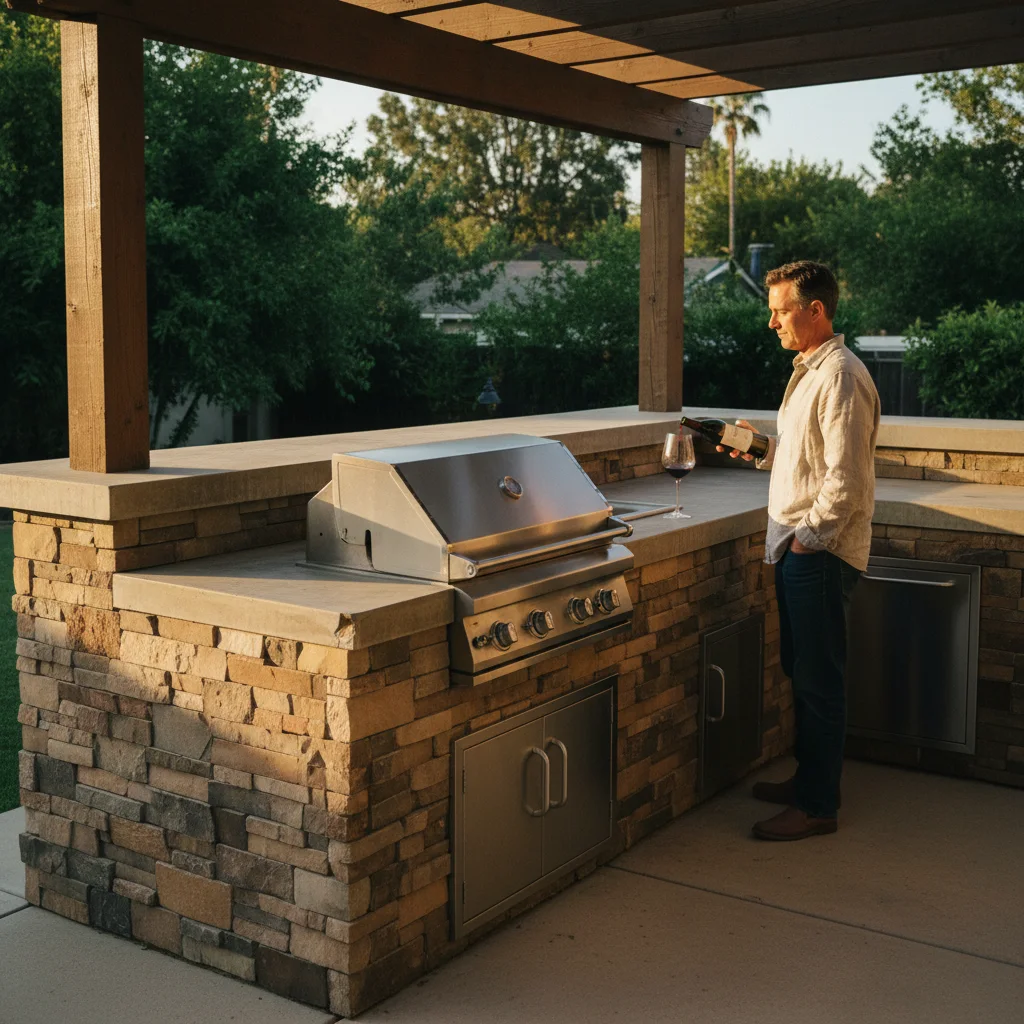
Ready to start your outdoor kitchen project?
Find My ProsFrequently Asked Questions
Why is selecting the right materials critical for an outdoor kitchen in 2026?
Choosing the right materials is paramount because outdoor kitchens face harsh elements, UV damage, and heavy use. In 2026, the focus is on extreme durability, sustainability, and smart integration to ensure longevity and prevent costly repairs.
What key factors should homeowners consider when choosing outdoor kitchen materials?
Homeowners should consider durability against weather, UV resistance, maintenance requirements, cost, and aesthetic appeal. Materials must withstand the elements while complementing your home's style and functioning flawlessly for years.
What are the benefits of using stainless steel for outdoor kitchen components?
Stainless steel, especially marine-grade 316L, offers unparalleled corrosion resistance, making it ideal for various climates. It's hygienic, easy to clean, non-porous, and resistant to pests and rot, ensuring a sleek, professional, and long-lasting finish.
How can I ensure my outdoor kitchen materials are durable and long-lasting?
Focus on materials specifically designed for outdoor use, such as marine-grade stainless steel or other weather-resistant options. Prioritize those known for enduring harsh weather, resisting UV damage, and standing up to heavy use to protect your investment.
Are there specific material trends for outdoor kitchens in 2026?
Yes, in 2026, the outdoor living trend emphasizes sustainability, smart integration, and extreme durability. Homeowners are seeking resilient, aesthetically pleasing materials that extend indoor comforts outdoors, pushing manufacturers to innovate with advanced options.