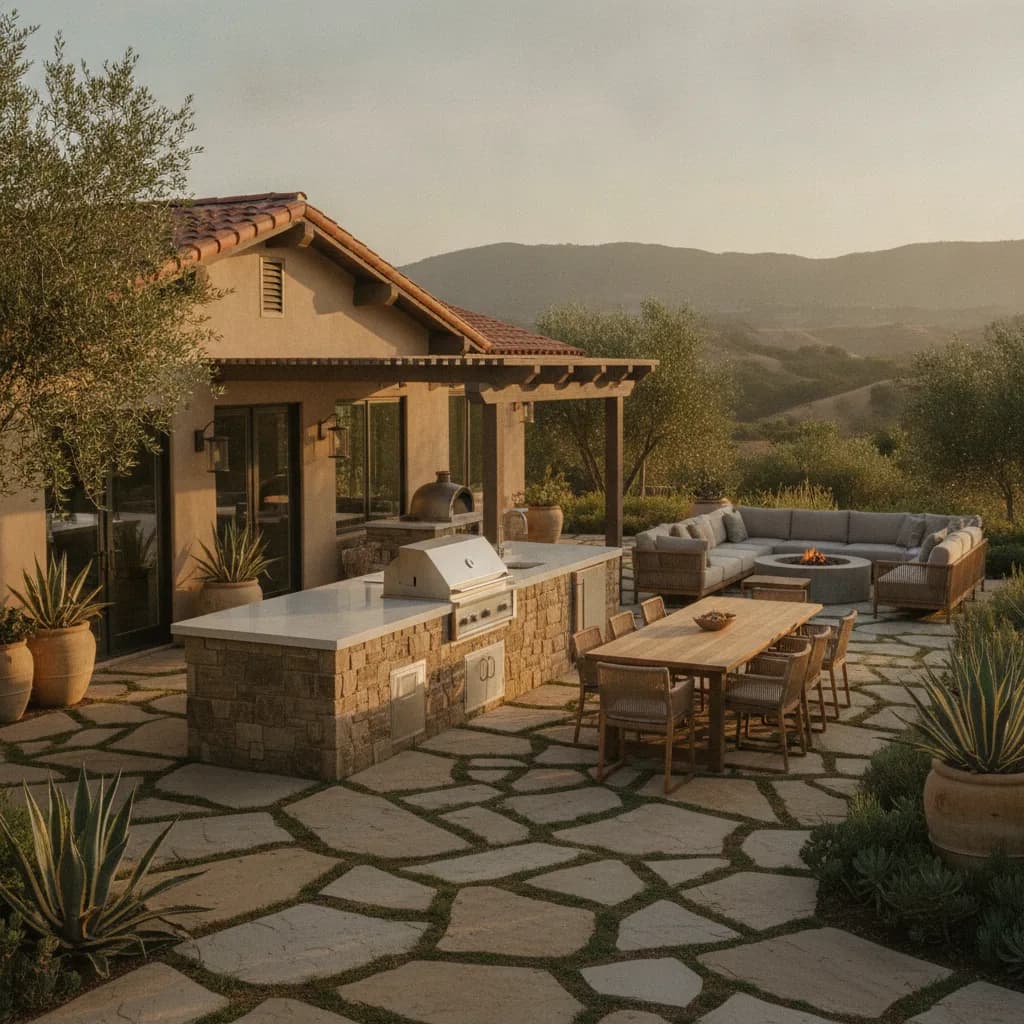
Creating the ultimate outdoor living space is a top priority for homeowners in 2026, with outdoor kitchens leading the charge. A well-designed outdoor kitchen extends your home's entertaining capabilities and enhances your lifestyle. However, the success and longevity of this investment hinge critically on one decision: selecting the best outdoor kitchen materials.
This comprehensive guide from Golden Yards Magazine will navigate the diverse landscape of outdoor kitchen materials available today. We will explore the latest trends, compare durability, aesthetics, maintenance, and crucial 2026 pricing insights. By understanding your options, you can build a resilient, beautiful, and functional outdoor kitchen that withstands the elements and serves your family for years to come.
Why Does Your Outdoor Kitchen Material Choice Matter So Much?
An outdoor kitchen faces unique challenges that indoor kitchens never encounter. Constant exposure to sun, rain, wind, and fluctuating temperatures demands materials specifically engineered for the outdoors. Choosing wisely impacts everything from your kitchen's lifespan to its daily maintenance and overall aesthetic appeal.
Poor material choices can lead to premature wear, costly repairs, and a significant decrease in your property's value. Conversely, investing in high-quality, weather-resistant materials ensures your outdoor oasis remains a source of pride and enjoyment. It is about balancing initial investment with long-term performance and visual harmony with your home's architecture.
What Are the Top Contenders for Outdoor Kitchen Cabinetry and Bases?
The foundation of any great outdoor kitchen lies in its cabinetry and structural bases. These components house appliances, provide storage, and define the kitchen's layout. Their material choice is paramount for both function and form.
Is Marine-Grade Polymer (HDPE) the Ultimate Low-Maintenance Choice?
High-Density Polyethylene, or HDPE, specifically marine-grade polymer, has surged in popularity for outdoor kitchen cabinets. This material is incredibly resistant to moisture, UV rays, and temperature extremes, making it ideal for coastal or high-humidity environments. Its non-porous surface also means it will not rot, delaminate, or swell.
HDPE cabinets come in a wide array of colors and finishes, offering significant design flexibility. While the initial cost can be higher than some alternatives, its virtually maintenance-free nature and exceptional longevity provide excellent long-term value. Homeowners report an average lifespan of 20+ years with minimal fading, making it a top contender for durability.
How Do Stainless Steel Cabinets Perform in All Climates?
Stainless steel, particularly 304 or 316 marine-grade, remains a classic and highly functional choice for outdoor kitchen cabinetry. Its inherent resistance to rust, corrosion, and extreme temperatures makes it incredibly robust. The sleek, professional aesthetic of stainless steel complements modern and industrial design styles beautifully.
However, not all stainless steel is created equal; opting for lower grades can lead to pitting and rust over time. While durable, stainless steel can show fingerprints and water spots, requiring regular cleaning to maintain its pristine appearance. In 2026, premium 316-grade stainless steel cabinets typically range from $450-$900 per linear foot, reflecting its superior performance.
Are Stucco and Stone Veneer Bases Still Popular and Practical?
Stucco and stone veneer offer a more traditional, integrated look, often matching the home's exterior. Stucco, a cement-based plaster, is highly durable and fire-resistant, providing a solid, monolithic appearance. It can be tinted to various colors and textures, offering customization.
Stone veneer, whether natural or manufactured, provides the timeless beauty and strength of stone without the full weight and cost. Both materials are excellent for structural bases, offering superb weather resistance when properly installed and sealed. Maintenance involves occasional cleaning and re-sealing every few years to prevent moisture intrusion, with costs averaging $15-$35 per square foot for installation in 2026.
What About Concrete for a Modern, Durable Base?
Concrete is gaining traction for outdoor kitchen bases due to its incredible durability and modern, minimalist aesthetic. Poured-in-place or pre-cast concrete offers unparalleled strength and can be customized with pigments, aggregates, and finishes. It is impervious to rot, insects, and fire.
While concrete is extremely heavy and requires professional installation, its longevity is virtually unmatched. Maintenance is minimal, typically involving periodic sealing to protect against stains and moisture. The cost for custom concrete bases can vary widely but generally falls into the premium category, reflecting its bespoke nature and robust performance.
Which Outdoor Kitchen Countertop Materials Offer the Best Durability and Style?
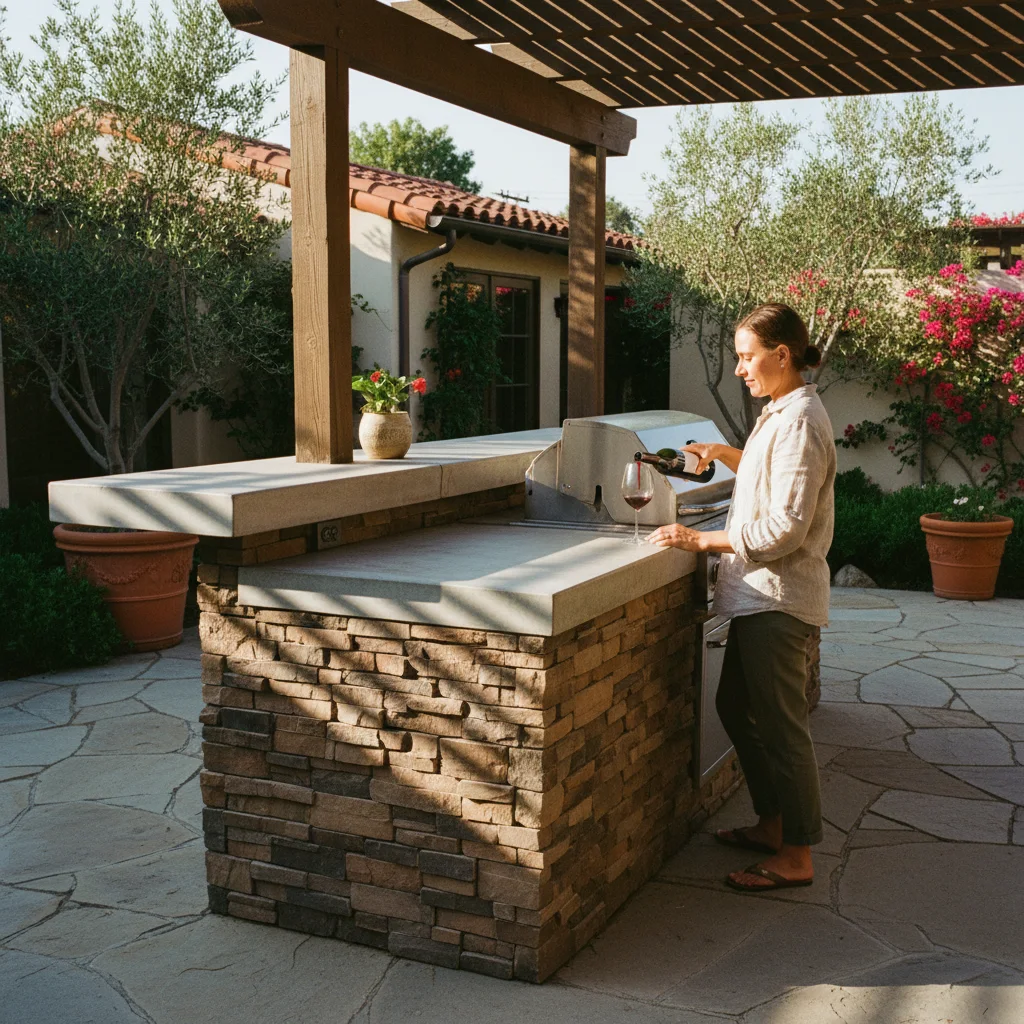
The countertop is the workhorse of your outdoor kitchen, enduring food prep, hot pans, and constant exposure to the elements. Its material choice is crucial for both functionality and visual appeal.
Is Natural Stone (Granite, Soapstone) Still the Gold Standard for Outdoor Countertops?
Natural stone, particularly granite and soapstone, remains a perennial favorite for outdoor countertops. Granite is renowned for its extreme hardness, scratch resistance, and ability to withstand high temperatures. Its unique patterns and colors bring a touch of natural elegance to any space.
Soapstone, while softer, is non-porous, highly heat-resistant, and develops a beautiful patina over time. Both require periodic sealing to prevent staining and maintain their luster, though soapstone is naturally more stain-resistant. In 2026, installed granite countertops typically range from $70-$150 per square foot, depending on the slab's rarity and complexity of installation.
Can Engineered Quartz Withstand the Elements Outdoors?
Historically, engineered quartz was not recommended for outdoor use due to its resin content, which could yellow or degrade under UV exposure. However, advancements in 2026 have introduced outdoor-specific quartz products designed to be UV-stable. These new formulations offer the consistent patterns and non-porous benefits of quartz, making them a viable, low-maintenance option for covered outdoor areas.
For fully exposed kitchens, caution is still advised, and choosing a product explicitly rated for outdoor use is essential. These specialized outdoor quartz options tend to be at the higher end of the price spectrum, reflecting their advanced engineering. Always verify the manufacturer's outdoor warranty before committing.
How Does Concrete Stack Up as an Outdoor Countertop?
Concrete countertops offer a distinctive, modern aesthetic and exceptional durability. They can be custom-poured to any shape or size, allowing for seamless integration and unique design elements. Concrete is incredibly strong and heat-resistant, making it an excellent choice for a busy outdoor kitchen.
Like concrete bases, countertops require professional fabrication and installation due to their weight and specialized sealing needs. Regular sealing, typically annually, is necessary to prevent staining and maintain its protective barrier. The cost for custom concrete countertops in 2026 ranges from $90-$200 per square foot, reflecting its bespoke nature and robust performance.
Are Porcelain Slabs a Smart Choice for Outdoor Kitchen Surfaces?
Large format porcelain slabs are a rising star in outdoor kitchen design for 2026. These incredibly durable, non-porous surfaces are virtually impervious to UV rays, scratches, heat, and frost. They offer a vast array of aesthetic options, mimicking natural stone, wood, or even concrete with remarkable realism.
Porcelain is lightweight compared to natural stone, making installation somewhat easier, and requires virtually no sealing. Its resistance to staining and fading makes it incredibly low maintenance. While the material cost can be competitive, specialized fabrication and installation for large slabs can add to the overall expense, typically $60-$120 per square foot installed.
What Are the Best Materials for Outdoor Kitchen Appliances and Fixtures?
Ready to compare vetted project options?
Use Project Match privately when your scope is clear enough for contractor conversations.
Start Project MatchSee what your outdoor kitchen actually costs in 4 questions.
We pull cost ranges from invoiced California outdoor kitchen builder projects, then narrow them to your scope, ZIP, and finish level. No first-call sticker shock.
Find an outdoor kitchen proFree. Takes under 2 minutes. No email required to see your range.
Appliances and fixtures are the functional heart of your outdoor kitchen. Their material choice is critical for performance, safety, and longevity in an outdoor environment.
Why is Marine-Grade Stainless Steel Crucial for Outdoor Appliances?
For outdoor grills, refrigerators, side burners, and other appliances, marine-grade 316 stainless steel is the undisputed champion. Unlike standard 304 stainless steel, 316 contains molybdenum, which significantly enhances its resistance to corrosion, especially in saltwater environments or areas with high humidity. This superior resistance prevents rust spots and degradation over time.
Investing in 316-grade stainless steel appliances, while pricier upfront, ensures they will withstand harsh weather conditions and maintain their functionality and appearance for many years. Look for manufacturers who explicitly state the use of 316 stainless steel for exterior components, as this is a key indicator of quality and durability.
What About Sinks and Faucets - Are All Metals Equal?
Outdoor sinks and faucets also demand robust, corrosion-resistant materials. 304 or 316 stainless steel is the preferred choice for sinks due to its durability and ease of cleaning. For faucets, solid brass with a durable finish, or again, 316 stainless steel, are excellent options. These materials resist rust, pitting, and tarnishing far better than standard chrome-plated alternatives.
Consider finishes like brushed nickel or matte black, which are popular in 2026 and offer good resistance to water spots and minor scratches. Always ensure that any plumbing fixtures are rated for outdoor use to guarantee their longevity and prevent premature failure due to weather exposure.
How Do Climate and Maintenance Needs Influence Your Material Decisions?
Your local climate is a primary determinant when selecting the best outdoor kitchen materials. What thrives in a dry desert might struggle in a humid coastal region, and vice-versa. Understanding these interactions is key to a long-lasting outdoor kitchen.
Which Materials Thrive in Extreme Heat and Sun?
In regions with intense sun and high temperatures, UV stability is paramount. Materials like porcelain slabs, natural stone (granite), concrete, and marine-grade polymer (HDPE) excel here. They resist fading, cracking, and warping under prolonged sun exposure. Stainless steel appliances perform well, but their surfaces can
Sources & Methodology
See the Golden Yards Methodology for how sources are reviewed, ranges are normalized, and planning-data limits are handled.
Cost ranges, regulatory references, and design guidance in this article draw on the following public datasets, industry standards, and Golden Yards editorial review.
- National Fire Protection Association (NFPA) 54, National Fuel Gas Code
- California Energy Code (Title 24 Part 6), outdoor electrical and gas requirements
- California Contractors State License Board (CSLB), C-36 Plumbing and C-10 Electrical scopes
- Hearth, Patio & Barbecue Association (HPBA), residential outdoor cooking standards
Related Articles
Ready to start your outdoor kitchen project?
Find My ProsFrequently Asked Questions
Why is choosing the right outdoor kitchen material so important?
Choosing the right outdoor kitchen material is important because it ensures durability against sun, rain, wind, and temperature changes. Proper material selection minimizes maintenance, prevents costly repairs, and protects your investment for years to come, which helps preserve your property value and ensures the kitchen's longevity against the elements.
Outdoor kitchens face constant exposure to harsh conditions. Sun can cause fading and cracking, while moisture from rain can lead to rot, rust, or warping. Significant temperature shifts and wind also place continuous stress on all surfaces and structural components. Without materials specifically designed for these challenges, an outdoor kitchen can deteriorate quickly.
Selecting appropriate, weather-resistant materials is a practical financial choice. This decision reduces future expenses and labor associated with frequent upkeep and significant repairs. Such foresight ensures the kitchen remains functional and attractive, preserving your initial investment and supporting your home's property value over the long term.
What are the key considerations for outdoor kitchen cabinetry and bases?
Prioritize materials that withstand constant exposure to moisture, UV rays, and temperature extremes for outdoor kitchen cabinetry and bases. Key considerations include durability, resistance to rot or swelling, and ease of maintenance. These factors are crucial for ensuring long-term performance, functionality, and the preservation of your outdoor kitchen's structure and appearance.
When selecting materials for cabinetry and structural bases, the main objective is to choose options designed for continuous outdoor exposure. The chosen materials must endure elements like persistent moisture, direct sunlight, and significant temperature shifts. Look for options that demonstrate high durability and will not rot or swell over time. Simple maintenance is also a key factor, as it contributes directly to the long-term performance and functionality of the kitchen, protecting your investment.
Is Marine-Grade Polymer (HDPE) a good choice for outdoor kitchen cabinets?
Yes, marine-grade HDPE is an excellent choice for outdoor kitchen cabinets. It offers high resistance to moisture, UV rays, and temperature fluctuations. Its non-porous surface prevents rotting, delamination, and swelling, making it a durable, low-maintenance option that is especially ideal for humid or coastal climates, ensuring long-lasting performance.
The high-density polyethylene (HDPE) used in marine-grade applications is engineered to withstand harsh environmental conditions. Its strong resistance to UV rays prevents fading and degradation from sun exposure, while its ability to handle temperature fluctuations means it will not crack or warp in changing weather.
Because the material is non-porous, it does not absorb water. This quality is crucial for preventing common outdoor material issues like rot, swelling, or delamination. This makes marine-grade polymer a very low-maintenance and durable choice for cabinetry, especially in coastal regions or areas with high humidity where moisture is a constant concern.
What factors should I balance when selecting outdoor kitchen materials?
Balance your initial investment with long-term performance and visual harmony with your home's architecture. Key factors include durability against the elements, required maintenance, and how materials affect the overall aesthetic and value of your outdoor space. This approach ensures a lasting and beautiful addition to your property.
When choosing materials, the upfront cost is just one part of the equation. You must also consider long-term performance. Some materials may cost more initially but require less maintenance and resist weathering better, saving money and effort over time. The goal is to find a balance that works for your budget while also creating visual harmony with your home's existing architecture. The right materials will be durable and contribute positively to the overall aesthetic, increasing the value of your outdoor area.