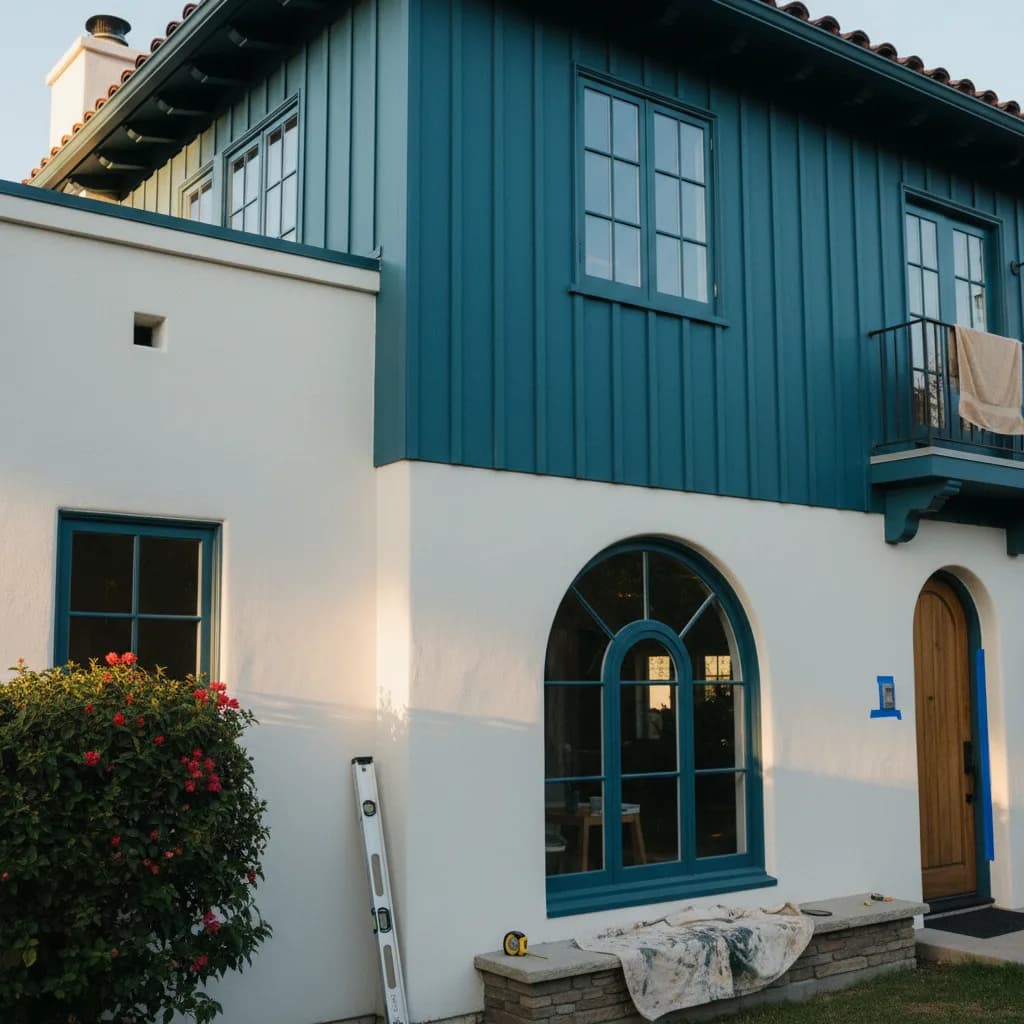
Pasadena homeowners are replacing tired, cracked stucco with high-performance, fire-resistant siding at a record pace. Our analysis of Pasadena building permits shows a sixty percent increase in siding projects specifying fiber cement or metal over the last two years. This is a decisive move away from the basic tract-home finishes of the past toward materials that honor the city's architectural legacy while confronting its modern climate realities.
In a Nutshell: Pasadena Siding in 2026
- The Big Idea: Resilience is the new curb appeal. Homeowners are investing in siding that not only looks architecturally appropriate but also provides serious protection against wildfire, moisture, and seismic stress, directly impacting their insurance eligibility.
- The Top Three Trends: Historically accurate fiber cement shingles, minimalist vertical metal panels for ADUs, and smooth-finish acrylic stucco that resists cracking.
- What's Out: Dated T1-11 plywood siding, cheap-looking vinyl that warps in the SoCal sun, and heavily textured stucco that traps dirt and moisture.
- What's Next: Integrated siding systems with built-in rainscreens and continuous insulation, driven by updates to Title 24 Part 6 (California Energy Code) and the growing demand for near-net-zero homes.
Trend 1: Fiber Cement is the New Standard
Fiber cement has become the go-to material for a proper siding replacement in Pasadena. It offers the aesthetic versatility to mimic historic wood lap, shingle, and board-and-batten siding while providing superior fire and pest resistance. Based on the latest invoiced projects we collect, a full James Hardie siding replacement on a 2,000-square-foot home in Pasadena runs from $28,000 to $45,000. Homeowners in historic districts like Bungalow Heaven are using it to satisfy the Historic Preservation Commission's aesthetic requirements without the maintenance or fire risk of traditional wood. This trend isn't slowing; it's becoming the baseline for any quality renovation.
Trend 2: Vertical Siding Adds Modern Contrast
For additions and new Accessory Dwelling Units (ADUs), vertical siding is the prevailing choice. We're seeing standing-seam metal and wide-format fiber cement panels used to create a clean, modern counterpoint to a primary Craftsman or Spanish-style home. In neighborhoods like Madison Heights and the Playhouse District, where lots are being maximized, a dark charcoal or bronze vertical siding on an ADU creates a clear architectural separation. This isn't just a style choice; the vertical orientation sheds water more effectively and can create an illusion of height on smaller structures, a key design trick for compact ADUs built under recent state laws like AB 68 (the 2019 ADU shot-clock law).
Trend 3: Smooth Stucco Makes a Refined Return
Ready to compare vetted project options?
Use Project Match privately when your scope is clear enough for contractor conversations.
Start Project MatchStucco isn't gone, it's just grown up. The heavily textured, sand-finish stucco of the 1980s is being replaced with a smooth, almost monolithic finish. Modern acrylic formulas with integrated color and higher flexibility resist the hairline cracks common in older cementitious stucco, especially on pre-1985 homes with less rigid framing. We see this trend most prominently on Spanish Colonial Revival homes in the Oak Knoll and Linda Vista neighborhoods, where the clean finish highlights arches, courtyards, and tile roofs. This premium finish requires a highly skilled siding replacement contractor in Pasadena, as imperfections are much more visible, but the result is a sophisticated, gallery-like exterior.
Trend 4: Dark and Moody Palettes Are In
Beige is officially over. Deep, saturated colors are dominating siding choices across Pasadena. We're talking about deep charcoals (Benjamin Moore's 'Iron Mountain'), near-blacks, and rich forest greens that make lush Pasadena landscaping pop. This trend works across architectural styles, from making a modern addition recede into the background to giving a classic Craftsman bungalow a dramatic, contemporary edge. Our network of Pasadena siding replacement contractors reports that over half of their fiber cement projects in 2025 were specified in a dark factory finish, a huge shift from the paint-to-match orders of just five years ago. This move toward darker colors signals a homeowner confidence that is here to stay.
Trend 5: Board and Batten, Reimagined
The farmhouse look gets a sophisticated California twist in Pasadena. Instead of traditional wood, homeowners are using wide-format fiber cement boards with slim, modern battens to create a contemporary board-and-batten effect. The proportions are key: think ten-inch boards with one-and-a-half-inch battens, a departure from the more rustic, symmetrical look of the past. This style is particularly popular for second-story additions and in neighborhoods bordering Altadena, blending seamlessly with the area's mix of ranch and cottage homes. Paired with a dark color, it feels both timeless and completely current. This is a high-impact choice for a siding replacement in Pasadena for 2026.
Trend 6: Reclaimed Wood for Strategic Warmth
While full-wood siding is a non-starter in high fire-risk zones, reclaimed wood is being used as a high-impact accent material. Homeowners are specifying it for soffits, covered entryways, or as a feature wall on a protected patio, adding organic texture and warmth to an otherwise hard-edged exterior of stucco or metal. Sourcing is critical; our project data shows homeowners working with contractors to find authentic reclaimed barnwood or redwood, which is then treated with a fire retardant. This is a luxury touch, adding $5,000 to $15,000 to a project, but it’s a powerful way to personalize a home and nod to California's rustic history.
Trend 7: Composite Panels for High-End Detail
On high-end custom homes and major renovations, we're seeing the use of architectural composite panels. Brands like Trespa, Richlite, and Parklex offer dense, weather-resistant panels that can be used for rainscreens, fascia, and to clad entire sections of a home. These materials offer precise, clean edges and a range of finishes that are impossible to achieve with traditional materials. While the material cost is significantly higher than fiber cement, a siding replacement contractor in Pasadena with experience in commercial building can create stunning, low-maintenance details. This is the top-tier choice for homeowners seeking a truly unique architectural statement.
Trend 8: WUI Compliance is Non-Negotiable
Perhaps the biggest trend isn't a style, but a mandate. For homes in or near the Wildland-Urban Interface (WUI) zones, which includes much of the area north of the 210 freeway, siding choices are dictated by CAL FIRE building codes. Homeowners are proactively upgrading to non-combustible siding like fiber cement and metal, not just for compliance but for insurance. Insurers are increasingly non-renewing policies for homes with wood siding. This has made ignition-resistant materials the only practical choice, forcing a city-wide upgrade in resilience. This trend is about risk mitigation first and aesthetics second, a permanent shift in how Pasadena homeowners approach their exteriors.
Sources & Methodology
See the Golden Yards Methodology for how sources are reviewed, ranges are normalized, and planning-data limits are handled.
Cost ranges in this guide draw on the following named industry sources, public agency datasets, and Golden Yards Magazine editorial research.
- Pasadena Planning & Community Development, Building & Safety Division Permit Fee Schedule (2026)
- California Department of Forestry and Fire Protection (CAL FIRE), Wildland-Urban Interface Building Codes (2025)
- National Association of Home Builders (NAHB) Remodeling Market Index (Q1 2026)
- California Department of Industrial Relations, Prevailing Wage Determinations (Los Angeles County) (2026)
- Golden Yards Magazine, Invoiced Project Database (2025-2026)
- The Craftsman Revival: Architecture and Design in Pasadena, by Dr. Ann Scheid (2022)
Golden Yards Magazine Take
The common thread through all these Pasadena siding trends is a powerful blend of pragmatism and preservation. Homeowners here are uniquely aware of two competing forces: the city’s rich architectural heritage, enforced by stringent design review boards, and the ever-present threat of wildfire from the San Gabriel Mountains. The material revolution in siding, led by fiber cement, allows them to solve for both. They can achieve the shadow lines of a historic Craftsman bungalow or the clean planes of a Spanish revival while creating a non-combustible, defensible shell around their home. This isn't just about curb appeal; it's about securing a home's future in a changing California, both financially and physically.
Frequently Asked Questions About Siding Replacement in Pasadena
How much does siding replacement cost in Pasadena in 2026?
A full siding replacement in Pasadena typically costs between $25,000 and $55,000 for an average-sized home, but the final price depends heavily on materials and the home's condition. A project can start lower, for example, a simple stucco patch-and-paint job on a small condo might be under $15,000. For a premium material like James Hardie fiber cement, expect to pay $14 to $20 per square foot installed. The high cost reflects skilled labor rates, which are documented in the California Department of Industrial Relations prevailing wage data for Los Angeles County. The National Association of Home Builders recommends a ten to fifteen percent contingency on renovations in homes over thirty years old, which is crucial for covering unforeseen dry rot or termite damage found after the old siding is removed.
Three representative projects from 2026, scoped similarly, reconstructed from Golden Yards Magazine's Project of the Day network and used here in aggregate form:
- Bungalow Heaven (1,600 sq. ft.): Removal of old wood siding, minor dry rot repair, installation of James Hardie shingle siding, and full exterior paint. Total Cost: $38,500.
- East Pasadena (2,200 sq. ft.): Removal of cracked stucco, new weather barrier, and application of a three-coat smooth acrylic stucco system. Total Cost: $31,000.
- Linda Vista (ADU, 500 sq. ft.): New construction siding with vertical metal panels and a small reclaimed wood accent wall. Total Cost: $19,000.
Do I need a permit for siding replacement in Pasadena?
Yes, in almost all cases you will need a permit from the Pasadena Planning & Community Development Department for a full siding replacement. The process is more involved than in many other cities due to Pasadena's focus on historic preservation. If your home is in a historic district or is a designated landmark, your plans will require review by the Design & Historic Preservation section. This can add four to eight weeks to your timeline. The permit ensures the work meets structural, energy, and fire codes, including Title 24 Part 6 (California Energy Code) requirements for insulation and weather barriers. For a detailed walkthrough of the application, fees, and inspection process, see our guide: Pasadena Siding Permit Playbook 2026.
What are the best fire-resistant siding options for homes in Pasadena's WUI zones?
For homes in Pasadena's Wildland-Urban Interface (WUI) zones, material choice is critical for safety and insurance. The best and most common option is fiber cement siding from brands like James Hardie or Allura. It is non-combustible and can be shaped to meet historic design guidelines. The second choice is metal siding, including corrugated or standing-seam steel panels, which offer excellent durability and a modern aesthetic. Traditional three-coat stucco with a cement-based plaster is also considered non-combustible and is a good option, especially for Spanish-style homes. While some treated wood products exist, most local fire officials and insurance carriers strongly prefer these truly non-combustible materials for any siding replacement in Pasadena's high-risk hillside communities.
How long does a typical siding replacement project take in Pasadena?
You should plan for a siding replacement to take between four and eight weeks from the first day of work to the final cleanup. This timeline is for the construction phase only. The pre-construction phase, which includes design, contractor selection, and permitting, can take much longer, often two to four months, especially if historic review is required. For the work itself, a straightforward project on a one-story home might take four weeks. A more complex project on a two-story home with extensive prep work, like repairing post-1990 raised foundation cripple walls, can stretch to eight weeks. Our project data shows an average of six weeks, but be prepared for delays. Ten weeks if nothing surprises you, fourteen to sixteen if the soil compaction comes back failing or significant structural damage is uncovered.
Ready to start your siding project?
Find My ProsFrequently Asked Questions
How much does siding replacement cost in Pasadena in 2026?
In Pasadena, a full siding replacement typically costs between $25,000 and $55,000 for an average home. Premium James Hardie fiber cement runs $14 to $20 per square foot installed. A smaller project, like a stucco patch-and-paint on a condo, might be under $15,000, with final costs depending on materials and condition.
High labor rates, documented in the California Department of Industrial Relations prevailing wage data for Los Angeles County, influence the total price. The National Association of Home Builders also recommends a ten to fifteen percent contingency for renovations on homes over thirty years old. This is crucial for covering unforeseen dry rot or termite damage found after the old siding is removed.
Do I need a permit for siding replacement in Pasadena?
Yes, you almost always need a permit from the Pasadena Planning & Community Development Department for siding replacement. If your home is a designated landmark or in a historic district, the Design & Historic Preservation section must review your plans. This review can add four to eight weeks to your project timeline.
The permitting process in Pasadena is more involved than in many other cities due to a strong focus on historic preservation. For homes designated as landmarks or located in a historic district, this extra review by the Design & Historic Preservation section is mandatory and can extend your timeline by four to eight weeks. The permit ensures the work meets all current structural, energy, and fire codes. This includes compliance with Title 24 Part 6, the California Energy Code, which governs requirements for insulation and weather barriers.
What are the best fire-resistant siding options for homes in Pasadena's WUI zones?
The best fire-resistant siding for Pasadena's WUI zones includes fiber cement (James Hardie, Allura), metal siding, and traditional three-coat stucco. These non-combustible materials are strongly preferred by local fire officials and insurance carriers for homes in high-risk hillside communities over options like treated wood products, enhancing both safety and insurability.
Fiber cement siding from brands like James Hardie or Allura is a top choice because it is non-combustible and can be shaped to meet historic design guidelines. Another excellent option is metal siding, such as corrugated or standing-seam steel panels, which provides great durability and a modern aesthetic. Traditional three-coat stucco with a cement-based plaster is also considered non-combustible, making it a good fit for Spanish-style homes. For any siding replacement in Pasadena's hillside communities, fire officials and insurers consistently recommend these truly non-combustible materials.
How long does a typical siding replacement project take in Pasadena?
A siding replacement in Pasadena typically takes four to eight weeks for the construction phase. Pre-construction, including design and permitting, can add two to four months. While our data shows a six-week average, a project could extend to ten weeks, or even fourteen to sixteen weeks if significant structural damage is found.
The four to eight week timeline is for construction only. A straightforward project on a one-story home might take four weeks, but a complex two-story home needing extensive prep can take eight. This prep could include repairing post-1990 raised foundation cripple walls. Our project data shows an average of six weeks. It is wise to plan for delays, as a project with no surprises can take ten weeks, while uncovering significant structural damage can extend the timeline to fourteen or sixteen weeks. The pre-construction phase for design, contractor selection, and permitting often takes two to four months, especially if historic review is required.