
Expanding your home in Sherman Oaks can significantly enhance your living space and property value. However, navigating the local permit process and Homeowners Association (HOA) requirements is crucial for a smooth, successful project. This comprehensive 2026 guide is specifically tailored for Sherman Oaks homeowners, providing the in-depth, local insights you need to confidently plan your room addition.
Why is a Room Addition Permit Essential in Sherman Oaks?
Obtaining the correct permits for your room addition in Sherman Oaks isn't just a legal formality- it's a critical step to ensure safety, compliance, and protect your investment. The City of Los Angeles Department of Building and Safety (LADBS), which governs Sherman Oaks, mandates permits for any structural changes, electrical work, plumbing, or significant alterations to your home's footprint. Without proper permits, you risk hefty fines, forced demolition, difficulty selling your home, and potential insurance claim denials. Given Sherman Oaks' unique blend of established neighborhoods and evolving architectural styles, adhering to local regulations ensures your addition complements the community while meeting rigorous safety standards.
What are the Typical Costs for a Room Addition in Sherman Oaks?
The cost of a room addition in Sherman Oaks varies significantly based on size, complexity, materials, and finishes. As of 2026, homeowners can expect a wide range, reflecting the area's premium real estate market and demand for quality construction. A basic 200-300 sq ft bedroom or office addition might start at $75,000-$120,000. A mid-range addition, perhaps a master suite with a bathroom, could run $130,000-$250,000. High-end, multi-story additions with luxury finishes, complex structural work, or extensive site preparation could easily exceed $300,000-$500,000+. These figures include design, permits, materials, and labor, but exclude specific HOA fees or unexpected site challenges. For comparison, a similar project in a less affluent part of Southern California might be 15-25% lower, highlighting Sherman Oaks' unique cost structure.
Navigating the Sherman Oaks Room Addition Permit Process Step-by-Step
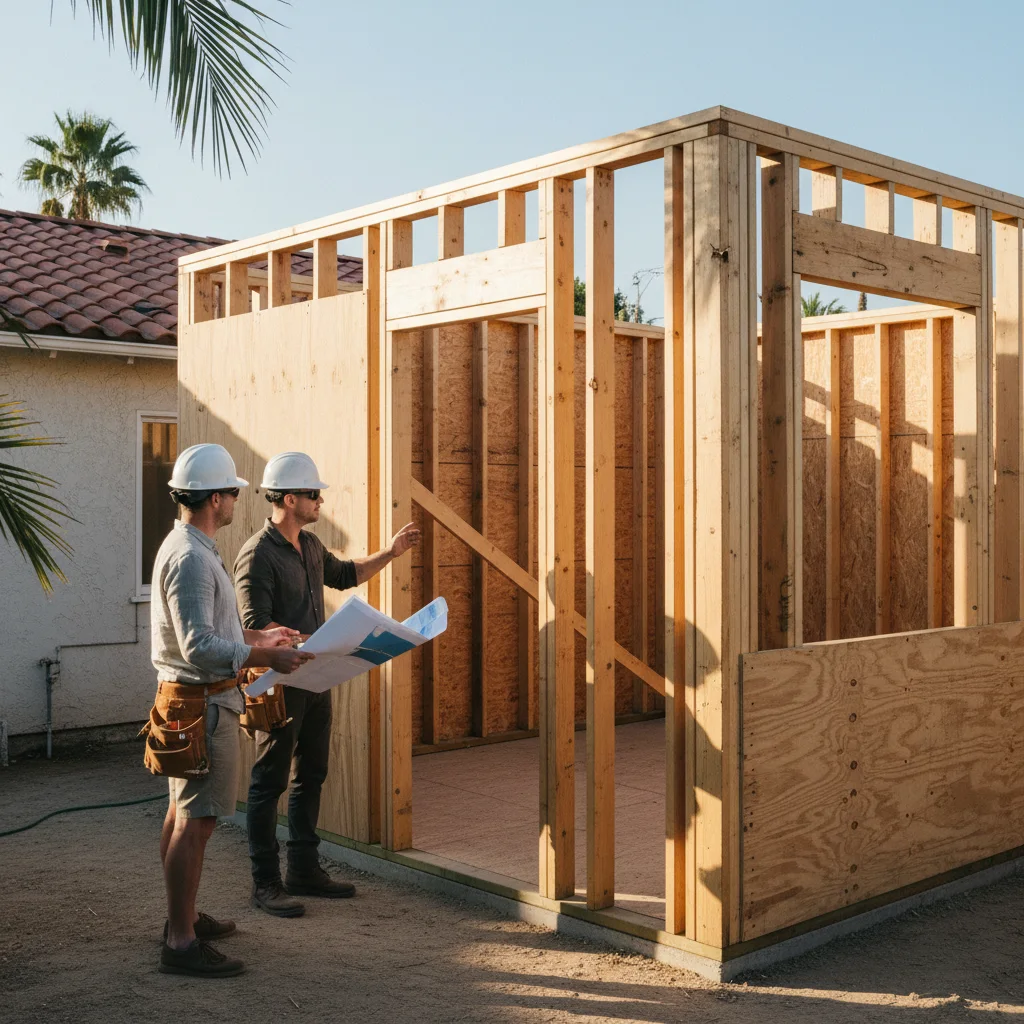
Obtaining a room addition permit in Sherman Oaks involves a structured process with the LADBS. This isn't a simple 'over-the-counter' permit for major additions; it requires detailed planning and multiple reviews. Here's a step-by-step breakdown:
- Initial Research & Design: Consult with a local architect or designer experienced in Sherman Oaks projects. They will help you create plans that comply with zoning, setbacks, and building codes. This includes architectural drawings, structural engineering plans, and potentially Title 24 energy calculations.
- Pre-Application Meeting (Optional but Recommended): For complex projects, a pre-application meeting with LADBS staff can clarify requirements and identify potential issues early on. This is particularly useful for properties with unique zoning or hillside considerations.
- Prepare Application Forms: You'll need to complete specific LADBS forms, including the General Application for Building Permit (FORM B-1), Owner-Builder Declaration (if applicable), and various supplemental forms for electrical, plumbing, and mechanical work. Your architect or contractor typically handles this.
- Plan Check Submission: Submit your complete set of plans and application forms to the LADBS Van Nuys Development Services Center, which serves the Sherman Oaks area. This initiates the plan check process.
- Plan Check Review: LADBS plan checkers will review your plans for compliance with building codes, zoning ordinances, and other regulations. This is often the longest phase. Typical plan check times for a room addition in Sherman Oaks can range from 6-12 weeks for initial review, with subsequent reviews after corrections taking another 3-6 weeks each. Complex projects or those requiring multiple department sign-offs (e.g., grading, sanitation) can extend this timeline. Common bottlenecks include incomplete drawings, non-compliance with Title 24 energy efficiency standards, or incorrect setback calculations for your specific Sherman Oaks zoning code.
- Permit Issuance: Once your plans are approved and all fees are paid, your building permit will be issued. This permit must be posted prominently on your job site.
- Inspections: Throughout construction, various inspections will be required by LADBS at different stages (e.g., foundation, framing, electrical, plumbing, insulation, final). Your contractor will schedule these.
- Final Approval: Upon successful completion of all inspections, LADBS will issue a Certificate of Occupancy, signifying your addition is safe and compliant. For more on general LA permits, see our guide on The Ultimate Room Addition Permit and HOA Guide for Long Beach in 2026.
What Permit Types and Fees are Common in Sherman Oaks?
Ready to compare vetted project options?
Use Project Match privately when your scope is clear enough for contractor conversations.
Start Project MatchSee what your ADU actually costs in 4 questions.
We pull cost ranges from invoiced California ADU builder projects, then narrow them to your scope, ZIP, and finish level. No first-call sticker shock.
Open the ADU cost calculatorFree. Takes under 2 minutes. No email required to see your range.
Beyond the overarching building permit, a room addition in Sherman Oaks typically requires several specialized permits and associated fees:
Building Permit: Covers structural changes, framing, and overall construction. Fees are calculated based on project valuation. Electrical Permit: For all new wiring, outlets, and lighting. Plumbing Permit: For new water lines, drains, and fixtures. Mechanical Permit: For HVAC systems, vents, and ductwork. Grading Permit: If your project involves significant excavation or changes to the existing terrain, especially on Sherman Oaks' hillside properties. This is crucial for stability and drainage. Planning Review/Zoning Clearance: Ensures compliance with local zoning ordinances, including setbacks, lot coverage, and height limits.
Typical permit fees for a mid-sized room addition (e.g., 300 sq ft master suite) in Sherman Oaks can range from $2,500 to $7,000+, not including plan check fees. Plan check fees are often a percentage of the construction valuation, typically 2-4%. These fees cover application processing, plan review, and inspections. Be prepared for additional fees if your project requires special engineering, environmental reviews, or public works sign-offs.
How Do HOAs Impact Room Additions in Sherman Oaks?
Many Sherman Oaks neighborhoods, particularly those with newer developments or planned communities, are governed by Homeowners Associations. HOAs have their own set of rules and architectural review guidelines that can significantly affect your room addition project. These guidelines often cover:
Exterior Design: Material choices, color palettes, roofing styles, window types, and overall architectural compatibility with existing homes in the community. Setbacks and Lot Coverage: While city zoning sets minimums, HOAs can impose stricter requirements. Construction Timelines: HOAs may have rules regarding construction hours, duration, and site maintenance. Landscaping: Requirements for new landscaping around the addition, often tied to a specific aesthetic.
To identify if your property is in an HOA, check your property deed, contact your real estate agent, or search online databases for your address. Once identified, obtain their specific architectural review guidelines. HOA approval timelines can vary widely, from 2-4 weeks for simple reviews to 2-3 months for more complex projects requiring board meetings. Typical HOA application fees for architectural review in Sherman Oaks can range from $100 to $500, though some may be higher for extensive projects. Denials typically stem from designs that don't match community aesthetics or exceed specific size/height restrictions. Appealing an HOA denial usually involves revising your plans to address their concerns and resubmitting, or, in some cases, presenting your case directly to the HOA board with a strong justification for your design.
Sherman Oaks-Specific Constraints and Considerations
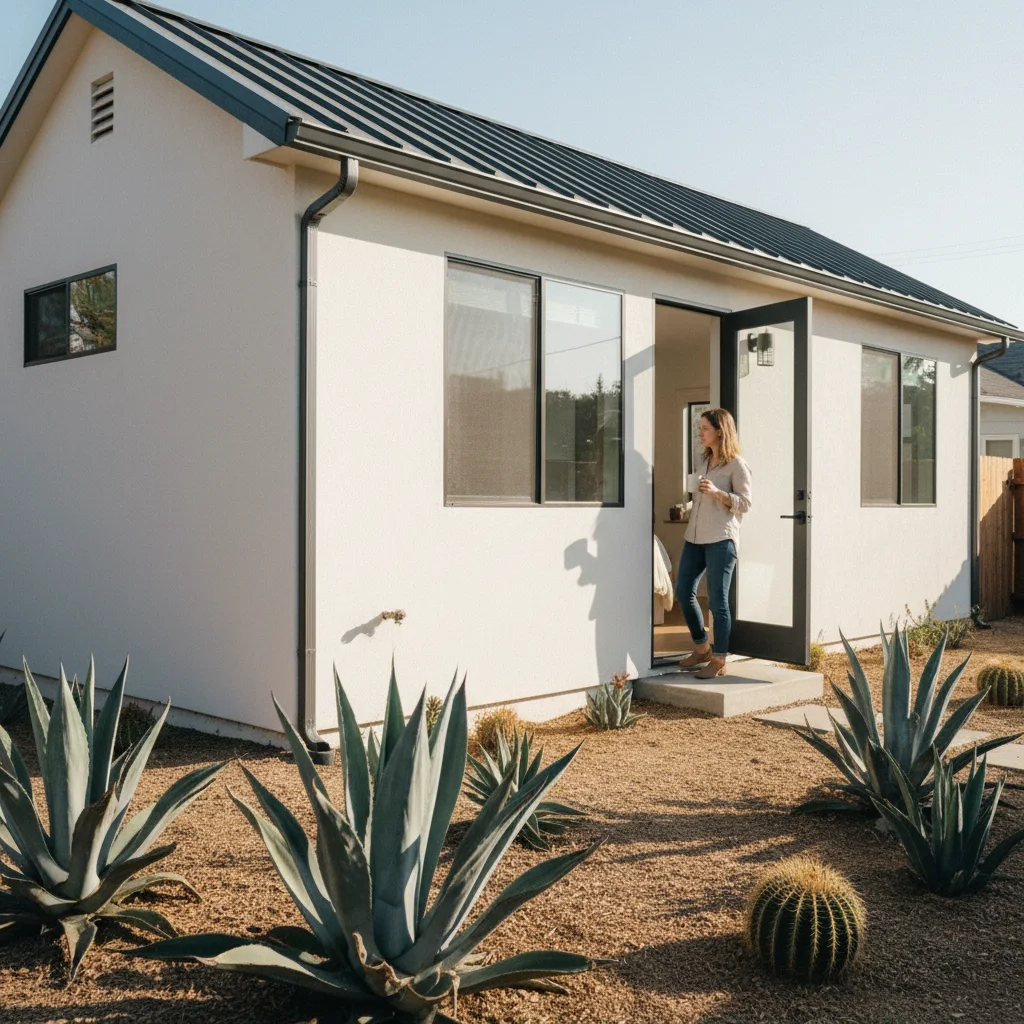
Sherman Oaks presents unique challenges and opportunities for room additions:
Lot Size and Access: Many older Sherman Oaks homes are on generous lots, offering more flexibility for additions. However, some areas have smaller, tighter lots or challenging access, which can increase construction costs and complexity. Consider how site prep, utility connections, and hardscape integration will impact your project. For more on hardscaping, refer to our Your Ultimate Guide to Hardscape Los Angeles in 2026. Climate and Material Selection: Sherman Oaks experiences hot, dry summers. Material selection should prioritize energy efficiency and durability. Consider cool roofs, high-performance windows (Title 24 compliant), and insulation that can withstand extreme temperatures. Drought-tolerant landscaping around your new addition is also a wise choice, reducing water bills and maintenance. Soil Conditions (Especially Hillside Properties): Properties in the hillsides of Sherman Oaks may require a comprehensive soil report (geotechnical investigation) to assess stability, drainage, and foundation requirements. This is a crucial step to prevent future structural issues and is often mandated by LADBS for grading permits. The process involves drilling soil samples and can add $3,000-$10,000 to your pre-construction costs, depending on complexity. Design Review Boards/Historic Preservation: While less common for standard room additions, properties within specific historic districts or with unique architectural significance might be subject to additional design review boards. Always verify if your property falls under such a designation.
Common Reasons for Permit Delays and How to Avoid Them
Get 3 ADU builder bids in 48 hours.
Our editors already screened California ADU builders. Answer 4 questions; we send 3 written bids inside 48 hours, with the real price for your scope, not their inflated first-call number.
Send my 3 bidsFree. No commission. If a match doesn't fit, we'll send another.
Permit delays can be frustrating and costly. In Sherman Oaks, common reasons for setbacks include:
Incomplete or Inaccurate Plans: The most frequent cause. Ensure your architectural and engineering drawings are thorough, dimensionally accurate, and clearly show all proposed changes. Non-Compliance with Code: Plans that don't meet current building codes, zoning setbacks, or Title 24 energy efficiency requirements will be rejected. Work with a designer familiar with LADBS codes. Missing Department Sign-offs: Complex projects may require approvals from multiple LADBS divisions (e.g., grading, sanitation, fire) or even external agencies. Ensure all necessary sign-offs are identified early. Unaddressed Plan Check Comments: Failing to promptly and accurately address all comments from LADBS plan checkers will prolong the review process. HOA Issues: Delays in HOA approval or design conflicts can halt your project before it even reaches the city for permits.
Pro-Tip: Engage a local Sherman Oaks zoning consultant or permit expediter. They specialize in navigating LADBS bureaucracy and can significantly speed up the process, often identifying potential issues before submission.
Checklist for Your Sherman Oaks Room Addition Permit Application
To streamline your permit application, ensure you have the following ready:
Completed LADBS Application Forms: General Application, Owner-Builder Declaration, Electrical, Plumbing, Mechanical forms. Architectural Plans: Detailed floor plans, elevations, sections, and roof plan. Structural Engineering Plans: Foundation, framing, and any necessary calculations. Title 24 Energy Calculations: Demonstrating energy code compliance. Site Plan: Showing property lines, existing structures, proposed addition, setbacks, and utility lines. Geotechnical Report (if applicable): For hillside or unstable soil conditions. HOA Approval Letter (if applicable): With approved plans attached. Proof of Property Ownership. Contractor's License and Insurance Information (if using a contractor).
Finding Local Professionals for Your Sherman Oaks Room Addition
Selecting the right architect and contractor is paramount for a successful room addition in Sherman Oaks. Look for professionals with a proven track record of projects specifically in the Sherman Oaks or greater San Fernando Valley area. They will be intimately familiar with LADBS procedures, local zoning nuances, and common HOA requirements. Ask for references, check licenses, and review portfolios that showcase similar room additions. The cost for architectural plans and engineering reports for a mid-sized room addition in Sherman Oaks typically ranges from $8,000 to $25,000, depending on the complexity and scope of services.
Conclusion
A room addition in Sherman Oaks is a significant investment that promises enhanced living and increased property value. By understanding the local permit process, anticipating typical costs, and meticulously navigating HOA requirements, you can ensure your project proceeds smoothly and successfully. Leverage local expertise, prepare thoroughly, and embrace the unique characteristics of Sherman Oaks to create an addition that truly elevates your home. For further guidance on home expansions, explore our Arcadia ADU Permit and HOA Guide: Your 2026 Blueprint for Success.
FAQ: Sherman Oaks Room Addition Permits & HOAs
What are the exact permit application forms needed for a room addition in Sherman Oaks?
For a room addition in Sherman Oaks, you will primarily need the LADBS General Application for Building Permit (FORM B-1), along with supplemental applications for electrical, plumbing, and mechanical work. An Owner-Builder Declaration (FORM B-3) is also required if you are acting as the owner-builder. Your design professional will help identify any other specific forms needed based on your project's scope.
How long does the LADBS plan check typically take for a room addition in Sherman Oaks?
The initial LADBS plan check for a room addition in Sherman Oaks typically takes 6-12 weeks. Subsequent reviews after corrections can add another 3-6 weeks per revision. Complex projects, or those requiring multiple department clearances, may experience longer timelines.
Are there any specific 'over-the-counter' permits available for minor room additions in Sherman Oaks?
No, significant room additions that involve structural changes, new foundations, or expanding the building footprint in Sherman Oaks generally do not qualify for 'over-the-counter' permits. These permits are typically reserved for minor, non-structural interior remodels or repairs. A full plan check is almost always required for room additions.
What are the typical HOA approval timelines and fees for a room addition in Sherman Oaks?
HOA approval timelines in Sherman Oaks can range from 2-4 weeks for straightforward designs to 2-3 months for more complex projects that require multiple board reviews. Typical HOA application fees for architectural review are between $100 and $500, though these can vary by association.
What are the specific setback requirements for different zoning codes in Sherman Oaks relevant to room additions?
Setback requirements in Sherman Oaks vary significantly by zoning code (e.g., R1, R2, RA). For single-family R1 zones, typical front setbacks are 20-25 feet, side setbacks are 5 feet, and rear setbacks are 15 feet. However, corner lots, hillside properties, and specific overlays can alter these. Always consult the LADBS zoning map and your architect to determine the exact setbacks for your specific property.
How do I appeal an HOA denial for a room addition in Sherman Oaks?
To appeal an HOA denial, first understand the specific reasons for the rejection. Revise your plans to address their concerns, providing detailed explanations and justifications for your design choices. You may need to formally resubmit your application or request a meeting with the HOA board to present your revised plans and rationale.
What are the specific energy efficiency requirements (Title 24) for room additions in Sherman Oaks?
Room additions in Sherman Oaks must comply with California's Title 24 Energy Efficiency Standards. This includes requirements for insulation (walls, ceilings, floors), high-performance windows and doors, efficient HVAC systems, and lighting. Energy calculations, typically performed by an energy consultant, must be submitted with your plans to demonstrate compliance.
What is the process for obtaining a soil report for hillside properties in Sherman Oaks for an addition?
For hillside properties in Sherman Oaks, obtaining a soil report involves hiring a licensed geotechnical engineer. They will conduct site investigations, including soil borings and lab tests, to assess soil stability, bearing capacity, and potential hazards. The engineer then provides a report with recommendations for foundation design and grading, which is submitted to LADBS for review and approval as part of your permit application.
Are there any specific local incentives or rebates for energy-efficient room additions in Sherman Oaks?
While Sherman Oaks itself doesn't typically offer direct local incentives for room additions, homeowners can explore regional and state programs. Southern California Edison (SCE) and Southern California Gas Company (SoCalGas) often have rebates for energy-efficient appliances, HVAC systems, and insulation upgrades. The federal government also offers tax credits for certain energy-efficient home improvements. Consult with your contractor or energy consultant for the latest available programs in 2026.
Sources & Methodology
See the Golden Yards Methodology for how sources are reviewed, ranges are normalized, and planning-data limits are handled.
Cost ranges, regulatory references, and design guidance in this article draw on the following public datasets, industry standards, and Golden Yards editorial review.
- California Department of Housing and Community Development (HCD), ADU Handbook
- Los Angeles Department of Building and Safety (LADBS), ADU Standard Plan Program
- California AB 1033 (2024), condo-style ADU sales
- California AB 68 (2019), ADU permit shot-clock requirement
- San Diego Development Services Department (DSD), ADU Bulletin
- California Contractors State License Board (CSLB), B General Building license scope
Related Articles
Ready to start your room addition project?
Find My ProsFrequently Asked Questions
What are the exact permit application forms needed for a room addition in Sherman Oaks?
For a room addition in Sherman Oaks, you will primarily need the LADBS General Application for Building Permit (FORM B-1), along with supplemental applications for electrical, plumbing, and mechanical work. An Owner-Builder Declaration (FORM B-3) is also required if you are acting as the owner-builder. Your design professional will help identify any other specific forms needed based on your project's scope.
How long does the LADBS plan check typically take for a room addition in Sherman Oaks?
The initial LADBS plan check for a room addition in Sherman Oaks typically takes <strong>6-12 weeks</strong>. Subsequent reviews after corrections can add another 3-6 weeks per revision. Complex projects, or those requiring multiple department clearances, may experience longer timelines.
Are there any specific 'over-the-counter' permits available for minor room additions in Sherman Oaks?
No, significant room additions that involve structural changes, new foundations, or expanding the building footprint in Sherman Oaks generally do not qualify for 'over-the-counter' permits. These permits are typically reserved for minor, non-structural interior remodels or repairs. A full plan check is almost always required for room additions.
What are the typical HOA approval timelines and fees for a room addition in Sherman Oaks?
HOA approval timelines in Sherman Oaks can range from <strong>2-4 weeks for straightforward designs</strong> to <strong>2-3 months for more complex projects</strong> that require multiple board reviews. Typical HOA application fees for architectural review are between <strong>$100 and $500</strong>, though these can vary by association.
What are the specific setback requirements for different zoning codes in Sherman Oaks relevant to room additions?
Setback requirements in Sherman Oaks vary significantly by zoning code (e.g., R1, R2, RA). For single-family R1 zones, typical front setbacks are 20-25 feet, side setbacks are 5 feet, and rear setbacks are 15 feet. However, corner lots, hillside properties, and specific overlays can alter these. Always consult the LADBS zoning map and your architect to determine the exact setbacks for your specific property.
How do I appeal an HOA denial for a room addition in Sherman Oaks?
To appeal an HOA denial, first understand the specific reasons for the rejection. Revise your plans to address their concerns, providing detailed explanations and justifications for your design choices. You may need to formally resubmit your application or request a meeting with the HOA board to present your revised plans and rationale.
What are the specific energy efficiency requirements (Title 24) for room additions in Sherman Oaks?
Room additions in Sherman Oaks must comply with California's Title 24 Energy Efficiency Standards. This includes requirements for insulation (walls, ceilings, floors), high-performance windows and doors, efficient HVAC systems, and lighting. Energy calculations, typically performed by an energy consultant, must be submitted with your plans to demonstrate compliance.
What is the process for obtaining a soil report for hillside properties in Sherman Oaks for an addition?
For hillside properties in Sherman Oaks, obtaining a soil report involves hiring a licensed geotechnical engineer. They will conduct site investigations, including soil borings and lab tests, to assess soil stability, bearing capacity, and potential hazards. The engineer then provides a report with recommendations for foundation design and grading, which is submitted to LADBS for review and approval as part of your permit application.
Are there any specific local incentives or rebates for energy-efficient room additions in Sherman Oaks?
While Sherman Oaks itself doesn't typically offer direct local incentives for room additions, homeowners can explore regional and state programs. Southern California Edison (SCE) and Southern California Gas Company (SoCalGas) often have rebates for energy-efficient appliances, HVAC systems, and insulation upgrades. The federal government also offers tax credits for certain energy-efficient home improvements. Consult with your contractor or energy consultant for the latest available programs in 2026.