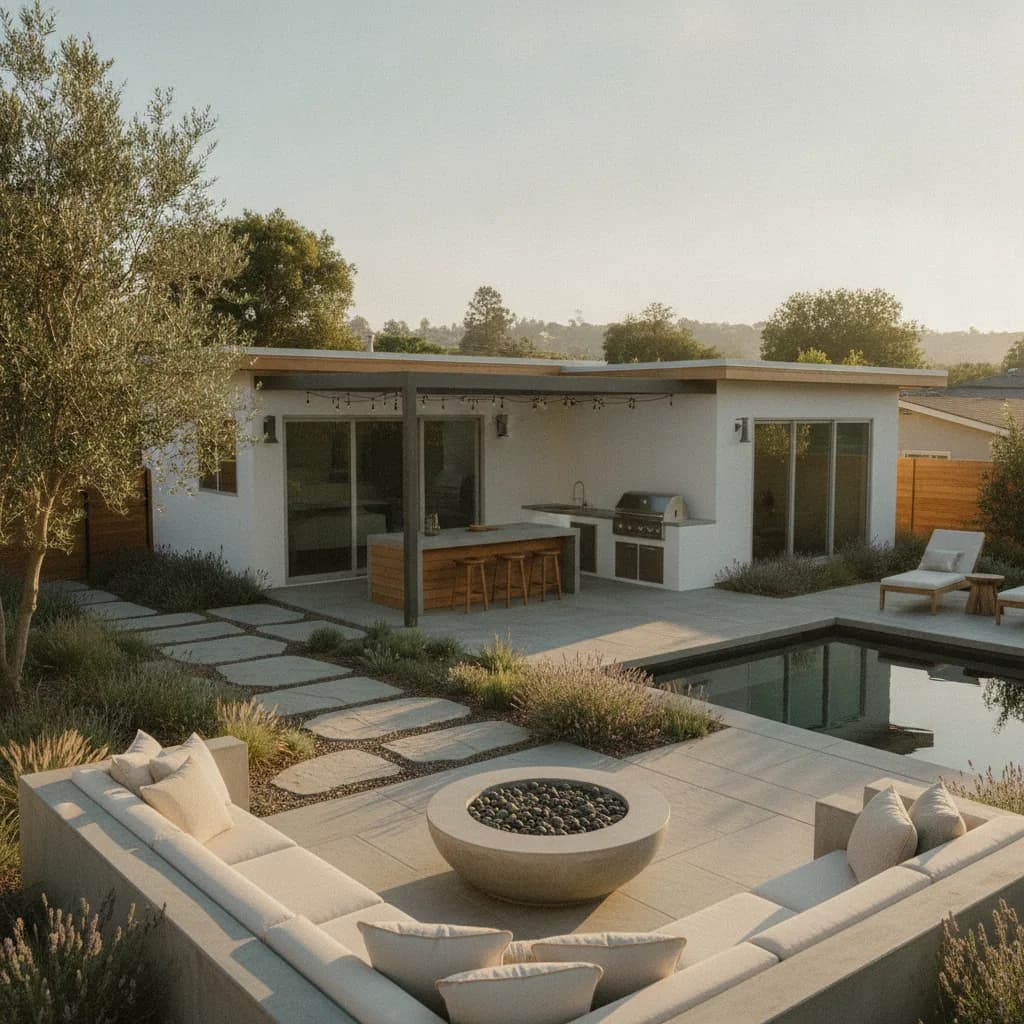
ADU Permit and HOA Guide for Riverside: Your 2026 Blueprint for Success
Building an Accessory Dwelling Unit (ADU) in Riverside, California, offers significant benefits for homeowners, from generating rental income to providing flexible living spaces. Navigating the permit process and understanding local HOA regulations in 2026 requires a clear understanding of Riverside-specific rules, costs, and timelines. Expect total project costs for a new detached ADU to range from $180,000 to $450,000+, with permit fees adding $0-$15,000 depending on size, and a typical timeline from design to move-in running 10-18 months. This guide provides a comprehensive blueprint for Riverside homeowners.
What are the specific differences in ADU regulations between the City of Riverside and unincorporated Riverside County?
ADU regulations in Riverside vary significantly depending on whether your property is within the incorporated City of Riverside limits or in unincorporated Riverside County. While both adhere to state-mandated ADU laws, local jurisdictions implement these with distinct nuances. For instance, the City of Riverside offers permit-ready ADU plans, a feature not uniformly available across all unincorporated county areas.
City of Riverside Specifics:
Size Limits: Detached ADUs can be up to 1,200 sq ft. Attached ADUs are limited to 50% of the primary dwelling's floor area. Junior ADUs (JADUs) are capped at 500 sq ft. These limits are generous, allowing for substantial additional living space. The City also provides pre-approved plans, including a 746 sq ft (1 bed/1 bath), 800 sq ft (2 bed/2 bath), 1,020 sq ft (2 bed/2 bath), and a 1,200 sq ft (3 bed/2 bath) option. Setbacks: A minimum 4-foot setback is required from both rear and side property lines for ADUs. This standardized setback simplifies site planning for many homeowners. Impact Fees: For ADUs under 750 sq ft, impact fees are entirely waived. For units exceeding 750 sq ft, impact fees typically range from $5,000 to $15,000, which can be a significant cost consideration for larger projects. Permit Process: The City of Riverside utilizes online portals, such as Accela, for permit applications, streamlining submissions and tracking. Expedited review times are a major benefit, with initial plan reviews taking as little as 3 business days for pre-approved plans and subsequent reviews around 10 business days.
Unincorporated Riverside County Specifics:
Size Limits: Generally align with state law, allowing up to 1,200 sq ft for detached ADUs and 50% of the primary dwelling for attached units, with JADUs at 500 sq ft. However, specific zoning overlays within the county might introduce additional considerations. Setbacks: While the 4-foot minimum is common, some unincorporated areas may have specific local overlays that could influence setbacks, particularly in areas with unique environmental or historical designations. Always verify with the specific county planning department for your parcel. Impact Fees: Similar to the City, impact fees are waived for ADUs under 750 sq ft. For larger units, fees are assessed based on square footage and location within the county, generally falling within the $5,000-$15,000 range. Permit Process: Permit processes at Riverside County can vary. While some services are moving online, some still require in-person submittal for certain types of plans or specific stages of review. Always confirm the current preferred submission method with the Riverside County Department of Building and Safety.
Understanding these distinctions is crucial for accurate project planning and budgeting. Homeowners in unincorporated areas might find slightly longer review times compared to the City's expedited pre-approved plan process.
What is a realistic, step-by-step timeline for an ADU project in Riverside, from initial concept to move-in?
A realistic timeline for an ADU project in Riverside, from initial concept to move-in, typically spans 10 to 18 months, varying based on design complexity, permit review efficiency, and construction speed. This comprehensive process involves several distinct phases.
Feasibility & Design (2-4 months): This initial phase involves site assessment, architectural design, and securing financing. For Riverside homeowners, this is where you decide between a custom design or utilizing the City's pre-approved plans. Engaging an architect or designer early helps navigate local zoning and building codes. Properties in Riverside typically have larger lots (7,000-15,000+ sq ft), offering more flexibility for ADU placement and potential scope expansions once initial design begins.
Permit Application & Review (2-6 months): This is often the most variable phase. For custom plans, the City of Riverside's One Stop Shop (951-826-5800) or Riverside County's Building and Safety Department will review your application. If you opt for one of the City's pre-approved plans, initial review can be as fast as 3 business days, with subsequent reviews taking around 10 business days. Custom plans, however, can take several months, including multiple rounds of revisions and resubmittals. This phase also involves obtaining clearances from Riverside Public Utilities for water (951-826-5285), sewer (951-826-5341), and electric (951-826-5489).
Contractor Selection & Pre-Construction (1-2 months): Once permits are approved, you'll solicit bids from contractors and finalize your construction agreement. This includes detailed scheduling and material procurement. Given Riverside's climate, ensuring your contractor understands local material requirements for fire and heat resistance is key.
Construction (4-8 months): The actual building phase. This timeline can be influenced by weather, material availability, and the complexity of your chosen design. Inspections will occur at various stages, requiring coordination with the City or County building department. Clay and decomposed-granite soils common in Riverside require engineered drainage for patios, retaining walls, and pool decking to prevent heaving and settling, which can add complexity to foundation and hardscape work.
Final Inspection & Occupancy (2-4 weeks): After construction is complete, a final inspection ensures all work meets code. Once approved, you receive your Certificate of Occupancy, and your ADU is ready for use.
What is the average total cost to build different types of ADUs in Riverside, and what is the typical ROI for these investments?
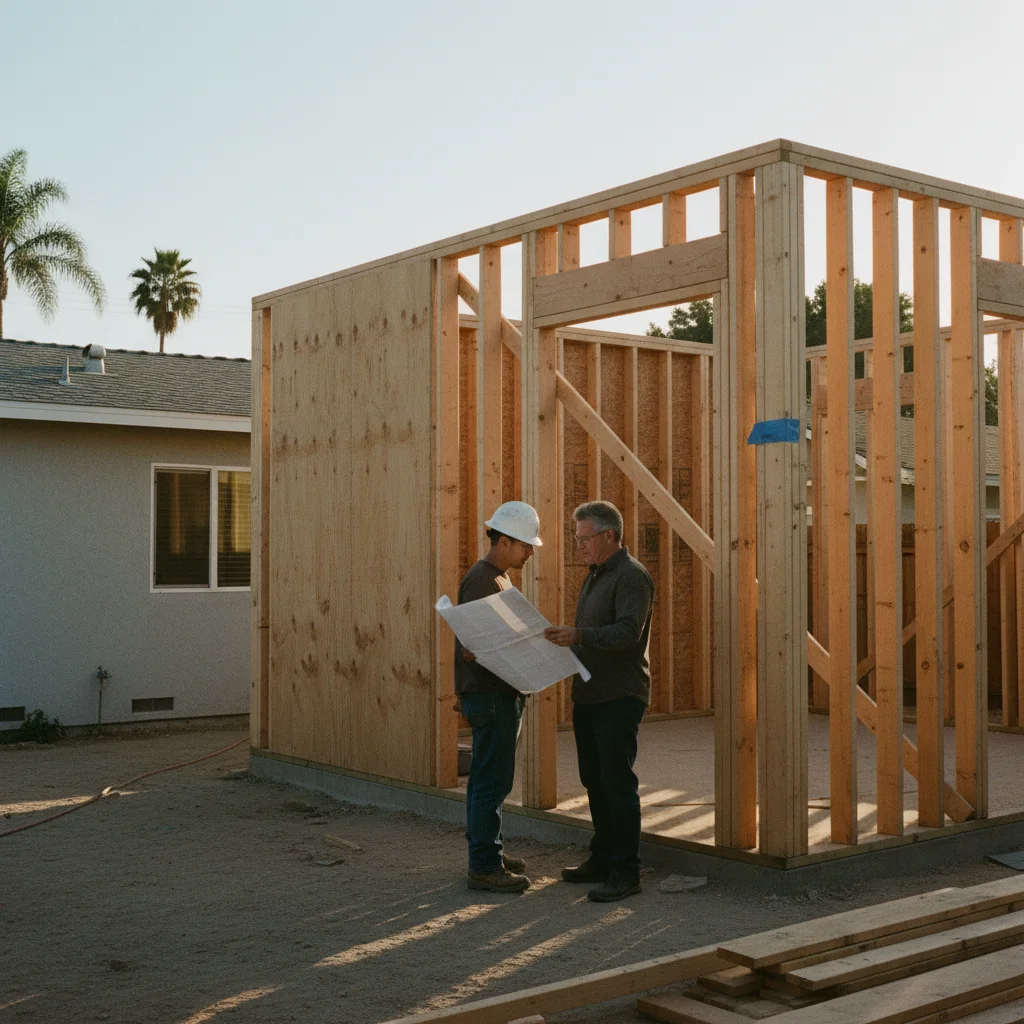
The average total cost to build an ADU in Riverside in 2026 can range significantly, primarily depending on the type of ADU, its size, and the chosen finishes. For Riverside homeowners, the Return on Investment (ROI) is generally strong, driven by high rental demand and increased property values.
Cost Estimates for Riverside ADUs (2026):
Garage Conversion (JADU or smaller ADU): Expect costs between $100,000 and $250,000. This is often the most budget-friendly option, leveraging existing structures. However, remember that Riverside's summer temperatures routinely hit 105-110°F, so proper insulation, HVAC, and window choices are critical for comfort, potentially adding to the cost. Attached ADU (new construction): These typically range from $150,000 to $350,000. Costs per square foot can be slightly lower than detached units due to shared walls and utility connections, but still require significant planning and construction. Detached ADU (new construction): The most popular and often most expensive option, ranging from $180,000 to $450,000+. A 750 sq ft detached ADU might cost $225,000-$300,000, while a full 1,200 sq ft unit could reach $350,000-$450,000+. This includes all soft costs (design, permits) and hard costs (materials, labor). For a deeper dive into construction costs, consider resources like The Ultimate Guide to the Cost to Build a Pool in Los Angeles (2026), as many cost factors overlap with general construction.
Additional Costs to Budget For:
Permit Fees: As mentioned, waived for units under 750 sq ft; $5,000-$15,000 for larger units. Utility Hookups: Can range from $5,000-$20,000, especially if new sewer or electrical lines need to be run from the street. Site Work: Grading, drainage, and landscaping can add $10,000-$30,000, particularly with Riverside's clay and decomposed-granite soils requiring engineered solutions. Architectural/Design Fees: Typically 10-15% of construction costs.
Typical ROI for Riverside ADU Investments:
Rental Income: A well-built ADU in Riverside can command significant rental income. A 1-bedroom unit might rent for $1,800-$2,500/month, while a 2-bedroom could fetch $2,500-$3,500/month. This provides a strong cash flow stream that can offset mortgage payments or generate substantial profit. Property Value Increase: Studies show that properties with ADUs can see a 15-30% increase in overall property value. For a median Riverside home, this can translate to a value increase of $75,000-$150,000 or more, offering excellent long-term equity growth. For more on maximizing home value, see guides like Pasadena ADU Permit & HOA Guide: Navigating 2026 Regulations and Fee Exemptions. Flexibility: Beyond monetary returns, an ADU offers unparalleled flexibility for multi-generational living, a home office, or guest quarters, enhancing the property's utility and appeal.
How do Riverside's climate, soil, and HOA environment affect ADU projects?
Ready to compare vetted project options?
Use Project Match privately when your scope is clear enough for contractor conversations.
Start Project MatchSee what your ADU actually costs in 4 questions.
We pull cost ranges from invoiced California ADU builder projects, then narrow them to your scope, ZIP, and finish level. No first-call sticker shock.
Open the ADU cost calculatorFree. Takes under 2 minutes. No email required to see your range.
Riverside's unique local environment, encompassing its intense climate, challenging soil conditions, and prevalent HOA communities, significantly influences ADU project planning and execution. Homeowners must consider these factors from design through construction.
Climate Considerations:
Extreme Heat: Summer temperatures routinely hit 105-110°F in Riverside. This makes material choices for ADUs critical. Pool decks, shade structures, and dark-colored hardscape materials must be carefully selected to ensure usability and comfort. High-efficiency HVAC systems, reflective roofing (Class A fire-rated is often required anyway), and well-insulated walls are not just energy-efficient but essential for livability. For exterior finishes, light colors help reflect heat, and drought-tolerant landscaping reduces water usage. Fire and Wind Events: Proximity to wildland-urban interfaces means fire and wind events drive material choices. Class A fire-rated roofing is a standard requirement, and non-combustible fence materials are often mandated in high-risk areas. Windows should be tempered or dual-pane for fire resistance and energy efficiency. These considerations are vital for safety and compliance, similar to challenges in other Southern California regions like those discussed in The Ultimate 2026 ADU Permit and HOA Guide for Woodland Hills Homeowners.
Soil Conditions:
Clay and Decomposed Granite: Riverside's prevalent clay and decomposed-granite soils require engineered drainage solutions for patios, retaining walls, and pool decking. Without proper engineering, these soils can lead to significant heaving and settling, causing structural damage. This means additional costs for foundation design, soil testing, and specialized drainage systems, which must be factored into your budget early on.
HOA Environment:
Architectural Review: Many Riverside neighborhoods, especially newer developments, are governed by HOAs. These associations often have strict architectural review processes that can impact ADU design, exterior materials, and even landscaping. Before submitting to the City or County, homeowners must consult their HOA's CC&Rs (Covenants, Conditions & Restrictions) and architectural guidelines. While state law generally preempts HOAs from outright prohibiting ADUs, they can impose reasonable restrictions on design and aesthetics. This is a crucial step to avoid costly redesigns or conflicts. Community Aesthetics: HOAs aim to maintain a consistent community aesthetic. Your ADU design should ideally complement the existing primary dwelling and neighborhood style. This might mean matching roofing materials, exterior paint colors, and window styles. Proactive communication with your HOA board is highly recommended.
What are the key permit requirements and expedited options for ADUs in Riverside?
Obtaining an ADU permit in Riverside involves meeting specific requirements and can be significantly expedited by utilizing the City's pre-approved plans. The permit process ensures your ADU complies with safety, zoning, and building codes.
Key Permit Requirements:
Application Form: A complete application form submitted to the City of Riverside Planning Division or Riverside County Building and Safety. Site Plan: A detailed site plan showing property lines, existing structures, proposed ADU location, setbacks, utility lines, and access points. This must clearly demonstrate the 4-foot minimum setbacks from rear and side property lines. Floor Plans: Architectural drawings detailing the layout, dimensions, and use of all rooms within the ADU, including a full kitchen and bathroom for independent living. Elevations: Drawings showing all sides of the proposed ADU, including materials, windows, and doors. Structural Plans: Engineering plans detailing the foundation, framing, and structural integrity of the ADU, especially critical given Riverside's soil conditions. Utility Plans: Diagrams showing connections to water, sewer, and electrical services, including any upgrades needed. Contact Riverside Public Utilities early to understand capacity and connection requirements. Energy Calculations: Documentation demonstrating compliance with California's Title 24 energy efficiency standards. Fire Sprinklers: While generally not required for ADUs if the primary dwelling doesn't have them, specific circumstances or local fire department requirements might necessitate them, especially in high fire hazard zones.
Expedited Options:
City of Riverside Pre-Approved Plans: The City offers four permit-ready ADU plans, ranging from 746 sq ft (1 bed/1 bath) to 1,200 sq ft (3 bed/2 bath). Utilizing these plans drastically reduces the permit review timeline. Initial plan review is typically completed within 3 business days, and subsequent reviews within 10 business days. This is a significant advantage for homeowners seeking a faster path to construction. Online Portals: The City of Riverside's Accela online portal allows for electronic submission and tracking of permits, which can expedite the process compared to traditional in-person submittals still common in some parts of Riverside County. Professional Assistance: Engaging experienced architects, designers, and contractors familiar with Riverside's specific requirements can help ensure your application is complete and accurate, minimizing delays. For example, understanding specific requirements for garage conversions in Riverside, as detailed in guides like Riverside Garage Conversion Permits & HOA: Your 2026 Blueprint, can save time.
How do you navigate HOA approvals for an ADU in Riverside?
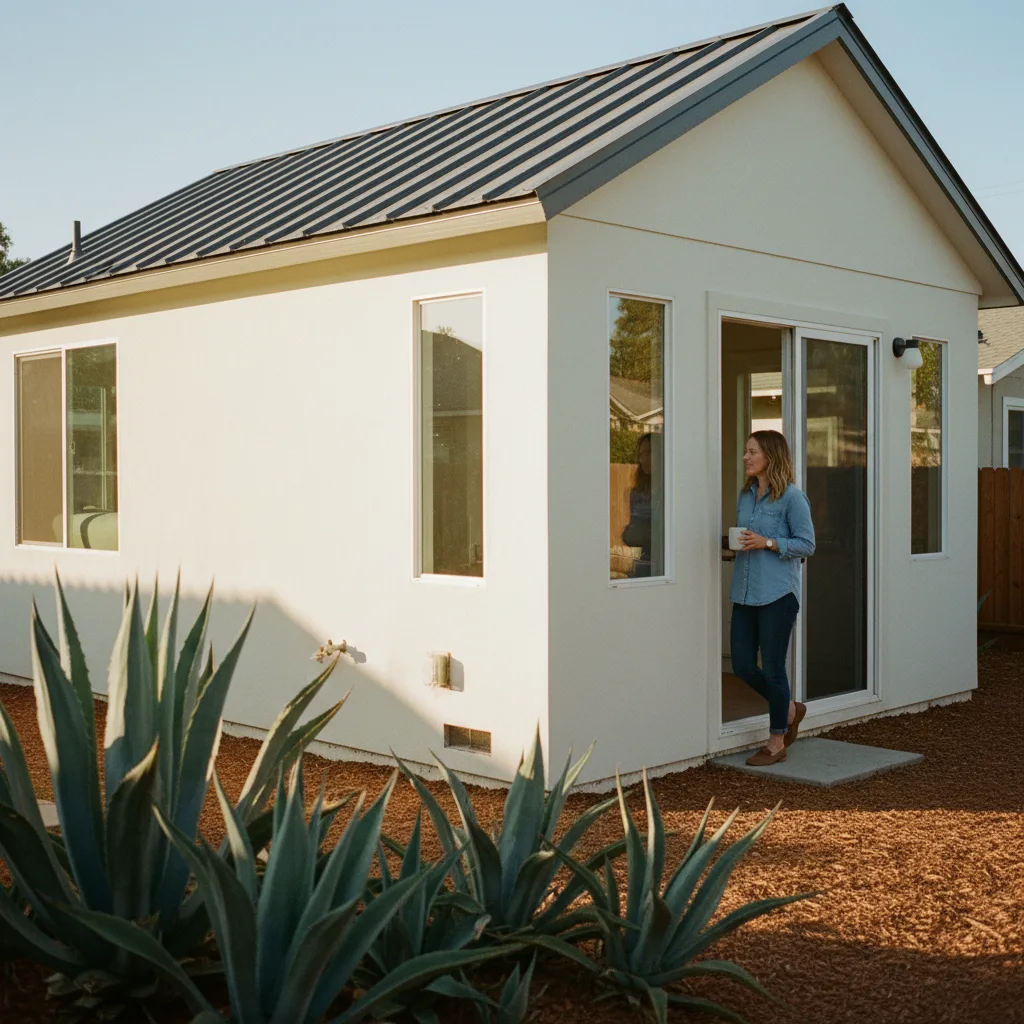
Navigating HOA approvals for an ADU in Riverside requires a proactive and informed approach, as HOAs, despite state law, retain significant influence over design and aesthetics. While state legislation largely prevents HOAs from outright prohibiting ADUs, they can enforce reasonable architectural standards.
Review Your CC&Rs: Before any design work begins, thoroughly read your Homeowners Association's Covenants, Conditions & Restrictions (CC&Rs) and architectural guidelines. These documents outline what is permissible in terms of construction, materials, colors, and design within your community. Pay close attention to sections on additions, accessory structures, and exterior modifications.
Pre-Application Meeting with HOA: Schedule an informal meeting with your HOA board or architectural review committee. Present your preliminary ADU concept and discuss your intentions. This early engagement can help identify potential conflicts or concerns before you invest heavily in detailed plans. Be prepared to explain how your ADU will blend with the existing home and neighborhood aesthetic.
Submit a Detailed Application: Once you have a clear understanding of your HOA's requirements and your ADU design is finalized, submit a formal application to your HOA's architectural review committee. This application should include: Detailed site plans showing the ADU's location, setbacks, and how it integrates with the existing property. Architectural drawings, including floor plans and elevations, demonstrating materials, colors, and overall design.
- Landscaping plans, if applicable, especially considering Riverside's need for drought-tolerant options and shade structures to combat high summer temperatures.
Address HOA Concerns: Be prepared for feedback and potential requests for modifications. HOAs often focus on visual impact, privacy for neighbors, and consistency with community standards. Your goal is to demonstrate that your ADU will enhance, or at least not detract from, the neighborhood's appeal. For instance, if your HOA has specific rules about fence materials, ensure your ADU plans incorporate non-combustible options if near a wildland-urban interface.
Obtain Written Approval: Ensure you receive written approval from your HOA before submitting your plans to the City of Riverside or Riverside County for permits. This written approval is often a prerequisite for the municipal permit application and provides crucial documentation should any disputes arise later.
Conclusion
Get 3 ADU builder bids in 48 hours.
Our editors already screened California ADU builders. Answer 4 questions; we send 3 written bids inside 48 hours, with the real price for your scope, not their inflated first-call number.
Send my 3 bidsFree. No commission. If a match doesn't fit, we'll send another.
Building an ADU in Riverside is a rewarding investment that enhances property value and provides flexible living solutions. By understanding the distinct regulations between the City of Riverside and unincorporated County, budgeting for realistic costs, and navigating the permit and HOA processes with foresight, homeowners can successfully realize their ADU vision. Always prioritize local expertise, adhere to climate-specific material choices, and engage with relevant authorities early in your project. With careful planning, your Riverside ADU can be a significant asset for years to come.
FAQ
Q: What are the size limits for ADUs in the City of Riverside?
A: In the City of Riverside, detached ADUs can be up to 1,200 sq ft, attached ADUs can be up to 50% of the primary dwelling's floor area, and Junior ADUs (JADUs) are capped at 500 sq ft.
Q: Are impact fees waived for ADUs in Riverside?
A: Yes, impact fees are entirely waived for ADUs under 750 sq ft in both the City of Riverside and unincorporated Riverside County. For units over 750 sq ft, impact fees typically range from $5,000 to $15,000.
Q: How long does it take to get an ADU permit approved in Riverside with pre-approved plans?
A: If you use the City of Riverside's pre-approved ADU plans, the initial plan review can be completed in as little as 3 business days, with subsequent reviews taking approximately 10 business days. Custom plans will have longer review periods.
Q: What are the minimum setback requirements for ADUs in Riverside?
A: ADUs in Riverside require a minimum 4-foot setback from both the rear and side property lines. Always verify with your specific jurisdiction (City or County) as local overlays can sometimes introduce minor variations.
Q: How do Riverside's high summer temperatures affect ADU construction?
A: Riverside's summer temperatures, often reaching 105-110°F, necessitate critical material choices for ADUs. This includes high-efficiency HVAC systems, proper insulation, reflective roofing, and light-colored exterior finishes to ensure comfort and energy efficiency. Shade structures and appropriate hardscape materials are also important for usability.
Frequently Asked Questions
What are the size limits for ADUs in the City of Riverside?
In the City of Riverside, detached ADUs can be up to 1,200 sq ft, attached ADUs can be up to 50% of the primary dwelling's floor area, and Junior ADUs (JADUs) are capped at 500 sq ft.
Are impact fees waived for ADUs in Riverside?
Yes, impact fees are entirely waived for ADUs under 750 sq ft in both the City of Riverside and unincorporated Riverside County. For units over 750 sq ft, impact fees typically range from $5,000 to $15,000.
How long does it take to get an ADU permit approved in Riverside with pre-approved plans?
If you use the City of Riverside's pre-approved ADU plans, the initial plan review can be completed in as little as 3 business days, with subsequent reviews taking approximately 10 business days. Custom plans will have longer review periods.
What are the minimum setback requirements for ADUs in Riverside?
ADUs in Riverside require a minimum 4-foot setback from both the rear and side property lines. Always verify with your specific jurisdiction (City or County) as local overlays can sometimes introduce minor variations.
How do Riverside's high summer temperatures affect ADU construction?
Riverside's summer temperatures, often reaching 105-110°F, necessitate critical material choices for ADUs. This includes high-efficiency HVAC systems, proper insulation, reflective roofing, and light-colored exterior finishes to ensure comfort and energy efficiency. Shade structures and appropriate hardscape materials are also important for usability.
Ready to start your ADU project?
Find My ProsFrequently Asked Questions
What are the size limits for ADUs in the City of Riverside?
In the City of Riverside, detached ADUs can be a maximum of 1,200 square feet, while attached ADUs are limited to 50% of the primary home's floor area. Junior ADUs (JADUs) have a separate, smaller cap and cannot exceed 500 square feet. These regulations determine the maximum buildable space.
The City of Riverside specifies different size limits depending on the ADU type. A detached, standalone unit has the largest potential footprint at 1,200 square feet. For an attached ADU, which connects to the main house, the size is proportional, limited to half of the primary dwelling's total floor area. The smallest option, a Junior ADU, is created within the existing home's footprint and is capped at 500 square feet.
Are impact fees waived for ADUs in Riverside?
Yes, impact fees are fully waived for accessory dwelling units under 750 square feet in both the City of Riverside and unincorporated Riverside County. For ADUs larger than this threshold, impact fees are applied and typically range from $5,000 to $15,000, depending on the specific project details.
Homeowners in the City of Riverside and unincorporated Riverside County receive a complete waiver of impact fees for any ADU smaller than 750 square feet. This policy significantly lowers the initial construction cost for more compact units, making them a more accessible housing option for many residents.
For accessory dwelling units that are 750 square feet or larger, these development impact fees are not waived. The costs for these larger units can vary, but they generally fall within a $5,000 to $15,000 range. The exact fee is calculated based on the unit's size and location.
How long does it take to get an ADU permit approved in Riverside with pre-approved plans?
In the City of Riverside, using pre-approved ADU plans allows for an initial plan review in as little as 3 business days. Subsequent reviews take approximately 10 business days to complete. Homeowners who submit custom plans instead of the pre-approved options will experience longer review periods for their permits.
The City of Riverside offers a streamlined process for homeowners who select its pre-approved ADU plans. The first review is remarkably quick, often finished within just 3 business days. If any corrections or additional information are needed, subsequent reviews are scheduled, and these typically take around 10 business days to complete. It is important to remember that these expedited timelines apply specifically to the city's pre-approved designs. Submitting custom ADU plans will require longer review periods for the permit application.
What are the minimum setback requirements for ADUs in Riverside?
In Riverside, Accessory Dwelling Units (ADUs) require a minimum 4-foot setback from both the rear and side property lines. It is crucial to confirm these requirements with your local jurisdiction, either the City or County, as local overlays can sometimes introduce small variations to this standard rule.
The established minimum for ADUs in Riverside is a 4-foot setback from side and rear property lines. This serves as a baseline, but homeowners should treat it as a starting point for their research. Always consult directly with the planning department for your specific jurisdiction, whether it is the City of Riverside or an unincorporated area within the County. Local planning overlays or specific zoning codes can impose slightly different rules. Confirming these details early in your project can prevent costly delays and ensure compliance.
How do Riverside's high summer temperatures affect ADU construction?
Riverside's high summer temperatures, often 105-110°F, require specific ADU construction choices for comfort and energy efficiency. These include high-efficiency HVAC, proper insulation, reflective roofing, and light-colored exterior finishes. Shade structures and appropriate hardscape materials are also critical for the property's usability during extreme heat.
In Riverside, where summer heat frequently climbs to 105-110°F, material selection is a crucial factor for a successful ADU project. To ensure the unit remains comfortable and energy-efficient, the design must incorporate high-performance systems. This means installing a high-efficiency HVAC unit and ensuring the structure has proper insulation.
The building's exterior choices are just as important for managing heat. Reflective roofing and light-colored finishes help deflect solar radiation, reducing the cooling demand. Additionally, including shade structures and selecting suitable hardscape materials for patios or walkways will make the surrounding outdoor areas more usable and pleasant during the hottest months.