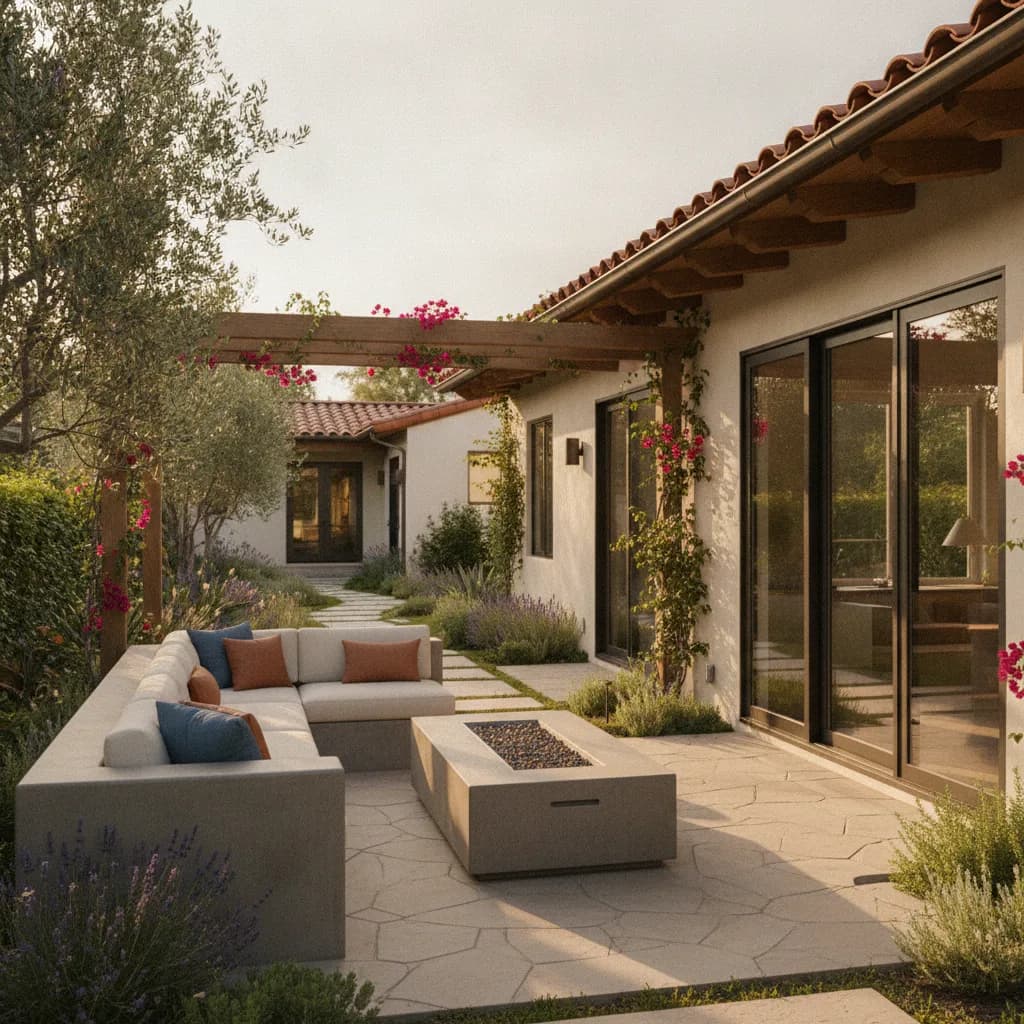
Building an Accessory Dwelling Unit (ADU) in Pasadena offers a fantastic opportunity to enhance property value, generate rental income, or provide flexible living space for family. However, navigating the city's specific permit requirements, understanding local fee structures, and addressing potential HOA restrictions can feel complex. This comprehensive guide for 2026 provides Pasadena homeowners with the precise, up-to-date information needed to successfully plan and execute their ADU project.
What Are the Latest ADU Permit Requirements in Pasadena for 2026?
Pasadena's ADU permit requirements for 2026 are designed to streamline the process while ensuring compliance with local zoning and building codes. Homeowners should anticipate a thorough review of their plans, focusing on design, safety, and environmental impact. The city emphasizes clear setbacks, appropriate sizing, and adherence to architectural standards, particularly for properties near Pasadena's historic-style homes, where material palettes that match existing architectural character often lead to smoother approvals.
For detached ADUs, a general height limit of 16 feet applies, while attached ADUs can extend up to 25 feet. Spatial and siting constraints are crucial: any exterior walls with openings like windows or doors must maintain at least a 5-foot setback from property lines. For ADUs exceeding 800 sq. ft., a 6-foot eave-to-eave separation from other structures on the lot is required. These specific rules go beyond generic 4-foot setback guidelines, making detailed planning essential for Pasadena homeowners.
How Do Pasadena's ADU Fee Exemptions and Discounts Work?
Pasadena offers significant financial incentives for ADU construction, making projects more affordable for many homeowners. These fee exemptions are a critical advantage for those looking to build in 2026. Understanding these specific criteria can drastically reduce your overall project costs.
For ADUs 900 sq. ft. or smaller, homeowners are exempt from Residential Impact Fees (RIFs). Additionally, these smaller units receive a 50% discount on plan check fees, a 25% reduction on permit fees, and a reduced $1,000 Construction and Demolition (C&D) deposit. These savings can be substantial, directly impacting your budget.
What are the Exact Requirements for an ADU Affordability Covenant?
Homeowners can receive fee exemptions on ADUs of any size if they sign an ADU Affordability Covenant. This agreement requires the unit to be rented to a household earning no more than 120% of the Area Median Income (AMI) for a minimum of 7 years. The process involves submitting a formal application to the City of Pasadena's Housing Department, demonstrating the unit's compliance with affordability standards, and legally recording the covenant against the property title. This ensures the unit remains affordable for the specified period, benefiting both the homeowner through fee reductions and the community through increased affordable housing options.
What's the Status of Pasadena's Standard ADU Plans Program in 2026?
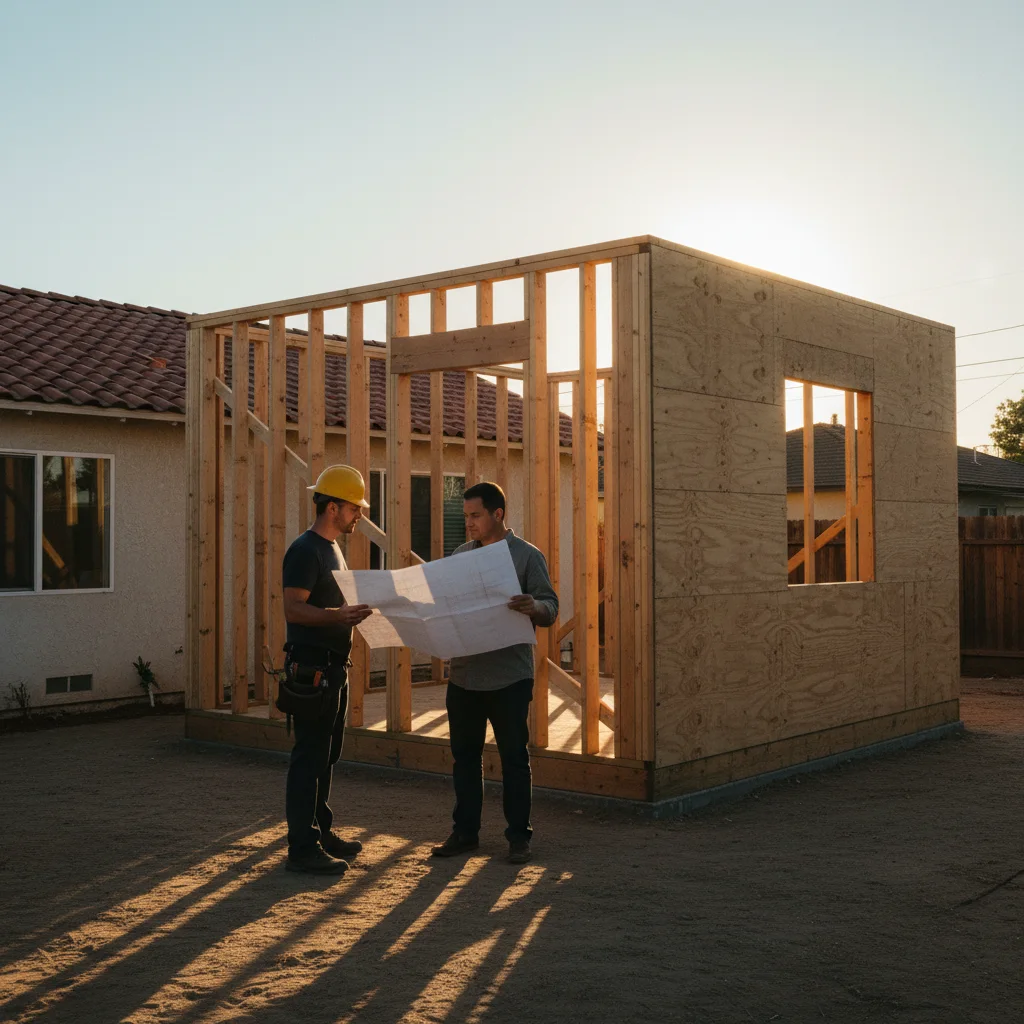
Pasadena's Standard ADU Plans Program, which previously offered pre-approved designs to fast-track permits, underwent a significant change at the end of 2025. It's crucial for homeowners to understand this update to avoid delays in their 2026 projects.
The previous Standard ADU Plans Program officially expired on December 31, 2025, due to updates in the California Building Code. As of January 1, 2026, these specific plans are restricted only to residential properties red-tagged from the Eaton Fire. For all other citywide single-family properties, new standard plans are expected to be added in the coming months. This means most homeowners will need to pursue custom plans or wait for the release of new city-approved standard designs. This transition underscores the importance of staying current with Pasadena's planning department announcements.
How Do HOAs in Pasadena Specifically Impact ADU Permits?
Ready to compare vetted project options?
Use Project Match privately when your scope is clear enough for contractor conversations.
Start Project MatchSee what your ADU actually costs in 4 questions.
We pull cost ranges from invoiced California ADU builder projects, then narrow them to your scope, ZIP, and finish level. No first-call sticker shock.
Open the ADU cost calculatorFree. Takes under 2 minutes. No email required to see your range.
Navigating an Accessory Dwelling Unit project in Pasadena often involves more than just city permits, especially if your property is part of a Homeowners Association (HOA). HOAs in Pasadena can significantly impact ADU permits, introducing an additional layer of approval and specific design requirements. Common challenges include architectural review boards scrutinizing exterior materials, colors, and landscaping to ensure consistency with community standards. Many HOAs have their own CC&Rs (Covenants, Conditions, and Restrictions) that might impose stricter rules than city code, such as prohibiting certain types of construction or dictating specific setbacks or aesthetic guidelines.
Workarounds often involve proactive communication with your HOA board early in the planning process. Presenting a detailed plan that addresses their concerns, perhaps even offering material palettes that match existing architectural character in the neighborhood, can facilitate smoother approval. Some HOAs may require a separate architectural review application and approval before you can even submit to the city. Neglecting HOA approval can lead to costly disputes, even if you have a city permit. For more insights on navigating similar challenges, consider our guide on Arcadia ADU Permit and HOA Guide: Your 2026 Blueprint for Success.
What Are Typical ADU Project Costs and Timelines in Pasadena?
ADU project costs in Pasadena for 2026 vary widely based on size, complexity, and finishes, typically ranging from $150,000 to $400,000+. A basic 400 sq. ft. detached ADU might start around $150,000-$200,000, while a larger, more custom 1,200 sq. ft. unit with high-end finishes could easily exceed $350,000. These figures are higher than national averages due to Pasadena's specific labor costs, material prices, and local permit fees, even with available exemptions.
Permit timelines in Pasadena typically range from 2 to 4 months for initial plan review and approval, assuming all documentation is complete and accurate. Construction can then take anywhere from 6 to 12 months, depending on the project's scope and contractor availability. It's important to note that older housing stock frequently introduces hidden scope in drainage, electrical grounding, and hardscape prep, which can extend both timelines and budgets. Permit coordination can be smoother when structural, electrical, and landscape scopes are planned as one cohesive package. Remember, if the city does not act on a complete ADU application within 60 days, it is deemed automatically approved, providing a crucial safeguard for homeowners.
How Does Pasadena's Environment Influence ADU Construction?
Pasadena's unique environment, characterized by its Mediterranean climate, diverse soil conditions, and mature tree canopy, significantly influences ADU construction. The dry summers and occasional heavy winter rains necessitate robust drainage planning. Tree root management and grading strategy can heavily influence patio, paver, and retaining wall budgets, especially in older, tree-lined neighborhoods. Homeowners usually get better outcomes by phasing projects: focusing on infrastructure first, then finishes. This approach helps manage unexpected issues, particularly when dealing with older properties where hidden drainage or electrical challenges are common.
Why is an ADU a Smart Investment for Pasadena Homeowners?
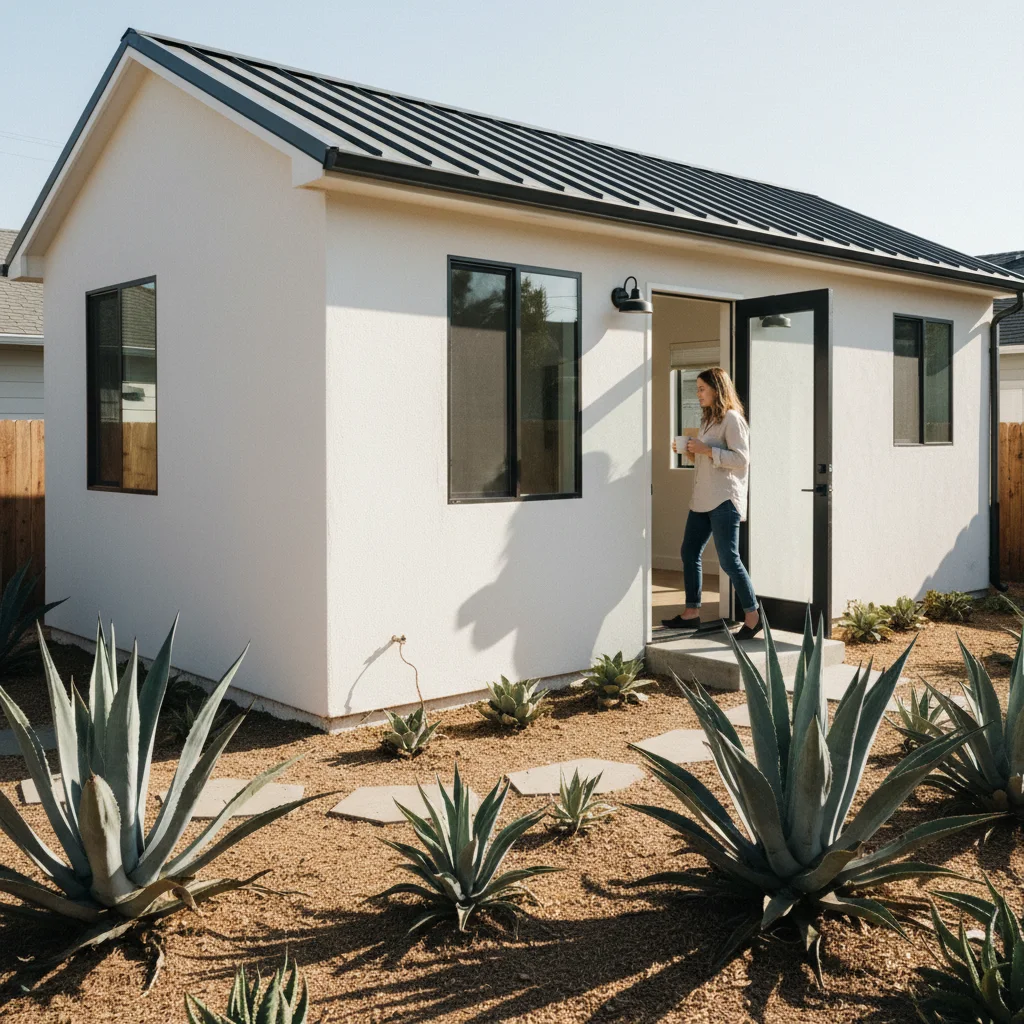
An ADU represents a strategic investment for Pasadena homeowners, offering multiple benefits tailored to the local context. With Pasadena's high housing costs and strong rental market, an ADU provides a valuable source of passive income, helping to offset mortgage payments or supplement retirement funds. It also offers flexible living solutions, whether for aging parents, adult children, or a dedicated home office, which is increasingly relevant in 2026.
The neighborhood context matters significantly in Pasadena. Many areas feature larger lots that can comfortably accommodate an ADU without sacrificing valuable yard space. The city's ongoing efforts to streamline ADU permits, coupled with financial incentives, make it an opportune time to build. An ADU not only increases your property's functional space but also its overall market value in a highly desirable region. For those considering similar projects in neighboring cities, our guide on The Ultimate 2026 ADU Permit and HOA Guide for Woodland Hills Homeowners offers comparative insights.
What Specific Design Requirements for New Standard Plans Are Expected?
Get 3 ADU builder bids in 48 hours.
Our editors already screened California ADU builders. Answer 4 questions; we send 3 written bids inside 48 hours, with the real price for your scope, not their inflated first-call number.
Send my 3 bidsFree. No commission. If a match doesn't fit, we'll send another.
With the expiration of the previous Standard ADU Plans Program, Pasadena is expected to introduce new standard plans suitable for citywide single-family properties in the coming months of 2026. While specific details are pending, these new plans will likely emphasize flexibility in design while adhering to updated California Building Codes and Pasadena's local aesthetic guidelines. Homeowners can anticipate options that cater to various lot sizes and architectural styles, aiming to further simplify the permit process.
These new standard plans will likely incorporate modern energy efficiency standards, sustainable material recommendations, and design elements that complement Pasadena's diverse architectural landscape. They are intended to provide a more current and broadly applicable set of pre-approved designs, making it easier for homeowners to select a plan that fits their property and vision without the need for extensive custom architectural drawings. Keep an eye on the City of Pasadena's Planning Division website for official announcements regarding these upcoming resources.
Conclusion
Navigating the ADU permit and HOA landscape in Pasadena in 2026 requires careful attention to detail and an understanding of the city's specific regulations and incentives. From leveraging fee exemptions for smaller units or affordability covenants to understanding the transition of the Standard Plans Program, being well-informed is your best strategy. By proactively addressing permit requirements, HOA guidelines, and local environmental considerations, Pasadena homeowners can successfully add valuable living space to their properties. Start your planning today to unlock the full potential of your Pasadena home.
FAQ
Q1: What is the typical cost range for building an ADU in Pasadena in 2026?
A1: In Pasadena, the typical cost for building an ADU in 2026 ranges from $150,000 to $400,000+, depending on size, finishes, and site-specific challenges. Smaller units (around 400 sq. ft.) might start at $150,000-$200,000, while larger, custom units can exceed $350,000.
Q2: How long does it typically take to get an ADU permit approved in Pasadena?
A2: The initial permit approval process in Pasadena typically takes 2 to 4 months for a complete ADU application. Construction then usually takes an additional 6 to 12 months. The city is mandated to act on a complete application within 60 days, or it's deemed automatically approved.
Q3: Are there any fee exemptions for ADUs in Pasadena?
A3: Yes, ADUs 900 sq. ft. or smaller are exempt from Residential Impact Fees (RIFs), receive a 50% discount on plan check fees, a 25% reduction on permit fees, and a reduced $1,000 Construction and Demolition (C&D) deposit. Homeowners can also receive fee exemptions for any size ADU by signing an Affordability Covenant.
Q4: What is the ADU Affordability Covenant in Pasadena?
A4: The ADU Affordability Covenant allows homeowners to receive fee exemptions on any size ADU if they agree to rent the unit to a household earning no more than 120% of the Area Median Income for a minimum of 7 years. This agreement is legally recorded against the property.
Q5: How do HOAs affect ADU construction in Pasadena?
A5: HOAs in Pasadena can significantly impact ADU projects by requiring additional architectural review and approval based on their specific CC&Rs. These rules can be stricter than city code, affecting design, materials, and setbacks. Proactive communication and adherence to HOA guidelines are crucial for a smooth process.
Q6: What happened to Pasadena's Standard ADU Plans Program?
A6: Pasadena's previous Standard ADU Plans Program expired on December 31, 2025, due to updated building codes. As of 2026, these plans are restricted to properties red-tagged from the Eaton Fire. New standard plans for citywide single-family properties are expected to be introduced in the coming months.
Frequently Asked Questions
Q1: What is the typical cost range for building an ADU in Pasadena in 2026?
A1: In Pasadena, the typical cost for building an ADU in 2026 ranges from $150,000 to $400,000+, depending on size, finishes, and site-specific challenges. Smaller units (around 400 sq. ft.) might start at $150,000-$200,000, while larger, custom units can exceed $350,000.
Q2: How long does it typically take to get an ADU permit approved in Pasadena?
A2: The initial permit approval process in Pasadena typically takes 2 to 4 months for a complete ADU application. Construction then usually takes an additional 6 to 12 months. The city is mandated to act on a complete application within 60 days, or it's deemed automatically approved.
Q3: Are there any fee exemptions for ADUs in Pasadena?
A3: Yes, ADUs 900 sq. ft. or smaller are exempt from Residential Impact Fees (RIFs), receive a 50% discount on plan check fees, a 25% reduction on permit fees, and a reduced $1,000 Construction and Demolition (C&D) deposit. Homeowners can also receive fee exemptions for any size ADU by signing an Affordability Covenant.
Q4: What is the ADU Affordability Covenant in Pasadena?
A4: The ADU Affordability Covenant allows homeowners to receive fee exemptions on any size ADU if they agree to rent the unit to a household earning no more than 120% of the Area Median Income for a minimum of 7 years. This agreement is legally recorded against the property.
Q5: How do HOAs affect ADU construction in Pasadena?
A5: HOAs in Pasadena can significantly impact ADU projects by requiring additional architectural review and approval based on their specific CC&Rs. These rules can be stricter than city code, affecting design, materials, and setbacks. Proactive communication and adherence to HOA guidelines are crucial for a smooth process.
Q6: What happened to Pasadena's Standard ADU Plans Program?
A6: Pasadena's previous Standard ADU Plans Program expired on December 31, 2025, due to updated building codes. As of 2026, these plans are restricted to properties red-tagged from the Eaton Fire. New standard plans for citywide single-family properties are expected to be introduced in the coming months.
Ready to start your ADU project?
Find My ProsFrequently Asked Questions
Q1: What is the typical cost range for building an ADU in Pasadena in 2026?
In Pasadena for 2026, the typical cost to build an ADU is $150,000 to $400,000+. This range depends on size, finishes, and site conditions. A smaller 400 sq. ft. unit might cost $150,000 to $200,000, while larger custom ADUs can exceed $350,000, reflecting the project's specific demands.
The projected 2026 cost for an ADU in Pasadena is a wide spectrum. A project at the lower end, around $150,000 to $200,000, typically corresponds to a smaller unit of about 400 sq. ft. with standard finishes. Conversely, costs can climb beyond $350,000 and even top $400,000 for larger, custom-designed units with high-end materials or for properties with significant site-specific challenges that complicate construction.
Q2: How long does it typically take to get an ADU permit approved in Pasadena?
In Pasadena, getting an ADU permit approved typically takes 2 to 4 months for a complete application. The city must act within 60 days, or the permit is automatically approved. After approval, construction usually takes another 6 to 12 months to complete the project.
The total timeline for a finished ADU in Pasadena has two main stages. First, the permit review and approval process for a complete application is expected to take between 2 and 4 months. Second, the construction phase itself typically requires an additional 6 to 12 months to finish.
A critical factor is that the city is mandated to act on a complete ADU application within a 60 day window. If the city does not respond in that timeframe, the application is considered automatically approved, which helps provide a more predictable review period for applicants.
Q3: Are there any fee exemptions for ADUs in Pasadena?
Yes, Pasadena provides fee exemptions for ADUs. Units 900 sq. ft. or smaller are exempt from Residential Impact Fees (RIFs), receive a 50% plan check fee discount, a 25% permit fee reduction, and a reduced $1,000 Construction and Demolition (C&D) deposit. Homeowners can also get exemptions for any size ADU by signing an Affordability Covenant.
In Pasadena, the size of your ADU is a key factor for certain fee reductions. For units measuring 900 square feet or smaller, the city completely waives Residential Impact Fees (RIFs). These projects also benefit from a 50% discount on plan check fees and a 25% reduction on permit fees. The Construction and Demolition (C&D) deposit is also lowered to $1,000.
An alternative path for fee exemptions exists that is not dependent on unit size. Homeowners can receive fee exemptions for an ADU of any square footage by signing an Affordability Covenant, which commits the unit to specific rent restrictions.
Q4: What is the ADU Affordability Covenant in Pasadena?
Pasadena's ADU Affordability Covenant grants homeowners fee exemptions on any size ADU. In return, the owner must agree to rent the unit to a household earning no more than 120% of the Area Median Income for a minimum of 7 years. This agreement is legally recorded against the property.
This Pasadena program provides a financial incentive for homeowners who contribute to affordable housing. By entering into the ADU Affordability Covenant, a homeowner can receive exemptions from certain fees when building an accessory dwelling unit, regardless of its size. This agreement is a formal, legal commitment that is officially recorded against the property's title.
The central condition of the covenant is a long-term rental restriction. For a minimum of 7 years, the property owner must rent the ADU to a household with an income at or below 120% of the Area Median Income. This ensures the unit serves lower-income residents for a specified period.
Q5: How do HOAs affect ADU construction in Pasadena?
In Pasadena, Homeowners' Associations (HOAs) can significantly impact ADU projects by requiring a separate architectural review and approval based on their Covenants, Conditions, and Restrictions (CC&Rs). These rules can be stricter than city code, affecting your ADU's design, materials, and setbacks. Proactive communication with your HOA is crucial.
Even if your ADU plans meet all of Pasadena's city requirements, an HOA can enforce its own, more restrictive guidelines. These are outlined in the community's CC&Rs and often involve a formal architectural review process. The HOA may have specific rules about exterior finishes, rooflines, landscaping, and how far the structure must be from property lines. To avoid costly delays or disputes, you should obtain a copy of the HOA's architectural standards and submit your plans for their approval early in the process. Adherence to these community-specific rules is essential for a successful build.
Q6: What happened to Pasadena's Standard ADU Plans Program?
Pasadena's previous Standard ADU Plans Program expired on December 31, 2025, due to updated building codes. As of 2026, these plans are restricted to properties red-tagged from the Eaton Fire. The city expects to introduce new standard plans for citywide single-family properties in the coming months.
The original Standard ADU Plans Program in Pasadena concluded on December 31, 2025. This expiration was required to comply with new building code updates.
As a result, beginning in 2026, the former standard plans have a very specific, limited use. They are now available only for properties that were red-tagged following the Eaton Fire. Pasadena is currently developing a new set of standard plans intended for broader application on single-family properties across the city, with their release anticipated soon.