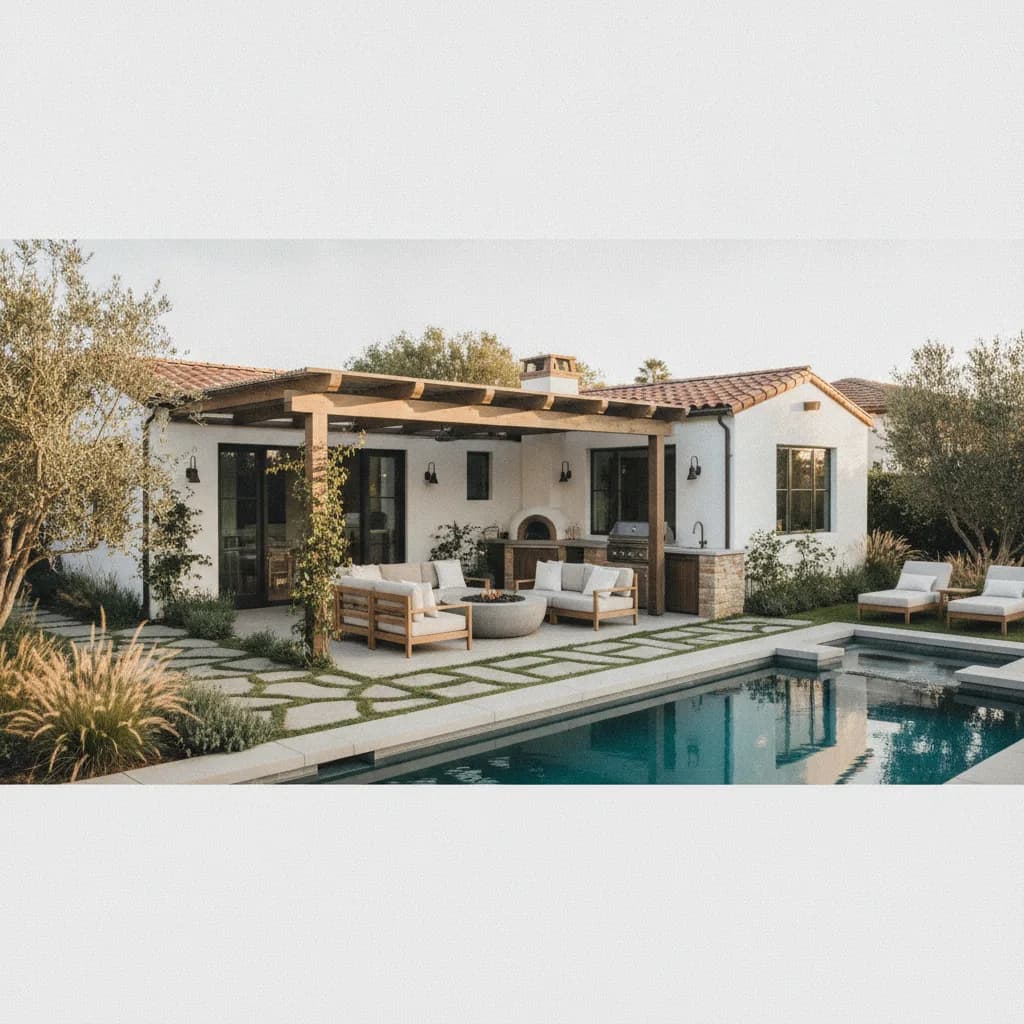
Welcome, Golden Yards readers, to an in-depth exploration of one of the most transformative home improvement projects sweeping Southern California: the Accessory Dwelling Unit (ADU). As a senior editor, I've seen countless trends come and go, but the ADU is more than a trend; it's a practical, valuable, and increasingly popular solution for homeowners in Los Angeles looking to maximize their property's potential.
An ADU, often called a granny flat, in-law unit, or backyard home, is an independent living space on the same lot as a primary residence. What makes an ADU truly shine in our sunny climate, however, is the opportunity to seamlessly integrate it with outdoor living spaces, creating a harmonious extension of your home and lifestyle. This comprehensive guide will walk you through every critical step, from initial planning and navigating LA's specific regulations to budgeting, construction, and, crucially, designing an ADU that embraces the quintessential Southern California indoor-outdoor experience.
Why an ADU in Los Angeles? Unlocking Your Property's Potential
Los Angeles is a city of dreams, innovation, and, let's be honest, high housing costs. This unique environment makes ADUs particularly appealing and impactful for homeowners across the sprawling metropolis. Building an ADU isn't just about adding square footage; it's about unlocking a multitude of benefits tailored to the LA lifestyle and market:
- Rental Income: With LA's robust rental market, an ADU can generate significant passive income, helping offset mortgage payments, fund college, or boost your retirement savings. It's a smart financial move in a city where demand for housing consistently outstrips supply.
- Multi-Generational Living: For many Angelenos, family is paramount. An ADU provides a private, independent space for aging parents, adult children, or visiting relatives, fostering closeness while maintaining personal boundaries. It's a compassionate and practical solution for extended families.
- Increased Property Value: A well-designed and legally permitted ADU can substantially increase your property's market value. Appraisers increasingly recognize ADUs as valuable assets, especially in desirable LA neighborhoods where space is at a premium.
- Flexible Space: Beyond permanent residents, an ADU can serve as a dedicated home office, an art studio, a gym, or a guest house, offering unparalleled flexibility as your needs evolve.
- Addressing the Housing Crisis: On a broader scale, building an ADU contributes to the solution for LA's housing shortage, providing much-needed housing options without requiring new land development. The state of California has actively encouraged ADU construction through progressive legislation, making it easier than ever for homeowners to build.
In a city where every square foot counts and the sun shines almost year-round, an ADU is more than just an addition; it's an investment in your property, your family, and your lifestyle.
The Planning & Design Phase: Laying the Foundation for Success
The journey to your perfect ADU begins long before any dirt is moved. A meticulous planning and design phase is crucial for a successful project, especially in a complex urban environment like Los Angeles.
Understanding ADU Types & Placement
Before sketching begins, you need to determine the type of ADU that best suits your property and needs:
- Detached ADU: A standalone structure, completely separate from the primary residence. This offers maximum privacy and design flexibility.
- Attached ADU: An addition to the existing home, sharing at least one wall. This can be more cost-effective as it leverages existing utilities and foundations.
- Garage Conversion ADU: Transforming an existing garage into a living space. Often the most economical option, as it utilizes an existing structure, though it may require significant structural upgrades.
- Junior ADU (JADU): A smaller (up to 500 sq ft) unit created within the existing footprint of a single-family home, typically requiring a shared bathroom or kitchen with the main house. JADUs have specific LA regulations regarding separate entrances and internal access.
Once you've considered the type, a thorough site assessment is paramount. Walk your property with a critical eye, or better yet, with an experienced architect or designer. Consider:
- Lot Size and Shape: Does your lot have enough space to accommodate the desired ADU size while meeting setback requirements?
- Existing Structures: How will the ADU relate to your main house, garage, and other outbuildings?
- Utility Access: Where are your sewer, water, gas, and electrical lines? Proximity to these can significantly impact cost.
- Topography: Is your lot flat, sloped, or terraced? Slopes can increase foundation costs.
- Sun Exposure & Views: How will the ADU be oriented to maximize natural light and privacy, and perhaps capture a view of the Hollywood Hills or your garden?
- Zoning & Overlays: While state law has streamlined ADU regulations, local zoning (e.g., single-family, multi-family) and specific overlays (e.g., historic preservation zones, hillside ordinances) can still influence design and approval.
Los Angeles, in particular, has specific regulations regarding maximum ADU sizes (typically up to 1,200 sq ft for detached, or 50% of the main dwelling's living area, whichever is less, but check current LADBS guidelines), and setbacks (often as little as 4 feet from side and rear property lines for detached ADUs, thanks to state law). Understanding these early will save time and potential redesigns.
Designing for Functionality & Aesthetics
With the type and placement determined, the creative design process begins. This is where your vision truly takes shape.
- Floor Plans: Think about the ADU's primary purpose. For a rental, efficiency and durability are key. For family, consider accessibility, storage, and shared spaces. Maximize natural light with strategically placed windows and doors.
- Accessibility: Consider universal design principles, especially if the ADU is for aging family members. Wide doorways, zero-entry showers, and accessible pathways are valuable features.
- Energy Efficiency: LA's climate allows for excellent passive design. Incorporate proper insulation, energy-efficient windows, and potentially solar panels. Title 24 energy calculations are a mandatory part of the permitting process in California.
- Aesthetics & Integration: The ADU should complement, not clash with, your main home's architectural style. Use similar materials, colors, and design elements to create a cohesive property aesthetic. This is especially important for maintaining curb appeal and property value.
The Crucial Role of Outdoor Living Integration
This is where Golden Yards Magazine truly shines, and where your LA ADU can become an extraordinary space. Given our Mediterranean climate, outdoor living isn't a luxury; it's an expectation. Integrating outdoor spaces into your ADU design enhances livability, expands usable square footage, and maximizes the Southern California lifestyle.
- Why it Matters in LA: Our mild weather allows for year-round enjoyment of outdoor spaces. An ADU with a dedicated patio, deck, or garden area feels larger, more luxurious, and more connected to its environment.
- Design Elements for Seamless Flow:
- Patios & Decks: Create a private outdoor "room" directly accessible from the ADU's living area or bedroom. Use sliding glass doors or French doors to blur the lines between inside and out.
- Pergolas & Awnings: Provide essential shade from the LA sun, making outdoor spaces comfortable even on hot days. They also add architectural interest.
- Privacy Screens & Landscaping: Use strategic planting, fences, or decorative screens to ensure privacy for both the ADU occupants and the main house. Drought-tolerant landscaping is a must in LA.
- Outdoor Kitchenettes/BBQ Areas: Even a small built-in grill or a counter for food prep can elevate the outdoor experience.
- Fire Pits: A cozy fire pit can extend the usability of your outdoor space into cooler evenings, perfect for entertaining.
- Pathways & Lighting: Connect the ADU to the main house and other outdoor areas with attractive, well-lit pathways.
- Material Choices: Select durable, weather-resistant materials that complement the ADU and main house. Consider permeable pavers for patios to help with stormwater management, a growing concern in urban areas.
By thoughtfully designing these outdoor elements from the outset, your ADU won't just be a structure; it will be a complete living environment, perfectly suited to the Los Angeles way of life.
Navigating Los Angeles Permitting & Regulations
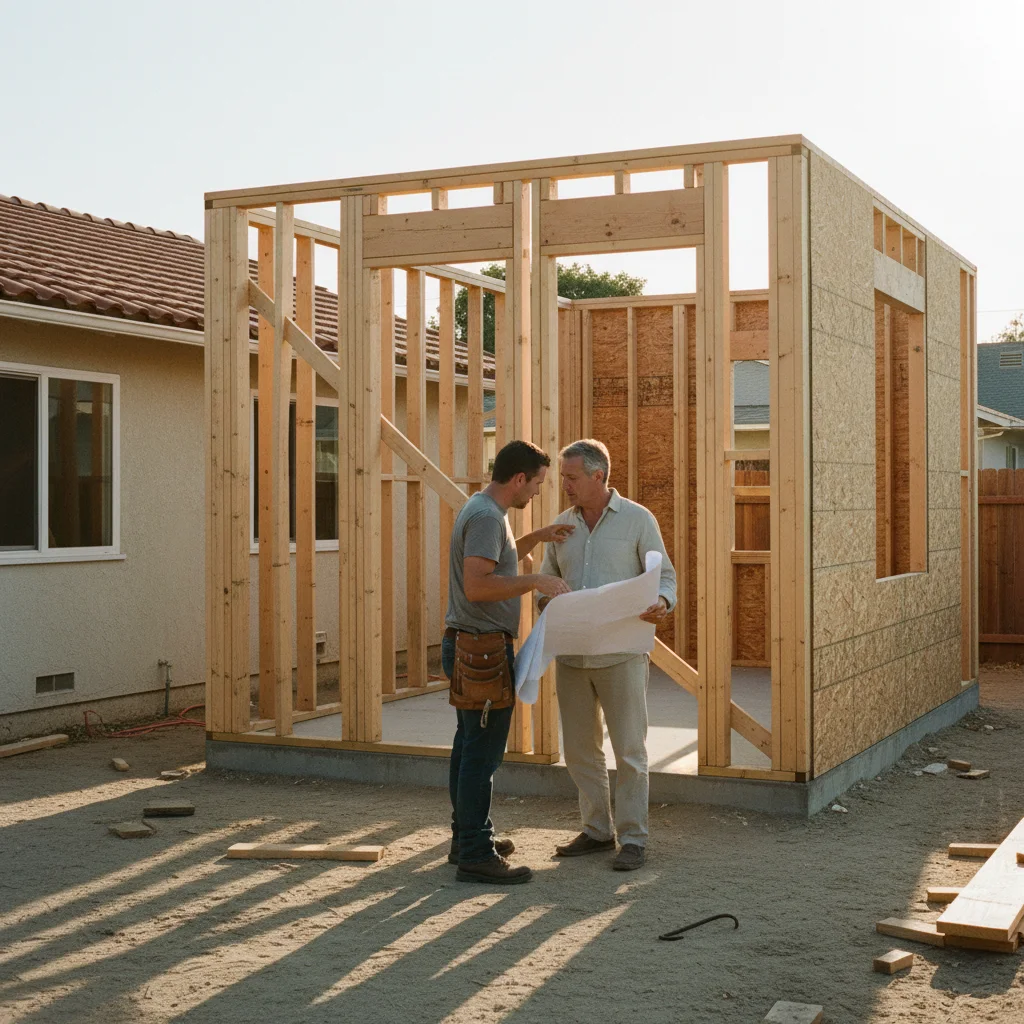
The permitting process for an ADU in Los Angeles can seem daunting, but thanks to progressive state legislation, it's become significantly more streamlined. Understanding the key players and steps is crucial.
State Laws & Local Ordinances
California has been at the forefront of encouraging ADU construction, passing several landmark bills (like AB 68, AB 881, and SB 9) that significantly limit local jurisdictions' ability to impose restrictive requirements. These state laws generally:
- Mandate Ministerial Approval: If your plans meet objective standards, the city must approve them.
- Reduce Setbacks: Often to just 4 feet from side and rear property lines for detached ADUs.
- Eliminate Parking Requirements: For ADUs within a half-mile of public transit, or if a garage is converted, or if a car-share vehicle is available within one block, among other exemptions. This is a huge benefit in parking-challenged LA.
- Prohibit Impact Fees: For ADUs under 750 sq ft.
- Allow for JADUs: With specific guidelines.
While state law provides a strong framework, the Los Angeles Department of Building and Safety (LADBS) is your primary point of contact for permits. They interpret and enforce both state and local ordinances. Be aware that while state law overrides many local restrictions, LA still has specific requirements regarding:
- Fire Sprinklers: If the primary residence has fire sprinklers, the ADU will also need them.
- Utility Connections: Ensuring proper and safe connections for water, sewer, gas, and electricity.
- Building Codes: Adherence to California Building Code (CBC), California Residential Code (CRC), and local amendments.
The Permitting Process Step-by-Step
Navigating LADBS requires patience and thorough preparation. Here's a general overview:
- Initial Consultation: Many homeowners start with an informal chat with a LADBS planner or a pre-application meeting to understand specific requirements for their property.
- Design & Plan Preparation: Work with your architect/designer to create a comprehensive set of plans, including:
- Site Plan: Showing lot lines, existing structures, proposed ADU, setbacks, utility lines, and access.
- Floor Plans: Detailed layouts of the ADU.
- Elevations: Exterior views of the ADU from all sides.
- Structural Plans: Engineered drawings for foundation, framing, and roof.
- MEP Plans: Mechanical, Electrical, and Plumbing layouts.
- Energy Calculations: Title 24 compliance.
- Drainage Plan: How stormwater will be managed.
- Plan Check Submission: Submit your complete plan set to LADBS. This is where city planners and engineers review your drawings for code compliance. This process can take several weeks to months, often involving multiple rounds of corrections and resubmissions.
- Permit Issuance: Once your plans are approved, you'll pay fees and receive your building permit. This is your green light to begin construction.
Timeline Expectation in LA: While state law aims to expedite ADU permits, the reality in a large city like Los Angeles can still mean a few months for plan check and approval, especially if your plans require multiple revisions or involve complex site conditions. Budget at least 3-6 months for the permitting phase alone.
HOA Considerations
If your property is part of a Homeowners Association (HOA), you'll need to navigate their rules in addition to city regulations. However, state law (specifically Civil Code Section 4740) significantly limits an HOA's ability to prohibit or unreasonably restrict ADU construction.
- Review CC&Rs: Carefully read your HOA's Covenants, Conditions, & Restrictions (CC&Rs) for any mention of ADUs or accessory structures.
- Communicate Early: Inform your HOA of your plans early in the process. While they cannot outright deny your ADU if it complies with state law, they may still have design guidelines (e.g., exterior materials, colors, landscaping) that you'll need to adhere to.
- Seek Legal Counsel if Necessary: If your HOA attempts to impose unreasonable restrictions that conflict with state law, consult with an attorney specializing in real estate or HOA law.
Budgeting & Financing Your LA ADU Project
Ready to compare vetted project options?
Use Project Match privately when your scope is clear enough for contractor conversations.
Start Project MatchSee what your ADU actually costs in 4 questions.
We pull cost ranges from invoiced California ADU builder projects, then narrow them to your scope, ZIP, and finish level. No first-call sticker shock.
Open the ADU cost calculatorFree. Takes under 2 minutes. No email required to see your range.
Understanding the financial commitment is paramount. ADU costs in Los Angeles can vary widely, but proper budgeting and exploring financing options will ensure your project stays on track.
Understanding ADU Costs in Los Angeles
The cost to build an ADU in LA can range significantly, typically from $100,000 for a basic garage conversion to $400,000+ for a custom-built, detached unit with high-end finishes and extensive site work. Several factors influence this range:
- Type of ADU: Garage conversions are generally the least expensive, followed by attached ADUs, and then detached new construction.
- Size: Larger units naturally cost more due to increased materials and labor.
- Finishes & Features: High-end appliances, custom cabinetry, luxury flooring, and extensive outdoor living elements will increase the budget.
- Site Complexity: Difficult access, significant grading, extensive utility trenching, or dealing with existing structural issues can add substantial costs.
- Contractor & Location: Costs can vary slightly depending on the contractor's overhead and the specific LA neighborhood (e.g., hillside vs. flat lot).
Typical Cost Breakdown (Approximate Percentages):
- Design & Permits (5-15%): Architect, engineers, permit fees, surveys.
- Site Work & Foundation (10-20%): Grading, trenching, utility connections, concrete slab or raised foundation.
- Framing & Roofing (15-25%): Lumber, sheathing, roofing materials, labor.
- Exterior Finishes (10-15%): Siding, stucco, windows, doors.
- Interior Finishes (20-30%): Drywall, paint, flooring, cabinetry, countertops, plumbing fixtures, electrical fixtures, appliances.
- MEP (Mechanical, Electrical, Plumbing) (10-15%): HVAC system, wiring, plumbing lines, water heater.
- Landscaping & Outdoor Living (5-10%+): Patios, pergolas, planting, irrigation.
- Contingency (10-15%): Crucial for any LA construction project. Unexpected issues always arise, from unforeseen soil conditions to material price fluctuations.
Financing Options
Given LA's high property values, many homeowners have significant equity, making financing an ADU more accessible:
- Cash: If you have the liquid funds, this is the simplest option, avoiding interest payments.
- Home Equity Line of Credit (HELOC) or Home Equity Loan: These allow you to borrow against the equity in your primary residence. HELOCs offer flexibility with a revolving credit line, while home equity loans provide a lump sum.
- Construction Loan: Specifically designed for new construction or major renovations, these loans are disbursed in stages as construction progresses. They typically convert to a conventional mortgage upon completion.
- Refinance: You can refinance your existing mortgage for a larger amount, pulling out equity to fund the ADU.
- Personal Loan: For smaller projects or if you have excellent credit, a personal loan can be an option, though interest rates may be higher.
Consult with a financial advisor and multiple lenders to find the best option for your specific situation.
Return on Investment (ROI)
An ADU in Los Angeles offers a compelling ROI:
- Rental Income: A well-located and designed ADU can command significant monthly rent, often covering a substantial portion of your mortgage or even the ADU's construction loan payments.
- Property Value Appreciation: As mentioned, an ADU is a recognized asset that can boost your property's market value, providing a strong return when you eventually sell.
- Tax Benefits: Consult with a tax professional, but you may be able to deduct interest on your construction loan or depreciate the ADU as a rental property.
Execution: From Groundbreaking to Grand Opening
With permits in hand and financing secured, it's time to bring your ADU vision to life. The execution phase requires careful coordination and oversight.
Selecting Your Project Team
The success of your ADU project hinges on the quality of your team:
- Architect/Designer: Essential for initial planning, design, and navigating the permitting process. Look for someone with specific ADU experience in Los Angeles.
- General Contractor (GC): Your primary point of contact during construction. They manage subcontractors, schedule work, and ensure quality. Always choose a licensed, bonded, and insured contractor with a strong track record of ADU projects in Southern California. Ask for references and visit their previous job sites.
- Engineers:
- Structural Engineer: Designs the foundation, framing, and other load-bearing elements.
- Civil Engineer: Handles site grading, drainage, and utility connections.
- MEP Engineers: Design mechanical (HVAC), electrical, and plumbing systems.
- Landscape Designer: Crucial for integrating those outdoor living spaces we've emphasized. They can work with your GC or be hired separately.
Construction Timeline & Management
A typical ADU construction timeline can range from 6 to 12 months from groundbreaking to final inspection, depending on the ADU type, complexity, and contractor efficiency. Key phases include:
- Site Preparation: Demolition (if converting a garage), clearing, grading, and trenching for utilities.
- Foundation: Pouring the concrete slab or building a raised foundation.
- Framing: Erecting the walls, roof, and interior partitions. This is where you really start to see the ADU take shape.
- Rough-ins: Installation of plumbing, electrical, and HVAC systems within the walls and ceiling.
- Insulation & Drywall: Insulating the walls and ceiling, followed by hanging and finishing drywall.
- Exterior Finishes: Roofing, siding, windows, and exterior doors.
- Interior Finishes: Flooring, cabinetry, countertops, painting, trim, and installation of fixtures and appliances.
- Landscaping & Outdoor Living: Installation of patios, pergolas, irrigation, and planting.
- Inspections: LADBS inspectors will conduct mandatory inspections at various stages (foundation, framing, rough-ins, insulation, final). Your contractor will schedule these.
- Final Walkthrough & Occupancy Permit: Once all inspections pass, you'll receive your Certificate of Occupancy, officially allowing the ADU to be inhabited.
Effective Project Management: Maintain open and regular communication with your general contractor. Schedule weekly meetings to discuss progress, address issues, and make decisions. Be prepared for unforeseen challenges, as they are common in construction, especially in older LA neighborhoods with potentially unknown underground conditions.
Integrating Outdoor Living During Construction
The outdoor living elements should be integrated throughout the construction process, not just as an afterthought.
- Early Coordination: Ensure your general contractor and landscape designer are communicating from the start. Utility lines for outdoor kitchens or lighting need to be roughed in during the early stages.
- Phasing: Sometimes, the ADU structure is completed first, and then the outdoor living space is built. Other times, elements like patios and pathways can be started concurrently with exterior finishes.
- Material Selection: Finalize choices for paving, decking, pergolas, and planting early to avoid delays.
The Golden Yards Touch: Maximizing Outdoor Living in Your LA ADU
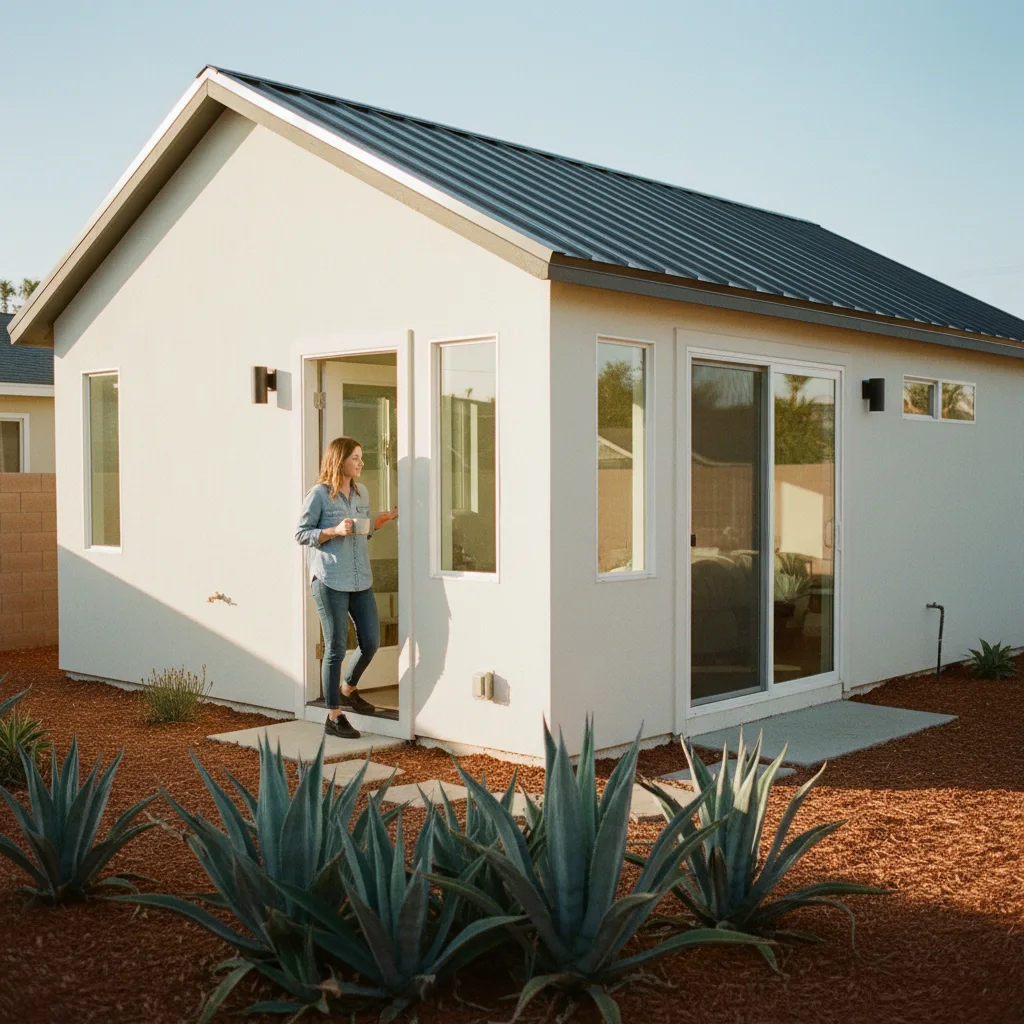
At Golden Yards, we believe outdoor living is an extension of your home, especially in Los Angeles. Here are specific ideas to elevate your ADU's outdoor spaces:
- Drought-Tolerant Landscaping: Embrace native and Mediterranean plants that thrive in LA's climate, conserving water and providing beautiful, low-maintenance greenery. Think succulents, lavender, olive trees, and California poppies.
- Smart Irrigation: Install drip irrigation systems and smart controllers that adjust watering based on weather, saving water and effort.
- Multi-Functional Spaces: Design patios that can serve as an outdoor dining area, a lounge, or a yoga space. Consider built-in benches with storage.
- Privacy Solutions: Use strategically placed hedges, bamboo screens, or slatted fences to create intimate outdoor zones without feeling enclosed. A living wall can add beauty and privacy.
- Thoughtful Lighting: Incorporate layered lighting – ambient string lights, task lighting for a BBQ area, and accent lighting for plants – to create a magical atmosphere after sunset.
- Material Harmony: Choose outdoor materials that echo the ADU's interior and exterior. For example, if your ADU has concrete floors, a polished concrete patio creates a seamless transition.
- Small Space Solutions: For compact ADU yards, consider vertical gardens, wall-mounted planters, and compact furniture that can be easily moved or stored.
By focusing on these details, your ADU will not only provide a functional living space but also a cherished outdoor sanctuary, perfectly embodying the indoor-outdoor lifestyle that makes Los Angeles so unique.
Conclusion
Get 3 ADU builder bids in 48 hours.
Our editors already screened California ADU builders. Answer 4 questions; we send 3 written bids inside 48 hours, with the real price for your scope, not their inflated first-call number.
Send my 3 bidsFree. No commission. If a match doesn't fit, we'll send another.
Building an ADU in Los Angeles is a significant undertaking, but one that offers immense rewards. From providing a valuable source of income or a comfortable home for loved ones to significantly increasing your property's value, an ADU is a smart investment in our dynamic city. By meticulously planning, understanding LA's unique regulatory landscape, budgeting wisely, and, most importantly, integrating thoughtful outdoor living spaces, you can create an ADU that truly enhances your property and enriches your life. Embrace the journey, and soon you'll be enjoying the golden benefits of your new backyard oasis.
Frequently Asked Questions (FAQ)
Q1: Do I need to provide parking for my ADU in Los Angeles?
A1: In most cases, no. California state law has significantly relaxed ADU parking requirements. Parking is generally not required if your ADU is located within a half-mile walking distance of public transit, if it's part of an existing garage conversion, or if a car-share vehicle is available within one block of the property, among other exemptions. Always verify with LADBS for your specific property.
Q2: Can I build an ADU if I live in an HOA in LA?
A2: Yes, generally. California state law (Civil Code Section 4740) limits an HOA's ability to prohibit or unreasonably restrict ADU construction. While HOAs can still enforce reasonable design standards (e.g., exterior materials, colors) that align with the community's aesthetic, they cannot outright deny an ADU that complies with state and local regulations. It's best to review your HOA's CC&Rs and communicate your plans early.
Q3: How long does the ADU permitting process typically take in Los Angeles?
A3: The permitting process in Los Angeles, from initial plan submission to permit issuance, can typically take anywhere from 3 to 6 months. This timeline can vary depending on the completeness of your plans, the complexity of your project, and the current workload at the Los Angeles Department of Building and Safety (LADBS). Multiple rounds of revisions can extend this period.
Q4: What's the average cost to build an ADU in LA?
A4: The cost to build an ADU in Los Angeles varies widely based on type, size, finishes, and site conditions. A basic garage conversion might start around $100,000, while a custom-built, detached ADU with high-end finishes and extensive site work could easily exceed $400,000. It's crucial to get detailed bids from licensed contractors and include a 10-15% contingency in your budget.
Q5: Can I rent out my ADU in Los Angeles for short-term rentals (e.g., Airbnb)?
A5: No, generally not. The City of Los Angeles has specific ordinances regarding short-term rentals (STRs). As of current regulations, ADUs are typically not permitted for short-term rental use (rentals of less than 30 days). ADUs are intended for long-term housing. Always check the latest city ordinances or consult with the Los Angeles Department of City Planning for current regulations regarding STRs and ADUs.
Sources & Methodology
See the Golden Yards Methodology for how sources are reviewed, ranges are normalized, and planning-data limits are handled.
Cost ranges, regulatory references, and design guidance in this article draw on the following public datasets, industry standards, and Golden Yards editorial review.
- California Department of Housing and Community Development (HCD), ADU Handbook
- Los Angeles Department of Building and Safety (LADBS), ADU Standard Plan Program
- California AB 1033 (2024), condo-style ADU sales
- California AB 68 (2019), ADU permit shot-clock requirement
- San Diego Development Services Department (DSD), ADU Bulletin
- California Contractors State License Board (CSLB), B General Building license scope
Ready to start your ADU project?
Find My ProsFrequently Asked Questions
Q1: Do I need to provide parking for my ADU in Los Angeles?
No, in most cases you do not need to provide parking for an ADU in Los Angeles. California state law exempts parking requirements if the ADU is within a half-mile walking distance of public transit, is a conversion of an existing garage, or if a car-share vehicle is available within one block.
California state law has significantly relaxed ADU parking rules, meaning most projects do not require a new parking space. The most common exemptions apply if your property is located within a half-mile walking distance of public transit, such as a bus stop, or if a car-share vehicle is available within one block of the home.
Additionally, if your ADU is created by converting an existing garage or other structure, no replacement parking is typically required. Because there are other specific exemptions and local interpretations can vary, it is essential to verify the requirements for your exact address with the Los Angeles Department of Building and Safety (LADBS).
Q2: Can I build an ADU if I live in an HOA in LA?
Yes, you can generally build an ADU in an LA HOA. California's Civil Code Section 4740 limits an HOA's ability to prohibit or unreasonably restrict ADU construction. While your HOA can enforce reasonable design standards, like exterior materials and colors, it cannot outright deny a project that complies with state and local regulations.
Under California Civil Code Section 4740, an HOA's authority over ADUs is specifically limited. They cannot ban them or create unreasonable restrictions that prevent their construction. However, the HOA can still enforce reasonable design standards to align with the community's existing aesthetic. This means they might have rules about exterior materials, paint colors, or roofing. To ensure a smooth process, you should review your HOA's Covenants, Conditions, and Restrictions (CC&Rs) and communicate your plans with them early to understand their specific requirements.
Q3: How long does the ADU permitting process typically take in Los Angeles?
The ADU permitting process in Los Angeles typically takes 3 to 6 months, from initial plan submission to permit issuance. This timeline from the Los Angeles Department of Building and Safety (LADBS) can vary based on project complexity, the completeness of your plans, and the department's current workload.
The 3 to 6 month estimate is a general guideline. The actual duration for your permit from the Los Angeles Department of Building and Safety (LADBS) can be longer. Key factors that extend this period include the need for multiple rounds of revisions, which often result from incomplete or inaccurate initial plan submissions.
Additionally, the complexity of your specific ADU project and the volume of applications being processed by LADBS at the time of your submission can significantly affect how long you wait. A simpler project submitted during a slower period may be approved more quickly than a complex one during a rush.
Q4: What's the average cost to build an ADU in LA?
In Los Angeles, ADU construction costs vary widely. A basic garage conversion can start around $100,000, while a custom, detached unit with high-end finishes and significant site work might exceed $400,000. Always get detailed bids from licensed contractors and budget for a 10-15% contingency for unexpected expenses.
The final price for an ADU in Los Angeles depends heavily on project specifics. For example, a simple garage conversion represents the lower end of the cost spectrum, starting near $100,000. In contrast, a new, custom-built detached ADU, especially one with premium finishes or requiring extensive site preparation, can easily surpass $400,000.
Because costs can fluctuate based on type, size, and conditions, it is essential to get detailed proposals from licensed contractors. Prudent financial planning also means including a contingency fund of 10 to 15 percent in your total budget to cover unforeseen issues during construction.
Q5: Can I rent out my ADU in Los Angeles for short-term rentals (e.g., Airbnb)?
No, you generally cannot rent your ADU for short-term periods in Los Angeles. City ordinances prohibit using ADUs for rentals of less than 30 days, as they are intended to provide long-term housing. For the most current rules, always consult the Los Angeles Department of City Planning.
The City of Los Angeles has specific ordinances that govern short-term rentals (STRs). Under these regulations, Accessory Dwelling Units are generally not permitted for STR use, which is defined as any rental period shorter than 30 consecutive days. The city's policy is that ADUs should contribute to the long-term housing supply, not serve as temporary lodging.
Because regulations can change, it is critical for homeowners to verify the latest rules. Before listing an ADU for rent, you should always check the most recent city ordinances or directly contact the Los Angeles Department of City Planning to confirm current requirements and restrictions for ADUs and STRs.