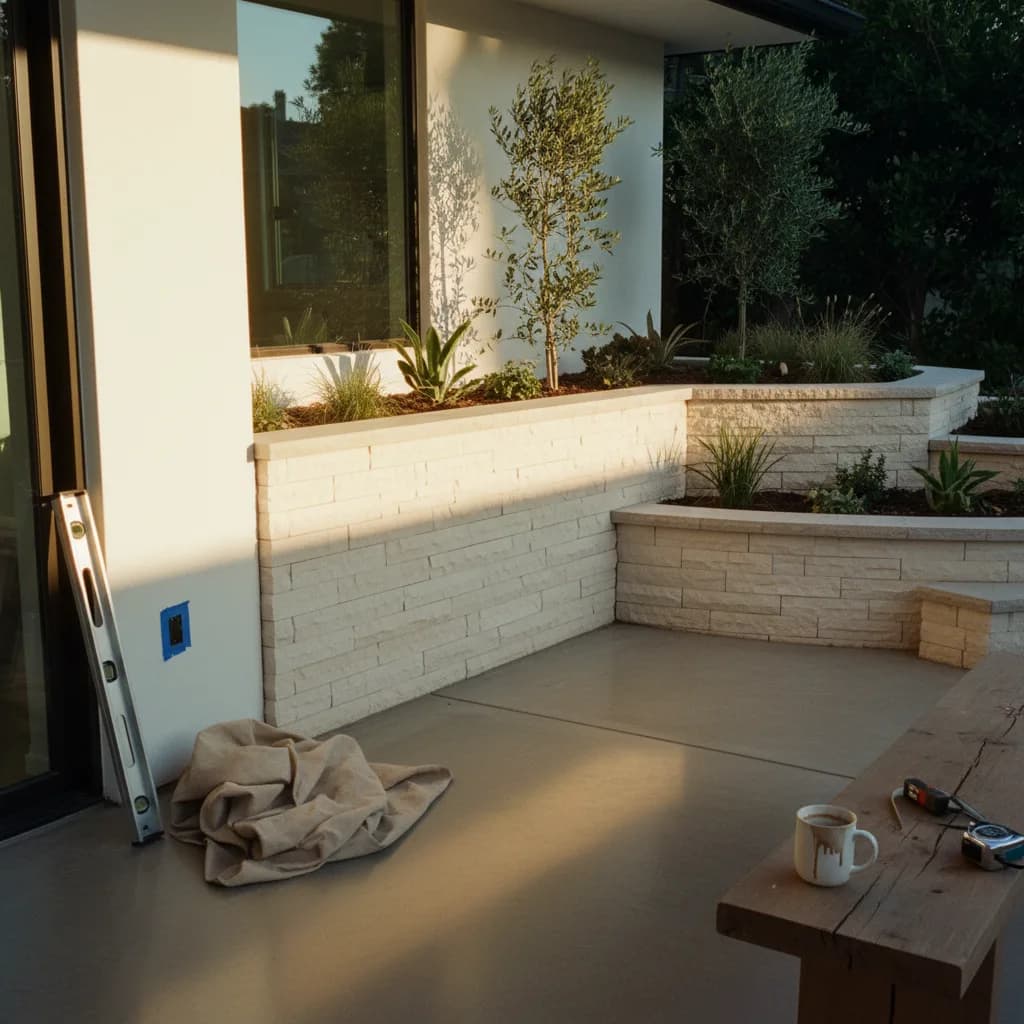
A failing retaining wall in Beverly Hills doesn't just crack; it moves. The cost to fix a four-foot cantilevered wall that’s tilting after two winters can easily top $50,000. That includes demolition, re-excavation, and rebuilding, turning a $30,000 project into an $80,000 lesson in soil mechanics. While a simple garden wall on flat ground can start lower, any structure holding back a California hillside is a significant engineering investment where cutting corners costs double in the long run.
In a Nutshell: Retaining Wall Realities
The most expensive retaining wall is the one you build twice. Homeowners in Beverly Hills, especially in hillside areas like Trousdale Estates, often make three critical errors: they underestimate the force of water-logged soil, they hire a contractor who lacks structural engineering expertise, and they treat the geotechnical report as an optional expense. The result is a cracked, bowing, or collapsing wall within five years. Your first move this week: If your property has any slope, find a licensed geotechnical engineer and schedule a consultation before you even speak to a contractor.
Mistake #1: Underestimating Soil and Surcharge Loads
Many homeowners see a four-foot-high wall and budget for a simple landscape feature. This is wrong because the wall isn't just holding back four feet of dirt; it's resisting the entire wedge of soil behind it, plus any weight on top of that slope, known as a surcharge. That surcharge could be a driveway, a swimming pool, or even just the weight of the upper hillside. In Beverly Hills, where properties are terraced, assuming simple soil pressure leads to under-built walls that are guaranteed to fail by overturning or sliding. The counter-move is to insist that your contractor or engineer calculates loads based on the entire system, not just the visible height of the wall face.
Mistake #2: Skipping the Geotechnical Soils Report
You wouldn't build a foundation without knowing what's underneath it, yet many treat retaining walls differently. The expansive clay soils common from The Flats to the hills of Bel Air swell when wet and shrink when dry, exerting immense pressure. A geotechnical report, typically costing $4,000 to $7,000, analyzes soil composition, shear strength, and groundwater levels. This report is not a suggestion; it's the instruction manual for the engineer designing the wall, dictating the footing depth, the amount of steel reinforcement, and the required drainage. Building without it is like performing surgery blindfolded; the outcome is left entirely to chance.
Mistake #3: Ignoring Hydrostatic Pressure
Ready to compare vetted project options?
Use Project Match privately when your scope is clear enough for contractor conversations.
Start Project MatchWater is the number one enemy of a retaining wall. A column of saturated soil can exert more than double the pressure of dry soil, a force called hydrostatic pressure. This is what bows walls and cracks concrete. Many contractors install inadequate drainage, or worse, none at all. A properly built wall has a comprehensive drainage system: a perforated pipe at the base to collect water, a thick layer of free-draining gravel like #57 stone against the wall, and a geotextile fabric separating the gravel from the native soil to prevent clogging. Without this system, you are building a concrete dam, and eventually, the water will win.
Mistake #4: Using Incorrect Backfill and Compaction
The material placed directly behind the wall is as important as the wall itself. The common mistake is to use the excavated native soil as backfill. This is wrong because that clay soil will hold water, expand, and defeat your expensive new wall. The specification always calls for granular, free-draining material, such as clean gravel or a sand-gravel mix meeting ASTM C33 standards., this backfill must be placed in lifts, or layers, of six to eight inches, with each lift compacted to 95 percent Modified Proctor density before the next is added. This prevents settlement, which can compromise the wall and anything built above it.
Mistake #5: Hiring the Wrong Type of Contractor
A retaining wall is not a landscaping project; it's a structural one. Many homeowners hire a general landscape contractor who can stack blocks but doesn't understand soil mechanics, rebar schedules, or concrete specifications like ACI 332 for residential concrete. This is a primary source of failure. A qualified retaining wall contractor in Beverly Hills will have a C-8 Concrete or C-29 Masonry license and will work directly from an engineer's stamped plans. Get three quotes. Check three references. Visit one finished California job before signing. This diligence separates the professionals from those who will leave you with a callback they can't fix.
Mistake #6: Viewing the Building Permit as Optional
In the City of Beverly Hills, any retaining wall over four feet in height, measured from the bottom of the footing to the top of the wall, requires a building permit and inspections. Trying to build a three-foot-eleven-inch wall to skirt the rule is a common but easily spotted tactic. An unpermitted wall is a massive liability. The City can issue a stop-work order, levy fines, and even require complete demolition. A permit ensures a third party, the city inspector, verifies that the construction meets the engineered plans and the California Building Code. Our [Beverly Hills retaining wall permit playbook for 2026](/guides/beverly-hills-retaining-wall-permit-playbook-2026) details the entire submission and inspection process.
Mistake #7: Prioritizing Finish Over Footing
Homeowners naturally focus on the visible part of the wall, the stone veneer or the smooth-faced block. But the strength comes from what you don't see: the footing. An undersized footing, or one placed on poorly compacted soil, will lead to settlement and catastrophic failure. The engineer's plan will specify the footing's dimensions and the rebar schedule, for example, #5 rebar at 16 inches on center. The cost of a retaining wall is disproportionately in the excavation, subgrade preparation, and footing construction. A beautiful finish on a weak foundation is just lipstick on a future landslide.
Why is a Retaining Wall More Expensive in Beverly Hills?
The higher retaining wall cost in Beverly Hills is a function of three factors: labor, logistics, and geology. Labor rates are dictated by regional economics, reflected in data from the California Department of Industrial Relations prevailing wage data for Los Angeles County, which sets a high bar for skilled masons and equipment operators. Logistically, working on narrow, hilly streets in areas like Beverly Park or Trousdale Estates requires smaller trucks, careful staging, and often specialized equipment, increasing mobilization costs. Finally, the challenging geology requires more solid, engineered designs and more extensive earthwork than projects on flat, stable ground. The National Association of Home Builders recommends a ten to fifteen percent contingency on renovations, a figure that is especially wise for subsurface work like retaining walls.
Three Representative Retaining Wall Projects for 2026
Three representative projects from 2026, scoped similarly, reconstructed from Golden Yards Magazine's Project of the Day network and used here in aggregate form:
- The Flats Garden Wall ($28,000): A three-foot-high, 60-foot-long segmental block wall to create a raised garden bed. The project involved minimal excavation on level ground with stable soil, no engineering required. The cost reflects materials, labor for the wall, and a simple gravel backfill and drain pipe.
- Trousdale Estates Driveway Wall ($95,000): A six-foot-high, 80-foot-long cantilevered concrete masonry unit (CMU) wall supporting a driveway surcharge. The price included a geotechnical report, full engineering plans, city permits, extensive excavation, epoxy-coated steel reinforcement, and a comprehensive drainage system. The face was finished with a smooth stucco to match the home.
- Hillside Multi-Tiered Walls ($275,000+): A complex project involving two tiered, eight-foot-high reinforced concrete walls to create a usable backyard pad on a steep hillside. This cost covered extensive geotechnical investigation, structural engineering for seismic loads, shoring of the upper slope during excavation, and deep caisson footings drilled into bedrock. The project took four months from start to finish.
Sources & Methodology
See the Golden Yards Methodology for how sources are reviewed, ranges are normalized, and planning-data limits are handled.
Cost ranges in this guide draw on the following named industry sources, public agency datasets, and Golden Yards Magazine editorial research.
- California Building Code, Title 24 (2022)
- National Concrete Masonry Association (NCMA), TEK 15-Series Retaining Wall Design (2023)
- American Concrete Institute (ACI) 332, Residential Code Requirements for Structural Concrete (2020)
- American Society of Civil Engineers (ASCE) 7-22, Minimum Design Loads for Buildings and Other Structures (2022)
- California Department of Industrial Relations, Prevailing Wage Determinations (2026)
- City of Beverly Hills Community Development Department, Building and Safety Division Guidelines (2025)
Golden Yards Magazine Take
The fundamental mistake homeowners make is a failure of category. They classify a retaining wall as a landscape element, like a patio or a fence, when it should be classified as a piece of civil engineering, like a bridge abutment or a small dam. This single error in thinking causes all the others. It leads to hiring the wrong professional, setting the wrong budget, and skipping the necessary engineering. A retaining wall is actively resisting thousands of pounds of pressure, 24 hours a day, in seismically active, water-prone soil. When you frame it that way, the necessity of a soils report, an engineered design, and a specialized contractor becomes obvious. The wall isn't decorating your yard; it's protecting it.
Ready to start your hardscaping project?
Find My ProsFrequently Asked Questions
What's the most expensive mistake when building a retaining wall?
The most expensive mistake when building a retaining wall is inadequate drainage. When water cannot escape the soil, it builds up hydrostatic pressure that can push the wall over. This single oversight can turn a $40,000 project into a $100,000 catastrophe requiring a complete demolition and rebuild of the failed wall.
A total wall failure from poor drainage requires more than just a new wall. The repair process is extensive, involving demolition of the failed structure, removal of debris, re-excavating the area, and stabilizing the collapsed slope before new construction can even begin.
This is why the cost to fix the problem often exceeds the original installation price. You are paying for demolition and complex site remediation on top of the new construction. This is how an initial $40,000 project can become a $100,000 disaster.
How do I know if my retaining wall contractor is padding the quote?
A padded quote often lacks detail. A professional retaining wall quote from a Beverly Hills contractor will be itemized, not a lump sum with vague descriptions like 'build wall'. It should break down costs for demolition, excavation, footing construction, CMUs, steel, backfill like #57 stone, labor, and permits.
Always compare the quoted quantity of materials, such as cubic yards of concrete or tons of gravel, against the engineer's plans. If the numbers seem inflated, ask for a justification. A trustworthy contractor can explain every line item, including costs for soil disposal, footing construction, concrete masonry units, and steel reinforcement.
A single, unexplained number is a significant red flag. A proper quote provides a clear breakdown, ensuring you understand the full scope and cost of the project in Beverly Hills without hidden fees.
When should I walk away from a retaining wall quote?
Walk away from a retaining wall quote if the contractor says no permit is needed for a wall over four feet, dismisses an engineer's design for a critical wall, or won't provide a license and insurance. Also, reject quotes given without a site visit or those that are suspiciously low, as this suggests cut corners.
A contractor suggesting you can bypass a permit for a wall over four feet high is a serious red flag. Similarly, dismissing the need for an engineer's design, especially on a critical, load-bearing structure, indicates a dangerous lack of professionalism. These are not optional steps, they are essential for safety and legal compliance.
Be cautious of quotes provided over the phone without a proper site visit. A dramatically lower bid compared to others is also a warning sign. This often means the contractor is cutting corners on crucial, unseen components like the footing, the amount of steel rebar, or the installation of a proper drainage system. Always insist that a contractor provide a valid license number and proof of liability and worker's compensation insurance before hiring.
What's the fastest way to blow a retaining wall budget?
The fastest way to blow a retaining wall budget is by encountering unforeseen soil conditions after skipping a geotechnical report. A contractor's bid assumes normal excavation. Discovering a high water table, unstable fill, or shallow bedrock requiring jackhammering will generate costly change orders, turning a $5,000 savings into $25,000 in extra costs.
A contractor’s initial bid is based on assumptions of 'normal' soil. When digging reveals unexpected issues like a high water table, unstable fill soil, or shallow bedrock, the original plan and price are no longer valid. These problems require immediate and expensive solutions not included in the first contract.
This is why skipping a geotechnical report is so risky. The new work must be addressed with change orders for things like dewatering pumps, deeper footings, or extensive jackhammering. The attempt to save $5,000 on a report can easily result in $25,000 of unforeseen costs during construction.