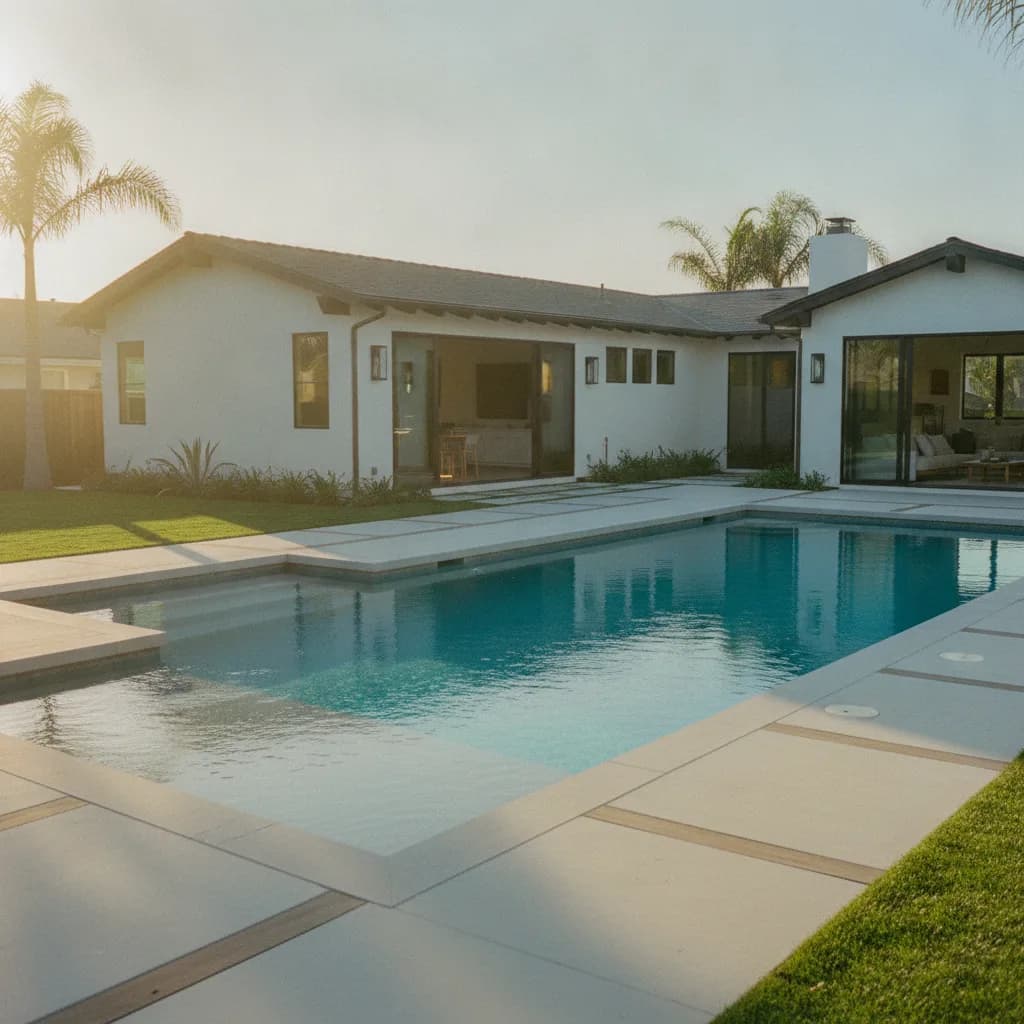
A saltwater pool can be the centerpiece of an outdoor living space in Newport Beach, offering a comfortable swimming experience with softer-feeling water. But before you can enjoy that first dip, understanding the full project cost is essential. The final price tag is rarely just about the pool itself. It's a combination of the vessel, the complex site work required for a coastal property, the equipment that runs it, and the hardscaping that completes the scene. This guide breaks down the components to help you plan your budget for a potential 2026 installation.
In a Nutshell
This cost guide uses a hypothetical mid-range project to explore the different parts of a saltwater pool installation. A formal quote from a licensed saltwater pool contractor in Newport Beach will reflect your property's specific conditions and your material choices.
- Scenario Scope: A new 15-foot by 30-foot (450 sq. ft.) in-ground gunite saltwater pool with a pebble interior finish, stone coping, and a surrounding paver patio.
- Key Assumptions: This scenario assumes a level lot with clear, 10-foot-wide equipment access, no demolition of existing structures, and standard soil conditions. It also assumes main utility connections (electrical, water, gas) are within 50 feet of the equipment pad.
- Work Priced Separately: Landscaping, fencing, lighting beyond the pool, retaining walls, and complex drainage systems are not included in this core scenario.
- The Biggest Question to Resolve: How will site-specific factors like soil stability, property access, and potential requirements from the California Coastal Commission affect the total cost of excavation, engineering, and permitting for your specific Newport Beach location?
Hypothetical Cost Scenarios for a Newport Beach Saltwater Pool
The cost of a new saltwater pool in Newport Beach is determined by size, materials, features, and site complexity. To illustrate how these choices affect a budget, we've created three hypothetical planning scenarios. These are not documented projects or market averages; they are examples with assumed quantities and unit rates to show how a project budget is constructed. All costs are for planning purposes only.
Scenario 1: The Basic Saltwater Pool
This scenario focuses on a functional, high-quality pool without extensive features. It's designed for swimming and cooling off, with a durable finish and basic, reliable equipment. The surrounding deck is minimal but functional.
| Item | Scope / Quantity | Assumed Unit Rate | Hypothetical Cost |
|---|---|---|---|
| Pool Shell (12'x24') | 288 sq. ft. | $160/sq. ft. | $46,080 |
| Excavation & Structure | Standard Access | Lump Sum | $20,000 |
| Interior Finish | Standard White Plaster | Lump Sum | $7,500 |
| Coping & Waterline Tile | Pre-cast Concrete | Lump Sum | $5,000 |
| Decking | 300 sq. ft. Brushed Concrete | $18/sq. ft. | $5,400 |
| Pool Equipment & SWCG | Basic Package | Lump Sum | $8,000 |
| Hypothetical Subtotal | $91,980 | ||
Exclusions: This hypothetical budget does not include permits, fencing, landscaping, pool cover, heater, or any utility upgrades.
Scenario 2: The Mid-Range Entertainment Pool
This popular scope includes a larger pool with upgraded materials designed for both swimming and socializing. The finish is more durable and visually appealing, and the equipment is more energy-efficient. The expanded patio provides space for lounging and dining.
| Item | Scope / Quantity | Assumed Unit Rate | Hypothetical Cost |
|---|---|---|---|
| Pool Shell (15'x30') | 450 sq. ft. | $175/sq. ft. | $78,750 |
| Excavation & Structure | Standard Access | Lump Sum | $25,000 |
| Interior Finish | Pebble Finish (Standard Color) | Lump Sum | $14,000 |
| Coping & Waterline Tile | Natural Stone | Lump Sum | $9,000 |
| Decking | 600 sq. ft. Pavers | $28/sq. ft. | $16,800 |
| Pool Equipment & SWCG | Variable Speed Pump, LED Light | Lump Sum | $12,000 |
| Gas Heater | Standard Unit | Lump Sum | $5,500 |
| Hypothetical Subtotal | $161,050 | ||
Exclusions: This hypothetical budget does not include complex electrical work, retaining walls, automated covers, water features, or landscaping.
Scenario 3: The Expanded Outdoor Living Resort
This scenario represents a high-end installation, transforming the backyard into a complete destination. It features a larger, often custom-shaped pool with luxury materials, an integrated spa, advanced automation, and significant hardscaping to support a full outdoor living concept.
| Item | Scope / Quantity | Assumed Unit Rate | Hypothetical Cost |
|---|---|---|---|
| Pool & Spa Shell (18'x36') | ~750 sq. ft. | $200/sq. ft. | $150,000 |
| Excavation & Structure | Complex Shape/Access | Lump Sum | $35,000 |
| Interior Finish | Premium Pebble or All-Tile | Lump Sum | $25,000 |
| Coping & Waterline Tile | Custom Travertine/Limestone | Lump Sum | $15,000 |
| Decking & Hardscaping | 1000 sq. ft. Premium Stone | $45/sq. ft. | $45,000 |
| Pool Equipment & Automation | Full Automation, Multiple Pumps | Lump Sum | $20,000 |
| Water Feature & Lighting | Sheer Descent Waterfall, 3 LED Lights | Lump Sum | $12,000 |
| Automatic Pool Cover | Recessed Track System | Lump Sum | $18,000 |
| Hypothetical Subtotal | $320,000 | ||
Exclusions: This hypothetical budget does not include outdoor kitchens, fire features, extensive landscaping, or structural engineering for hillside properties.
Beyond the Pool: Essential Site Work to Scope
The tables above focus on the pool and its immediate surroundings, but the unique characteristics of your Newport Beach property will introduce costs that are impossible to standardize. A thorough quote from a saltwater pool contractor will address these site-specific variables. Homeowners should ask detailed questions about how each of these factors is priced into their proposal.
Access for Construction
Many Newport Beach neighborhoods feature homes built close together, with narrow side yards. Heavy equipment for excavation, concrete, and material delivery needs a clear path. If access is less than eight to ten feet wide, your costs can increase. Contractors may need to use smaller, less efficient equipment, which increases labor hours. In the most challenging cases, a crane may be required to lift equipment or even the pool shell over the house, a significant added expense.
Demolition and Grading
What currently exists in your proposed pool location? Any project must account for the removal of existing elements. This could include breaking up and hauling away a concrete or paver patio, removing large trees and their root systems, rerouting irrigation lines, or demolishing old garden sheds. If your yard has a slope, extensive grading will be required to create a level area for the pool and deck, which may also necessitate the construction of retaining walls.
Drainage and Soil Conditions
Proximity to the coast can introduce unique soil and water table considerations. Sandy soil may require different excavation and structural support techniques compared to clay. Your contractor may need to perform a soil analysis to inform the engineering plan. Proper drainage is also critical to protect the pool structure and surrounding property. This could involve installing French drains or sump pumps to manage groundwater and surface runoff, especially during rainy seasons.
Utilities and Fencing
A pool requires significant utility connections. An electrical subpanel is often needed to power the pump, lighting, and saltwater generator. If you want a heated pool, a gas line must be run from the meter to the equipment pad. A dedicated water line is also needed for filling the pool and for auto-fill systems. The cost for these connections depends entirely on the distance and complexity of the runs. California law requires safety fencing with a self-latching gate around new pools, which must be factored into the total project budget.
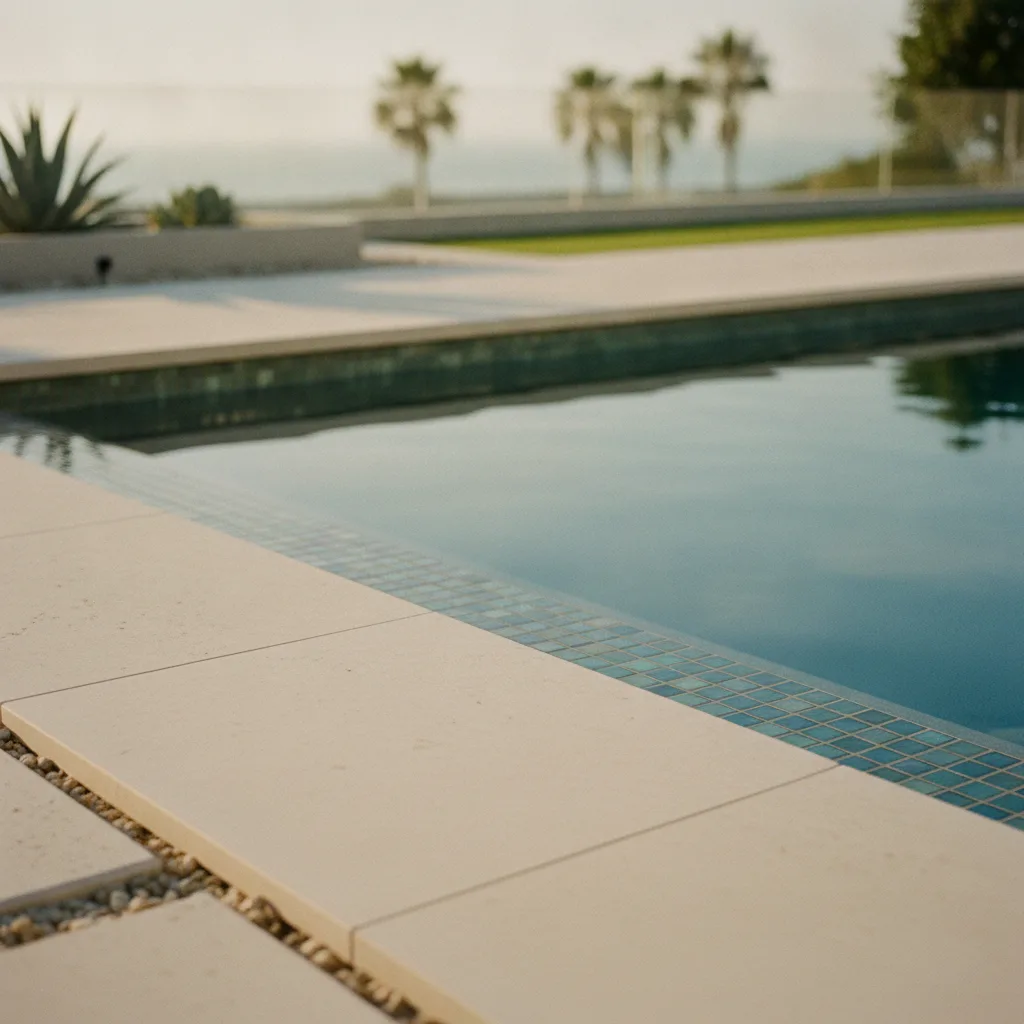
Comparing Three Hypothetical Saltwater Pool Projects
Ready to compare vetted project options?
Use Project Match privately when your scope is clear enough for contractor conversations.
Start Project MatchHypothetical planning examples, not documented projects, help illustrate how budget choices shape the final outcome. The arithmetic below is based on the assumed unit rates in our scenarios. Your actual quotes will depend on the contractors you select and the specific material costs at the time of your project.
Project A: The Essential Swim Zone
This project is based on our Basic Scenario, prioritizing function over form. The goal is a clean, safe, and enjoyable swimming experience. The homeowner chooses a standard 12x24 foot rectangular shape, which is efficient to excavate and form. The white plaster interior is a classic choice, and the brushed concrete deck provides a safe, non-slip surface around the pool.
- Hypothetical Calculation: $46,080 (Pool Shell) + $20,000 (Excavation/Structure) + $7,500 (Plaster) + $5,000 (Coping/Tile) + $5,400 (Decking) + $8,000 (Equipment) = $91,980
- Consideration: While this provides the core pool, the homeowner's total budget must still account for safety fencing, basic landscaping to finish the yard, and permit fees.
Project B: The Integrated Entertainment Hub
Following the Mid-Range Scenario, this project envisions the pool as the center of backyard activity. The larger 15x30 foot size accommodates more people. A durable and attractive pebble finish is chosen for its longevity and color options. The natural stone coping and extensive paver patio create a cohesive and upscale look, providing ample room for lounge chairs and a dining set. A gas heater extends the swimming season into cooler months.
- Hypothetical Calculation: $78,750 (Pool Shell) + $25,000 (Excavation/Structure) + $14,000 (Pebble Finish) + $9,000 (Coping/Tile) + $16,800 (Paver Deck) + $12,000 (Equipment) + $5,500 (Heater) = $161,050
- Consideration: This budget creates a more complete outdoor room. The next steps for the homeowner might involve planning for patio furniture, shade structures like a pergola, and landscape lighting.
Project C: The Complete Outdoor Resort
This project, based on the Expanded Scenario, is a full backyard transformation. The large, custom-shaped pool includes an integrated spa for year-round use. The finish is a premium, all-tile surface, and the deck is made of high-end travertine. Full automation allows the owner to control the spa, lights, and temperature from a phone. An automatic cover provides safety and cleanliness while reducing evaporation. This is more than a pool; it's a comprehensive outdoor living environment.
- Hypothetical Calculation: $150,000 (Pool/Spa Shell) + $35,000 (Excavation/Structure) + $25,000 (Premium Finish) + $15,000 (Coping/Tile) + $45,000 (Decking) + $20,000 (Automation) + $12,000 (Features) + $18,000 (Auto Cover) = $320,000
- Consideration: At this level, the project often involves a landscape architect to ensure smooth integration with other outdoor features like a kitchen, fire pit, and sophisticated planting schemes, which represent additional, separate costs.
What a Standard Pool Quote Should Include
When you receive a bid from a saltwater pool contractor in Newport Beach, it should clearly detail the scope of work. A comprehensive quote allows for an accurate comparison between builders. Look for these specific line items and ask for clarification if anything is missing.
- Preparation and Demolition: The quote should specify what is being removed from the site (e.g., existing patio, soil, vegetation) and whether the cost of hauling and disposal is included.
- Excavation and Structure: This covers digging the hole to the specified dimensions and includes the structural components like the reinforced steel (rebar) grid and the application of the gunite or shotcrete shell.
- Plumbing and Electrical: It should detail the plumbing lines for circulation and features, as well as the electrical conduit. Clarify how many feet of trenching from the main house panel to the equipment pad is included in the base price.
- Tile and Coping: The bid must specify the type, brand, and amount of waterline tile and the material for the coping (the edge of the pool).
- Interior Finish: The type of interior surface (e.g., white plaster, quartz, or a specific brand and color of pebble finish) should be clearly stated.
- Decking: The quote must include the total square footage of the pool deck, the material to be used (e.g., brushed concrete, pavers, natural stone), and the sub-base preparation.
- Pool Equipment: A detailed list of the equipment by brand and model number is essential. This includes the pump, filter, lights, and, most importantly, the Saltwater Chlorine Generator (SWCG).
- Permits and Fees: Ask if the contractor's price includes pulling the necessary permits from the City of Newport Beach or if that is the homeowner's responsibility. Note that the actual city fees are often a separate allowance or cost.
- Cleanup and Startup: A professional quote includes final site cleanup, filling the pool with water, adding the initial salt and chemicals, and providing a startup orientation to the homeowner.
Planning for a Financial Reserve
For any major construction project, it's wise to have a financial reserve separate from your contractor's bid. This is not a fee the contractor charges but a portion of your own budget that you set aside for unforeseen issues or desired upgrades. This practice is based on the reality that even the best plans can encounter surprises.
The amount to set aside is a personal choice based on the project's complexity and the age of your property. For a hypothetical $150,000 pool project, a homeowner might choose to hold back 10% to 15% ($15,000 to $22,500) in their personal budget. This reserve could cover costs associated with hitting unexpected rock or a high water table during excavation, which would require extra labor and equipment. It could also be used for elective changes, such as deciding to upgrade the waterline tile midway through the project or adding more deck space once the pool's form is in place.
Discussing potential issues with your contractor beforehand can help you anticipate where costs might change. Ask them what common surprises they encounter in Newport Beach and what those solutions typically cost. This conversation helps you make an informed decision about the size of your personal reserve.
Your Saltwater Pool Contractor Quote Checklist
Use these questions to interview potential contractors and compare their proposals. A thorough contractor will be able to answer these clearly and provide the details in their written quote. Getting clarity on these points upfront helps prevent misunderstandings later.
- What is the brand and model number of the pump, filter, and Saltwater Chlorine Generator?
- Is the cost of hauling away all excavated soil and construction debris included?
- How much decking, in square feet, is included in this price, and what is the cost per square foot for adding more?
- Does the electrical scope include a new subpanel if my main panel is full?
- What is the warranty on the pool shell, the equipment, and your workmanship?
- Who is responsible for repairing any damage to my driveway, landscaping, or irrigation system caused by construction access?
- Is the cost of the city permit and all related inspection fees included, or are those separate cash allowances?
- What is not included in this proposal that I will need to purchase or contract for separately (e.g., fencing, gas line)?
- How do you handle unforeseen site conditions, like hitting rock or groundwater? What is the process for a change order?
- Can you provide addresses of recently completed projects in Newport Beach and references I can contact?
- What is your California contractor license number, and is your insurance and bond information current?
- What is the estimated timeline for construction from excavation to final inspection?
- Does the startup service include initial water balancing and a tutorial on how to operate the equipment?
How to Compare Bids for Your Newport Beach Pool
Receiving three or more bids is a standard practice, but the lowest number is not always the best choice. The goal is to compare proposals on an equal basis to find the best value and the right partner for your project. Start by creating a spreadsheet to normalize the quotes. List every major component, from the pool dimensions and interior finish to the specific model of the pump and the square footage of the patio.
If one contractor quotes for a premium pebble finish and another for standard plaster, the price difference is understandable. Ask contractors to price out specific alternates if their base packages differ. Pay close attention to what is excluded. One bid might seem lower because it omits the cost of hauling dirt, a necessary expense that will appear later. A quality bid is transparent about these details.
Beyond the numbers, consider the contractor's experience, especially with projects in coastal Orange County. Check their license status with the California Contractors State License Board (CSLB). Ask references about their communication, professionalism, and how they handled challenges during the project. While no online tool can replace a detailed quote, a resource like the Golden Yards pool cost calculator can help you explore how different features and finishes might affect a hypothetical budget before you even speak with a contractor.
Frequently Asked Questions
How much does a saltwater pool cost in Newport Beach in 2026?
Based on hypothetical scenarios, a basic saltwater pool project in Newport Beach could start around $90,000, with mid-range projects often falling between $140,000 and $180,000. Expansive, resort-style pools with high-end finishes and features can easily exceed $250,000. These are planning estimates, not guaranteed prices.
The final cost depends entirely on your property's specific site conditions, the size of the pool, the materials you select, and the scope of the surrounding hardscaping and features. Access for heavy equipment, soil quality, and the need for retaining walls or extensive drainage work are major variables that can significantly impact the total price. Always get detailed quotes from licensed local contractors.
Is a saltwater pool more expensive than a traditional chlorine pool?
Initially, a saltwater pool is slightly more expensive due to the upfront cost of the Saltwater Chlorine Generator (SWCG), which can add $1,500 to $2,500 to the project based on hypothetical estimates. However, this is often balanced by lower ongoing costs for chemicals over the life of the pool.
Instead of buying chlorine tablets or liquid, you add bags of inexpensive pool-grade salt a few times a year. The SWCG uses electrolysis to convert this salt into chlorine. While you save on chlorine, you will have slightly higher electricity costs to run the cell, and the cell itself will need to be replaced every three to seven years at a hypothetical cost of $800 to $1,500.
What are the biggest hidden costs of a pool installation?
The most significant costs that surprise homeowners are typically related to site-specific work, which are not hidden but simply cannot be priced until a site evaluation is complete. These include extensive grading for a sloped yard, the need for retaining walls, resolving poor equipment access, and complex utility runs for gas and electrical.
Discovering poor soil or a high water table during excavation can also add costs for additional engineering and materials. Other items often budgeted separately from the core pool contract include mandatory safety fencing, landscaping to repair construction damage and finish the yard, and any desired outdoor furniture or shade structures.
Do I need a special permit for a saltwater pool in Newport Beach?
A saltwater pool requires the same building permits as any in-ground swimming pool from the City of Newport Beach Building Division. There is no special or different permit simply because it uses a salt system. The permitting process involves submitting detailed engineering plans for the pool structure, plumbing, and electrical systems.
Depending on your property's specific location within Newport Beach, your project may also be subject to review by the California Coastal Commission, which can add time and complexity to the approval process. It is critical to have your contractor confirm all jurisdictional requirements before beginning work. A qualified local contractor will be familiar with these processes.
How much does it cost to maintain a saltwater pool annually?
Annual maintenance costs for a saltwater pool are generally focused on electricity, replacement salt, and occasional balancing chemicals. Hypothetical annual costs could range from $500 to $900, depending on pool size, usage, and local utility rates. This is often less than the cost of chlorine for a traditional pool.
The largest single replacement cost is the salt cell, which typically lasts three to seven years and can cost between $800 and $1,500 to replace, based on assumed figures. You will still need to test the water regularly for pH and alkalinity and add other chemicals like muriatic acid or cyanuric acid as needed, but the volume is far less than a standard chlorine pool.
Golden Yards Magazine Take
Building a saltwater pool in Newport Beach is a significant investment that goes well beyond the price of the shell and equipment. The final cost and project success depend heavily on a thorough plan that accounts for the unique demands of your property. Compare the shell, the surrounding site work, and the equipment package as separate but interconnected parts of the whole. Before choosing a contractor based on the lowest total, insist on a detailed, line-item quote that clarifies exactly what is included for access, excavation, utility connections, and cleanup. A successful project begins with a transparent budget, a clear scope of work, and a partnership with a qualified local builder who understands the specifics of coastal construction.
Sources & methodology
How Golden Yards builds this guide
Golden Yards reviews public permit and code signals, material pricing, climate and site constraints, contractor quote patterns, comparable projects, the Golden Yards Cost Index, and the Golden Yards Methodology. Cost references are planning ranges, not fixed bids.
- Benchmarked against the Golden Yards Cost Index and related project guides.
- Reviewed for California climate, water, fire, drainage, access, and permit context.
- Commercial Project Match is separate from editorial cost guidance.
Ready to start your pool project?
Find My ProsFrequently Asked Questions
How much does a saltwater pool cost in Newport Beach in 2026?
Based on hypothetical scenarios, a basic saltwater pool project in Newport Beach could start around $90,000, with mid-range projects often falling between $140,000 and $180,000. Expansive, resort-style pools with high-end finishes and features can easily exceed $250,000. These are planning estimates, not guaranteed prices.
The final cost depends entirely on your property's specific site conditions, the size of the pool, the materials you select, and the scope of the surrounding hardscaping and features. Access for heavy equipment, soil quality, and the need for retaining walls or extensive drainage work are major variables that can significantly impact the total price. Always get detailed quotes from licensed local contractors.
Is a saltwater pool more expensive than a traditional chlorine pool?
Initially, a saltwater pool is slightly more expensive due to the upfront cost of the Saltwater Chlorine Generator (SWCG), which can add $1,500 to $2,500 to the project based on hypothetical estimates. However, this is often balanced by lower ongoing costs for chemicals over the life of the pool.
Instead of buying chlorine tablets or liquid, you add bags of inexpensive pool-grade salt a few times a year. The SWCG uses electrolysis to convert this salt into chlorine. While you save on chlorine, you will have slightly higher electricity costs to run the cell, and the cell itself will need to be replaced every three to seven years at a hypothetical cost of $800 to $1,500.
What are the biggest hidden costs of a pool installation?
The most significant costs that surprise homeowners are typically related to site-specific work, which are not hidden but simply cannot be priced until a site evaluation is complete. These include extensive grading for a sloped yard, the need for retaining walls, resolving poor equipment access, and complex utility runs for gas and electrical.
Discovering poor soil or a high water table during excavation can also add costs for additional engineering and materials. Other items often budgeted separately from the core pool contract include mandatory safety fencing, landscaping to repair construction damage and finish the yard, and any desired outdoor furniture or shade structures.
Do I need a special permit for a saltwater pool in Newport Beach?
A saltwater pool requires the same building permits as any in-ground swimming pool from the City of Newport Beach Building Division. There is no special or different permit simply because it uses a salt system. The permitting process involves submitting detailed engineering plans for the pool structure, plumbing, and electrical systems.
Depending on your property's specific location within Newport Beach, your project may also be subject to review by the California Coastal Commission, which can add time and complexity to the approval process. It is critical to have your contractor confirm all jurisdictional requirements before beginning work. A qualified local contractor will be familiar with these processes.
How much does it cost to maintain a saltwater pool annually?
Annual maintenance costs for a saltwater pool are generally focused on electricity, replacement salt, and occasional balancing chemicals. Hypothetical annual costs could range from $500 to $900, depending on pool size, usage, and local utility rates. This is often less than the cost of chlorine for a traditional pool.
The largest single replacement cost is the salt cell, which typically lasts three to seven years and can cost between $800 and $1,500 to replace, based on assumed figures. You will still need to test the water regularly for pH and alkalinity and add other chemicals like muriatic acid or cyanuric acid as needed, but the volume is far less than a standard chlorine pool.