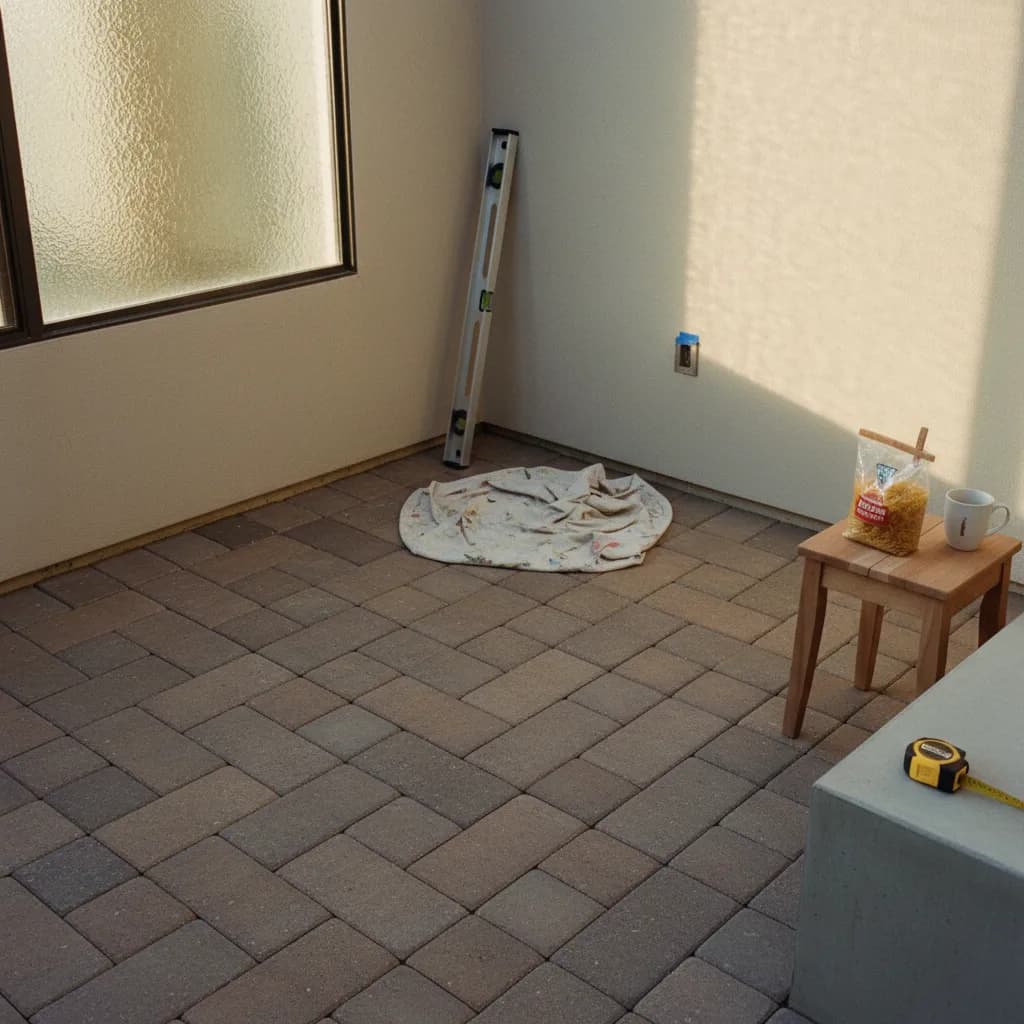
A full paver patio installation in San Diego, from bare dirt to finished surface, typically takes six to twelve weeks. The timeline can start lower, around four weeks, for a simple replacement of an existing concrete slab where the base is already stable. For a new build in a neighborhood like La Jolla, the single biggest delay isn't laying the stone; it's getting sign-off on the drainage plan and any retaining walls from the San Diego Development Services Department, especially if your property falls under Coastal Commission review. The visible work is the last, and fastest, part of the job. The real project is building the foundation you never see.
In a Nutshell
- Total Timeline: 6 to 12 weeks for a standard 600-square-foot paver patio project.
- The Four Phases: The project breaks down into four distinct stages: Design and Permits, Site Prep and Foundation, Construction Scope, and finally, Finishes and Inspection.
- Biggest Delay Risk: Engineering plan approvals for retaining walls over four feet or complex drainage solutions required by the city. This can add weeks before a shovel ever hits the ground.
- Contingency Planning: Expect the unexpected. The National Association of Home Builders recommends a ten to fifteen percent cost contingency for any major renovation project. For patios, this covers surprises like buried debris or poor soil conditions.
Phase 1: Design and Permits (weeks 2, 4)
This is where the project is built on paper. It's also where timelines can stretch before you see any physical progress. This phase involves finalizing the layout, selecting the specific paver type and color, and engineering the structural components. For a simple, flat patio, this is quick. But if you add a seat wall, a fire pit, low-voltage lighting, or a retaining wall over four feet in height (three feet for certain property line conditions), you now need engineered plans. Your paver patio contractor in San Diego will coordinate with a designer or landscape architect to produce drawings. These plans are then submitted to the San Diego Development Services Department (DSD) for review. If your home is west of Interstate 5, you may also face a review from the California Coastal Commission, which adds another layer of scrutiny and time. The most common holdup is the DSD plan check, which can return with corrections that require revisions and resubmission, easily adding two or three weeks to this phase.
Phase 2: Site Prep and Foundation (weeks 1, 3)
This is the most critical phase for the longevity of your patio, and it cannot be rushed. The work begins with demolition of any existing surfaces and a call to 811 to mark all underground utilities. Then comes the excavation. Your contractor will dig out six to eight inches of native soil. In San Diego, this can mean dealing with sandy loam near the coast or heavy, expansive clay inland in areas like Scripps Ranch. On clay, a professional contractor will install a geotextile separation layer to prevent the base rock from sinking into the subgrade. The subgrade is then compacted to 95 percent Modified Proctor density. Next, the aggregate base, typically a clean, open-graded #57 stone, is brought in. It's laid in lifts, meaning two- to three-inch layers at a time, with each lift being watered and compacted before the next is added. A failed compaction test from a visiting inspector or geotechnical engineer is a common delay, forcing a crew to re-work the entire base. This is the foundation that prevents sinking and shifting for the next twenty-five years.
Phase 3: Construction Scope (weeks 2, 4)
Ready to compare vetted project options?
Use Project Match privately when your scope is clear enough for contractor conversations.
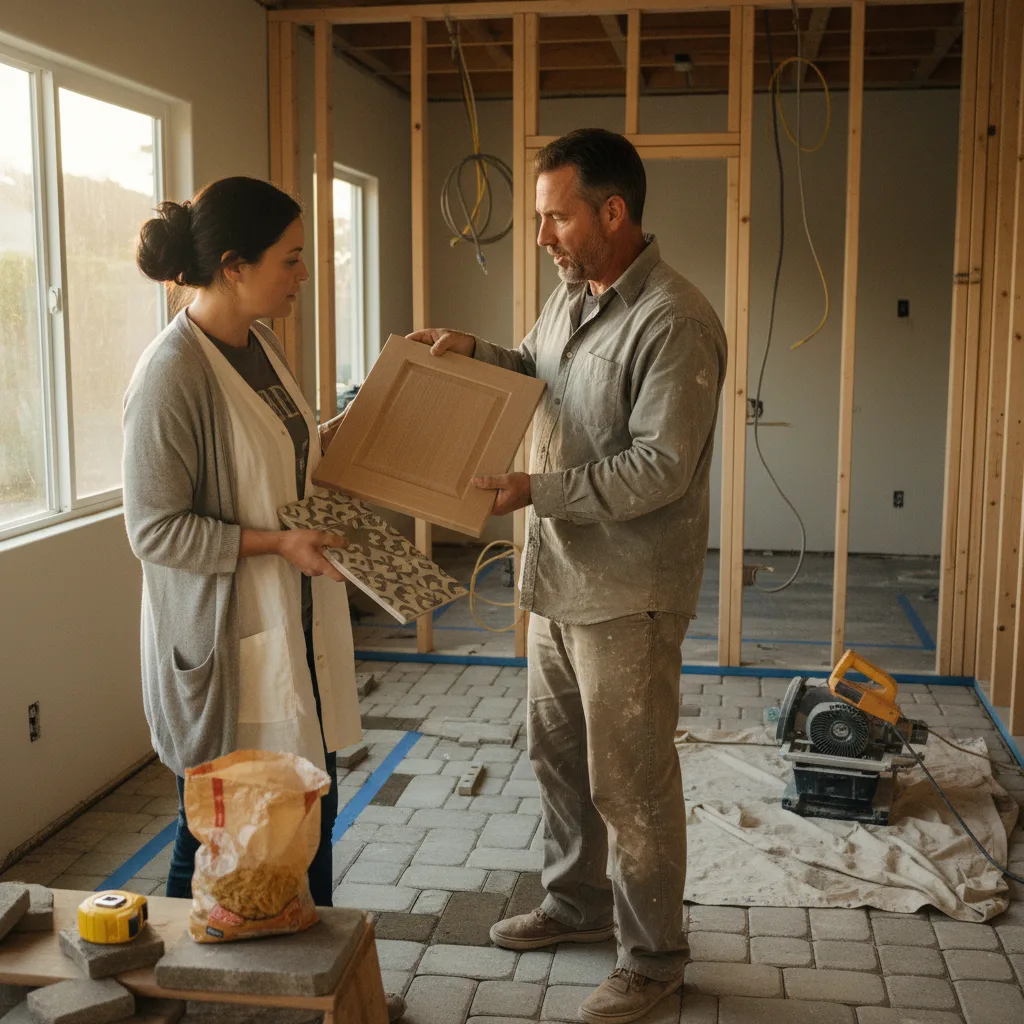
Start Project MatchWith a solid, compacted base, the visible part of the installation begins. First, a one-inch layer of bedding sand, specifically ASTM C33 concrete sand, is screeded perfectly flat across the base. This is what the pavers rest on. The crew then begins laying the pavers in the chosen pattern, working from a corner outward. This process is fast, and a skilled team can lay several hundred square feet in a day. The perimeter pavers are then marked and cut with a wet saw to create clean, sharp edges against borders or structures. If your project includes features like a gas fire pit, the lines managed by a licensed plumber are stubbed up through the base before the pavers are laid. The primary holdups in this phase are material-related: a delayed paver delivery or finding that a pallet of stones has significant color variation, requiring re-ordering. This is where having a good paver patio contractor san diego with strong supplier relationships makes a difference.
Phase 4: Finishes and Final Inspection (weeks 1, 2)
The final phase locks everything in place. Concrete or plastic edge restraints are installed around the entire perimeter of the patio, secured with ten-inch steel spikes. This containment is non-negotiable; it prevents the pavers from spreading apart over time. Once the edging is secure, the crew sweeps polymeric sand into the joints between the pavers. This special sand contains a polymer that, when activated with a light mist of water, hardens to form a durable, flexible mortar. It locks the pavers together, prevents weed growth, and resists erosion. After the sand is swept in, a plate compactor is run over the entire surface to settle the sand deep into the joints and achieve final interlock. The site is then thoroughly cleaned, and a final walkthrough is conducted with you to ensure every detail meets your satisfaction. If your project required a permit for a retaining wall or electrical work, this is when the city inspector returns for a final sign-off, closing out the permit.
Three Representative Projects from 2026
Three representative California projects from 2026, scoped similarly, reconstructed from Golden Yards Magazine's invoiced project network and presented here in aggregate form:
- North Park, San Diego: A 450-square-foot rectangular paver patio replacing a cracked concrete slab. The project used standard Belgard pavers with no retaining walls or extra features. The straightforward scope meant no permits were needed. Total Cost: $13,500. Total Timeline: 5 weeks.
- Carlsbad, San Diego County: An 800-square-foot paver patio with a gentle curve, a built-in gas fire pit, and low-voltage landscape lighting. The project required a plumbing permit for the gas line and minor grading. Total Cost: $38,000. Total Timeline: 9 weeks.
- Rancho Santa Fe, San Diego County: A 1,600-square-foot project including a new driveway and connecting patio using permeable pavers. The scope included a four-foot engineered retaining wall and a complex drainage system to manage runoff on a sloped lot, requiring full DSD plan review. Total Cost: $110,000. Total Timeline: 15 weeks.
What Can Compress This Timeline
While you can't rush compaction tests or permit reviews, homeowners have control over three key areas that keep a project moving. First, make all material decisions before work begins. Lock in the paver style, color, pattern, and border stone before the contract is signed. Changing your mind mid-project can halt work for weeks waiting on new material. Second, provide clear and consistent site access. Ensure a dedicated path for small machinery like a Bobcat and for material deliveries. Having to move cars or clear a pathway every morning wastes time. Third, keep the scope simple. A flat, rectangular patio with no integrated utilities or retaining walls avoids the entire permitting and engineering loop, which is the single biggest source of pre-construction delays. A simpler design is a faster design.
What Blows It Up
Three things reliably turn a six-week job into a twelve-week headache. First is discovering poor soil conditions. Hitting undocumented fill or highly expansive clay requires over-excavation and importing engineered fill, adding significant cost and time. This is a common issue when estimating a paver patio san diego cost without a geotechnical report. The additional labor costs reflect prevailing wage data from the California Department of Industrial Relations for San Diego County. Second is scope creep. Adding a pergola, an outdoor kitchen, or even a simple seat wall after the project has started means stopping all work to get new plans drawn, engineered, and permitted. Third, and most common in San Diego's hilly neighborhoods, are drainage issues. A patio that inadvertently channels water toward your home's foundation is a major failure. Fixing this mid-project often requires installing extensive French drains, which means re-excavating the base you just built. The National Association of Home Builders recommends a ten to fifteen percent contingency on renovations in homes over thirty years old.
What Should Be in Your Contractor's Schedule
A professional contractor's schedule is more than a start and end date. It's a sequence of dependent tasks. Your contract's scope of work should include a schedule with these specific line items and target dates:
- Permit Submittal Date
- Permit Approval Date
- Material Order and Delivery Dates
- Demolition and Site Clearing
- Excavation and Subgrade Compaction Test
- Geotextile and Aggregate Base Installation (in lifts)
- Base Compaction Test
- Bedding Sand Screeding and Paver Installation
- Border Cutting and Edge Restraint Installation
- Joint Sanding, Final Compaction, and Sealing
- Site Cleanup and Final Walkthrough
- Final Inspection (if required)
This level of detail helps you track progress and identifies potential bottlenecks early. To understand the city's role in this schedule, review our [San Diego paver permit playbook for 2026](/guides/san-diego-pavers-permit-playbook-2026).
Golden Yards Take
The contractor's brochure shows a crew laying pavers and finishing a patio in five days. That's the marketing timeline. The realistic San Diego timeline accounts for the two weeks of foundation work nobody photographs and the three weeks of paperwork nobody talks about. The difference between a paver patio that looks good for a year and one that lasts twenty-five years is entirely in Phase 2. It’s the subgrade compaction, the geotextile fabric over clay soil, and the open-graded base built in compacted lifts. In our coastal climate, proper base and drainage prevent the efflorescence and shifting that salt air and moisture can accelerate. Don't focus on the speed of the paver laying. Focus on the quality of the base preparation. The surface is just decoration; the foundation is the project.
Frequently Asked Questions
How long does a paver patio in San Diego really take?
A typical paver patio project in San Diego, for a space of about 400 to 800 square feet, takes between six and twelve weeks from signing the contract to final walkthrough. This timeline can be shorter, around four to five weeks, for a simple replacement of an existing slab on flat ground. For more complex projects involving significant grading, engineered retaining walls, or Coastal Commission review, the timeline can easily extend to sixteen weeks or more. The biggest variables are the permitting and engineering phase (Phase 1) and the site preparation phase (Phase 2), which are often the most time-consuming parts of the entire san diego paver patio installation.
Can I use my yard during construction?
It's best to assume the project area and its immediate surroundings will be an active and inaccessible construction zone. For safety and efficiency, contractors will typically cordon off the work area. Expect noise from saws and compactors, dust from excavation and cutting, and the presence of heavy materials and equipment. Access to your backyard may be completely blocked for days at a time, especially during excavation and material delivery. While your contractor should maintain a clean site, the process is inherently disruptive. Plan on using other parts of your property and keep pets and children safely away from the work zone for the duration of the project.
What's the longest single phase of a paver installation?
For complex projects, Phase 1: Design and Permits is often the longest and most unpredictable phase. Waiting for engineered plans and then navigating the San Diego DSD's review and correction cycles can take a month or more before any physical work starts. For simpler projects that don't require permits, Phase 2: Site Prep and Foundation becomes the longest physical part of the job. While laying the pavers themselves is relatively quick, the meticulous process of excavating, grading, laying geotextile fabric, and compacting the aggregate base in multiple lifts can take one to three weeks. This foundational work is critical and cannot be rushed, as it dictates the durability and stability of the entire patio for decades to come.
Can I fast-track the permits for a paver patio in San Diego?
Generally, you cannot pay extra to expedite a standard plan review with the San Diego Development Services Department (DSD). The fastest way through the permitting process is to have a complete and error-free application package submitted by an experienced contractor or expeditor who understands the city's codes. Any mistakes or omissions in the plans will trigger a correction notice, sending you to the back of the queue. The only true 'fast track' is to design a project that doesn't require a permit in the first place. In San Diego, patios and walkways on flat ground typically don't need permits, but retaining walls over four feet, or any structure altering drainage, will trigger a mandatory review.
Sources & Methodology
Golden Yards reviews public permit and code signals, material pricing, climate and site constraints, contractor quote patterns, comparable projects, the Golden Yards Cost Index, and the Golden Yards Methodology. Cost references are planning ranges, not fixed bids.
- Interlocking Concrete Pavement Institute (ICPI), Tech Spec 2: Construction of Interlocking Concrete Pavements (2023)
- City of San Diego, Development Services Department, Project Submittal Manual (2024)
- ASTM International, C33/C33M - 18: Standard Specification for Concrete Aggregates
- National Association of Home Builders (NAHB), Remodeling Market Index (RMI) (Q1 2026)
- California Department of Industrial Relations, San Diego County Prevailing Wage Determinations (2026)
- Belgard Hardscapes, Master Catalog and Installation Guide (2026)
- State of California, Model Water Efficient Landscape Ordinance (MWELO)
Ready to start your patio project?
Find My ProsFrequently Asked Questions
How long does a paver patio in San Diego really take?
A typical 400 to 800 square foot paver patio in San Diego takes six to twelve weeks from contract to completion. Simpler projects, like replacing an existing slab on flat ground, can take four to five weeks. Complex jobs requiring grading or Coastal Commission review may extend to sixteen weeks or more.
The biggest variables affecting your project timeline are the initial permitting and engineering phase (Phase 1) and the site preparation phase (Phase 2). These steps are often the most time-consuming parts of a San Diego paver patio installation. A simple job replacing a slab on flat ground could be done in four to five weeks. In contrast, a complex project needing significant grading, engineered retaining walls, or Coastal Commission approval can take sixteen weeks or longer. This explains the wide range for a standard project.
Can I use my yard during construction?
No, it is best to assume you cannot use your yard during construction. For safety and efficiency, contractors will cordon off the project area, making it an active and inaccessible zone. Expect noise, dust, and heavy equipment. Access may be blocked for days, so keep children and pets safely away.
The project area and its immediate surroundings should be considered an active construction site. You can expect significant noise from equipment like saws and compactors, as well as dust from excavation and cutting. The presence of heavy materials is also a constant.
Access to your backyard may be completely blocked for days at a time, particularly during excavation and material delivery phases. While your contractor should maintain a clean site, the process is inherently disruptive. For the duration of the project, plan on using other parts of your property and ensure pets and children are kept clear of the work zone.
What's the longest single phase of a paver installation?
The longest paver installation phase depends on project complexity. For complex jobs, Design and Permits can take a month or more for engineered plans and San Diego DSD review. For simpler projects not needing permits, the Site Prep and Foundation phase is longest, taking one to three weeks for essential base work.
For complex projects, the initial Design and Permits phase is often the most unpredictable. Waiting for engineered plans and then completing the San Diego DSD's review and correction cycles can add significant time before physical work starts. When permits are not required, the longest physical part becomes site preparation. While setting the pavers is relatively fast, the foundational work is meticulous. This process involves excavating, grading, laying geotextile fabric, and compacting the aggregate base in multiple lifts. This critical work cannot be rushed, as it determines the patio's stability for decades.
Can I fast-track the permits for a paver patio in San Diego?
No, you generally cannot pay to fast-track a paver patio permit with the San Diego Development Services Department (DSD). The fastest method is submitting a complete, error-free application. Patios on flat ground may not need a permit, but retaining walls over four feet or projects altering drainage will.
The San Diego Development Services Department (DSD) does not offer a paid option to expedite standard plan reviews. To ensure the fastest possible processing, submit a complete and error-free application prepared by an experienced professional. Any mistakes will trigger a correction notice, which sends your project to the back of the queue. The only way to truly speed things up is to design a project that does not require a permit. In San Diego, this includes patios on flat ground, but retaining walls over four feet or any structure that alters drainage will trigger a mandatory review.