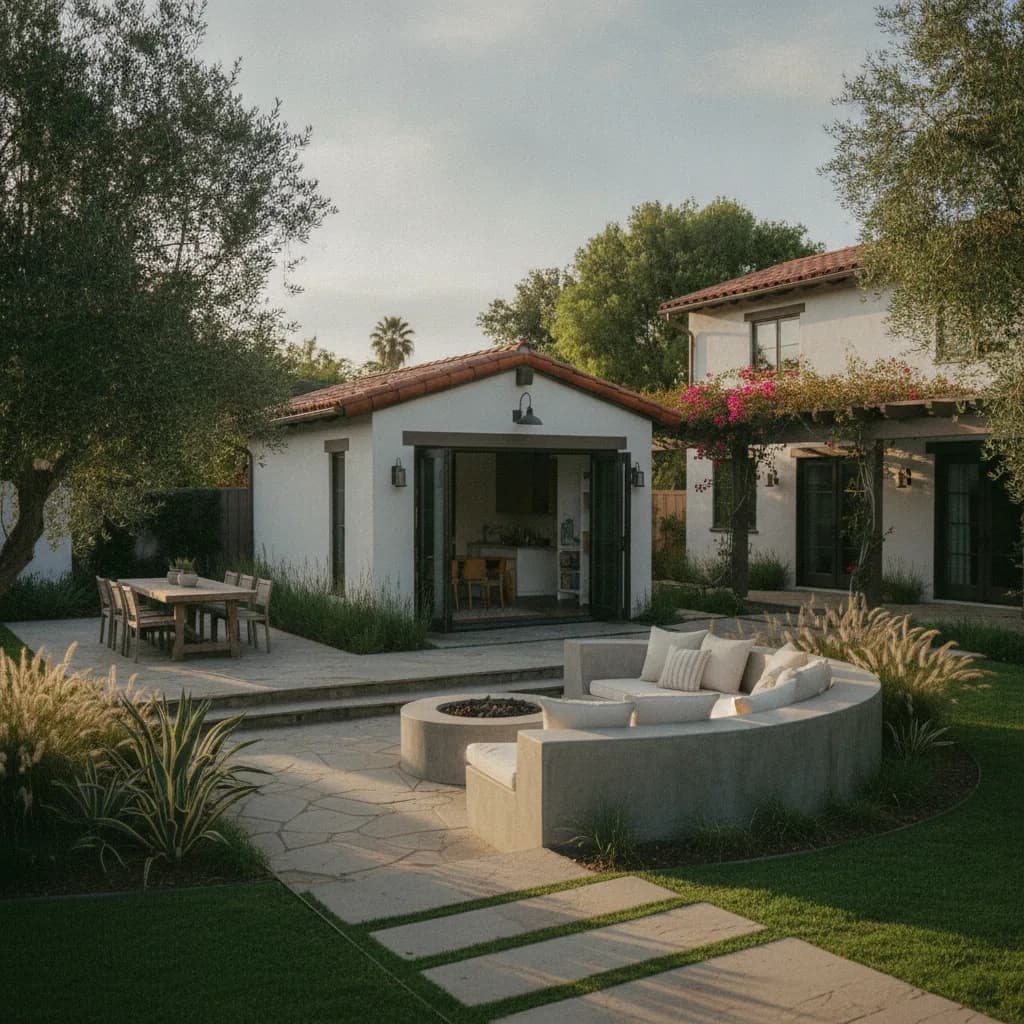
Transforming your garage into a valuable living space, whether for family, rental income, or a home office, is a popular project for Northridge homeowners in 2026. However, navigating the specific permit requirements and Homeowners Association (HOA) regulations unique to Northridge can be complex. This comprehensive guide will walk you through every step, ensuring your garage conversion project adheres to local Northridge standards and avoids common pitfalls.
Why Convert Your Garage in Northridge?
Converting your garage in Northridge offers significant benefits, from increasing property value to providing much-needed flexible living space. With Northridge's diverse neighborhoods, ranging from sprawling ranch-style homes to more dense suburban developments, an Accessory Dwelling Unit (ADU) or Junior Accessory Dwelling Unit (JADU) can cater to various needs, including housing aging parents, providing a separate space for adult children, or generating rental income in a competitive market. The local climate, with its warm, dry summers and mild winters, also makes a well-insulated and climate-controlled ADU a highly desirable addition, especially if designed with energy efficiency in mind.
Understanding Northridge Garage Conversion Permit Requirements
Securing the necessary permits is the foundational step for any garage conversion in Northridge. While general LA County regulations provide a framework, Northridge, as part of the City of Los Angeles, has specific departmental procedures and review priorities. The process typically involves submitting plans to the Los Angeles Department of Building and Safety (LADBS) for structural, electrical, plumbing, and mechanical review.
What are the Specific Permit Requirements for Northridge?
Northridge garage conversions fall under the City of Los Angeles's ADU ordinance, which streamlines many aspects of the process. Key requirements include demonstrating compliance with zoning, building codes, fire safety, and environmental health standards. For Northridge, this means adhering to specific setback requirements, ensuring adequate parking (though often waived for garage conversions), and meeting minimum size and habitability standards. You'll need detailed architectural plans, structural calculations, and utility plans. Unlike some other areas, Northridge doesn't have unique historical districts or specific zoning overlays that frequently impact standard garage conversions, but it's always wise to verify your specific property's zoning via the LADBS ZIMAS system.
How Long Does It Typically Take to Get a Garage Conversion Permit Approved in Northridge?
The average permit processing time for Northridge garage conversions can vary significantly, but homeowners should generally anticipate a timeline of 3 to 6 months for initial plan check and approval, assuming no major revisions are required. This timeframe includes the initial submission, plan review cycles, and any necessary resubmissions. Bottlenecks often occur during the initial plan check for incomplete submissions or when structural engineering details are not fully compliant. Proactive engagement with a knowledgeable architect or contractor familiar with LADBS procedures can significantly expedite this process. For comparison, a similar project in Culver City might see slightly faster turnaround due to different departmental loads, but Northridge's process is generally efficient for well-prepared applications.
What are the Specific Fees for Garage Conversion Permits in Northridge?
Permit fees for a garage conversion in Northridge are calculated based on the project valuation and specific departmental reviews required. Homeowners can expect a range of $2,500 to $7,000 for permit fees alone, not including design and engineering costs. This typically includes plan check fees, building permit fees, electrical, plumbing, and mechanical permits, as well as potential impact fees or school fees depending on the scope and size of the new living space. For example, a basic 400 sq ft attached garage conversion might be on the lower end, while a larger, detached 600 sq ft ADU with new utility connections would incur higher fees. It's crucial to obtain a detailed fee estimate from LADBS during the initial application phase.
Navigating Northridge HOA Regulations for Garage Conversions
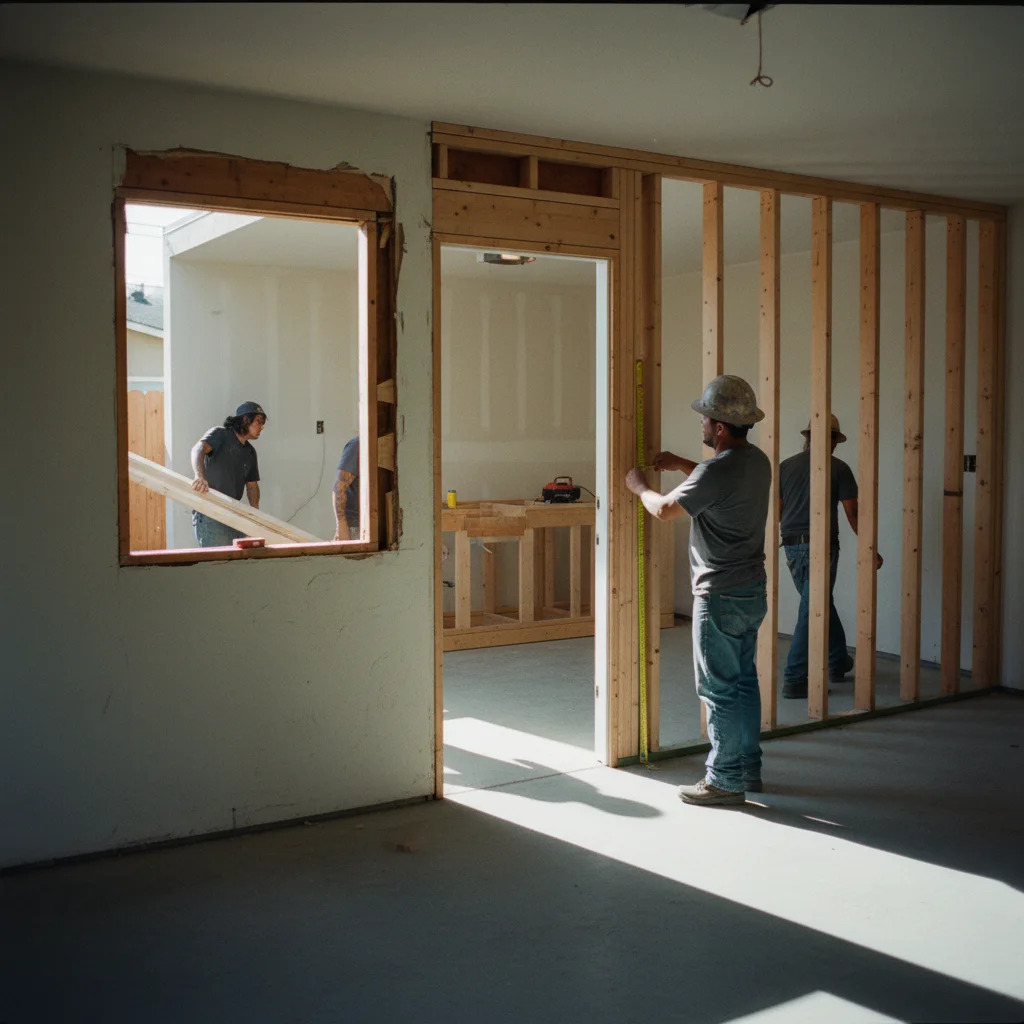
Many Northridge neighborhoods, particularly newer developments or those with shared amenities, are governed by Homeowners Associations. HOA approval is a separate and often equally critical step to permit approval. Ignoring HOA rules can lead to significant penalties, fines, or even legal action.
What are the Specific HOA Rules and Restrictions for Garage Conversions in Northridge?
HOA rules in Northridge can vary wildly by community, but common restrictions for garage conversions often include limitations on exterior appearance, building materials, rooflines, window styles, and even landscaping. Some HOAs may have explicit prohibitions against ADUs or require specific architectural review board approval. For instance, an HOA might require that the converted garage maintain the exact exterior aesthetic of the main house, dictating paint colors, stucco finishes, and even garage door styles (even if it's no longer a functioning garage door). Always consult your HOA's Covenants, Conditions, and Restrictions (CC&Rs) and design guidelines before starting any design work. You might find similar challenges navigating HOAs in areas like Woodland Hills.
Step-by-Step Guide for Navigating HOA Approval in Northridge
- Review Your HOA Documents: Obtain and thoroughly read your CC&Rs, bylaws, and design guidelines. Pay close attention to sections on exterior modifications, additions, and ADUs.
- Initial Communication: Schedule a preliminary meeting with your HOA board or architectural review committee to discuss your project concept. This early engagement can identify potential issues before significant investment.
- Prepare a Detailed Proposal: Your proposal should include architectural drawings, material samples, color palettes, landscaping plans, and a clear explanation of how your conversion will maintain or enhance the community's aesthetic.
- Submit for Review: Follow your HOA's specific submission process and deadlines. Be prepared for multiple review cycles and potential requests for revisions.
- Address Concerns Promptly: Be responsive and cooperative in addressing any concerns raised by the HOA. Flexibility and a willingness to compromise can often lead to a smoother approval process.
What are the Most Common Reasons for Permit or HOA Application Denial in Northridge?
For permits, common reasons for denial in Northridge include incomplete plans, non-compliance with building codes (e.g., insufficient setbacks, inadequate egress, fire separation issues), or structural deficiencies. For HOAs, denials often stem from projects that deviate significantly from the community's architectural style, impact neighboring property views or privacy, or violate specific clauses in the CC&Rs regarding density or use. For example, an HOA might deny a conversion that replaces a traditional garage door with a large sliding glass door if it's deemed out of character with the neighborhood's aesthetic.
Typical Cost Ranges for Northridge Garage Conversions
Ready to compare vetted project options?
Use Project Match privately when your scope is clear enough for contractor conversations.
Start Project MatchSee what your garage conversion actually costs in 4 questions.
We pull cost ranges from invoiced California ADU builder projects, then narrow them to your scope, ZIP, and finish level. No first-call sticker shock.
Open the garage conversion calculatorFree. Takes under 2 minutes. No email required to see your range.
The cost of converting a garage in Northridge can vary widely based on the size, scope, and desired finishes. It's crucial to budget realistically for a project that meets Northridge's building standards and your personal needs.
Low-End Scenario (Basic Conversion): For a simple, attached garage conversion (e.g., 200-300 sq ft) with basic finishes, minimal structural changes, and existing utility access, expect to pay $70,000 - $100,000. This might include basic insulation, drywall, flooring, a kitchenette, and a small bathroom. Mid-Range Scenario (Standard ADU): A more comprehensive conversion (e.g., 350-500 sq ft) with new utility connections, moderate structural work, and quality finishes (e.g., quartz countertops, mid-grade appliances) will typically range from $110,000 - $160,000. This is common for creating a comfortable one-bedroom ADU. High-End Scenario (Premium Detached ADU): For a larger, detached garage conversion (e.g., 500-750 sq ft) with significant structural modifications, new foundation work, high-end finishes, and extensive landscaping, costs can reach $170,000 - $250,000+. This often includes custom cabinetry, high-efficiency systems, and premium materials.
These figures include design, engineering, permits, and construction. Remember, Northridge's labor and material costs are generally in line with the broader Los Angeles market, which is higher than national averages. For context, similar projects in West Covina might see slightly lower labor costs, but material prices remain consistent across the region.
Climate and Maintenance Implications in Northridge
Northridge's climate, characterized by hot summers, materially impacts material selection and design for your garage conversion. Proper insulation, efficient HVAC systems, and appropriate roofing are not just comfort considerations, but also code requirements and long-term maintenance factors.
Insulation: High-performance insulation (e.g., spray foam or rigid foam) is crucial for energy efficiency, given Northridge's summer heat. This helps reduce cooling costs significantly. Windows: Dual-pane, low-emissivity (Low-E) windows are essential to minimize heat gain. Roofing: Consider cool roof technologies or light-colored roofing materials to reflect sunlight and reduce attic temperatures, which directly impacts the ADU's interior climate. HVAC: A dedicated mini-split HVAC system is often the most efficient choice for ADUs, offering zoned heating and cooling. Exterior Materials: Stucco and fiber cement siding are popular choices in Northridge due to their durability and fire resistance, important considerations in a region prone to dry conditions.
These choices not only enhance comfort but also contribute to the long-term durability and lower operational costs of your Northridge ADU.
Practical Sequencing Advice for Your Northridge Garage Conversion
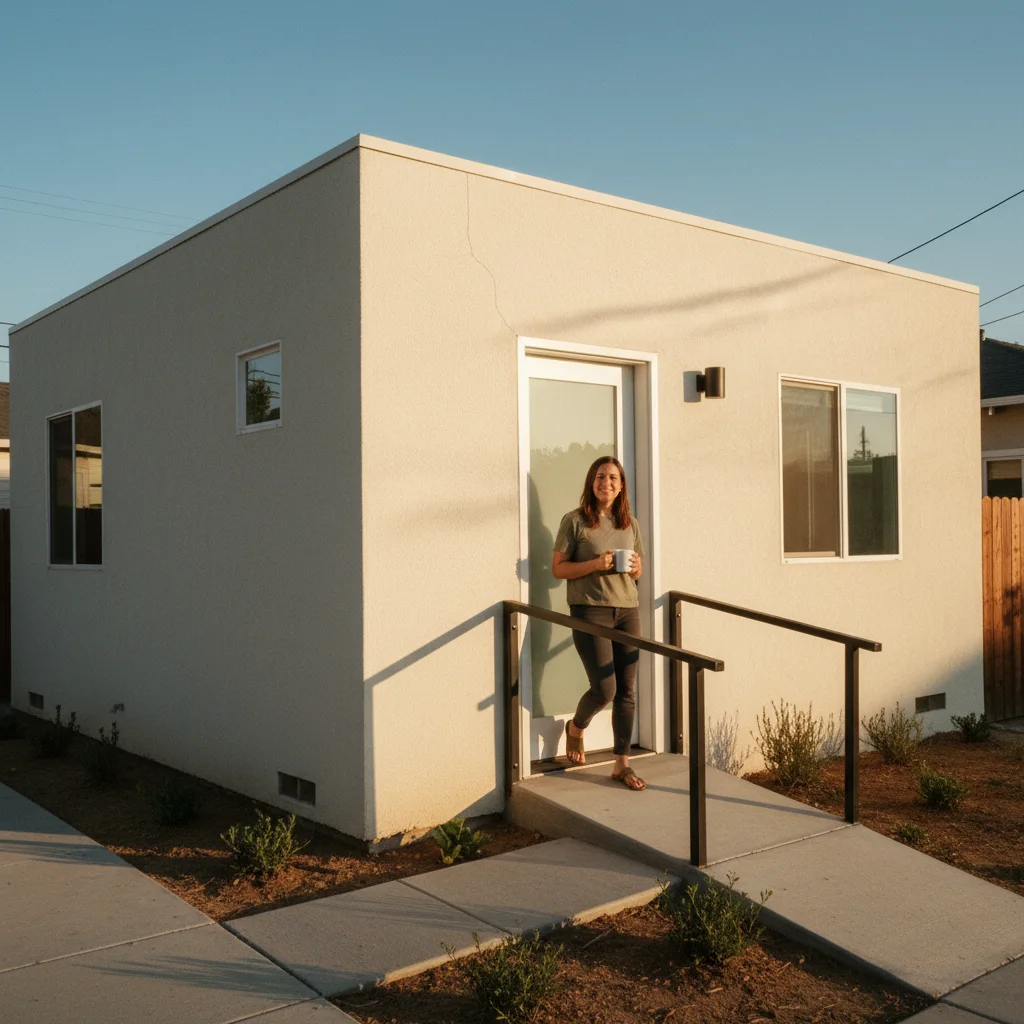
Executing your garage conversion efficiently requires a logical sequence of operations. This approach minimizes delays and ensures compliance at each stage.
- Planning & Design (Weeks 1-8): Engage an architect or designer experienced with Northridge ADU projects. Develop detailed plans, including floor plans, elevations, structural details, and utility layouts.
- Permit & HOA Submission (Weeks 8-12): Submit your complete plans to LADBS and your HOA simultaneously. Be prepared for review cycles and revisions.
- Site Preparation & Demolition (Week 12+): Once permits are approved, begin with any necessary demolition, site clearing, and foundation work. This might include breaking up existing concrete slabs or pouring new footings if expanding the footprint or addressing seismic requirements.
- Rough-Ins (Weeks 14-20): Install new plumbing, electrical, and HVAC lines. This is when the space truly begins to transform.
- Framing & Sheathing (Weeks 20-24): Complete any new framing for walls, windows, and doors. Install exterior sheathing.
- Exterior Finishes & Roofing (Weeks 24-28): Apply stucco, siding, install windows and doors, and complete the roofing. This is crucial for weatherproofing.
- Insulation & Drywall (Weeks 28-32): Install insulation, followed by drywall, taping, and texturing.
- Interior Finishes (Weeks 32-40): Install flooring, cabinetry, countertops, fixtures, and paint.
- Hardscape & Landscaping (Weeks 36-44): Complete any exterior concrete work, pathways, and planting. This is often done concurrently with interior finishes.
- Final Inspections & Certificate of Occupancy (Week 44+): Schedule final inspections with LADBS. Once all inspections pass, you'll receive your Certificate of Occupancy, making your new ADU legal for use.
Are There Any Specific Local Incentives or Programs for ADU Conversions in Northridge?
Get 3 ADU builder bids in 48 hours.
Our editors already screened California ADU builders. Answer 4 questions; we send 3 written bids inside 48 hours, with the real price for your scope, not their inflated first-call number.
Send my 3 bidsFree. No commission. If a match doesn't fit, we'll send another.
While the City of Los Angeles offers various ADU incentives, Northridge homeowners can specifically benefit from county-level programs. The Los Angeles County Development Authority (LACDA) occasionally offers financial assistance programs, such as low-interest loans or grants for ADU construction, particularly for affordable housing initiatives. It's recommended to check the LACDA website and the City of Los Angeles Housing Department for current programs in 2026. These programs are often competitive and have specific eligibility criteria, but they can significantly offset costs. For more information on broader ADU incentives, you might find our guide on Arcadia ADU Permits and HOA useful.
Resources for Northridge Homeowners
Los Angeles Department of Building and Safety (LADBS): For all permit-related inquiries, plan submittals, and inspection scheduling. Their website (ladbs.org) is an invaluable resource. LADBS ZIMAS System: To verify your property's zoning, lot size, and any specific overlays. Northridge Neighborhood Council: While not a permitting authority, your local neighborhood council can offer insights into community sentiment and potential local issues. Golden Yards Magazine: Explore our other localized guides, such as "The Ultimate Garage Conversion Permit and HOA Guide for Culver City in 2026" or "Thousand Oaks Garage Conversion: Your 2026 Permit and HOA Compliance Guide," for comparative insights and best practices.
Conclusion
Converting your garage in Northridge into an ADU or JADU is a rewarding investment that enhances your property's value and functionality. By meticulously navigating the specific permit requirements of the City of Los Angeles and the unique regulations of your Northridge HOA, you can ensure a smooth and successful project. Remember, thorough planning, engaging experienced local professionals, and proactive communication are your keys to transforming your garage into a valuable asset for years to come. Start your Northridge garage conversion journey today with confidence and clarity!
FAQ: Northridge Garage Conversion Permits & HOAs
Q: Do I need an architect or engineer specifically licensed for Northridge projects?
A: You need an architect or engineer licensed in California. While not specific to Northridge, choosing professionals familiar with LADBS procedures and local Northridge conditions (like soil types for foundations or common HOA structures) can significantly benefit your project.
Q: Are there any specific fire safety or egress requirements unique to Northridge for ADUs?
A: Northridge ADUs must comply with California Building Code fire safety and egress requirements, which include smoke detectors, carbon monoxide detectors, and specific egress window sizes and locations. While not unique to Northridge, the City of Los Angeles often emphasizes fire separation between the ADU and the primary dwelling, especially for attached conversions, and adherence to urban wildfire interface codes where applicable.
Q: How does the permit process differ for attached vs. detached garage conversions in Northridge?
A: The permit process for both attached and detached garage conversions in Northridge follows similar LADBS procedures, but detached conversions may require more extensive foundation work, new utility trenching, and potentially different setback requirements. Attached conversions often leverage existing walls and utility connections, which can simplify some aspects of the structural and utility plans.
Q: What resources are available for Northridge homeowners seeking financial assistance for ADU conversions?
A: Northridge homeowners should explore programs offered by the Los Angeles County Development Authority (LACDA) and the City of Los Angeles Housing Department. These agencies occasionally provide low-interest loans or grants for ADU construction, especially for projects that meet affordable housing criteria. Checking their official websites for current 2026 programs is recommended.
Sources & Methodology
See the Golden Yards Methodology for how sources are reviewed, ranges are normalized, and planning-data limits are handled.
Cost ranges, regulatory references, and design guidance in this article draw on the following public datasets, industry standards, and Renology editorial research.
- California Department of Housing and Community Development (HCD), JADU Handbook
- Los Angeles Department of Building and Safety (LADBS), ADU/JADU Standard Plan
- California AB 1033 (2024), JADU and ADU sale-as-condo provisions
- California Contractors State License Board (CSLB), B General Building scope
- Renology editorial methodology, invoiced California garage conversions, 2025–2026
Related Articles
Ready to start your garage conversion project?
Find My ProsFrequently Asked Questions
Q: Do I need an architect or engineer specifically licensed for Northridge projects?
You need an architect or engineer licensed in California for your Northridge project. A license specific to Northridge is not required. However, choosing a professional familiar with LADBS procedures and local Northridge conditions, such as specific soil types for foundations or common HOA structures, can significantly benefit your project.
The state of California, not individual cities, issues professional licenses. Any architect or engineer with a valid California license can legally design your project. The key advantage of local experience comes from familiarity with the Los Angeles Department of Building and Safety (LADBS) and its specific submission requirements.
Furthermore, a professional who regularly works in Northridge will have practical knowledge of the area's unique characteristics. This includes understanding local soil conditions that affect foundation engineering and being acquainted with the design review processes for the neighborhood's common Homeowners' Associations (HOAs). This expertise can help avoid costly delays and redesigns.
Q: Are there any specific fire safety or egress requirements unique to Northridge for ADUs?
Northridge ADUs must comply with California Building Code fire safety standards, which are not unique to the area. These rules require smoke detectors, carbon monoxide detectors, and specific egress window sizes and locations. The City of Los Angeles also emphasizes fire separation for attached conversions and adherence to urban wildfire interface codes.
While the fundamental requirements originate from the statewide California Building Code, the City of Los Angeles often gives special attention to certain aspects for projects in Northridge. For attached ADUs or conversions, officials frequently stress the importance of proper fire separation between the new unit and the primary dwelling. Furthermore, properties located in specific zones must follow urban wildfire interface codes to mitigate fire risk. These local points of emphasis supplement the standard state requirements for detectors and egress windows.
Q: How does the permit process differ for attached vs. detached garage conversions in Northridge?
In Northridge, the permit process for attached and detached garage conversions follows similar LADBS procedures. The main difference is that detached conversions may require more extensive foundation work, new utility trenching, and different setback requirements. Attached conversions often use existing walls and utility connections, which can simplify structural and utility plans.
While both conversion types in Northridge are subject to the same LADBS review process, the submitted plans reflect key distinctions. A detached garage conversion often necessitates plans for a new foundation, trenches for new utility lines, and adherence to setback requirements for a standalone dwelling. For an attached garage, the plans frequently show how the project incorporates existing walls and connects to established utilities. This distinction can make the planning and approval stages for structural and utility elements less complex for attached units.
Q: What resources are available for Northridge homeowners seeking financial assistance for ADU conversions?
Northridge homeowners can seek financial assistance for ADU conversions from the Los Angeles County Development Authority (LACDA) and the City of Los Angeles Housing Department. These agencies sometimes provide low-interest loans or grants, particularly for projects meeting affordable housing criteria. Check their official websites for current 2026 programs.
For homeowners in Northridge, the main sources for potential ADU financial aid are county and city agencies. The Los Angeles County Development Authority (LACDA) and the City of Los Angeles Housing Department are the specific organizations to monitor for assistance programs.
These programs, which can include low-interest loans or grants, are not always available and often have specific requirements. For example, funding is frequently targeted at ADU conversions that will serve as affordable housing units. Because program availability and terms change, it is essential to check the agencies' websites for the most current information regarding 2026 opportunities.