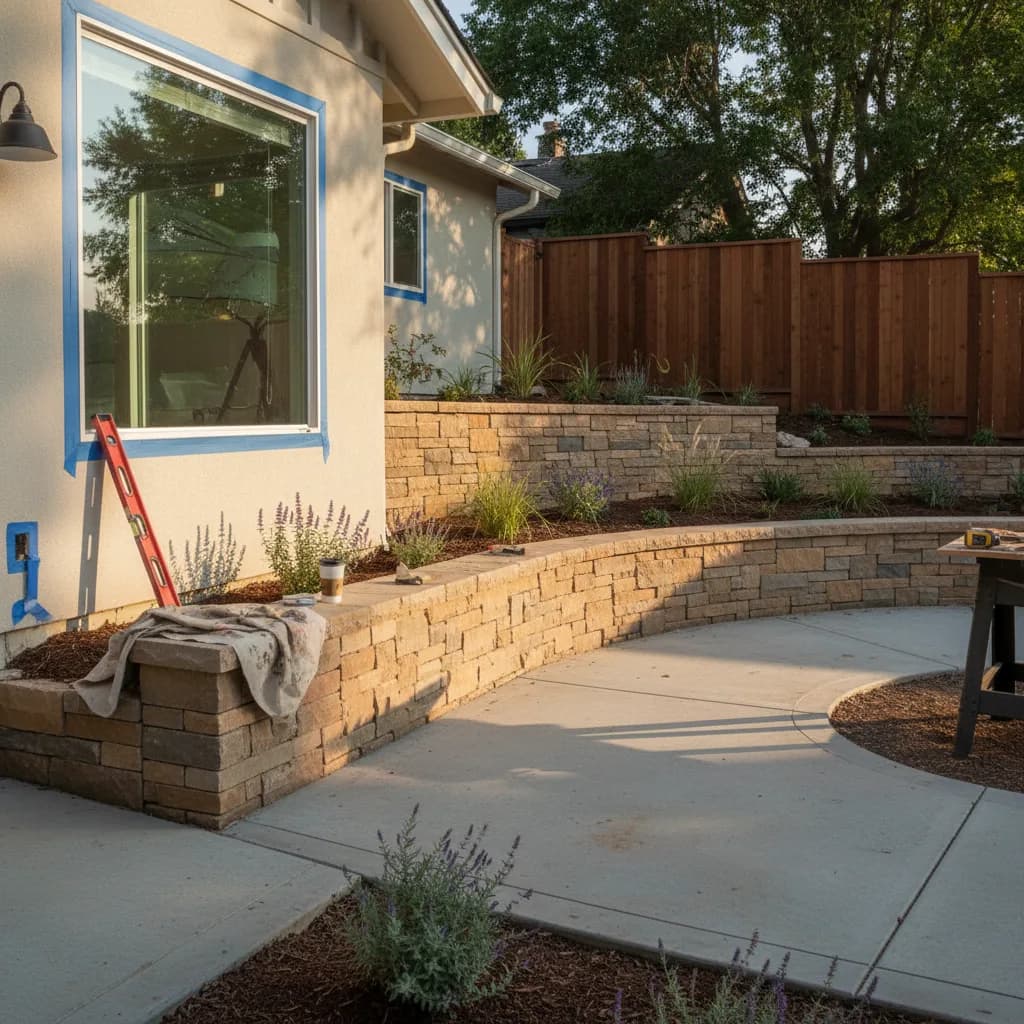
A structural retaining wall in Sacramento isn’t a two-week job. The realistic timeline, from the first soil test to the final capstone, is six to fourteen weeks. The total can start lower, around four weeks, for a simple, non-engineered garden wall under four feet high in a neighborhood like Curtis Park. For anything taller, especially on the expansive clay soils common from the Pocket to Folsom, the biggest delay is the upfront work nobody sees: the geotechnical report and the structural engineering plans required by the Sacramento Community Development Department. That engineering dictates the entire build and is the difference between a wall that lasts and one that fails.
In a Nutshell
- Total Timeline: 6 to 14 weeks for an engineered wall; 3 to 5 weeks for a simple garden wall.
- Four Key Phases: Design and Permits, Site Prep and Foundation, Wall Construction, and Finishes and Final Inspection.
- Biggest Delay Risk: Engineering revisions required by the city's plan check, often triggered by poor initial soil analysis or property line complications.
- Contingency Planning: Assume overruns. The National Association of Home Builders recommends a ten to fifteen percent contingency fund for any major landscape construction.
Phase 1: Design and Permits (Weeks 1, 5)
This is where the project is won or lost. Any retaining wall over four feet in height (measured from the bottom of the footing to the top of the wall) requires a building permit in Sacramento. This isn't just paperwork. It means a licensed civil or structural engineer must design the wall based on a geotechnical report that analyzes your specific soil conditions. In Sacramento, that usually means designing for expansive clay, which exerts immense pressure on a wall as it swells and shrinks with moisture changes. The engineer's plans will specify the footing depth, the rebar schedule (e.g., #4 rebar at 18 inches on center), the type of geogrid reinforcement, and the drainage system. Your contractor or an expediter submits these plans to the Sacramento Community Development Department for review. A clean, well-documented submission is the fastest path; incomplete plans can add weeks of back-and-forth revisions.
Phase 2: Site Prep and Foundation (Weeks 6, 8)
With an approved permit, the real work begins. First, call 811 to have utilities like SMUD and PG&E mark their lines. Then, excavation starts. This is more than just digging a trench. We cut back the slope to the engineer's specifications, creating a safe work area and the correct profile for the reinforcement zone. The subgrade soil is then compacted to a minimum of 95 percent of its maximum dry density per ASTM D1557 (Modified Proctor). This is non-negotiable and prevents settling. A layer of geotextile fabric may be laid down to separate the native soil from the base material. Finally, the base itself, typically a six-to-twelve-inch layer of ¾-inch clean crushed rock (#57 stone), is placed and compacted to create a stable, free-draining leveling pad for the first course of block or the concrete footing.
Phase 3: Construction Scope (Weeks 8, 11)
Ready to compare vetted project options?
Use Project Match privately when your scope is clear enough for contractor conversations.
Start Project MatchThis is the phase where the visible structure takes shape. For a segmental retaining wall (SRW), we lay the first course of blocks meticulously on the compacted leveling pad, ensuring it's perfectly level. Subsequent courses are stacked, with layers of geogrid reinforcement placed at heights specified by the engineer. This geogrid extends back into the hillside and is the primary mechanism holding the soil back. As each course is laid, we backfill with open-graded stone (like #57) to ensure drainage and compact the fill in controlled lifts of six to eight inches. The city building inspector will visit at key milestones. They’ll check the footing or leveling pad before the first course is laid, and they may check geogrid placement mid-construction. A failed inspection means rework. Compact in lifts. Test the base. Keep the inspection card ready.
Phase 4: Finishes and Final Inspection (Weeks 12, 14)
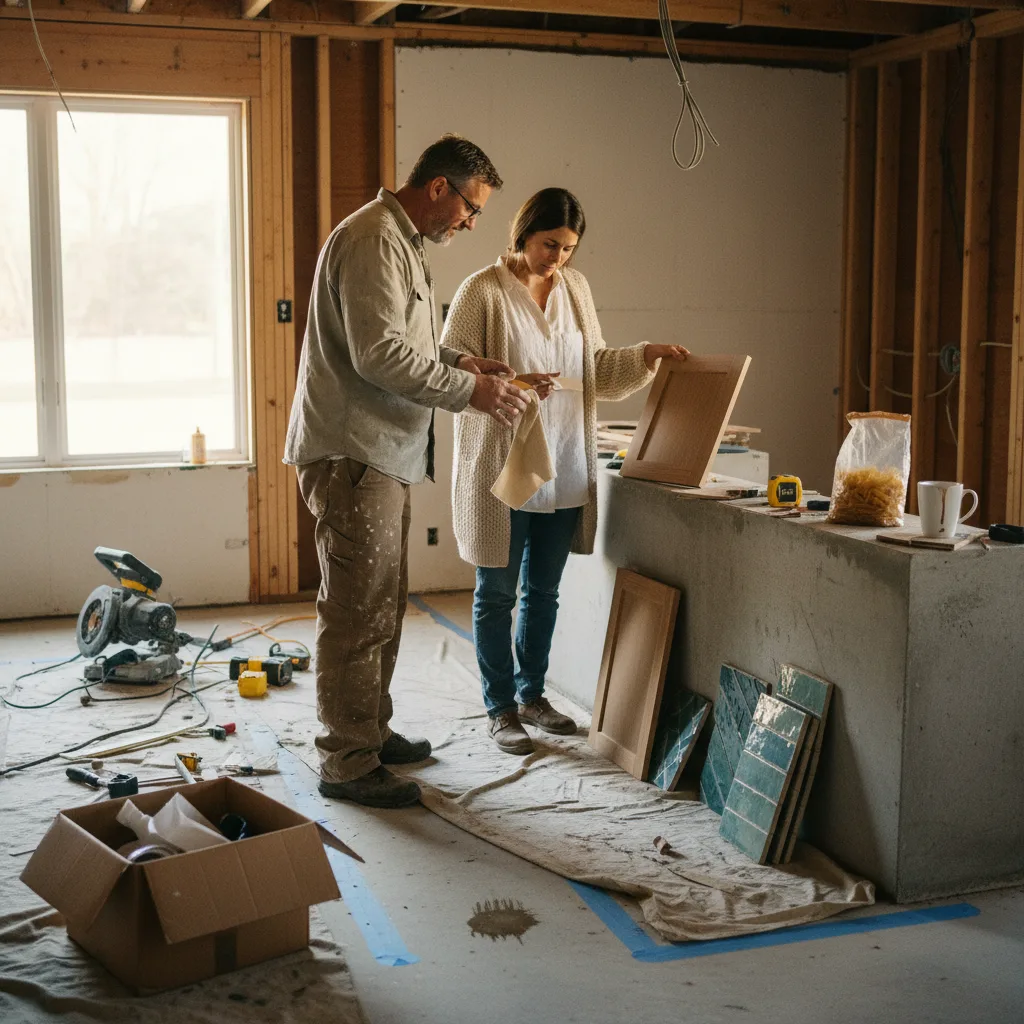
With the wall built to its final height, the focus shifts to finishing details and site restoration. Capstones are secured to the top course with a high-strength concrete adhesive. The area behind the wall is backfilled to the final grade, often with native soil in the top twelve inches to support planting. A critical and often overlooked step is installing the surface drainage system, such as a swale or catch basins, to divert water away from the wall. You do not want water sheeting over the top. The final step is the final inspection from the Sacramento building inspector. They verify the wall's height, the drainage measures, and the overall site safety. Once they sign off on the permit card, the project is officially complete. The contractor will then perform a final cleanup and walkthrough with you.
Three Representative Projects from 2026
Three representative California projects from 2026, scoped similarly, reconstructed from Golden Yards Magazine's invoiced project network and presented here in aggregate form: The cost of a Sacramento retaining wall is driven by height, access, and engineering complexity. Labor rates, reflected in the California Department of Industrial Relations prevailing wage data for Sacramento County, are a significant component of the total retaining wall sacramento cost.
- East Sacramento (95819): A 60-foot-long, 3.5-foot-high decorative garden wall using pre-cast segmental blocks. No permit or engineering was required. The project involved minimal excavation on a level lot. Total Cost: $14,500. Total Time: 4 weeks.
- Folsom (95630): An 85-foot-long, 6-foot-high engineered SRW to create a level play area on a sloped backyard. Required a full geotechnical report, structural engineering, and city permits. Included extensive geogrid reinforcement and a solid drainage system. Total Cost: $48,000. Total Time: 10 weeks.
- Granite Bay (95746): A complex, multi-tiered system of concrete retaining walls with a stone veneer finish, totaling 150 linear feet. The project required extensive engineering for a hillside property, integrated stairs, and landscape lighting. Site access was difficult, requiring smaller machinery. Total Cost: $115,000. Total Time: 16 weeks.
What Can Compress This Timeline
While you can't rush soil compaction or concrete curing, homeowners have three points of use. First, make all material decisions before the contract is signed. Have the block style, color, and capstone selected and confirmed for availability. Second, hire a design-build retaining wall contractor in Sacramento who manages the engineering and permitting process in-house. This avoids the communication gaps between a separate designer, engineer, and builder. Third, schedule the work for the right season. In Sacramento, that means late spring or fall. Trying to excavate and compact wet clay soil in the winter is slow and ineffective, while pouring concrete in 105-degree July heat presents its own challenges. A dry, stable site is a fast site.
What Blows It Up
Three things reliably derail a retaining wall schedule. The first is discovering unexpected conditions during excavation, such as undocumented fill, a high water table, or massive tree roots that conflict with the footing. This often requires a revised engineering plan and a delay of several weeks. The second is a property line dispute. If your wall is built on or near the property line, a disagreement with a neighbor can lead to a stop-work order until a formal survey is completed. The third is a failed inspection due to contractor error, like improper drainage backfill or incorrect geogrid placement, which forces costly and time-consuming rework. The National Association of Home Builders recommends a ten to fifteen percent contingency on renovations in homes over thirty years old.
What Should Be in Your Contractor's Schedule
A professional's schedule is more than just a start and end date. It's a sequence of dependent tasks and inspections. Your Sacramento retaining wall contractor's proposal should include a detailed schedule with at least these line items. This level of detail is a key part of your project's scope-lock, which you can learn more about in our [Sacramento retaining wall permit playbook for 2026](/guides/sacramento-retaining-wall-permit-playbook-2026).
- Geotechnical Report Commissioned and Delivered
- Structural Engineering Plans Completed
- Permit Application Submitted to Sacramento Community Development
- Permit Issued
- Site Excavation, Subgrade Preparation, and Compaction
- Footing/Leveling Pad Installation and Pre-Pour Inspection
- Wall Construction to Mid-Point (Geogrid Check)
- Drainage System and Backfill Installation
- Capstone/Finish Installation
- Final Inspection and City Sign-Off
Golden Yards Take
The brochure for a segmental wall system shows two people building a beautiful wall in a single weekend. That reality only exists for knee-high garden planters. For any structural Sacramento retaining wall, the product you are buying is not the block. You are buying the engineering, the compacted subgrade, the geogrid reinforcement, and the drainage system. The blocks are just the cosmetic finish on a heavy civil engineering project in your backyard. The most expensive retaining wall is the one you have to build twice because the first one failed. Focus your questions to a retaining wall contractor on their process for subgrade compaction, their knowledge of geogrid specifications, and their plan for water management. The answers will tell you everything you need to know about whether the wall will last five years or fifty.
Frequently Asked Questions
How long does a retaining wall in Sacramento really take?
A structural retaining wall in Sacramento, one over four feet high requiring permits, typically takes six to fourteen weeks from start to finish. The construction itself might only be three to five weeks of that. The longest phase is often the pre-construction period, which includes one to two weeks for a geotechnical soil report and another two to six weeks for an engineer to draft plans and for the Sacramento Community Development Department to review and approve them. Simple, non-engineered garden walls under four feet can often be completed in three to five weeks total, as they skip the formal engineering and permitting steps.
Can I use my yard during construction?
It's best to plan on losing access to the work area and a significant portion of your yard. The construction zone will include the wall's footprint, a large staging area for materials like blocks and gravel, and space for excavation equipment. For safety and efficiency, contractors will typically fence off this area. There will be noise, dust, and heavy equipment moving around. Access paths for machinery can also temporarily impact other parts of your lawn or driveway. Clear communication with your retaining wall contractor about their site plan can help manage expectations and minimize disruption to the rest of your property.
What's the longest single phase for a Sacramento retaining wall?
For any engineered retaining wall in Sacramento, Phase 1: Design and Permits is almost always the longest and most unpredictable part of the timeline. While the physical construction might take a few weeks, the upfront process of getting a soil report, having an engineer design the wall to California Building Code standards, and navigating the city's plan check and permit issuance process can easily take four to seven weeks, sometimes longer if revisions are required. This is the critical groundwork that ensures the wall is built correctly for Sacramento's specific soil and seismic conditions, but it requires patience before a single shovel of dirt is moved.
Can I fast-track the permits for my retaining wall?
Generally, you cannot pay extra to speed up the city's review process. The fastest way through the Sacramento permit office is to submit a perfect application the first time. This means hiring an experienced local civil engineer who understands the city's specific requirements for retaining walls, especially regarding drainage and seismic considerations for our region. A complete and accurate set of plans, accompanied by a thorough geotechnical report, is less likely to receive comments or require revisions from the plan checker. This avoids the weeks of delay that come with resubmitting corrected plans. A contractor or permit expediter familiar with the city's portal and staff can also help avoid simple administrative errors that cause delays.
Why is the retaining wall sacramento cost so variable?
The cost varies because no two sites are the same. The primary driver is height; a six-foot wall requires exponentially more reinforcement, excavation, and engineering than a three-foot wall. Soil type is another major factor. Sacramento's expansive clay soils often demand deeper footings and more solid drainage systems than a site with sandy loam. Site access also plays a large role. If heavy equipment can't easily reach the work area, labor costs increase significantly. Finally, material choices, from standard concrete blocks to premium natural stone veneers, and the inclusion of features like stairs or lighting, all impact the final price of a sacramento retaining wall.
Sources & Methodology
See the Golden Yards Methodology for how sources are reviewed, ranges are normalized, and planning-data limits are handled.
Cost ranges in this guide draw on the following named industry sources, public agency datasets, and Golden Yards Magazine editorial research.
- City of Sacramento Community Development Department, Building Division (2026)
- California Building Code (CBC), Title 24 (2022)
- National Concrete Masonry Association (NCMA), SRW Design Manual (2021)
- American Society for Testing and Materials (ASTM) D1557 (2023)
- California Department of Industrial Relations, Sacramento County Prevailing Wage Data (2026)
- American Society of Civil Engineers (ASCE) 7-22 (2022)
Ready to start your hardscaping project?
Find My ProsFrequently Asked Questions
How long does a retaining wall in Sacramento really take?
In Sacramento, a structural retaining wall over four feet tall requires six to fourteen weeks from start to finish. The actual construction takes three to five weeks, but pre-construction steps are lengthy. Simpler garden walls under four feet, which do not need permits, can be completed in three to five weeks.
The total timeline for a permitted retaining wall is driven by pre-construction requirements. While construction itself is a quick three to five weeks, you must first get a geotechnical soil report, which takes one to two weeks. Following that, the Sacramento Community Development Department's plan review and approval process adds another two to six weeks to the schedule before any work can begin. These administrative steps account for the long six to fourteen week total project time. In contrast, simple garden walls under four feet do not require this formal engineering and permitting, allowing for a much faster completion.
Can I use my yard during construction?
You should plan on losing access to the work area and a significant part of your yard. The construction zone requires space for the wall’s footprint, a staging area for materials and equipment, and machinery access paths. For safety and efficiency, contractors typically fence off this area, which will have noise and dust.
The fenced-off construction zone is necessary for both safety and project efficiency. It contains not just the wall's footprint but also a large staging area for materials like blocks and gravel. Space is also required for excavation equipment to operate. Heavy machinery moving around creates significant noise and dust.
Access paths for this machinery can also temporarily affect other parts of your property, such as your lawn or driveway. Clear communication with your retaining wall contractor about their specific site plan is the best way to understand the full impact and manage expectations for minimizing disruption to the rest of your property.
What's the longest single phase for a Sacramento retaining wall?
The longest single phase for a Sacramento retaining wall is Phase 1: Design and Permits, which typically takes four to seven weeks. This initial stage includes getting a soil report, engineering the design to California Building Code standards, and securing city permits. This process must be completed before the shorter physical construction phase begins.
While the physical construction of an engineered retaining wall might only last a few weeks, the upfront design and permitting process is almost always the longest and most unpredictable part of the timeline. This critical groundwork ensures the wall is built correctly for Sacramento's specific soil and seismic conditions. The process involves getting a soil report, having an engineer create a design compliant with the California Building Code, and managing the city's plan check and permit issuance. This can sometimes take longer than seven weeks if revisions are required, so patience is needed before any dirt is moved.
Can I fast-track the permits for my retaining wall?
No, you generally cannot pay extra to speed up the city's permit review. The fastest way through the Sacramento permit office is to submit a perfect application the first time. This means hiring an experienced local civil engineer to prepare complete plans, including a geotechnical report addressing local seismic and drainage rules.
An experienced local civil engineer understands Sacramento's specific requirements for retaining walls, particularly concerning drainage and seismic considerations for our region. A complete and accurate set of plans, supported by a thorough geotechnical report, is less likely to receive comments or require revisions from the plan checker, avoiding weeks of delay.
A contractor or permit expediter familiar with the city's portal and staff can also help prevent simple administrative errors that cause hold-ups. Their expertise ensures the application is submitted correctly, which is crucial for a timely review process.
Why is the retaining wall sacramento cost so variable?
Retaining wall costs in Sacramento are variable because each site is unique. The primary factors are wall height, soil conditions, site accessibility, and material choices. A six-foot wall requires significantly more engineering and reinforcement than a three-foot wall, while Sacramento's expansive clay soils often demand deeper footings and better drainage systems.
A six-foot wall, for example, requires exponentially more reinforcement, excavation, and engineering than a shorter three-foot wall. The soil in Sacramento is often expansive clay, which necessitates deeper footings and more substantial drainage systems compared to sites with sandy loam. Accessibility is another major variable. If heavy equipment cannot easily reach the work area, labor costs will increase. Finally, your choice of materials, from standard concrete blocks to premium natural stone veneers, and added features like stairs or lighting, will directly affect the final price.
Do I need a permit for a retaining wall in Sacramento?
Yes, a building permit is required in Sacramento for any retaining wall over four feet high, measured from the footing's bottom to the wall's top. Walls exceeding this height need professional engineering plans based on a soil report, which must be submitted to the Sacramento Community Development Department for approval.
The permit requirement is triggered when a retaining wall's height exceeds four feet, a measurement taken from the bottom of the footing to the top of the wall. For these taller walls, the Sacramento Community Development Department requires the submission of professional engineering plans for review. A licensed engineer must create these plans, and they must be informed by a geotechnical soil report. In contrast, smaller structures like simple garden walls under four feet high are usually exempt from this formal process.