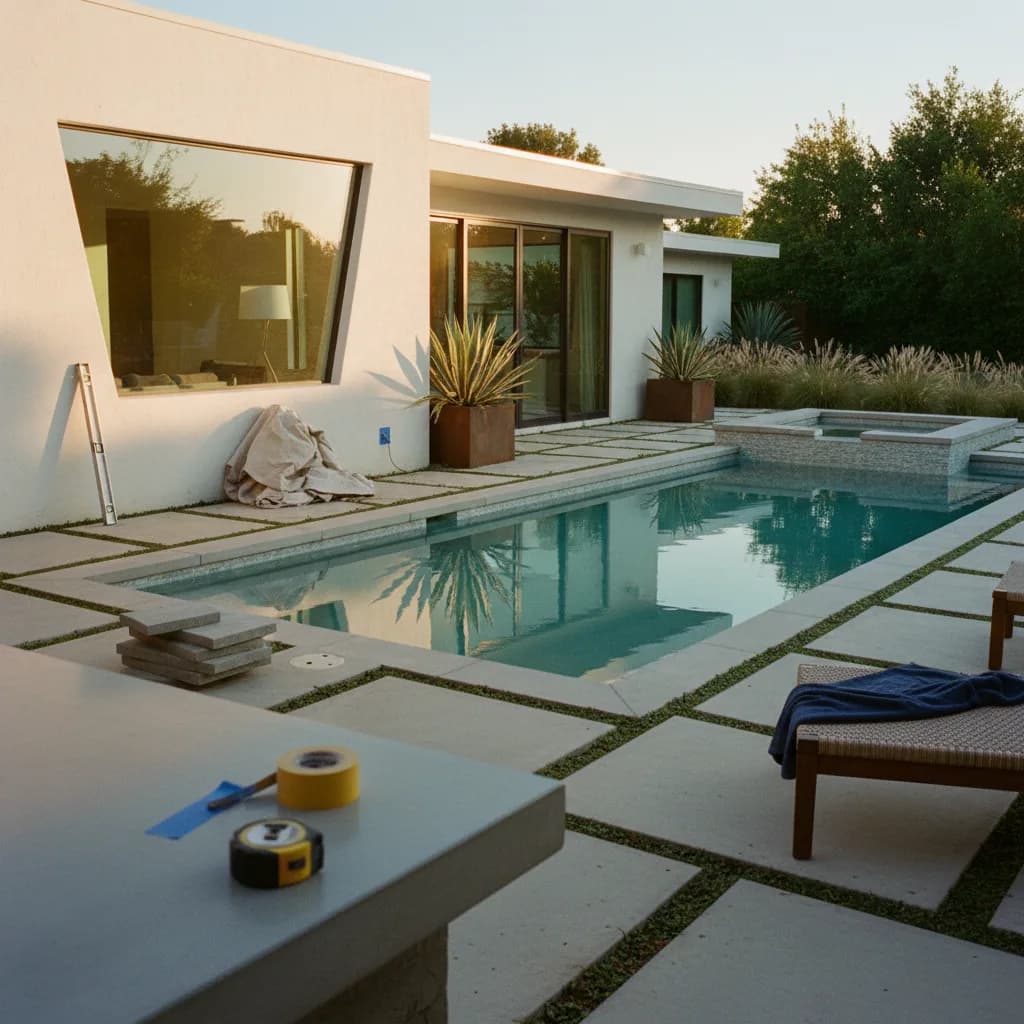
An inground gunite pool in Orange County in 2026 typically costs between $95,000 and $185,000 for a standard installation. While project costs can start lower for small-footprint plunge pools or pre-fabricated fiberglass shells on flat lots, most homeowners find their all-in budget lands near $125,000 once equipment, decking, and required utility upgrades are factored in. The sticker price for the pool shell is just the beginning; the real budget test comes from the site work and infrastructure required to make it functional and legal.
In a Nutshell: Orange County Pool Cost
- Total Cost Range: $75,000 to $250,000+
- Mid-Range Average: $125,000 for a 15'x30' gunite pool with a standard equipment set and concrete paver deck.
- Typical Timeline: Six to nine months from design finalization to first swim, with permitting often taking 8 to 12 weeks alone.
- Biggest Surprise Line Item: The electrical and gas line upgrades. A new 60-100 amp subpanel and a 3/4-inch or 1-inch gas line run can add $4,000 to $8,500, a cost rarely detailed in the initial pool quote.
What does an inground pool actually cost in Orange County in 2026?
For a standard 15-foot by 30-foot gunite pool, homeowners in Orange County can expect a three-tiered cost structure. The final price is heavily influenced by equipment choices, material finishes, and site complexity.
| Tier | Cost Range | What's Included |
|---|---|---|
| Basic | $75,000 - $95,000 | Standard shape gunite shell, basic white plaster, simple concrete deck, single-speed pump, cartridge filter, manual chlorination, minimal lighting. |
| Mid-Range | $95,000 - $145,000 | Custom shape gunite shell, PebbleTec or equivalent finish, paver or travertine coping and deck, a Pentair Intelliflo VSF variable-speed pump, salt water chlorinator, LED lighting, basic automation, and a gas heater. |
| Premium | $145,000 - $250,000+ | Complex design with integrated spa, Baja shelf, negative edge, high-end glass tile, premium stone decking, full automation (like Jandy iAquaLink), high-efficiency heater/heat pump combo, and laminar jets or water features. |
A typical mid-range project's budget breaks down as follows:
- Pool Shell (Excavation, Rebar, Gunite): 45%
- Decking & Coping: 20%
- Equipment Pad (Pump, Filter, Heater, Sanitizer): 15%
- Electrical & Gas Utilities: 10%
- Permits, Design & Fencing: 10%
The bottom-of-range $75,000 case typically applies to a small, pre-designed fiberglass pool installed on a perfectly level and accessible lot with existing, adequate utility service, which is not the scenario for most single-family homes in the area.
Why is it more expensive in Orange County than Riverside County?
Three primary factors drive up pool construction costs in Orange County compared to inland regions: labor rates, regulatory complexity, and land value premiums that affect every aspect of construction.
First, skilled labor is more expensive. According to the California Department of Industrial Relations prevailing wage data for Orange County, hourly rates for trades like electricians, plumbers, and equipment operators are ten to twenty percent higher than in neighboring Riverside or San Bernardino counties. This premium reflects the higher cost of living and is passed directly to the homeowner.
Second, the regulatory environment is stricter. Many Orange County cities, especially coastal ones like Newport Beach and Laguna Beach, have rigorous design review boards and require extensive geological and soil reports., all new projects must comply with California's Model Water Efficient Landscape Ordinance (MWELO), which dictates drought-tolerant planting and irrigation limits around the new hardscape. This often adds a mandatory landscape design and installation cost that isn't part of the core pool budget.
Finally, neighborhood and site premiums add a significant margin. Building in affluent, high-density areas like Corona del Mar or Laguna Niguel involves tighter access, stricter HOA rules, and higher insurance requirements for contractors. For coastal properties, engineering must account for a 110 mph design wind speed and potential corrosion from salt air, requiring stainless steel fixtures and specialized structural considerations that aren't necessary further inland.
What do real Orange County homeowners spend in 2026?
Ready to compare vetted project options?
Use Project Match privately when your scope is clear enough for contractor conversations.
Start Project MatchThree representative projects from 2026, scoped similarly, reconstructed from Golden Yards Magazine's Project of the Day network and used here in aggregate form:
- The Irvine Standard ($118,000): A family in a newer Irvine development installed a 14'x28' rectangular pool. The cost included the gunite shell, a PebbleSheen finish, a saltwater system, a variable-speed pump, and a basic gas heater. The deck was composed of concrete pavers. The budget surprise was a required $4,500 soils report and the $3,000 cost for temporary fencing during the six-month construction period.
- The Anaheim Hills Entertainer ($139,500): On a sloped lot in Anaheim Hills, this project featured a 15'x32' freeform pool with an attached 7'x7' spa. The package included a Pentair Intelliflo VSF pump, Jandy iAquaLink automation controlled by a phone app, and a travertine deck. The slope required a small, engineered retaining wall, adding an unforeseen $9,000 to the site work budget. The gas line upsize to support the 400k BTU heater cost an additional $2,800.
- The Newport Beach Coastal ($172,000): This project near the coast involved a 12'x24' plunge pool with an infinity edge overlooking the backyard canyon. The higher cost was driven by high-end glass tile, an ozone/UV sanitation system, and a heat pump for energy efficiency. Coastal engineering requirements and difficult site access for excavation equipment accounted for nearly $20,000 of the total cost before any water features were even considered.
Where does the money actually go? The hidden costs
The initial quote from an inground pool contractor in Orange County often covers the shell, basic plumbing, and standard equipment. Homeowners are frequently surprised by the additional line items required to complete the project. Budget for these common extras:
- Electrical Subpanel ($2,500 - $4,500): Most homes need a new 60 to 100-amp subpanel dedicated to the pool equipment. The cost depends on the distance from the main service panel.
- Gas Line Upgrade ($1,500 - $3,500): A standard 400,000 BTU gas heater requires a 3/4-inch or 1-inch gas line. The gas line upsize from the meter is rarely in the first quote.
- Geotechnical & Soils Report ($3,000 - $5,000): Many Orange County cities require this report to assess soil stability, especially on hillsides or in areas with expansive clay soil.
- Demolition and Site Access ($2,000 - $6,000): If a crane is needed to lift equipment over the house or significant demolition of existing patios or landscaping is required, costs can escalate quickly.
- MWELO-Compliant Landscaping ($4,000 - $9,000): The Model Water Efficient Landscape Ordinance mandates that the area around your new pool deck features low-water plants and efficient irrigation. This is not an optional upgrade; it's a condition of your permit.
- Safety Fencing ($2,500 - $7,000): California law requires an approved safety barrier (fencing with a self-latching gate or approved automatic cover) for any new pool.
- Drainage Solutions ($1,800 - $4,000): Proper drainage around the pool deck is critical to protect your home's foundation. This often involves installing channel drains and tying them into your property’s drainage system.
What stops an Orange County pool project from running over budget?
Three issues typically cause budget overruns: unforeseen site conditions, scope creep, and under-specified allowances. The best defense is a detailed plan and a healthy contingency fund.
First, hitting unexpected utility lines or dealing with difficult soil conditions during excavation can halt work and add thousands in costs. While a soils report helps, it can't predict everything. This is where a contingency fund is most valuable. The National Association of Home Builders recommends a ten to fifteen percent contingency on renovations in homes over thirty years old.
Second, scope creep is the most common culprit. Deciding to add a spa, upgrade from plaster to a pebble finish, or choose more expensive tile mid-project feels like a small change at the time, but these decisions accumulate and can inflate the final cost by 20 percent or more. Lock in all material and feature decisions before breaking ground.
Third, vague allowances in the contract can be a problem. If your contract specifies a '$5,000 tile allowance,' find out exactly what type and quantity of tile that covers. A low allowance may force you to pay out-of-pocket for the materials you actually want. Insist on specific product names and models in your contract, from the pump to the tile.
Ready to estimate your project?
While this guide provides a detailed overview, the specifics of your property will determine the final cost. Use our Inground Pool Cost Calculator to create a more personalized estimate based on your desired size, materials, and features.
What should your Orange County contractor include in the quote?
A detailed quote is your best tool for comparing bids and preventing surprises. Ensure your proposal from any inground pool contractor in Orange County includes these line items:
- Engineering and architectural plans.
- Permit application and processing fees.
- Excavation, including soil type assumptions and off-haul costs.
- Structural engineering for the steel rebar grid.
- Gunite or shotcrete application with specified thickness and PSI strength.
- Plumbing, including pipe size (e.g., 2-inch schedule 40 PVC) and number of returns/drains.
- Coping and waterline tile, with material type and quantity specified.
- Interior finish (e.g., white plaster, PebbleTec, or tile) with brand and color.
- Decking material, square footage, and sub-base preparation.
- Specific equipment models: pump (e.g., Pentair Intelliflo VSF), filter, heater, and sanitizer.
- Electrical work, including the cost of a new subpanel and bonding.
- Gas line installation or upgrade, specifying pipe diameter and length.
- Required safety features, like fencing and gate hardware. For a full breakdown of local requirements, see our Orange County Pool Permit Playbook.
- Cleanup and site restoration plan.
The Golden Yards Take
The most common mistake we see homeowners make is budgeting for the pool but not for the 'pool project.' The project is the entire ecosystem: the utilities that power it, the safety features that make it legal, the hardscape that makes it usable, and the landscaping that makes it compliant. The gunite shell is often less than half the final bill. An inground pool contractor in Orange County sells the pool, but you are buying a complete backyard transformation. If you frame your budget around the total project from day one, accounting for the unglamorous but necessary infrastructure, you can avoid the financial shock that derails so many dream backyards.
Sources & Methodology
See the Golden Yards Methodology for how sources are reviewed, ranges are normalized, and planning-data limits are handled.
Cost ranges in this guide draw on the following named industry sources, public agency datasets, and Golden Yards Magazine editorial research.
- California Department of Industrial Relations, Orange County Prevailing Wage Data (2026)
- Pool & Hot Tub Alliance (PHTA), Construction Cost Survey (2025)
- National Association of Home Builders (NAHB), Home Remodeling Index (Q1 2026)
- City of Irvine, Building & Safety Department, Permit Fee Schedule (2026)
Ready to start your pool project?
Find My ProsFrequently Asked Questions
How much does a small 'spool' or plunge pool cost in Orange County?
In Orange County, a small spool or plunge pool typically costs between $60,000 and $90,000. While a smaller size reduces expenses for materials like steel and concrete, many fixed costs for equipment, permits, and utilities remain similar to a full-sized pool, preventing the price from being proportional to its size.
The main savings for a spool come from reduced labor and materials for excavation, gunite, and interior finish. However, the equipment pad with its pump, filter, heater, and automation is nearly identical to that of a larger pool. These significant fixed costs do not scale down with the pool's dimensions.
Because of this cost structure, a pool half the size of a standard one will cost much more than half the price. Homeowners often choose spools for small lots or to incorporate high-end features like powerful jets and premium finishes that would be cost-prohibitive on a larger scale.
Does a saltwater pool cost more than a traditional chlorine pool?
Yes, a saltwater pool initially costs more. In Orange County, the upfront premium is $1,200 to $2,000 for the salt chlorine generator. While annual chemical costs are lower, the system's salt cell requires replacement every three to seven years for $700 to $1,100, which affects long-term savings.
The initial investment, which has dropped from over $2,400 a few years ago, covers the salt chlorine generator cell and its controller. This system uses electrolysis to convert salt into chlorine. This process provides a more stable and less harsh swimming experience than pools using liquid or tablet chlorine.
Although you save on chemicals because bags of salt are much cheaper, property owners should plan for future expenses. The salt cell will eventually fail and must be replaced every three to seven years, at a cost of $700 to $1,100. Also, be aware that saltwater can be more corrosive to certain types of stone decking and metal components if not properly managed.
How long does it take to build an inground pool in Orange County?
Building an inground pool in Orange County typically takes six to nine months from signing the contract to swimming. This total time includes two to four months for the design and permitting phase and an additional four to five months for physical construction, which is subject to weather and inspection schedules.
The upfront design and permitting timeline can be longer in certain cities, as places like Irvine and Newport Beach have notoriously detailed plan review processes. Once construction begins, the project follows distinct stages: excavation (1 week), plumbing and steel (1-2 weeks), and gunite (1 day, plus 28 days to cure). The final steps include tile and coping (1-2 weeks), decking (2-3 weeks), and plaster with filling (1 week). Each major step requires a city inspection, and a failed inspection can cause significant delays to the schedule.
What are the most expensive hidden costs when building a pool?
The most expensive hidden pool costs are utility upgrades and site-specific engineering. A new electrical subpanel can cost up to $4,500 and a gas line upgrade adds $3,500. For sloped or clay soil lots, a city-required soils report costs $3,000 to $5,000, with resulting construction adding thousands more.
These infrastructure expenses are often excluded from initial pool-only quotes. The up to $4,500 for an electrical subpanel and $3,500 for a gas line are essential for safety and function but may not be in the base price.
Beyond utilities, site preparation is a major factor. If your property is on a slope or has expansive clay soil, the city will require a geologist or soils engineer report, which costs $3,000 to $5,000. Any recommendations from that report, such as deeper footings or retaining walls, can add tens of thousands to the project cost.