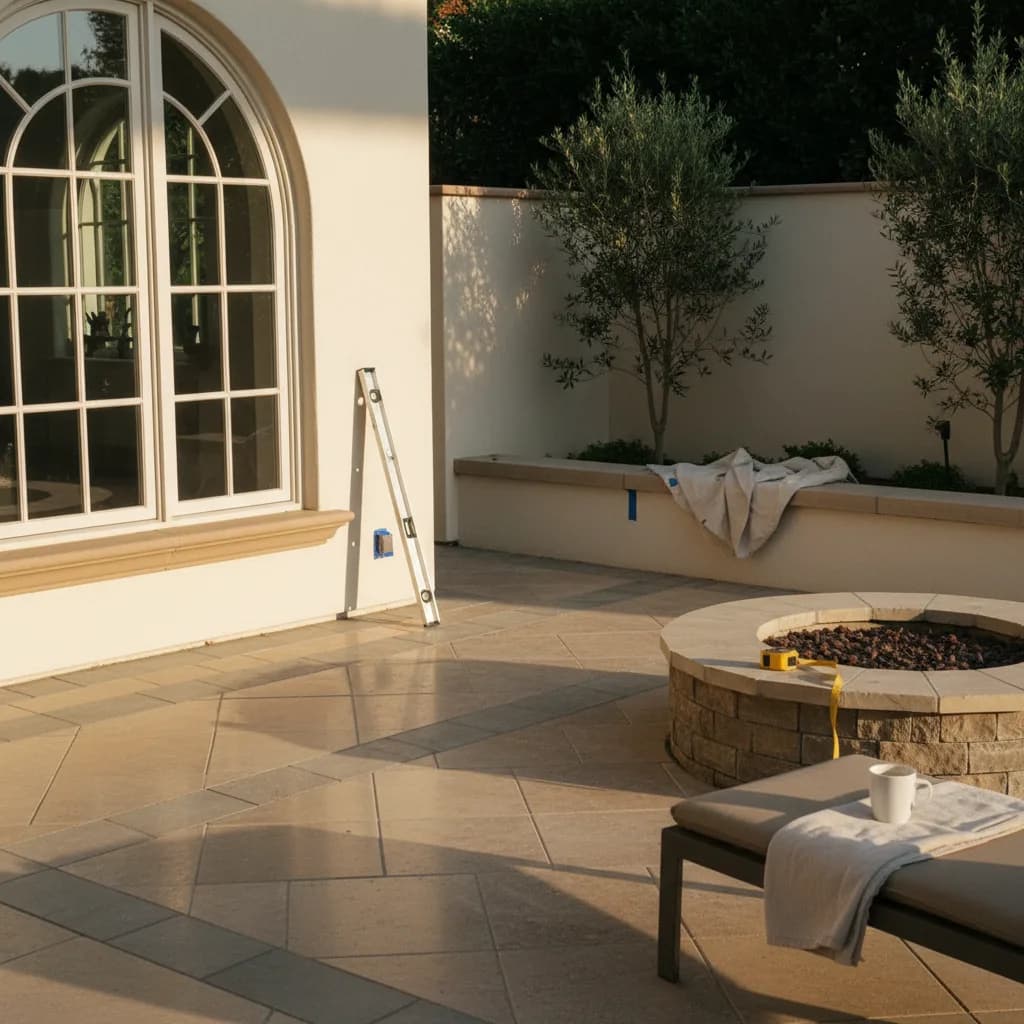
A professionally installed paver patio in Beverly Hills in 2026 will cost between $45 and $150 per square foot, with most homeowners landing in the $65 to $90 range. For a typical 600-square-foot project, this translates to a total investment of $39,000 to $54,000. While a basic paver overlay on an existing concrete slab can start lower, a full-scope installation involving demolition, excavation, and a properly engineered base defines the typical Beverly Hills project. The final price tag is a direct function of material selection, site access, and the unseen work below the surface.
In a Nutshell
- Total Cost Range: $27,000 to $120,000+ for a standard 600-square-foot patio.
- Mid-Range Average: $39,000 to $54,000 is the most common all-in price for a high-quality installation with mid-grade materials.
- Typical Timeline: Four to seven weeks from start to finish. Expect two to three of those weeks to be dedicated entirely to demolition, grading, and compacting the aggregate base.
- Biggest Surprise Line Item: Subsurface drainage systems. Addressing Beverly Hills' clay soil and runoff requirements with channel drains and French drains can add $5,000 to $10,000.
What does a paver patio actually cost in Beverly Hills in 2026?
The cost per square foot is a summary of dozens of individual decisions. We've broken down the typical paver patio cost in Beverly Hills into three tiers to clarify where the money goes. These figures assume a 600-square-foot project on a site with average access and soil conditions.
| Tier | Price per Sq. Ft. | Common Scope |
|---|---|---|
| Basic | $45 - $60 | Standard concrete pavers (e.g., Belgard Holland Stone), simple rectangular pattern, 4-inch compacted base, plastic edge restraint, silica sand joints. |
| Mid-Range | $65 - $90 | Architectural slab pavers or porcelain tiles, 6-inch open-graded base over geotextile fabric, concrete toe edge restraint, polymeric sand, basic drainage. |
| Premium | $95 - $150+ | Imported natural stone (travertine, bluestone), complex patterns (herringbone), integrated seat walls, steps, outdoor kitchen prep, extensive low-voltage lighting, engineered drainage. |
For a typical mid-range project, the budget allocation looks something like this:
- Labor: 45%
- Materials (Pavers, Sand, Base): 30%
- Site Prep (Excavation, Demo, Disposal): 15%
- Permits, Engineering, and Fees: 5%
- Contractor Overhead & Profit: 5%
A project that falls below this range, perhaps in the $35 per square foot zone, is almost always a simple overlay where new pavers are set on an existing, structurally sound concrete slab. This avoids the significant cost of demolition, excavation, and base construction, but it is not a new installation from the ground up.
Why is a paver patio more expensive in Beverly Hills than the rest of Southern California?
Three factors drive the premium for a Beverly Hills paver patio: hyper-local labor rates, logistical constraints, and demanding geotechnical conditions that require a more solid installation.
1. Skilled Labor Rates: A paver patio is only as good as the crew that lays it. Top-tier installers certified by the Interlocking Concrete Pavement Institute (ICPI) command higher wages. According to the California Department of Industrial Relations prevailing wage data for Los Angeles County, the rates for masons and operating engineers are among the highest in the state. This isn't just about laying pavers; it's about the skill to properly grade a site for drainage, operate compaction equipment to achieve 95 percent Modified Proctor density, and execute complex cuts for intricate patterns. That expertise carries a premium.
2. Neighborhood Premiums and Site Logistics: Working in Beverly Hills, Bel Air, or Brentwood is operationally more complex than in other parts of Los Angeles. City ordinances and homeowner associations often restrict work hours, limiting crew productivity. On-street parking for dump trucks, delivery of aggregate, and crew vehicles is scarce and heavily regulated. Tight property lines and established landscaping mean more work must be done by hand with wheelbarrows instead of skid-steers, increasing labor hours for material transport. These logistical hurdles translate directly into higher project costs.
3. Geotechnical and Permitting Demands: Much of Beverly Hills sits on expansive clay soils. This is a critical technical challenge. When clay soil gets wet, it expands; when it dries, it shrinks. This movement will destroy a patio built on a standard four-inch base. The correct specification here calls for over-excavation, a geotextile separation layer to prevent soil migration, and a much thicker open-graded base, often eight to twelve inches of #57 stone. This adds significant material and labor costs., the City of Beverly Hills' permitting process is rigorous, often requiring soils reports and drainage plans that must be approved before any work begins, adding engineering fees and time to the project.
What do real Beverly Hills homeowners spend in 2026?
Ready to compare vetted project options?
Use Project Match privately when your scope is clear enough for contractor conversations.
Start Project MatchThree representative projects from 2026, scoped similarly, reconstructed from Golden Yards Magazine's Project of the Day network and used here in aggregate form:
- Trousdale Estates Hillside Patio: An 850-square-foot porcelain paver patio on a terraced hillside lot. The scope included extensive grading, a new French drain system tied into city storm drains, and integrated low-voltage lighting. The primary challenge was equipment access, requiring a crane for pallet delivery. Total Cost: $81,000.
- Beverly Hills Flats Pool Deck Renovation: A 1,100-square-foot project replacing a cracked concrete cool deck with large-format travertine pavers. The work involved careful demolition around the existing pool, new coping installation, and integrating a new gas line for a fire pit feature. The contractor had to protect mature trees and landscaping throughout the process. Total Cost: $125,000.
- South of Wilshire Courtyard: A 500-square-foot permeable paver installation for a front courtyard. The choice of a permeable system was driven by city lot coverage requirements to maximize green space. The project required an eight-inch open-graded base of ASTM #57 stone to serve as a reservoir for stormwater. Total Cost: $38,500.
Where does the money actually go? The hidden costs of a proper paver installation
The paver itself is just one part of the budget. A professional quote from a qualified paver patio contractor in Beverly Hills will account for these essential, often overlooked, line items.
- Demolition and Haul-Away: Removal of old concrete, asphalt, or landscaping. ($4 - $8 per sq. ft.)
- Excavation and Subgrade Preparation: The labor and equipment to dig out soil to the required depth and compact the native subgrade. ($3 - $6 per sq. ft.)
- Geotextile Separation Fabric: A non-woven fabric laid between the native soil and the aggregate base to prevent mixing and improve stability. ($1.50 - $2.50 per sq. ft.)
- Aggregate Base Material & Compaction: The crushed stone base (e.g., #57 or a Class II base), delivered and compacted in two- to four-inch lifts. ($5 - $10 per sq. ft.)
- Drainage Systems: Installation of channel drains, catch basins, or French drains to manage water runoff. ($3,000 - $10,000+ per project)
- Permitting and Inspection Fees: Costs paid to the City of Beverly Hills for plan review and site inspections. ($1,500 - $4,000)
- Edge Restraints: A critical component, typically a poured concrete toe or heavy-duty plastic edging, that holds the entire paver field together. ($10 - $18 per linear foot)
- Final Cleanup and Sealing: Power washing, joint sanding stabilization, and application of a protective sealer. ($2 - $4 per sq. ft.)
What stops a Beverly Hills paver patio project from running over budget?
Budget overruns on hardscape projects are almost always traced back to three issues: unforeseen site conditions, mid-project design changes, and poor initial planning.
- Unforeseen Subsurface Conditions: During excavation, the crew might discover buried debris, old foundations, or poorly compacted fill from the original home construction. Worse, they could encounter undocumented utility lines. Rectifying these issues requires time and money for extra labor, equipment, and materials not included in the original bid.
- Scope Creep: It starts small. “While you’re here, can we add a small seat wall?” Or, “Let’s add some landscape lighting.” These additions, made after the contract is signed, have a cascading effect on material orders, labor schedules, and potentially permit revisions, all of which increase the final cost.
- Under-specified Plans: A quote based on a simple sketch is an invitation for cost overruns. A detailed plan should specify the exact paver, the base depth, the compaction standard, and the drainage plan. Ambiguity leads to change orders. The National Association of Home Builders recommends a ten to fifteen percent contingency on renovations in homes over thirty years old.
Understanding the costs upfront is crucial. While focused on driveways, our paver cost calculator can provide a preliminary estimate for the materials and labor involved in your patio project.
What should your Beverly Hills contractor include in the quote?
A legitimate bid is a detailed scope of work, not a one-page estimate. It should be a technical document that protects both you and the contractor. Insist on a quote that includes these fourteen points:
- Proof of C-29 Masonry license and general liability insurance.
- Responsibility for permit acquisition from the City of Beverly Hills.
- Detailed scope of demolition, including disposal of all debris.
- Excavation depth specified in inches (e.g., “excavate to 10 inches below final grade”).
- Specification of geotextile separation fabric.
- Type and compacted depth of the aggregate base (e.g., “6 inches of compacted Class II base”).
- Compaction standard to be met (e.g., “95% Modified Proctor density”).
- Type and depth of the bedding sand (e.g., “1 inch of screeded ASTM C33 concrete sand”).
- Paver manufacturer, style, color, and pattern.
- Type of edge restraint to be used (e.g., “poured-in-place concrete toe beam”).
- Type of joint sand (e.g., “polymeric sand, brand and color specified”).
- A clear drainage plan, including slope percentage and location of any drains.
- A project schedule with key milestones and a clear payment schedule.
- Warranty details covering both workmanship and material defects.
A comprehensive quote should align with the requirements outlined in our Beverly Hills paver patio permit playbook for 2026.
Golden Yards Take
Homeowners evaluating bids for a Beverly Hills paver patio often fixate on the surface: the color of the travertine, the texture of the porcelain, the pattern of the layout. This is a mistake. The single most important factor determining if your patio lasts five years or fifty is the part you will never see again after installation day: the base. A paver patio doesn't fail because a paver cracks. It fails from below. It fails when an inadequate base, built on poorly compacted, expansive clay soil, shifts and settles, creating dips, humps, and separating joints. The callbacks we see are never about the paver. They're about the prep. The smartest money you can spend is not on a more expensive stone, but on two extra inches of #57 aggregate base and an ICPI-certified installer who actually tests compaction. Get the foundation right. The rest is just aesthetics.
Sources & Methodology
See the Golden Yards Methodology for how sources are reviewed, ranges are normalized, and planning-data limits are handled.
Cost ranges in this guide draw on the following named industry sources, public agency datasets, and Golden Yards Magazine editorial research.
- National Association of Home Builders (NAHB), Remodeling Market Index (Q1 2026)
- California Department of Industrial Relations, Prevailing Wage Determinations for Los Angeles County (2026)
- City of Beverly Hills, Community Development Department, Permit Fee Schedule (2026)
- California Contractors State License Board (CSLB), C-29 Masonry Contractor Licensee Data (2026)
- Interlocking Concrete Pavement Institute (ICPI), Tech Spec 2: Construction of Interlocking Concrete Pavements (2023)
- Golden Yards Magazine, Editorial Project Cost Database (2024-2026)
Ready to start your patio project?
Find My ProsFrequently Asked Questions
Do I need a permit for a paver patio in Beverly Hills?
Yes, most paver patios in Beverly Hills require a permit from the Community Development Department. A permit is necessary if the project involves grading, is in a hillside area, or exceeds certain size limits. This process ensures the installation complies with local regulations for drainage, lot coverage, and property line setbacks.
Permits are not just bureaucracy; they confirm your project follows critical local regulations for proper drainage and stormwater management. A professional paver patio contractor in Beverly Hills will be familiar with the process and should manage the entire permit application and inspection schedule. Failing to pull a required permit can result in stop-work orders, fines, and problems when you eventually sell the property.
How long does a paver patio last in the Southern California climate?
A correctly installed paver patio in Southern California lasts 25 to 50 years, often longer. While pavers withstand intense sun and heat, longevity depends on a solid base that resists soil movement. Regular maintenance, including using polymeric sand and applying a quality sealer every three to five years, is essential for durability.
The pavers themselves are exceptionally durable, but the system's weak point is its base. In Southern California, expansive clay soils combined with periods of drought and intense rain can cause the subgrade to move. A long-lasting installation requires a thick, compacted aggregate base over a geotextile fabric to ensure stability.
Proper maintenance also plays a critical role. Using polymeric sand in the joints prevents weed growth and insect intrusion. To protect the pavers from stains and UV fading, which preserves their color and finish, you should apply a quality sealer every three to five years.
Is a permeable paver patio a good idea in Beverly Hills?
Yes, a permeable paver patio is an excellent idea for Beverly Hills properties. It addresses stormwater management, a major concern in the Los Angeles region, by reducing runoff. This can be a key factor in getting project approval from the Los Angeles Department of Building and Safety (LADBS) and may allow a larger patio.
Permeable paver systems are a smart, environmentally conscious choice that solves real-world regulatory challenges. They allow rainwater to percolate through a specialized open-graded stone base into the subgrade. This function reduces runoff into the city's storm drain system, which can be critical for project approval by the LADBS.
Additionally, because permeable surfaces are often treated differently in lot coverage calculations, installing one can allow homeowners to build a larger patio without violating local Beverly Hills zoning ordinances. It is a technical solution for both environmental and building code concerns.
What's the cost difference between concrete pavers and natural stone?
The primary cost difference is the material. Concrete pavers from brands like Belgard or Angelus cost $8 to $15 per square foot. Natural stone, such as travertine or bluestone, is significantly more expensive, ranging from $15 to over $40 per square foot. Installation labor costs are similar for both options.
High-quality manufactured concrete pavers offer incredible design flexibility, uniform sizing, and proven durability. Natural stone, including travertine, bluestone, or limestone, is quarried and provides a more variable, high-end aesthetic. While stone often stays cooler to the touch, a benefit for pool decks in the California sun, it requires proper sealing to prevent staining. Because the labor to install both is comparable, the price difference is almost entirely in the material itself.
Can I install a paver patio over my existing concrete slab?
Yes, you can install a paver patio over an existing concrete slab, but it is conditionally advised. This overlay is only possible if the slab is in excellent condition, with no major cracks, heaving, or settling, and has proper drainage. Any future slab failure will transfer directly to the pavers.
This approach carries risk because if the underlying slab ever cracks or shifts, it will ruin the paver installation above. For this reason, most high-end installations in Beverly Hills involve full demolition. Contractors will instead build a proper, flexible aggregate base from the ground up. This method ensures a much longer lifespan, often 25 years or more, by creating a stable foundation that is not dependent on the old concrete.