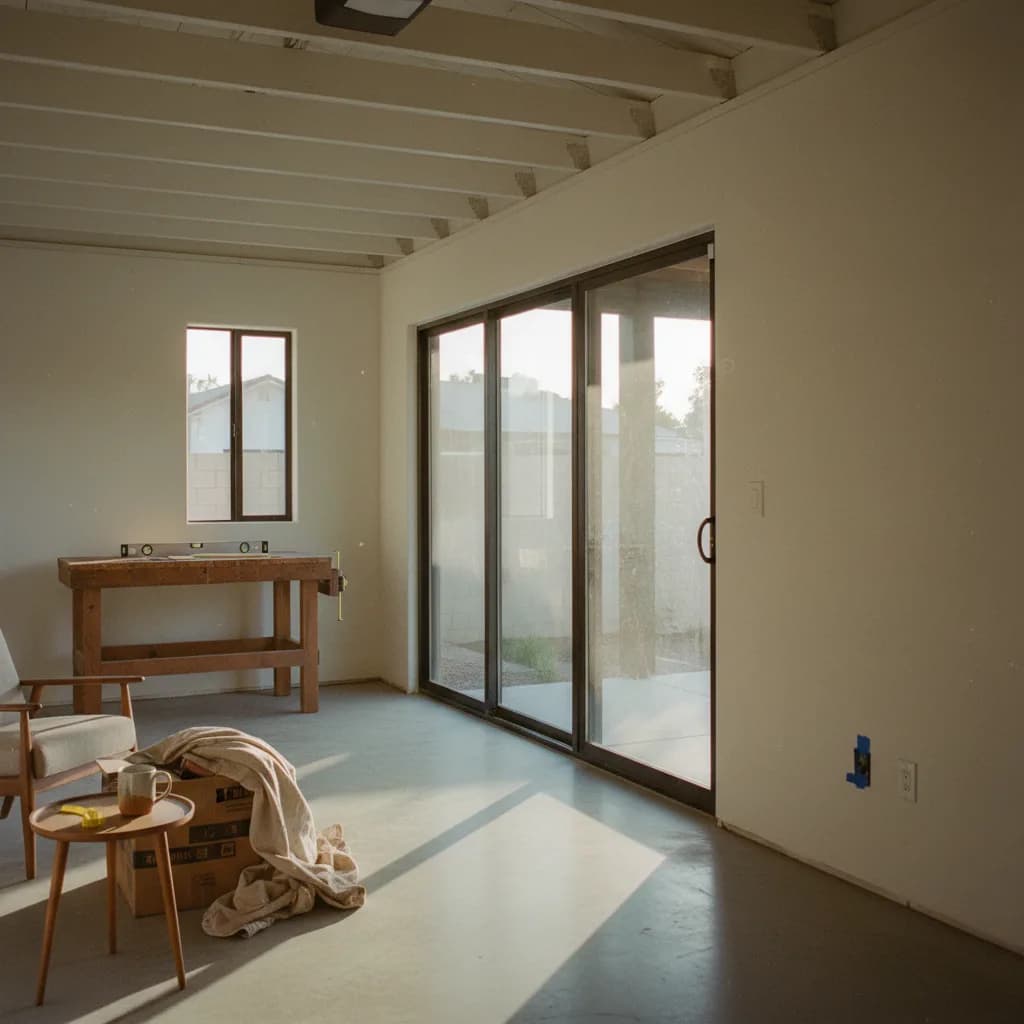
A garage conversion in Riverside seems straightforward until the change orders start. A project you budgeted for $140,000 quickly becomes a $185,000 ordeal, adding ten to twelve weeks of delays. This isn't bad luck; it's a failure to plan for the specific structural, energy, and permit requirements of the Inland Empire. The average Riverside garage conversion we track goes over budget by twenty-five percent, a costly lesson in local building code.
In a Nutshell: Riverside Garage Conversion Mistakes
The most common financial pain point is assuming your existing garage is a ready-to-finish box. It rarely is. Here are the three mistakes we see most often in our project data, and the one thing you should do this week to get ahead of them.
- The Cost of Getting It Wrong: Riverside garage conversions most often run over budget and schedule because of hidden structural, electrical and permit work.
- Top Three Mistakes: 1) Ignoring the condition of the existing concrete slab, 2) Failing to budget for Title 24 energy code compliance from day one, and 3) Not accounting for a full electrical panel upgrade and new utility trenching.
- Your Counter-Move This Week: Before you hire an architect, spend $1,500 on a structural engineer's assessment of your garage's foundation and framing. This report will be the most valuable document you own, saving you from tens of thousands in structural surprises down the line.
Mistake #1: Assuming Your Concrete Slab is Usable
Many homeowners believe their existing garage slab is a ready-made foundation for their new living space. This is almost never true for a legal conversion. The slab is often cracked, unlevel, or lacks the required vapor barrier for habitable space, leading to moisture problems and failed inspections. Correcting this with a new floating slab or a full replacement can cost $15,000 to $25,000 you didn't budget for. Instead, assume from the start that you will need a new, properly engineered foundation system poured over the old one.
Mistake #2: Treating Title 24 Energy Code as an Afterthought
Homeowners get excited about floor plans and finishes, pushing energy compliance to the end of the process. This is a massive financial risk. Title 24 Part 6 (California Energy Code) dictates strict requirements for insulation, window efficiency (U-factor), and HVAC performance that are non-negotiable for a certificate of occupancy. Trying to retrofit these requirements after framing is expensive and disruptive. A panicked scramble to meet Title 24 can add $8,000 to $12,000 in last-minute costs for high-performance windows or spray foam insulation. Your counter-move is to demand a Title 24 compliance report from your designer *before* the plans are submitted for permits.
Mistake #3: Hiring a Contractor Based on the Lowest Bid
Ready to compare vetted project options?
Use Project Match privately when your scope is clear enough for contractor conversations.
Start Project MatchAccepting the cheapest quote for a garage conversion contractor in Riverside is the fastest path to budget disaster. Low bids often omit critical line items like drywall finishing, paint, utility connection fees, or adequate allowances for fixtures. The contractor plans to make their profit on a series of expensive change orders. This can inflate your final cost by 30% or more and lead to disputes. To avoid this, you must systematically vet your builders. Get three quotes. Check three references. Visit one finished California job before signing.
Mistake #4: Underestimating Utility and Infrastructure Upgrades
A garage is not plumbed or wired to be a home. Converting it requires significant utility work that homeowners frequently underestimate. This often includes trenching across the yard for new sewer and water lines, upgrading your home's main electrical panel to handle the additional load, and potentially running a new gas line. Based on our project data, these unforeseen utility upgrades average $10,000 to $20,000. Before finalizing your budget, have an electrician assess your main panel and a plumber evaluate the distance and complexity of the sewer tie-in.
Mistake #5: Not Planning for Riverside's High Heat Climate
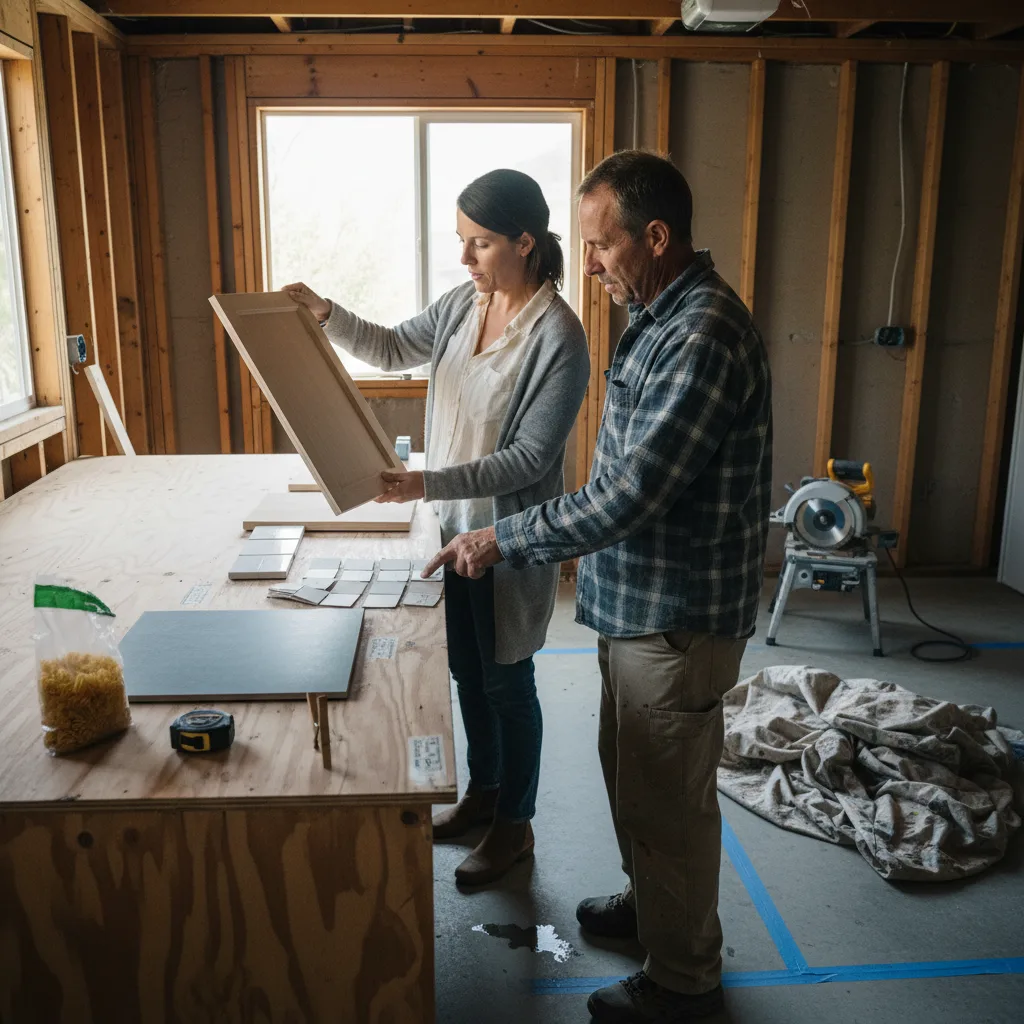
Designing a garage conversion in Riverside as if it were in a coastal city is a recipe for an uncomfortable, expensive-to-run ADU. The extreme summer heat in the Inland Empire demands more than standard insulation. Homeowners who skimp on cooling systems or radiant barriers end up with unbearable indoor temperatures and astronomical utility bills from Riverside Public Utilities. A late-stage HVAC upgrade can cost $7,000, while living with the mistake costs hundreds per year. Your design for neighborhoods from Canyon Crest to Woodcrest must include cool roof materials, a properly sized mini-split HVAC system, and low-emissivity windows from the very beginning.
Mistake #6: Misunderstanding the Permit Timeline
State laws like AB 68 (the 2019 ADU shot-clock law) promise a 60-day permit turnaround, but that's not the reality on the ground. The clock only starts once the Riverside Development Services Department (DSD) deems your application complete, and it pauses with every request for corrections. In our experience, the actual time from submission to approved permit in Riverside is closer to twelve to sixteen weeks. Assuming a 60-day timeline can cause scheduling chaos with your contractor and add thousands in carrying costs. Get a realistic timeline from your contractor based on their recent submissions and consult our [Riverside Garage Conversion Permit Playbook for 2026](/guides/riverside-garage-conversion-permit-playbook-2026) for a detailed breakdown.
Mistake #7: Ignoring the Age and Structure of Your Garage
Many garages in Riverside, especially in older areas like Arlington or La Sierra, were built before modern seismic codes. These pre-1990 structures often have inadequate foundations or framing that cannot legally support a conversion without significant reinforcement. Discovering you need new footings, shear walls, or roof ties after construction has begun is a budget-killer, easily adding $12,000 to $22,000 in structural change orders. The National Association of Home Builders recommends a ten to fifteen percent contingency on renovations in homes over thirty years old. An initial structural assessment is the best way to define and protect that contingency.
Why a Garage Conversion in Riverside Costs More in 2026
A full garage conversion in Riverside costs between $120,000 and $195,000 in 2026, though a simple finish-out of a structurally sound, newer garage can start lower, around $95,000. The high end of the range is for older garages requiring significant structural and utility work. This is driven by labor costs, which the California Department of Industrial Relations prevailing wage data for Riverside County shows are among the highest in the state for skilled trades like electricians and framers. Materials, particularly Title 24-compliant insulation and windows, have also seen price increases.
Three representative projects from 2026, scoped similarly, reconstructed from Golden Yards Magazine's Project of the Day network and used here in aggregate form:
- Canyon Crest ($185,000): A 400-square-foot conversion of a 1980s garage. Required a new floating slab, a full electrical panel upgrade, and significant seismic retrofitting to the existing framing.
- Woodcrest ($155,000): A 450-square-foot conversion of a newer, post-2000 garage. The structure was sound, but the project required 40 feet of trenching for a new sewer line connection, driving up the cost.
- Arlington ($130,000): A straightforward 400-square-foot conversion with minimal structural work. The homeowner opted for high-efficiency HVAC and insulation, adding to the initial cost but saving on long-term energy bills.
The Golden Yards Magazine Take
The fundamental mistake homeowners make is thinking of a garage conversion as a remodel. It is not. You are building a small house that must meet all the same structural, energy, and safety codes as a new home built from scratch. The project's success hinges on treating it with the same rigor. The budget overruns and delays in Riverside almost always stem from this single misunderstanding. People hire a remodeler when they need a new-construction specialist. They budget for drywall and paint when they need to budget for foundations, utility infrastructure, and structural engineering. The moment you reframe the project in your mind from a simple conversion to a compact new build, you start asking the right questions and allocating money to the right places, which is the only way to keep your project on track.
Sources & Methodology
See the Golden Yards Methodology for how sources are reviewed, ranges are normalized, and planning-data limits are handled.
Cost ranges in this guide draw on the following named industry sources, public agency datasets, and Golden Yards Magazine editorial research.
- Riverside Development Services Department, Permit Fee Schedule (2026)
- California Department of Industrial Relations, Riverside County Prevailing Wage Data (2026)
- California State License Board (CSLB), Contractor License Database (2026)
- California Energy Commission, Title 24 Part 6 Building Energy Efficiency Standards (2022)
- National Association of Home Builders (NAHB), Remodeling Market Index (Q1 2026)
Ready to start your garage conversion project?
Find My ProsFrequently Asked Questions
What's the most expensive mistake in a Riverside garage conversion?
The most expensive mistake is assuming the existing garage structure, particularly the concrete slab foundation, is adequate for a living space. Discovering mid-project that you need a new foundation and significant seismic retrofitting can add $25,000 to $40,000 in unforeseen costs, completely derailing your budget and timeline. This issue arises because garage slabs were not designed for habitable dwellings. They often lack a vapor barrier, proper reinforcement, and are not level enough for interior flooring. Similarly, the framing may not meet current building codes for shear strength or insulation depth. A pre-construction assessment by a structural engineer is the only way to identify these expensive problems before they become a crisis.
How do I know if my garage conversion contractor is padding the quote?
A padded quote often reveals itself through vagueness. Look for large, unexplained 'allowance' figures for items like fixtures or finishes, or lump-sum costs without a detailed breakdown of labor and materials. A trustworthy quote will be highly itemized, showing you exactly what you're paying for at each stage. Also, be wary of a quote that is significantly higher or lower than others without a clear justification. Ask pointed questions about what is specifically excluded from the contract. A professional garage conversion contractor in Riverside should be able to walk you through every line item and explain their pricing. If they can't, or if they rush you, it's a major red flag.
When should I walk away from a garage conversion quote?
You should walk away from a quote immediately if the contractor is not licensed with the California State License Board (CSLB) or cannot provide proof of liability and workers' compensation insurance. Also, reject any quote that comes with high-pressure sales tactics or a demand for a large upfront deposit (more than 10% or $1,000, whichever is less, is illegal in California). A vague scope of work is another critical reason to walk away. If the contract doesn't clearly list every task, material, and finish, it leaves you open to endless disputes and change orders. Trust your gut; if the contractor seems disorganized, unprofessional, or evasive, it's better to find someone else.
What's the fastest way to blow a garage conversion budget?
The fastest way to blow your budget is making changes after the plans are approved and construction has started. Scope creep, like deciding to vault a ceiling or move a bathroom wall after framing is complete, creates a cascade of expensive rework. It impacts not just one trade but several, from framing and electrical to plumbing and drywall. Each change order comes with a premium for the contractor's time and administrative overhead. To prevent this, you must lock in every single design decision, from outlet placement to paint color, before the first hammer swings. Meticulous upfront planning is the single best defense against budget overruns in any construction project.