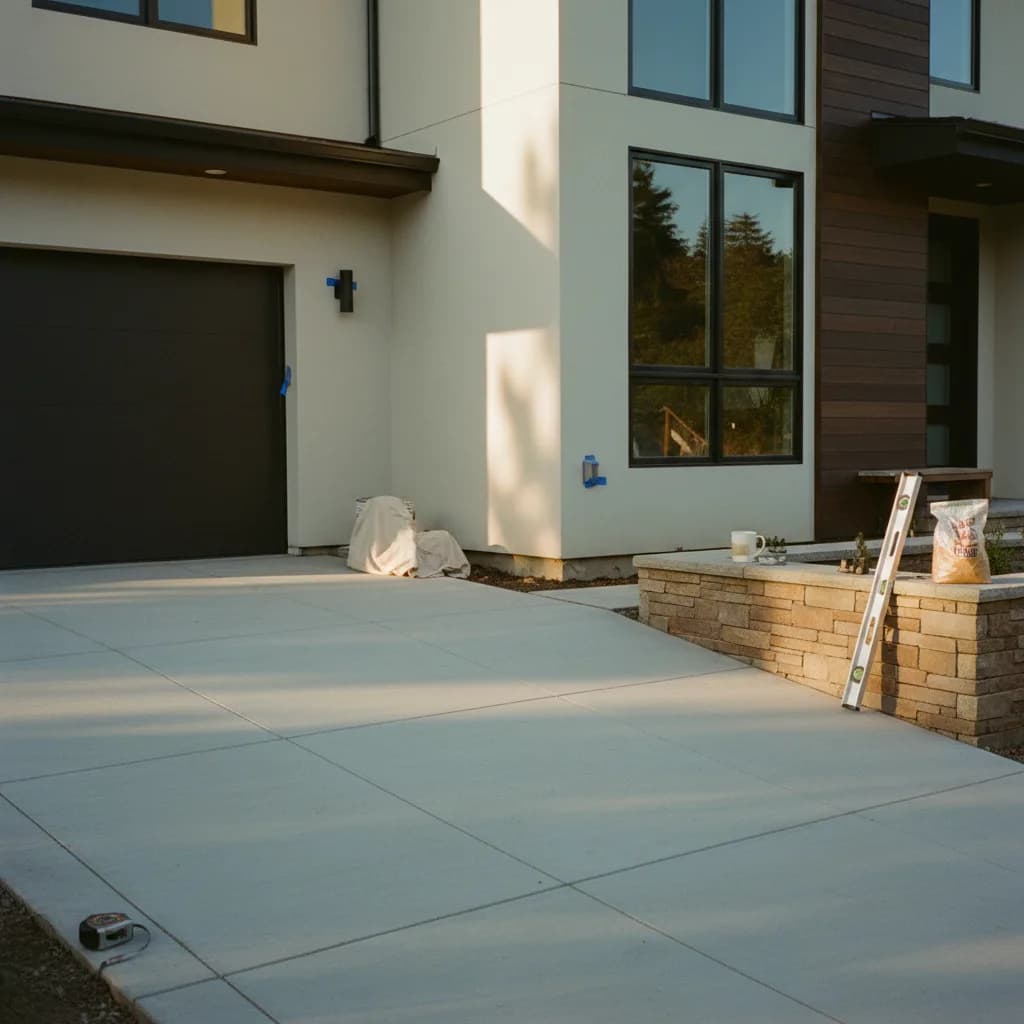
A full tear-out and replacement for a driveway in San Jose runs six to ten weeks, from the first tape measure to the final sweep. The timeline can start lower, say two to three weeks, for a simple asphalt overlay or a small paver repair. But for a full replacement in a neighborhood like Willow Glen, the single biggest delay isn't the city or the weather. It's the soil under your feet. San Jose’s expansive adobe clay dictates a timeline heavy on earthwork, long before the first paver is set. Getting the foundation right is the difference between a 25-year investment and a callback for cracked concrete in year three.
In a Nutshell
- Total Timeline: 6 to 10 weeks for a standard 800 sq. ft. driveway replacement in San Jose.
- The Four Phases: The project breaks down into Design and Permits; Site Prep and Foundation; Construction; and Finishes and Final Inspection.
- Biggest Delay Risk: Unforeseen subgrade conditions. San Jose's expansive clay soil often requires deeper excavation and an engineered base, adding a week or more to the schedule.
- Contingency Planning: Your budget needs a buffer. The National Association of Home Builders recommends a ten to fifteen percent contingency for unforeseen issues, a non-negotiable for any major hardscape project.
Phase 1: Design and Permits (weeks 1, 3)
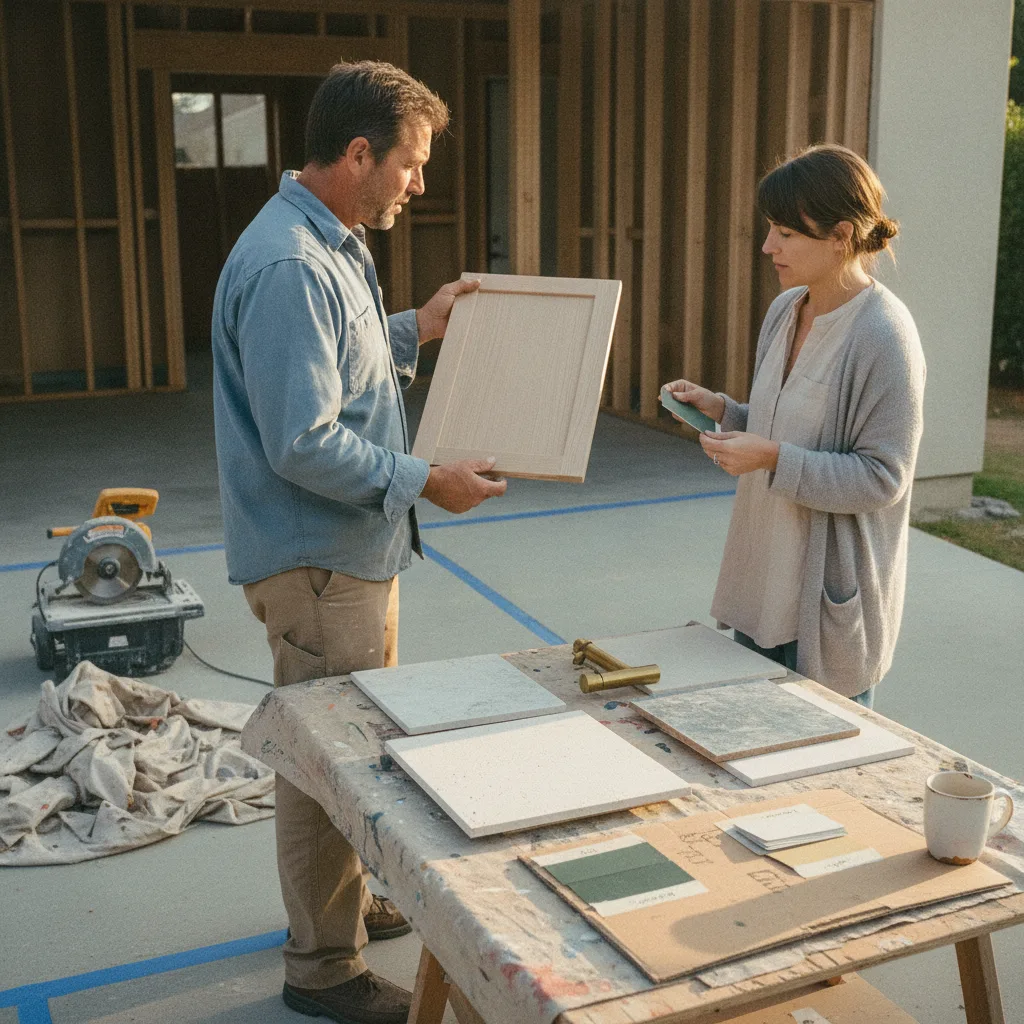
This is the planning stage, where decisions are locked in. Your contractor measures the site, you select materials (pavers, poured concrete, permeable options), and a drainage plan is drawn. For a typical 800-square-foot driveway, this involves creating plans showing setbacks, slope, and material specs for the San José Department of Planning, Building and Code Enforcement. A competent driveway contractor in San Jose will handle this filing, often using an expediter. Common holdups include incomplete plans that fail to account for stormwater runoff or impervious surface limits, triggering a correction cycle that adds a week or two. If your project impacts a significant landscape area, it may also need to comply with California's Model Water Efficient Landscape Ordinance (MWELO). This phase is about paperwork and precision. Get it right. Get it signed. Get ready for demolition.
Phase 2: Site Prep and Foundation (weeks 2, 5)
Here is where the real work begins and where schedules most often diverge from the proposal. Demolition of the old slab is first. Then, excavation. In San Jose, we don’t just scrape the surface. The expansive clay soil requires over-excavation, often 12 to 18 inches deep, far more than in areas with sandy loam. We then lay a non-woven geotextile separation layer to keep the clay from migrating into the base. The crew then builds the sub-base back up with Caltrans Class 2 aggregate, compacting it in three-inch lifts with a plate compactor to achieve 95 percent Modified Proctor density. Before any digging, a call to 811 is mandatory to locate PG&E and other utility lines. Hitting an unmarked gas line is a project-stopping event. This phase is slow, loud, and foundational. It’s also the most important part of the entire job.
Phase 3: Construction Scope (weeks 4, 7)
Ready to compare vetted project options?
Use Project Match privately when your scope is clear enough for contractor conversations.
Start Project MatchWith a bulletproof base, the visible surface goes down relatively quickly. For interlocking concrete pavers, this means laying a one-inch bedding course of ASTM C33 concrete sand, setting the pavers, and installing edge restraints. For a concrete driveway, the crew sets forms, places #4 rebar at 18 inches on center, and ensures proper elevation for drainage. A pre-pour inspection is required by the city inspector to verify rebar placement and formwork before any concrete truck is called. The pour itself takes a few hours, followed by finishing and cutting control joints to manage inevitable shrinkage cracking. The quality of a driveway contractor in San Jose is revealed here. Are the lines clean? Is the slope correct? Is the worksite organized? The labor rates for these skilled trades, reflected in the California Department of Industrial Relations prevailing wage data for Santa Clara County, contribute significantly to the overall driveway san jose cost.
Phase 4: Finishes and Final Inspection (weeks 6, 9)
The final stage is about details and curing. For a paver driveway, installers sweep polymeric sand into the joints, run a plate compactor over the surface to lock the pavers together, and then activate the sand with a light mist of water. A final sealing coat is often applied to protect against stains. For concrete, the main job is waiting. The slab must cure for at least seven days before it can handle vehicle traffic. During this time, the site is cleaned, landscaping is repaired, and any final punch-list items are addressed. The last step is the final inspection from the San José building inspector, who signs off on the permit card, officially closing out the project. Only then is the final payment due. Don't release the final check until that permit is signed. This protects you from incomplete work.
Three Representative Projects from 2026
Three representative California projects from 2026, scoped similarly, reconstructed from Golden Yards Magazine's invoiced project network and presented here in aggregate form:
- Willow Glen, San Jose: A 900-square-foot paver driveway with a new concrete ribbon curb and an integrated drainage system. The project involved extensive excavation due to highly expansive soil. Total Cost: $46,500. Total Timeline: 8 weeks.
- Almaden Valley, San Jose: A 1,200-square-foot stamped and colored concrete driveway. The scope included removing large tree roots that had destroyed the previous driveway and installing root barriers. Total Cost: $39,000. Total Timeline: 7 weeks.
- Evergreen, San Jose: A 750-square-foot permeable paver driveway designed to meet strict local stormwater management rules. This required a deeper, open-graded aggregate base and more complex installation. Total Cost: $54,000. Total Timeline: 10 weeks.
What Can Compress This Timeline
You have some control over the schedule. First, make all material decisions upfront and sign off on them. Changing from one paver style to another after the material is ordered can add weeks of delay. Second, ensure the site is clear and accessible. If contractors have to maneuver equipment around vehicles, playsets, or stored items, every step takes longer. Third, hire a design-build firm that manages the entire process from plans to final inspection. A single point of responsibility prevents the blame game between a separate designer and contractor if issues arise with the city's plan check. These three actions are your best use for a faster project. They require discipline. Plan the work. Work the plan. No changes.
What Blows It Up
Three things reliably derail a driveway project timeline. First is discovering highly unstable or poorly drained subgrade soil that requires a geotechnical engineer's report and a more solid, expensive foundation design. Second is scope creep. Adding a matching walkway or a small retaining wall halfway through the project sounds simple, but it requires a change order, more materials, and re-sequencing the crew’s work. Third, and most common in older San Jose homes, is discovering old, undocumented utilities or septic systems during excavation. Each of these can add weeks and thousands of dollars to the job. The National Association of Home Builders recommends a ten to fifteen percent contingency on renovations in homes over thirty years old. Heed this advice; it’s your only real buffer against the unknown.
What Should Be in Your Contractor's Schedule
A professional bid isn't just a price, it's a plan. Your contractor's schedule of values and timeline should include distinct line items for each of these steps. If it's just a single number for "New Driveway," ask for a breakdown. You need to see the plan to trust the builder.
- Permit Application and Plan Submission
- Site Mobilization and Demolition of Existing Surfaces
- Excavation and Haul-Off of Spoils
- Subgrade Compaction and Geotextile Installation
- Installation and Compaction of Aggregate Base Course
- Pre-Pour/Pre-Installation Inspection by City
- Formwork, Rebar, and Bedding Sand Installation
- Concrete Pour and Finish or Paver Installation
- Curing Period or Joint Sanding and Compaction
- Site Cleanup, Sealing, and Final Inspection
You can cross-reference these costs against our driveway cost calculator to ensure the bid is complete and reflects the full scope of work. A detailed plan prevents surprises.
Golden Yards Take
The brochure from a driveway contractor in San Jose might show a project completed in a week. That's the marketing timeline. The realistic timeline for a driveway built to last in the Bay Area is governed by geology and bureaucracy. Most of the work, and a significant part of the driveway san jose cost, is spent on the foundation that nobody will ever see. The subgrade excavation, the geotextile fabric, the lift-compacted aggregate base, the properly placed rebar, this is the grammar of a successful project. A contractor who rushes the base to get to the pretty part on top is setting you up for failure. The cracks and settlement that show up in year three were born from shortcuts taken in week three. Your job is to hire the contractor who respects the process, from the permit desk to the final compaction.
Frequently Asked Questions
How long does a driveway installation in San Jose really take?
A complete driveway replacement in San Jose typically takes six to ten weeks from signing the contract to final inspection. This schedule includes design, permitting, demolition, and all phases of construction. Simple resurfacing or sealcoating projects can be much faster, often completed in under two weeks if no permits or major earthwork are required.
The timeline is heavily influenced by the condition of your soil. San Jose's expansive clay often necessitates a more involved site preparation phase, which can take two to three weeks alone. This includes deep excavation and building a multi-layered aggregate base. Permitting with the San José Department of Planning, Building and Code Enforcement adds another one to three weeks at the start. The actual installation of pavers or concrete is one of the quicker phases, but it cannot begin until the foundation is perfect.
Can I use my driveway during construction?
No, you will not have access to your driveway or garage for vehicle use for the majority of the project. You should plan for alternative street parking for the entire six to ten-week duration. Access is restricted from the moment demolition begins until the new surface has fully cured, which can be up to a week after a concrete pour.
Heavy machinery will be operating in the area, creating a safety hazard. The subgrade and base layers are carefully compacted and graded, and foot or vehicle traffic can ruin the prep work. For concrete, the slab needs a minimum of seven days to cure before it can support the weight of a car. For pavers, you must wait until the jointing sand has been swept, compacted, and set. Attempting to use the area prematurely is the fastest way to damage your investment.
What's the longest single phase of a San Jose driveway project?
The Site Preparation and Foundation phase is almost always the longest and most critical part of a San Jose driveway installation, often taking two to three full weeks. This is a direct result of the region's expansive adobe clay soils, which require significant work to create a stable base that prevents future cracking, heaving, and settlement.
This phase involves more than just scraping the dirt. It includes deep excavation (often 12+ inches), hauling away tons of soil, laying a geotextile fabric to separate the clay from the new base, and then building up that base with specific aggregate stone, compacted in multiple thin layers. Each step is deliberate and essential for longevity. In contrast, laying the final pavers or pouring the concrete might only take a few days once this solid foundation is complete.
Can I fast-track the permits for a driveway in San Jose?
While you cannot pay a fee to skip the queue at the permit office, you can significantly accelerate the approval process by ensuring your application is perfect on the first submission. The fastest path is hiring an experienced local driveway contractor or designer who understands the specific requirements of the San José Department of Planning, Building and Code Enforcement.
Delays are almost always caused by incomplete or incorrect information. Common errors include improper drainage plans, missing property line setbacks, inaccurate impervious surface calculations, or failing to address grading requirements. A well-prepared application from a professional who anticipates plan checkers' questions can often move through the system in one to two weeks. A sloppy application can get stuck in a cycle of corrections and resubmissions that lasts for over a month.
Sources & Methodology
Golden Yards reviews public permit and code signals, material pricing, climate and site constraints, contractor quote patterns, comparable projects, the Golden Yards Cost Index, and the Golden Yards Methodology. Cost references are planning ranges, not fixed bids.
- San José Department of Planning, Building and Code Enforcement, Driveway Standards, 2024
- Interlocking Concrete Pavement Institute (ICPI), Tech Spec 2: Construction of Interlocking Concrete Pavements, 2023
- American Concrete Institute (ACI), ACI 332-R-06 Guide to Residential Concrete, 2022 Edition
- California Department of Industrial Relations, Santa Clara County Prevailing Wage Data, 2026
- ASTM International, C33/C33M Standard Specification for Concrete Aggregates, 2023
- National Association of Home Builders (NAHB), Construction Cost Survey, 2025
- Caltrans Standard Specifications, Section 26: Aggregate Bases, 2022
Ready to start your driveway project?
Find My ProsFrequently Asked Questions
How long does a driveway installation in San Jose really take?
A complete driveway replacement in San Jose typically takes six to ten weeks from signing the contract to final inspection. This schedule includes design, permitting, demolition, and all phases of construction. Simple resurfacing or sealcoating projects can be much faster, often completed in under two weeks if no permits or major earthwork are required. The timeline is heavily influenced by the condition of your soil. San Jose's expansive clay often necessitates a more involved site preparation phase, which can take two to three weeks alone. This includes deep excavation and building a multi-layered aggregate base. Permitting with the San José Department of Planning, Building and Code Enforcement adds another one to three weeks at the start. The actual installation of pavers or concrete is one of the quicker phases, but it cannot begin until the foundation is perfect.
Can I use my driveway during construction?
No, you will not have access to your driveway or garage for vehicle use for the majority of the project. You should plan for alternative street parking for the entire six to ten-week duration. Access is restricted from the moment demolition begins until the new surface has fully cured, which can be up to a week after a concrete pour. Heavy machinery will be operating in the area, creating a safety hazard. The subgrade and base layers are carefully compacted and graded, and foot or vehicle traffic can ruin the prep work. For concrete, the slab needs a minimum of seven days to cure before it can support the weight of a car. For pavers, you must wait until the jointing sand has been swept, compacted, and set. Attempting to use the area prematurely is the fastest way to damage your investment.
What's the longest single phase of a San Jose driveway project?
The Site Preparation and Foundation phase is almost always the longest and most critical part of a San Jose driveway installation, often taking two to three full weeks. This is a direct result of the region's expansive adobe clay soils, which require significant work to create a stable base that prevents future cracking, heaving, and settlement. This phase involves more than just scraping the dirt. It includes deep excavation (often 12+ inches), hauling away tons of soil, laying a geotextile fabric to separate the clay from the new base, and then building up that base with specific aggregate stone, compacted in multiple thin layers. Each step is deliberate and essential for longevity. In contrast, laying the final pavers or pouring the concrete might only take a few days once this solid foundation is complete.
Can I fast-track the permits for a driveway in San Jose?
While you cannot pay a fee to skip the queue at the permit office, you can significantly accelerate the approval process by ensuring your application is perfect on the first submission. The fastest path is hiring an experienced local driveway contractor or designer who understands the specific requirements of the San José Department of Planning, Building and Code Enforcement. Delays are almost always caused by incomplete or incorrect information. Common errors include improper drainage plans, missing property line setbacks, inaccurate impervious surface calculations, or failing to address grading requirements. A well-prepared application from a professional who anticipates plan checkers' questions can often move through the system in one to two weeks. A sloppy application can get stuck in a cycle of corrections and resubmissions that lasts for over a month.