Building an Accessory Dwelling Unit in Newport Beach is a tale of two markets. On one hand, state laws encourage development; on the other, coastal regulations, high-end neighborhood expectations, and demanding site conditions create a complex building environment. The final cost for an ADU in Newport Beach for 2026 can range from $275,000 to well over $550,000. It’s important to note that the lower end of that range can start lower, but typically applies to simpler garage conversions or interior-grade refreshes, not the detached, custom guest houses most homeowners here envision.
So, what separates a $300,000 mid-tier build from a $500,000-plus premium project? The difference isn't just square footage. It's in the architectural integrity, the resilience of materials against coastal salt spray, and the level of integration with the primary residence. We'll break down the real-world choices and costs for both approaches, using data from our network of invoiced ADU projects.
In a Nutshell: Mid-Tier vs. Premium ADU in Newport Beach
Here’s a high-level look at how these two project tiers stack up across the key decision points for a new-construction, 750-square-foot detached ADU.
| Dimension | Mid-Tier ADU | Premium ADU |
|---|---|---|
| All-In Cost (2026) | $275,000 - $380,000 | $450,000 - $600,000+ |
| Best For | Rental income, family housing, functional guest space. | Smooth architectural integration, high-end guest quarters, maximizing property value. |
| Key Materials | Hardie board siding, asphalt shingles, Milgard vinyl windows. | Smooth stucco, standing seam metal roof, LaCantina or Fleetwood doors, Ipe wood accents. |
| Permit Path | Standard plan review with the city; may require minor revisions. | Custom architectural plans, structural engineering, potential California Coastal Commission review. |
| Timeline | 10 to 14 months (design, permit, build) | 16 to 24 months (design, permit, build) |
The Real Cost of a Newport Beach ADU: 2026 Breakdown
Why is the ADU Newport Beach cost higher than in other parts of Orange County? Three factors drive the price: labor, materials, and process. First, skilled labor is at a premium. The California Department of Industrial Relations prevailing wage data for Orange County shows that specialized trades demand higher rates here than in Riverside or San Bernardino counties. A top-tier framing crew or stucco contractor who works in neighborhoods like Corona del Mar or Lido Isle charges for their expertise in high-end finishes.
Second, material choices are dictated by the coastal environment. The salt-laden, humid air requires marine-grade stainless steel hardware, corrosion-resistant window frames like aluminum or high-end fiberglass, and exterior finishes that can withstand constant moisture. These are not optional upgrades; they are necessary for durability.
Finally, the process itself adds cost. While state law AB 68 (the 2019 ADU shot-clock law) mandates a 60-day review period, this clock can pause for revisions, and it doesn't apply to the separate review process required by the California Coastal Commission for properties in the coastal zone. This dual-track approval adds time and professional fees from architects and expediters who specialize in navigating these two distinct regulatory bodies.
Comparison 1: Foundation and Structure
The unseen elements of your ADU are critical for longevity and safety, especially on the varied terrain of Newport Beach, from the flatlands of the Balboa Peninsula to the hills of Newport Coast.
A mid-tier build typically uses a standard slab-on-grade foundation with conventional wood framing. This is perfectly adequate for a level lot and meets all seismic codes. The structural engineering is straightforward, focused on code compliance without over-engineering.
A premium ADU often requires a more complex foundation, such as a raised foundation with a crawl space to accommodate a sloped lot or to match the floor height of an older main house. For post-1990 raised foundation cripple walls, seismic retrofitting might be more solid than code minimums. The structure might use engineered lumber like LVL beams to create wide-open interior spaces or support heavy bifold door systems, adding significant material and engineering costs.
Comparison 2: Exterior Finishes and Windows
Ready to compare vetted project options?
Use Project Match privately when your scope is clear enough for contractor conversations.
Start Project MatchThe exterior is where the budget divergence becomes most visible. A mid-tier ADU contractor in Newport Beach will likely recommend durable, cost-effective materials like James Hardie fiber cement siding and a 30-year architectural shingle roof. For windows, vinyl options from manufacturers like Milgard or Jeld-Wen offer good performance and meet Title 24 Part 6 (California Energy Code) requirements without breaking the bank.
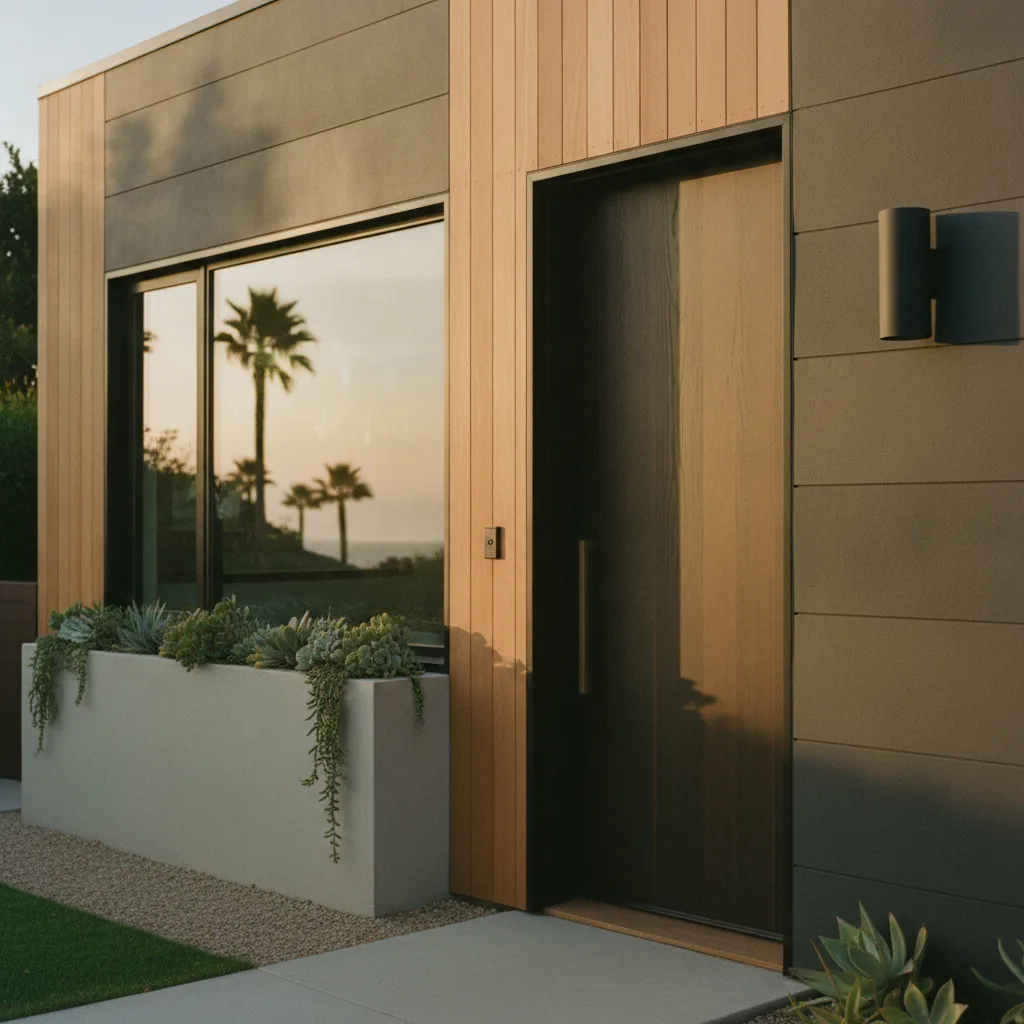
A premium build aims for architectural harmony with a multi-million dollar primary residence. This means three-coat smooth stucco finishes, standing seam metal roofing, and extensive use of natural materials like Ipe or teak for rainscreens and accents. The window and door package is a major expense, often featuring aluminum-clad doors from Fleetwood or LaCantina that create entire walls of glass. These systems require precise structural engineering and installation, adding tens of thousands to the final cost but delivering an iconic indoor-outdoor California living experience.
Comparison 3: Interior Finishes and Fixtures
Inside, the story is one of good-versus-great. A mid-tier ADU is nicely appointed, with luxury vinyl plank (LVP) flooring, semi-custom cabinetry, quartz countertops from brands like Caesarstone, and quality fixtures from Kohler or Moen. The focus is on durable, attractive materials that will appeal to renters or family members without the expense of bespoke items.
A premium interior is defined by custom craftsmanship. This includes wide-plank European oak flooring, custom-milled rift-sawn white oak cabinetry, and natural stone countertops like quartzite or marble. The fixture budget expands to include high-end brands like Waterworks, Kallista, or Rohl. Details like solid core doors, designer lighting, and integrated smart home features (Lutron lighting, automated shades) contribute to a luxury feel and a higher price tag.
Comparison 4: Systems (HVAC, Electrical, Plumbing)
The mechanical, electrical, and plumbing (MEP) systems are governed by strict codes, but there's still room for significant budget variation. A mid-tier project will use a high-efficiency ductless mini-split system for heating and cooling, a standard tank water heater, and an electrical panel sufficient for the unit's needs. It will meet the energy efficiency standards of Title 24 Part 6 (California Energy Code) efficiently.
A premium ADU often invests in superior comfort and sustainability. This could mean a fully ducted, ultra-high-efficiency HVAC system with an Energy Recovery Ventilator (ERV) for fresh air, a tankless Navien water heater for endless hot water, and a larger electrical panel pre-wired for a future EV charger. Many premium builds also incorporate rooftop solar to achieve zero-net-energy, a significant upfront cost that provides long-term benefits and exceeds state mandates.
Comparison 5: Permitting and Design Process
The path to a building permit is a major factor in your project's timeline and budget. For a mid-tier ADU, homeowners often work with a design-build firm that uses a portfolio of pre-designed plans. These can be modified slightly, streamlining the design phase. The firm handles the permit submission to the Newport Beach Community Development Department, a process that is relatively predictable for standard designs on simple lots. For a complete overview of the steps, see [our complete permit guide](/guides/newport-beach-adu-permit-playbook-2026).
A premium project starts with a custom design from an architect. This process is more involved, with detailed site analysis, multiple design revisions, and coordination with structural engineers and landscape architects. If the property is in the coastal zone, the plans must also undergo a separate, often lengthy, review by the California Coastal Commission. This requires specialized expertise and can add months and thousands in consulting fees to the project timeline.
Comparison 6: Timeline and Project Management
For a mid-tier project, once permits are issued, a competent general contractor can often complete construction in five to seven months. The project is typically managed directly by the contractor, with regular check-ins with the homeowner. The timeline is fairly standard: 10 weeks if nothing surprises you, 14 to 16 if the soil compaction comes back failing or there are supply chain delays.
A premium ADU build is a more complex undertaking. Construction can take eight to twelve months due to the higher level of detail, custom fabrications, and specialty trade coordination. These projects are often managed by the architect or a dedicated project manager to ensure design integrity. The National Association of Home Builders recommends a ten to fifteen percent contingency on renovations in homes over thirty years old, a rule that applies equally to complex new builds where unforeseen site conditions can easily arise.
Three Representative Newport Beach ADU Projects from 2026
Three representative projects from 2026, scoped similarly, reconstructed from Golden Yards Magazine's Project of the Day network and used here in aggregate form:
- Balboa Island Garage Conversion ($265,000): A 450 sq. ft. studio ADU converted from an existing two-car garage. The project kept the original slab and footprint, focusing on a high-quality interior finish for a short-term rental. The main challenges were structural upgrades to the old garage and fitting all necessary utilities within the tight lot lines.
- Corona del Mar Detached ADU ($390,000): A 700 sq. ft. one-bedroom mid-tier unit built in the backyard of a 1960s home. The build used Hardie siding, a composition shingle roof, and a high-quality but standard interior package. The permitting process was straightforward as it was outside the immediate coastal review zone.
- Newport Coast Custom Guest House ($580,000): An 850 sq. ft. one-bedroom premium ADU designed by an architect to match a custom Italianate main home. The project featured a smooth stucco finish, a tile roof, Fleetwood sliding doors opening to a private patio, and a full luxury interior with custom millwork and stone countertops. Coastal Commission review added five months to the permit timeline.
Verdict: Which ADU Build is Right for Your Newport Beach Home?
Choosing between a mid-tier and premium ADU in Newport Beach is less about good vs. bad and more about purpose and context.
The Mid-Tier ADU is the pragmatic choice for homeowners focused on generating rental income or providing comfortable, independent housing for family. It delivers a high-quality, durable, and attractive living space that meets all modern standards without the significant expense of custom architectural features. It’s a smart financial investment that gets you 90% of the function for 60% of the premium cost.
The Premium ADU is for homeowners who view the unit as an extension of their primary residence. In neighborhoods like Newport Coast or Lido Isle, where the main home is a significant architectural statement, a basic ADU can feel out of place. This path is for creating a true guest house, a private office retreat, or a space that enhances the overall aesthetic and market value of a luxury property. The introduction of AB 1033 (2024 condo-style ADU rule) also makes a premium unit a potentially severable, high-value asset that can be sold separately, a compelling option in this market.
Frequently Asked Questions
What is the biggest hidden cost for an ADU in Newport Beach?
The most significant potential hidden cost for a Newport Beach ADU is dealing with the California Coastal Commission. If your property falls within the coastal zone, you may face additional design constraints, specialized biological or geological reports, and a much longer review period that adds professional fees and holding costs.
Beyond the Coastal Commission, other common surprises include utility upgrades and soil conditions. Many older homes in areas like the Balboa Peninsula have undersized electrical panels or sewer lines that require expensive trenching and replacement to service a new unit. Poor soil stability can also necessitate costly engineered foundations, a risk in both hillside and sandy coastal areas.
How long does it really take to get ADU permits in Newport Beach?
For a standard ADU outside the coastal zone, you can expect the permit process to take four to six months. While AB 68 mandates a 60-day review, this clock stops anytime the city requests revisions. For custom or complex projects, especially those requiring Coastal Commission approval, the total permitting timeline can easily stretch from nine to fifteen months.
The key is to have a complete and error-free submission package. Working with an architect or designer who has extensive experience specifically with the Newport Beach Community Development Department and the Coastal Commission is the single best way to minimize delays. They understand the local requirements and can anticipate revision requests before they happen.
Can I build an ADU on Balboa Island?
Yes, you can build an ADU on Balboa Island, but it comes with significant restrictions. The small lot sizes, parking requirements, and coastal zoning create a challenging environment. Most ADUs on the island are conversions of existing garages or small, detached studios designed to fit within very tight setbacks.
Height is also a major constraint, and any design will need to be carefully considered to preserve neighbor privacy and light. Because of these complexities, it's essential to work with a design professional who has successfully permitted and built ADUs specifically on Balboa Island. They will be your best resource for what is realistically achievable.
Does a premium ADU add more value to my property?
A premium ADU can add significant value, but the return on investment depends on matching the quality to the main house and neighborhood. In a luxury market like Newport Beach, a well-designed, architecturally integrated ADU is often seen as a required amenity, much like a pool or a high-end kitchen. It can make your property more attractive to a wider range of buyers.
However, over-improving can lead to diminishing returns. The key is balance. The finish level of the ADU should be comparable to, but not necessarily exceed, that of the main residence. The greatest value comes from creating a cohesive property where the ADU feels like a natural and intentional extension of the home.
What is AB 1033 and how does it affect Newport Beach ADUs?
AB 1033 is a state law, effective in 2024, that allows homeowners to sell their ADUs separately from the primary residence, similar to a condominium. This could be a game-changer in high-value markets like Newport Beach, creating a new, more affordable tier of homeownership in the city.
For a homeowner, this means an ADU project could potentially be financed and sold as a separate asset, recouping construction costs and potentially turning a profit. The process involves creating a condo agreement and getting approval from the city and utility companies. While still a new and complex process, it presents a powerful new financial strategy for property owners considering a premium ADU build.
Sources & Methodology
See the Golden Yards Methodology for how sources are reviewed, ranges are normalized, and planning-data limits are handled.
Cost ranges in this guide draw on the following named industry sources, public agency datasets, and Golden Yards Magazine editorial research.
- Newport Beach Community Development Dept. Fee Schedule (2026)
- California Coastal Commission, Local Coastal Program Records (2025)
- California Dept. of Industrial Relations, Orange County Prevailing Wage Data (2026)
- Golden Yards Magazine, Invoiced ADU Project Data (2025-2026)
- National Association of Home Builders (NAHB), Construction Cost Survey (2025)
- California Title 24, Part 6 Building Energy Efficiency Standards (2025 Update)
Golden Yards Magazine Take
The conversation about building an ADU in Newport Beach often gets stuck on the headline-grabbing costs. But the most critical factor homeowners miss is 'contextual quality.' In a city where the median home price is in the millions, a basic, off-the-shelf ADU can feel like a compromise that detracts from the main property's value. The mid-tier approach we've outlined isn't 'cheap', it's a high-quality build focused on durable, attractive function. The premium path isn't an indulgence; it's an investment in architectural continuity. The real decision isn't about saving $100,000. It's about deciding whether the ADU is a standalone utility or an integrated part of a valuable, cohesive estate. In Newport Beach, the latter choice often provides the better long-term return.
Ready to start your ADU project?
Find My ProsFrequently Asked Questions
What is the biggest hidden cost for an ADU in Newport Beach?
The biggest hidden cost for an ADU in Newport Beach is often the California Coastal Commission. If your property is in the coastal zone, you may face design constraints, specialized reports, and a long review period that increases professional fees. Other common surprises include utility upgrades and soil conditions requiring costly engineered foundations.
Properties within the coastal zone can require specialized biological or geological reports. The extended review period from the California Coastal Commission adds significantly to professional fees and holding costs. Beyond coastal regulations, other issues arise. Many older homes, such as those on the Balboa Peninsula, have undersized electrical panels or sewer lines that need expensive trenching and replacement to service a new ADU. Additionally, poor soil stability, a risk in both hillside and sandy coastal areas, can demand costly engineered foundations.
How long does it really take to get ADU permits in Newport Beach?
Standard ADU permits in Newport Beach take four to six months for projects outside the coastal zone. For custom ADUs or those requiring Coastal Commission approval, the timeline can be nine to fifteen months. Although AB 68 mandates a 60-day review, this clock stops for any city-requested revisions.
The primary reason timelines extend beyond the 60-day review period required by AB 68 is that the review clock pauses anytime the city requests revisions. This is why a standard project can take four to six months. For more complex projects, especially those needing Coastal Commission approval, the total permitting time can easily reach nine to fifteen months. The best way to minimize delays is to submit a complete, error-free package. An architect experienced with the Newport Beach Community Development Department and the Coastal Commission can anticipate local requirements and prevent common revision requests.
Can I build an ADU on Balboa Island?
Yes, you can build an ADU on Balboa Island, but significant restrictions apply due to small lot sizes, parking requirements, and coastal zoning. Most ADUs are garage conversions or small detached studios built within tight setbacks. It is essential to work with a design professional experienced with projects on the island.
The environment on Balboa Island creates specific complexities for ADU construction. Because of the small lots and coastal zoning rules, most successful projects are conversions of existing garages or compact, detached studios. These units must be designed to fit within very tight setbacks. Height is also a major constraint, and any plan must carefully consider its effect on neighbor privacy and light. Given these challenges, it is critical to hire a design professional who has successfully permitted and built ADUs specifically on Balboa Island. They are the best resource for determining what is realistically achievable.
Does a premium ADU add more value to my property?
Yes, a premium ADU can add significant value, but your return on investment depends on matching its quality to the main house and neighborhood. In luxury markets like Newport Beach, a well-designed ADU is often a required amenity. The key is balance, creating a cohesive property where the ADU feels like a natural extension.
In an upscale market such as Newport Beach, an architecturally integrated ADU is often seen as a necessary feature, much like a pool or a high-end kitchen, making your property attractive to more buyers. Be aware that over-improving can lead to diminishing returns. The finish level of the accessory dwelling unit should be comparable to, but not necessarily exceed, that of the main residence. The greatest value comes from creating a unified property where the ADU seems like an intentional part of the home.
What is AB 1033 and how does it affect Newport Beach ADUs?
AB 1033 is a state law, effective in 2024, that allows homeowners to sell an ADU separately from the primary residence, similar to a condominium. In high-value markets like Newport Beach, this can create a more affordable homeownership option and allows property owners to sell their ADU as a separate asset.
For a homeowner in Newport Beach, this means an ADU project could be financed and sold as its own property. This strategy allows for recouping construction costs and potentially turning a profit, introducing a new tier of housing into the city's market.
The process, while presenting a powerful financial strategy, is new and complex. It requires creating a formal condo agreement for the property and securing approvals from both the city and the relevant utility companies before the ADU can be sold independently of the primary residence.