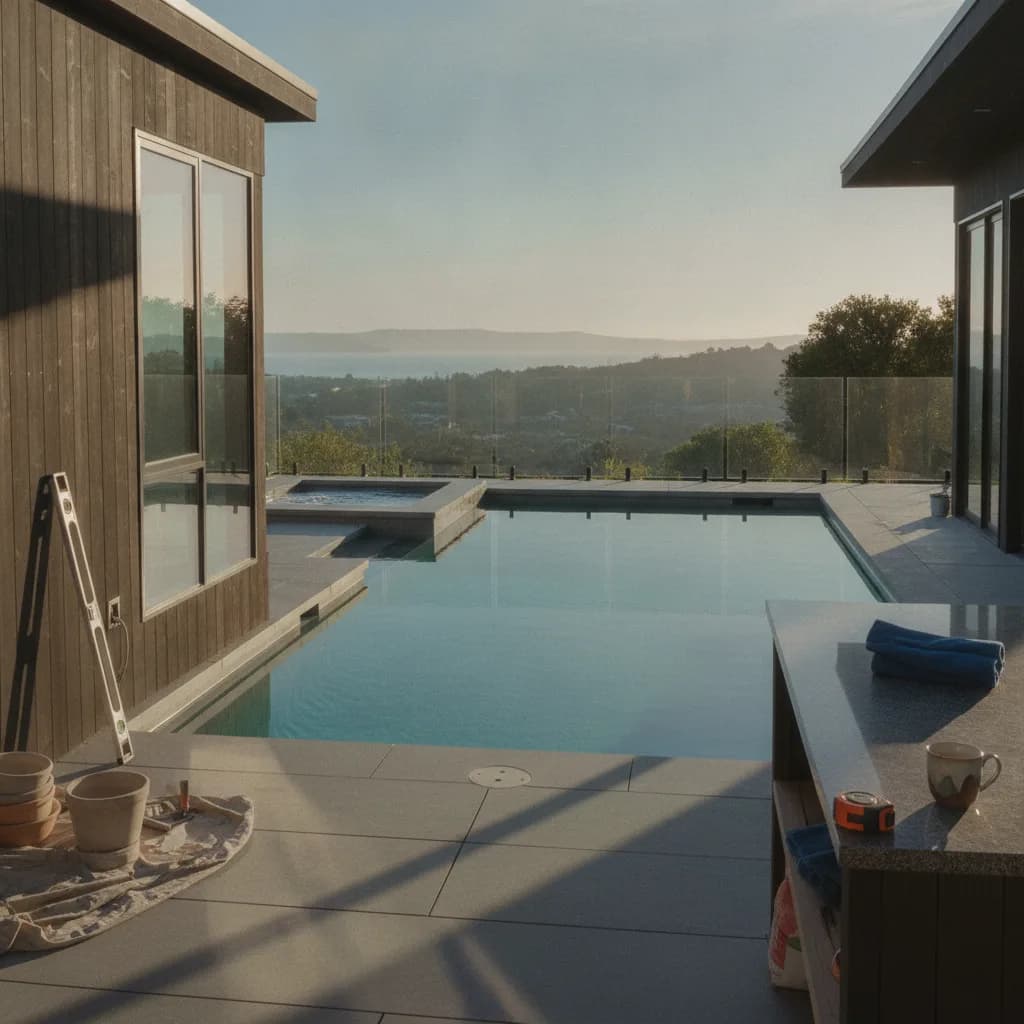
The backyard is no longer an afterthought; it's the new living room. In Oakland, this shift is defined by the saltwater pool, with over eighty-five percent of new installations in 2026 opting for saline systems. This isn't just a move away from the harsh chemical smell of traditional chlorine. It's about creating a fully integrated, automated, and comfortable outdoor environment that extends the home's living space right to the property line.
In a Nutshell
- The Big Idea: The Connected Backyard. Saltwater pools are becoming the centerpiece of a larger, smarter, and more sustainable outdoor ecosystem, managed with the same digital convenience as the rest of the home.
- The Trends: Dark-plaster finishes are the new standard for aesthetics and passive heating. Full-system automation is now baseline, not an upgrade. And MWELO-compliant hydrozones are shaping the landscapes around our pools.
- What's Out: High-maintenance chlorine systems, single-speed pumps, and water-thirsty lawns surrounding the pool deck.
- What's Next: Integration with whole-home energy management systems to optimize costs against PG&E's time-of-use rates.
Trend 1: The Midnight Pool: Dark Plaster Finishes Go Mainstream
Homeowners are choosing dark plaster finishes like PebbleTec's Black Onyx or Wet Edge's Prism Matrix in shades of deep blue and charcoal grey. This move creates a dramatic, lagoon-like aesthetic that makes the water look like a natural body of water. More practically, darker finishes absorb more solar heat, which can reduce gas heating costs by an estimated five to ten percent during swim season. Data from Adams Pool Solutions, a major East Bay builder, shows a forty percent year-over-year increase in dark plaster selections for new builds. This trend is especially popular in the Oakland Hills and Rockridge, where pools are designed to complement sweeping views and modern architecture. The aesthetic is likely here to stay as energy costs continue to rise.
Trend 2: Automation Is No Longer an Upgrade, It's Standard
Full-system automation is now a baseline expectation for any saltwater pool in Oakland. A standard equipment pad in 2026 includes a system like a Pentair IntelliCenter or Hayward OmniHub, controlling the pump, heater, salt cell, and lighting from a single smartphone app. The cost difference between a basic timer system and a full automation package has shrunk to under $1,500, making it an easy choice for homeowners. We're seeing this become standard issue across Oakland, from new builds in Montclair to major renovations in the Dimond District. The next evolution is already happening: integration with whole-home energy management systems that can optimize pump run times against PG&E's demanding time-of-use rates, saving homeowners hundreds of dollars a year.
Trend 3: The Baja Shelf as a Social Hub
Ready to compare vetted project options?
Use Project Match privately when your scope is clear enough for contractor conversations.
Start Project MatchExpansive Baja shelves, also known as tanning ledges, are becoming the central feature of pool design. These shallow areas, typically twelve to eighteen inches deep, are being designed large enough for multiple in-water lounge chairs, like the popular models from Ledge Lounger. A recent project we tracked in Piedmont saw the Baja shelf account for twenty percent of the total pool surface area, transforming it from a simple entry step into the primary social space. Families in neighborhoods like Glenview and Crocker Highlands are driving this trend, creating a safe, shallow area for young children and a comfortable social space for adults. Expect to see more integrated features like bubblers, umbrella sleeves, and even built-in tables on these shelves in coming years.
Trend 4: Low-Salinity Systems Offer a Softer Feel
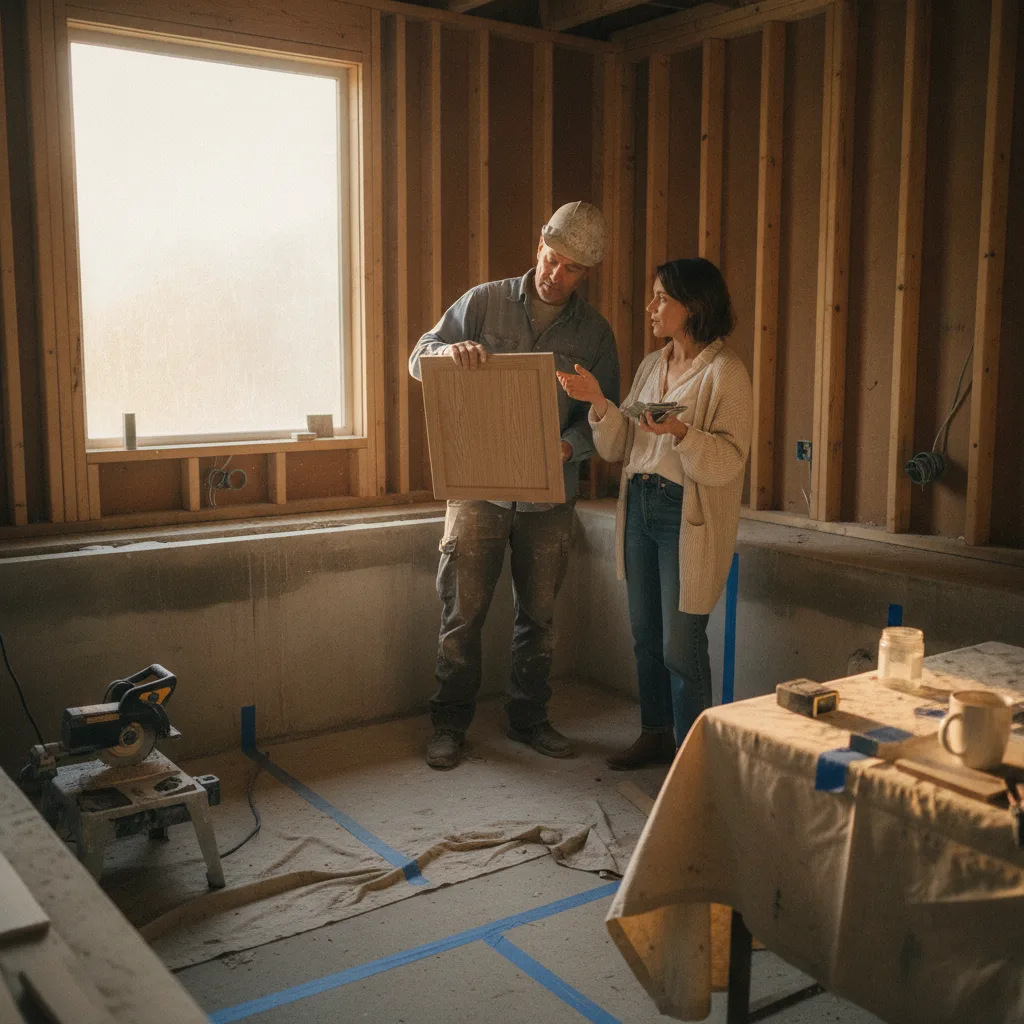
The latest generation of saltwater systems is all about comfort. Homeowners are opting for low-salinity salt chlorinators that offer a gentler, less noticeable swimming experience. Brands like Pentair's IntelliChlor and Hayward's AquaRite LS now operate at 2,500-3,000 parts per million (ppm) of salinity, which is much closer to the salinity of human tears than the older 3,500-4,500 ppm systems. The perceived "soft water" feel is a major selling point. This upgrade is also more affordable than ever; the saltwater conversion premium has dropped from $2,400 to $1,200 since 2024. This is a common upgrade in Temescal renovations where homeowners are replacing older, harsher salt systems, aligning with a broader wellness focus on comfort and reduced chemical sensitivity.
Trend 5: Energy Efficiency Drives Pump and Heater Choices
While mandated by California's Title 20, the choice of highly efficient equipment is also a smart financial one. Every new saltwater pool contractor in Oakland installs a variable-speed pump, like a Pentair Intelliflo VSF, which can save up to ninety percent on energy costs over an old single-speed model. When paired with a high-efficiency gas heater, like a Raypak 406A, the operational savings can offset the higher upfront cost in just three to five years under PG&E's current rate structure. Budget-conscious homeowners throughout Oakland understand that the equipment pad is where you invest upfront to save significantly on long-term ownership costs. The next wave will be the adoption of electric pool heat pumps, which are gaining traction in the Bay Area for their even greater efficiency.
Trend 6: MWELO-Compliant Landscaping Is the Default
Pool projects are now designed from the start with the Model Water Efficient Landscape Ordinance (MWELO) in mind. This is no longer an optional green upgrade; it's a permitting requirement for any project with over 500 square feet of new or renovated landscape area. Landscape architects now submit a hydrozone breakdown by sun exposure and specify a drought-tolerant plant palette as part of the initial plan set. While East Bay Municipal Utility District (EBMUD) offers turf replacement rebates, MWELO compliance is the bigger driver. A typical deck-perimeter planting strip costs $3,500 to $6,200 but ensures the project moves smoothly through city planning. This has led to the embrace of beautiful, water-wise gardens featuring native grasses and succulents that integrate seamlessly with the poolscape.
Trend 7: The Disappearing Gas Line Surprise
Oakland homeowners are finally budgeting for the inevitable gas line upgrade required for a modern pool heater. A standard 400k BTU heater, necessary to heat a pool in the Bay Area's climate, requires a larger gas line than most older homes possess. A reputable saltwater pool contractor in Oakland will now flag this on the initial bid, but it's a common omission from less experienced builders. The gas line upsize from a half-inch to a three-quarter or one-inch line is rarely in the first quote. Homeowners should budget another $1,800 to $3,500 if the gas meter doesn't support the new BTU load. This is a universal issue in Oakland's older housing stock, especially in areas like Rockridge and Piedmont with pre-1960s homes, and a common source of mid-project change orders.
Trend 8: Compact Spools for Smaller Oakland Lots
As lot sizes shrink, smaller, multi-functional "spools" (spa-pool hybrids) are gaining popularity. A typical spool is 10'x15' or 12'x20', combining the relaxation of a spa with the refreshment of a pool. They feature bench seating, therapy jets, and a powerful heater for comfortable year-round use. The smaller footprint also means a smaller price tag; the gunite shell for a spool can start lower, around $45,000, compared to $65,000 for a full-size pool, making it a viable option for smaller backyards. We're seeing these installed in neighborhoods with tighter parcels like Temescal, Bushrod, and the Jack London district. As homeowners seek year-round value from their investment, the spool is becoming a dominant form factor for urban outdoor living.
Sources & Methodology
See the Golden Yards Methodology for how sources are reviewed, ranges are normalized, and planning-data limits are handled.
Cost ranges in this guide draw on the following named industry sources, public agency datasets, and Golden Yards Magazine editorial research.
- Pool & Hot Tub Alliance (PHTA) 2026 Market Report (Q1 2026)
- Adams Pool Solutions, East Bay Showroom Data (2025-2026)
- California Department of Industrial Relations, Alameda County Wage Data (2026)
- East Bay Municipal Utility District (EBMUD) Water-Wise Landscaping Guidelines (2025)
- Golden Yards Magazine, 2026 Bay Area Project Cost Survey (2026)
- Pentair, 2026 Automation & VSF Pump Spec Sheets (2026)
Golden Yards Magazine Take
The thread connecting these eight trends is the maturation of the backyard from a simple amenity to a core part of the home's living space. The modern Oakland saltwater pool is an environment, not just a feature. It's managed by the same smart technology that controls the thermostat, heated by the most efficient equipment available, and surrounded by a sustainable, water-wise landscape. This shift reflects a desire for lower daily friction and higher daily use. It’s less about the occasional big party and more about creating a serene, comfortable, and low-effort space for daily decompression. Homeowners are investing in the infrastructure (automation, efficient equipment, proper utility lines) to make this an effortless reality, a true extension of their indoor life.
Frequently Asked Questions
How much does a saltwater pool cost in Oakland in 2026?
A new inground gunite saltwater pool in Oakland typically costs between $95,000 and $160,000 for a complete project. This includes the pool shell, decking, and a standard equipment pad with automation. Smaller projects like spools can start lower, but this range reflects a typical 15'x30' pool with modern features.
The cost breaks down into three main parts: the gunite shell is $65,000. The deck and coping is another $28,000. The equipment pad, including a Pentair Intelliflo VSF pump, heater, salt cell, and IntelliCenter automation, adds $18,000 to $24,000. Hidden costs to budget for include the electrical subpanel ($2,500), the gas line upgrade ($2,000-$3,500), and potential retaining walls on sloped Oakland Hills lots ($15,000+). The National Association of Home Builders recommends a ten to fifteen percent contingency on renovations in homes over thirty years old. You can learn more in our Our Oakland Saltwater Pool Permit Playbook for 2026.
Is a saltwater pool harder to maintain than a chlorine pool?
No, saltwater pools are generally considered easier and less time-consuming to maintain than traditional chlorine pools. The salt cell automates chlorine production, eliminating the need to manually add chlorine pucks or liquid. This provides more stable water chemistry and reduces daily hands-on tasks for the homeowner.
Maintenance is not zero, however. You still need to test pH and alkalinity weekly, clean the salt cell every three months to remove calcium buildup, and balance other chemicals like cyanuric acid and calcium hardness. But the biggest daily variable, the chlorine level, is managed automatically. This consistency is why most owners report a significantly easier maintenance routine and a better swimming experience without the peaks and valleys of manual chlorination.
Do saltwater pools damage decking and equipment?
Salt can be corrosive to certain materials if not properly managed. Porous, unsealed natural stones like some types of sandstone or limestone are susceptible to damage from salt crystal formation. However, choosing appropriate materials like high-density travertine, porcelain pavers, or properly sealed concrete largely mitigates this risk. Modern pool equipment is also designed for saltwater use.
Experienced pool builders in coastal regions like the Bay Area will guide you toward salt-compatible materials. For equipment, a sacrificial zinc anode can be added to the plumbing to protect metal components like heater cores from galvanic corrosion. Simple preventative measures, like regularly rinsing the deck and outdoor furniture with fresh water, also go a long way in preventing any salt buildup or damage.
What are the main “hidden costs” when installing a saltwater pool in Oakland?
The biggest surprise costs for Oakland homeowners are often utility upgrades. This includes upsizing the gas line for a 400k BTU heater ($1,800-$3,500), adding a dedicated 60-amp electrical subpanel for the equipment pad ($2,200-$3,000), and potentially upgrading the main service panel if capacity is insufficient. Labor rates are a significant factor, informed by the California Department of Industrial Relations prevailing wage data for Alameda County.
Three representative projects from 2026, scoped similarly, reconstructed from Golden Yards Magazine's Project of the Day network and used here in aggregate form: a Rockridge home required a $22,000 retaining wall due to the lot's slope. A Piedmont project needed a $2,800 soil engineering report due to expansive clay. A Montclair installation required a $4,500 electrical service panel upgrade. These site-specific issues, not the pool itself, often create the largest budget surprises.
Ready to start your pool project?
Find My ProsFrequently Asked Questions
How much does a saltwater pool cost in Oakland in 2026?
In 2026, a new inground gunite saltwater pool in Oakland costs between $95,000 and $160,000 for a complete project. This estimate for a typical 15'x30' pool includes the shell, decking, and standard equipment with automation. The cost includes $65,000 for the shell, $28,000 for decking, and $18,000 to $24,000 for equipment.
The total project cost has three main parts. The gunite shell is $65,000, the deck and coping is $28,000, and the equipment pad with a Pentair Intelliflo VSF pump, heater, salt cell, and IntelliCenter automation adds $18,000 to $24,000. Homeowners should also budget for other expenses, such as a $2,500 electrical subpanel and a $2,000 to $3,500 gas line upgrade. Sloped lots in the Oakland Hills may require retaining walls costing $15,000 or more. The National Association of Home Builders recommends a ten to fifteen percent contingency on homes over thirty years old. You can learn more in Our Oakland Saltwater Pool Permit Playbook for 2026.
Is a saltwater pool harder to maintain than a chlorine pool?
No, saltwater pools are generally easier to maintain. A salt cell automates chlorine production, which eliminates the need to manually add chlorine and creates more stable water chemistry. This automation handles the biggest daily variable in pool care, reducing hands-on tasks and simplifying the routine for most owners.
While the daily chlorine management is automated, maintenance is not zero. You must still test pH and alkalinity weekly and balance other chemicals like cyanuric acid and calcium hardness as needed. The salt cell also requires cleaning every three months to remove calcium buildup. However, this consistency is why owners report an easier routine and a better swimming experience, avoiding the chemical peaks and valleys of manual chlorination.
Do saltwater pools damage decking and equipment?
Yes, salt can be corrosive, but damage is preventable. Porous, unsealed stones are susceptible, so choose salt-compatible materials like travertine, porcelain, or sealed concrete. Modern equipment is designed for saltwater, and a sacrificial zinc anode can protect metal parts. Regularly rinsing the deck and furniture with fresh water also prevents damage.
Porous, unsealed natural stones, including some types of sandstone or limestone, are vulnerable to damage from salt crystal formation. This risk is greatly reduced by choosing appropriate materials such as high-density travertine, porcelain pavers, or properly sealed concrete. Experienced pool builders in coastal regions like the Bay Area can guide these material selections.
Modern pool equipment is designed for saltwater use. For extra protection, a sacrificial zinc anode can be added to the plumbing to guard metal components, like heater cores, from galvanic corrosion. Simple preventative measures, such as regularly rinsing the deck and outdoor furniture with fresh water, also prevent salt buildup and potential damage.
What are the main “hidden costs” when installing a saltwater pool in Oakland?
The main hidden costs for an Oakland saltwater pool are utility upgrades and site-specific work. This often includes a gas line for a 400k BTU heater ($1,800-$3,500) and a dedicated 60-amp electrical subpanel ($2,200-$3,000). Unexpected site issues, not the pool itself, frequently create the largest budget surprises for homeowners.
Labor rates, informed by California Department of Industrial Relations prevailing wage data for Alameda County, are a significant factor. Site-specific problems can be costly, as shown by representative 2026 projects from Golden Yards Magazine. For example, a Rockridge home required a $22,000 retaining wall due to its slope. Another project in Piedmont needed a $2,800 soil engineering report for expansive clay, while a Montclair installation required a $4,500 electrical service panel upgrade.