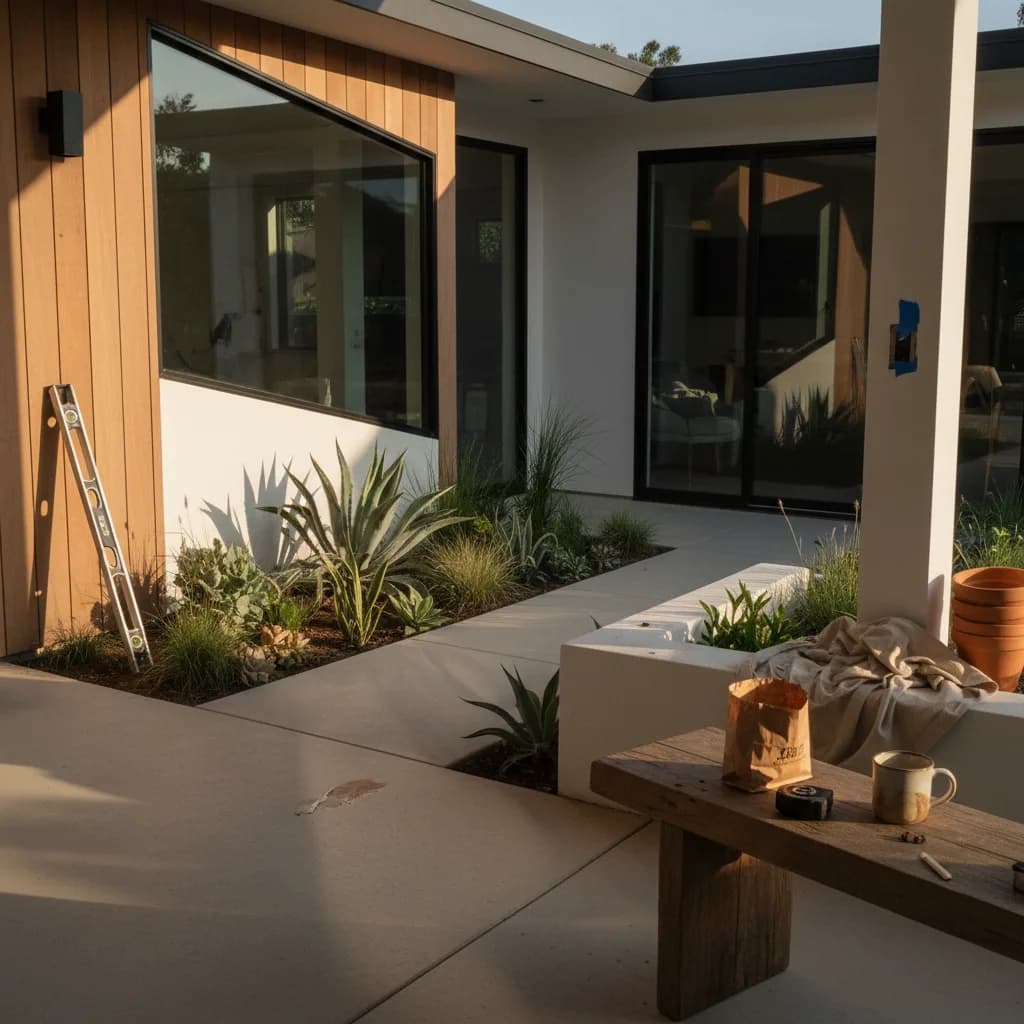
Santa Monica backyards are no longer an afterthought; they are primary living spaces. In 2026, homeowners are investing an average of 25% of their total renovation budget outdoors, a significant shift from the 10% standard just five years ago. This is not about maintaining a lawn, but about building a resilient, multi-functional extension of the home itself. The focus of landscape design in Santa Monica has pivoted from aesthetics alone to performance and sustainability.
In a Nutshell
- The Umbrella Trend: The Un-walled Living Room. Backyards are being designed and budgeted as fully functional, climate-resilient extensions of the home's interior square footage.
- The Three Biggest Shifts: The rise of the compact plunge pool over the traditional swimming pool; the upgrade from a simple grill to a full-service outdoor kitchen; and the mandatory adoption of water-positive hardscapes that manage stormwater on-site.
- What's Being Replaced: Expansive, water-intensive lawns, token barbecue islands, and flimsy patio furniture are out. The high-maintenance, low-utility yard is a relic.
- What's Next: Fully automated outdoor zones with integrated lighting, sound, and climate control, all managed from a single home automation system.
1. The Plunge Pool Eclipses the Lap Pool
With lot sizes shrinking and water conservation a permanent fixture of California life, the traditional swimming pool is giving way to the “spool” or plunge pool. These smaller bodies of water, typically under 400 square feet, serve as both a hot tub and a cooling-off pool, offering year-round utility. A recent project in the North of Montana neighborhood saw a homeowner install a 10x15 foot gunite plunge pool with an integrated spa for $92,000. This trend is driven by efficiency, both in space and water usage, making it a pragmatic choice for properties in Mar Vista and Ocean Park. We expect the plunge pool to become the default water feature in high-end landscape design for Santa Monica by 2028.
The budget framing is key. The gunite shell is $45k. The deck and coping is another $20k. The equipment pad, with a high-efficiency Pentair Intelliflo VSF pump and a combination heater/chiller, adds $18k to $25k. Homeowners are surprised that the equipment for a small pool costs nearly as much as for a large one.
2. The Hyper-Functional Outdoor Kitchen
The built-in grill on a stucco island is officially dated. The 2026 trend is a complete outdoor kitchen that rivals its indoor counterpart in functionality. This means dedicated zones for prep, cooking, and cleaning. We're seeing invoices for outdoor kitchens that include not just a Lynx 36-inch Sedona grill, but also a Gozney Dome pizza oven, a power burner for wok cooking, and a Perlick 24-inch outdoor refrigerator. A project in Venice specified a complete kitchen build-out for $48,000, not including the patio itself. This is a significant investment, signaling a fundamental change in how homeowners use their outdoor space. The outdoor kitchen is now the social hub of the home for at least six months of the year.
The scope items commonly under-quoted are the utilities. A high-BTU appliance load often requires a gas line upsize from 3/4-inch to a full 1-inch pipe from the meter, a task that can cost $3,000 to $6,000. A dedicated 50-amp subpanel for refrigerators, lighting, and outlets is another $2,500 that rarely makes it into the initial proposal from a landscape design contractor in Santa Monica.
3. Water-Positive Hardscapes Are Mandatory
Ready to compare vetted project options?
Use Project Match privately when your scope is clear enough for contractor conversations.
Start Project MatchSanta Monica's stringent stormwater management regulations are driving a shift from impermeable concrete patios to water-positive surfaces. This means using materials that allow rainwater to percolate back into the ground, reducing runoff and recharging the local aquifer. Permeable pavers, like Belgard's Eco-Dublin series, and decomposed granite pathways are now standard practice. A recent installation in Sunset Park replaced a 1,200-square-foot concrete patio with permeable pavers and two small rain gardens for $31,000. This is not just an environmental choice; it's a compliance necessity. Expect the City of Santa Monica to tighten these requirements further, making on-site water retention a non-negotiable part of any major landscape project.
The hidden cost is in the base preparation. Permeable paver systems require a much deeper, multi-layered aggregate base than standard pavers, which can add 30-40% to the material and labor cost for the hardscape portion of the project.
4. Performance Turf Goes Mainstream
For homeowners who still want the look and feel of a lawn, high-end synthetic turf has become the go-to solution. Products from brands like SYNLawn and ProGreen now feature heat-blocking technology, advanced drainage, and incredibly realistic textures. The appeal is twofold: a perfect green lawn with zero water consumption. This qualifies homeowners for the Metropolitan Water District's turf-replacement rebate, which can be as high as $3 per square foot in some areas. The long-term water savings and low maintenance are driving adoption across Southern California. The saltwater conversion premium for pools has dropped, but the premium for quality synthetic turf installation remains strong, as it's a specialized skill.
A typical 500-square-foot installation costs between $7,500 and $12,000. The cost variation in landscape design Santa Monica quotes comes from the sub-base. A proper installation requires several inches of compacted aggregate for drainage and stability, a step that lower-cost installers often skimp on.
5. Engineered Shade Structures are the New Standard
The simple patio umbrella is being replaced by solid, engineered shade structures designed to handle Santa Monica's specific coastal climate. We're seeing a surge in automated louvered pergolas, like the StruXure Pivot 6 or the Azenco R-BLADE, that can close during a rain shower or tilt to block the low-angle afternoon sun. A recent project in the Sunset Park neighborhood featured a 16x20 foot StruXure system invoiced at $38,000, including installation and engineered footings. Homeowners from Ocean Park to North of Montana are realizing that usable shade is the key to all-day outdoor living. Expect this trend to accelerate as these systems become integrated with home automation platforms.
The hidden cost here is the engineering. Coastal pergolas in Santa Monica need wind-load engineering for a 110 mph design wind speed, which adds $2,500 to $4,000 for plans and structural calculations before a permit is even pulled. The concrete footings are also substantially larger and deeper than for a standard wood structure, a detail often omitted from initial quotes.
6. The Productive Garden as a Focal Point
The victory garden is back, but with a design-forward approach. Instead of a hidden patch of vegetables, homeowners are integrating edible plants into the core landscape design. We are seeing projects that feature espaliered fruit trees as living fences, raised corten steel beds for herbs, and a mix of ornamental and edible plants that comply with the Model Water Efficient Landscape Ordinance (MWELO). This trend is about creating a beautiful space that is also productive, providing herbs, fruits, and vegetables. It's a direct response to a desire for a closer connection to food and a more sustainable lifestyle. A well-designed productive garden requires a thoughtful hydrozone breakdown by sun exposure and plant water needs.
7. The Fully-Wired Outdoor Workspace
With remote work now a permanent part of the professional world, the outdoor office is a serious design consideration. This goes beyond a table and a chair. The 2026 Santa Monica landscape includes dedicated outdoor workspaces with integrated, weather-proof power outlets, USB charging ports, and hardwired data connections for reliable internet. We've seen designs that incorporate built-in desks, task lighting, and shade structures specifically oriented for screen visibility throughout the day. The infrastructure is the main cost. Trenching conduit for electrical and data lines from the house can cost $100 to $150 per linear foot, a significant expense that needs to be planned from the outset.
8. Biophilic Design for Climate Resilience
The final trend is a move towards biophilic design that uses a drought-tolerant plant palette under the Model Water Efficient Landscape Ordinance. This is not the sparse rock-and-cactus look of the past. Instead, it's about creating lush, layered gardens with California natives like Ceanothus and Salvia, alongside other climate-appropriate plants. The goal is to create a habitat that supports local pollinators, reduces water use, and provides a restorative, natural environment for the homeowner. This approach acknowledges the reality of the Southern California climate and builds a garden that can thrive in it, reducing the need for constant maintenance and intervention. It's a design strategy that is both beautiful and deeply practical.
Sources & Methodology
See the Golden Yards Methodology for how sources are reviewed, ranges are normalized, and planning-data limits are handled.
Cost ranges in this guide draw on the following named industry sources, public agency datasets, and Golden Yards Magazine editorial research.
- California Landscape Contractors Association (CLCA), Los Angeles/San Gabriel Valley Chapter Meeting Minutes (February 2026)
- City of Santa Monica Planning and Community Development Department, Permitting Data (2025-2026)
- Metropolitan Water District of Southern California, SoCalWater$mart Program Data (Q1 2026)
- California Department of Industrial Relations, Prevailing Wage Determinations for Los Angeles County (January 2026)
- Golden Yards Magazine, Annual Outdoor Living Reader Survey (2026)
- National Association of Home Builders (NAHB) Remodeling Market Index (RMI) (Q4 2025)
Golden Yards Magazine Take
The unifying thread across all eight trends is resilience. Santa Monica homeowners are no longer designing for an idealized, water-abundant past. They are building for a future of water scarcity, extreme heat, and a need for functional, restorative living space. This is a pragmatic and sophisticated response to the environmental realities of coastal Southern California. The investment in solid infrastructure, from engineered shade to permeable hardscapes and upgraded utilities, shows a commitment to long-term livability. The 2026 landscape is not just an aesthetic statement; it's a personal infrastructure project designed to enhance quality of life in a changing climate. The surprise isn't the cost, it's the scope of what a backyard is expected to do.
Frequently Asked Questions
How much does a full landscape redesign cost in Santa Monica in 2026?
A comprehensive landscape design and installation in Santa Monica for a typical 5,000-square-foot lot runs from $95,000 to $220,000. This range covers design fees, demolition, irrigation, lighting, hardscaping, and planting. Smaller-scale projects or simple turf-to-drought-tolerant plant conversions can start lower, often in the $25,000 to $45,000 range for front yards only.
The primary cost driver is the scope of hardscaping. A simple decomposed granite patio is a fraction of the cost of Ipe decking or large-format porcelain pavers. Labor is also a significant factor. According to the California Department of Industrial Relations prevailing wage data for Los Angeles County, skilled landscape construction labor rates contribute heavily to the overall project cost. Three representative projects from 2026, scoped similarly, reconstructed from Golden Yards Magazine's Project of the Day network and used here in aggregate form: a Mar Vista yard with a new deck and turf was $110,000; a Santa Monica canyon property requiring retaining walls and extensive drainage hit $195,000; and a full outdoor kitchen and pool project in Venice topped $300,000.
What are the biggest hidden costs in a Santa Monica landscape project?
The most common budget surprises are not in the plants or pavers, but in the infrastructure required to support the new design. Homeowners often overlook the cost of upgrading utilities, managing water, and meeting structural codes. These items, such as drainage systems, gas line upsizes for fire pits or kitchens, and new electrical subpanels, can add $10,000 to $25,000.
For example, a new outdoor kitchen with a 60,000 BTU Lynx grill and a gas fire pit will likely require upsizing your home's gas line from 3/4-inch to 1-inch pipe. This is rarely in the first quote from a landscape contractor and can cost $2,500 to $5,000. Similarly, extensive landscape lighting, a pool pump, and outdoor heaters demand a new electrical subpanel, a $3,000 to $5,500 expense. The National Association of Home Builders recommends a ten to fifteen percent contingency on renovations in homes over thirty years old, which is critical for covering these unforeseen infrastructure needs.
How does MWELO affect my landscape design?
California's Model Water Efficient Landscape Ordinance (MWELO) sets a maximum water budget for your property's landscaping. For new construction or major renovations over 500 square feet, your design must prove it will not exceed this budget. This is achieved by using low-water plants, efficient irrigation systems like drip lines, and limiting turf areas.
Your landscape designer will create a plan that groups plants into hydrozones based on their water needs, ensuring that water-loving plants aren't mixed with desert natives. They will perform a water budget calculation that is submitted with your permit application. While it sounds restrictive, a skilled designer can create a lush, beautiful garden that is fully MWELO-compliant. It encourages thoughtful, climate-appropriate design rather than limiting creativity. The focus is on a smart plant palette and efficient watering, not on creating a barren yard.
Do I need a permit for my landscape project in Santa Monica?
Yes, many landscape elements in Santa Monica require a permit from the Planning and Community Development Department. Any structure over 120 square feet (like a pergola), retaining walls over four feet high, new pools, or significant electrical and plumbing work will trigger a permit review. Simple planting and irrigation updates typically do not require one.
Failing to secure the proper permits can result in stop-work orders and fines. It is crucial to confirm the scope with your contractor. For instance, even a "simple" deck is often over 30 inches above grade, which requires a permit. Your landscape design contractor in Santa Monica should manage this process. To understand the specific triggers and timelines, review our complete [Santa Monica landscape permit playbook for 2026](/guides/santa-monica-landscape-permit-playbook-2026).
Ready to start your landscaping project?
Find My ProsFrequently Asked Questions
How much does a full landscape redesign cost in Santa Monica in 2026?
A full landscape redesign in Santa Monica for a 5,000-square-foot lot costs $95,000 to $220,000 in 2026. This comprehensive price covers design, demolition, irrigation, lighting, hardscaping, and planting. Simpler front yard conversions to drought-tolerant plants may cost only $25,000 to $45,000, providing a lower-cost alternative for specific projects.
The primary cost driver is the scope of hardscaping, as a simple decomposed granite patio is a fraction of the cost of Ipe decking. Labor is also a significant factor, with rates influenced by the California Department of Industrial Relations prevailing wage data for Los Angeles County.
Three representative 2026 projects from Golden Yards Magazine's network show this variation. A Mar Vista yard with a new deck and turf was $110,000. A Santa Monica canyon property needing retaining walls and extensive drainage cost $195,000, while a full outdoor kitchen and pool project in Venice topped $300,000.
What are the biggest hidden costs in a Santa Monica landscape project?
The biggest hidden costs in a Santa Monica landscape project are infrastructure upgrades, not plants or pavers. Homeowners often overlook required drainage systems, gas line upsizes for fire pits, and new electrical subpanels. These necessary items can unexpectedly add $10,000 to $25,000 to the total project cost.
For example, an outdoor kitchen with a 60,000 BTU Lynx grill and a gas fire pit will likely require upsizing the gas line from 3/4-inch to 1-inch pipe, an overlooked cost of $2,500 to $5,000. Extensive landscape lighting, a pool pump, and heaters can demand a new electrical subpanel for $3,000 to $5,500. The National Association of Home Builders recommends a ten to fifteen percent contingency for renovations in homes over thirty years old to cover these unforeseen needs.
How does MWELO affect my landscape design?
California's Model Water Efficient Landscape Ordinance (MWELO) affects your design by setting a maximum water budget for landscaping. For new construction or major renovations over 500 square feet, your plan must prove it will not exceed this budget by using low-water plants, efficient irrigation like drip lines, and limited turf areas.
Your landscape designer will create a plan that groups plants into hydrozones based on their water needs, ensuring water-loving plants are not mixed with desert natives. They will perform a water budget calculation that is submitted with your permit application.
While this may sound restrictive, a skilled designer can create a lush, beautiful garden that is fully MWELO-compliant. The ordinance encourages thoughtful, climate-appropriate design rather than limiting creativity. The focus is on a smart plant palette and efficient watering, not on creating a barren yard.
Do I need a permit for my landscape project in Santa Monica?
Yes, many landscape projects in Santa Monica require a permit from the Planning and Community Development Department. This includes structures over 120 square feet, retaining walls over four feet high, new pools, or significant electrical and plumbing work. Simple planting and irrigation updates are typically exempt. Your contractor should manage this.
Failing to secure the proper permits can result in stop-work orders and fines, so it is crucial to confirm the project scope with your contractor. For instance, a deck that seems simple often exceeds 30 inches above grade, a height that requires a permit. Your landscape design contractor in Santa Monica should manage this process. To understand specific triggers and timelines, review the complete Santa Monica landscape permit playbook for 2026.