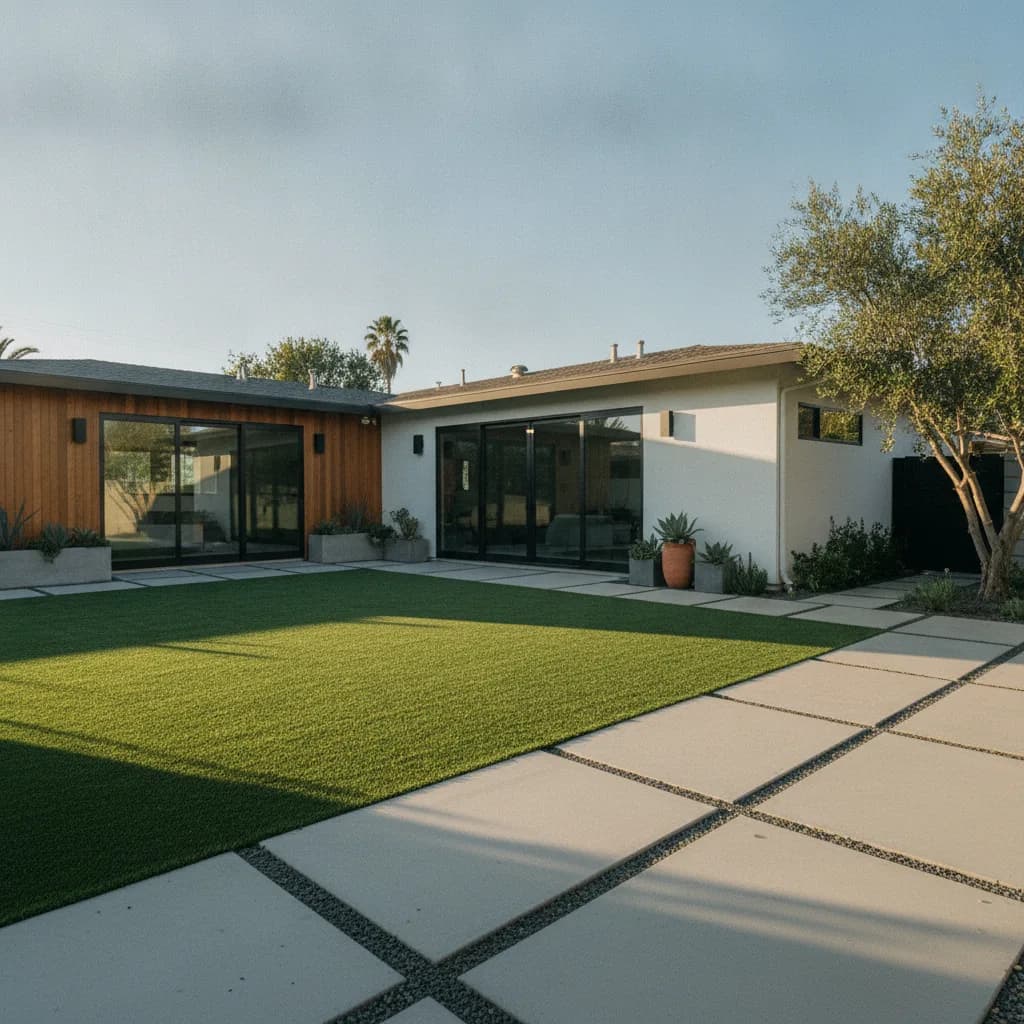
An artificial turf lawn in San Jose seems like a straightforward upgrade. You envision a perfect, green rectangle that solves your water usage worries and frees up your weekends. You get a quote based on a simple price per square foot, and it fits the budget. But as the project unfolds, the costs begin to climb. Suddenly, you’re paying extra for ground preparation you thought was included, drainage you never discussed, and hauling away old soil and concrete. By the time the last blade of synthetic grass is brushed into place, the final bill is thousands more than you expected. This scenario is frustratingly common, but it is also avoidable.
Budget overruns on turf projects rarely happen because of one single, catastrophic error. Instead, they are the result of a series of small, unasked questions and unconfirmed assumptions made during the planning phase. By understanding where these hidden costs lurk, you can create a detailed project plan that protects your budget and ensures the beautiful, low-maintenance yard you imagined becomes a reality. This guide walks through the most common mistakes homeowners make and provides the questions you need to ask to keep your project on track and on budget.
In a Nutshell
- Define Everything: A vague scope is the primary cause of budget creep. Specify every detail, from demolition and base depth to edging materials and infill type, before signing a contract.
- Compare Line Items, Not Totals: Demand itemized bids from every potential artificial turf contractor in San Jose. A low total price might hide exclusions for essential work like drainage or waste removal.
- Investigate Your Site: Poor access, sloped terrain, and San Jose’s clay soil can significantly increase labor and material costs. Address these issues during the bidding phase, not after work begins.
- Document All Changes: Verbal agreements for modifications or additions are a recipe for disputes. Insist on written change orders that specify the cost and schedule impact for any deviation from the original plan.
- Plan for the Long Term: Your project doesn’t end at installation. Understand the maintenance requirements and warranty coverage for both the turf product and the installation workmanship to avoid future surprises.
The Unclear Scope: When "Just Turf" Means Much More
The most frequent reason an artificial turf project goes over budget is a poorly defined scope of work. When you ask a contractor for a price to install turf, their interpretation of what that includes can vary dramatically from your own. You might be thinking of the finished product, while they may be quoting only for the turf and a minimal base layer, leaving out critical components that are discovered later.
A comprehensive project scope treats the turf as just one part of a larger system. This system includes site clearing and demolition of the old lawn or patio, grading the soil for proper drainage, installing a multi-layer aggregate base, adding a weed barrier, securing the turf, applying infill, and installing edging. Each of these steps requires specific materials and labor that should be detailed in your contract.
To avoid this pitfall, insist that every quote breaks the project down into its core components. Ask questions like: What is the depth of the aggregate base? What type of aggregate will be used? Does the quote include hauling away all demolition debris? Is professional sprinkler capping included? By getting these details in writing, you create a clear set of deliverables that forms the basis of your agreement. An undefined scope is an open invitation for additional charges.
Hypothetical planning example, not a documented project: A homeowner wants to replace a 500-square-foot lawn. A vague scope might just say "Install 500 sq ft of artificial turf." A detailed scope would prevent misunderstandings and future costs.
- Vague Scope Item: Site Preparation.
- Detailed Scope Items: Remove and dispose of 500 sq ft of existing sod and soil to a depth of four inches. Cap three existing sprinkler heads. Grade sub-base to ensure a 1% slope away from the house foundation.
- Vague Scope Item: Install Base.
- Detailed Scope Items: Install and compact a three-inch layer of Class II aggregate base. Install and compact a one-inch layer of decomposed granite for a smooth final surface. Install commercial-grade weed barrier fabric with six-inch overlaps at all seams.
- Vague Scope Item: Install Turf.
- Detailed Scope Items: Install customer-selected turf model XYZ. Secure perimeter with six-inch galvanized spikes every six inches. Apply 1.5 pounds per square foot of specified silica sand infill and power broom to settle.
Comparing Apples to Oranges: Why Bids Don't Match Up
After you’ve done the hard work of creating a detailed scope, the next challenge is comparing the bids you receive from different contractors. The lowest price is often the most tempting, but it can be misleading. Contractors who present a low total cost may be excluding essential work or specifying lower-quality materials to make their bid appear more competitive. Without a line-by-line comparison, you are not truly comparing equivalent projects.
For any significant investment like an artificial turf installation in San Jose, you should seek at least three detailed, itemized quotes. Create a simple spreadsheet to compare them. List every component of the project down one side: demolition, disposal fees, base material type and depth, drainage provisions, edging style, turf model, infill type and amount, and labor. Then, create a column for each contractor and fill in their quoted price for each line item. This process immediately highlights discrepancies. You might find one contractor’s price for base preparation is half of another’s, prompting you to ask if they are using a thinner base, which could compromise the longevity of your installation.
Pay close attention to what is explicitly excluded. Does the bid state that the homeowner is responsible for clearing the area? Does it exclude the cost of repairing any damage to adjacent landscaping or irrigation lines? A thorough bid comparison protects you from contractors who win jobs with low initial quotes, only to make up the difference with a series of expensive change orders later. Finding a reputable artificial turf contractor in San Jose means finding one who is transparent about the total scope and cost from the very beginning.
Site Surprises: The Cost of Unasked Questions
Ready to compare vetted project options?
Use Project Match privately when your scope is clear enough for contractor conversations.
Start Project MatchEvery property is unique, and site-specific challenges are a major source of unexpected costs. What lies beneath the surface and the logistics of getting materials and equipment to the work area can have a significant impact on your budget. A contractor who provides a quote without a thorough site inspection is gambling with your money.
In San Jose and the surrounding Santa Clara Valley, one of the most common site issues is the prevalence of expansive clay soil, often called adobe clay. This type of soil expands when wet and shrinks when dry, which can cause an improperly prepared base to shift and become uneven over time. Addressing this often requires a deeper and more solid aggregate base than in areas with sandy soil, adding to material and labor costs. Drainage is also critical; a proper plan must be in place to ensure water doesn't pool on or under the turf. This may involve installing French drains or other systems, which should be quoted upfront.
Access is another key factor. If your backyard is only accessible through a narrow side gate, all materials must be brought in and all debris must be removed by wheelbarrow instead of with a mini-excavator. This manual labor is far more time-consuming and expensive. Before you get a quote, walk the property with potential contractors and ask direct questions: How will you get equipment to the installation area? Have you accounted for the slope of my yard in the grading plan? Are there any visible utility lines or sprinkler systems that need to be addressed? A proactive site assessment turns potential surprises into planned expenses.
Material Missteps: Choosing Turf on Looks Alone
The artificial turf itself is the centerpiece of your project, and selecting the right product is about more than just finding the right shade of green. The market is filled with options that vary widely in quality, durability, feel, and heat resistance. Choosing a product based solely on its upfront cost or appearance without considering its technical specifications can lead to disappointment and the expense of a premature replacement.
Key specifications to compare include face weight (the weight of the yarn in ounces per square yard), pile height (the length of the blades), and backing material. A higher face weight generally indicates a denser, more durable turf. The backing is also critical; a polyurethane backing is typically more durable and resistant to expansion and contraction with temperature changes than a latex backing. For a lawn that will see heavy use from children or pets, a durable product with a strong backing is a wise investment.
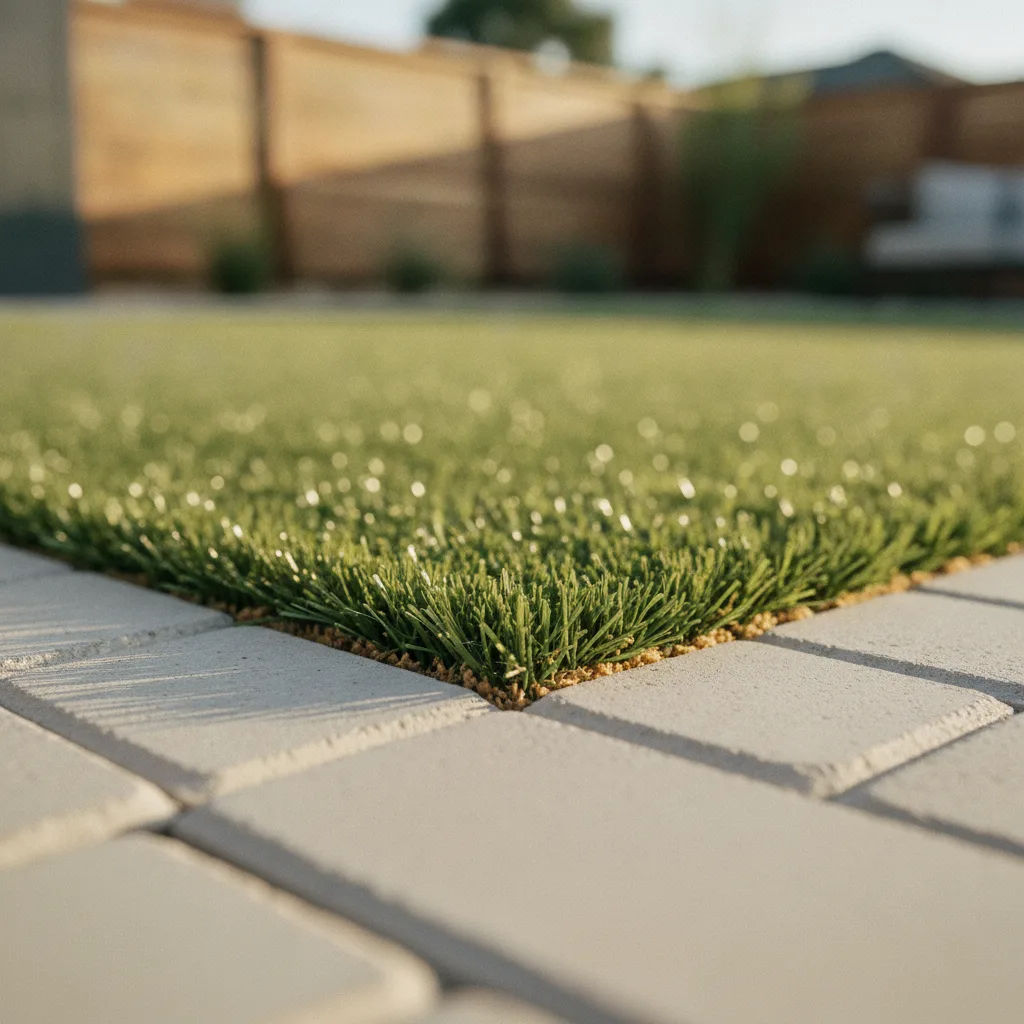
Infill, the material brushed in between the turf blades, is another crucial choice. Standard silica sand is the most common and cost-effective option. However, for pet owners, upgrading to a zeolite-based infill that helps control odors may be necessary. In the warm, sunny climate of San Jose, heat retention is a major concern. Some turf products are designed with heat-reflective technology in the yarns, and lighter-colored infills can also help reduce surface temperatures. These premium features add to the initial artificial turf San Jose cost, but they significantly improve the usability and comfort of your lawn. Ask for spec sheets for any turf you are considering and discuss the trade-offs with your contractor.
Change Orders: The Unwritten Plan That Sinks Budgets
Even with the most detailed initial plan, you might decide to make a change once the project is underway. Perhaps you want to extend the turf area by a few feet or add a matching turf border around a planter box. These mid-project adjustments are managed through a document called a change order, and how they are handled can make or break your budget.
The mistake is not in making a change, but in agreeing to it verbally. A casual conversation with the crew leader where you say, "While you're here, could you also..." is not a binding agreement. Without a written change order, you have no control over how much that small addition will cost or how it will affect the project timeline. The contractor may present you with a surprisingly large bill at the end of the project for the extra work, leading to a dispute that sours the entire experience.
A professional contractor will always use a formal change order process. When you request a change, they should provide you with a written document that details the new scope of work, the additional cost for materials and labor, and any adjustment to the completion date. You must review and sign this document before the new work begins. This process ensures transparency and keeps you in control of the budget. Before signing your initial contract, confirm that it includes a clause explaining the change order process. This formalizes the procedure and protects both you and the contractor from misunderstandings.
Permit Puzzles: Who Handles the Paperwork?
Many homeowners assume that installing artificial turf is a simple landscaping project that doesn't require municipal oversight. While this is often true for a straightforward lawn replacement on a flat surface, more complex projects can trigger permit requirements from the City of San Jose Department of Planning, Building and Code Enforcement. Assuming no permit is needed without verifying can lead to stop-work orders, fines, and the costly process of redoing work to meet code.
Projects that involve significant changes to your property's drainage or grading are the most likely to require a permit. For example, if your plan requires extensive excavation or the construction of retaining walls to create a level surface, a grading permit may be necessary., some regulations may relate to the total percentage of a property that can be covered by impermeable surfaces, although most modern artificial turf with proper drainage systems is considered permeable.
The critical mistake is failing to assign responsibility for the permit process. Your contract should explicitly state who is responsible for determining if a permit is required, submitting the application, and scheduling any necessary inspections. Do not rely on a verbal assurance from a contractor that "no one ever gets a permit for this." A professional artificial turf contractor in San Jose should be knowledgeable about local requirements and be able to guide you through the process. The safest approach is always to contact the city's building department directly with your project plans to get a definitive answer. Clarifying this responsibility upfront avoids delays and potential legal issues down the road.
Beyond Installation: The Forgotten Costs of Ownership
A successful project budget accounts not only for the installation but also for the long-term costs of ownership. Artificial turf is low-maintenance, not zero-maintenance. Overlooking these future needs, along with the details of your warranty, can lead to unexpected expenses years after the installation crew has left.
Regular maintenance involves removing leaves and debris, rinsing the surface periodically, and brushing the blades to keep them upright and prevent matting, especially in high-traffic areas. You may need to purchase a power broom or hire a service to perform this maintenance annually. Over time, the infill may compact or wash away, requiring a top-up to maintain the lawn's performance and feel. These are modest costs but should be factored into your long-term financial planning.
Warranty coverage is another area that requires careful review. Most projects come with two separate warranties: one from the turf manufacturer covering defects like fading or fiber degradation, and another from the installer covering the workmanship. The installer’s warranty is arguably more important, as most issues arise from improper base preparation or seam work. Ask for a copy of both warranties and read the fine print. Does the installation warranty cover sinking or uneven spots? For how long? Understanding what is and isn't covered will help you anticipate potential future repair costs that may fall outside the warranty period.
Rushing the Timeline: Unrealistic Schedules and Their Price
In the excitement to get a new lawn, it can be tempting to push for the fastest possible installation timeline. However, rushing an artificial turf project is a false economy. A hurried schedule can lead to mistakes, compromised quality, and ultimately, higher costs to fix problems that could have been avoided with a little more patience.
A realistic timeline accounts for several stages that cannot be rushed. First, there is material procurement; the specific turf you selected may not be in stock locally and could take weeks to arrive. The site preparation phase is the most critical. After excavation, the aggregate base must be installed in layers and compacted thoroughly. In some cases, allowing the base to settle for a few days, especially after a rare rain, is crucial for long-term stability. Rushing this step can lead to depressions and an uneven surface later on.
Discuss a detailed, phased timeline with your contractor before work begins. A typical 500 to 1,000-square-foot project might take three to five days for an experienced crew, but this can be affected by weather, site complexity, and the availability of subcontractors if needed. Building a few buffer days into your schedule for unforeseen delays is a prudent strategy. This approach is particularly important if you are planning for a future installation, perhaps for a project in 2025 or looking ahead to artificial turf San Jose 2026 trends; good planning never goes out of style. A contractor who promises an impossibly fast timeline may be cutting corners on essential steps like base compaction, a shortcut that will almost certainly lead to costly repairs in the future.
Frequently Asked Questions
What's a realistic budget for artificial turf in San Jose?
A realistic budget depends entirely on your project's scope, materials, and site conditions. Instead of a single number, build a budget by considering costs for demolition, base preparation, drainage, the turf itself, infill, and labor. A comprehensive budget also includes a contingency fund of ten to fifteen percent for unexpected issues.
Hypothetical planning example, not documented local pricing: For a 500 sq ft area, you might estimate costs by component. If site prep and base materials are assumed at $6/sq ft ($3,000), mid-grade turf is $5/sq ft ($2,500), and labor is $5/sq ft ($2,500), the subtotal is $8,000. Adding a 10% contingency ($800) brings the planning budget to $8,800. This itemized approach is more reliable than a single square-foot price.
Do I need a permit for artificial turf in San Jose?
You might, depending on the scope of your project. Simple lawn replacements on level ground typically do not require a permit. However, projects involving significant grading, excavation, or the construction of retaining walls to support the turf area often do. It is always best to assume you need to check.
The only way to be certain is to contact the San Jose Department of Planning, Building and Code Enforcement with your specific plans. Do not rely solely on your contractor's opinion. Your contract should clearly state who is responsible for verifying permit requirements and filing any necessary applications. This simple step can prevent costly stop-work orders and fines.
How does San Jose's climate affect artificial turf choices?
San Jose's sunny, warm climate makes heat resistance and UV stability the most important factors when choosing artificial turf. Lower-quality turf can fade under constant sun exposure and become uncomfortably hot to the touch during summer afternoons. Look for products with high-quality UV inhibitors in the fibers to prevent fading and discoloration.
To manage heat, consider turf with specialized heat-reflective technology in the yarn. Lighter-colored turf and infill materials also absorb less solar energy than darker options. Discuss these features with your supplier; while they may increase the initial artificial turf san jose cost, they greatly enhance the comfort and usability of your lawn throughout the year.
Can I save money by preparing the ground myself?
While you can potentially save on labor costs by doing the demolition and base preparation yourself, it comes with significant risks. The base is the most critical component for the longevity and performance of your artificial turf. Improper grading can lead to drainage problems, and an insufficiently compacted base will result in dips and uneven surfaces over time.
, many professional installers will not warranty their work if it is done on a base they did not build. Any future problems with sinking or drainage would be your responsibility to fix, likely costing more than the initial savings. Unless you have extensive experience with landscaping and grading, it is generally wiser to leave this crucial step to the professionals.
What are the biggest hidden costs in an artificial turf project?
The most common hidden costs arise from site-specific issues that were not addressed in the initial quote. These typically include the need for extensive grading to correct a slope, the installation of a French drain or other system to manage poor drainage from clay soil, and increased labor costs due to poor site access for machinery.
To avoid these surprises, ensure your contractor performs a thorough on-site evaluation before providing a bid. Ask them to explicitly outline their plan and costs for drainage, grading, and material transport in the written proposal. A detailed, itemized quote based on a physical inspection is your best defense against unexpected charges that can inflate your final project cost.
Sources & Methodology
See the Golden Yards Methodology for how sources are reviewed, ranges are normalized, and planning-data limits are handled.
The recommendations and hypothetical examples in this article are based on standard project management principles for home renovations. The cost breakdowns are illustrative planning scenarios and are not based on documented invoices or a survey of local market rates in San Jose. Homeowners should obtain multiple, detailed bids from qualified local contractors to determine actual project costs.
- For information on building permits, homeowners should consult the City of San Jose Department of Planning, Building and Code Enforcement directly.
Golden Yards Magazine Take
The allure of a perpetually green, water-wise lawn is powerful, especially in a place like San Jose. But the path to that perfect yard is paved with details. The difference between a project that finishes on budget and one that becomes a source of financial stress is almost always found in the planning stage. Do not accept a simple price per square foot as a complete quote. Instead, demand a detailed breakdown that separates the turf, the extensive groundwork beneath it, and the labor to install it all. Ask pointed questions about your specific site conditions, from soil type to gate width. Insist on written change orders for every single modification. By approaching your artificial turf project with diligence and a healthy dose of skepticism, you move from being a passive buyer to an active, informed manager of your investment. That control is the surest way to get the result you want for a price you’ve agreed to.
Ready to start your artificial turf project?
Find My ProsFrequently Asked Questions
What's a realistic budget for artificial turf in San Jose?
<p>A realistic budget depends entirely on your project's scope, materials, and site conditions. Instead of a single number, build a budget by considering costs for demolition, base preparation, drainage, the turf itself, infill, and labor. A comprehensive budget also includes a contingency fund of ten to fifteen percent for unexpected issues.</p>
<p>Hypothetical planning example, not documented local pricing: For a 500 sq ft area, you might estimate costs by component. If site prep and base materials are assumed at $6/sq ft ($3,000), mid-grade turf is $5/sq ft ($2,500), and labor is $5/sq ft ($2,500), the subtotal is $8,000. Adding a 10% contingency ($800) brings the planning budget to $8,800. This itemized approach is more reliable than a single square-foot price.</p>
Do I need a permit for artificial turf in San Jose?
<p>You might, depending on the scope of your project. Simple lawn replacements on level ground typically do not require a permit. However, projects involving significant grading, excavation, or the construction of retaining walls to support the turf area often do. It is always best to assume you need to check.</p>
<p>The only way to be certain is to contact the San Jose Department of Planning, Building and Code Enforcement with your specific plans. Do not rely solely on your contractor's opinion. Your contract should clearly state who is responsible for verifying permit requirements and filing any necessary applications. This simple step can prevent costly stop-work orders and fines.</p>
How does San Jose's climate affect artificial turf choices?
<p>San Jose's sunny, warm climate makes heat resistance and UV stability the most important factors when choosing artificial turf. Lower-quality turf can fade under constant sun exposure and become uncomfortably hot to the touch during summer afternoons. Look for products with high-quality UV inhibitors in the fibers to prevent fading and discoloration.</p>
<p>To manage heat, consider turf with specialized heat-reflective technology in the yarn. Lighter-colored turf and infill materials also absorb less solar energy than darker options. Discuss these features with your supplier; while they may increase the initial artificial turf san jose cost, they greatly enhance the comfort and usability of your lawn throughout the year.</p>
Can I save money by preparing the ground myself?
<p>While you can potentially save on labor costs by doing the demolition and base preparation yourself, it comes with significant risks. The base is the most critical component for the longevity and performance of your artificial turf. Improper grading can lead to drainage problems, and an insufficiently compacted base will result in dips and uneven surfaces over time.</p>
<p>, many professional installers will not warranty their work if it is done on a base they did not build. Any future problems with sinking or drainage would be your responsibility to fix, likely costing more than the initial savings. Unless you have extensive experience with landscaping and grading, it is generally wiser to leave this crucial step to the professionals.</p>
What are the biggest hidden costs in an artificial turf project?
<p>The most common hidden costs arise from site-specific issues that were not addressed in the initial quote. These typically include the need for extensive grading to correct a slope, the installation of a French drain or other system to manage poor drainage from clay soil, and increased labor costs due to poor site access for machinery.</p>
<p>To avoid these surprises, ensure your contractor performs a thorough on-site evaluation before providing a bid. Ask them to explicitly outline their plan and costs for drainage, grading, and material transport in the written proposal. A detailed, itemized quote based on a physical inspection is your best defense against unexpected charges that can inflate your final project cost.</p>