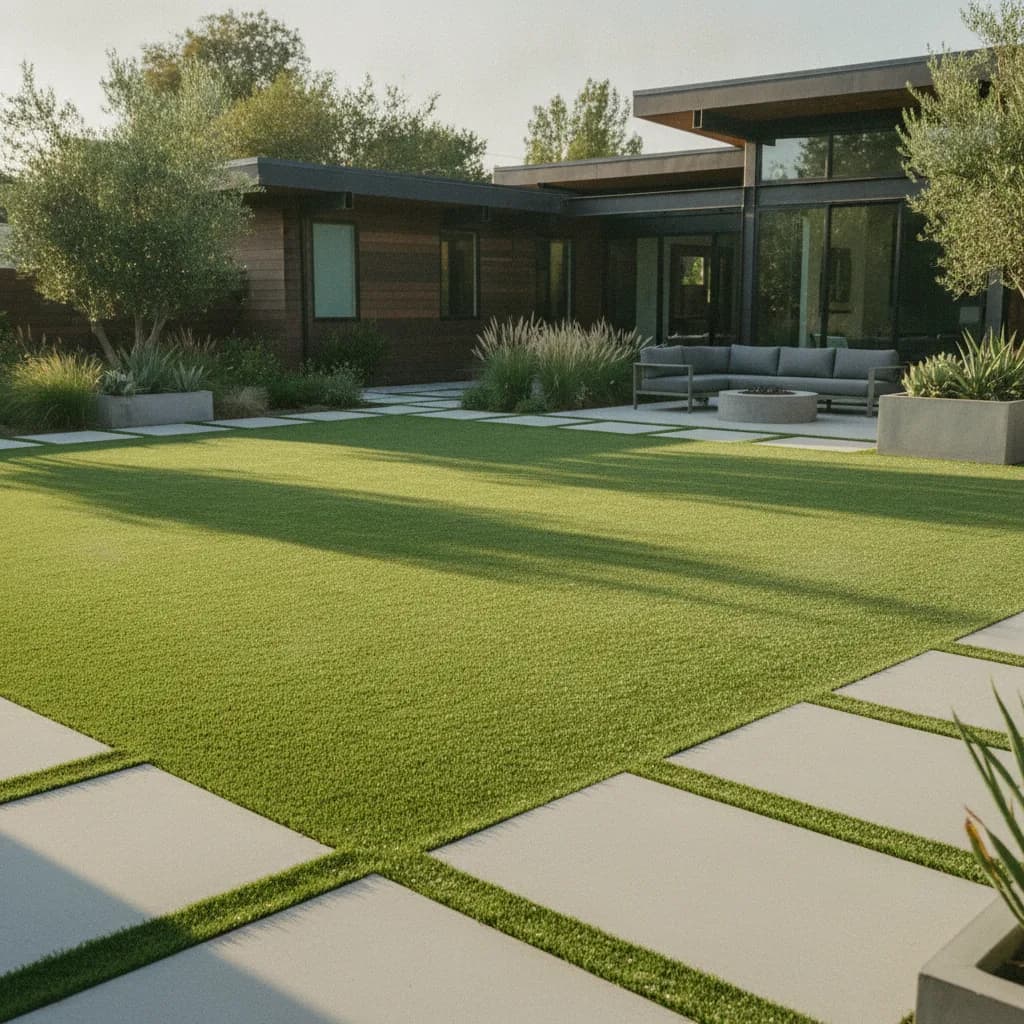
An artificial turf lawn can seem like the perfect solution for Seattle’s notoriously gray and drizzly climate. The promise of a lush, green yard year-round without mowing, watering, or fertilizing is a powerful draw. Yet, many homeowners find their dream project turning into a frustrating and costly ordeal. The most common mistakes are not about choosing the wrong shade of green; they are fundamental errors in planning, bidding, and understanding the unique demands of our Pacific Northwest environment. A successful installation is a complex system, and focusing only on the surface material is the first step toward disappointment.
From underestimating the critical role of drainage to accepting vague quotes that hide major costs, the path to a durable, beautiful synthetic lawn is filled with potential missteps. This guide will walk you through the most frequent errors Seattle homeowners make when installing artificial turf. By understanding these challenges upfront, you can ask the right questions, demand clear agreements, and ensure your investment results in an outdoor space you can enjoy for years, regardless of the weather forecast.
In a Nutshell
- Define the Full Scope: Look beyond the turf itself. Your project includes ground preparation, a solid sub-base, comprehensive drainage, and secure edging. A clear scope of work is your most important starting document.
- Demand Itemized Bids: To properly compare offers from any artificial turf contractor in Seattle, you need detailed, itemized bids. A single per-square-foot number hides crucial differences in materials and labor.
- Assess Your Site's Reality: Seattle's rain and soil conditions are not forgiving. A professional site assessment must address drainage, soil stability, and property access before any work begins.
- Document Every Change: Verbal agreements about project changes are a recipe for disputes. Use formal, written change orders for any modification to the scope, cost, or schedule.
- Choose Materials Wisely: Select turf and infill products designed for wet climates and your specific use case, whether it's for children, pets, or simple aesthetics. Request samples and specification sheets.
- Clarify Permit Responsibility: Never assume permits are not needed or that your contractor is handling them. Define this responsibility in your contract and verify requirements with your local jurisdiction.
- Plan for Actual Maintenance: Artificial turf is low-maintenance, not no-maintenance. Understand the required upkeep, like rinsing, brushing, and debris removal, to protect your investment.
- Build a Realistic Timeline: Your project schedule must account for material lead times and, most importantly, potential weather delays. Seattle's climate demands flexibility.
Mistake 1: Focusing Only on the Turf, Not the Total Project Scope
The most common planning error is fixating on the cost and appearance of the artificial turf itself while glossing over the extensive work required underneath it. Many homeowners get a price per square foot and assume it covers everything. This is rarely the case. A durable, well-draining lawn is an integrated system where the sub-base and site preparation are just as important, if not more so, than the visible green surface.
The risk of a narrow scope is significant budget shock. The quote that seemed low suddenly inflates with essential add-ons for demolition, grading, drainage, and materials that you thought were included. To avoid this, your first step should be to create a comprehensive scope of work document. This document should detail every phase of the project, including the removal of the existing lawn and soil, precise grading to ensure water flows away from your home's foundation, the installation of a multi-layer aggregate base, any necessary drainage solutions like French drains, the inclusion of a weed barrier, the specific turf product, the type and amount of infill, and the final edging material. This detailed plan becomes the foundation for every bid you solicit, ensuring every artificial turf contractor in Seattle is pricing the exact same project.
Hypothetical Planning Example: A 500-Square-Foot Lawn Scope
This hypothetical example is for planning purposes only and does not represent a documented project or local market prices. Assume two different ways of quoting the same job.
- Vague Quote A: 500 sq. ft. lawn installation @ $18/sq. ft. = $9,000. This quote leaves you wondering what is included in that price. Does it cover the old lawn removal? What kind of base material will be used, and how deep will it be?
- Itemized Quote B (Based on a Detailed Scope):
- Demolition and hauling of existing sod (500 sq. ft.): $750
- Excavation and grading for drainage: $1,200
- Four-inch compacted crushed rock sub-base: $2,000
- Weed barrier fabric: $250
- Specified artificial turf product (500 sq. ft.): $3,500
- Silica sand infill (1.5 lbs/sq. ft.): $800
- Composite edging and securing spikes: $1,000
- Total: $9,500
Quote B is only slightly more expensive, but it provides complete transparency. You know exactly what you are paying for and can hold the contractor accountable for each line item. Quote A could easily hide a thinner sub-base or exclude demolition costs, leading to surprise charges later.
Mistake 2: Accepting Vague, Incomparable Bids
Following from the first mistake, accepting a bid that lacks detail makes a true comparison impossible. When one contractor offers a single lump-sum price and another provides a partial breakdown, you cannot effectively evaluate which offers better value. The lowest price might reflect inferior materials, a rushed installation process, or a dangerously thin sub-base that will fail within a few years. For a project like Seattle artificial turf, where performance is tied directly to the quality of the installation, these details are paramount.
The resolution is to insist that every contractor provides a fully itemized bid that aligns with your detailed scope of work. This forces an apples-to-apples comparison. Your request for a quote should ask for specific information, including: the manufacturer and product name of the turf, its face weight, pile height, and backing material; the type and compacted depth of the sub-base aggregate; the type of infill to be used and the application rate (e.g., pounds per square foot); and detailed descriptions of the warranty for both the materials and the labor. Comparing these specifics will reveal much more than the final price. A contractor proposing a two-inch base of pea gravel is not offering the same job as one specifying a four-inch base of compacted, angular crushed rock, even if the price is similar. The latter is far more stable and provides better drainage, a non-negotiable for our region. For more on planning outdoor projects, see our guide to landscaping.
Mistake 3: Ignoring Seattle-Specific Site Conditions
Ready to compare vetted project options?
Use Project Match privately when your scope is clear enough for contractor conversations.
Start Project MatchSeattle's geology and weather present unique challenges that must be addressed before a single roll of turf is ordered. Our region is known for its persistent rain, and many properties have dense, clay-heavy soil that drains poorly. Installing an artificial turf system without accounting for these realities can create a waterlogged mess, turning your yard into a shallow pond after every downpour. Water that cannot drain properly through the sub-base will pool, encouraging moss and mildew, and potentially causing the base to shift and become unstable.
A thorough site assessment is the only way to mitigate this risk. Before you sign a contract, your chosen contractor should perform a detailed evaluation of your property. Key questions to address during this assessment include: What is the composition of the existing soil? How does water currently behave on the property during heavy rain? Is the area sloped, and if so, where will runoff be directed? Will a standard sub-base be sufficient, or is a more solid drainage system, such as a French drain or a dry well, required? Another critical factor is access. Can machinery like a small excavator or compactor easily get to the installation area, or will all materials need to be moved by wheelbarrow through a narrow side yard? Limited access can significantly increase labor costs and extend the project timeline. Addressing these questions upfront prevents costly surprises and ensures the final installation is engineered for long-term success in Seattle's climate.
Mistake 4: Agreeing to Verbal Changes Without Documentation
Projects evolve. During the installation, you might decide to expand the turf area, add a landscape feature, or change the type of edging material. It is easy to have a quick conversation with the crew leader and assume the change is understood and agreed upon. This is a significant mistake. Verbal agreements are a primary source of conflict in construction projects. Without a written record, there is no shared understanding of the change's impact on the project's cost and schedule, leading to disputes and a final bill that is much higher than you anticipated.
The professional standard for managing changes is a formal change order. A change order is a simple written document that should be used for any deviation from the original contract. It must clearly describe the new work to be done, the materials required, the additional cost (or credit, if applicable), and any adjustment to the project completion date. Both you and the contractor must sign the change order before the new work begins. For example, imagine you decide to upgrade from standard plastic edging to a more decorative stone border. A verbal approval might leave the cost ambiguous. A change order would state: "Upgrade 80 linear feet of edging from standard bender board to paver stone border. Additional materials and labor cost: $1,200. Project timeline extended by one day." This simple document provides clarity, protects both parties, and maintains a transparent and professional relationship with your contractor.
Mistake 5: Choosing Unsuitable Turf and Infill Materials
Not all artificial turf is created equal. The market is filled with products varying widely in quality, durability, and suitability for different applications. Choosing a product based solely on its low price or because it looks good on a small sample can lead to disappointment. An inexpensive turf might fade under summer UV exposure, feel abrasive, or quickly become matted and worn in high-traffic areas. Similarly, the infill, the granular material spread between the turf blades, is a critical component for performance, and the wrong choice can cause problems.
To avoid this, invest time in researching materials. Request large samples of the turf products you are considering and take them outside. See how they look in both direct sunlight and on an overcast Seattle day. Feel the texture. Ask the contractor for the product's specification sheet, which details its face weight (the weight of the yarn in a square yard, a key indicator of density and durability), pile height, and fiber material (typically polyethylene, polypropylene, or nylon). For infill, understand your options. Standard silica sand is common, but coated, antimicrobial sands can offer better protection against bacteria, which is beneficial for homeowners with pets. Other infills can help keep the surface cooler. Discuss your specific needs with your contractor. Do you have active children and pets? You will want a durable product with a shorter pile height and a non-toxic infill. Is the area mostly decorative? A plusher, taller pile might be more appropriate. A good artificial turf guide can help you understand these trade-offs.
Mistake 6: Assuming Permits Aren't Needed (or Someone Else is Handling Them)
Many homeowners assume that replacing their lawn is a simple landscaping project that does not require city oversight. This can be a costly assumption. While a basic turf installation on a flat, stable area may not require a permit, projects involving significant earthwork, grading, or the installation of new drainage systems often do. In Seattle, regulations are in place to manage stormwater runoff and ensure that construction does not negatively impact neighboring properties or the public drainage system. Altering the grade of your property could trigger the need for a permit from the Seattle Department of Construction and Inspections (SDCI).
The risk of proceeding without a required permit includes stop-work orders, fines, and potentially being required to remove the entire installation at your own expense. The solution is to clarify permit responsibility from the very beginning. Your contract must explicitly state who is responsible for determining permit requirements, applying for them, and scheduling any necessary inspections. Do not rely on a verbal assurance that "no permit is needed." Ask the contractor to provide a written statement confirming they have checked with the relevant authorities. If you live in a neighboring city like Bellevue, Kirkland, or in unincorporated King County, remember that their regulations may differ from Seattle's. The safest approach is always to contact your local planning or building department directly to confirm the requirements for your specific project scope before any work begins.
Mistake 7: Neglecting a Long-Term Maintenance Plan
One of the biggest selling points for artificial turf is its low-maintenance nature. However, "low-maintenance" is not the same as "no-maintenance." Homeowners who believe they can install a synthetic lawn and forget about it will likely see its appearance and performance degrade over time. Debris like leaves and pine needles can accumulate, encouraging weed and moss growth. High-traffic areas can become matted, and the infill can get compacted. Without regular care, the lawn will not deliver the long-term aesthetic and functional benefits you expect, which is a key consideration when thinking about the value of your "artificial turf seattle 2026" investment.
To prevent premature wear, you need a simple but consistent maintenance plan. Before the project is complete, have your contractor walk you through the specific care requirements for your chosen turf product. Your routine should include several key tasks. First, regularly rinse the turf with a hose to wash away dust, pollen, and pet residue. Second, use a leaf blower or a stiff-bristled broom (never one with metal bristles) to remove organic debris. Third, periodically use a broom or a power brush to "bloom" the turf fibers, fluffing them up in high-traffic areas to prevent matting. Finally, if you have pets, use an enzymatic cleaner to neutralize odors. Document these steps and create a seasonal schedule. This small amount of proactive care will dramatically extend the life and beauty of your lawn.
Mistake 8: Setting an Unrealistic Project Schedule
Enthusiasm for a new project often leads to optimistic but unrealistic timelines. You might envision your new lawn being ready for a party in two weeks, but the reality of an artificial turf installation is often more complex. Underestimating the timeline leads to frustration and can strain the relationship with your contractor. The process involves multiple stages, each with its own dependencies and potential for delays, especially in a climate like Seattle's.
A realistic schedule, established in writing, is essential for managing expectations. Work with your contractor to map out each phase of the project and its estimated duration. A typical timeline includes: material ordering and delivery (which can take several weeks), demolition and site clearing, excavation and grading, sub-base installation and compaction, and finally, the turf and infill installation. The most significant variable in Seattle is weather. The sub-base must be installed and compacted when it is relatively dry. A week of steady rain can bring the entire project to a halt. A well-managed schedule will include buffer days to account for potential weather delays. For example, a project that might take seven working days in ideal conditions should probably be scheduled over a three-week period to allow for unforeseen circumstances. This realistic approach ensures the project is completed correctly without rushing critical steps like base preparation, which is the foundation of a lasting installation.
Sources & Methodology
See the Golden Yards Methodology for how sources are reviewed, ranges are normalized, and planning-data limits are handled.
The links below are resources for checking project requirements. Their inclusion does not establish that scenario prices or timelines were observed in those sources. Hypothetical examples are planning assumptions, not documented projects.
- Golden Yards Magazine Planning Guides
- Note on Hypothetical Examples
Golden Yards Magazine Take
The appeal of a perfect, low-maintenance lawn in the Pacific Northwest is undeniable. However, the success of an artificial turf installation hinges on understanding that you are not just buying a product; you are commissioning a construction project. The most critical mistakes happen long before the first roll of turf is unfurled. They happen in the planning and contracting phase. Your focus should be on the complete system: the drainage, the sub-base, the edging, and the turf itself. A cheap installation that cuts corners on the base will fail, no matter how expensive the turf on top is. Before you commit, demand a transparent, itemized contract that specifies every material and every step. Verify the plan for managing Seattle’s rainfall on your specific property. A beautiful, durable artificial lawn is absolutely achievable, but it requires diligence, clear communication, and a plan that respects the realities of our local environment.
Ready to start your artificial turf project?
Find My ProsFrequently Asked Questions
What is a realistic cost for artificial turf in Seattle?
There is no single price for artificial turf, as costs depend entirely on the materials selected, the amount of site preparation needed, and your project's size. Hypothetical examples for a full, professional installation often range from $15 to $30 per square foot, but this should not be taken as a formal quote.
To understand your potential "artificial turf seattle cost," you must get itemized bids for your specific yard. Key cost drivers include the quality of the turf product, the depth of the aggregate sub-base (more is better for drainage), the need for extensive grading or drainage systems like French drains, and site access. A small, flat, easy-to-access yard will cost less per square foot than a large, sloped yard with poor access that requires significant preparation.
How long does artificial turf last in the Seattle climate?
Most modern artificial turf products come with manufacturer warranties of eight to fifteen years. The actual lifespan of the lawn depends heavily on the quality of the material, the professionalism of the installation, the amount of foot traffic it receives, and how well it is maintained over time.
The Seattle climate offers a mixed bag for turf longevity. The lower levels of intense UV radiation compared to sunnier regions can help reduce fading and material degradation. However, the constant moisture makes it critical to choose products with excellent drainage and antimicrobial properties in the backing to prevent mold, mildew, and moss. Regular rinsing, brushing, and removal of organic debris are essential to maximizing its life in our damp environment.
Is artificial turf a good solution for Seattle's drainage problems?
Artificial turf itself does not solve drainage issues; the permeable sub-base system installed beneath it does. When installed correctly, an artificial turf system can be an excellent solution for managing rainwater and preventing the muddy puddles common in yards with poor-draining clay soil.
The system is designed to allow water to pass through the turf's perforated backing into a deep layer of compacted, crushed rock. This base acts as a reservoir, allowing water to slowly percolate into the ground or flow into an installed drainage system. For properties with severe drainage challenges, a simple base may not be enough, and an artificial turf contractor might recommend including a French drain to actively channel water away.
Do I need a permit for installing artificial turf in Seattle?
Permit requirements depend entirely on your project's scope. A simple replacement of grass with turf on a flat surface may not require a permit. However, projects that involve significant grading, retaining walls, or new drainage systems that alter stormwater runoff often do require a permit from your local jurisdiction.
It is crucial to verify the rules with the authority for your property, whether that is the Seattle Department of Construction and Inspections or the equivalent department in a neighboring city like Bellevue or in unincorporated King County. Do not assume your project is exempt. The responsibility for obtaining any necessary permits should be clearly defined in your written contract with your installer to avoid potential fines or stop-work orders.
Can I install artificial turf myself to save money?
While a DIY installation is possible for very small, simple areas like a dog run, professional installation is strongly recommended for most lawns. The process requires specialized tools, significant physical labor, and expertise in ground preparation and seaming that most homeowners do not possess.
The most critical and difficult steps are the excavation, grading, and compaction of the sub-base, which ensures proper drainage and a stable, smooth surface. Professionals use heavy equipment like plate compactors to achieve the required density., seaming turf rolls so the connections are invisible is an art that takes practice. A poor installation can result in drainage problems, visible seams, and wrinkling, and it may void the manufacturer's warranty.