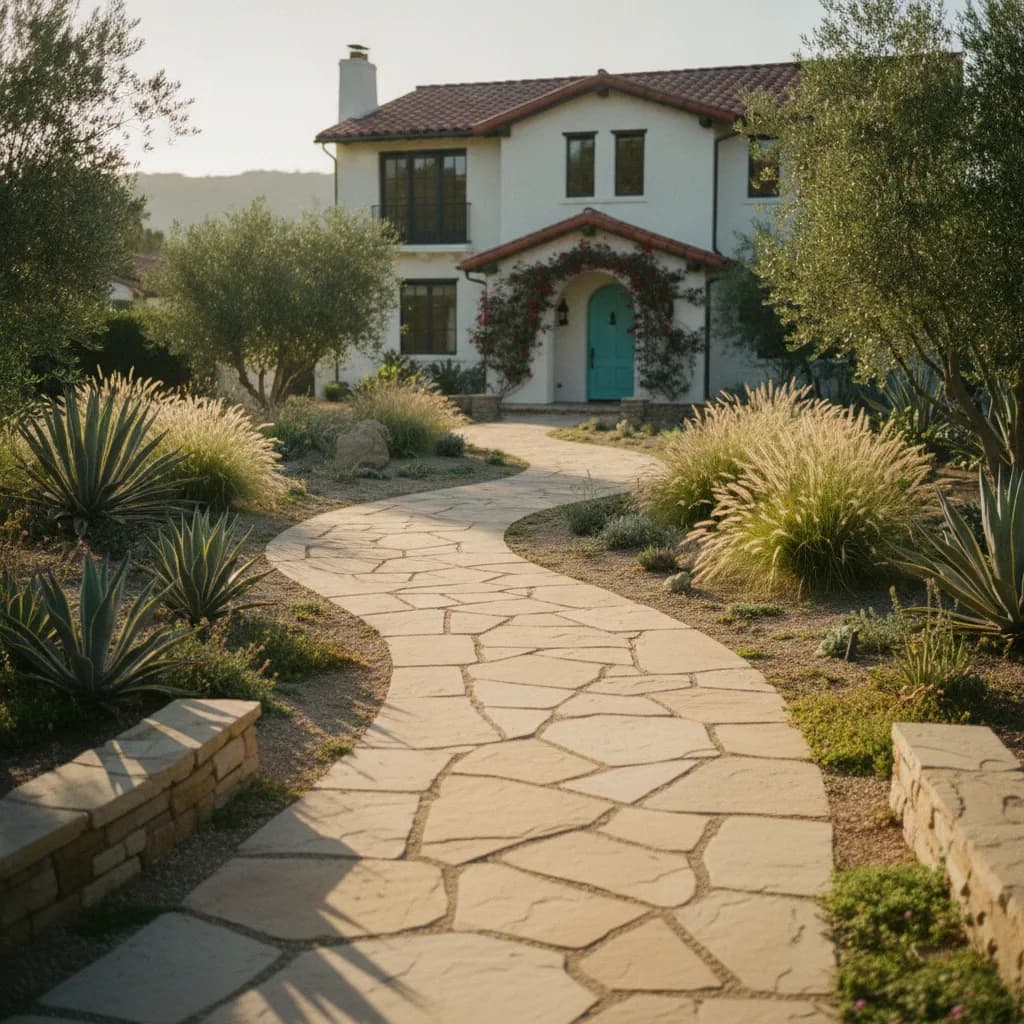
Choosing a new walkway material in San Diego feels like a surface-level decision. It is not. The choice between a premium mortared stone path and a mid-tier interlocking paver system is really a choice about what happens four, eight, and twelve inches below the surface. The longevity of your investment is not in the stone you see, but in the compacted base you don't. The difference between a walkway that lasts five years and one that lasts twenty-five is determined before the first paver is ever laid.
In a Nutshell: Premium vs. Mid-Tier Walkway
- Premium Option: Mortared Bluestone on Concrete. This is the high-end, classic approach. It involves setting natural stone, like dimensional bluestone, in mortar over a poured concrete sub-base. It offers maximum durability and a timeless aesthetic but comes with the highest cost and a rigid structure that is unforgiving of base failures.
- Mid-Tier Option: Interlocking Concrete Pavers. This is the versatile, modern standard. High-quality concrete pavers are set on a compacted aggregate base with sand-filled joints. This flexible system is more forgiving of San Diego's expansive soils and is more cost-effective, but its lifespan is entirely dependent on meticulous base preparation.
The Premium Option: Mortared Bluestone on a Concrete Sub-base
This is the institutional-grade installation, built for permanence. The visual is classic, high-end residential. The structure underneath is what separates it from cosmetic imitations. A mortared bluestone walkway is a rigid pavement system, meaning it functions as a single, monolithic unit.
Material and Installation
The surface is typically a full-range, dimensional bluestone or another dense natural stone, set with Type S mortar joints. The real work is the foundation: a four-inch thick, 3,500 PSI concrete slab poured over a compacted subgrade. This slab should conform to ACI 332 residential concrete specs, reinforced with #4 rebar at 18 inches on center. The subgrade itself must be compacted to 95 percent Modified Proctor density, with a geotextile separation layer to prevent soil migration. This is not a weekend project. It’s a structural build that demands precision. Compact in lifts. Test the base. Pull the permit before the pour.
Performance and Climate Considerations
With a proper build, the service life is twenty-five years or more. The rigid slab foundation is key for resisting settlement, especially on the challenging expansive clay soils common in neighborhoods from Point Loma to Scripps Ranch. The solid, mortared surface means no weeds, no ant hills, and a clean, uniform look. However, this impermeability means water management is critical. The walkway must be sloped correctly (a minimum of two percent, or a quarter-inch per foot) to prevent pooling. In coastal San Diego, from La Jolla to Coronado, the persistent salt air is less of a threat to the stone itself, but any improperly covered rebar in the concrete base is a future spalling failure waiting to happen. For inland areas like Rancho Bernardo, the summer heat makes control joints in the concrete sub-base absolutely non-negotiable to manage thermal expansion.
Failure Modes
The primary point of failure is the concrete sub-base. If the subgrade is not properly prepared and compacted, the slab will settle and crack, and those cracks will telegraph directly through the mortar joints and stone. Another common callback is efflorescence, the white, chalky residue that appears when water-soluble salts are drawn out of the mortar and concrete. This is a moisture management problem, often stemming from an incomplete cure or a base that stays too wet.
The Mid-Tier Option: Interlocking Concrete Pavers on an Aggregate Base
This is the workhorse of modern hardscaping. Interlocking concrete pavers from manufacturers like Belgard or Angelus Paving Stones offer a huge range of styles and colors. The key difference is that this is a flexible pavement system. It’s an assembly of individual units that can move slightly without failing, making it uniquely suited to certain site conditions.
Material and Installation
The installation follows a strict, layered process defined by the Interlocking Concrete Pavement Institute (ICPI). It starts with excavating and compacting the native subgrade soil. A geotextile fabric is laid down, followed by four to six inches of open-graded base material, typically #57 stone. This base is compacted in lifts. On top of the base goes a precisely screeded one-inch layer of coarse bedding sand (ASTM C33 concrete sand). The pavers are laid on this sand bed, and a plate compactor sets them. Finally, joint sand, preferably polymeric sand, is swept into the gaps and activated with water to lock everything together.
Performance and Climate Considerations
A properly installed paver walkway has a service life of fifteen to twenty years. Its greatest strength in the San Diego region is its ability to handle expansive clay soils. The flexible, multi-unit system can accommodate minor soil heave and settlement without the catastrophic cracking seen in rigid systems. The sand-filled joints also allow for some water permeability, which can help manage stormwater runoff. For paver projects anywhere in San Diego County, using a high-quality polymeric sand is essential. It hardens to resist washout from winter rains and prevents the inevitable weed growth and insect intrusion that plagues walkways using simple silica sand.
Failure Modes
Nearly every paver failure is a base failure. If the subgrade and aggregate base are not compacted correctly, the walkway will develop ruts, dips, and shifting pavers within a few years. An installer who just dumps four inches of gravel and runs a compactor over it once is guaranteeing a callback. The second common failure is joint sand degradation. Without polymeric sand, or if it's installed improperly, the sand washes out, the pavers lose their interlock, and they begin to wobble and shift.
Cost Breakdown: San Diego Walkway in 2026
Ready to compare vetted project options?
Use Project Match privately when your scope is clear enough for contractor conversations.
Start Project MatchA typical project cost for a new walkway in San Diego can start lower for simple refreshes on stable ground or in multi-family complexes with easy access. For most single-family home projects involving excavation and base work, expect costs to fall in the following ranges. These figures assume professional installation by a licensed and insured walkway contractor in San Diego.
- Mid-Tier Interlocking Pavers: $25 - $45 per square foot. The price varies based on paver selection, site access, and the amount of demolition and grading required.
- Premium Mortared Bluestone on Concrete: $55 - $85+ per square foot. Natural stone costs more, and the labor-intensive concrete and mortar work significantly increase the price.
The higher labor costs reflect the prevailing wages for skilled masons and concrete finishers in the region. According to the California Department of Industrial Relations prevailing wage data for San Diego County, these trades command a premium, which is factored into any professional quote. This ensures experienced crews are building a foundation that lasts.
Three representative projects from 2026, scoped similarly, reconstructed from Golden Yards Magazine's Project of the Day network and used here in aggregate form:
- Escondido Ranch Home ($11,500): A 300-square-foot interlocking paver walkway from the driveway to the front door. The project involved removing an old, cracked concrete path and re-grading the subsoil to improve drainage away from the foundation.
- Point Loma Craftsman ($22,000): A 450-square-foot paver path with a small adjoining patio area. The choice of a higher-end tumbled paver and the inclusion of low-voltage lighting drove the cost up from a basic installation.
- La Jolla Estate ($48,000): A 600-square-foot mortared bluestone walkway with wide, sweeping curves. The cost reflects the premium material, extensive concrete sub-base work, and challenging site access that required smaller equipment.
Hiring a Walkway Contractor in San Diego
The success of your project hinges on the installer. Look for a contractor with a valid California C-29 (Masonry) or C-8 (Concrete) license. For paver work, ICPI certification is a strong indicator of technical competence. When vetting a walkway contractor in San Diego, ask pointed questions about their process: “What is your protocol for subgrade compaction and how do you test it?” “What specific aggregate and sand do you use for the base and bedding courses?” “How will you ensure positive drainage away from my home’s foundation?” Their answers will tell you if they are building for the long term or just for a quick finish. Before signing a contract, ensure the scope of work is detailed and includes specifics on materials, base depth, and compaction. You can learn more about local requirements in our [San Diego walkway permit playbook for 2026](/guides/san-diego-walkway-permit-playbook-2026).
Budgeting and Avoiding Overruns
The most common source of budget surprises lies buried in the ground. Poor soil conditions, discovering old irrigation lines, or hitting caliche that requires extra excavation can all add to the cost. The best way to mitigate this is with a thorough site assessment upfront and a clear understanding with your contractor about how such discoveries will be handled. The National Association of Home Builders recommends a ten to fifteen percent contingency on renovations in homes over thirty years old. This advice is just as critical for landscape construction, as the unknowns are often greater. A well-defined contract that specifies costs for potential additional work, like extra grading or hauling away unsuitable soil, is your best defense against unexpected bills.
Sources & Methodology
Cost ranges in this guide draw on the following named industry sources, public agency datasets, and Golden Yards Magazine editorial research.
- California Department of Industrial Relations, San Diego County Prevailing Wage Data (2026)
- Interlocking Concrete Pavement Institute (ICPI) Tech Spec 2 (2024)
- American Concrete Institute, ACI 332-20 Residential Concrete Code (2020)
- ASTM International, C33/C33M Standard Specification for Concrete Aggregates (2023)
- National Association of Home Builders (NAHB), Remodeling Market Index (Q1 2026)
- City of San Diego Development Services Department, Project Submittal Manual (2025)
Golden Yards Magazine Take
Homeowners often fixate on the surface material, debating the color of a paver or the texture of a stone. This is the least important decision in the long run. The real choice you are making is about the base. A premium bluestone walkway built on a poorly prepared subgrade will fail. It will crack and heave, becoming a costly, dangerous mess. A mid-tier paver system installed meticulously over a properly engineered, multi-layered, and compacted base will perform flawlessly for decades. Your budget should be allocated accordingly. Spend the money on the excavation, the geotextile, the aggregate, and the compaction. A superior base with a standard paver is a far better investment than a premium stone on a compromised foundation.
Frequently Asked Questions
How long does a new walkway last in San Diego?
A walkway's lifespan depends entirely on the quality of its base. A properly installed interlocking paver walkway on a compacted aggregate base can last 15 to 20 years. A mortared natural stone walkway built on a reinforced concrete sub-base can be expected to last 25 years or more. Surface materials rarely fail; the underlying foundation does.
In both cases, these lifespans assume the subgrade was properly compacted and that drainage was correctly managed. A poorly built base can lead to failure in as little as three to five years, regardless of the surface material. Regular maintenance, such as topping off polymeric sand in paver joints, also plays a role in maximizing the walkway's service life.
Do I need a permit for a walkway in San Diego?
Generally, a permit is not required for a simple walkway or other flatwork that is on-grade. However, the situation changes if the project has other components. You will likely need a permit from the San Diego Development Services Department if your walkway includes a retaining wall over three feet high, has an attached cover or pergola, or significantly alters the property's drainage patterns.
It is always the safest and most responsible course of action to check with the city before beginning work. A licensed contractor should be able to advise you on permit requirements for your specific project scope. Failing to secure a necessary permit can lead to stop-work orders, fines, and problems when you eventually sell the property.
What is the best walkway material for San Diego's expansive clay soil?
Interlocking concrete pavers on a flexible aggregate base are typically the superior choice for properties with expansive clay soil. This type of soil swells when wet and shrinks when dry, and a rigid system like a mortared path on a concrete slab can crack under this movement. A flexible paver system is designed to accommodate minor shifts without failing.
While a mortared stone walkway can be built on expansive clay, it requires a much more solid and expensive foundation. This might include a post-tensioned slab or a base that is significantly over-excavated and backfilled with engineered fill. For most residential applications, the cost-effective and reliable solution is the flexible paver system.
How much does a walkway in San Diego cost in 2026?
The cost of a new walkway in San Diego for 2026 varies widely with materials and site complexity. Mid-tier interlocking paver installations typically range from $25 to $45 per square foot. Premium options, like mortared natural stone on a concrete base, are significantly more, usually falling between $55 and $85 per square foot, and sometimes higher.
These prices include materials, labor, demolition of any old surfaces, and proper base preparation. Factors that can increase the cost include difficult site access, the need for extensive grading or drainage work, and the selection of high-end materials. Always get multiple detailed quotes from qualified contractors to compare.
Why is polymeric sand so important for paver walkways?
Polymeric sand is a critical component for the longevity of a paver walkway. It is a fine sand mixed with a polymer binding agent that, when activated with water, hardens to lock pavers firmly in place. This creates a durable, flexible joint that resists erosion from rain and power washing, prevents weed growth, and deters ants from nesting between pavers.
Using regular sand or stone dust will lead to rapid joint failure. The material washes out, allowing pavers to shift and become uneven. This creates trip hazards and allows weeds to take root, dramatically increasing maintenance and shortening the functional life of the walkway. Insisting on high-quality polymeric sand is a non-negotiable part of a professional paver installation.
Sources & methodology
How Golden Yards builds this guide
Golden Yards reviews public permit and code signals, material pricing, climate and site constraints, contractor quote patterns, comparable projects, the Golden Yards Cost Index, and the Golden Yards Methodology. Cost references are planning ranges, not fixed bids.
- Benchmarked against the Golden Yards Cost Index and related project guides.
- Reviewed for California climate, water, fire, drainage, access, and permit context.
- Commercial Project Match is separate from editorial cost guidance.
Ready to start your driveway project?
Get matched with 2-3 vetted California contractors. 100% free, no obligation.
Find My Pros