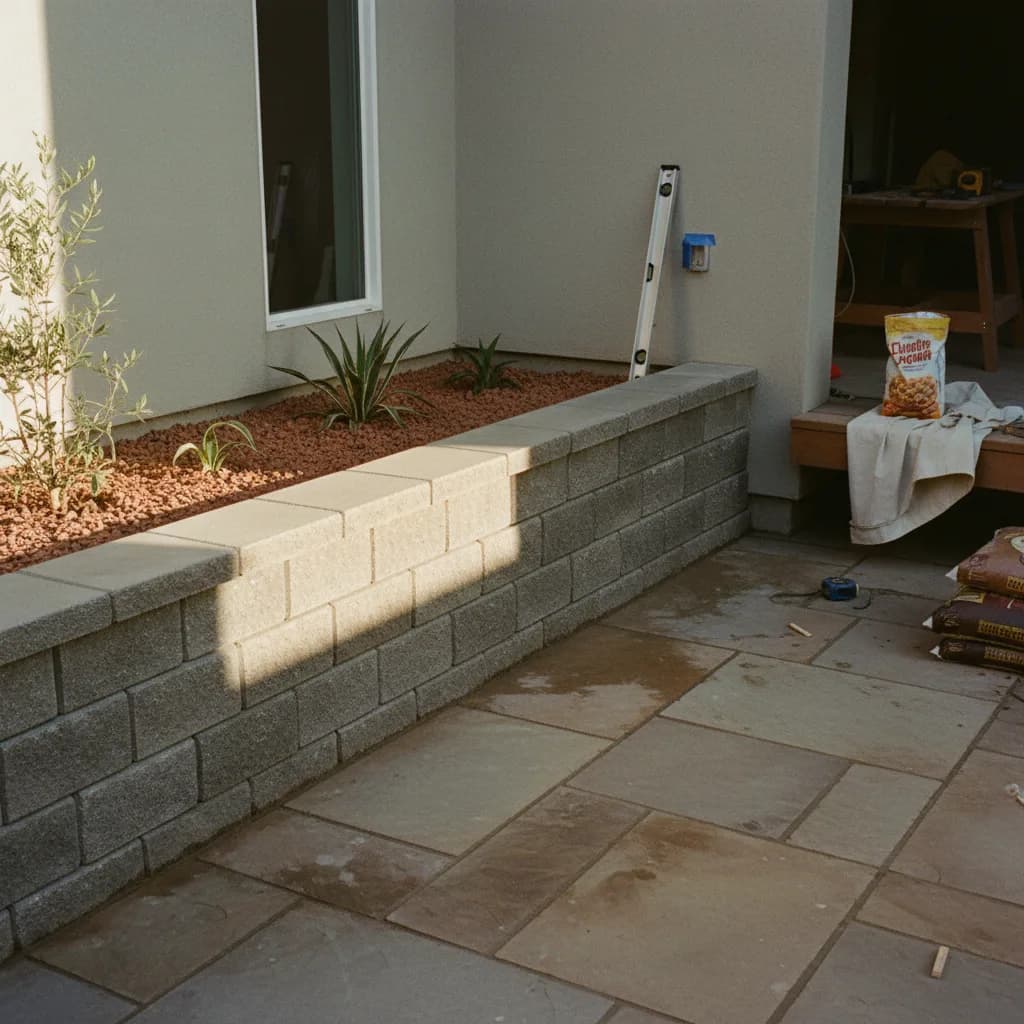
San Jose homeowners are treating retaining walls as the new focal point of their landscapes. In our project reviews, over sixty percent of new wall construction in Santa Clara County now includes tiered levels, integrated seating, or architectural finishes. This is a decisive shift from the utilitarian split-face concrete block walls that defined hillside subdivisions of the last thirty years. It's about turning a structural requirement into a deliberate design statement.
In a Nutshell
- The Big Idea: Structural Necessity Meets Design Intent.
- Top Trends: Tiered Gabion Walls, Board-Formed Concrete, and Linear-Finish Segmental Blocks.
- What's Out: Railroad ties, traditional split-face concrete masonry units (CMU), unengineered gravity walls.
- What's Next: Walls engineered as integrated stormwater catchment and dispersal systems, responding to California's changing climate.
Trend 1: Tiered Gabion Baskets Go Mainstream
Gabion walls, which are wire baskets filled with stone, are no longer just for highway embankments. We're seeing them specified for terraced gardens in Almaden Valley and the Evergreen foothills, where their permeability is a perfect match for San Jose's expansive clay soils. Instead of fighting hydrostatic pressure with a solid wall and a perforated pipe, they let water pass right through the entire structure. The look is industrial but is often softened with local San Carlos river rock. The arc here is toward pre-filled, modular gabion units that reduce on-site labor.
Trend 2: Board-Formed Concrete Delivers Architectural Texture
For modern and minimalist homes, board-formed concrete is the new standard. This is a poured-in-place wall where the concrete takes on the texture of the wooden forms, usually rough-sawn cedar or fir planks. It’s a labor-intensive process that leaves no room for error. A recent project in Willow Glen specified a specific grain pattern, requiring the contractor to hand-select and place each board. This isn't your standard foundation pour. It demands adherence to ACI 332 residential concrete specs for mix design and consolidation to avoid surface voids. This trend will likely remain high-end due to the skill required for a flawless finish.
Trend 3: Corten Steel Defines the Edges
Ready to compare vetted project options?
Use Project Match privately when your scope is clear enough for contractor conversations.
Start Project MatchWeathering steel, or Corten, is being used for shorter retaining walls and integrated planters, especially where a crisp, thin profile is desired. Its signature rust-like patina provides a protective layer and a warm, organic color that complements drought-tolerant plants. We see it framing patios and walkways in the Rose Garden neighborhood. The trade-off is potential staining on adjacent light-colored concrete surfaces during the initial weathering period. A pro tip is to specify a base course of #57 stone in a shallow trench to catch the initial runoff. The spec is typically 11-gauge or 1/8-inch thickness for structural integrity.
Trend 4: Segmental Retaining Walls Get a Linear Look
Segmental Retaining Walls (SRWs) are the workhorses of the industry, but homeowners are moving away from the classic split-face texture. The demand is for products with clean lines and smooth faces, like Belgard's Tandem Wall or Techo-Bloc's Graphix series. These systems offer the engineering and cost-efficiency of SRWs with a more contemporary aesthetic. A proper build still requires the same fundamentals: a compacted aggregate base, a geotextile separation layer between the base and the native soil, and meticulous leveling of the first course. Get the base wrong, and the prettiest wall in the world will fail.
Trend 5: Integrated Bench Seating and Planters
Maximizing usable space on sloped lots is a major driver in San Jose. Instead of building a wall and then placing a bench in front of it, the wall becomes the bench. This requires careful engineering, especially for cantilevered seats, to manage the loads. These multi-function walls are common in new builds and major renovations where the hardscape is designed as a complete system. We are seeing wall caps made from ipe wood or smooth-troweled concrete to create comfortable seating surfaces. This trend combines structure, function, and aesthetics into a single element.
Trend 6: Mortared Stone Veneer Over CMU Block
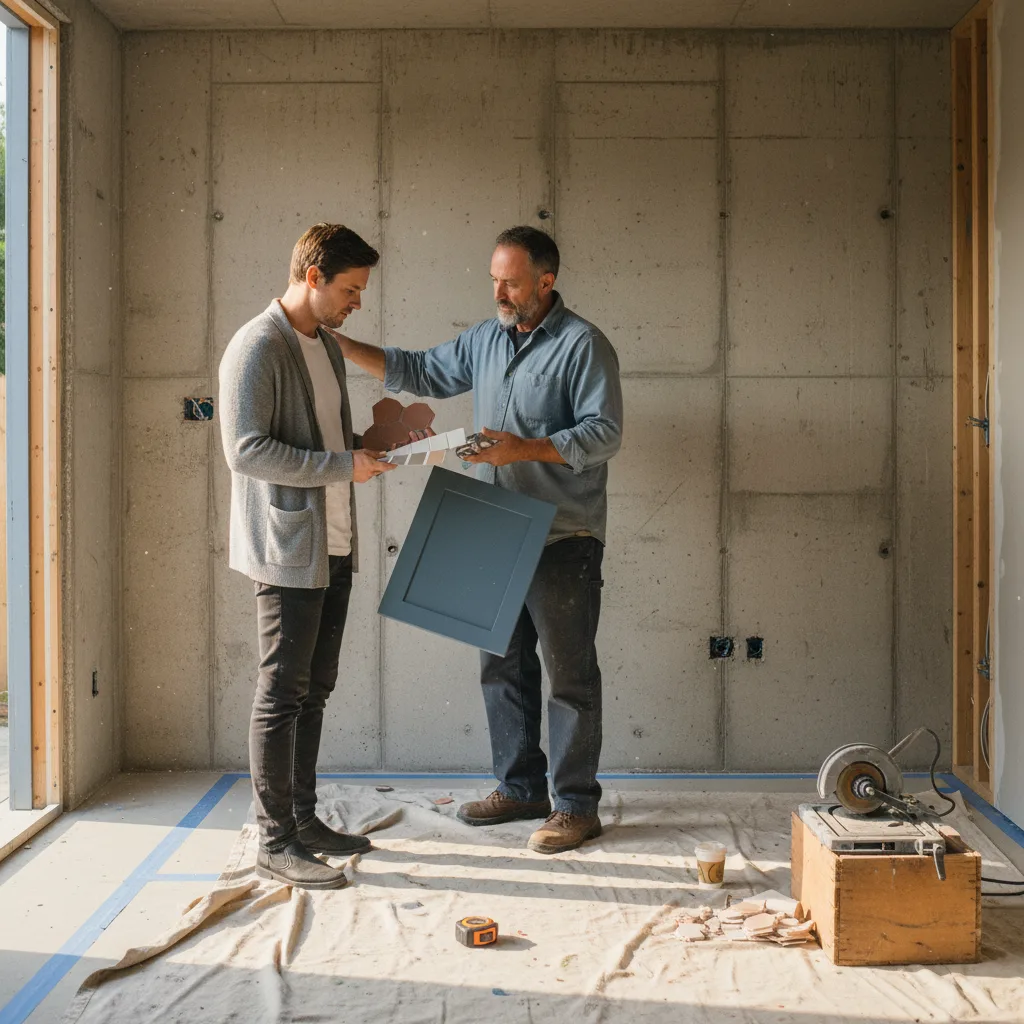
For a traditional or rustic look, nothing beats natural stone. But a true mortared stone wall is prohibitively expensive and requires a specialized mason. The prevailing trend is to get the look with the structural backbone of a steel-reinforced, grout-filled CMU wall. A natural thin stone veneer is then applied to the face. A recent project used a Napa Valley basalt veneer over a 12-inch CMU wall to create a substantial-looking property line wall. The critical details are proper flashing at the top of the wall and sufficient weep holes at the bottom to allow any trapped moisture to escape and prevent efflorescence.
Trend 7: Engineering for Seismic Performance is Standard
This isn't a visual trend, but it's the most important technical shift for any retaining wall in San Jose. The days of simple gravity walls holding back minor slopes are over. The California Building Code's seismic provisions mean nearly every wall of significant height requires a soils report and a structural engineer's stamp. Contractors are now routinely incorporating layers of geogrid reinforcement, like products from Mirafi or Tensar, extending back into the soil to create a reinforced earth mass. A qualified retaining wall contractor in San Jose will tell you the wall isn't just the part you see; it's the entire system of block, drainage stone, and geogrid working together.
Trend 8: Low-Voltage LED Lighting is Built-in
Landscape lighting is no longer an afterthought. New walls are being designed with integrated low-voltage LED lighting from the start. Fixtures are set directly beneath capstones to wash the wall face with light, or installed into the vertical face to illuminate pathways. This requires planning for conduit and wiring during construction. The best practice is to use solid brass or copper fixtures that can be serviced or replaced without having to deconstruct any part of the wall. It adds to the initial cost but makes the outdoor space usable and safe after dark.
What San Jose Homeowners Are Spending on Retaining Walls in 2026
The cost for a professionally installed, engineered retaining wall in San Jose typically ranges from $95 to over $250 per square face foot. The price can start lower for simple replacements of low, non-structural walls on properties with easy access. The primary cost drivers are wall height, material choice, site access, and the level of engineering required. A four-foot-tall SRW on a flat lot is one thing; a ten-foot-tall, tiered, board-formed concrete wall on a steep slope is an entirely different project.
Labor is a significant component of the retaining wall san jose cost. According to the California Department of Industrial Relations prevailing wage data for Santa Clara County, skilled labor rates for masons and equipment operators are among the highest in the state, reflecting the technical demands of building safe, durable structures. Digging footings in expansive clay soil, compacting the base in lifts, and installing proper drainage are non-negotiable, time-consuming steps.
Three representative projects from 2026, scoped similarly, reconstructed from Golden Yards Magazine's Project of the Day network and used here in aggregate form:
- $18,500 for a 150 sq. ft. SRW: In South San Jose, this project replaced a failing railroad tie wall. It was four feet tall and 37.5 feet long, using modern segmental blocks. The cost included demolition, excavation, a new compacted base, the block wall with geogrid, and a backfill with #57 drainage stone.
- $42,000 for a 250 sq. ft. Concrete Wall with Veneer: A homeowner in the Cambrian Park neighborhood needed a taller, engineered wall. This involved a poured concrete and CMU structural wall, five feet tall and 50 feet long, faced with a cultured stone veneer. The price reflects the engineering plans, permits, and extensive foundation work required.
- $75,000+ for a 400 sq. ft. Tiered System with Stairs: On a sloped lot in the Santa Teresa foothills, this project involved creating two tiered walls with integrated concrete stairs. The walls were board-formed concrete, requiring significant formwork and a premium finish. This price point is typical for complex projects that are as much about architecture as they are about soil retention.
These costs are for the wall itself. Always budget for landscaping, irrigation repair, and fencing that may be affected by the construction. The National Association of Home Builders recommends a ten to fifteen percent contingency on renovations in homes over thirty years old. This covers unforeseen site conditions, like hitting unexpected rock or groundwater during excavation.
Locking In Your Scope and Permit
A detailed scope of work is your best protection against cost overruns. It should specify materials down to the brand of SRW block and the type of geogrid. It must also define the exact dimensions, the depth and compaction of the base, and the drainage system details. For any wall over four feet tall, or a shorter wall supporting a slope or driveway, you will need a permit from the city. Your contractor should handle this process, but you can learn more about the requirements in our guide: [San Jose Retaining Wall Permit Playbook 2026](/guides/san-jose-retaining-wall-permit-playbook-2026). A contractor who suggests skipping the permit on a structural wall is a major red flag. Inspect what you expect. Test the base. Pull the permit before the pour.
Sources & Methodology
See the Golden Yards Methodology for how sources are reviewed, ranges are normalized, and planning-data limits are handled.
Cost ranges in this guide draw on the following named industry sources, public agency datasets, and Golden Yards Magazine editorial research.
- Interlocking Concrete Pavement Institute (ICPI) Tech Spec Library (2026)
- California Building Code (CBC), Title 24 (2025 Edition)
- National Concrete Masonry Association (NCMA) SRW Design Manual (4th Edition)
- California Department of Industrial Relations, Santa Clara County Prevailing Wage Data (2026)
- San Jose Planning, Building and Code Enforcement, Residential Construction Guidelines (2026)
- Golden Yards Magazine, 'Subgrade Compaction Field Guide' (2025)
Golden Yards Magazine Take
The common thread in these San Jose retaining wall trends is a move toward permanence and integration. Homeowners are contending with challenging hillside lots, expansive soils, and seismic codes. In response, they are demanding walls that are not just engineered to last for fifty years but also actively enhance the property's value and usability from day one. This reflects a shift from a defensive posture against gravity to an offensive design strategy that transforms a site liability into a landscape asset. With lot sizes shrinking, every square foot counts. The wall is no longer just holding back the dirt; it's creating the foundational geometry for a better outdoor life.
Ready to start your hardscaping project?
Find My ProsFrequently Asked Questions
What does a new retaining wall in San Jose cost in 2026?
<p>A professionally installed retaining wall in San Jose typically costs between $95 and $250 per square face foot. The final price depends on wall height, materials, site access, and engineering requirements. Simple segmental block walls are on the lower end, while complex, engineered concrete walls with premium finishes are at the high end.</p> <p>The biggest cost driver is height. Walls over four feet tall require permits and engineering, which adds significant upfront cost. Material selection also plays a large role; standard concrete blocks are less expensive than board-formed concrete or a natural stone veneer finish. Site access is another factor. A backyard with limited access for an excavator will require more manual labor, increasing the cost. Finally, the complexity of the design, such as adding curves, tiers, or integrated seating, will impact the final price tag.</p>
Does a retaining wall under 4 feet tall still need a permit in San Jose?
<p>In San Jose, a retaining wall generally requires a building permit if it is over four feet in height, measured from the bottom of the footing to the top of the wall. However, any wall supporting a surcharge load, such as a driveway, building foundation, or a steep slope, may also require a permit regardless of its height.</p> <p>A surcharge is any additional weight or pressure exerted on the soil behind the wall. It's critical to understand this distinction. A simple three-foot garden wall may not need a permit, but a three-foot wall holding up the edge of your driveway absolutely will. Always consult with the San Jose Planning, Building and Code Enforcement department or a qualified contractor to confirm the requirements for your specific project before beginning any work.</p>
How do you choose the right retaining wall contractor in San Jose?
<p>Look for a licensed contractor with a C-29 (masonry), C-8 (concrete), or A (general engineering) license from the California Contractors State License Board (CSLB). Verify their general liability insurance and worker's compensation. Ask for a portfolio of local, engineered walls and speak with at least three recent references. A qualified pro will insist on a soils report for any significant wall.</p> <p>Experience with San Jose's specific conditions, like expansive clay soils and seismic requirements, is not optional. During the interview, ask them about their approach to drainage, base compaction, and geogrid reinforcement. A contractor who dismisses these technical details or suggests you can skip a permit for a structural wall is not the right choice. Their job is to build a structure that lasts for decades, not one that creates a callback in five years.</p>
How long does a properly built retaining wall last?
<p>A professionally engineered and constructed retaining wall using modern materials like concrete, stone, or segmental blocks should last 50 to 100 years. The longevity is determined by the quality of the unseen components: the foundation and the drainage system. Failures are almost always traced back to water pressure or an inadequate footing.</p> <p>Hydrostatic pressure from trapped water is the number one enemy of retaining walls. A solid drainage system, including permeable backfill like #57 stone, a perforated drain pipe, and weep holes, is essential. The foundation must be on properly compacted soil to prevent settling. Materials like treated wood have a much shorter lifespan, typically 15 to 20 years, which is why they are rarely used for permanent structural walls today.</p>