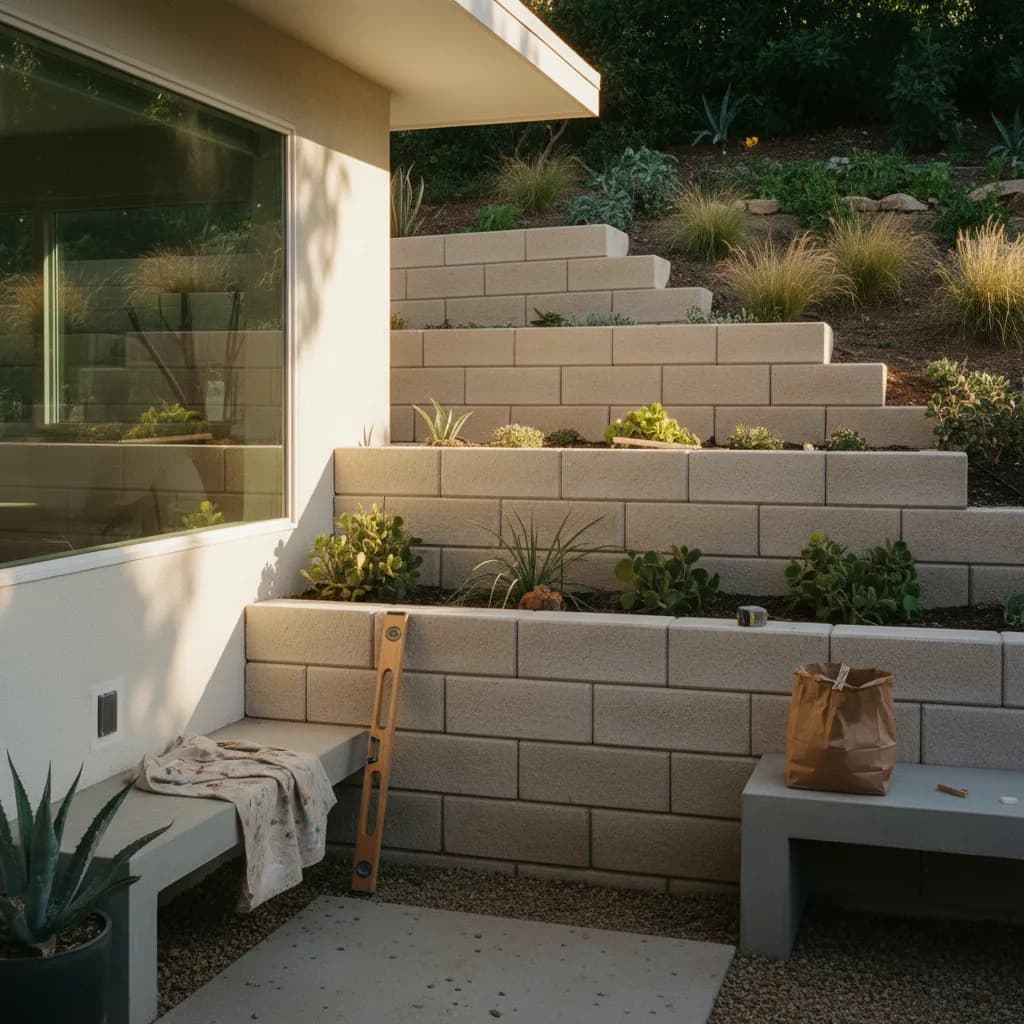
Choose a retaining wall system for the site, then compare the complete proposals. Poured concrete and segmental block can serve different designs; “premium” and “mid-tier” are spending labels, not engineering grades. The useful comparison includes the ground being retained, nearby loads, available construction space, drainage, approvals and finish choices.
This guide helps Los Angeles homeowners prepare that comparison. It does not provide a wall design or a verified local construction-price survey. The numerical worksheet below is hypothetical, and the permit discussion distinguishes City of Los Angeles guidance from other jurisdictions within the county.
Concrete vs. segmental block: compare the proposed system
A proposal for poured concrete should identify the designed wall and foundation, reinforcement, concrete specification and finish. A segmental retaining wall, or SRW, proposal should identify the block system and whether its design uses conventional gravity construction or reinforced soil. Neither proposal is complete when it names only a surface material.
CMHA's segmental wall design guidance covers both conventional and soil-reinforced systems, including structural applications such as parking-area support. A segmental wall is therefore not automatically a decorative alternative to a structural concrete wall. Suitability must be established for the particular site and design.
| Decision | Poured concrete proposal | Segmental block proposal |
|---|---|---|
| System definition | Ask for the wall type, foundation and specified reinforcement. | Ask for the exact block system and whether the design includes reinforced soil. |
| Available space | Show the foundation, excavation and construction-access footprint. | Show the complete wall footprint, including any reinforcement zone. |
| Finish | Separate the structural work from board-form, color or cladding choices. | Identify the face style, color, caps, corners and transitions. |
| Scope to document | Include drainage, approvals, inspection responsibilities and restoration. | Include drainage, approvals, inspection responsibilities and restoration. |
The table is a request for information, not a claim that one system is always cheaper, faster or longer-lived. Compare alternatives after the design team has determined which can work. An attractive finish or a promised lifespan does not demonstrate structural suitability.
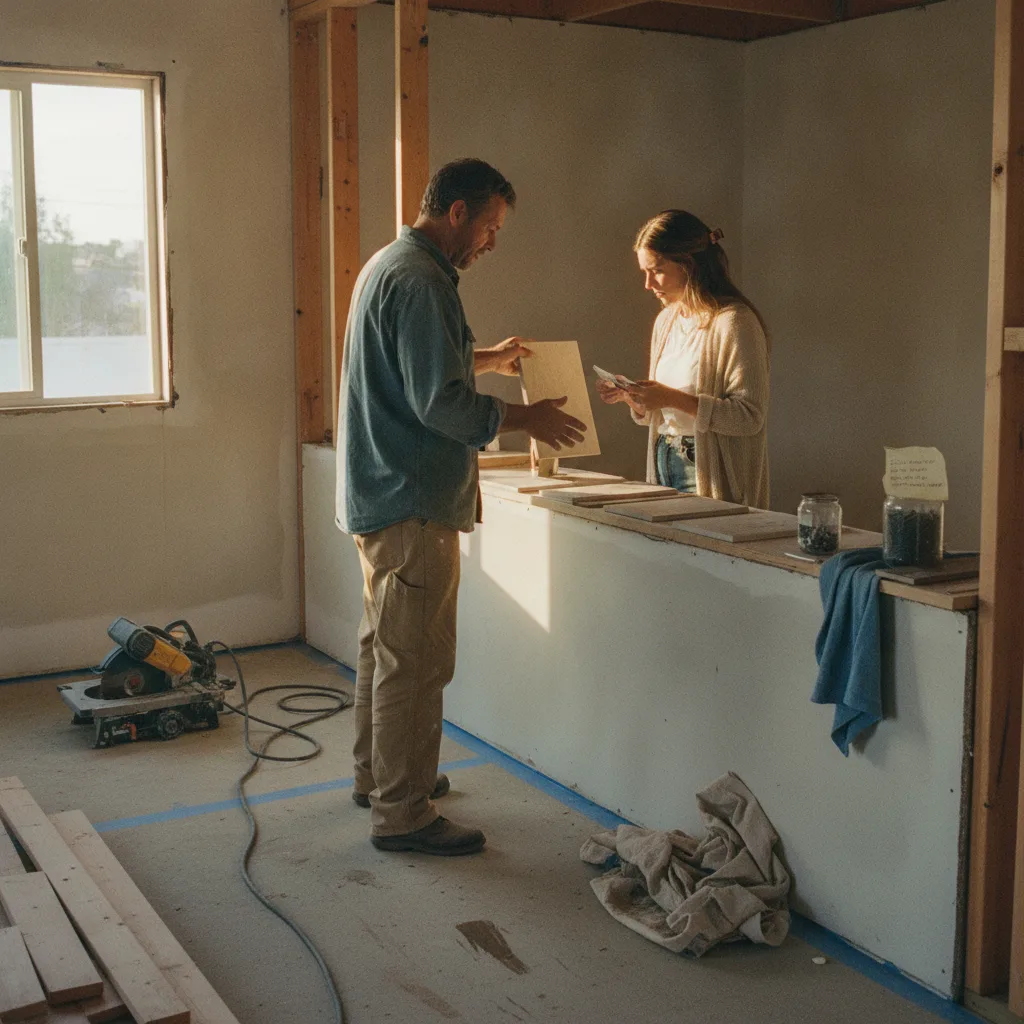
What the site and drainage plan must resolve
Bring a measured site sketch and photographs to the first design conversation. Allan Block's planning guidance calls for understanding the terrain, soil, nearby features and water movement before design. Identify property boundaries, access, utilities, existing structures and the ground above and below the proposed wall.
Ask who will evaluate the effect of a nearby driveway, patio, pool, building or another wall. For a tiered garden, show the entire arrangement rather than treating each visible face as an isolated project. The available space behind the face also belongs on the plan; a narrow property edge can constrain construction and system selection.
Water management should have a named designer, contractor and completion check. The manufacturer's construction checklist separates surface runoff from water behind the wall and asks where it will be discharged. Request a documented route, outlet and maintenance access, including coordination with existing yard drainage. Adding a pipe to a bid does not establish that the whole drainage plan is resolved.
For replacement work, ask how the work area and adjacent features will be supported during removal and excavation. Have the appropriate professionals assess existing movement or distress before planning a cosmetic repair. This comparison does not specify footing dimensions, reinforcement spacing, compaction targets or a repair method.
Los Angeles permits and design review
First confirm the agency responsible for the property. City of Los Angeles DBS guidance is not a substitute for the requirements of an independent city or an unincorporated Los Angeles County address.
The city's Retaining Wall Design bulletin, P/BC 2026-083, revised August 4, 2026, addresses lateral soil pressure, additional loads, seismic criteria and stability. It calls for a geotechnical investigation report when retaining sloping ground. Have the responsible design professional identify the applicable conditions and document how the proposal addresses them.
Check grading as a separate part of the approval conversation. The city's grading-permit page lists retaining-wall cuts, backcuts and backfill among work subject to grading plan review. A wall proposal should state which applications and review responsibilities are included.
Do not decide whether a permit is unnecessary from a generic three- or four-foot height rule. Ask DBS to confirm any exemption against the measured wall, adjacent conditions and proposed work. Request the current document and the reason it applies. A standard detail or a contractor's statement that a wall is “small” does not settle the complete approval scope.
Retaining wall costs: define the units and inclusions
Ready to compare vetted project options?
Use Project Match privately when your scope is clear enough for contractor conversations.
Start Project MatchFor a simple rectangular illustration, a wall 50 feet long with four feet of exposed face has 200 square feet of visible face. This is quantity arithmetic, not a recommended wall size. It excludes any buried face, foundation and additional excavation from that area measurement.
Ask each bidder how they measure stepped sections, changing heights, corners and caps. Then ask what the quoted unit price includes. A rate per face square foot and a rate per linear foot are not comparable until the geometry and scope match. Material-only block prices cannot establish an installed wall budget.
Separate these proposal categories: design and investigation; applications and review fees; removal and temporary works; excavation and disposal; the wall system and installation; drainage and its outlet; inspections or testing; access and restoration; and optional finishes. Record exclusions and allowances next to the total. Check whether taxes and delivery are included.
A quote worksheet: how a lower headline price can change
The following invented numbers illustrate two proposals for the same assumed scope. They are not Los Angeles market rates, invoices or examples from completed projects. Proposal A leaves three items out of its headline price; Proposal B includes them. The added figures are placeholders that would need written prices.
| Budget entry | Proposal A | Proposal B |
|---|---|---|
| Headline amount | $28,000 | $34,000 |
| Add excluded design and review allowance | $3,000 | $0 |
| Add excluded drainage-outlet allowance | $2,000 | $0 |
| Add excluded haul-away allowance | $3,000 | $0 |
| Adjusted example total | $36,000 | $34,000 |
A zero in Proposal B means the item is assumed included in its headline amount, not that the work is free. Proposal A starts $6,000 lower but ends $2,000 higher after the assumed missing scope is added. The comparison still requires matching specifications, approval responsibilities and exclusions; arithmetic cannot establish construction quality.
Keep the owner's reserve separate from the contracted amount. Choose it with the project team after identifying unresolved conditions; no universal percentage is established here. For an upgrade, request the price difference from an agreed baseline. Do not use “premium” to combine better-looking finishes with undocumented claims about strength or resale value.
Ask for a schedule with clear completion steps
Request separate milestones for investigation and design, application submission, corrections, approval, procurement, construction and handover. Identify who owns each step and what information must be available before work can proceed. A construction-duration estimate should say whether it starts before or after permits and site access are ready.
For poured concrete, ask how formwork, deliveries, placement and the specified curing and inspection sequence affect the schedule. For segmental block, ask how excavation, system deliveries, any reinforcement and backfill work are coordinated. Neither material name establishes a reliable completion date for an unknown site.
At handover, request the relevant approvals and inspection records, final scope, product information, warranty terms and drainage-maintenance instructions. Record unresolved items and who will address them. Keep those documents with the property records rather than relying on photographs of the finished face.
Choose the team and connect the backyard work
Use the CSLB license lookup to check the business and license information. Confirm that the classification fits the complete work; this article does not prescribe one classification for every retaining-wall contract. Ask for insurance information, comparable references and a written division of design and construction responsibilities.
Discuss the wall together with nearby hardscape and landscaping. Name the party responsible for access, soil disposal, surface restoration and drainage connections so those items are neither omitted nor priced twice. Keep optional planting, lighting and decorative finishes separate from the required wall work.
If you use Project Match, bring site photos, the measured layout, available reports, the intended use of the space and your unresolved questions. A productive first conversation should clarify the next design or pricing step. It should not promise a system, a permit exemption or a fixed price from a photo alone.
Sources & Methodology
Reviewed September 10, 2026. The city documents support the Los Angeles design and grading discussion. CMHA and Allan Block provide system and planning context; their guidance does not approve a specific property. None of these sources validates the worksheet's invented dollar amounts or a Los Angeles installed-price average.
We have not verified a customer-invoice sample, comparative earthquake-performance dataset, fixed service life or resale-return percentage for this article. The calculation and quote worksheet are editorial planning examples. See our methodology and corrections process.
Ready to start your hardscaping project?
Find My ProsFrequently Asked Questions
How much does a retaining wall cost in Los Angeles?
This article does not establish a verified Los Angeles installed-price range. Compare property-specific proposals that identify the wall system, dimensions, design, excavation, disposal, drainage, installation and approvals. The $36,000 and $34,000 adjusted totals in the worksheet are hypothetical quote comparisons, not market averages or completed projects.
Should retaining wall quotes use square feet or linear feet?
Either unit needs a defined scope. For a hypothetical 50-foot-long wall with four feet of exposed face, the visible face area is 200 square feet. State whether quoted height includes buried work, how stepped sections are measured, and whether design, drainage and excavation are included. A face-area estimate is not a structural design.
How high can I build a retaining wall without a permit in Los Angeles?
Do not decide from height alone or a generic three- or four-foot rule. Ask the City of Los Angeles DBS to confirm the applicable exemption or permit path for your measured wall and site. Confirm grading separately: the city's grading guidance lists retaining-wall cuts, backcuts and backfill for plan review. Other Los Angeles County jurisdictions may use different processes.
Can a segmental block wall support a driveway?
Some engineered segmental retaining wall systems are used for parking-area support; block is not limited to decorative garden walls. That does not approve a particular product for your driveway. Have the design team evaluate loads, soil, slopes, drainage, available space and local requirements before comparing construction bids.
Is poured concrete always better than block in an earthquake?
A material label does not establish earthquake performance. The City of Los Angeles retaining-wall design bulletin addresses soil loads, surcharges and seismic design criteria. Ask the responsible engineer to explain the applicable requirements and proposed system for your site; this article does not rank systems by verified earthquake performance.
Does every segmental retaining wall need geogrid?
No. CMHA distinguishes conventional gravity segmental walls from walls that incorporate reinforced soil. Whether reinforcement is needed, and its design, depends on the selected system and site conditions. Do not choose geogrid length, spacing or a wall height from this article.
What should I ask a retaining wall contractor before hiring?
Check the business and license record through CSLB, confirm a classification appropriate to the complete work, and request insurance information and comparable references. Ask who handles engineering, permits, temporary works, drainage, inspections and changes. Compare those responsibilities in writing before accepting the price.
Does a premium retaining wall guarantee higher resale value?
This article has no verified sales dataset showing a fixed resale premium or return. Compare the usable space, maintenance responsibilities, documented condition and your intended use. A more expensive finish is not evidence of greater structural suitability or a guaranteed financial gain.