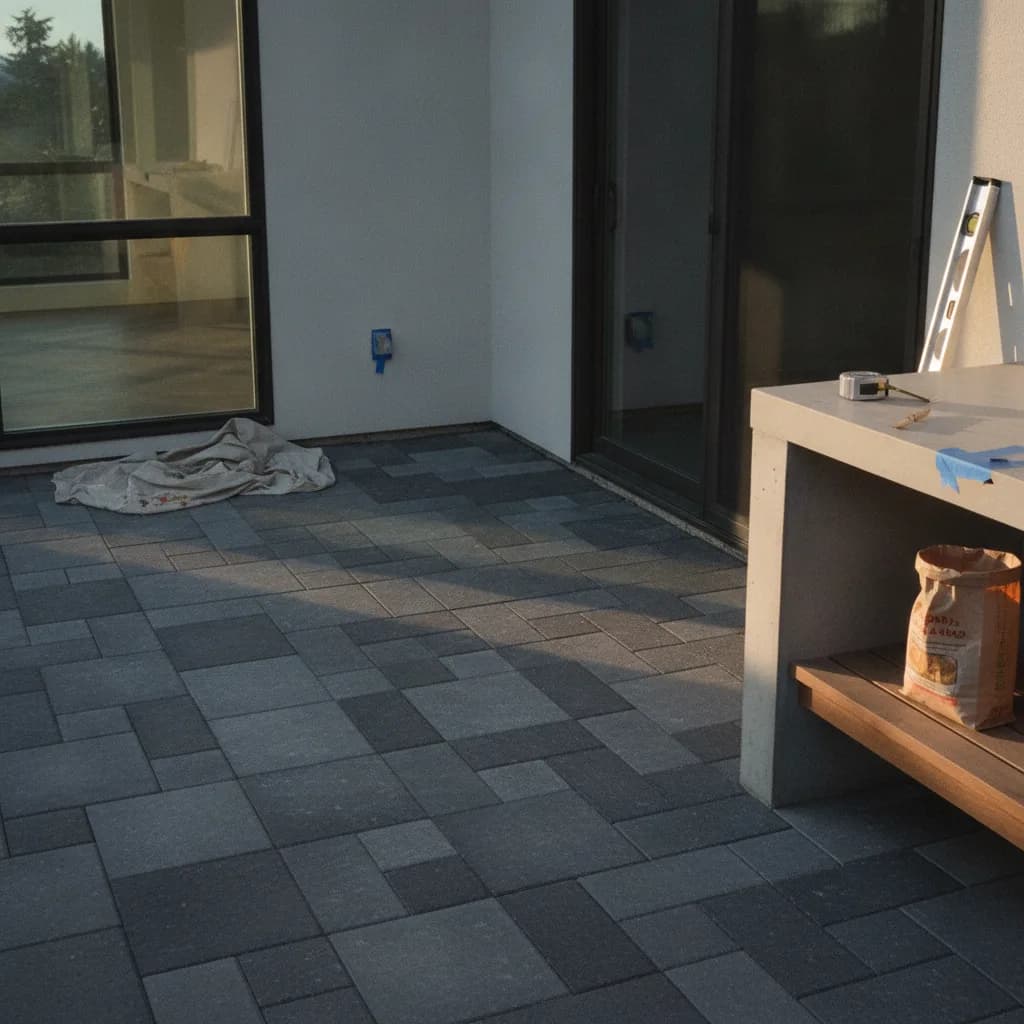
A paver patio in Bellevue looks simple. You pick a color, a pattern, and a crew lays it down. But the patio that lasts twenty-five years versus the one that’s a lumpy, weed-choked mess after five winters has nothing to do with the color. The difference is buried, unseen, in the six to ten inches of aggregate base beneath the surface. It's about how the system handles the forty-plus inches of rain and the freeze-thaw cycles that define our Pacific Northwest climate. This is a technical decision, not an aesthetic one.
We’re comparing two common approaches for a 2026 paver patio in Bellevue. Not just good vs. bad, but a solid, industry-standard build versus a premium, water-managing system designed for legacy performance. One is a workhorse. The other is an investment in geotechnical stability. The choice you make determines whether you’re enjoying your patio in 2050 or calling a contractor for a complete tear-out and redo.
In a Nutshell: Mid-Tier vs. Premium Paver Patios
- Mid-Tier Approach: Focuses on a standard Interlocking Concrete Pavement Institute (ICPI) compliant build. Uses quality concrete pavers, a compacted aggregate base, and polymeric sand. It’s the industry baseline for a reason: it's reliable and cost-effective when done right. Best for: Smaller patios on stable, relatively flat sites with good existing drainage.
- Premium Approach: Employs an open-graded base system for maximum water permeability. Uses high-end materials like large-format concrete or porcelain pavers, a deeper base of clean-washed stone, and high-performance geotextiles. This is a drainage system first, a patio second. Best for: Large patios, hillside properties in neighborhoods like Somerset or Lakemont, and sites with poor-draining glacial till soil.
The Mid-Tier Patio: Industry Standard Build
1. Materials & Aesthetics
This build typically uses standard-sized concrete pavers from regional manufacturers like Mutual Materials (e.g., their Vancouver Bay or Holland series) or Belgard's classic lines. These are durable, proven products available in a wide range of colors and textures. The focus is on a traditional interlocking pattern that provides strength and stability. This is the look you see in most solid, well-built suburban patios.
2. Foundation & Base Prep
The foundation is the core of any paver job. A mid-tier installation follows ICPI Tech Spec 2 guidelines. This means excavating six to eight inches of native soil, compacting the subgrade to 95 percent Standard Proctor density, and installing a woven geotextile separation fabric. On top of this goes four to six inches of a dense-graded aggregate, like 5/8-inch minus crushed rock, compacted in two-inch lifts. Finally, a one-inch bedding course of ASTM C33 concrete sand is screeded for the pavers.
3. Drainage & Edge Restraints
Water management relies on a carefully graded surface slope (a minimum of 1/4 inch per foot) to direct runoff away from structures. Edging is critical to prevent pavers from spreading. Standard installations use heavy-duty plastic or concrete edge restraints secured with 10-inch steel spikes. Joints are filled with a quality polymeric sand, which hardens to lock pavers in place and resist weed growth.
4. Installation & Labor
A proficient crew can execute this system efficiently. The process is straightforward for an experienced paver patio contractor in Bellevue. Labor involves excavation, material hauling, precise compaction with a plate compactor, and careful laying and cutting of pavers. For a typical 500-square-foot patio, the base prep is two to three days of work, with the paver laying taking another one to two days.
5. Long-Term Performance & Maintenance
When installed correctly, a mid-tier patio offers excellent performance for fifteen to twenty years. The primary failure mode is differential settlement. If the subgrade isn't compacted properly or the base is too thin for the soil type, sections can sink over time, creating low spots where water pools. Maintenance involves occasional pressure washing and topping off polymeric sand every few years.
6. Cost & ROI
For a complete installation in 2026, a mid-tier paver patio in Bellevue costs between $30 and $45 per square foot. The return on investment is solid, as it provides a durable, functional outdoor living space that meets the expectations of most homebuyers. It’s a known quantity and a safe bet for improving usability and curb appeal.
The Premium Patio: Permeable Legacy Build
1. Materials & Aesthetics
A premium build opens the door to high-end materials. Think large-format porcelain pavers for a sleek, modern look, or thick, architectural concrete slabs like Belgard's Artforms. These materials offer superior stain resistance and a more sophisticated aesthetic. The look is less about traditional interlock and more about creating a smooth, architectural surface.
2. Foundation & Base Prep
This is the system's main differentiator. Instead of a dense-graded base, a premium build uses an open-graded, permeable base. This means excavating deeper, often eight to twelve inches. After compacting the subgrade, a solid non-woven geotextile fabric is laid down. The base consists of six to ten inches of clean, washed #57 stone, lightly compacted. This creates a massive underground reservoir that allows water to percolate through, drastically reducing runoff and hydrostatic pressure. The bedding course is often a 1/4-inch washed chip stone (ASTM No. 8 aggregate) instead of sand.
3. Drainage & Edge Restraints
The entire base acts as a drainage field, making it ideal for Bellevue's rainy climate and clay-heavy soils. This system actively manages stormwater, which can even reduce requirements for other on-site drainage solutions. Edge restraints are more solid, often concrete curbs or integrated systems bonded to the pavers. Jointing might use a higher-end polymeric sand or even a permeable aggregate, depending on the desired aesthetic and performance.
4. Installation & Labor
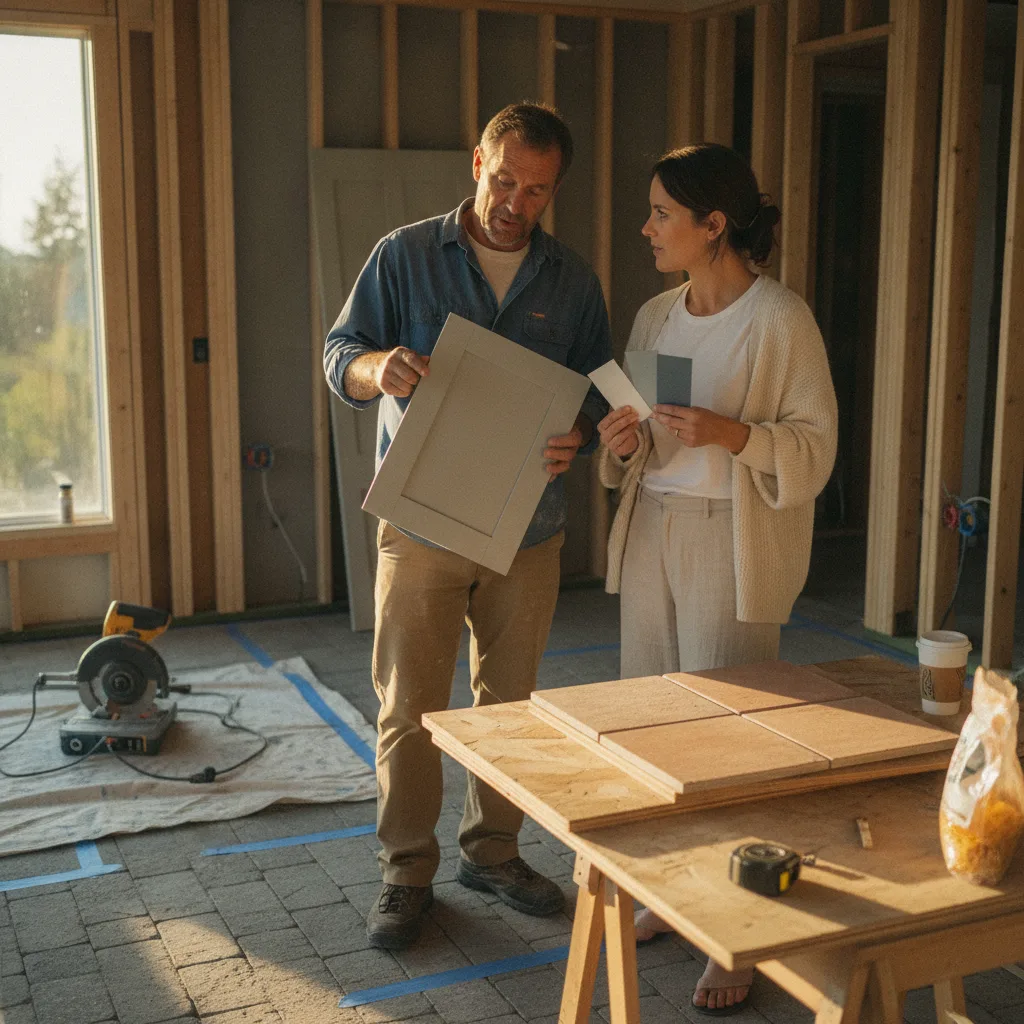
This is a more technically demanding installation. The crew needs specific training in permeable systems. Handling large-format porcelain tiles requires specialized cutting tools and techniques. The volume of excavated material and imported aggregate is significantly higher. A 500-square-foot project could take a full week for the base prep alone, pushing the total timeline longer.
5. Long-Term Performance & Maintenance
An open-graded system is virtually immune to frost heave, the primary killer of paver patios in cold, wet climates. By eliminating trapped water in the base, there's nothing to freeze and expand. The result is a patio that can easily last twenty-five to fifty years with minimal settlement. Maintenance is similar to a standard patio, though ensuring the joints remain permeable is key.
6. Cost & ROI
The upfront paver patio bellevue cost is higher, ranging from $50 to $75+ per square foot for a 2026 project. The materials are more expensive, and the labor is more intensive. The ROI is realized over the long term, through near-zero repair costs and the value of a high-design feature that also solves site drainage problems. In high-end neighborhoods like Medina or Clyde Hill, this level of build quality is often expected.
Why the Premium Approach Costs More in Bellevue
Ready to compare vetted project options?
Use Project Match privately when your scope is clear enough for contractor conversations.
Start Project MatchThe price difference comes down to three factors: materials, machinery, and manpower. A premium build requires 50-100% more aggregate base material and the associated trucking and disposal fees for the excavated soil. It also involves higher-cost surface pavers and geotextiles. The labor is more specialized; according to Washington State L&I contractor licensing and labor rate data, skilled hardscape technicians who can properly execute a permeable base command a higher wage. More time on site. More material to move. More expertise required.
Three Representative Paver Patio Bellevue Projects from 2026
Three representative projects from 2026, scoped similarly, reconstructed from Golden Yards Magazine's Project of the Day network and used here in aggregate form:
- $16,500 (Mid-Tier): A 400-square-foot rectangular patio in the Eastgate neighborhood using standard concrete pavers. The project involved minimal grading, a standard 6-inch ICPI base, and plastic edge restraints. Straightforward access for machinery kept labor costs in check.
- $28,800 (Mid-Tier Plus): A 600-square-foot patio in the Newport Shores area with a curved design, a sitting wall, and low-voltage lighting. The paver was a higher-quality architectural slab, and the base was slightly deepened to 8 inches to accommodate less stable soil near the water.
- $48,000 (Premium): A 750-square-foot multi-level patio in Somerset using large-format porcelain pavers over a 10-inch open-graded permeable base. The project required extensive excavation on a sloped yard and included integrated channel drains and a concrete-poured edge restraint.
Managing Your Bellevue Paver Patio Budget
The final paver patio bellevue cost can vary based on site access, demolition of an old patio, and design complexity. The price ranges provided assume a clear, accessible site and can start lower for simple overlay projects or small condo spaces. Be prepared for the unexpected. The National Association of Home Builders recommends a ten to fifteen percent contingency on renovations in homes over thirty years old. In Bellevue, this often covers unforeseen drainage issues or poor soil that requires deeper excavation once the work begins. Get it in writing. Sign the change order. Keep the project moving.
Finding the Right Paver Patio Contractor in Bellevue
The best contractor isn't the one with the lowest bid; it's the one who talks more about the base than the pavers. Ask potential contractors to detail their base preparation method. Do they mention ICPI specs? Do they own a compaction tester? For a premium build, ask for their experience with open-graded, permeable systems. Check their Washington State contractor license and ask for Bellevue-specific references. Locking in your full scope of work before signing is critical. For more guidance on vetting and permitting, see our complete [Bellevue pavers permit playbook for 2026](/guides/bellevue-pavers-permit-playbook-2026).
Verdict: Which Paver System is Right for Your Bellevue Home?
The choice hinges on your site, your budget, and your long-term goals. A Mid-Tier, ICPI-standard patio is a perfectly sound investment for many Bellevue homes. If your property has decent drainage and you need a functional, attractive space without over-investing, it’s the pragmatic choice. It’s a proven system that delivers decades of service when the contractor doesn't cut corners on the base.
A Premium, open-graded permeable system is for the legacy project. If you live on a hillside, have notoriously poor-draining soil, or simply want the most durable, technically advanced system available, the extra investment pays for itself in peace of mind and near-zero risk of failure from water or frost. It solves for the specific geotechnical challenges of the Puget Sound region. It’s not just a patio; it’s infrastructure.
Sources & Methodology
See the Golden Yards Methodology for how sources are reviewed, ranges are normalized, and planning-data limits are handled.
Cost ranges in this guide draw on the following named industry sources, public agency datasets, and Golden Yards Magazine editorial research.
- Interlocking Concrete Pavement Institute (ICPI) Tech Specs (2026)
- Washington State L&I Contractor Licensing and Labor Rate Data (2026)
- City of Bellevue, Development Services Department, Permit Guidelines (2026)
- Belgard Hardscapes, Technical Installation Guides (2025)
- Mutual Materials, Paver Installation Specifications (2025)
- National Association of Home Builders (NAHB), Remodeling Cost Data (2026)
- ASTM International, Standard C33 and D2940 (2024)
Golden Yards Magazine Take
Homeowners get fixated on the paver, the visible surface they'll walk on every day. But in a climate like Bellevue's, the paver is the least critical part of the system. The real product you are buying from a top-tier paver patio contractor in Bellevue is airspace, the voids within a clean, open-graded aggregate base. You are paying for a meticulously prepared subgrade and a system that can absorb a winter downpour without turning your yard into a swamp or your patio into a skating rink. The best investment you can make is in the part of the project you will never see again. Focus on the base. The surface will take care of itself.
Frequently Asked Questions
What is the biggest mistake homeowners make with paver patios in Bellevue?
The most common mistake is underestimating drainage and hiring a contractor who builds a base that is too thin for Bellevue's wet climate and glacial soils. A patio's longevity is determined by its ability to manage water. An insufficient base leads to sinking, heaving, and premature failure.
Many contractors can lay a pretty surface, but the real craft is in the unseen earthwork. A proper base in our region often requires excavating 8 to 12 inches, installing geotextile fabric, and compacting several layers of aggregate. Cutting corners on base depth or compaction is the fastest way to guarantee a callback and a failed patio within a few years of freeze-thaw cycles.
Do I need a permit for a paver patio in Bellevue?
Typically, on-grade paver patios that are not part of a larger structure do not require a permit from the City of Bellevue. However, permits may be required if the patio includes a cover, is part of a retaining wall system over four feet in height, or impacts critical areas like steep slopes or wetlands.
It's always the safest and most professional practice to verify with Bellevue's Development Services department before starting work. Rules can change, and a quick inquiry can prevent costly stop-work orders or future compliance issues. A qualified local contractor should be able to guide you through this verification process as part of their standard procedure.
How long does a properly installed paver patio last in the Pacific Northwest?
A paver patio's lifespan is directly tied to the quality of its foundation. A mid-tier patio built to ICPI standards can be expected to last 15 to 25 years. A premium patio with a deeper, open-graded permeable base designed for our wet climate can last 30 to 50 years or more with minimal maintenance.
The pavers themselves are incredibly durable and will likely outlast the base they sit on. The failure point is almost always the foundation. Investing in a more solid base system is the most effective way to ensure your patio becomes a permanent feature of your home, rather than a recurring maintenance problem.
Can I install a paver patio over my existing concrete slab?
While technically possible using specific overlay systems, laying pavers directly over an existing concrete slab is generally not recommended in Bellevue. The primary issue is drainage. Trapped water between the old slab and new pavers will accelerate freeze-thaw damage, leading to shifting and failure.
A proper installation requires removing the old slab to build a new, correctly compacted aggregate base from the subgrade up. This is the only method that guarantees long-term stability and proper water management. An overlay is a short-term fix that often leads to a full replacement sooner than you'd expect.
What is the best joint sand for Bellevue's wet climate?
For Bellevue's rainy conditions, a high-quality polymeric sand is the only professional choice. Unlike basic silica sand, polymeric sand contains additives that harden when activated with water. This locks the pavers together, creates a durable, semi-flexible joint, and critically, prevents weed growth and erosion from heavy rain.
Cheaper sand will wash out within the first few seasons, allowing weeds to take root and pavers to shift. Investing in a top-tier polymeric sand product from a brand like Techniseal or Alliance Gator is a small upfront cost that prevents significant maintenance headaches down the road. It's a non-negotiable component of a quality installation.
Ready to start your patio project?
Find My ProsFrequently Asked Questions
What is the biggest mistake homeowners make with paver patios in Bellevue?
The biggest mistake homeowners in Bellevue make is underestimating drainage and hiring contractors who build a base too thin for the area's wet climate and glacial soils. A patio's longevity depends on proper water management. An insufficient base leads to sinking, heaving, and premature failure from freeze-thaw cycles within a few years.
A patio's durability is determined by its unseen earthwork, not just the visible surface. For Bellevue's specific conditions, a proper base requires excavating 8 to 12 inches deep. This process includes installing geotextile fabric and compacting several layers of aggregate. While many contractors can lay an attractive surface, cutting corners on base depth or compaction is the fastest way to guarantee a failed patio.
Do I need a permit for a paver patio in Bellevue?
No, a permit is typically not required for an on-grade paver patio in Bellevue if it is not part of a larger structure. However, a permit is needed if the patio has a cover, is part of a retaining wall system over four feet high, or impacts critical areas like steep slopes.
While simple paver patios are often exempt, certain features trigger permit requirements in Bellevue. These include adding a cover, incorporating the patio into a retaining wall system exceeding four feet in height, or building on or near critical areas such as steep slopes or wetlands.
It is always the safest and most professional practice to verify requirements with Bellevue's Development Services department before beginning construction. Rules can change, and a quick inquiry can prevent costly stop-work orders or future compliance issues. A qualified local contractor should be able to guide you through this verification process.
How long does a properly installed paver patio last in the Pacific Northwest?
In the Pacific Northwest, a paver patio built to ICPI standards can last 15 to 25 years. A premium patio with a deeper, open-graded base designed for our wet climate can last 30 to 50 years or more. A patio's lifespan is directly tied to the quality of its foundation.
The pavers themselves are incredibly durable and will likely outlast the base they sit on. The failure point is almost always the foundation. Investing in a more solid base system is the most effective way to ensure your patio becomes a permanent feature of your home, rather than a recurring maintenance problem.
A mid-tier patio built to ICPI standards offers a 15 to 25 year lifespan. For a patio that lasts 30 to 50 years or more with minimal maintenance, a premium, deeper open-graded permeable base is better suited for our wet climate.
Can I install a paver patio over my existing concrete slab?
Installing pavers directly over a concrete slab is not recommended in Bellevue. This method traps water, causing freeze-thaw damage that leads to shifting and failure. For long-term stability, the old slab must be removed to build a proper aggregate base from the subgrade up, ensuring correct drainage and preventing premature failure.
Although specific overlay systems make it technically possible, they are a short-term fix that often leads to a full replacement sooner than expected. The core issue is water management. When water gets trapped between the new pavers and the old concrete, it cannot drain. In areas with freezing temperatures, this moisture will expand and contract, causing the pavers to shift and the installation to fail.
The only method that guarantees long-term stability in Bellevue is a full replacement. This process involves removing the old slab completely and constructing a new, correctly compacted aggregate base. This approach is the standard for proper water management and a durable, lasting patio surface.
What is the best joint sand for Bellevue's wet climate?
For Bellevue's wet climate, high-quality polymeric sand is the best choice. Its additives harden with water, locking pavers together and creating a durable, semi-flexible joint. This process prevents weed growth and erosion from heavy rain. Using a top-tier product from a brand like Techniseal or Alliance Gator is essential for a quality installation.
Polymeric sand is the only professional choice for Bellevue because its hardening additives create a strong bond. This semi-flexible joint resists weed growth and erosion caused by frequent rain. In contrast, cheaper silica sand will wash out within the first few seasons, allowing weeds to take root and pavers to shift. Investing in a product from a brand like Techniseal or Alliance Gator is a small upfront cost that prevents significant maintenance headaches and is a non-negotiable component of a proper installation.