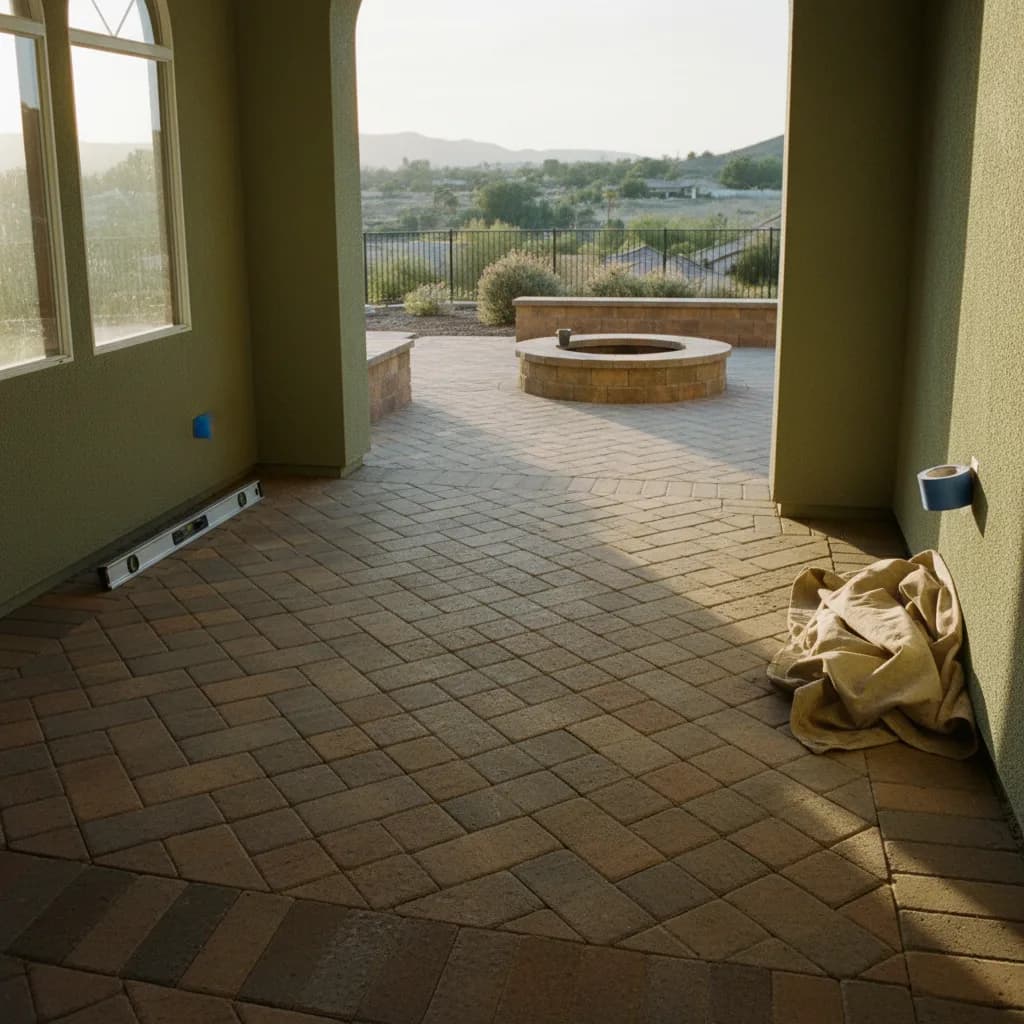
A professionally installed paver patio in Riverside for 2026 will typically cost between $28 and $45 per square foot, putting a standard 600-square-foot project in the $16,800 to $27,000 range. The total investment can start lower, around $18 per square foot, for a simple refresh using existing base material or for a small condo courtyard. However, for most Riverside homes built on expansive clay, the real cost is driven by the unseen subgrade engineering required to prevent heaving and shifting under our intense summer heat.
In a Nutshell
- Total Cost Range: $12,000 for a basic 300 sq. ft. patio to over $70,000 for a premium, multi-feature outdoor living space.
- Mid-Range Average: Most homeowners should budget for $28 to $45 per square foot for a high-quality, long-lasting installation.
- Typical Timeline: Four to six weeks from demolition to final joint sand sweep for a 600-square-foot project. Two to three of those weeks are dedicated to subgrade and base preparation alone.
- Biggest Surprise Line Item: Subgrade correction and drainage. Over-excavating expansive clay soil and installing a proper geotextile and open-graded base can add $3,000 to $7,000 to the budget.
What does a paver patio actually cost in Riverside in 2026?
The per-square-foot price of a paver patio in Riverside is a direct reflection of material choices and, more importantly, the depth and quality of the foundation beneath it. Here’s a breakdown of what to expect at three distinct budget levels. The bottom-of-the-range cases typically involve overlaying an existing concrete slab or working on a small, perfectly flat area with stable, sandy loam soil, which is not the standard scenario in this region.
| Tier | Price Range / Sq. Ft. | Typical Project (500 sq. ft.) | Materials & Features |
|---|---|---|---|
| Basic | $18 - $26 | $9,000 - $13,000 | Standard concrete pavers (e.g., Holland Stone), simple running bond pattern, minimal grading, 4-inch compacted base, standard silica sand joints. |
| Mid-Range | $28 - $45 | $14,000 - $22,500 | Architectural slab pavers (e.g., Belgard or Angelus), herringbone or ashlar pattern, proper subgrade prep for clay, geotextile fabric, 6-inch base, polymeric sand, and possibly a small seat wall. |
| Premium | $50 - $95+ | $25,000 - $47,500+ | Porcelain tile, natural stone (travertine or slate), complex inlays and borders, multi-level design, integrated fire pit, low-voltage lighting, extensive drainage, and retaining walls. |
For a typical mid-range riverside paver patio, the budget allocation breaks down like this:
- Labor: 40-50%
- Pavers & Materials (Sand, Base, Geotextile): 30-35%
- Site Prep, Demolition & Hauling: 10-15%
- Permits & Overhead: 5-10%
Why is a paver patio more expensive in Riverside than in other regions?
Three factors drive the cost of a paver patio in Riverside above national averages: soil conditions, labor rates, and material logistics.
1. Expansive Clay Soil: The dominant soil type across the Inland Empire is expansive clay. This soil swells when wet and shrinks dramatically when dry, a cycle that will destroy a paver patio built on a standard base. A professional paver patio contractor in Riverside must over-excavate the subgrade by an additional six to twelve inches, lay a geotextile separation layer to prevent soil migration, and build up a thicker, open-graded base using material like #57 stone. This isn't just more work; it's an engineered system that adds significant material and machine-time costs upfront to prevent heaving, cracking, and sinking down the line.
2. Skilled Labor Rates: The cost of qualified labor is a major component. According to the California Department of Industrial Relations prevailing wage data for Riverside County, skilled construction labor and equipment operators command premium rates. An ICPI-certified installer who understands how to properly compact a base in lifts and screen an ASTM C33 sand bedding course is a specialized tradesperson. Their expertise prevents the most common failure modes, and their wages are reflected in the final quote.
3. Neighborhood Premiums and Logistics: While Riverside is a logistics hub, many high-end pavers and natural stones are sourced from quarries or manufacturers closer to the coast, incurring freight charges., established neighborhoods like Woodcrest and Canyon Crest often have larger lots requiring more extensive site work, stricter HOA architectural reviews, and homeowners who specify premium materials and features like outdoor kitchens and fire pits. These factors increase the complexity, timeline, and overall cost of a project.
What do real Riverside homeowners spend in 2026?
Ready to compare vetted project options?
Use Project Match privately when your scope is clear enough for contractor conversations.
Start Project MatchThree representative projects from 2026, scoped similarly, reconstructed from Golden Yards Magazine's Project of the Day network and used here in aggregate form:
1. Orangecrest - $22,500: A 600-square-foot patio using Angelus Courtyard pavers in a simple ashlar pattern. The project involved removing a cracked concrete slab and correcting minor drainage issues. The key cost driver was excavating an extra eight inches of clay and installing a proper geotextile fabric and a six-inch compacted base of #57 stone. The job took four weeks start to finish.
2. Canyon Crest - $38,000: This 750-square-foot project featured Belgard porcelain pavers, a matching gas fire pit, and a low-voltage lighting system. The site had a noticeable slope, requiring a two-foot-high segmental retaining wall and a French drain system tied into the property’s main drain lines. The extensive earthwork and engineered wall added nearly 40 percent to the total project cost.
3. Woodcrest - $65,000: An 1,100-square-foot multi-level patio with natural travertine pavers set on a concrete sub-base for maximum stability. The scope included a built-in outdoor kitchen island, a block seat wall, and extensive grading to create a level entertaining area on a sloped lot. Permitting for the gas lines and retaining walls was complex and required stamped engineering plans.
Where does the money actually go?
The paver itself is often less than a third of the total cost. The majority of your investment goes into the unseen preparation and structural components that ensure your patio lasts for decades, not just a few seasons. A professional quote will account for these items.
- Demolition and Hauling: $2-$5 per square foot to break up and dispose of an old concrete slab or deck.
- Subgrade Over-Excavation: $1,500 - $4,000 for the extra machine time and hauling required to remove expansive clay soil.
- Geotextile Separation Fabric: $1.50 - $2.50 per square foot. This is non-negotiable on clay soils to keep the base rock from sinking into the subgrade.
- Class II or #57 Stone Base: $80 - $120 per cubic yard delivered. A proper job in Riverside needs a minimum six to eight-inch base, not the four inches that might pass in other climates.
- ASTM C33 Bedding Sand: $1 - $2 per square foot. Using the wrong sand (like masonry or play sand) leads to paver settlement and weed growth.
- Polymeric Joint Sand: $1.50 - $3.00 per square foot premium over standard sand. It hardens to lock pavers together and resist weeds and insects, essential in our climate.
- Concrete Bond Beam Edge Restraint: $6 - $10 per linear foot. Plastic edging fails in the Riverside heat. A poured concrete toe is the industry standard for preventing pavers from spreading.
- Permitting and Inspection Fees: $750 - $2,000. The City of Riverside requires permits for most hardscape projects involving grading or retaining walls over a certain height.
What stops a Riverside paver patio from running over budget?
Budget overruns on hardscape projects are almost always tied to unforeseen conditions below the surface or changes made after the work has begun. Here are the three most common causes.
1. Unforeseen Subsurface Conditions: Even with a soil test, your contractor can hit a layer of caliche (a concrete-like soil deposit) or discover poorly compacted fill from the original home construction. This requires heavier equipment, more time, and different disposal methods, all of which add cost. This is the single biggest risk factor in any excavation project.
2. Mid-Project Scope Creep: It’s easy to look at the excavated space and decide to add a seat wall, a fire pit connection, or landscape lighting conduits. While these are great additions, making the decision after the base is installed means re-excavating and re-compacting, leading to significant added labor and material costs. Finalize your design before the first shovel hits the ground.
3. Inadequate Drainage Plan: A new, non-permeable patio surface changes how water flows across your property. If the initial plan doesn't adequately account for this, you may discover water pooling against your foundation after the first rain. Adding a channel drain or French drain system after the patio is laid is exponentially more expensive than planning for it from the start. The National Association of Home Builders recommends a ten to fifteen percent contingency on renovations in homes over thirty years old.
How can I estimate my paver patio project cost?
To get a preliminary budget for your project, it helps to measure the area and consider the materials you're interested in. You can use an online hardscape calculator to compare costs for different paver types and project sizes. Our free tool at Golden Yards Driveway & Patio Cost Calculator can provide a solid baseline for your paver patio riverside 2026 budget planning.
What should your Riverside contractor include in the quote?
A legitimate quote from a qualified paver patio contractor riverside is a detailed scope of work, not a one-page estimate. It should read like a set of instructions that any foreman could follow. Insist on the following line items:
- Scope of demolition, including disposal method.
- Subgrade excavation depth (e.g., "excavate to 10 inches below final grade").
- Subgrade compaction standard (e.g., "compact to 95 percent Modified Proctor").
- Specification of geotextile fabric to be used.
- Base material type and compacted depth (e.g., "install 6 inches of ASTM #57 stone").
- Compaction method for base (e.g., "in two 3-inch lifts").
- Bedding course material and depth (e.g., "1 inch of screeded ASTM C33 concrete sand").
- Paver manufacturer, style, and color.
- Edge restraint specification (e.g., "poured concrete toe beam").
- Joint sand specification (e.g., "ASTM C144 polymeric sand").
- Final compaction method (e.g., "plate compactor with protective mat").
- Site cleanup and protection plan.
- Warranty on workmanship and materials.
- A statement that all work will comply with ICPI Tech Specs and that they will pull the required city permits. You can learn more about the local process in our Riverside paver patio permit guide.
Sources & Methodology
See the Golden Yards Methodology for how sources are reviewed, ranges are normalized, and planning-data limits are handled.
Cost ranges in this guide draw on the following named industry sources, public agency datasets, and Golden Yards Magazine editorial research.
- National Association of Home Builders (NAHB) Remodeling Market Index (Q1 2026)
- California Department of Industrial Relations (DIR), Riverside County Prevailing Wage Data (2026)
- City of Riverside Building & Safety Division, Permit Records (2025)
- California Contractors State License Board (CSLB), Licensee Survey Data (2025)
- Interlocking Concrete Pavement Institute (ICPI), Tech Spec 2 & 3 (2024)
- Golden Yards Magazine Editorial Methodology and Project Data (2025-2026)
Golden Yards Magazine Take
Homeowners get fixated on the surface. They spend weeks choosing between a Belgard 'Catalina Grana' and an Angelus 'Paseo' paver, debating colors and textures. But the paver you choose has almost nothing to do with whether your patio investment fails in five years. The callbacks we see are never about a chipped paver. They are about sinking, heaving, and separation. These failures are born in the base. The difference between a temporary patio and a permanent one in Riverside's challenging soil is a roll of non-woven geotextile fabric, two extra inches of #57 stone, and compacting that base in controlled lifts. The most important parts of your paver patio riverside cost are the ones you will never see again once the job is done. Spend your money there. Test the base. Pull the permit. Get the foundation right.
Ready to start your patio project?
Find My ProsFrequently Asked Questions
How much does a paver patio cost per square foot in Riverside?
In Riverside, a professionally installed mid-range paver patio costs between $28 and $45 per square foot as of 2026. Basic projects with standard materials can start around $18 per square foot, while premium installations with natural stone, lighting, and fire features can easily exceed $50 per square foot.
The final cost is driven by three main factors: the pavers themselves, design complexity, and subgrade preparation. Riverside's expansive clay soil is a significant consideration, often requiring more extensive excavation and a thicker, engineered base than in other regions. This foundational work accounts for a large portion of the budget. A quote that seems too low is likely cutting corners on this crucial, unseen preparation.
Why is subgrade preparation so important for Riverside paver patios?
Proper subgrade preparation is critical in Riverside because the region's expansive clay soil causes patios to heave and sink. Without an engineered base, this soil movement, driven by moisture changes, will create an uneven surface. A correct installation requires over-excavating the clay and installing a six to eight-inch aggregate base.
In the Inland Empire, failing to prepare the subgrade is the single most common point of failure for hardscape projects. A proper installation involves laying a geotextile separation fabric to stabilize the soil, then adding a thick base of open-graded aggregate, such as #57 stone. This system creates a stable foundation that allows water to drain and isolates pavers from soil movement. Skipping these steps to save money upfront is a guarantee of future failure and costly repairs within a few years.
Do I need a permit for a paver patio in Riverside?
Yes, a permit from the City of Riverside Building & Safety Division is often required for a paver patio. A permit is necessary for flatwork covering more than 200 square feet or for any project that alters property drainage. Retaining walls over four feet high, measured from the footing's bottom, need a separate engineered permit.
Your contractor should handle the entire permitting process. Proceeding without a required permit can lead to stop-work orders, fines, and difficulties when you eventually sell your home. The city inspection process is important because it confirms the work meets safety and code standards, especially regarding proper grading and drainage to protect your home's foundation.
How long does a paver patio last in the Riverside climate?
A properly installed paver patio in Riverside should last 25 to 30 years. While the pavers themselves can last over 50 years, the system’s functional lifespan depends on the installation quality. A poorly built patio on local clay soil can show signs of failure in as little as three to five years.
The main threats in the Riverside climate are soil movement and joint failure. Intense sun can degrade lower-quality polymeric sands over time, leading to weed growth or insect intrusion. Using high-quality, UV-stable polymeric sand and ensuring the base is built to ICPI (Interlocking Concrete Pavement Institute) standards are the keys to longevity.
Are concrete pavers or natural stone better for a Riverside patio?
Concrete pavers are the better choice for most Riverside patios. They are cost-effective and manufactured to strict ASTM standards for durability in intense sun and heat. High-quality brands like Belgard and Angelus offer many styles that mimic natural stone, providing superior value, durability, and design flexibility for your investment.
Natural stone like travertine provides a premium, unique appearance and stays cooler to the touch, a significant benefit in the Riverside area. However, this option comes with higher material and installation costs. Natural stone can also be more susceptible to staining and requires regular sealing to protect it. For most projects, the consistent size, strength, and wide style selection of concrete pavers make them the more pragmatic choice.