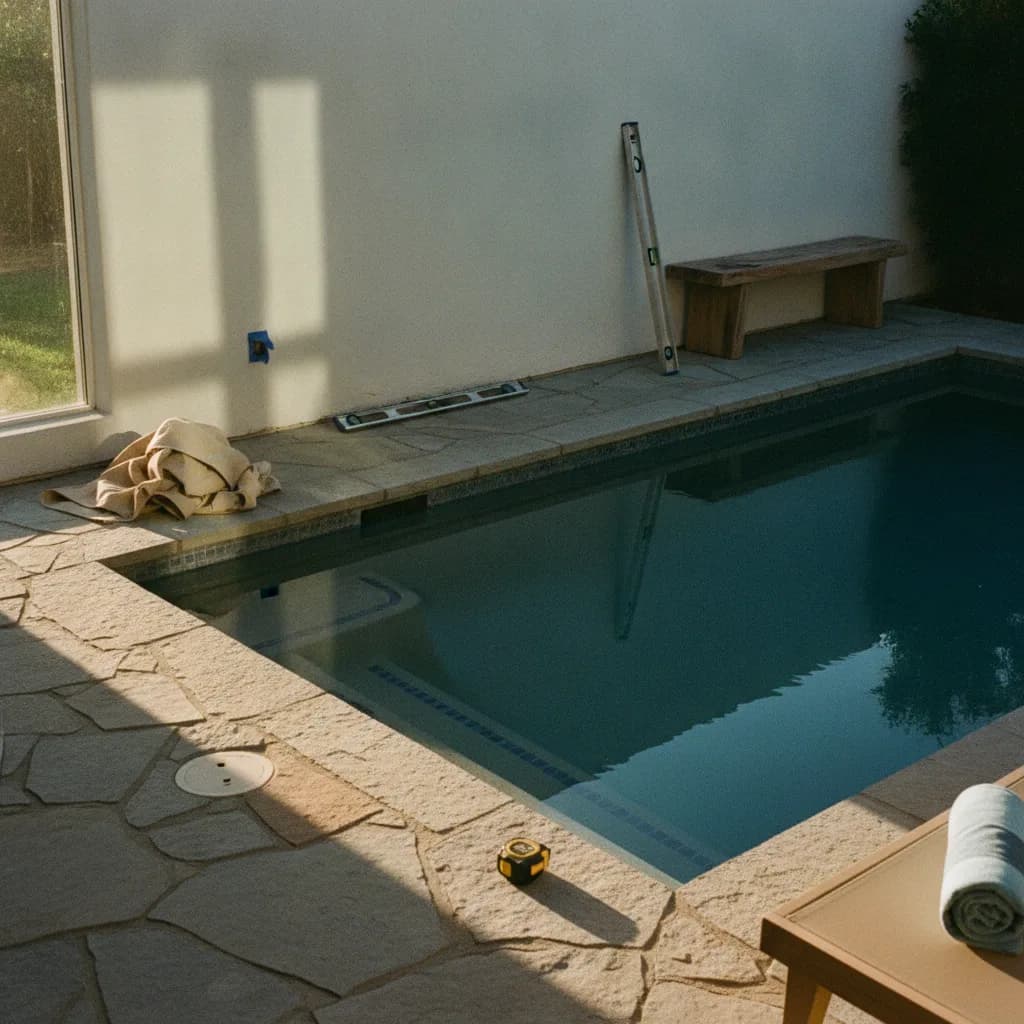
A new saltwater pool in Malibu takes between twenty and thirty weeks from the first design meeting to the first swim. While some simple, flat-lot projects can finish faster, the timeline for most homes in areas like Point Dume or along Broad Beach is dictated by one major variable: the California Coastal Commission. Their review process, which runs parallel to the City of Malibu's planning department, is the single most significant factor in a project's schedule. Understanding this upfront is the key to a realistic budget and a saner construction experience for a saltwater pool in Malibu.
In a Nutshell
- Total Realistic Timeline: 20 to 30 weeks, with complex hillside or large-scale projects extending to 40+ weeks.
- The Four Phases: The project breaks down into four distinct stages: Design and Permits; Site Prep and Foundation; Construction Scope; and Finishes and Final Inspection.
- Biggest Delay Risk: Revisions required by the California Coastal Commission. This can add four to eight weeks of redesign and resubmittal cycles before a shovel ever hits the ground.
- Contingency Planning: Your budget needs a buffer. The National Association of Home Builders recommends a ten to fifteen percent contingency for any major renovation project, and coastal pool builds are no exception.
Phase 1: Design and Permits (Weeks 1, 12)
This is the planning phase, and in Malibu, it’s the longest part of the journey. It's all about paperwork, not dirt work. Your designer or pool builder will coordinate geological surveys, soil reports, and structural engineering plans. These documents are then bundled into a comprehensive plan set for submission to the City of Malibu Planning Department and, critically, the California Coastal Commission for a Coastal Development Permit (CDP).
- What happens: Site survey, soil stability testing, structural engineering for the pool shell and any retaining walls, and development of a MWELO-compliant planting plan for the surrounding landscape.
- Who does what: The homeowner hires a landscape architect or specialized pool designer. They, in turn, manage the team of engineers and often use a permit expediter who specializes in navigating the coastal review process.
- Common holdups: The Coastal Commission is focused on public access, viewsheds, and environmental impact. Any design that impedes these can trigger requests for significant revisions, easily adding two months to this phase for a saltwater pool in Malibu.
Phase 2: Site Prep and Foundation (Weeks 13, 16)
Once you have approved permits, the physical work begins. This phase is loud, dusty, and transformative. Heavy machinery arrives for demolition of any existing features, followed by excavation for the pool shell. This is also when utility trenches are dug. The higher labor costs in this region, reflected in the California Department of Industrial Relations prevailing wage data for Los Angeles County, are most visible here, with skilled operators and crews commanding premium rates.
- What happens: Site access is established, the pool area is excavated to the engineered specifications, and trenches for plumbing, electrical, and gas lines are dug.
- Who does what: The general contractor's crew manages excavation and grading. Licensed plumbers and electricians then run conduit and pipes from the equipment pad location to the house's main service panels.
- Common holdups: Discovering unexpected bedrock during excavation can require hydraulic hammers, adding time and cost. It's also when a utility capacity check reveals a surprise. A 400,000 BTU pool heater often requires a gas line upsize to a 1.25-inch pipe, a $2,500 to $4,500 change order not always in the first quote from a saltwater pool contractor Malibu. Similarly, the new pumps and lighting may necessitate a new 100-amp subpanel, which Southern California Edison (SCE) will need to approve.
Phase 3: Construction Scope (Weeks 17, 22)
Ready to compare vetted project options?
Use Project Match privately when your scope is clear enough for contractor conversations.
Start Project MatchWith the hole dug and utilities stubbed out, the pool itself takes shape. This phase is a carefully choreographed sequence of specialized trades. It starts with the installation of a complex web of steel rebar, which forms the skeleton of the pool. Plumbers return to install the intricate network of pipes for returns, drains, and cleaners. After a pre-gunite inspection by the city inspector, the shell is formed by spraying gunite, a type of concrete.
- What happens: Steel rebar installation, plumbing rough-in, gunite application, and then the start of hard finishes like waterline tile and coping (the stone or concrete edge of the pool).
- Who does what: A rebar crew, a plumbing crew, a gunite application team, and finally tile setters, each working for a few days in succession. The contractor's job is to manage this sequence without dead time.
- Common holdups: Rain can delay gunite application, as it needs dry conditions to cure properly. Scheduling the city inspector for the pre-gunite review can sometimes create a bottleneck of a few days. Any failure on that inspection requires rework and another inspection cycle.
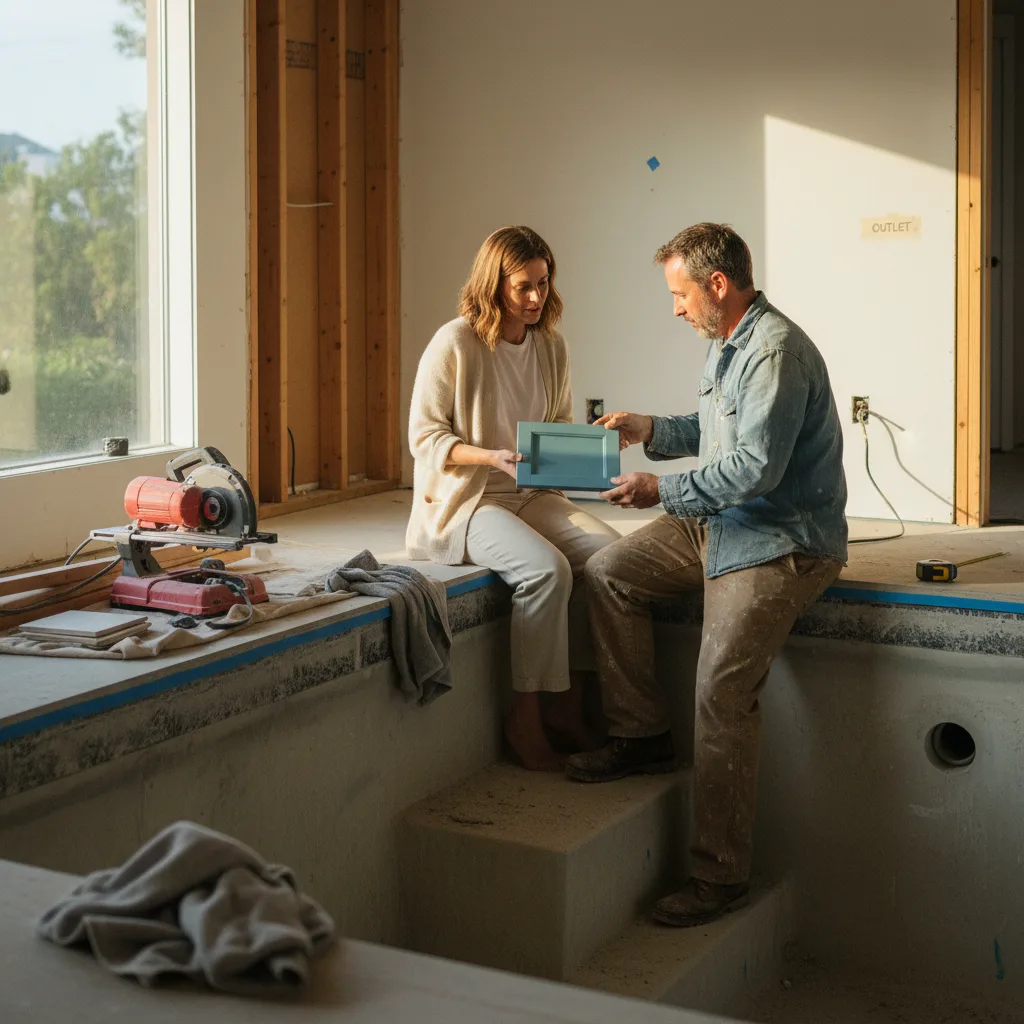
Phase 4: Finishes and Final Inspection (Weeks 23, 28)
The project now looks less like a construction site and more like a backyard. This phase involves everything surrounding the pool shell. Decking is formed and poured, the equipment pad is set up with the pump and heater, and the final interior finish, plaster, is applied. This is also when all safety features required by the California Pool Safety Act are installed, a non-negotiable step before the final sign-off.
- What happens: Decking installation (pavers, concrete, or ipe wood), setting the equipment like a Pentair Intelliflo VSF pump and a Pentair IC60 IntelliChlor salt chlorine generator, plastering the pool interior, and installing landscaping and safety fencing.
- Who does what: Masons, electricians, plasterers, and landscapers complete their scopes. The contractor coordinates the final pool fill and chemical startup.
- Common holdups: The final inspection with the City of Malibu building inspector is a comprehensive review. Any missing safety feature, like a door alarm or an improperly latched gate, will result in a failed inspection and delay the official completion.
Three Representative Projects from 2026
Three representative California projects from 2026, scoped similarly, reconstructed from Golden Yards Magazine's invoiced project network and presented here in aggregate form:
- Carbon Beach, Malibu: A 15x30 foot geometric saltwater pool with an automatic cover and simple poured-in-place concrete decking. The project required a Coastal Development Permit but had minimal grading. Total Cost: $165,000. Total Timeline: 24 weeks.
- Pacific Palisades: A 450-square-foot freeform pool with an attached spa, extensive travertine pavers, and plumbing stubs for a future outdoor kitchen. The hillside lot required a small retaining wall and more extensive engineering. Total Cost: $230,000. Total Timeline: 32 weeks.
- Calabasas: An inland project without coastal review, but on a challenging slope requiring significant shoring and retaining walls. Included an infinity edge, a high-end pebble finish, and full smart-home automation for the Jandy equipment. Total Cost: $325,000. Total Timeline: 38 weeks.
What Can Compress This Timeline
While the Malibu process has fixed hurdles, homeowners have some control. First, make all your design decisions upfront. Lock in your tile, coping, and plaster choices before the contract is signed. Changing your mind mid-project creates a cascade of delays. Second, hire a design-build firm or saltwater pool contractor in Malibu with a proven track record of getting projects through the Coastal Commission. Their experience and relationships are invaluable. Third, ensure your design team has a complete and meticulously detailed plan set. Fewer questions from the city's plan checkers mean faster approvals. A well-prepared application is the best way to minimize bureaucratic friction and shorten the painful permit phase.
What Blows It Up
Three things reliably derail a Malibu pool timeline. The first and most common is a contentious Coastal Commission review. If your project is flagged for view impairment or habitat issues, be prepared for a long back-and-forth. Second is changing the scope after construction has begun. Adding a spa or changing the shape of the deck isn't a simple tweak; it requires new engineering, new permits, and re-sequencing of trades. Third are unforeseen geological conditions on hillside properties. Hitting a massive boulder or unstable soil can stop work for weeks while engineers design a solution. The National Association of Home Builders recommends a ten to fifteen percent contingency on renovations in homes over thirty years old for exactly these kinds of surprises.
What Should Be in Your Contractor's Schedule
A professional contractor's schedule isn't a vague outline; it's a detailed, week-by-week document with clear milestones. Before signing a contract, ensure their plan includes specific line items for each of these steps. A detailed schedule is your best tool for tracking progress and holding your team accountable. You can model your own budget expectations using an online pool cost calculator to gut-check the initial proposal.
- Geological & Soils Report Completion
- Architectural & Engineering Plan Completion
- City & Coastal Commission Permit Submission Date
- Permit Approval & Issuance Date
- Excavation, Grading & Subgrade Compaction
- Steel, Plumbing & Electrical Rough-in
- Pre-Gunite City Inspection
- Gunite Application & Curing Period (typically 28 days for full strength)
- Tile, Coping & Hardscape Installation
- Plaster, Pool Fill & Chemical Startup
- Final Inspection & Project Turnover
Golden Yards Take
The brochures from many pool builders promise a backyard oasis in just twelve weeks. For a saltwater pool in Malibu, that timeline is pure fantasy. The reality is a six to nine-month process where the construction itself is often the shortest part. The real work, and the real test of patience, is in the pre-construction phase of design, engineering, and permitting, especially with the California Coastal Commission's necessary oversight. Homeowners who succeed budget for a 28-week timeline and are pleasantly surprised if it comes in at 22. They understand that they aren't just buying a pool; they're funding a complex, multi-stage engineering project on some of the most regulated and geologically sensitive land in the country. The saltwater pool malibu cost reflects this complexity.
Frequently Asked Questions
How long does a saltwater pool build in Malibu really take?
A realistic timeline for a saltwater pool in Malibu is 20 to 30 weeks, from initial design to final approval. While the construction phase can be as short as 10 weeks, the pre-construction phase involving design, engineering, and securing permits from both the City of Malibu and the California Coastal Commission typically takes 10 to 12 weeks or more.
This timeline assumes a straightforward process. Any requested revisions from the Coastal Commission, which are common, can easily add another four to eight weeks for redesign and resubmittal. Complex hillside projects requiring significant retaining walls or shoring can extend the total timeline to 40 weeks. The key is to separate the 'dirt-work' timeline from the 'paper-work' timeline; in Malibu, the paperwork always takes longer.
Can I use my yard during construction?
You should plan on having zero access to the construction area and limited use of your adjacent yard for the duration of the project. A pool build turns your backyard into a full-scale industrial site with heavy machinery, deep trenches, and hazardous materials. For safety and liability reasons, contractors will fence off the entire work zone.
Expect constant noise, dust, and a steady flow of workers and material deliveries. Access paths to the site will be established, and any landscaping in that path will likely be removed or damaged. It's best to consider the backyard off-limits until the contractor officially hands it back to you after the final inspection.
What's the longest single phase of a Malibu pool build?
The longest single phase is unquestionably Phase 1: Design and Permits. This pre-construction stage can take 12 weeks or more, often consuming over half of the total project timeline. The construction phases that follow are typically much faster and more predictable. The bottleneck is purely administrative, not physical.
The primary reason for this extended timeline is the dual-review process required in Malibu. Plans must be approved by the City of Malibu's planning and building departments, but also by the California Coastal Commission. The commission's review cycle has its own schedule, and any feedback or required changes can reset the clock, making this the most variable and frustrating part of building a malibu saltwater pool.
Can I fast-track the permits for a saltwater pool in Malibu?
No, there is no official process to fast-track a Coastal Development Permit (CDP) for a new pool. The California Coastal Commission's review timeline is mandated by law and is designed to ensure thorough evaluation of environmental and public-access impacts. Attempting to rush this can result in an incomplete application, which only causes further delays.
The best strategy is not to speed up the review, but to make the review as smooth as possible. This is achieved by hiring an experienced local architect or permit expediter who understands the commission's priorities. Submitting a meticulously prepared, complete, and compliant application is the only way to minimize the risk of delays and revision requests. A design that is sensitive to viewsheds and local ecology will always move through the system faster than one that pushes the boundaries.
Sources & Methodology
Golden Yards reviews public permit and code signals, material pricing, climate and site constraints, contractor quote patterns, comparable projects, the Golden Yards Cost Index, and the Golden Yards Methodology. Cost references are planning ranges, not fixed bids.
- City of Malibu Planning Department, Building Safety Division
- California Coastal Commission, South Central Coast District Office
- Pool & Hot Tub Alliance (PHTA), 2026 ANSI/PHTA/ICC-7 Standard for Suction Entrapment Avoidance
- California Department of Industrial Relations, Los Angeles County Prevailing Wage Determinations (2026)
- Southern California Edison (SCE), Residential Service Planning Requirements
- SoCalGas, Customer Service and New Connections Guidelines
- Model Water Efficient Landscape Ordinance (MWELO), California Department of Water Resources
Ready to start your pool project?
Find My ProsFrequently Asked Questions
How long does a saltwater pool build in Malibu really take?
A saltwater pool build in Malibu takes a realistic 20 to 30 weeks from design to final approval. While construction may be just 10 weeks, the pre-construction phase for permits from the City of Malibu and California Coastal Commission takes 10 to 12 weeks. Revisions can add four to eight weeks, and complex hillside projects can take 40 weeks.
The key is separating the construction timeline from the administrative one. In Malibu, the 'paper-work' phase for design, engineering, and permits always takes longer than the 'dirt-work' of construction. The initial 10 to 12 week permitting timeline assumes a straightforward process with both the City of Malibu and the California Coastal Commission.
However, it is common for the Coastal Commission to request revisions, which can easily add another four to eight weeks for redesign and resubmittal. For more complex projects, such as those on hillsides requiring significant shoring or retaining walls, the total project timeline can extend up to 40 weeks.
Can I use my yard during construction?
No, you should plan on having zero access to the construction area and limited use of your adjacent yard for the project's duration. A pool build turns your yard into an industrial site with heavy machinery, deep trenches, and hazardous materials. For safety and liability reasons, contractors will fence off the entire work zone.
Expect constant noise, dust, and a steady flow of workers and material deliveries. Access paths for equipment will be established, and any landscaping in that path will likely be removed or damaged. Because of these hazardous and disruptive conditions, it is best to consider the backyard off-limits until the contractor officially hands it back to you after the final inspection.
What's the longest single phase of a Malibu pool build?
The longest single phase of a Malibu pool build is Phase 1: Design and Permits. This pre-construction stage can take 12 weeks or more, often consuming over half the project timeline. The delay is administrative, caused by a required dual-review process with the City of Malibu and the California Coastal Commission.
The primary bottleneck for a Malibu saltwater pool is not physical construction, but administrative processing. The construction phases that follow are typically much faster and more predictable. This extended timeline is due to the dual-review process, where plans must be approved by both the City of Malibu's planning and building departments and the California Coastal Commission. The commission has its own review schedule, and any requested changes can reset the approval clock, making this the most variable and frustrating part of the project.
Can I fast-track the permits for a saltwater pool in Malibu?
No, you cannot fast-track a Coastal Development Permit (CDP) for a saltwater pool in Malibu. The California Coastal Commission's review timeline is mandated by law to assess environmental and public-access impacts. The best approach is to submit a complete and compliant application to avoid delays, rather than trying to speed up the review.
Attempting to rush the California Coastal Commission's legally mandated review can result in an incomplete application, which causes further delays. The most effective strategy is not to speed up the review, but to make it as smooth as possible. This is achieved by hiring an experienced local architect or permit expediter who understands the commission's priorities.
A meticulously prepared, complete, and compliant application is the only way to minimize the risk of revision requests. A design that is sensitive to viewsheds and local ecology will always move through the system faster than one that pushes the boundaries.