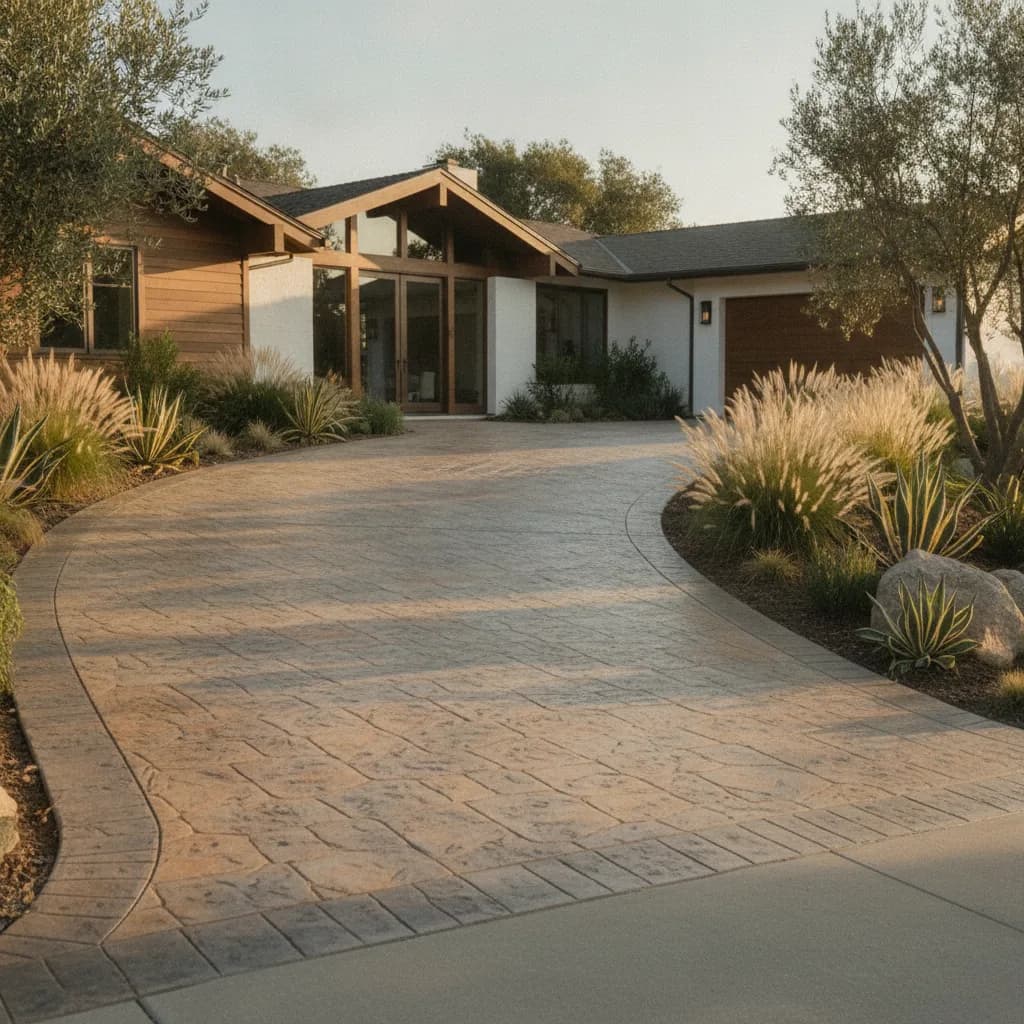
A full driveway replacement in Bellevue, Washington, is a four to seven week job, end to end. That timeline can start lower for a simple asphalt overlay, but for a full tear-out and replacement with pavers or concrete, plan on over a month. The single biggest delay for any driveway in Bellevue is the city's rigorous stormwater management review, especially for properties in critical areas like those near Medina or Clyde Hill. A poorly prepared drainage plan submitted to Bellevue Development Services can stall a project before the first shovel of dirt is turned. The foundation of your project isn't just gravel, it's the paperwork.
In a Nutshell
- Total Timeline: 4 to 7 weeks for a standard 800-square-foot driveway replacement.
- The Four Phases: The project breaks down into four distinct stages: Design and Permitting; Demolition and Subgrade Preparation; Base Installation and Paving; and finally, Curing and Finishing Touches.
- Biggest Delay Risk: Unforeseen subgrade conditions. Hitting pockets of unstable glacial till or a high water table can require over-excavation and engineered fill, adding a week or more to the schedule.
- Contingency Planning: Budget for the unexpected. The National Association of Home Builders recommends a ten to fifteen percent contingency fund for any major exterior renovation project.
Phase 1: Design and Permits (Weeks 1, 2)
This is where the job is won or lost. The initial phase involves finalizing your material choice, whether it's traditional brushed concrete, exposed aggregate, or interlocking concrete pavers. Your contractor will conduct a site survey, measure for grade and drainage, and prepare the necessary plans for submittal. In Bellevue, this isn't a simple over-the-counter permit. The City of Bellevue Development Services department will scrutinize the plan for compliance with the Land Use Code, paying special attention to impervious surface limits and the proposed stormwater runoff solution. A permeable paver system may have a smoother path through permitting than a standard concrete slab. The homeowner's job is to make firm decisions on materials and aesthetics; the contractor's job is to translate that into a permit-ready package. Any hesitation or change of mind here ripples through the entire schedule.
Phase 2: Site Prep and Foundation (Weeks 2, 4)
This is the most critical and labor-intensive phase, yet it's the part the homeowner never sees in the finished product. Work begins with the demolition and haul-away of the existing driveway. Then, the crew excavates the subgrade, typically ten to twelve inches deep for a residential driveway designed for passenger vehicles. Before any gravel comes in, the exposed native soil, often a dense glacial till in this region, must be compacted to at least 95 percent of its Modified Proctor density. A geotextile separation fabric is then laid down to prevent the base rock from mixing with the soil below. This step is non-negotiable for longevity. All underground utilities are located and marked by calling 811; any work near Puget Sound Energy (PSE) gas or electric lines requires extreme caution. This phase is all about brute force guided by precision. Compact in lifts. Test the base. Get the foundation right.
Phase 3: Construction Scope (Weeks 4, 5)
Ready to compare vetted project options?
Use Project Match privately when your scope is clear enough for contractor conversations.
Start Project MatchWith a stable, compacted subgrade, the structural layers are built up. This means placing and compacting a six to eight inch layer of open-graded base, typically WSDOT-spec 5/8-inch minus crushed rock. For a concrete driveway, this is followed by setting forms, placing plastic vapor barriers, and tying a grid of #4 rebar at 18 inches on center, held up off the base by plastic chairs to ensure it's embedded in the middle of the slab. For a paver driveway, this phase involves installing durable edge restraints and screeding a one-inch bedding course of ASTM C33 concrete sand. The Bellevue inspector will need to sign off on the formwork and rebar placement *before* any concrete can be ordered. This pre-pour inspection is a hard stop in the schedule. The actual pour or paver-laying might only take a day, but it rests on weeks of prior preparation.
Phase 4: Finishes and Final Inspection (Weeks 6, 7)
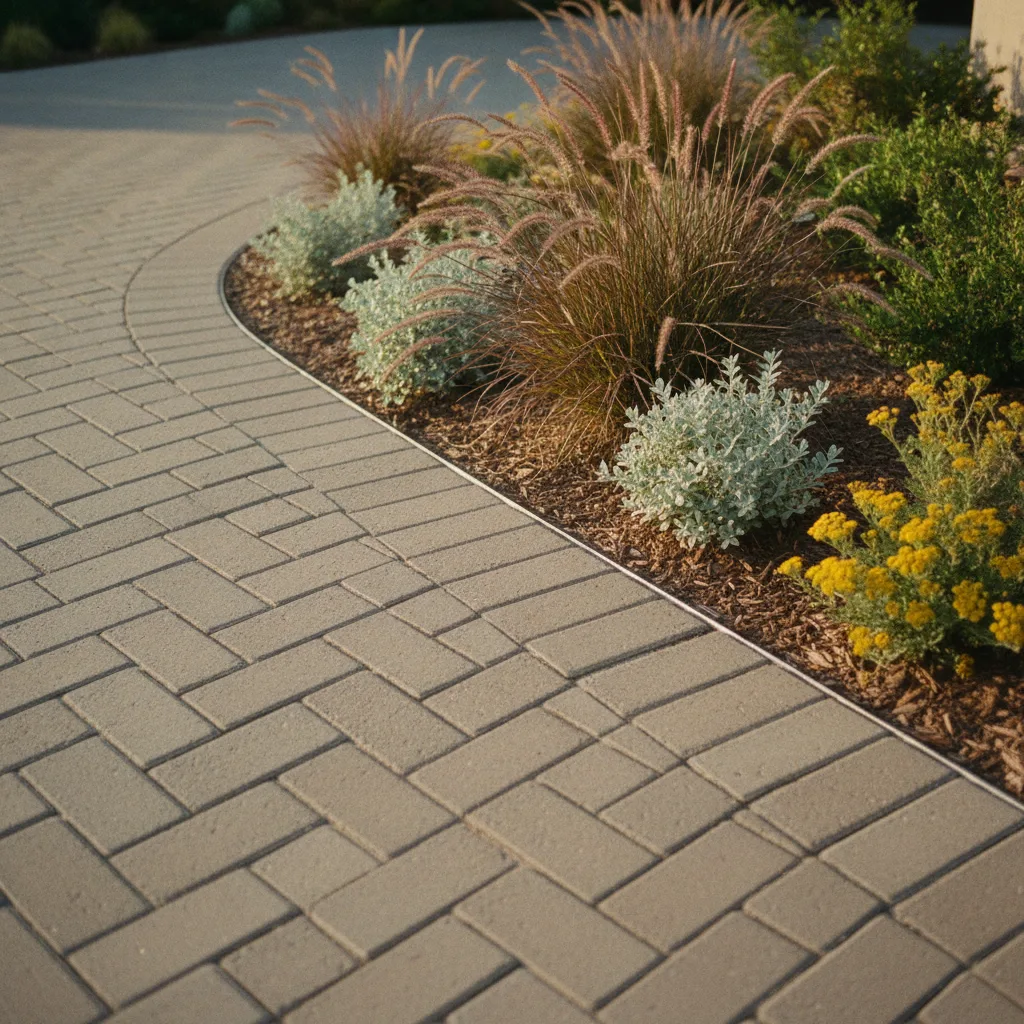
The final phase is about patience and details. For a new concrete driveway, the first seven days are critical for curing. The slab needs to be kept moist to achieve its design strength; rushing this step leads to surface spalling and shrinkage cracks. Control joints must be cut into the slab within 12 to 18 hours of the pour to manage where cracking will occur. For a paver driveway, this phase involves sweeping polymeric sand into the joints, compacting the pavers to set them into the bedding sand, and then lightly misting the surface to activate the sand's binding agents. Once the surface is ready for light traffic, the crew performs a final site cleanup, removes all equipment, and schedules the final inspection with the city. The inspector's sign-off on the completed work officially closes the permit and the project.
Three Representative Projects from 2026
Three representative California projects from 2026, scoped similarly, reconstructed from Golden Yards Magazine's invoiced project network and presented here in aggregate form:
- Medina Heated Paver Driveway: A 1,200-square-foot permeable paver installation on a sloped lot, including a hydronic heating system to prevent ice. The project required an engineered drainage plan and extensive earthwork. Total Cost: $52,000. Total Weeks: 9.
- Somerset Exposed Aggregate Concrete: A 900-square-foot tear-out and replacement with a decorative exposed aggregate finish and integrated channel drains tied into a new dry well to meet city code. Total Cost: $36,000. Total Weeks: 7.
- Downtown Bellevue Standard Concrete: A straightforward 600-square-foot replacement for a townhouse, using standard brushed concrete. The permit was simpler due to the small footprint and replacement-in-kind nature. Total Cost: $24,500. Total Weeks: 5.
What Can Compress This Timeline
While the laws of physics and permit queues are inflexible, homeowners have three points of use. First, make all material decisions before the contractor files for the permit. Changing from one paver style to another after the initial order can add weeks of delay. Second, opt for standard, readily available materials. A standard brushed concrete finish or a popular paver style from a local supplier avoids the lead times associated with custom orders. Third, hire an experienced local driveway contractor. A team that has a working relationship with Bellevue's inspectors and understands the nuances of the local code can anticipate requirements and prepare a complete, approvable permit package on the first try, avoiding weeks of back-and-forth corrections.
What Blows It Up
Three things reliably derail a driveway project schedule. The first is weather. You cannot properly compact a subgrade or pour concrete in the middle of a Pacific Northwest downpour. A week of steady rain can mean a week of no progress. The second is discovering unsuitable soils. If the excavation reveals soft spots or organic material, the area must be over-excavated and backfilled with engineered structural fill, a costly and time-consuming change order. The third is a failed inspection. If the pre-pour inspector finds the rebar is improperly spaced or the forms are not secure, the crew must stop, fix the issue, and wait for a re-inspection. The National Association of Home Builders recommends a ten to fifteen percent contingency on renovations in homes over thirty years old.
What Should Be in Your Contractor's Schedule
A professional bid is more than a price; it includes a schedule with clear milestones. Your contractor's plan for a 2026 Bellevue driveway should include line items for each of these steps. If it doesn't, ask why. A detailed schedule is the best tool for managing expectations and is essential for understanding the permit process. You can learn more about the specific local requirements in our [Bellevue driveway permit playbook](/guides/bellevue-driveway-permit-playbook-2026).
- Permit Application Submittal & Review Period
- Utility Location Service (Call 811)
- Demolition, Excavation, and Debris Haul-Away
- Subgrade Compaction and Testing
- Geotextile Fabric Installation
- Base Rock Delivery, Placement, and Compaction
- Formwork and Rebar Installation (for concrete) or Edge Restraint and Bedding Sand (for pavers)
- Pre-Pour/Pre-Pave Municipal Inspection
- Concrete Pour and Finish or Paver Installation
- Curing Period and Control Joint Cutting
- Joint Sanding and Sealing (for pavers)
- Final Inspection and Project Closeout
Golden Yards Take
The brochure from a driveway contractor might show a project completed in two weeks. That's the marketing timeline. The realistic timeline for a driveway in Bellevue is four to seven weeks, and most of that time is spent on work no one will ever applaud: permits, drainage plans, excavation, and subgrade compaction. Homeowners fixate on the surface, the color of the pavers or the texture of the concrete. But the longevity of the investment is determined entirely by the unseen foundation beneath it. In the wet climate of the Pacific Northwest, with its challenging glacial soils, skimping on the base to save a few days or a few dollars is the most expensive mistake you can make. It's the difference between a driveway that lasts thirty years and one that's a cracked mess after three winters. Pay for the base. The surface will take care of itself.
Frequently Asked Questions
How long does a driveway in Bellevue really take?
A complete driveway replacement in Bellevue typically takes four to seven weeks from signing the contract to final inspection. This includes time for permit processing, demolition, extensive foundation work, construction, and proper curing. A simple resurfacing project might be faster, but a full tear-out requires a patient, methodical approach.
The timeline is heavily weighted toward the front end. The first one to two weeks are often dedicated to design finalization and the city's permit review. The next two weeks involve the most critical physical work: excavation and building the multi-layered base. The actual concrete pour or paver installation may only take a day or two, but it's followed by a necessary curing or finishing period. Weather is the biggest variable; a rainy week can easily halt all site work.
Can I use the home/yard during construction?
You can live in your home, but access will be significantly disrupted. For the entire duration of the project, typically four to seven weeks, you will need to park your vehicles on the street. The work area itself will be an active construction zone with heavy equipment, open trenches, and materials staged, making it unsafe for access.
Your contractor should establish clear access paths to your front door, but expect noise, dust, and vibration during work hours (usually 7 a.m. to 6 p.m. in Bellevue). It's wise to communicate with your contractor about any specific needs, like deliveries or accessibility for family members, so they can be planned for in advance. The final curing phase for concrete requires keeping all traffic, including foot traffic, off the new slab for at least seven days.
What's the longest single phase of a Bellevue driveway project?
The longest and most critical phase is the site preparation and base work, which typically takes one to two full weeks. This phase includes demolishing the old driveway, excavating several hundred cubic feet of soil, compacting the subgrade, and then carefully building and compacting the new gravel base in multiple lifts.
This work is foundational and cannot be rushed. Proper compaction is essential for preventing future settlement and cracking, especially on Bellevue's prevalent glacial till soils. While it feels like slow progress compared to the dramatic change of a concrete pour, this is where the quality and longevity of the entire driveway is determined. Any delays due to weather or unexpected soil conditions usually happen during this phase.
Can I fast-track the permits for my driveway in Bellevue?
Generally, you cannot pay extra to fast-track a standard driveway permit in Bellevue. The fastest way through the system is to submit a perfect application. The City of Bellevue's Development Services department reviews projects in the order they are received, and their primary concern is compliance with building codes, especially stormwater and drainage regulations.
An experienced local contractor who understands Bellevue's specific submittal requirements can prevent delays caused by incomplete or incorrect paperwork. A plan that clearly addresses impervious surfaces, runoff control, and soil stability is less likely to receive correction notices that send it to the back of the queue. For a standard driveway, expect the permit review to take one to two weeks if the application is complete and correct from the start.
Why is a driveway in Bellevue more expensive than I expected?
The cost of a driveway in Bellevue is driven by three main factors: high labor costs, stringent code requirements, and challenging site conditions. The region's construction boom means skilled labor is in high demand, a fact reflected in wage data from the Washington State Department of Labor & Industries. Contractors must pay competitive rates to retain qualified crews.
Second, Bellevue's focus on stormwater management often requires more than just a simple slab. Permeable pavers, channel drains, or dry wells may be required to handle runoff, adding significant material and labor costs. Finally, the native glacial till soil often requires deeper excavation and more substantial base preparation than in other regions, increasing the amount of gravel needed and the cost of hauling away excavated soil. This combination of labor, regulation, and geology makes for a higher baseline driveway bellevue cost.
Sources & Methodology
Golden Yards reviews public permit and code signals, material pricing, climate and site constraints, contractor quote patterns, comparable projects, the Golden Yards Cost Index, and the Golden Yards Methodology. Cost references are planning ranges, not fixed bids.
- City of Bellevue Development Services, "Driveways and Parking Standards"
- Interlocking Concrete Pavement Institute (ICPI), "Tech Spec 2: Construction of Interlocking Concrete Pavements"
- American Concrete Institute (ACI), "ACI 332-R-17: Guide to Residential Concrete Construction"
- Washington State Department of Transportation (WSDOT), "Standard Specifications for Road, Bridge, and Municipal Construction, 2024"
- Washington State Department of Labor & Industries, "Prevailing Wage Rate Data for King County"
- National Association of Home Builders (NAHB), "Remodeling Market Index (RMI)"
- Puget Sound Clean Air Agency, "Regulations on Dust Control from Construction"
Sources & methodology
How Golden Yards builds this guide
Golden Yards reviews public permit and code signals, material pricing, climate and site constraints, contractor quote patterns, comparable projects, the Golden Yards Cost Index, and the Golden Yards Methodology. Cost references are planning ranges, not fixed bids.
- Benchmarked against the Golden Yards Cost Index and related project guides.
- Reviewed for California climate, water, fire, drainage, access, and permit context.
- Commercial Project Match is separate from editorial cost guidance.
Ready to start your driveway project?
Get matched with 2-3 vetted California contractors. 100% free, no obligation.
Find My Pros