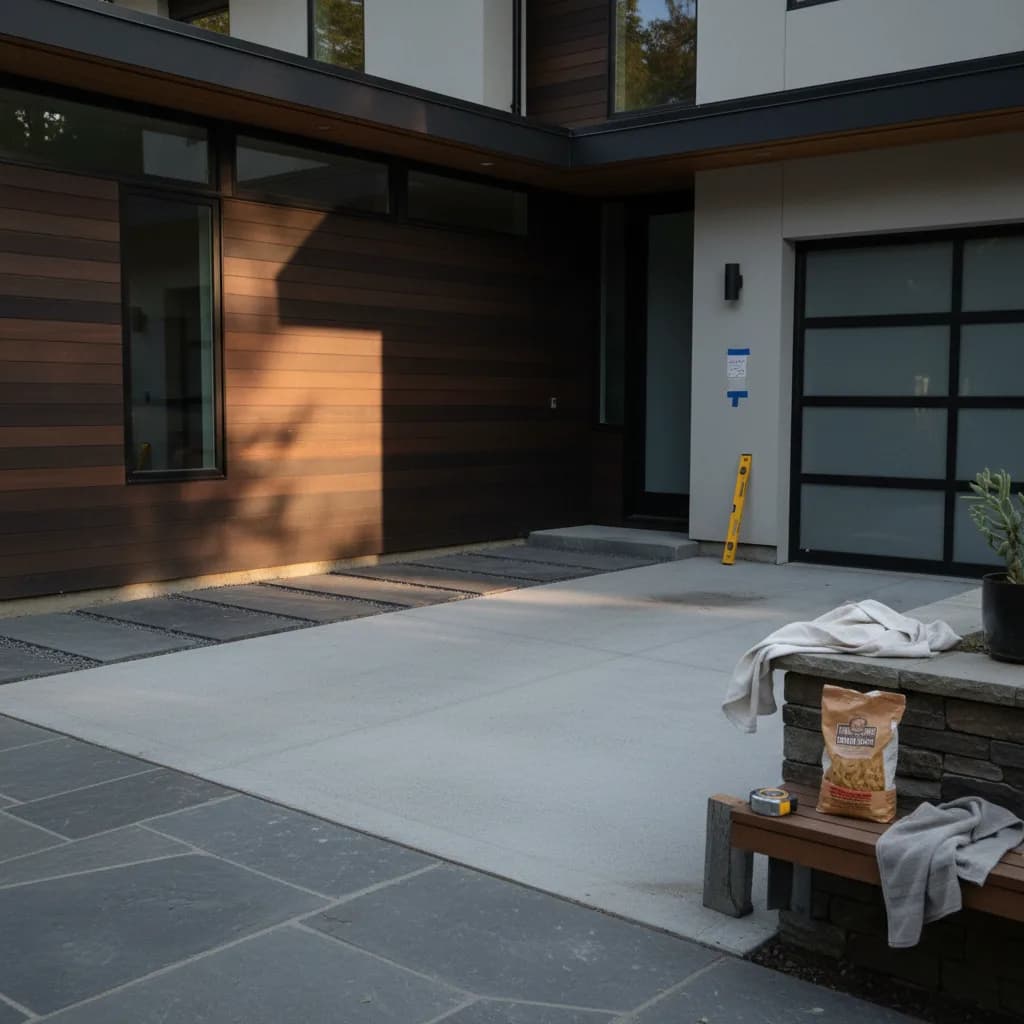
A full tear-out and replacement for a 600-square-foot driveway in Bellevue takes five to eight weeks in 2026, assuming the rain holds off. The timeline can start lower, around two to three weeks, for a simple paver overlay on a stable existing base. The single biggest delay for any new driveway bellevue project isn't material shortages or crew availability; it's the city's glacial till soil. Hit an unexpected pocket of waterlogged, uncompactable muck in a neighborhood like Enatai, and your schedule just added a week of over-excavation and geotextile engineering before a single paver gets laid. That's where the real work happens.
In a Nutshell
- Total Timeline: 5 to 8 weeks for a standard replacement.
- Four Key Phases: Design & Permitting, Site Prep & Base, Construction & Curing, Finishes & Final Inspection.
- Biggest Delay Risk: Unexpected subgrade conditions. Bellevue's poorly-draining soil can turn a standard excavation into a significant earthmoving and soil stabilization project, especially during the rainy season from October to May.
- Financial Cushion: Plan for the unexpected. The National Association of Home Builders recommends a ten to fifteen percent contingency fund for precisely these kinds of site-specific surprises.
Phase 1: Design and Permits (weeks 1, 3)
Design is about more than aesthetics; it's about managing water. Your designer or driveway contractor bellevue works up a plan that meets Bellevue's impervious surface limits and stormwater codes. This isn't optional. The city cares where every drop of rain goes. The owner's job is to make firm decisions on materials, because changes later are costly. Your contractor or an expediter submits the plans to Bellevue Development Services for review. A common holdup is an incomplete stormwater management plan or a design that exceeds the lot coverage allowance. The city wants to see calculations for permeable pavers or a plan for directing runoff to a rain garden or dry well. Get this wrong, and you're back in the queue.
Phase 2: Site Prep and Foundation (weeks 2, 4)
This is where a driveway's lifespan is decided. After the permit is issued, demolition of the old surface begins. Then, excavation. We're not just scraping the dirt; we're digging down eight to twelve inches to reach stable, native subgrade. In Bellevue, that often means hitting dense glacial till. We then proof-roll the subgrade to identify soft spots. A geotextile separation layer is non-negotiable here; it keeps your expensive base rock from disappearing into the mud below. The base itself, typically four to six inches of compacted #57 stone laid in two-inch lifts, is compacted to 95 percent Modified Proctor density. A technician with a nuclear densometer should be testing this. Anything less is a callback waiting to happen. Before digging, a call to 811 to locate lines from Puget Sound Energy and other utilities is mandatory.
Phase 3: Construction Scope (weeks 4, 6)
Ready to compare vetted project options?
Use Project Match privately when your scope is clear enough for contractor conversations.
Start Project MatchWith a bulletproof base, the surface work begins. For a paver driveway, this means a one-inch bedding course of ASTM C33 concrete sand, screeded perfectly level. Pavers are laid with tight joints, and solid edge restraints are installed to prevent lateral creep. For a concrete driveway, this is formwork and steel. We'll set forms, then place #4 rebar at 18-inch on-center spacing, held up on chairs so it sits in the middle of the slab, not on the bottom where it does nothing. A Bellevue city inspector will check the formwork, base depth, and steel placement before any concrete is ordered. This pre-pour inspection is a critical milestone. Once cleared, we pour a 3,500 PSI mix, strike it off, and apply the specified finish. Compact in lifts. Test the base. Pull the permit before the pour.
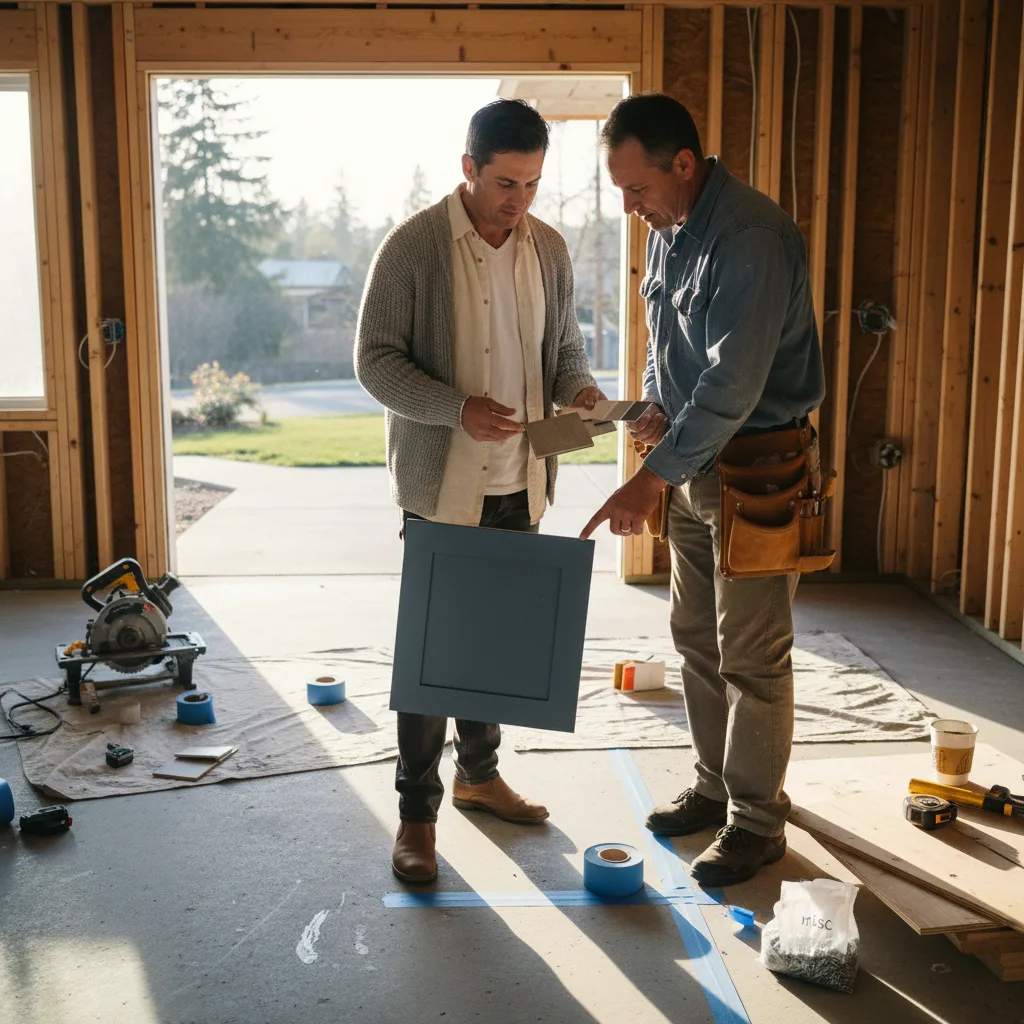
Phase 4: Finishes and Final Inspection (weeks 5, 8)
The final steps are about longevity and aesthetics. For pavers, we sweep in polymeric joint sand, which hardens to lock the pavers together and block weeds. Then we run a plate compactor over the entire surface to set the pavers and vibrate the sand deep into the joints. For concrete, the critical phase is curing. A proper cure, often involving a liquid membrane-forming compound, is what allows the concrete to reach its designed strength. Rushing this leads to surface spalling and shrinkage cracks. After the surface is complete and cured, we schedule the final inspection with the city of Bellevue. The inspector verifies drainage, final grading, and overall compliance with the approved plans. Only after that final signature is the project truly complete.
Three Representative Projects from 2026
Three representative California projects from 2026, scoped similarly, reconstructed from Golden Yards Magazine's invoiced project network and presented here in aggregate form:
- Pasadena: A 900-square-foot stamped concrete driveway replacement on expansive clay soil. Required over-excavation, a structural base, and #4 rebar. Total cost: $28,500. Total timeline: 7 weeks.
- Newport Beach: A 1,200-square-foot permeable paver installation subject to California Coastal Commission review. Included a new drain system tied into the city storm sewer. Total cost: $41,000. Total timeline: 9 weeks.
- Palo Alto: A 750-square-foot modern concrete driveway with linear drains and radiant heating loops. Required electrical and plumbing tie-ins and extensive coordination. Total cost: $52,000. Total timeline: 10 weeks.
What Can Compress This Timeline
Three things you control can shorten the schedule. First, make all your material decisions before the first shovel hits the ground. Lock in the paver style, color, and pattern or the concrete finish and color. Indecision costs days. Second, provide clear and unobstructed access to the site for machinery and material deliveries. If crews are moving wheelbarrows an extra hundred feet because a car is in the way, the job slows down. Third, be available. Your contractor will have questions. Responding to a text about a drain location in ten minutes instead of ten hours can keep the crew moving and prevent a costly re-do. These simple actions show respect for the crew's time and keep the project on track.
What Blows It Up
Three things reliably derail a Bellevue driveway project. First is weather. You cannot properly compact a subgrade or pour concrete in the middle of a Pacific Northwest downpour. A week of solid rain means a week of no progress. Second is discovering unsuitable soil. Hitting undocumented fill, organic material, or a high water table means stopping work, calling in a geotechnical engineer, and executing a new, more expensive plan. Third, and most avoidable, is a mid-project change of scope. Deciding you want to add a walkway or change the paver pattern after work has begun creates a cascade of delays for re-quoting, ordering materials, and rescheduling. The National Association of Home Builders recommends a ten to fifteen percent contingency on renovations in homes over thirty years old. Use it for discoveries, not design changes.
What Should Be in Your Contractor's Schedule
A professional driveway contractor in Bellevue will provide a schedule with clear milestones. It should look something like this, and you should ask for it before signing a contract. A detailed schedule isn't just for them; it's for you to understand the logic of the build and where your money is going. If you're new to the process, you can learn more from [our Bellevue driveway permit playbook](/guides/bellevue-driveway-permit-playbook-2026) to prepare.
- Permit Application & Approval
- Utility Location (Call 811)
- Demolition & Haul-Away
- Excavation & Subgrade Compaction (with third-party testing)
- Geotextile Fabric & Base Rock Installation (compacted in lifts)
- Formwork & Rebar Placement (for concrete) / Edge Restraint & Sand Bedding (for pavers)
- Pre-Pour/Pre-Cover Municipal Inspection
- Concrete Pour & Finish / Paver Laying & Cutting
- Curing Period / Joint Sanding & Final Compaction
- Site Cleanup & Final Municipal Inspection
Golden Yards Take
The brochure from a driveway contractor bellevue might show a dramatic one-week transformation. The reality of a driveway bellevue 2026 project is a month or two of deliberate, unglamorous groundwork. The first seventy percent of the labor and timeline is spent on everything *under* the surface you'll eventually see. It's subgrade compaction, drainage engineering, and building a structural stone base that can handle 5,000-pound SUVs and decades of freeze-thaw cycles. The final pavers or concrete finish is just the thin top layer of a complex system. Homeowners get anxious during the long, muddy excavation phase, but that's where your investment is truly made. A good contractor focuses on the base. A bad one rushes to the pretty part. Know the difference.
Frequently Asked Questions
How long does a driveway in Bellevue really take?
For a standard 600-800 square foot driveway replacement, plan for five to eight weeks from signing the contract to final sign-off. This includes about one to two weeks for design and permitting, two to three weeks for demolition, excavation, and base preparation, and two to three weeks for the actual surface installation, curing, and final inspections. The biggest variable is weather. A string of rainy days can easily add a week or more to the site prep phase, as work on the subgrade cannot proceed on saturated soil.
Can I use my garage during construction?
Access will be limited or impossible for vehicles. During demolition and excavation, the entire area will be an active construction zone. Once the base is down but before the surface is installed, you might be able to lay down some plywood for foot traffic, but it's not ideal. For concrete, you must stay off the new slab for at least seven days for it to cure enough for foot traffic and up to twenty-eight days before driving on it. Plan to park on the street for the duration of the project, typically for several weeks.
What's the longest single phase?
The site preparation and base work phase is almost always the longest and most critical part of the job. It often takes more time than laying the final surface. This includes demolition, hauling away debris, excavating to the proper depth, ensuring the subgrade soil is stable and properly compacted, installing geotextile fabric, and then building up the gravel base in multiple compacted layers. Any issues found here, like soft soil or drainage problems, must be corrected and can add significant time and cost before any visible progress is made.
Can I fast-track the permits in Bellevue?
Generally, no. The City of Bellevue Development Services department processes permits in the order they are received. There isn't a "fast track" option for a standard driveway permit. The best way to ensure a smooth process is to submit a complete and accurate application package from the start. This includes a clear site plan, correct calculations for impervious surfaces, and a detailed stormwater management plan. An incomplete or incorrect application is the most common reason for delays, as it gets sent back for corrections, putting you at the back of the review queue.
Why is the driveway bellevue cost higher than national averages?
The cost is driven by several local factors. Labor is a primary one; Washington State Department of Labor & Industries (L&I) prevailing wage data for King County reflects high demand and cost of living. Material costs, including aggregates and concrete, are also higher due to regional demand and transportation logistics., Bellevue's stringent environmental and stormwater management codes often require more extensive site work, such as deeper-than-average open-graded bases, permeable paver systems, or engineered drainage solutions, all of which add to the total project cost.
Sources & Methodology
Golden Yards reviews public permit and code signals, material pricing, climate and site constraints, contractor quote patterns, comparable projects, the Golden Yards Cost Index, and the Golden Yards Methodology. Cost references are planning ranges, not fixed bids.
- City of Bellevue, Development Services Department
- Interlocking Concrete Pavement Institute (ICPI) Tech Specs
- American Concrete Institute (ACI) 332-R-06 Guide to Residential Concrete
- Washington State Department of Labor & Industries, Prevailing Wage Data
- ASTM International, Standard C33/C33M
- National Association of Home Builders (NAHB)
- WSDOT Standard Specifications for Road, Bridge, and Municipal Construction
Ready to start your driveway project?
Find My ProsFrequently Asked Questions
How long does a driveway in Bellevue really take?
A standard 600-800 square foot driveway replacement in Bellevue takes five to eight weeks from contract to completion. This timeline includes one to two weeks for design and permitting, two to three weeks for site preparation, and another two to three weeks for surface installation, curing, and final inspections.
The total five to eight week schedule for a 600-800 square foot driveway is divided into phases. Design and permitting typically require one to two weeks. Demolition, excavation, and base preparation take two to three weeks, while the final surface installation, curing, and inspections also need two to three weeks. The most significant variable affecting this timeline is weather. A string of rainy days can easily add a week or more to the site preparation phase, since work on the subgrade cannot proceed on saturated soil.
Can I use my garage during construction?
No, you cannot use your garage for vehicles during construction. The area will be an active construction zone, and you should plan to park on the street for several weeks. For new concrete, you must wait at least seven days for foot traffic and up to twenty-eight days before driving on it.
During demolition and excavation, the entire area will be an active construction zone, making access impossible. After the base is installed but before the final surface is laid, you might be able to place some plywood for limited foot traffic, but this is not recommended.
If your project involves concrete, the curing time is critical. The new slab needs a minimum of seven days before it can handle foot traffic. To prevent damage, you must wait up to twenty-eight days before driving a vehicle on the new surface. It is best to arrange for street parking for the full duration of the project.
What's the longest single phase?
The site preparation and base work phase is almost always the longest and most critical part of the job, often taking more time than laying the final surface. This foundational work includes demolition, excavation, ensuring soil stability, and building the gravel base. Unforeseen issues like soft soil can cause significant delays.
This phase involves several steps, starting with demolition and hauling away debris. Workers then excavate to the correct depth and confirm the subgrade soil is stable and properly compacted. A geotextile fabric is often installed before building up the gravel base, which is done in multiple, carefully compacted layers.
Correcting problems found during this stage is essential for a lasting result. Issues such as soft soil or poor drainage must be addressed before proceeding. These corrections can add significant time and cost to the project, even though they occur before the final surface is applied.
Can I fast-track the permits in Bellevue?
No, the City of Bellevue Development Services department does not offer a fast-track option for permits. Applications are processed in the order they are received. The best way to ensure a smooth process and avoid delays is to submit a complete and accurate application package from the very beginning.
The most common reason for delays is an incomplete or incorrect application. When this occurs, your submission is sent back for corrections, which places you at the back of the review queue once you resubmit. This can significantly extend your project timeline.
To prevent this, ensure your initial package is thorough. This includes providing a clear site plan, correct calculations for impervious surfaces, and a detailed stormwater management plan. A well-prepared application is the most effective way to keep your permit review on schedule.
Why is the driveway bellevue cost higher than national averages?
Driveway costs in Bellevue are higher than national averages due to local labor rates, material expenses, and strict building codes. Washington State Department of Labor & Industries (L&I) data for King County shows high prevailing wages. Regional demand increases material costs, while Bellevue's environmental codes often require more complex, expensive site work.
The higher cost is a combination of several local pressures. Labor is a primary factor, with prevailing wage data from the Washington State Department of Labor & Industries (L&I) for King County reflecting the area's high demand and cost of living. Material costs for items like aggregates and concrete are also inflated by regional demand and transportation logistics. Furthermore, Bellevue's stringent environmental and stormwater management codes often require more extensive site work, such as deeper-than-average open-graded bases, permeable paver systems, or engineered drainage solutions, all of which add to the total project price.
Do I need a permit for a new driveway in Bellevue?
Yes, a permit is required for a new or replacement driveway in Bellevue. Due to strict regulations on impervious surfaces and stormwater management, a plan must be approved before any work, including demolition, begins. This applies to any project that alters your driveway's size, location, or drainage. Your contractor submits the plans.
Your contractor will submit plans to Bellevue Development Services for review. The city focuses on lot coverage allowances and requires a complete stormwater management plan. This plan must detail how runoff will be handled, using features such as permeable pavers or rain gardens. The process includes critical milestones like a pre-pour inspection and a final inspection to ensure full compliance.