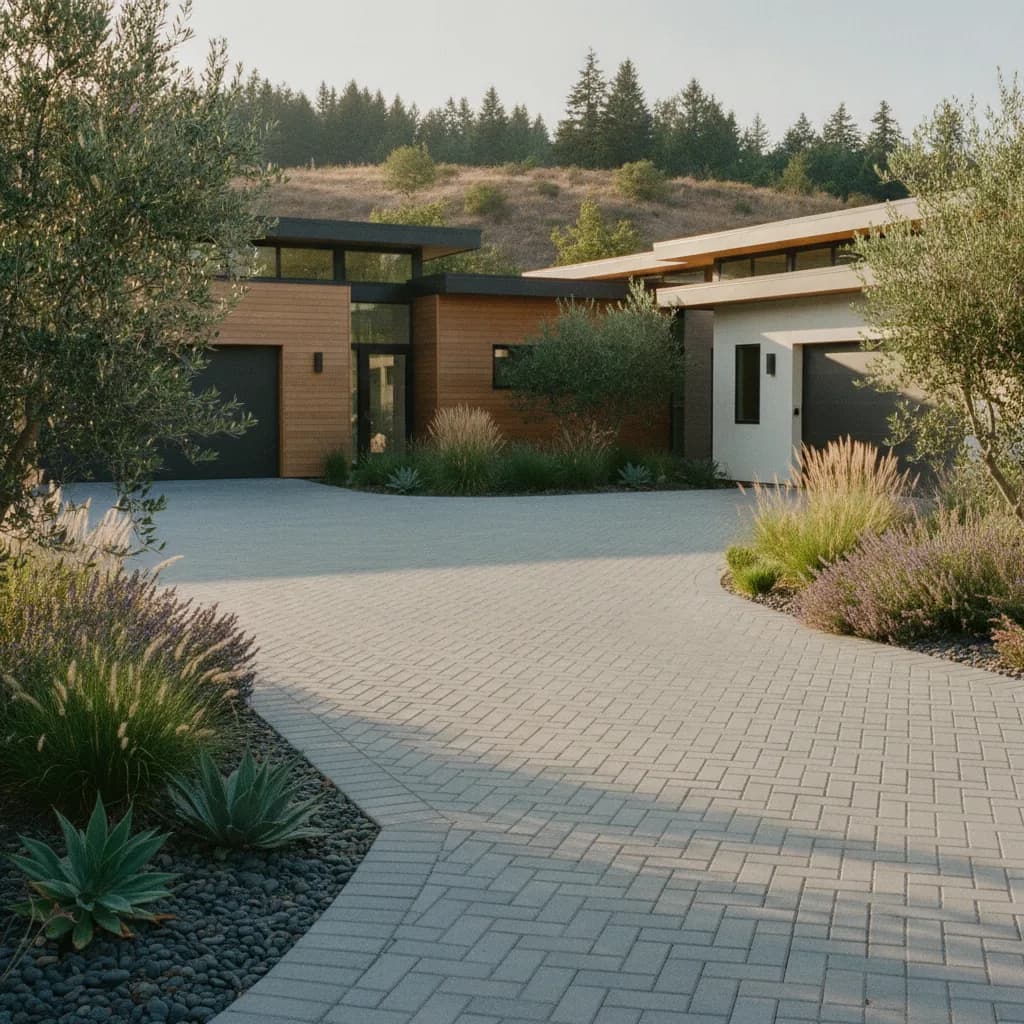
A new driveway in Seattle is a significant investment, with a typical 600-square-foot project costing between $22,000 and $45,000 in 2026. The final invoice is driven by materials, site complexity, and most importantly, the unseen drainage and base preparation required by our wet climate. While a simple asphalt overlay on an existing base can start lower, around $10,000 to $15,000, most full driveway replacement Seattle projects land squarely in the mid-tier range, reflecting the labor and engineering needed to manage Pacific Northwest rainfall for decades to come.
In a Nutshell: Seattle Driveway Costs
- Total Cost Range: $12,000 to $70,000+
- Typical Mid-Range Project: $24,000 - $38,000 for a 600 sq. ft. paver or stamped concrete driveway.
- Project Timeline: Four to seven weeks, with at least half that time dedicated to excavation, subgrade compaction, and base installation.
- Biggest Surprise Line Item: The cost of the stormwater management system. Permeable paver bases or engineered drainage can add 20-30% to the total project cost.
What does a driveway actually cost in Seattle in 2026?
The driveway cost in Seattle is a function of three things: square footage, material choice, and site conditions. A steep slope in Queen Anne with poor soil requires far more engineering and earthwork than a flat lot in Ballard. Below are three tiers of investment for a standard 600-square-foot driveway replacement.
| Tier | Cost Range | Materials & Scope |
|---|---|---|
| Basic | $12,000 - $20,000 | Asphalt or standard broom-finish concrete (4,000 PSI). Minimal grading on a flat site. Assumes stable subgrade. |
| Mid-Range | $22,000 - $45,000 | Interlocking concrete pavers (ICPI certified installation) or colored, stamped concrete. Includes proper excavation, 6-8 inches of compacted aggregate base, and basic channel drainage. |
| Premium | $48,000 - $70,000+ | Permeable pavers with a full open-graded base system, a heated system for snowmelt, or extensive custom stonework. Includes significant grading, retaining walls, and engineered drainage plans for steep or sensitive sites. |
For a typical mid-range project, the budget breaks down approximately like this:
- Labor: 45-50%
- Materials (pavers, base rock, sand, concrete): 30-35%
- Excavation, Demolition & Disposal: 10-15%
- Permits, Engineering & Overhead: 5-10%
The bottom of the range, that $12,000 figure, typically represents a straightforward asphalt pour over a pre-existing, stable base, not a full tear-out and replacement which is the more common scope of work.
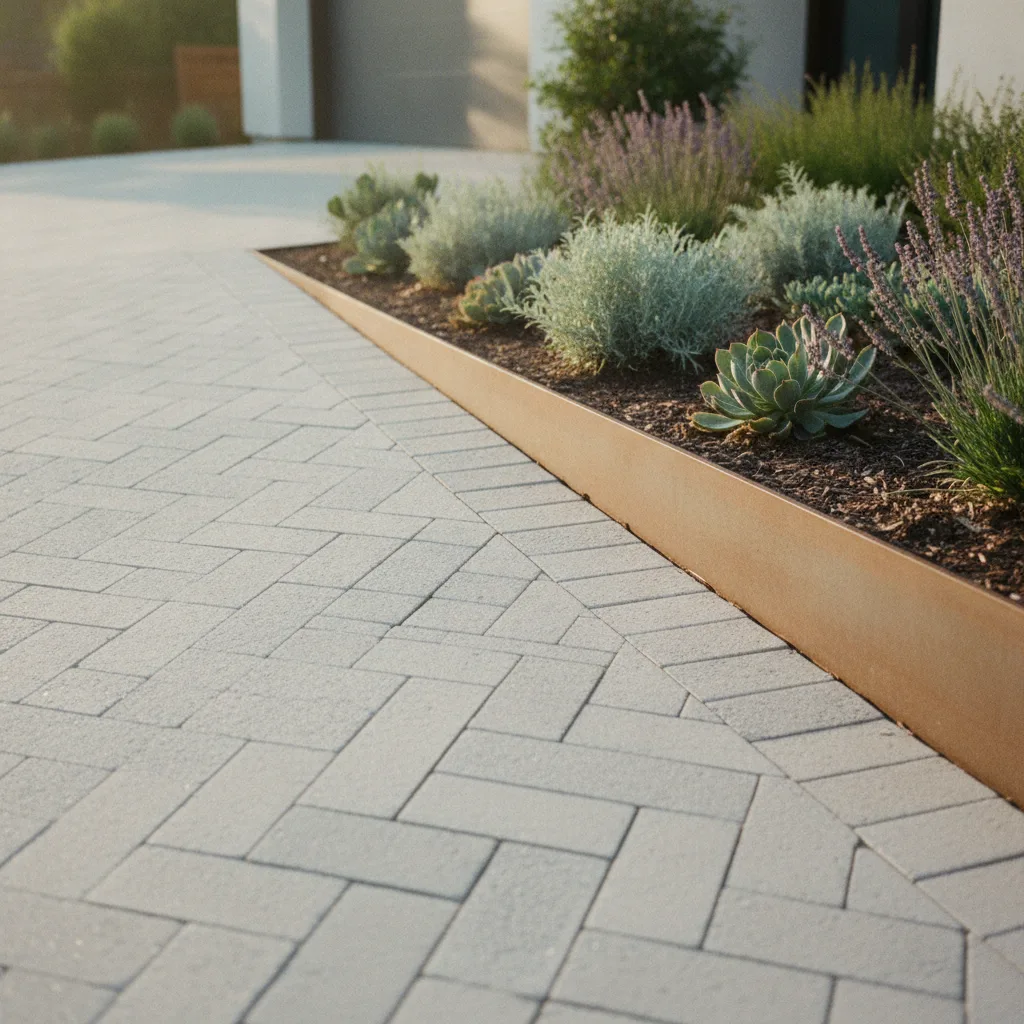
Why is driveway installation in Seattle more expensive?
Costs in the Puget Sound region are consistently higher than the national average. This isn't arbitrary pricing; it's a direct result of our specific economic, logistical, and environmental conditions.
First, labor rates are a primary driver. According to the Washington State Department of Labor & Industries (L&I) prevailing wage data for King County, skilled construction labor commands a significant premium. The high cost of living, coupled with intense demand from a booming construction sector, means that experienced concrete finishers, equipment operators, and hardscape installers are among the highest-paid in the nation. This isn't just wages; it includes insurance, training, and certification costs that reputable contractors carry.
Second, our geology and topography are demanding. Seattle is built on hills and glacial till. This means more excavation, the potential for retaining walls, and complex subgrade preparation to ensure stability. In neighborhoods like Capitol Hill or West Seattle, steep grades require specialized equipment and extensive engineering to manage water and prevent erosion, adding days of labor and thousands in structural costs before a single paver is laid.
Finally, and most critically, are Seattle's stringent environmental regulations. The Seattle Public Utilities and the Department of Construction & Inspections (SDCI) enforce some of the country's toughest stormwater management codes. For many properties, this effectively mandates the use of permeable surfaces or the construction of expensive on-site drainage systems like dry wells or rain gardens to handle runoff. This isn't an optional upgrade; it's a condition of permit approval.
What do real Seattle homeowners spend in 2026?
Ready to compare vetted project options?
Use Project Match privately when your scope is clear enough for contractor conversations.
Start Project MatchThree representative projects from 2026, scoped similarly at around 700 square feet, reconstructed from Golden Yards Magazine's Project of the Day network and used here in aggregate form:
- Greenwood ($26,500): A straightforward replacement of a cracked concrete driveway. The project involved a full tear-out, re-grading the subgrade, installing four inches of new ¾-inch clean crushed rock base compacted to 95 percent Proctor, and pouring a new 4-inch, 4,000 PSI broom-finish slab with #3 rebar at 24-inch on center. A simple channel drain was tied into an existing downspout.
- Wallingford ($39,000): This project addressed a persistent drainage problem. The solution was a permeable paver system. The cost included deep excavation (12 inches) to accommodate the open-graded #57 stone base, geotextile separation fabric, and the pavers themselves. The higher cost reflects the substantially increased material volume and labor for the base system.
- Mercer Island ($68,000): A high-end project featuring a heated driveway system set beneath premium architectural pavers. The scope included extensive excavation, a complex layout of hydronic tubing, a dedicated boiler system, and significant electrical work. The cost also covered engineered plans and multiple inspections required for a system of this complexity.
Where does the money actually go?
The surface you see is often less than half the total cost. The real work is buried. Here are common line items that don't appear on a simple per-square-foot estimate but are critical to a long-lasting driveway installation in Seattle.
- Demolition and Haul-Away: $3 - $6 per square foot. This includes breaking up the old surface and trucking it to a recycling facility.
- Excavation and Soil Export: $2,000 - $5,000+. If your subgrade is unstable clay, it must be removed and replaced with structural fill. Tipping fees for soil are substantial.
- Geotextile Separation Fabric: $1 - $2 per square foot. This fabric is non-negotiable in our wet soils. It prevents the expensive aggregate base from sinking into the subgrade mud.
- Engineered Drainage System: $3,000 - $10,000+. This could be a simple channel drain or a complex dry well system required by the city to manage stormwater on-site.
- Permit Fees (SDCI): $800 - $2,500. This covers plan review and inspections. Fees increase with project complexity and if it's in an Environmentally Critical Area (ECA).
- Concrete Pump Truck: $700 - $1,200 per pour. If a standard concrete truck can't access the site directly, a pump is needed to move the material.
- Thickened Edge Footings: $20 - $30 per linear foot. A thickened concrete edge provides structural support and prevents the edges from cracking and chipping, especially where vehicles enter and exit.
What stops a Seattle driveway project from running over budget?
Three factors typically derail driveway budgets: surprises under the surface, mid-project changes, and permitting hurdles.
First is discovering poor subgrade conditions after demolition. If the soil is saturated clay or uncompacted fill, the plan must change. This might require deeper excavation and more base rock, adding thousands to the cost. The National Association of Home Builders recommends a ten to fifteen percent contingency on renovations in homes over thirty years old for precisely these kinds of unforeseen issues.
Second is scope creep. Deciding to add a walkway, upgrade to heated pavers, or install landscape lighting halfway through the project will inflate costs and extend timelines. These changes require new material orders and revised labor schedules. Lock in your design and material choices before the first shovel hits the ground.
Third, permitting with the Seattle Department of Construction & Inspections can be complex, especially if your property has steep slopes or is near a wetland. A plan that fails review or requires significant revisions from a civil engineer can cause weeks of delay and add to design costs. A contractor experienced with the local code is your best defense.
Ready to estimate your project?
To get a preliminary estimate based on your specific square footage and material choice, you can use our online driveway cost calculator. It provides a localized baseline to help you budget for discussions with qualified contractors.
What should your Seattle contractor include in the quote?
A legitimate quote is a detailed scope of work, not a single number on a handshake. It should specify the following to pass inspection and prevent callbacks.
- Detailed scope of demolition and disposal of existing materials.
- Depth of excavation for subgrade and base preparation.
- Subgrade compaction specification (e.g., to 95 percent Modified Proctor).
- Type and depth of aggregate base material (e.g., 6 inches of ¾-inch clean crushed rock).
- Specification for geotextile separation fabric between subgrade and base.
- For concrete: PSI strength (min. 4,000 PSI for driveways), thickness, and air entrainment percentage (critical for freeze-thaw durability).
- For concrete: Reinforcement details (e.g., #4 rebar at 18-inch on-center grid).
- For pavers: Manufacturer, style, and bedding course material (e.g., 1 inch of ASTM C33 sand).
- For pavers: Type of joint sand (e.g., ASTM C144 or polymeric sand).
- Detailed drainage plan, including pipe sizes, drain types, and connection points.
- Responsibility for obtaining permits. A detailed breakdown can be found in our Seattle driveway permit playbook.
- Projected start date, duration, and a clear payment schedule.
- Lien release procedures.
- Warranty information on both materials and workmanship.
Sources & Methodology
Cost ranges in this guide draw on the following named industry sources, public agency datasets, and Golden Yards Magazine editorial research.
- Washington State Department of Labor & Industries, Prevailing Wage Data for King County (2026)
- Seattle Department of Construction & Inspections (SDCI), Fee Schedules & Permit Requirements (2026)
- Interlocking Concrete Pavement Institute (ICPI), Tech Spec 2: Construction of Interlocking Concrete Pavements (2024)
- American Concrete Institute (ACI), ACI 332R-06: Guide to Residential Code for Concrete (2023)
- National Association of Home Builders (NAHB), Construction Cost Survey (Q4 2025)
- Golden Yards Magazine, Editorial Methodology & Proprietary Project Database (2024-2026)
Golden Yards Magazine Take
In Seattle, a driveway is not a cosmetic upgrade; it is an integrated piece of your home's water management system. The most common point of failure we see is not the surface material but the inadequate base and drainage beneath it. Homeowners get sold on a beautiful stamped concrete pattern or a stylish paver, but the contractor cuts corners on the unseen work: skimping on base rock depth, skipping the geotextile fabric, or failing to compact the subgrade in proper lifts. In our climate, water will always find the weak spot. Five years later, that shortcut results in settlement, cracks, and pooling water. The single best investment you can make is to pay for a solid, well-drained foundation. The surface is just the finish.
Sources & methodology
How Golden Yards builds this guide
Golden Yards reviews public permit and code signals, material pricing, climate and site constraints, contractor quote patterns, comparable projects, the Golden Yards Cost Index, and the Golden Yards Methodology. Cost references are planning ranges, not fixed bids.
- Benchmarked against the Golden Yards Cost Index and related project guides.
- Reviewed for California climate, water, fire, drainage, access, and permit context.
- Commercial Project Match is separate from editorial cost guidance.
Ready to start your driveway project?
Get matched with 2-3 vetted California contractors. 100% free, no obligation.
Find My Pros