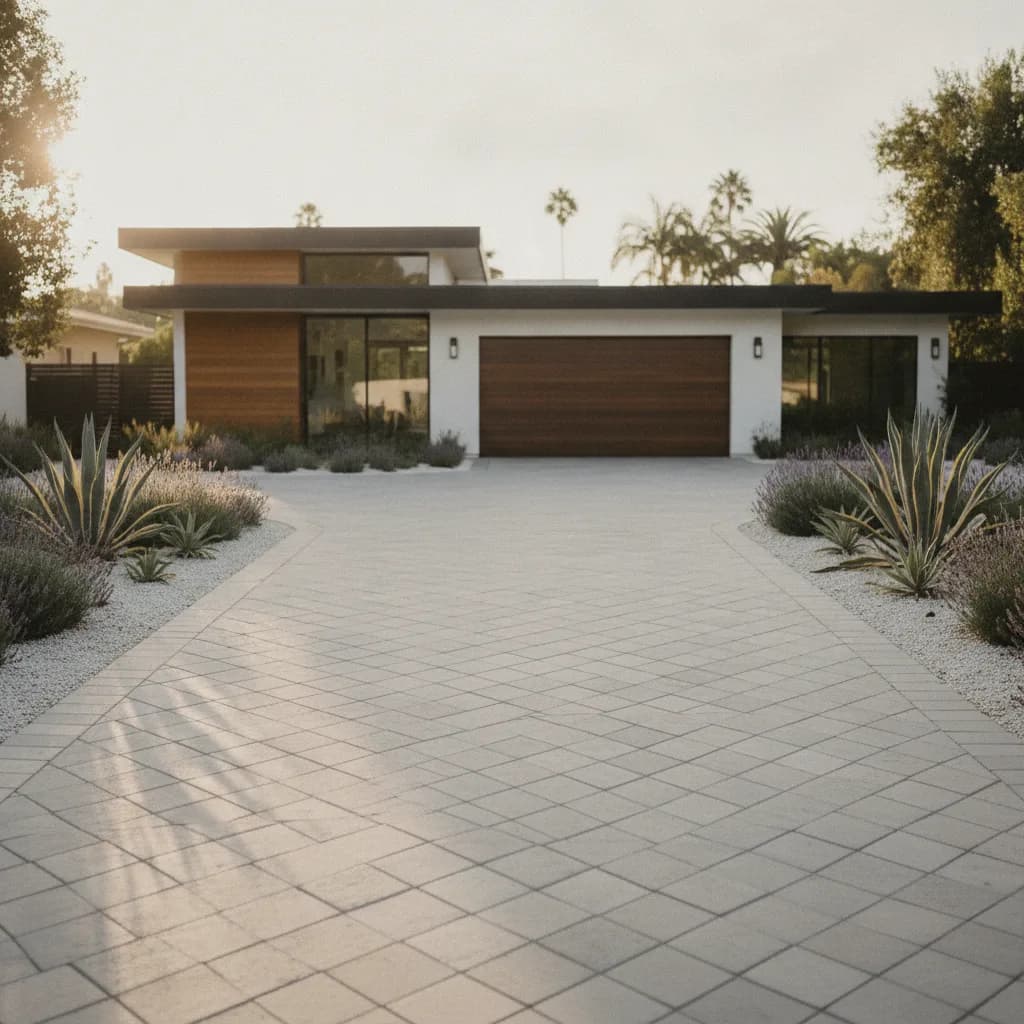
A new driveway in Los Angeles typically costs between $15,000 and $45,000, with most homeowners paying around $28,000 for a professionally installed 600-square-foot paver system. The price for a driveway in Los Angeles can start lower, around $9,000, for a simple concrete replacement on a flat lot with good existing subgrade. However, the final invoice is dictated by demolition, soil conditions, drainage requirements, and the material you put on top. The foundation you don't see is where the real investment lies.
In a Nutshell
- Total Cost Range: $9,000 (basic concrete) to $50,000+ (premium permeable pavers).
- Mid-Range Average: $25,000 to $35,000 for a 600-square-foot interlocking paver driveway.
- Typical Timeline: Four to six weeks, with up to three weeks dedicated to demolition, excavation, and base preparation.
- Biggest Surprise Line Item: Subgrade correction for LA's expansive clay soils, which can add $3,000 to $7,000 to a project.
What does a driveway actually cost in Los Angeles in 2026?
The square-foot price is a blunt instrument, but it's a starting point. The real cost drivers are underneath the surface. A flat lot with sandy loam is a different project from a sloping yard with expansive clay. Below are three tiers of investment for a standard 600-square-foot driveway.
| Tier | Description | Cost per Sq. Ft. | Total Cost (600 Sq. Ft.) |
|---|---|---|---|
| Basic | Broom-finish concrete (4-inch slab), minimal grading, no major demolition. Meets ACI 332 residential spec. | $15 - $25 | $9,000 - $15,000 |
| Mid-Range | Interlocking concrete pavers, proper demolition, 6-inch Class II aggregate base, edge restraints, polymeric sand. | $28 - $45 | $16,800 - $27,000 |
| Premium | Permeable pavers or natural stone, deep open-graded base, integrated drainage, decorative elements. | $45 - $75+ | $27,000 - $45,000+ |
For a typical mid-range paver project, the budget allocation looks something like this:
- Labor: 45%
- Materials (Pavers, Base, Sand): 30%
- Site Prep, Demolition & Hauling: 20%
- Permits & Fees: 5%
The bottom-of-range $9,000 driveway assumes an existing, stable subgrade and minimal demolition, a scenario that is uncommon for most Los Angeles properties needing a full replacement.
Why is a driveway more expensive in Los Angeles?
Three factors drive up the cost of a driveway in Los Angeles compared to other regions: labor rates, logistical hurdles, and complex site conditions.
One: Skilled Labor Costs. A proper driveway installation isn't just about pouring concrete or laying pavers. It requires skilled equipment operators for excavation and compaction. According to the California Department of Industrial Relations prevailing wage data for Los Angeles County, the cost for this skilled labor is among the highest in the state. A contractor's quote reflects not just the crew's time but their liability insurance, workers' compensation, and the overhead to run a licensed, bonded business in California.
Two: Logistics and Material Transport. Los Angeles is a sprawling metropolis. The aggregate quarries that produce the #57 stone and Class II base essential for a stable driveway are located far from coastal and central neighborhoods. A significant portion of your material cost is diesel fuel and the driver's time navigating traffic to get that ten-ton load of rock to your site. Tight access on streets in older neighborhoods like Eagle Rock or Echo Park can also require smaller trucks, meaning more trips and higher costs.
Three: Site Complexity and Neighborhood Premiums. Many LA properties sit on expansive clay soils, particularly in the San Fernando Valley. This isn't dirt; it's a structural risk that swells when wet and shrinks when dry, cracking slabs and shifting pavers. Mitigating it requires over-excavation and importing engineered fill, a costly but non-negotiable step., contractors working in affluent areas like Santa Monica or Sherman Oaks often carry higher insurance premiums and face more rigorous homeowner association reviews, costs that are factored into the final price.
What do real Los Angeles homeowners spend in 2026?
Ready to compare vetted project options?
Use Project Match privately when your scope is clear enough for contractor conversations.
Start Project MatchThree representative projects from 2026, scoped similarly, reconstructed from Golden Yards Magazine's Project of the Day network and used here in aggregate form:
1. The Studio City Paver Upgrade: $29,500. A 650-square-foot driveway where the original concrete was severely cracked by ficus tree roots. The project required demolition, hauling, significant root pruning, and installing a root barrier. The new installation included a six-inch compacted Class II base, ASTM C33 bedding sand, and interlocking concrete pavers sealed against oil stains.
2. The Eagle Rock Concrete Replacement: $12,800. A straightforward 500-square-foot remove-and-replace project on a flat lot. The subgrade was stable, requiring minimal re-compaction. The scope included demolition of the old slab, forming, pouring a four-inch 3,500 PSI concrete slab with #4 rebar at 18 inches on center, and a standard broom finish. The job was completed in under two weeks.
3. The Mar Vista Permeable Solution: $41,000. A 700-square-foot project driven by the homeowner's desire to manage stormwater runoff and recharge groundwater. This required excavating twelve inches deeper than a standard driveway to install an open-graded base of #57 stone, wrapped in geotextile fabric. The permeable pavers allow water to pass through, reducing runoff into city drains. The higher cost reflects the specialized materials, deeper excavation, and meticulous installation process.
Where does the money actually go?
A contractor's bid bundles dozens of small costs. Understanding them helps you see why a low bid is a red flag. It usually means one of these critical steps is being skipped.
- Demolition and Haul-Away ($2,000 - $5,000): Breaking up the old concrete or asphalt and legally disposing of it at a recycling facility.
- Subgrade Preparation ($1,500 - $4,000): This is excavation, grading for proper slope, and compaction to 95 percent Modified Proctor density. This is the most critical step for longevity.
- Geotextile Separation Layer ($500 - $1,200): A heavy-duty fabric that separates the clay subgrade from your expensive aggregate base, preventing the stone from sinking over time.
- Class II Aggregate Base ($3,000 - $6,000): The structural foundation. For a driveway, this should be a minimum of six to eight inches deep, brought in and compacted in two-inch lifts.
- Edge Restraints ($1,000 - $2,500): Concrete or plastic restraints installed on a concrete footing to keep the pavers from shifting outward under load.
- Drainage System ($2,500 - $6,000): Channel drains, catch basins, or French drains required by code to prevent water from sheeting onto the sidewalk or into your garage.
- Permit Fees ($800 - $1,500): The cost for the Los Angeles Department of Building and Safety (LADBS) to review plans and conduct inspections.
- Polymeric Joint Sand & Sealer ($700 - $1,800): The final step for pavers. The sand hardens to lock pavers in place, and the sealer protects against stains.
What stops a Los Angeles driveway from running over budget?
Three things typically break a driveway budget: surprises under the ground, changes from the homeowner, and insufficient planning.
1. Subsurface Conditions. You never know what's under the old slab until it's gone. Discovering uncompacted fill, a high water table, or a vein of stubborn adobe clay means the original plan for subgrade prep is out the window. The fix requires more excavation and more imported material, adding time and cost.
2. Scope Creep. It often starts with, "While you have the crew here..." Adding a matching walkway, a new porch landing, or integrated lighting are all separate projects that can quickly inflate the budget. Decide on the full scope before the first jackhammer hits the concrete.
3. Inadequate Drainage Plan. Water is the enemy of every hardscape. A plan that just meets the minimum code might not be enough for your property's unique grading. Discovering a drainage problem after the base is installed often requires costly rework. The National Association of Home Builders recommends a ten to fifteen percent contingency on renovations in homes over thirty years old.
How do I estimate my driveway cost?
A detailed quote from a licensed contractor is the only way to get a firm number. However, to get a preliminary estimate for your specific dimensions and materials, you can use a detailed driveway cost calculator. This tool helps you compare the costs of different materials and understand the budget implications before you start collecting bids.
What should your Los Angeles contractor include in the quote?
A professional bid is a multi-page document, not a handshake. It protects you and the contractor by defining the job precisely. Look for these fourteen line items:
- Total square footage of the project.
- Detailed scope of demolition and disposal methods.
- Subgrade compaction specification (e.g., "compaction to 95% Modified Proctor").
- Depth and type of aggregate base (e.g., "6-inch depth of Caltrans Class II aggregate base").
- Inclusion of a geotextile separation fabric.
- Depth and type of bedding course for pavers (e.g., "1-inch screeded course of ASTM C33 concrete sand").
- For concrete: slab thickness, concrete PSI strength, and rebar/mesh specification.
- For pavers: manufacturer, style, and color of the paver.
- Type of edge restraint to be used.
- Type of joint sand (e.g., "polymeric sand, brand and color specified").
- Details of any drainage systems being installed.
- The official permit number from LADBS. A detailed overview can be found in our Los Angeles driveway permit playbook.
- Payment schedule and project timeline.
- Warranty information for both materials and labor.
The Golden Yards Take
The single biggest mistake a homeowner can make is focusing on the surface. The paver color, the stamp pattern, the finish, that's the five percent of the project that provides the aesthetic payoff. The other ninety-five percent of the value, the part that determines if your driveway lasts five years or twenty-five, is the earthwork. It's the compaction of the subgrade, the depth of the base, and the management of water. A contractor who spends more time explaining their base prep than showing you paver samples is a professional. The callback that costs everyone is not a stained paver. It's the rut your SUV leaves after the first rainy season because the base failed. That fix is a complete tear-out. Pay for the base. Get it inspected. The surface will take care of itself.
Sources & Methodology
Cost ranges in this guide draw on the following named industry sources, public agency datasets, and Golden Yards Magazine editorial research.
- California Department of Industrial Relations, Prevailing Wage Determinations, Los Angeles County (2026)
- Los Angeles Department of Building and Safety (LADBS), Driveway Permit Requirements (2026)
- National Association of Home Builders (NAHB), Remodeling Market Index (Q1 2026)
- Interlocking Concrete Pavement Institute (ICPI), Tech Spec 2: Construction of Interlocking Concrete Pavements (2025)
- American Concrete Institute (ACI), ACI 332: Residential Code Requirements for Structural Concrete (2024)
- California Contractors State License Board (CSLB), Licensee Survey Data (2025)
- Golden Yards Magazine, Editorial Methodology & Proprietary Project Cost Data (2026)
Sources & methodology
How Golden Yards builds this guide
Golden Yards reviews public permit and code signals, material pricing, climate and site constraints, contractor quote patterns, comparable projects, the Golden Yards Cost Index, and the Golden Yards Methodology. Cost references are planning ranges, not fixed bids.
- Benchmarked against the Golden Yards Cost Index and related project guides.
- Reviewed for California climate, water, fire, drainage, access, and permit context.
- Commercial Project Match is separate from editorial cost guidance.
Ready to start your driveway project?
Get matched with 2-3 vetted California contractors. 100% free, no obligation.
Find My Pros