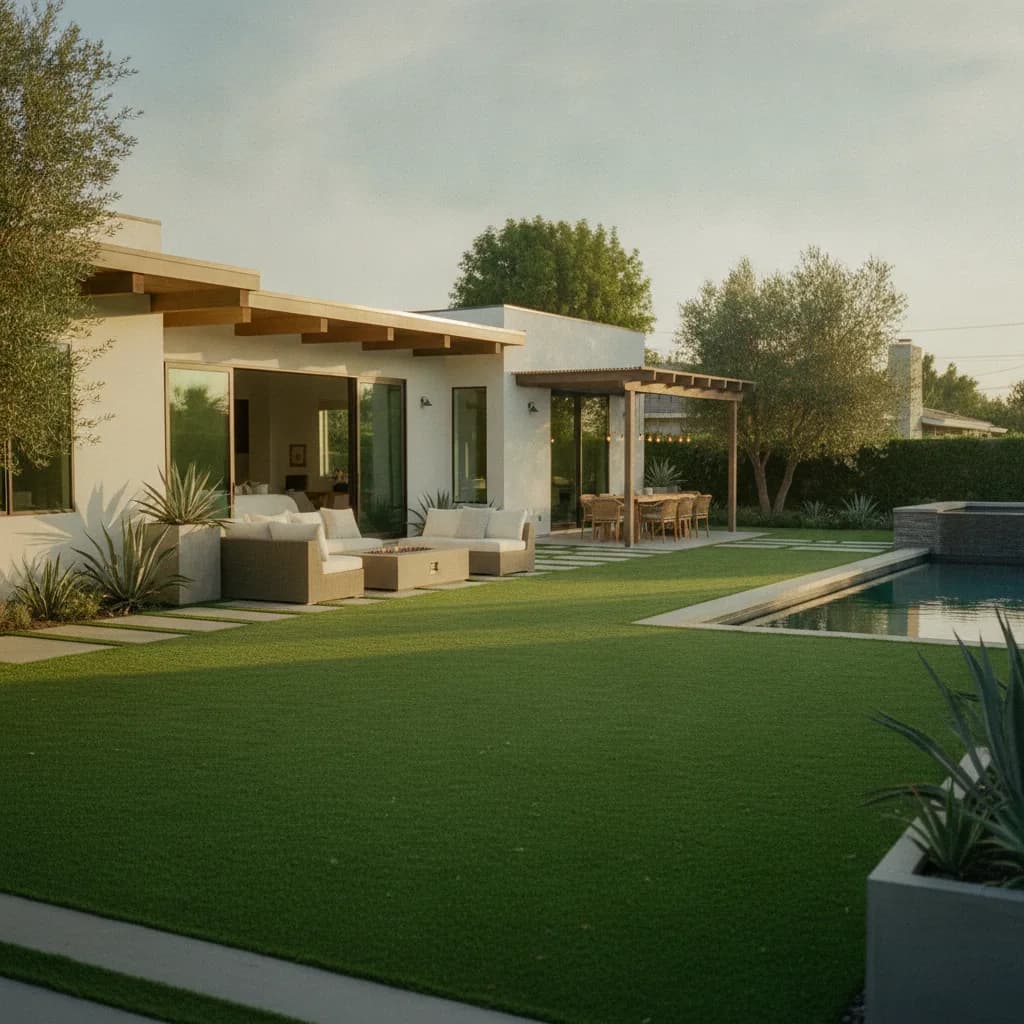
For Los Angeles homeowners, the dream of a lush, green lawn often clashes with the reality of persistent drought conditions, escalating water bills, and the endless chore of maintenance. Traditional grass, while beautiful, is a thirsty and demanding landscape element, especially in our arid climate. This is where artificial turf steps in, not as a compromise, but as a superior solution, offering an evergreen aesthetic, significant water savings, and remarkable durability.
Once considered a niche product, synthetic grass has evolved dramatically. Modern artificial turf is incredibly realistic, comfortable underfoot, and engineered to withstand the intense Southern California sun. It's a smart, sustainable investment that transforms your outdoor space into a perpetually perfect oasis, freeing you from the burdens of traditional lawn care and aligning with our region's critical need for water conservation.
Why Synthetic Grass is a Smart Choice for Los Angeles Homeowners
The decision to switch to artificial turf in Los Angeles is often driven by a confluence of practical and aesthetic desires. For many, it represents a definitive answer to the challenges of maintaining a vibrant landscape in a drought-prone metropolis.
Water Conservation: A Regional Imperative
This is arguably the most compelling reason for Angelenos to embrace artificial turf. Los Angeles faces perennial water scarcity, leading to stringent watering restrictions and rising utility costs. A typical natural lawn can consume hundreds of gallons of water per week, a significant portion of a household's total usage. By replacing natural grass with synthetic turf, homeowners can drastically reduce their outdoor water consumption, often by 50-70% or more. This not only translates to substantial savings on your LADWP bill but also contributes directly to the region's water security efforts. Many local agencies, including the Los Angeles Department of Water and Power (LADWP) and the Metropolitan Water District (MWD), offer attractive rebate programs for turf removal, making the transition even more financially appealing.
Low Maintenance: Reclaim Your Weekends
Imagine a life without mowing, fertilizing, weeding, or pest control. Artificial turf delivers this freedom. There's no need for loud mowers, chemical treatments, or endless hours spent battling crabgrass. A synthetic lawn requires minimal upkeep – occasional brushing, rinsing, and debris removal – allowing you to reclaim your precious weekends and enjoy your yard rather than laboring over it. This also means fewer trips to the garden center, less fuel consumption for lawn equipment, and a reduced carbon footprint.
Year-Round Beauty: Always Green, Always Perfect
Unlike natural grass, which can brown in the summer heat, thin out in shaded areas, or struggle with disease, artificial turf maintains its pristine, vibrant green appearance 365 days a year. It's impervious to seasonal changes, drought, and heavy foot traffic. Whether it's a scorching August afternoon or a cool December morning, your lawn will look impeccably manicured, enhancing your home's curb appeal without fail.
Durability & Longevity: Built for LA Life
Modern artificial turf is engineered for resilience. It's designed to withstand the harsh UV rays of the Southern California sun without fading, heavy foot traffic from children and pets, and even the occasional backyard party. High-quality installations can last 15-20 years or more, providing a long-term solution that outperforms and outlasts traditional lawns in many respects.
Pet-Friendly & Allergy-Friendly
For pet owners, artificial turf offers a clean, durable surface that eliminates muddy paws and brown spots from pet waste. Specialized infills and backing materials ensure excellent drainage and odor control. For allergy sufferers, synthetic grass means no pollen, reducing seasonal discomfort and allowing for greater enjoyment of outdoor spaces.
Understanding Your Options: Choosing the Right Artificial Turf
The market for artificial turf has expanded significantly, offering a wide array of products tailored to different needs and aesthetics. Selecting the right turf involves understanding several key characteristics.
Pile Height and Density
- Pile Height: This refers to the length of the individual grass blades. Shorter piles (0.5-1.5 inches) are often used for putting greens or high-traffic areas, offering a tidy, manicured look and easier cleaning. Taller piles (1.75-2.5 inches) mimic the look and feel of a lush, natural lawn, providing a softer, more luxurious feel.
- Density: This is the number of individual blades per square foot. Higher density turf generally looks fuller, feels softer, and is more durable, but also tends to be more expensive. Consider the intended use: a decorative lawn might prioritize a softer, denser feel, while a play area might need a more resilient, slightly shorter pile.
Blade Shape and Material
The shape of the individual synthetic grass blades plays a crucial role in how the turf looks, feels, and performs. Common shapes include:
- Flat/Diamond: Offers a soft feel but can flatten easily.
- C-Shape/S-Shape: Designed for resilience, helping blades stand upright even after heavy use, providing a natural bounce-back. Excellent for high-traffic areas.
- V-Shape/W-Shape: Offers a more realistic look with varying blade directions and good durability.
- U-Shape: Known for its strength and ability to resist flattening.
The primary materials used are:
- Polyethylene: The most common and versatile, offering a good balance of softness, durability, and realistic appearance. Ideal for general landscaping.
- Polypropylene: Often used for putting greens due to its stiffness and short pile. Less durable for high-traffic areas.
- Nylon: The most durable and expensive, capable of withstanding extreme temperatures and heavy use, but can be stiff and less realistic in appearance. Often blended with other materials.
For most LA residential applications, a high-quality polyethylene turf with a resilient blade shape (C, S, V, or U) is the best choice.
Color and Thatch Layer
To achieve a truly natural look, modern artificial turf incorporates varying shades of green, often with a brown or tan "thatch" layer at the base. This mimics the dead grass and organic matter found in a natural lawn, adding depth and realism. Look for turf with multiple blade colors and a well-integrated thatch layer to avoid a monochromatic, artificial appearance. Consider how the turf color will complement your home's exterior and existing landscaping under the bright LA sun.
Backing Material
The backing is crucial for drainage and overall turf integrity. Most quality turf features a permeable backing, often made of polyurethane or latex, with perforations to allow water to drain through. For pet owners, specialized "flow-through" or "MaxFlow" backings offer superior drainage, preventing odors and ensuring a cleaner environment.
Infill Options
Infill is the granular material spread between the turf blades after installation. It serves several vital functions:
- Weighs down the turf: Prevents wrinkles and shifting.
- Supports the blades: Helps them stand upright, maintaining the turf's plush appearance.
- Provides cushioning: Enhances comfort and safety.
- Aids in drainage: Helps water move through the turf.
- Controls temperature: Some infills can help dissipate heat.
Common infill options include:
- Silica Sand: Economical, provides weight and support. Can retain heat.
- Crumb Rubber: Made from recycled tires, offers excellent cushioning and support. Can retain heat and sometimes have an odor.
- ZeoFill (Zeolite): A natural mineral excellent for pet areas. It absorbs ammonia from pet urine, significantly reducing odors.
- Acrylic-Coated Sand: Offers enhanced durability and can be cooler than plain silica sand.
For LA's climate, especially with pets, a combination of silica sand and ZeoFill is often recommended for optimal performance and odor control.
UV Resistance
Given the intense and consistent sunshine in Los Angeles, UV resistance is non-negotiable. High-quality turf is treated with UV inhibitors to prevent fading and degradation over time. Always confirm the turf's UV rating and warranty against sun damage.
Planning Your Artificial Turf Project: From Concept to Reality
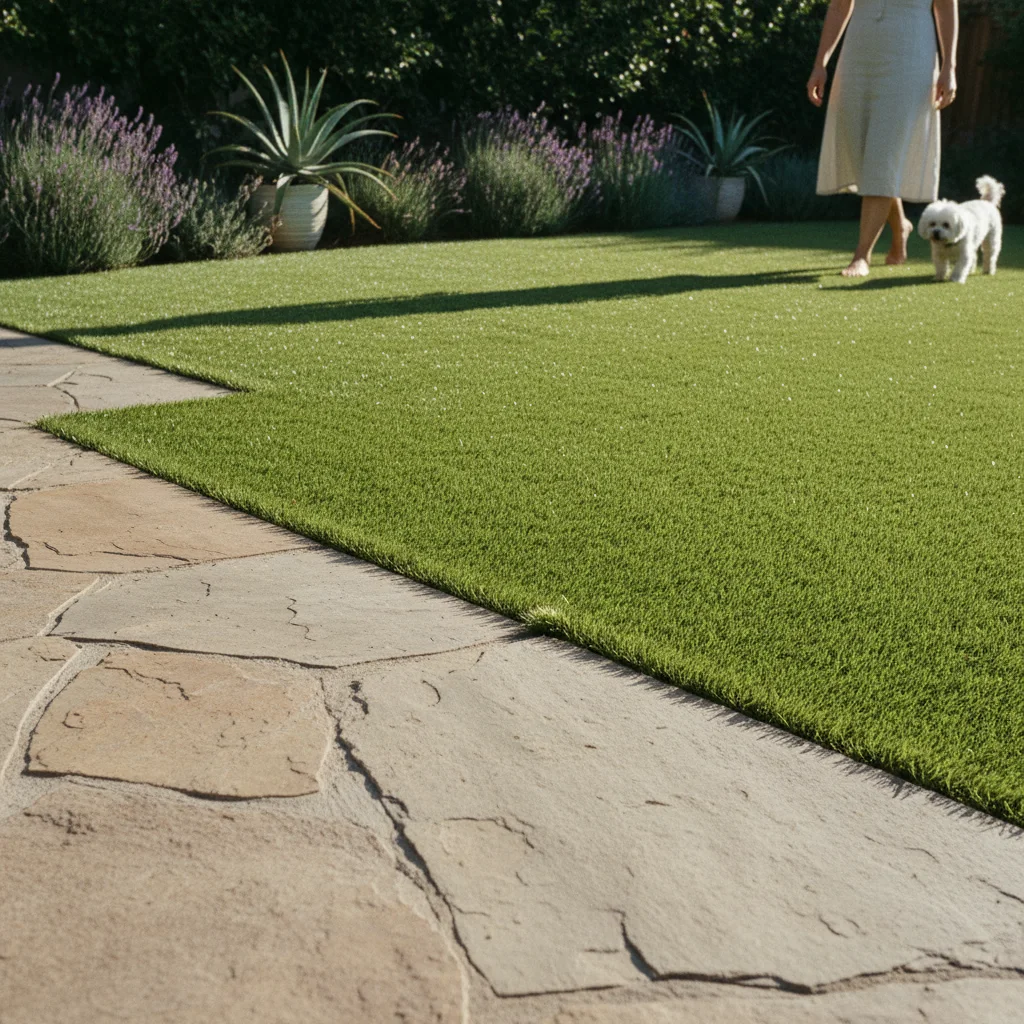
A successful artificial turf installation begins with meticulous planning. Rushing this phase can lead to costly mistakes and an unsatisfactory result.
Site Assessment
Before anything else, thoroughly assess your project area:
- Drainage: How does water currently drain? Artificial turf requires a well-draining base. If your yard has pooling issues, you'll need to address grading and potentially install French drains or other solutions beneath the turf.
- Sun Exposure: While turf is UV-resistant, understanding sun patterns helps in selecting the right product and anticipating potential heat retention.
- Existing Irrigation: You'll need to cap or remove existing sprinkler heads. Consider repurposing the irrigation lines for drip systems to water surrounding plants.
- Underground Utilities: Be aware of any buried lines (water, gas, electrical, internet) before digging. Call 811 before you dig!
Design Considerations
Think about how you'll use the space:
- Area Size and Shape: Measure accurately. Complex shapes will require more cutting and seaming, potentially increasing material waste and labor.
- Intended Use: Is it a decorative lawn, a play area for kids, a pet run, or a putting green? This will influence your turf choice (pile height, density, infill).
- Integration with Existing Landscaping: How will the turf transition to flower beds, patios, pathways, or hardscaping? Proper edging is key for a clean, finished look. Consider incorporating drought-tolerant plants, rocks, and decomposed granite for a cohesive, water-wise landscape.
- Slope: While turf can be installed on slopes, very steep grades might require specialized installation techniques to prevent shifting.
Budgeting & Cost Factors
The cost of artificial turf varies widely based on turf quality, project complexity, and whether you DIY or hire professionals. Expect to pay anywhere from $5 to $20+ per square foot for a professionally installed, high-quality system in Los Angeles.
Key cost components include:
- Turf Material: Typically $2.50 - $8.00 per square foot, depending on quality, pile height, and density.
- Base Materials: Crushed aggregate (e.g., Class II Road Base, decomposed granite) for the sub-base, typically $0.50 - $1.50 per square foot.
- Infill: $0.25 - $1.00 per square foot, varying by type (silica sand, ZeoFill, etc.).
- Edging Materials: Benders board, concrete curbing, or other transitions.
- Weed Barrier: Inexpensive, but essential.
- Labor: Professional installation can range from $3.00 - $10.00+ per square foot, depending on site prep, complexity, and contractor.
- Tools: If DIY, consider rental costs for plate compactors, sod cutters, etc.
- Disposal Fees: For removing existing sod and soil.
Rebates for LA Homeowners: Budget the full installed cost, because the turf replacement rebate does not cover synthetic grass. The LADWP and Metropolitan Water District programs, administered through SoCal Water$mart, pay homeowners to replace a lawn with live drought tolerant planting, and the program states that synthetic turf is not an approved conversion option. A qualifying project also needs a minimum area of turf removed, at least three plants per 100 square feet, a stormwater retention feature, no overhead spray irrigation and no impermeable hardscape. If the rebate is what makes your project work, a planted conversion is the eligible route, and the two give you very different yards. Rebates are administered by individual water agencies and terms change, so confirm current rules with your provider before you budget either way.
Navigating Permits and Homeowners Association (HOA) Regulations in LA
Ready to compare vetted project options?
Use Project Match privately when your scope is clear enough for contractor conversations.
Start Project MatchSee what your artificial turf install actually costs in 4 questions.
We pull cost ranges from invoiced California turf installer projects, then narrow them to your scope, ZIP, and finish level. No first-call sticker shock.
Open the turf savings calculatorFree. Takes under 2 minutes. No email required to see your range.
Before you break ground, it's crucial to understand the regulatory landscape in Los Angeles.
Permits
Generally, the installation of artificial turf itself does not require a specific building permit from the City of Los Angeles or Los Angeles County. This is because it's considered a landscape improvement rather than a structural change.
However, permits may be required if your project involves:
- Significant Grading or Excavation: If you're altering the natural grade of your property substantially, especially near property lines or structures.
- Extensive Drainage Work: Installing new storm drains or complex French drain systems.
- Retaining Walls: If your project necessitates building or modifying retaining walls.
- Electrical Work: For integrated lighting or other electrical components.
Always err on the side of caution. Contact your local Department of Building and Safety (for City of LA residents) or the LA County Department of Public Works (for unincorporated areas) to confirm specific requirements for your project. A quick phone call can save you significant headaches down the line.
Homeowners Association (HOA) Rules
If you live in a community governed by a Homeowners Association, this step is absolutely critical. HOAs in Los Angeles often have strict guidelines regarding exterior modifications, including landscaping.
- Architectural Review: Most HOAs require submission of plans for any exterior changes to an Architectural Review Committee (ARC) or similar body.
- Approved Materials: They may have specific requirements for turf type, color, pile height, and even the percentage of your yard that can be covered by artificial turf. Some HOAs might have a list of pre-approved turf products or installers.
- Installation Standards: They might dictate how the turf transitions to other landscaping elements or require specific edging.
- Timeline: Be aware of their review process timeline, which can sometimes take several weeks.
Do not proceed with installation until you have written approval from your HOA. Failing to do so can result in fines, forced removal, or legal action. Obtain a copy of your HOA's CC&Rs (Covenants, Conditions, and Restrictions) and any specific landscaping guidelines.
Installation: DIY vs. Professional Expertise
Once planning is complete, the execution phase begins. Deciding between a DIY installation and hiring professionals depends on your project's scope, your skill level, and your budget.
When to DIY
DIY installation is feasible for:
- Smaller, simpler areas: A small patch of lawn, a dog run, or a simple rectangular shape.
- Homeowners with good manual labor skills: You'll need to be comfortable with digging, leveling, and heavy lifting.
- Access to tools: You'll need a sod cutter, plate compactor, utility knife, power broom, and other specialized tools. Rental costs should be factored in.
- Desire for cost savings: DIY can significantly reduce labor costs.
When to Hire a Professional
For most LA homeowners, especially for larger or more complex projects, professional installation is highly recommended due to:
- Expertise: Professionals have the experience to handle complex grading, drainage issues, intricate cuts, and seamless installations.
- Efficiency: They can complete the project much faster and often with better results.
- Specialized Equipment: They own or rent heavy-duty equipment that ensures proper base compaction and a flawless finish.
- Warranty: Reputable installers offer warranties on both their workmanship and the turf product itself, providing peace of mind.
- Time Savings: You avoid the physical labor and time commitment.
The Installation Process (Brief Overview)
Whether DIY or professional, the core steps remain consistent:
- Site Preparation: Remove existing sod and about 3-4 inches of soil. Cap or remove irrigation lines.
- Base Preparation: Lay down 2-3 inches of crushed aggregate (e.g., Class II Road Base or decomposed granite). Moisten and compact it thoroughly with a plate compactor to create a firm, level, and well-draining sub-base. Ensure a slight slope away from structures for optimal drainage.
- Weed Barrier: Install a permeable weed barrier fabric over the compacted base to prevent weeds from growing through the turf's drainage holes.
- Turf Unrolling and Cutting: Unroll the turf, allowing it to acclimate to the sun for a few hours to relax any wrinkles. Carefully cut the turf to fit the contours of your area, always cutting from the back.
- Seaming: If multiple pieces of turf are needed, carefully butt them together, ensuring the pile direction is consistent. Use specialized seaming tape and adhesive to create virtually invisible seams.
- Securing the Turf: Anchor the turf around the perimeter and along seams using galvanized landscape nails or staples, spaced every 6-12 inches.
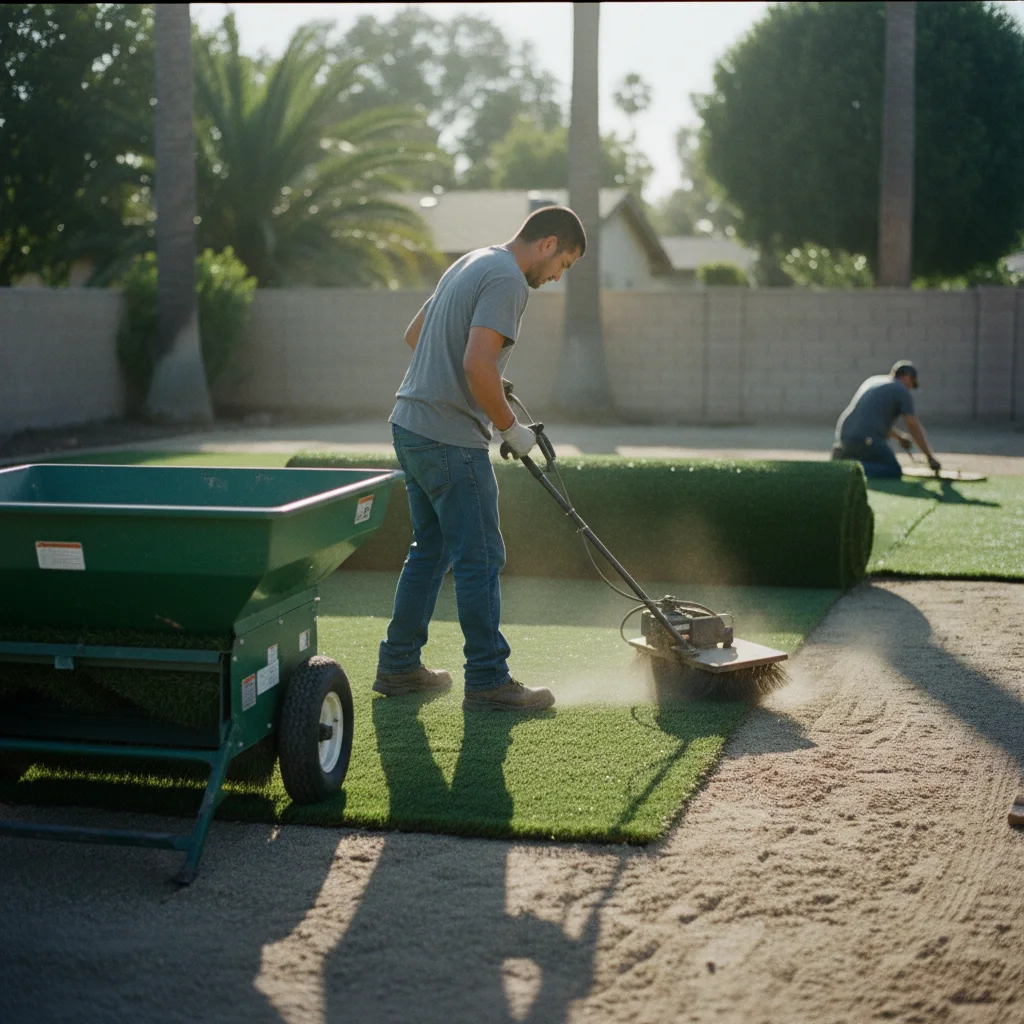
- Applying Infill: Spread the chosen infill evenly over the turf using a drop spreader.
- Brushing: Use a power broom or stiff-bristled broom to work the infill down into the turf fibers and to stand the blades upright, giving the lawn a natural, plush appearance.
Maintaining Your Artificial Lawn for Lasting Beauty
One of the greatest advantages of artificial turf is its minimal maintenance, but "minimal" doesn't mean "no maintenance." A little care goes a long way in preserving its beauty and longevity.
- Regular Brushing: Over time, the turf blades can flatten, especially in high-traffic areas. Use a stiff-bristled broom or a power broom to periodically brush the fibers against the grain. This helps the blades stand upright, maintaining the turf's plush appearance and preventing matting. Aim for once a month or as needed.
- Debris Removal: Regularly remove leaves, twigs, and other organic debris. A leaf blower, rake (plastic or bamboo to avoid damaging fibers), or even a vacuum designed for outdoor use works well. This prevents organic matter from breaking down and potentially fostering weed growth or odors.
- Spot Cleaning for Spills: For food spills, drinks, or other non-pet-related messes, blot the area immediately with a cloth. Most spills can be cleaned with warm water and a mild household detergent. Rinse thoroughly.
- Pet Waste Management: For pet urine, simply rinse the area with a hose to dilute and flush it through the drainage system. For solid waste, remove it promptly, then rinse the area. For persistent odors, especially in LA's heat, use an enzymatic cleaner specifically designed for artificial turf and pet odors. These cleaners break down the odor-causing bacteria.
- Occasional Rinsing: Even without pets, dust, pollen, and environmental pollutants can accumulate. Periodically rinse your entire lawn with a hose to keep it clean and fresh, especially after Santa Ana winds.
- Weed Control: While a good weed barrier prevents most weeds, occasionally a stubborn weed might sprout through a drainage hole or along the edges. Simply pull them out by hand or use a spot weed killer.
- Professional Cleaning (Optional): Every few years, you might consider a professional cleaning service. They have specialized equipment to deep clean, re-bloom the fibers, and replenish infill if needed.
Frequently Asked Questions About Artificial Turf
Get 3 turf installer bids in 48 hours.
Our editors already screened California turf installers. Answer 4 questions; we send 3 written bids inside 48 hours, with the real price for your scope, not their inflated first-call number.
Send my 3 bidsFree. No commission. If a match doesn't fit, we'll send another.
Q1: Does artificial turf get hot in the LA sun?
A1: Yes, artificial turf can get hotter than natural grass, especially in direct sunlight during peak summer temperatures in Los Angeles. Darker turf colors and certain infills (like crumb rubber) can absorb more heat. However, advancements in turf technology, such as lighter blade colors, specialized infills (e.g., T°Cool infill), and permeable backings, can help mitigate heat retention. A quick rinse with a hose can also cool the surface significantly.
Q2: Is artificial turf safe for pets and children?
A2: Absolutely. Modern artificial turf is designed with safety in mind. It's non-toxic, lead-free, and hypoallergenic. For pets, specialized infills like ZeoFill help neutralize odors from urine, and permeable backings ensure good drainage. For children, the soft, consistent surface provides a safe play area, eliminating concerns about pesticides, fertilizers, or muddy patches.
Q3: How long does artificial turf last?
A3: High-quality artificial turf, properly installed and maintained, can last between 15 to 20 years or even longer. The lifespan depends on the quality of the turf product, the amount of foot traffic it receives, the intensity of sun exposure (though UV inhibitors help), and how well it's cared for. Most reputable manufacturers offer warranties ranging from 8 to 15 years.
Q4: Can I install artificial turf over concrete or existing pavers?
A4: While technically possible, it's generally not recommended for large areas or where drainage is a concern. Installing over concrete can lead to poor drainage, potential odor issues (especially with pets), and a less natural feel. If installing over a small, existing concrete patio or walkway, ensure proper drainage is still achieved, and consider using a shock pad for cushioning. For larger areas, it's always best to remove existing hardscaping and prepare a proper aggregate base.
Q5: What about drainage? Will water pool on my artificial lawn?
A5: No, a properly installed artificial turf system is designed for excellent drainage. The turf itself has perforations in its backing, and it's installed over a permeable, compacted aggregate base that allows water to flow through and dissipate into the ground beneath. The base is also typically graded with a slight slope to ensure water runoff, preventing pooling even during heavy Los Angeles rain.
Sources & Methodology
See the Golden Yards Methodology for how sources are reviewed, ranges are normalized, and planning-data limits are handled.
Cost ranges, regulatory references, and design guidance in this article draw on the following public datasets, industry standards, and Renology editorial research.
- Metropolitan Water District of Southern California, Turf Replacement Rebate Program
- SoCalWater$mart, residential turf-replacement rebate guidelines
- California Department of Water Resources, MWELO Compliance
- ASTM F2898, Standard Specification for Polyolefin-Based Synthetic Turf
- Renology editorial methodology, invoiced California turf installs, 2025–2026
Ready to start your artificial turf project?
Find My ProsFrequently Asked Questions
Q1: Does artificial turf get hot in the LA sun?
Yes, artificial turf can get hotter than natural grass, especially in the direct Los Angeles sun during summer. Darker colors and crumb rubber infill absorb more heat. However, modern turf with lighter blade colors, permeable backings, and specialized infills like T°Cool can reduce this effect. A quick rinse with a hose also cools it.
In Los Angeles, artificial turf's surface temperature is influenced by its components. Darker colored blades and infills made from materials like crumb rubber absorb significant solar heat, making the surface quite warm on peak summer days. This is a key difference when compared to natural grass, which has a natural cooling effect.
To address this, advancements in turf technology offer effective solutions. Products with lighter blade colors reflect more sunlight. Specialized infills, such as T°Cool, are specifically engineered to mitigate heat retention. Furthermore, permeable backings can improve cooling. For immediate relief, spraying the surface with a garden hose provides a quick and noticeable temperature drop.
Q2: Is artificial turf safe for pets and children?
Yes, modern artificial turf is safe for pets and children. It is designed to be non-toxic, lead-free, and hypoallergenic. For pets, specialized infills and permeable backings manage odors and drainage. For children, it provides a soft, consistent play surface free from pesticides, fertilizers, and the risk of muddy patches.
Modern artificial turf is engineered with family safety as a primary concern. The materials are specifically chosen to be non-toxic and lead-free, and their hypoallergenic nature makes the surface suitable for sensitive individuals. This eliminates common worries associated with traditional lawns, such as exposure to chemical fertilizers or pesticides.
For pet owners, specific features improve hygiene and comfort. Specialized infills, for example ZeoFill, are available to help neutralize odors from pet urine. Additionally, the turf’s permeable backing ensures liquids drain through efficiently. This combination provides a soft, consistent, and clean area for children to play on, without the mess of mud after it rains.
Q3: How long does artificial turf last?
High-quality artificial turf can last 15 to 20 years or more with proper installation and maintenance. Most manufacturers provide warranties for 8 to 15 years. The actual lifespan depends on product quality, foot traffic, sun exposure, and consistent care. UV inhibitors in the material help extend its life.
The 15 to 20 year lifespan is an estimate based on ideal conditions. Several factors can affect this. For instance, turf in a high-traffic area or a location with intense, direct sunlight will wear faster than a purely decorative lawn, even with built-in UV inhibitors. Proper installation and a consistent maintenance routine are critical to reaching the upper end of that lifespan. The manufacturer's warranty, typically 8 to 15 years, is a good indicator of the product's expected durability and quality.
Q4: Can I install artificial turf over concrete or existing pavers?
Installing artificial turf over concrete or pavers is generally not recommended for large areas due to drainage concerns. This method can lead to poor water flow, potential odor issues, especially with pets, and a less natural feel. For a small patio, it is possible if you ensure adequate drainage and use a shock pad.
While technically possible, placing turf on a hard surface like concrete can create significant problems. The non-porous base prevents water from draining away, which can cause odors from mold, mildew, or pet waste. The surface will also feel unnaturally hard underfoot without proper cushioning.
For the best results in larger areas, it is always recommended to remove existing hardscaping like concrete or pavers. After removal, preparing a proper aggregate base is essential. This base provides the necessary drainage and stability, creating a more durable and natural-feeling lawn that avoids the common issues of installing over hard surfaces.
Q5: What about drainage? Will water pool on my artificial lawn?
No, water will not pool on a properly installed artificial lawn. The turf itself has perforations in its backing, and it is installed over a permeable, compacted base. This system is designed for excellent drainage, allowing water to flow through and dissipate, even during heavy Los Angeles rain.
A professional artificial turf installation focuses heavily on drainage. The system's success begins with the turf backing, which contains small holes to let water pass through. Below this, a specially prepared base of compacted aggregate material provides a permeable layer, allowing water to filter down into the subsoil. The installation crew also grades this base with a slight slope. This incline directs water flow, ensuring proper runoff and preventing standing water, a design effective even with heavy Los Angeles rainfall.