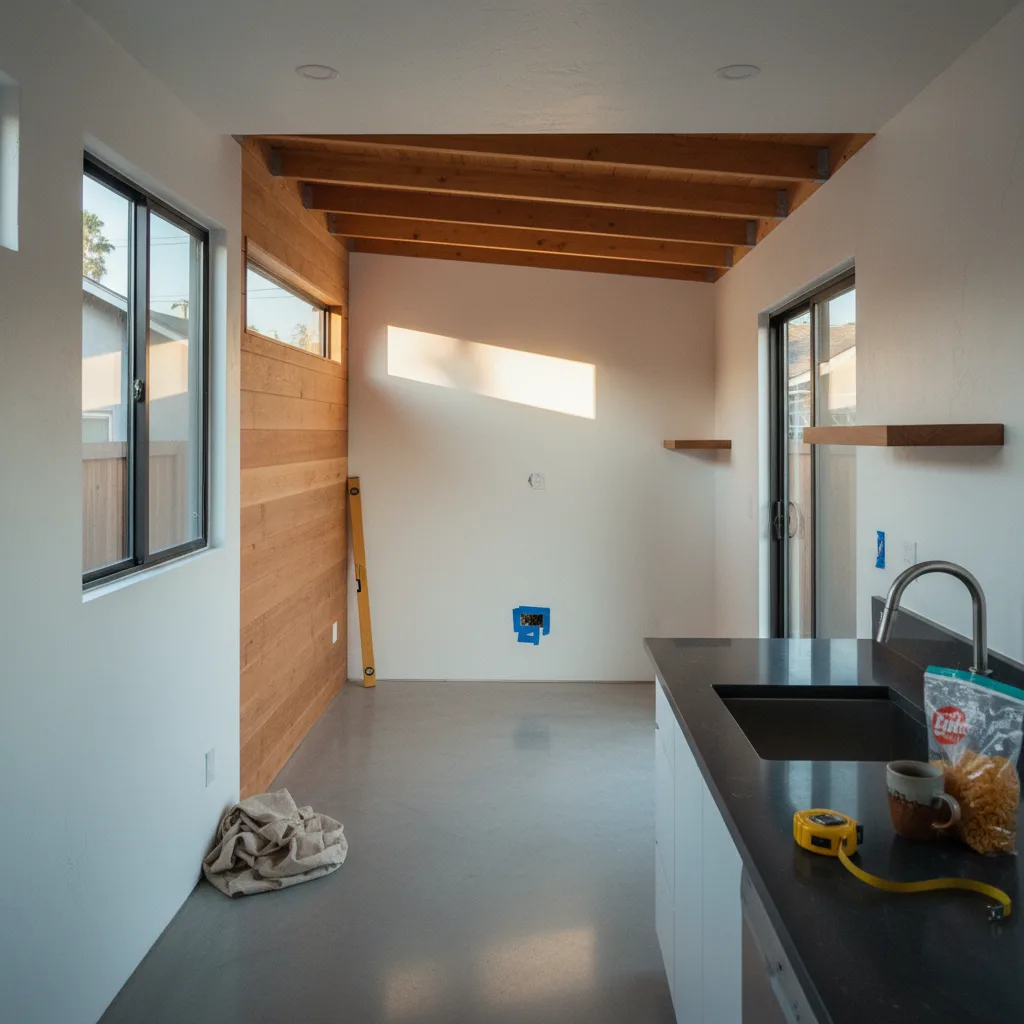
Building an Accessory Dwelling Unit in Long Beach presents a unique set of choices, driven as much by coastal air and seismic zones as by budget. As a rough planning range, a new construction ADU in Long Beach costs between $220,000 and $480,000 in 2026. That range is wide because it covers everything from a simple studio conversion to a custom two-bedroom unit on the Naples canals. An ADU in Long Beach can start lower, around $180,000 for a straightforward garage conversion with standard finishes, but most ground-up projects land squarely in the middle of that range. This guide compares two common paths: a practical, mid-tier build focused on value and a premium, custom build designed for lifestyle.
In a Nutshell: Mid-Tier vs. Premium ADU in Long Beach
- Mid-Tier ADU: Aims for the best return on investment. Uses pre-approved plans or simple designs, builder-grade finishes, and standard systems to keep costs around $240,000 to $320,000. Ideal for generating rental income or housing family affordably.
- Premium ADU: A true extension of the main home. Involves custom architecture, high-end materials, luxury appliances, and integrated smart home features. Costs typically range from $350,000 to $480,000+, reflecting a focus on personal comfort and aesthetic value.
The Core Cost Question: What Drives ADU Prices in Long Beach?
The primary driver of any ADU long beach cost is construction labor. According to the California Department of Industrial Relations prevailing wage data for Los Angeles County, skilled tradespeople command high rates, which form the baseline for any project budget. Beyond labor, Long Beach has specific geographic cost factors. Lots in Belmont Shore or on Naples Island often have tight access, requiring smaller equipment and more manual labor. Soil conditions across the city can vary, with some areas requiring deeper, more expensive foundations due to liquefaction risk.
, the age of your primary residence is a major factor. Tying new utilities into a pre-1985 stucco house with galvanized supply lines is a more complex, and therefore more expensive, job than connecting to a modern home. Finally, proximity to the ocean adds another layer. Any project within the Coastal Zone faces a more rigorous review process from the Long Beach Development Services (LBDS) and sometimes the California Coastal Commission, adding time and architectural costs to ensure compliance with coastal development standards.
The Mid-Tier ADU: Practicality and Value ($240,000 - $320,000)
A mid-tier ADU is the workhorse of the Long Beach market. It’s a smart, efficient build designed to meet code, provide comfortable living space, and pencil out as a rental. The focus is on durable, widely available materials and streamlined processes to manage costs without sacrificing quality.
Scope & Finishes
Expect durable and attractive, but not bespoke, materials. Flooring is typically luxury vinyl plank (LVP), countertops are quartz slabs from reliable brands, and cabinetry is often semi-custom or high-quality stock. The goal is a clean, modern aesthetic that appeals to a broad range of renters or family members. Fixtures are from reputable brands like Moen or Delta, chosen for reliability over designer appeal.
Design & Permitting
To control costs, many homeowners opt for one of Long Beach's Pre-Approved ADU Plans. These plans have already been reviewed by LBDS, which can shorten the plan check timeline significantly. Even with a pre-approved plan, your project-specific site plan, grading, and utility connections still require review. Under AB 68 (the 2019 ADU shot-clock law), the city has 60 days to act on a permit application, but corrections or coastal reviews can extend this. A typical mid-tier permit process in a non-coastal neighborhood like Bixby Knolls takes 10 to 16 weeks.
Appliances & Systems
Appliances are typically Energy Star-rated models from brands like GE, Whirlpool, or Frigidaire. For heating and cooling, a ductless mini-split system is the standard choice, offering efficient climate control for a small space. The entire build must comply with Title 24 Part 6 (California Energy Code), which dictates insulation levels, window efficiency, and ventilation. A mid-tier build meets these requirements without costly upgrades like solar panels, unless required by local ordinance.
Timeline & Ideal Use Case
From breaking ground to final inspection, a mid-tier ADU build usually takes four to six months. This assumes no major delays with utility connections from Southern California Edison or Long Beach Gas & Oil. The ideal use for this ADU is generating rental income or providing a safe, independent home for aging parents or adult children. It’s a financial asset built for functionality.
The Premium ADU: Customization and Craftsmanship ($350,000 - $480,000+)
Ready to compare vetted project options?
Use Project Match privately when your scope is clear enough for contractor conversations.
Start Project MatchA premium ADU is less about ROI and more about lifestyle. This is a fully custom small home, designed by an architect to perfectly match the main house and the owner’s specific tastes. Every finish and feature is hand-selected, and the budget reflects that level of detail and quality.
Scope & Finishes
Here you’ll find high-end materials: wide-plank hardwood floors, natural stone countertops like marble or quartzite, and fully custom cabinetry. Windows and doors are often oversized aluminum-clad wood from brands like Marvin or Andersen's E-Series. Fixture packages might come from Waterworks, Kallista, or Rejuvenation. The exterior is designed to seamlessly blend with the main house, whether it's a Spanish-revival in Belmont Heights or a mid-century modern in the El Dorado Park Estates.
Design & Permitting
A custom design requires a full architectural package, including structural engineering, soil reports, and energy calculations. This design phase alone can take two to four months before the plans are even submitted to LBDS. If the property is in the Coastal Zone, the plans undergo an extra layer of scrutiny to protect public access and coastal resources, which can add another two to three months to the approval timeline. This is where an experienced local architect is critical.
Appliances & Systems
Appliances are typically panel-ready, high-performance models from Sub-Zero, Wolf, or Miele, creating an integrated, smooth kitchen. The HVAC system might be a high-efficiency ducted unit for quiet, even temperature control. Smart home integration is common, controlling lighting, climate, and security from a single interface. To meet Title 24 energy requirements, these homes often incorporate solar panels, high-performance insulation, and energy recovery ventilators (ERVs).
Timeline & Ideal Use Case
A premium ADU project is a longer journey. Expect six to nine months for construction, following a permit process that could easily take six months or more. The lead times for custom windows, tile, and cabinetry are significant. This ADU is perfect for a homeowner who plans to use it themselves, as a high-end guest suite for visitors, or as a creative studio. It’s an investment in the overall property value and quality of life.
Real-World Cost Breakdowns: Three Long Beach ADU Projects from 2026
Three representative projects from 2026, scoped similarly, reconstructed from Golden Yards Magazine's Project of the Day network and used here in aggregate form:
- The Bixby Knolls Garage Conversion ($195,000): A 400 sq. ft. conversion of an existing garage. The slab and structure were sound, saving significant costs. Finishes were mid-tier, with LVP floors and IKEA kitchen. The biggest challenge was upgrading the 1950s electrical panel to handle the new load. Total timeline: five months.
- The El Dorado Park New Build ($280,000): A 500 sq. ft. one-bedroom new construction ADU on a flat lot with easy access. The owner used a pre-approved city plan, saving on design fees. The project included standard utility trenching and builder-grade finishes. Total timeline: seven months from design to completion.
- The Naples Island Custom Unit ($440,000): A 750 sq. ft. two-bedroom ADU designed to match the main home's Mediterranean style. Located in the Coastal Zone, it required a lengthy review. High-end finishes, custom millwork, and a LaCantina door system drove up the cost. Site access was extremely limited, increasing labor costs. Total timeline: 14 months.
Avoiding Budget Overruns: The Long Beach Checklist
Unexpected costs are the enemy of any construction project. In Long Beach, the most common surprises are failing soil compaction reports that require engineered fill, corroded sewer laterals that need replacement, and the high cost of trenching for new utility lines. The National Association of Home Builders recommends a ten to fifteen percent contingency on renovations in homes over thirty years old. For an ADU project, this is essential. A detailed scope of work, agreed upon with your contractor before signing a contract, is your best defense against budget creep. This document should specify every material, from the foundation concrete mix to the brand of interior paint.
Finding the Right ADU Contractor in Long Beach
Choosing the right ADU contractor in Long Beach is the single most important decision you'll make. Look for a general contractor with a valid CSLB license, comprehensive liability and workers' compensation insurance, and a portfolio of completed ADUs specifically in Long Beach or nearby coastal cities. They will understand the nuances of working with LBDS and the specific challenges of coastal construction, like using stainless steel fasteners to prevent corrosion from the salt air. Always check references and visit a past project if possible.
Before you even begin interviewing builders, it helps to understand the local process. Our detailed guide breaks down every step of the permitting journey. You can read it here: The Long Beach ADU Permit Playbook 2026. Locking in your scope of work with a qualified contractor who understands these local rules is the key to a successful build.
Sources & Methodology
See the Golden Yards Methodology for how sources are reviewed, ranges are normalized, and planning-data limits are handled.
Cost ranges in this guide draw on the following named industry sources, public agency datasets, and Golden Yards Magazine editorial research.
- California Department of Industrial Relations, Prevailing Wage Determinations (2026)
- Long Beach Development Services, ADU Permit Fee Schedule (2026)
- National Association of Home Builders (NAHB), Construction Cost Survey (2025)
- California Coastal Commission, Local Coastal Program for Long Beach (2024 Update)
Golden Yards Magazine Take
The choice between a mid-tier and premium ADU in Long Beach isn't just about finishes; it's a strategic decision about the unit's purpose. A mid-tier ADU is a financial instrument, optimized for quick permitting and durable, low-maintenance materials that maximize rental income. A premium ADU is an emotional and architectural investment, designed to enhance your personal living space and property value. The pattern most homeowners miss is how Long Beach's geography can force your hand. A property in the Coastal Zone or on a tricky hillside lot often requires a level of architectural and engineering investment that pushes a project into the premium category, whether you planned for it or not. The smartest approach is to understand these site-specific constraints first, as they will define your true budget before you ever pick out a countertop.
Frequently Asked Questions about Long Beach ADUs
How much does an ADU cost in Long Beach in 2026?
In 2026, a new-construction ADU in Long Beach typically costs between $220,000 and $480,000. Garage conversions are less expensive, often falling between $150,000 and $220,000. The final price depends on size, site conditions, level of finishes, and whether the project is in the complex Coastal Zone.
This range is broad because of the diversity of projects. A simple 450-square-foot studio with standard finishes in a non-coastal neighborhood represents the lower end of the new-build spectrum. A custom-designed 800-square-foot, two-bedroom unit in Belmont Shore with high-end appliances and finishes will easily push the upper limits of that range.
How long does it take to get ADU permits in Long Beach?
Getting ADU permits in Long Beach takes approximately three to five months. While state law AB 68 mandates a 60-day review period, this clock can pause if the city requires corrections or additional information. Projects within the Coastal Zone often require an additional two to three months for more extensive review.
The initial plan submission and review with Long Beach Development Services (LBDS) is the first step. If your property lies within the city's designated Coastal Zone, a separate, more detailed review is triggered to ensure compliance with coastal regulations. Using one of Long Beach's Pre-Approved ADU Plans can sometimes shorten the initial plan check phase, but site-specific plans and coastal reviews will still follow their own timeline.
Can I build an ADU in the Coastal Zone in Long Beach?
Yes, you can build an ADU in the Coastal Zone in Long Beach, but it involves a more complex and lengthy permitting process. These projects require a Coastal Development Permit (CDP) and must adhere to stricter regulations regarding height, setbacks, and environmental impact, which adds time and cost.
The California Coastal Commission has certified Long Beach's Local Coastal Program (LCP), which gives the city authority to issue most CDPs. However, the review process is rigorous. Your plans will be scrutinized for potential impacts on public access, views, and marine habitats. Expect to hire an architect or consultant with specific experience in coastal permitting to manage the application, which can add several thousand dollars to your soft costs.
Does AB 1033 affect my Long Beach ADU?
Yes, AB 1033 (the 2024 condo-style ADU rule) allows Long Beach homeowners to sell their ADUs separately from the main house, similar to a condominium. This requires approval from the city and involves creating a formal homeowners association (HOA) and meeting specific legal and utility separation requirements.
This law creates a new path to homeownership and can be a powerful wealth-building tool. However, the process is complex. It requires significant legal work to establish the condo map and HOA documents. You must also get approval from your mortgage lender and ensure utilities are completely separate. It's a viable option, but one that demands careful financial and legal planning with experienced professionals before you begin construction.
What are the biggest hidden costs for a Long Beach ADU?
The most common hidden costs for a Long Beach ADU are utility connections, soil-related foundation work, and seismic retrofitting for the main house. Trenching for new sewer, water, and electrical lines from the street can cost $15,000 to $30,000 alone, a figure often underestimated by homeowners.
Many parts of Long Beach have poor soil conditions, which may require more expensive engineered foundations. If you are converting a garage or attaching the ADU to an older home, you may be required to seismically upgrade the existing structure's cripple walls or foundation bolting to comply with current building codes. These items are often discovered during the engineering phase and can add significantly to the budget.
Ready to start your ADU project?
Find My ProsFrequently Asked Questions
How much does an ADU cost in Long Beach in 2026?
In 2026, a new ADU in Long Beach costs between $220,000 and $480,000, while a garage conversion typically costs $150,000 to $220,000. The final price depends on the project's size, site conditions, level of finishes, and whether it is located within the complex Coastal Zone.
This broad range reflects project diversity. A simple 450-square-foot studio with standard finishes in a non-coastal neighborhood represents the lower end of the new construction estimate. Conversely, a custom-designed 800-square-foot, two-bedroom unit with high-end appliances and finishes in a neighborhood like Belmont Shore will easily approach the upper limit.
How long does it take to get ADU permits in Long Beach?
Getting ADU permits in Long Beach takes approximately three to five months. While state law AB 68 mandates a 60-day review, this clock can pause for corrections. Properties within the Coastal Zone often require an additional two to three months for more extensive review by Long Beach Development Services.
The process begins with plan submission to Long Beach Development Services (LBDS). The 60-day review period required by state law AB 68 can be paused if the city requests plan corrections or additional information. A separate, more detailed review is triggered for properties within the city's designated Coastal Zone to ensure compliance with specific regulations. Using one of Long Beach's Pre-Approved ADU Plans may shorten the initial plan check phase, but site-specific plans and coastal reviews will still follow their own timeline.
Can I build an ADU in the Coastal Zone in Long Beach?
Yes, you can build an ADU in the Long Beach Coastal Zone, but the process is more complex and lengthy. Projects require a Coastal Development Permit (CDP) and must follow stricter rules for height, setbacks, and environmental impact. The city's review under its certified Local Coastal Program (LCP) is rigorous.
The California Coastal Commission certified Long Beach's Local Coastal Program (LCP), which gives the city authority to issue most CDPs. However, this review process is thorough. Your plans will be scrutinized for potential impacts on public access, views, and marine habitats. Due to this complexity, expect to hire an architect or consultant with specific experience in coastal permitting. This professional service can add several thousand dollars to your soft costs.
Does AB 1033 affect my Long Beach ADU?
Yes, AB 1033 affects your Long Beach ADU. This 2024 law allows homeowners to sell their ADUs separately from the main house, similar to a condominium. This process requires city approval, the creation of a formal homeowners association (HOA), and meeting specific legal and utility separation requirements.
While this law creates a new path to homeownership and can be a powerful wealth-building tool, the process is complex. It demands significant legal work to establish the condo map and HOA documents. You must also get approval from your mortgage lender and ensure utilities are completely separate. It is a viable option, but one that requires careful financial and legal planning with experienced professionals before you begin construction.
What are the biggest hidden costs for a Long Beach ADU?
The biggest hidden costs for a Long Beach ADU are utility connections, soil-related foundation work, and seismic retrofitting for the main house. Trenching for new sewer, water, and electrical lines can cost $15,000 to $30,000. Poor soil may require engineered foundations, and older homes might need seismic upgrades to meet current codes.
Homeowners often underestimate the cost of utility connections, as trenching for new sewer, water, and electrical lines from the street can add $15,000 to $30,000 to a project. Furthermore, many parts of Long Beach have poor soil conditions, which may require more expensive engineered foundations. If you are converting a garage or attaching the ADU to an older home, you may be required to seismically upgrade the existing structure. This could involve work on cripple walls or foundation bolting to comply with building codes, items often discovered during the engineering phase that can significantly increase the budget.