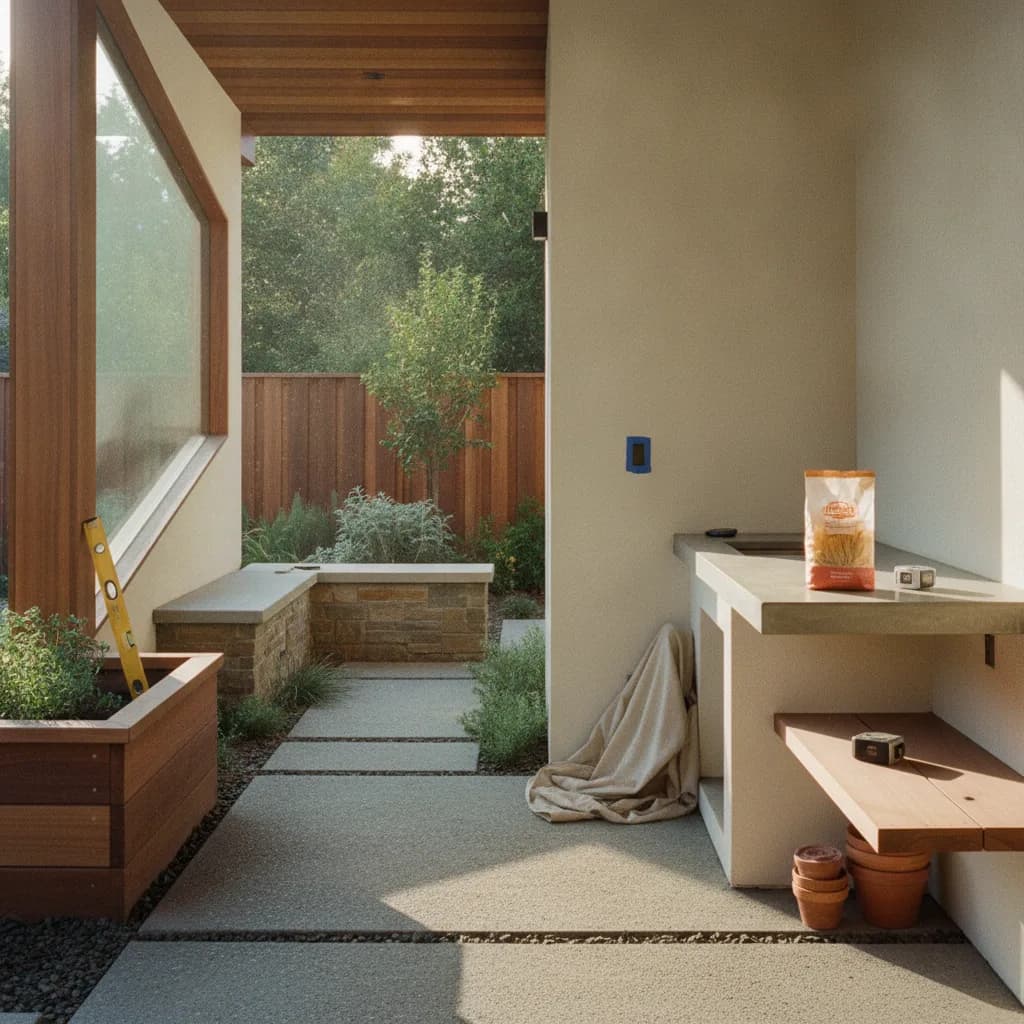
A full landscape design and installation in Sacramento for a typical suburban lot in 2026 costs between $45,000 and $120,000. This range covers everything from initial concepts to final planting. The total investment can start lower, around $15,000 to $25,000, for smaller townhome patios or simple front yard refreshes that do not involve major hardscaping or structural changes. The key to a successful project is understanding that the initial quote for plants and pavers is just the beginning. The real budget challenges come from Sacramento-specific needs like clay soil drainage, high-efficiency irrigation for brutal summers, and mandatory water-use compliance.
In a Nutshell
- Typical 2026 Sacramento Cost: Expect to spend $45,000 to $120,000 for a comprehensive project. Simple front yard updates or small patios can be done for $15,000 to $25,000.
- Key Budget Drivers: Hardscaping (patios, walls) makes up over half the cost. Hidden expenses include drainage systems for clay soil, electrical work for lighting, and potential gas line extensions for fire pits.
- MWELO is Mandatory: California's Model Water Efficient Landscape Ordinance (MWELO) governs nearly all new projects, requiring drought-tolerant plants, zoned irrigation, and water budget calculations. It is not optional.
- Contractor Vetting is Crucial: Always verify a C-27 Landscape Contractor license with the California Contractors State License Board (CSLB). A qualified landscape design contractor in Sacramento will handle both the design and the complex installation requirements.
- Plan for Overruns: Unforeseen issues like discovering old concrete or needing to reroute utilities are common. A 10-15% contingency fund is not just a suggestion, it is a necessity.
How Much Does Landscape Design Cost in Sacramento in 2026?
For a full-scale project, the initial design fees from a landscape architect or designer alone run $3,000 to $8,000. The total project cost, including installation, is where the real numbers take shape. A good rule of thumb is to budget 10-20% of your home's value for a complete outdoor transformation.
Let's break down a hypothetical $80,000 project. The hardscape, like a Belgard paver patio and a new walkway, is $38,000. The planting and irrigation system, including soil amendments for our region's heavy clay, is another $25,000. The features, like a pergola kit, low-voltage lighting from Kichler, and a gas fire pit, add the final $17,000. This is before accounting for hidden costs.
Three representative projects from 2026, scoped similarly, reconstructed from Golden Yards Magazine's Project of the Day network and used here in aggregate form:
- East Sacramento Bungalow ($55,000): A front yard overhaul focused on curb appeal. This included a new paver walkway, replacing a 1,200 sq. ft. lawn with drought-tolerant perennials and mulch under the City's turf conversion rebate, a new high-efficiency Rain Bird irrigation system, and low-voltage path lighting.
- Land Park Tudor ($92,000): A complete backyard redesign for entertaining. This project featured a 600 sq. ft. concrete paver patio, a built-in outdoor kitchen island with a Blaze 32-inch grill, a cedar pergola, extensive planting, and a new 60-amp electrical subpanel to support the lighting and appliances.
- Folsom New Build ($145,000): A comprehensive front and back plan for a larger lot. This involved significant grading, French drains to manage clay soil runoff, a small artificial turf area from a brand like SYNLawn for kids, a large patio, a basalt column water feature, and a defensible space plan with fire-resistant plants to meet local fire code.
Why Sacramento Landscaping is More Expensive Than You Think
Material and plant costs are a factor, but skilled labor is the primary driver of your final bill. According to the California Department of Industrial Relations prevailing wage data for Sacramento County, certified landscape technicians and irrigation specialists command high hourly rates. This expertise is what ensures your project is built to last through scorching summers and occasional wet winters.
Beyond labor, Sacramento's climate and geology present unique challenges. The region's expansive clay soil requires extensive soil amendment and often subsurface drainage systems, a scope item that can add $5,000 to $10,000., with summer temperatures regularly exceeding 100 degrees, a solid, water-efficient irrigation system is not a luxury. A smart controller, like a Hunter Pro-HC, paired with drip lines and MP Rotator nozzles, is essential for plant survival and MWELO compliance. For homeowners in communities bordering the wildland-urban interface, like Folsom or El Dorado Hills, creating defensible space with specific fire-wise plantings adds another layer of mandatory, and often costly, planning.
Step 1: Define Your Vision and Budget
Ready to compare vetted project options?
Use Project Match privately when your scope is clear enough for contractor conversations.
Start Project MatchStart by listing how you want to use your space. Is it for dining, relaxing, children's play, or all three? Create a list of must-haves (a patio) and nice-to-haves (a water feature). This clarity prevents scope creep later.
Why: A clear vision prevents expensive changes mid-project and helps contractors provide an accurate bid.
Watch out for: Underestimating the total budget by focusing only on the visible elements, forgetting the foundational work like grading and electrical that makes them possible.
Step 2: Research and Hire a Landscape Design Contractor
Your most important decision is hiring the right professional. Look for a licensed C-27 landscape design contractor in Sacramento who has a portfolio of work in neighborhoods like yours, whether it is a historic Land Park property or a newer build. Get at least three detailed bids.
Why: An experienced local contractor understands regional soil conditions, city permitting, and the best plant palettes for our climate.
Watch out for: Unusually low bids that often omit crucial items like soil hauling, drainage, or proper irrigation, which then reappear as costly change orders.
Step 3: Develop the Scope and Finalize the Design
This is the collaborative phase where your vision becomes a concrete plan. Your contractor will create scaled drawings, specify materials like Trex decking versus redwood, and develop a hydrozone breakdown by sun exposure for MWELO compliance. This is the time to finalize every detail.
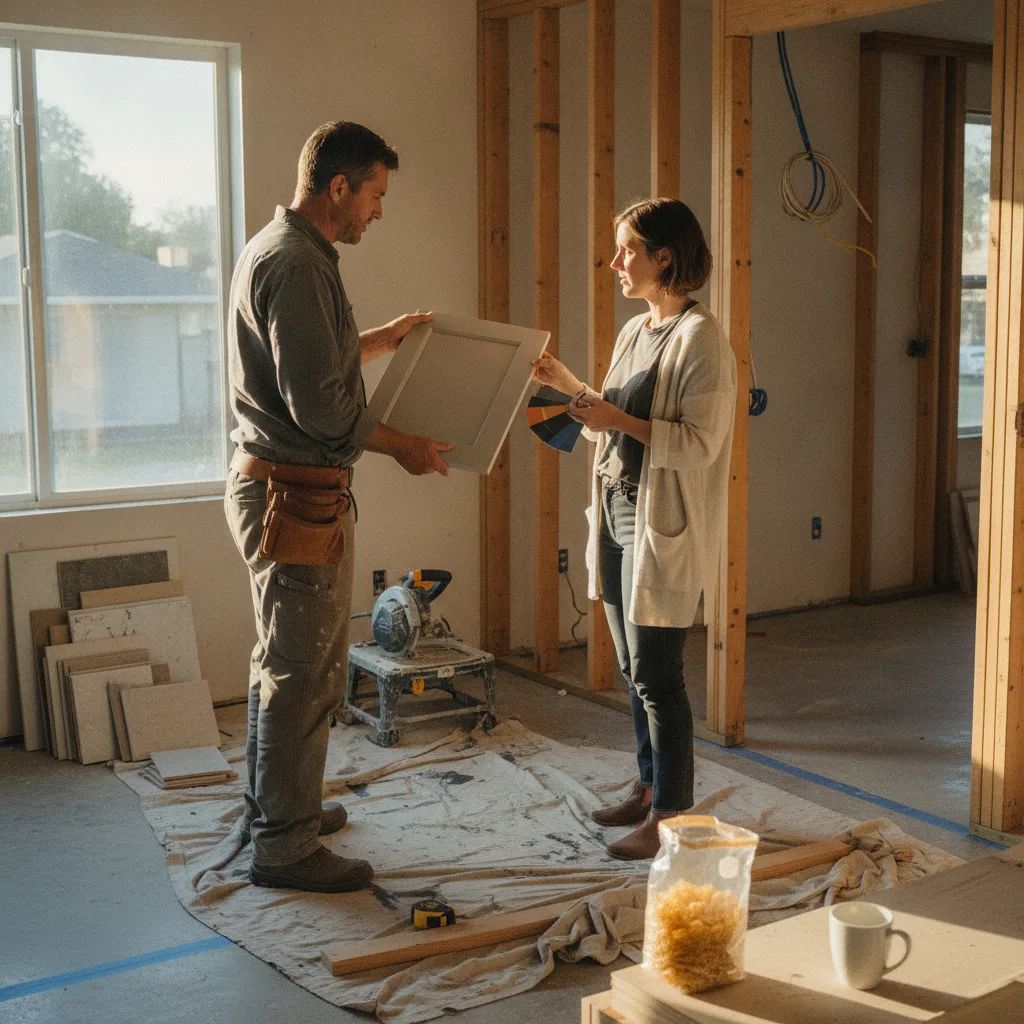
Why: Locking in the scope prevents ambiguity and provides a clear roadmap for the construction team, ensuring what is built matches what was designed.
Watch out for: Vague material specifications in the contract. Instead of "paver patio," it should read "600 sq. ft. of Belgard Catalina Grana pavers in 'Toscana' color, laid on a 4-inch compacted base." For more on what to look for in your contract, see our [Sacramento landscape permit playbook for 2026](/guides/sacramento-landscape-permit-playbook-2026).
Step 4: Permitting and Pre-Construction
Many landscape elements require permits from the City of Sacramento or Sacramento County. This includes decks over 30 inches high, retaining walls over four feet, some pergolas, and any new electrical or gas lines. Your contractor should handle this process.
Why: Proper permitting ensures your project is safe, built to code, and will not cause problems during a future home sale.
Watch out for: Contractors who suggest skipping permits to save money. This is a major red flag and can result in fines and orders to tear out the unpermitted work.
Step 5: Construction and Installation
The build phase begins with demolition and grading, followed by hardscape installation, and then irrigation, planting, and lighting. Expect your yard to be an active construction zone for several weeks to a few months, depending on complexity.
Why: A logical construction sequence, managed by a competent project manager, minimizes delays and ensures each trade completes their work correctly.
Watch out for: Poor site management that damages existing trees, sidewalks, or your neighbor's property, creating unexpected repair costs and friction.
Step 6: Final Walk-Through and Maintenance Plan
Once construction is complete, conduct a final walk-through with your contractor to create a "punch list" of any remaining items to fix. You should also receive a detailed maintenance guide and instructions on how to operate new systems like irrigation controllers or lighting timers.
Why: The final walk-through ensures you are 100% satisfied with the work before making the final payment.
Watch out for: Forgetting to get warranties for plants and materials in writing. Most contractors offer a one-year warranty on plants and a longer warranty on hardscaping.
Common Budget Busters to Plan For
Even with a detailed plan, surprises happen. The most common is poor drainage. In Sacramento's clay-heavy soil, a simple French drain system can cost $3,000 to $7,000, a line item rarely included in initial estimates. Another is electrical capacity. Adding landscape lighting, an outdoor kitchen, and a water feature might require a new 60-amp subpanel, which can run $2,500 to $4,000. Finally, the gas line upsize for a powerful grill or fire pit is often overlooked. Upgrading a line from 1/2 inch to 3/4 inch can add another $1,500 to $3,000. The National Association of Home Builders recommends a ten to fifteen percent contingency on renovations in homes over thirty years old.
Your Sacramento Landscape Design Checklist
- [ ] Create a detailed list of needs and wants.
- [ ] Establish a realistic all-in budget, including a 15% contingency.
- [ ] Research and interview at least three C-27 licensed contractors.
- [ ] Check contractor references and visit past projects.
- [ ] Finalize a detailed, to-scale design plan.
- [ ] Sign a contract with itemized costs, material specs, and a payment schedule.
- [ ] Confirm all necessary permits have been pulled.
- [ ] Conduct a final walk-through and create a punch list.
- [ ] Receive all warranty documents and a seasonal maintenance plan.
Frequently Asked Questions
What's the biggest mistake homeowners make in Sacramento landscape design?
The most common error is underestimating the importance and cost of foundational work. Homeowners get excited about visible elements like plants and patios but overlook the critical infrastructure beneath them. This includes proper grading, drainage for clay soil, soil amendment, and correctly sized irrigation systems, which are essential for long-term success in Sacramento’s climate.
Ignoring these fundamentals leads to predictable problems: patios that flood, plants that die from poor drainage or inadequate water, and higher costs down the line to fix issues that should have been addressed from the start. A successful landscape design Sacramento project is built from the ground up, not just decorated on the surface.
Do I need a permit for my landscape project in Sacramento?
Yes, many common landscape elements require a permit from the city or county. While simple planting or laying pavers on grade typically does not, structural work does. This includes retaining walls over four feet, decks more than 30 inches above the ground, most solid-roof patio covers, and any new electrical or gas lines.
A qualified landscape design contractor in Sacramento will be familiar with local requirements and manage the permitting process for you. Attempting to build without required permits can lead to stop-work orders, fines, and difficulty when you eventually sell your home. It is always best to confirm requirements with the local building department before starting work.
How can I save money on my Sacramento landscape project?
Focus on rebates and phased construction. The Sacramento Regional Water Authority and local water suppliers offer turf-replacement rebates, often up to $1.50 per square foot, which can offset the cost of converting a lawn to a water-wise garden. SMUD also provides rebates for smart irrigation controllers and energy-efficient pool pumps.
Also, consider phasing the project. Install the essential infrastructure and hardscaping like patios and walkways in phase one. You can then add planting, lighting, or a water feature in a second phase as your budget allows. This approach makes the total cost more manageable without compromising the quality of the foundational elements.
What is MWELO and why does it matter for my Sacramento yard?
MWELO stands for the Model Water Efficient Landscape Ordinance, a statewide policy in California that sets water efficiency standards for new and renovated landscapes. It applies to almost all projects, requiring a water-efficient plant palette, limitations on turf area, high-efficiency irrigation systems, and a maximum water allowance calculation for the site.
For a Sacramento homeowner, this means your landscape design must be smart about water use. Your plan will likely include drip irrigation, plants grouped into hydrozones based on water needs, and a limited amount of grass. A good landscape designer sees MWELO not as a restriction but as a framework for creating a beautiful, sustainable, and low-maintenance yard that thrives in our climate.
How long does a typical landscape design project take in Sacramento?
A full-scale landscape project in Sacramento typically takes four to nine months from the initial consultation to completion. The design and planning phase, including revisions and material selection, can take one to three months. The permitting process with the city or county can add another one to two months, depending on complexity.
Once permits are approved, the actual construction can last from one to four months. Smaller projects, like a front yard refresh without major structural changes, might be completed in six to eight weeks. The timeline is highly dependent on the project's scope, contractor availability, and potential weather delays, particularly during the rainy season.
Sources & Methodology
See the Golden Yards Methodology for how sources are reviewed, ranges are normalized, and planning-data limits are handled.
Cost ranges in this guide draw on the following named industry sources, public agency datasets, and Golden Yards Magazine editorial research.
- California Department of Industrial Relations, Sacramento County Prevailing Wage Data (2026)
- City of Sacramento, Department of Utilities Water Conservation Rebates (2026)
- California Contractors State License Board (CSLB) (2026)
- National Association of Home Builders (NAHB) Remodeling Cost Data (Q1 2026)
- California Department of Water Resources, MWELO Guidelines (2025)
- Sacramento Municipal Utility District (SMUD) Rebate Programs (2026)
Golden Yards Magazine Take
The central tension in Sacramento landscaping is the desire for a lush, green oasis versus the reality of our hot, dry climate and clay soil. Too many homeowners try to replicate coastal or Midwest aesthetics, leading to a constant battle with high water bills and stressed plants. The most successful projects embrace our region's conditions. They prioritize creating functional shade with pergolas and trees, use hardscaping to define outdoor rooms, and select a plant palette that thrives in the heat with minimal water.
The smartest investment is not a bigger lawn; it is a better plan. A comprehensive design that integrates drainage, efficient irrigation, and MWELO principles from day one will save you thousands in the long run. Think of your landscape not as decoration, but as an extension of your home's infrastructure. Get that foundation right, and the beauty will follow.
Ready to start your landscaping project?
Find My ProsFrequently Asked Questions
What's the biggest mistake homeowners make in Sacramento landscape design?
The most common error is underestimating the importance and cost of foundational work. Homeowners get excited about visible elements like plants and patios but overlook the critical infrastructure beneath them. This includes proper grading, drainage for clay soil, soil amendment, and correctly sized irrigation systems, which are essential for long-term success in Sacramento’s climate. Ignoring these fundamentals leads to predictable problems: patios that flood, plants that die from poor drainage or inadequate water, and higher costs down the line to fix issues that should have been addressed from the start. A successful landscape design Sacramento project is built from the ground up, not just decorated on the surface.
Do I need a permit for my landscape project in Sacramento?
Yes, many common landscape elements require a permit from the city or county. While simple planting or laying pavers on grade typically does not, structural work does. This includes retaining walls over four feet, decks more than 30 inches above the ground, most solid-roof patio covers, and any new electrical or gas lines. A qualified landscape design contractor in Sacramento will be familiar with local requirements and manage the permitting process for you. Attempting to build without required permits can lead to stop-work orders, fines, and difficulty when you eventually sell your home. It is always best to confirm requirements with the local building department before starting work.
How can I save money on my Sacramento landscape project?
Focus on rebates and phased construction. The Sacramento Regional Water Authority and local water suppliers offer turf-replacement rebates, often up to $1.50 per square foot, which can offset the cost of converting a lawn to a water-wise garden. SMUD also provides rebates for smart irrigation controllers and energy-efficient pool pumps. Also, consider phasing the project. Install the essential infrastructure and hardscaping like patios and walkways in phase one. You can then add planting, lighting, or a water feature in a second phase as your budget allows. This approach makes the total cost more manageable without compromising the quality of the foundational elements.
What is MWELO and why does it matter for my Sacramento yard?
MWELO stands for the Model Water Efficient Landscape Ordinance, a statewide policy in California that sets water efficiency standards for new and renovated landscapes. It applies to almost all projects, requiring a water-efficient plant palette, limitations on turf area, high-efficiency irrigation systems, and a maximum water allowance calculation for the site. For a Sacramento homeowner, this means your landscape design must be smart about water use. Your plan will likely include drip irrigation, plants grouped into hydrozones based on water needs, and a limited amount of grass. A good landscape designer sees MWELO not as a restriction but as a framework for creating a beautiful, sustainable, and low-maintenance yard that thrives in our climate.
How long does a typical landscape design project take in Sacramento?
A full-scale landscape project in Sacramento typically takes four to nine months from the initial consultation to completion. The design and planning phase, including revisions and material selection, can take one to three months. The permitting process with the city or county can add another one to two months, depending on complexity. Once permits are approved, the actual construction can last from one to four months. Smaller projects, like a front yard refresh without major structural changes, might be completed in six to eight weeks. The timeline is highly dependent on the project's scope, contractor availability, and potential weather delays, particularly during the rainy season.