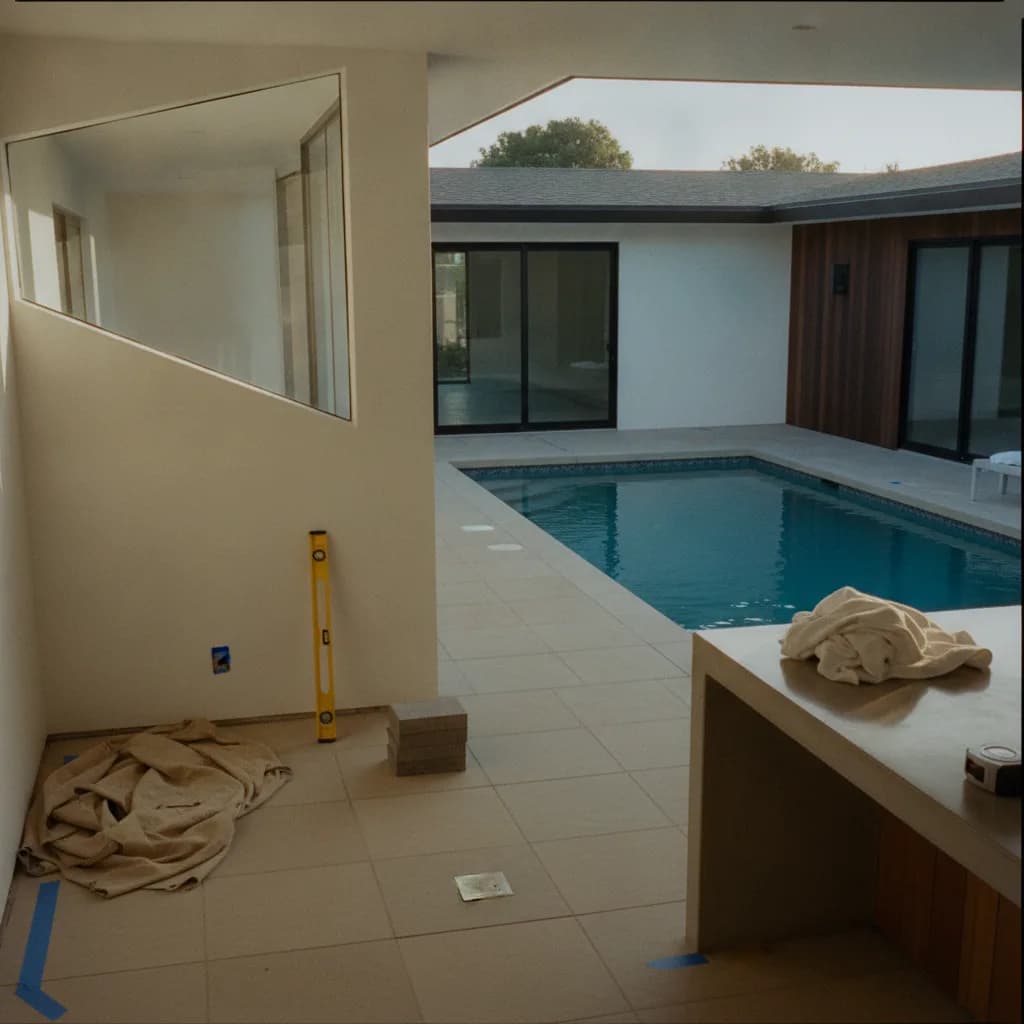
A Long Beach inground pool project overruns its initial budget by an average of $27,000 and six weeks. It's not because contractors are dishonest; it's because the initial quote rarely covers the full scope of work. The budget surprises aren't in the water. They're in the ground, the electrical panel, and the city's permit office. Understanding the real total cost of an inground pool in Long Beach for 2026 requires looking past the brochure price.
In a Nutshell: The Three Costliest Mistakes
Homeowners in Long Beach consistently make three expensive errors when planning an inground pool. Each one stems from focusing on the pool itself, not the complete construction system it requires. Here’s the breakdown and your first move to get ahead of the budget.
- The Mistake Homeowners Make: They budget for the pool shell and equipment but forget the utility upgrades. This includes a larger gas line for the heater and a new electrical subpanel for the pumps. The cost surprise is typically $4,500 to $9,000.
- The Second Mistake: They underestimate the cost of demolition, soil remediation, and site access. Long Beach's expansive clay soil can require extensive grading and engineered fill, adding unexpected weeks and $5,000 to $15,000 to the project.
- The Third Mistake: They treat hardscaping and landscaping as a separate, later project. This misses huge cost savings from trenching once and violates California's Model Water Efficient Landscape Ordinance (MWELO), which can halt a project at final inspection.
- Your Counter-Move This Week: Before you get a single quote, call the Long Beach Gas & Oil Department (LBGO) and Southern California Edison. Ask them for the specs on your current gas meter and main electrical panel. Knowing your capacity upfront is the single best way to prevent the most common budget overrun.
Mistake #1: Budgeting for the Pool, Not the Project
Homeowners see a quote for $95,000 and think that's the price. In reality, that's just one piece of the puzzle. An inground pool isn't a product; it's a complex construction project involving at least five different trades. The most common mistake is failing to budget for the complete system. A realistic budget uses a three-beat framing: the gunite shell is $65k. The deck and coping is another $28k. The equipment pad, with a Pentair Intelliflo VSF variable-speed pump, heater, and automation, adds $16k to $24k.
The total inground pool long beach cost can start lower, of course, but those figures are usually for small spools or projects with existing hardscape and utilities. For a typical family pool in Bixby Knolls or Los Altos, the real starting number is closer to $120,000 before landscaping. Why the high cost? Labor is a significant factor, with the California Department of Industrial Relations prevailing wage data for Los Angeles County setting a high baseline for skilled trades like electricians and plumbers.
Your counter-move is to demand a quote that separates the pool shell, the equipment pad, and the hardscape into three distinct subtotals. This forces clarity and shows you the true cost centers of your long beach inground pool.
Mistake #2: Assuming Your Utilities Can Handle the Load
A modern pool is a power-hungry system. A standard 400k BTU pool heater requires a much larger gas line than your home's furnace. Most homes have a 1/2-inch or 3/4-inch line, but a pool heater often needs a dedicated 1-inch or 1 1/4-inch line run directly from the meter. The gas line upsize from 1/2 inch to 1 inch is rarely in the first quote, budget another $2,500 to $4,000 if your meter doesn't support the BTU load. This is a common surprise for homeowners.
The same applies to your electrical service. The variable-speed pump, automation system, and lighting require a dedicated 60-amp to 100-amp subpanel at the equipment pad. If your main panel is full or lacks capacity, you're looking at a main panel upgrade (MPU), which can cost $4,000 to $7,000. The subpanel itself is another $2,500. Don't let your contractor tell you they'll "figure it out later." Get a licensed electrician to assess your panel capacity as part of the initial bidding process. This single step can save you thousands in change orders.
Mistake #3: Ignoring Long Beach’s Unique Site Conditions
Ready to compare vetted project options?
Use Project Match privately when your scope is clear enough for contractor conversations.
Start Project MatchNot all backyards are created equal, especially in a coastal city with varied geology. Inland neighborhoods like Bixby Knolls often have expansive clay soil, which swells when wet and shrinks when dry. Building a pool on this soil without proper engineering, including deeper foundations and structural fill, is a recipe for a cracked shell within a decade. A basic geotechnical report costs around $2,000 but can save you from a $50,000 structural repair down the line.
Closer to the coast in Belmont Shore or Naples, the salty, humid air is a major factor. It causes accelerated corrosion on metal components. Any steel rebar must have adequate concrete cover, and all fixtures, railings, and equipment must be marine-grade 316L stainless steel or properly powder-coated. Specifying cheaper materials to save a few hundred dollars upfront will lead to rust stains and component failure in just a few years. Your contractor should address coastal conditions specifically in their proposal.
Mistake #4: Treating Landscaping and Drainage as an Afterthought
Many homeowners plan to "do the plants later" to save money. This is a critical error in California. The Model Water Efficient Landscape Ordinance (MWELO) applies to any new landscape project over 500 square feet, which a pool project almost always is. The ordinance requires a detailed plan showing hydrozones, a drought-tolerant plant palette, and specific irrigation hardware. Your pool project cannot get final sign-off from the Long Beach Development Services department without a compliant landscape plan.
Tacking it on at the end means re-digging trenches for irrigation and lighting, often through your brand-new deck. Integrating the landscape design from day one is far more efficient. A MWELO-compliant deck-perimeter planting strip costs $4,000 to $7,500 but saves you from costly rework and project delays. Also, check for rebates. SoCalWater$mart for residential lawn-conversion rebates can offset some of these costs, but you have to plan for it. Proper drainage around the pool deck is also crucial to prevent water from saturating the soil near the pool's foundation.
Mistake #5: Accepting Vague Material Allowances
A contract that says "standard tile" or "broom-finish concrete deck" is a red flag. These are allowances, not specifications. The contractor has budgeted a certain amount, and if you choose anything better, you pay the difference. This is where budgets quietly inflate. A quote should specify the exact material by brand and series, for example, "NPT Pool Tile, Gemstone series" or "Belgard Catalina Grana pavers in Toscana."
Before you sign anything, do this. Get three quotes. Check three references. Visit one finished California job before signing. When you visit the job, ask the homeowner specifically about change orders related to materials. The National Association of Home Builders recommends a ten to fifteen percent contingency on renovations in homes over thirty years old; for pools, that contingency should be reserved for true unknowns, not foreseeable material upgrades. Don't let vague allowances eat your entire contingency fund before the first tile is set.
Mistake #6: Hiring a Contractor Who Doesn't Know Long Beach
The permitting process in Long Beach is specific. An experienced `inground pool contractor long beach` knows the plan checkers at Long Beach Development Services, understands the city's specific grading requirements, and knows how to structure a permit package for quick approval. A contractor from outside the area might be cheaper upfront but can cost you months in permitting delays and revisions.
Ask potential contractors for the addresses of three pools they've completed in Long Beach in the last two years. A great contractor will be proud to share them. Verify their license with the Contractors State License Board (CSLB) and check for any complaints. A clean record and local experience are worth a small premium. For a complete overview of the process, review our [Long Beach pool permit playbook for 2026](/guides/long-beach-pool-permit-playbook-2026) to understand what your contractor should be managing on your behalf.
Golden Yards Magazine Take
The meta-mistake behind almost every inground pool budget overrun is treating the pool like a product you buy, not a construction project you manage. A homeowner would never build a home addition without scrutinizing the foundation, electrical, and plumbing plans, yet they do it all the time with pools. They focus on the shape and the tile color, not the systems that make it work.
A pool is an ecosystem of trades: excavation, steel, gunite, plumbing, electrical, gas, and landscape. The project's success and budget depend on managing the interfaces between them. The homeowner who understands this, who asks about the gas line before the grotto, and who specs the subpanel before the saltwater system, is the one who stays on budget. Stop shopping for a pool; start planning a construction project.
Frequently Asked Questions
What's the most expensive mistake when building an inground pool in Long Beach?
The single most expensive mistake is skipping a geotechnical and soils report before design. Assuming the ground can support a 40-ton concrete shell without proper engineering can lead to catastrophic failure. A cracked pool shell caused by expansive soil or improper compaction is a repair that can easily exceed $50,000 and is often not covered by insurance.
In areas of Long Beach with expansive clay soil, the ground moves significantly between wet and dry seasons. A standard pool design might not withstand these forces. A geotech report, which costs about $2,000 to $3,000, provides the engineer with the data needed to design a foundation system, such as piers or a thicker shell, that can handle the specific conditions of your property. It feels like an optional expense upfront, but it is the cheapest insurance you can buy against a future structural disaster.
How do I know if my inground pool contractor is padding the quote?
A padded quote often lacks detail. Look for vague line items like "Plumbing: $8,000" or large, unexplained "Project Management" fees. A transparent quote from a reputable `inground pool contractor long beach` will specify brands, models, and quantities, such as "Pentair Intelliflo VSF Pump" or "120 linear feet of 6-inch waterline tile from NPT."
To spot padding, compare at least three highly detailed, line-item quotes. If one contractor's price for excavation or electrical is 30% higher than the others with no clear justification, ask them to explain the difference. It could be a legitimate reason, like accounting for difficult site access, or it could be fluff. Also, be wary of very low material allowances, as this is a common tactic to win the bid and then make up the profit on change orders for every upgrade.
When should I walk away from a pool quote?
You should walk away from a quote if the contractor pressures you to sign immediately with a "today only" discount, cannot provide a valid C-53 Swimming Pool Contractor license number, or refuses to provide a list of recent, local references. Another major red flag is a contract with an unclear payment schedule or one that asks for more than 10% or $1,000, whichever is less, as a down payment, which is the legal limit in California.
Trust your instincts. If the contractor is evasive, unprofessional, or dismissive of your questions about hidden costs like utility upgrades or MWELO compliance, they are not the right partner for a months-long, six-figure project. A professional will welcome detailed questions because it shows you are an engaged and serious client. A vague or incomplete quote is not a starting point for negotiation; it's a reason to end the conversation.
What's the fastest way to blow an inground pool long beach 2026 budget?
The fastest way to destroy your budget is by making design changes after construction has started. Deciding you want to move the equipment pad after the trenches are dug, adding a spa after the rebar is laid, or changing the deck material after it's been ordered are all decisions that have massive ripple effects. These changes create rework, trigger expensive restocking fees, and disrupt crew scheduling, leading to costly delays.
This is why a detailed 3D rendering and a locked-in scope of work are so critical before breaking ground. Spend the extra time and money during the design phase to get every detail exactly right on paper. Once the excavation begins, every change order comes at a premium. A good rule is to have a complete plan that specifies every finish, fixture, and feature before you even apply for the permit.
Sources & Methodology
Golden Yards reviews public permit and code signals, material pricing, climate and site constraints, contractor quote patterns, comparable projects, the Golden Yards Cost Index, and the Golden Yards Methodology. Cost references are planning ranges, not fixed bids.
Ready to start your pool project?
Find My ProsFrequently Asked Questions
What's the most expensive mistake when building an inground pool in Long Beach?
<p>The single most expensive mistake is skipping a geotechnical and soils report before design. Assuming the ground can support a 40-ton concrete shell without proper engineering can lead to catastrophic failure. A cracked pool shell caused by expansive soil or improper compaction is a repair that can easily exceed $50,000 and is often not covered by insurance.</p> <p>In areas of Long Beach with expansive clay soil, the ground moves significantly between wet and dry seasons. A standard pool design might not withstand these forces. A geotech report, which costs about $2,000 to $3,000, provides the engineer with the data needed to design a foundation system, such as piers or a thicker shell, that can handle the specific conditions of your property. It feels like an optional expense upfront, but it is the cheapest insurance you can buy against a future structural disaster.</p>
How do I know if my inground pool contractor is padding the quote?
<p>A padded quote often lacks detail. Look for vague line items like "Plumbing: $8,000" or large, unexplained "Project Management" fees. A transparent quote from a reputable `inground pool contractor long beach` will specify brands, models, and quantities, such as "Pentair Intelliflo VSF Pump" or "120 linear feet of 6-inch waterline tile from NPT."</p> <p>To spot padding, compare at least three highly detailed, line-item quotes. If one contractor's price for excavation or electrical is 30% higher than the others with no clear justification, ask them to explain the difference. It could be a legitimate reason, like accounting for difficult site access, or it could be fluff. Also, be wary of very low material allowances, as this is a common tactic to win the bid and then make up the profit on change orders for every upgrade.</p>
When should I walk away from a pool quote?
<p>You should walk away from a quote if the contractor pressures you to sign immediately with a "today only" discount, cannot provide a valid C-53 Swimming Pool Contractor license number, or refuses to provide a list of recent, local references. Another major red flag is a contract with an unclear payment schedule or one that asks for more than 10% or $1,000, whichever is less, as a down payment, which is the legal limit in California.</p> <p>Trust your instincts. If the contractor is evasive, unprofessional, or dismissive of your questions about hidden costs like utility upgrades or MWELO compliance, they are not the right partner for a months-long, six-figure project. A professional will welcome detailed questions because it shows you are an engaged and serious client. A vague or incomplete quote is not a starting point for negotiation; it's a reason to end the conversation.</p>
What's the fastest way to blow an inground pool long beach 2026 budget?
<p>The fastest way to destroy your budget is by making design changes after construction has started. Deciding you want to move the equipment pad after the trenches are dug, adding a spa after the rebar is laid, or changing the deck material after it's been ordered are all decisions that have massive ripple effects. These changes create rework, trigger expensive restocking fees, and disrupt crew scheduling, leading to costly delays.</p> <p>This is why a detailed 3D rendering and a locked-in scope of work are so critical before breaking ground. Spend the extra time and money during the design phase to get every detail exactly right on paper. Once the excavation begins, every change order comes at a premium. A good rule is to have a complete plan that specifies every finish, fixture, and feature before you even apply for the permit.</p>