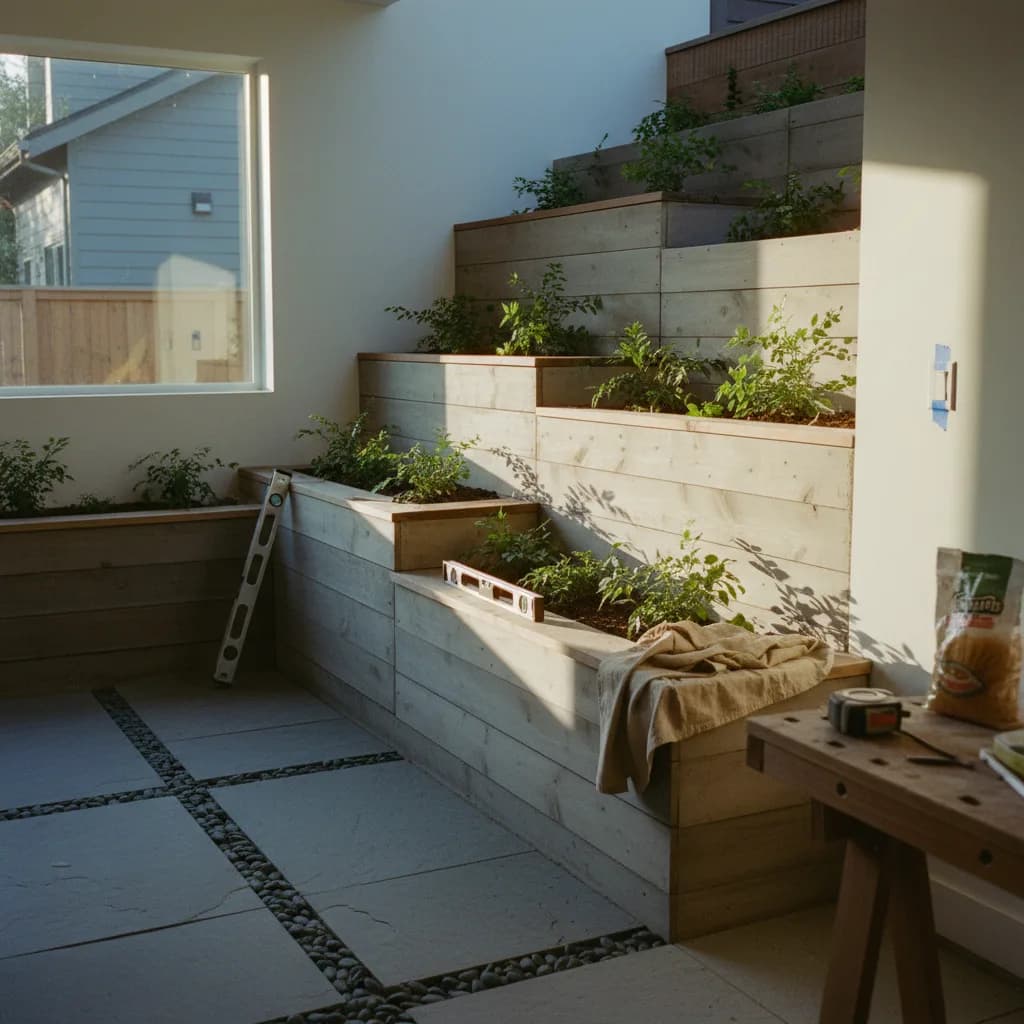
A professionally installed retaining wall in Seattle will cost between $125 and $225 per square face foot in 2026, with most homeowners spending between $35,000 and $75,000 for an engineered wall managing a sloped yard. Costs can start lower, around $95 per square foot, for simple, sub-four-foot segmental block walls on a flat lot with no engineering required. However, Seattle’s challenging terrain and seismic requirements mean the majority of projects land squarely in the mid-to-upper end of that range, where geotechnical reports and solid drainage systems are non-negotiable line items.
In a Nutshell
- Total Cost Range: $18,000 to $85,000+. Projects involving difficult access, significant excavation, or high-end finishes can easily exceed $100,000.
- Mid-Range Project Average: $45,000 - $65,000 for a 250-square-foot engineered concrete or segmental block wall on a typical sloped lot.
- Typical Timeline: Five to nine weeks from signing the contract. Expect two to four of those weeks for engineering, soil reports, and Seattle Department of Construction & Inspections (SDCI) permit review before any dirt moves.
- Biggest Surprise Line Item: Geotechnical engineering and special inspections. For any wall over four feet, this can add $8,000 to $15,000 before the first block is even delivered.
What does a retaining wall actually cost in Seattle in 2026?
The cost per square foot is a function of height, material, and the unseen structural requirements dictated by soil type and slope. A simple garden wall has a completely different cost structure than an engineered wall holding back a saturated hillside in West Seattle.
| Tier | Wall Type & Scope | Cost per Square Face Foot | Estimated Total (200 sq. ft. wall) |
|---|---|---|---|
| Basic | Segmental block wall under 4' high. No permit required, minimal excavation, good site access. | $95 - $140 | $19,000 - $28,000 |
| Mid-Range | Engineered segmental block or poured concrete wall, 4-7' high. Requires geotech report, permit, significant excavation, and geogrid reinforcement. | $150 - $225 | $30,000 - $45,000 |
| Premium | Tiered walls, architectural concrete finish, integrated stairs or lighting, challenging site access (barge or crane), extensive drainage work. | $250 - $400+ | $50,000 - $80,000+ |
For a typical mid-range, 250-square-foot project, the budget allocation looks something like this:
- Labor: 45%
- Materials (concrete, block, rebar, backfill): 25%
- Engineering, Geotech & Permitting: 15%
- Equipment & Excavation: 10%
- Overhead, Profit & Contingency: 5%
The bottom of the range represents a straightforward, non-permitted landscape wall on a level lot, which is not the typical scenario for a functional retaining wall in the Seattle area.
Why is it more expensive in Seattle than surrounding regions?
Three factors drive the high cost of retaining walls in Seattle: aggressive soil and water conditions, high labor costs for specialized trades, and logistical challenges inherent to the city's topography.
- Geotechnical & Seismic Demands: Seattle is built on glacial till, a dense, heavy soil that becomes unstable when saturated. Combined with near-constant rainfall, this creates immense hydrostatic pressure., the Seattle Fault Zone mandates that any significant structure, including retaining walls, be designed to withstand seismic forces. This requires a geotechnical soils report and a structural engineer to design the wall footing, drainage, and reinforcement, adding thousands to the project cost before construction begins.
- Specialized Labor Rates: The skill set required to build a code-compliant, engineered retaining wall is specialized. According to the Washington State Department of Labor & Industries (L&I) prevailing wage data for King County, skilled equipment operators and concrete masons command hourly rates significantly higher than in other regions. This isn't general laborer work; it's a technical trade, and the wages reflect that.
- Challenging Site Access & Neighborhood Premiums: Many Seattle properties, particularly in hillside neighborhoods like Queen Anne, Magnolia, and parts of West Seattle, have limited access for excavation equipment. A mini-excavator that can drive right into a suburban backyard might need to be craned into a city lot, adding a full day and several thousand dollars to the budget. Hauling away excavated soil from these tight sites is also slower and more expensive.
What do real Seattle homeowners spend in 2026?
Ready to compare vetted project options?
Use Project Match privately when your scope is clear enough for contractor conversations.
Start Project MatchThree representative projects from 2026, scoped similarly, reconstructed from Golden Yards Magazine's Project of the Day network and used here in aggregate form:
- The Queen Anne Hillside Tamer ($68,000): A failing timber wall was replaced with a 30-foot-long, 8-foot-tall soldier pile and lagging wall to secure a driveway. The project required extensive shoring, a full geotechnical report due to the slope's critical angle, and special inspections for pile depth and concrete strength. Tight access required a spider excavator, increasing equipment costs.
- The West Seattle Landslide Prevention ($85,000): A tiered, 450-square-foot segmental block wall system with extensive geogrid reinforcement was installed to create a usable backyard space on a steep slope. The primary cost driver was the drainage system, which included multiple French drains and a deep chimney drain of #57 stone to manage seasonal groundwater, all tied into the city storm sewer.
- The Capitol Hill Courtyard Creator ($52,000): A 220-square-foot architectural cast-in-place concrete wall, four feet high, was built to define a sunken patio. While shorter and not requiring the same level of engineering, the cost was driven by the high-end finish, including board-form texture, integral color, and waterproofing required for the planter behind it.
Where does the money actually go?
Your contractor's proposal may not itemize every soft cost. These are the necessary expenses that get bundled into the total price for any permitted retaining wall in Seattle.
- Geotechnical Soils Report: $3,500 - $7,000. An engineer analyzes soil borings to determine soil type, stability, and water content, which dictates the wall's design.
- Structural Engineering Plans: $4,000 - $9,000. A licensed engineer uses the geotech report to create stamped, buildable plans that meet Seattle building codes.
- SDCI Permitting & Plan Review: $2,500 - $6,000. Fees paid to the Seattle Department of Construction & Inspections for reviewing plans and issuing the permit.
- Special Inspections: $2,000 - $5,000. Third-party inspections required by SDCI to verify rebar placement, soil compaction, and concrete strength during construction.
- Excavation & Spoil Haul-Off: $6,000 - $18,000. This includes renting an excavator and dump trucks, plus landfill tipping fees, which are high for dense, wet soil.
- Engineered Backfill Material: $2,000 - $5,000. You can't just put the native soil back. Code requires specific open-graded gravel (like AASHTO #57 stone) for the drainage zone directly behind the wall.
- Comprehensive Drainage System: $30 - $50 per linear foot. This includes perforated pipe, filter fabric, and connection to a suitable discharge point (daylighting or storm drain).
- Site Restoration: $4,000 - $12,000. Repairing the lawn, fences, and landscaping that were disturbed during construction.
What stops a Seattle retaining wall from running over budget?
Three issues commonly cause budget overruns on these projects: subsurface surprises, scope creep, and permit delays.
- Unforeseen Ground Conditions. The geotechnical report is based on a few soil borings. It's possible to hit a massive boulder, an unexpected seam of groundwater, or unstable fill between those boring locations, requiring on-the-fly engineering changes and costly excavation work.
- Drainage Complications. The initial plan might be to daylight the wall's drainage pipe to a low point on the property. If percolation tests fail or the grade isn't sufficient, the plan may need to change to a more expensive option like a dry well or a direct connection to the city storm sewer, triggering more permits and costs.
- Access-Related Delays. If a neighbor revokes temporary access through their yard or unexpected utility lines are discovered in the primary access path, the contractor may need to bring in smaller, less efficient equipment, stretching the timeline and labor budget. The National Association of Home Builders recommends a ten to fifteen percent contingency on renovations in homes over thirty years old.
How can I estimate my retaining wall cost?
To develop a preliminary budget based on your wall's specific dimensions and material choices, our retaining wall cost calculator can provide a useful starting point before you engage a professional contractor.
What should your Seattle contractor include in the quote?
A legitimate bid from a licensed retaining wall contractor in Seattle is a technical document. It should clearly define the scope and specifications to ensure the final product is safe, legal, and durable.
- Scope of demolition for any existing structures.
- Excavation depth, width, and plan for off-hauling spoils.
- Subgrade compaction specification (e.g., 95 percent Modified Proctor).
- Base material type and depth (e.g., 6 inches of compacted 1.25-inch minus crushed rock).
- Wall material manufacturer and product name (e.g., Allan Block AB Collection, or 3000 PSI concrete mix design).
- Reinforcement details (e.g., #5 epoxy-coated rebar at 16 inches on center, or geogrid type and placement schedule).
- Drainage system design, including backfill material (e.g., 24 inches of clean #57 stone), filter fabric type, and pipe specification (e.g., 4-inch perforated SDR 35).
- Waterproofing or dampproofing product specification for concrete walls.
- Responsibility for securing permits, including the permit process.
- Schedule for required special inspections.
- Plan for site protection and restoration.
- Total cost, payment schedule, and warranty information.
- Proof of liability insurance and Washington State contractor license.
Sources & Methodology
See the Golden Yards Methodology for how sources are reviewed, ranges are normalized, and planning-data limits are handled.
Cost ranges in this guide draw on the following named industry sources, public agency datasets, and Golden Yards Magazine editorial research.
- Seattle Department of Construction & Inspections (SDCI), Retaining Wall Code Requirements (2026)
- Washington State Department of Labor & Industries, Prevailing Wage Data for King County (2026)
- National Concrete Masonry Association (NCMA), TEK 15-Series Design Manual for Segmental Retaining Walls (2025)
- American Concrete Institute (ACI), ACI 318 Building Code Requirements for Structural Concrete (2019)
- National Association of Home Builders (NAHB), Construction Cost Survey (2025)
- American Society of Civil Engineers (ASCE), ASCE 7-22 Minimum Design Loads for Buildings and Other Structures (2022)
- Golden Yards Magazine, 2026 Editorial Review of Invoiced Projects (2026)
Golden Yards Magazine Take
The single biggest point of failure for retaining walls in the Pacific Northwest isn't the block or the concrete; it's the water management system you never see. Homeowners fixate on the visible face of the wall, but the real work happens behind it. Hydrostatic pressure from our relentless rain is an unstoppable force. A properly built wall is, fundamentally, a drainage system with a decorative face. The critical components are the chimney drain of open-graded rock, the non-woven geotextile fabric separating that rock from the native soil, and the perforated pipe that collects the water and moves it away. Skimping on the depth of this drainage zone or using the wrong backfill is the most common shortcut. It saves a few bucks on gravel and labor, but it guarantees a callback in five to seven years when the wall starts to bow or fail. A well-built wall is dry. A failing wall is wet.
Ready to start your hardscaping project?
Find My ProsFrequently Asked Questions
How much does a retaining wall cost per foot in Seattle?
In 2026, expect to pay between $125 and $225 per square face foot for a professionally installed, engineered retaining wall in Seattle. Simple landscape walls under four feet tall might cost as little as $95 per square foot, while complex projects with difficult access or high-end finishes can exceed $250 per square foot. The final cost depends on several factors. Poured concrete walls are typically more expensive than segmental block walls. Height is the biggest multiplier; walls over four feet require engineering plans, permits, and more solid construction, significantly increasing the price. Site access, the amount of excavation needed, and the complexity of the required drainage system also play major roles in the total project cost.
Do I need a permit for a retaining wall in Seattle?
Yes, a permit from the Seattle Department of Construction & Inspections (SDCI) is required for any retaining wall taller than four feet, measured from the bottom of the footing to the top of the wall. Additionally, any wall, regardless of height, that supports a surcharge (like a driveway, slope, or building) also requires a permit. The permitting process for these walls typically requires a geotechnical report and stamped structural engineering plans. This process ensures the wall is designed to handle Seattle's specific soil conditions, heavy rainfall, and seismic risks. Working with a contractor who is experienced with the SDCI's requirements is critical to avoid delays and ensure your project is code-compliant.
What is the most durable material for a Seattle retaining wall?
For maximum longevity in Seattle's wet climate, reinforced poured concrete is the most durable material for a retaining wall. When properly designed with steel rebar and a solid drainage system, a concrete wall can last for 50 to 100 years. It provides superior strength against the immense hydrostatic pressure common in our region. However, modern engineered segmental retaining wall (SRW) blocks are also extremely durable and often a more cost-effective choice. These systems, when installed with the correct geogrid reinforcement and drainage backfill, are designed to last for decades. The key to durability for any wall type in Seattle is not just the face material, but the unseen drainage and reinforcement behind it.
How long does it take to build a retaining wall in Seattle?
The total timeline for a permitted retaining wall project in Seattle is typically five to nine weeks. The pre-construction phase, which includes the geotechnical survey, engineering design, and SDCI permit review, often takes two to four weeks alone. The actual on-site construction can then take another three to five weeks, depending on the wall's size and complexity. Factors like weather, inspection schedules, and site access can extend this timeline. A simple, non-permitted landscape wall under four feet might be completed in one to two weeks. However, for the majority of projects holding back a slope, the administrative and planning phase is a significant portion of the overall schedule.
Why is drainage so critical for retaining walls in the Pacific Northwest?
Drainage is the single most critical element for a retaining wall's longevity in the Pacific Northwest. The region's heavy and persistent rainfall saturates the soil behind the wall, creating immense hydrostatic pressure. Without a proper drainage system to relieve this pressure, the water will push against the wall, causing it to bow, crack, or fail completely. A functional system includes a layer of open-graded gravel (like #57 stone) directly behind the wall, a perforated pipe at the base to collect water, and geotextile fabric to prevent soil from clogging the gravel. This system must effectively channel water away from the wall to a safe discharge point. In essence, a Seattle retaining wall is a water management system first and a structural wall second.