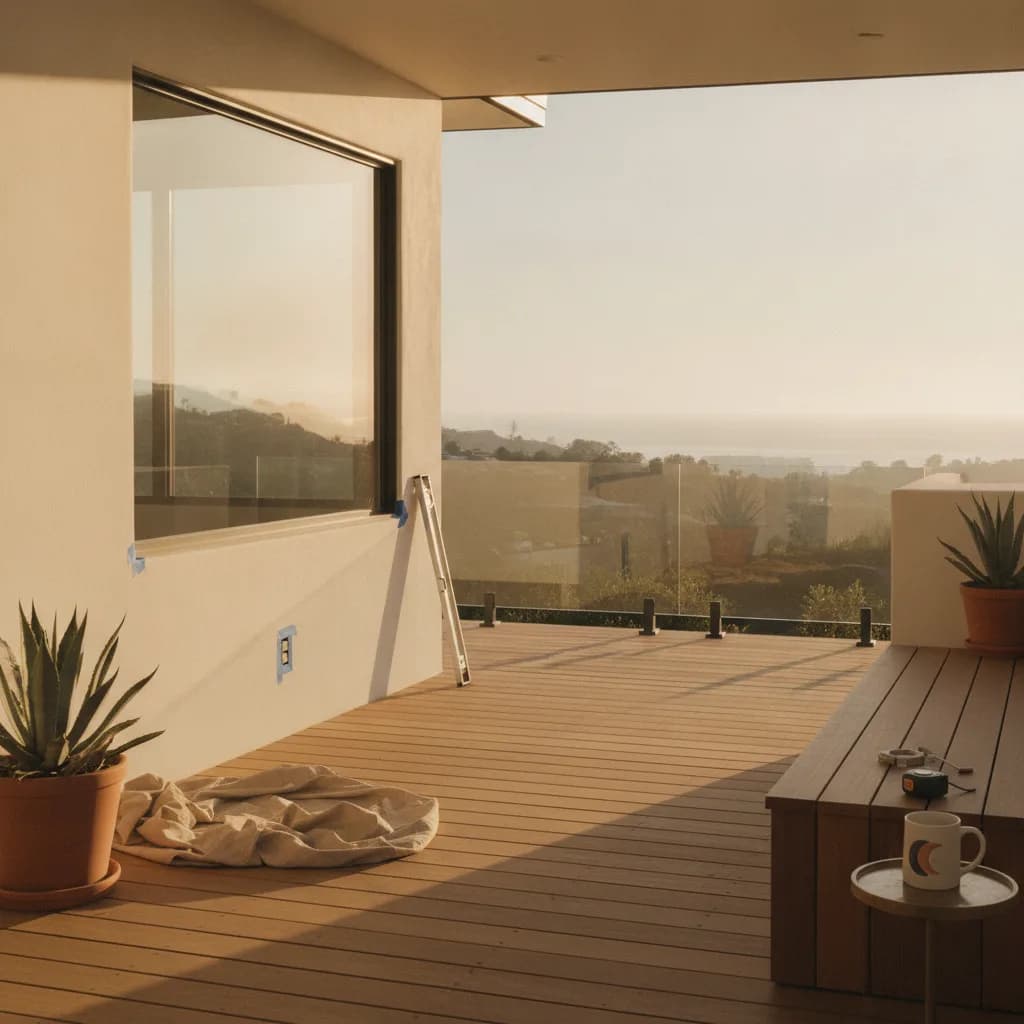
A new deck in San Diego takes anywhere from 12 to 24 weeks from the first design meeting to the final inspection sign-off. The timeline can start lower, around eight to ten weeks, for a simple ground-level paver patio or a deck refresh that doesn't require structural permits. For most projects, however, like a new improved deck in Point Loma, the single biggest delay is the plan check and permit issuance from the city's Development Services Department. Add review from the California Coastal Commission for any property in the coastal zone, and you can easily tack on another two to four months before a shovel even hits the dirt. The construction itself is the fastest part; the preparation is the marathon.
In a Nutshell
- Total Project Timeline: 12 to 24 weeks (can extend to 30+ weeks in the Coastal Zone)
- The Four Phases: Design and Permits, Site Prep and Foundation, Construction, and Finishes.
- Biggest Delay Risk: Permitting backlogs at the San Diego Development Services Department (DSD), especially with mandatory review from the California Coastal Commission for projects west of I-5.
- Budget Honesty: The National Association of Home Builders recommends a ten to fifteen percent contingency fund for unforeseen issues like poor soil conditions or wood rot discovered during demolition.
Phase 1: Design and Permits (4, 10 weeks)
This is the planning stage where the vision becomes a buildable blueprint. It's a paper-heavy phase that feels slow but prevents costly changes later. A designer or architect drafts the plans, which then go to a structural engineer to calculate load paths, footing requirements, and ledger board connections. These stamped plans are submitted to the San Diego Development Services Department (DSD) for plan check. For a straightforward project, expect a four to six week review. If your home is in La Jolla or Del Mar, however, your plans also require review by the California Coastal Commission, a process that can add another four to eight weeks, sometimes more. This is also when you finalize material choices, from the specific composite line like Trex Transcend to the railing style, locking in your scope before the first purchase order is placed.
- What happens: Architectural drawings, structural engineering, material selection, permit application submittal.
- Who does what: The homeowner makes design decisions, the designer/architect creates plans, and a permit expediter or the contractor submits the package to the DSD.
- Common holdups: DSD plan check corrections, engineering for non-standard designs, and the significant delays imposed by Coastal Commission review.
Phase 2: Site Prep and Foundation (1, 3 weeks)
Once the permit is in hand, physical work begins. This phase is about preparing the canvas. Any existing structures are demolished and hauled away. The site is graded for proper drainage, a critical step to prevent water from pooling against your home's foundation. Utility lines are marked by calling 811 to avoid costly accidents with SDG&E electrical or gas lines. Finally, holes are dug for the footings, rebar cages are placed, and the first inspection (footing inspection) is called. After the inspector approves the depth and steel placement, concrete is poured. A common hidden cost here is discovering poor soil, which might require deeper or wider footings, adding $2,000 to $4,000 for revised engineering and extra concrete. This is also the time to confirm your electrical service can handle new lighting or an outdoor kitchen; a subpanel upgrade can add $2,500 to the budget.
- What happens: Demolition, site grading, utility marking, digging and pouring concrete footings.
- Who does what: The general contractor's crew handles demolition and digging; a concrete subcontractor typically pours the footings.
- Common holdups: Hitting unexpected rock or old concrete during excavation, failed footing inspections requiring rework, and delays waiting for the concrete truck.
Phase 3: Construction (2, 5 weeks)
Ready to compare vetted project options?
Use Project Match privately when your scope is clear enough for contractor conversations.
Start Project MatchThis is the most visible and rewarding phase, where the deck structure takes shape. The process follows a strict sequence tied to city inspections. First, the ledger board is bolted to the house, a critical connection that is often its own inspection point. Then, the support posts, beams, and joists are installed to create the deck's skeleton. This is called the framing. Once the frame is complete, a second inspection (framing inspection) is scheduled with the DSD. The inspector checks everything from joist spacing to the hardware used, ensuring it matches the approved plans. Only after this pass can the decking material, whether it's a premium hardwood like Ipe or a composite like TimberTech AZEK, be installed. Material availability can be a chokepoint; a specific color of composite decking on backorder can pause the entire project for weeks.
- What happens: Building the deck frame, installing the decking boards.
- Who does what: The contractor's carpentry crew.
- Common holdups: Failing a framing inspection, delays in material delivery, or weather interruptions.

Phase 4: Finishes and Final Inspection (1, 3 weeks)
With the main structure and decking down, this final phase focuses on the details that complete the project. This includes building stairs, installing railings, and integrating any built-in features like benches or planter boxes. If your plan includes lighting, an electrician will run wiring and install fixtures. For wood decks, this is when sanding, staining, and sealing happens. The final step is the final inspection. The DSD inspector returns to verify that every detail, from the guardrail height (minimum 36 inches for residential) to the stair riser dimensions, complies with the building code. Once they sign the permit card, the project is officially complete. This final sign-off is what you'll need to close out the permit and for your home's records, which is crucial for a future sale.
- What happens: Installation of stairs, railings, lighting, and any built-in features; final cleanup.
- Who does what: Carpenters for railings and stairs, electricians for lighting.
- Common holdups: Failing the final inspection for small details like improper railing spacing, requiring minor but time-consuming rework.
Three Representative Projects from 2026
Three representative California projects from 2026, scoped similarly, reconstructed from Golden Yards Magazine's invoiced project network and presented here in aggregate form:
- North Park Craftsman: A 250-square-foot ground-level redwood deck. The simple design required a basic plot plan for a permit but no complex engineering. The project focused on creating a functional dining space off the kitchen. Total Cost: $22,500. Total Time: 9 weeks.
- Carmel Valley Family Home: A 450-square-foot improved deck using Trex Transcend Lineage composite decking with a simple cable railing system and an attached cedar pergola. Structural engineering was required for the height and ledger connection. Total Cost: $54,000. Total Time: 16 weeks.
- La Jolla Coastal View: A 700-square-foot multi-level Ipe hardwood deck with frameless glass railings, built-in gas fire pit, and an integrated outdoor kitchen. This project required extensive engineering, DSD review, and a lengthy California Coastal Commission review. The gas line upsize from 1/2-inch to 3/4-inch to support the grill and fire pit was a $2,800 hidden cost. Total Cost: $135,000. Total Time: 28 weeks.
What Can Compress This Timeline
While you can't control the city's permit backlog, you can influence other parts of the schedule. First, achieve "scope-lock" before work begins. This means every single material, from the decking to the fasteners to the railing caps, is selected and ordered upfront. Changing your mind mid-project on a railing system can trigger a cascade of delays. Second, hire a contractor who uses modern project management software and provides a detailed, day-by-day schedule. This transparency forces accountability. Third, opt for in-stock materials. While a special-order Brazilian hardwood is beautiful, a six-week shipping delay can turn a summer project into a winter one. Choosing a readily available Trex or TimberTech product from a local supplier like Dixieline can shave weeks off the timeline.
What Blows It Up
Three things reliably derail a deck-building timeline. The most common is changing the design after the permit has been issued. Even a small change, like moving a staircase, can require a plan revision and resubmittal to the DSD, sending you back to the beginning of the permitting queue. The second major risk is unforeseen site conditions. Discovering that the soil has poor bearing capacity requires a new engineering plan with more expensive footings. The third is a dispute with a neighbor or a homeowner's association. An HOA that decides your chosen stain color is not on the approved list can halt work for weeks while you go through an architectural review process. The National Association of Home Builders recommends a ten to fifteen percent contingency on renovations in homes over thirty years old.
What Should Be in Your Contractor's Schedule
A professional deck contractor in San Diego will provide a schedule that goes beyond a simple start and end date. Your project plan should be a detailed document with specific milestones. Insist on seeing these line items before signing a contract. Understanding the permit process is key; you can learn more in our [San Diego deck permit playbook for 2026](/guides/san-diego-deck-permit-playbook-2026). Look for this level of detail:
- Final Plan Approval & Engineering Sign-off
- Permit Application Submitted to San Diego DSD
- Permit Issued
- Material Order Dates (Decking, Framing, Hardware)
- Demolition and Site Prep Start/End Dates
- Footing Inspection Date
- Framing Start/End Dates
- Framing Inspection Date
- Decking & Railing Installation Start/End Dates
- Final Inspection Date
Golden Yards Take
The marketing from a deck contractor often sells the construction phase, which might only be three or four weeks. They show smiling crews and rapid progress. But the reality for a homeowner in San Diego is a much longer journey dominated by administrative hurdles. The true timeline is the *process* timeline, which is four to six months. The disconnect between the brochure and the reality of DSD plan checks, Coastal Commission oversight, and supply chain logistics is where homeowner frustration is born. The cost of a deck in San Diego isn't just in lumber and labor; it's in the time and expertise required to get the project approved. Higher labor costs, driven by rates published in the California Department of Industrial Relations prevailing wage data for San Diego County, also contribute to the final price tag. Plan for the marathon, not the sprint.
Frequently Asked Questions
How long does a deck build in San Diego really take?
A typical permitted deck project in San Diego takes 12 to 24 weeks from design to completion. This includes four to ten weeks for design and permitting, one to three for site prep, two to five for construction, and one to three for finishes and final inspection. The actual on-site construction is often the shortest phase.
Projects in the Coastal Zone can easily take over six months due to the additional review process by the California Coastal Commission. Simple, non-permitted ground-level decks or resurfacing projects can be much faster, often completed in under eight weeks. The key is understanding that the timeline quoted by a contractor often refers only to the construction phase, not the extensive and often lengthy pre-construction planning and permitting process.
Can I use my yard during deck construction?
You should plan for limited to no access to the construction area of your yard for the duration of the project. The site becomes a work zone with safety hazards, including open footing holes, power tools, and stacks of materials. Your contractor will likely establish a perimeter for safety and insurance liability reasons.
Access to other parts of your yard may be possible, but expect noise, dust, and general disruption during work hours (typically 7 a.m. to 4 p.m. on weekdays). It's best to discuss access and logistics with your deck contractor in San Diego before the project begins to set clear expectations for your family and pets.
What's the longest single phase of a deck project?
The design and permitting phase is almost always the longest and most unpredictable part of building a deck in San Diego. While construction might take only a few weeks, waiting for plan approval from the San Diego Development Services Department (DSD) can take four to ten weeks or more, depending on their backlog and the complexity of your project.
If your property falls under the jurisdiction of the California Coastal Commission, this phase can stretch for an additional two to four months. This administrative time, which occurs before any physical work begins, is often underestimated by homeowners and is the primary reason for extended project timelines.
Can I fast-track the permits in San Diego?
While there is no guaranteed way to "fast-track" a building permit, you can take steps to minimize delays. Hiring an experienced local permit expediter who knows the DSD's processes and staff can help avoid common mistakes and ensure your application package is complete and correct from the start, reducing the chance of it being kicked back.
Ensuring your architect and structural engineer are responsive to any questions or correction requests from the city's plan checkers is also critical. However, you are ultimately subject to the DSD's workload and review queues. Any notion of skipping the line is unrealistic; the goal is to have a perfect submission that sails through the standard process as smoothly as possible.
What are the hidden costs of a San Diego deck?
The most common hidden costs for a deck in San Diego are not in the decking material itself. They are in the necessary prep and enabling work. Structural engineering plans can cost $1,500 to $3,000. If you have challenging soil, a geotechnical report might be required, adding another $2,000 to $4,000. Demolition of an old concrete patio can add $1,500.
, if your deck includes an outdoor kitchen or extensive lighting, you may need a new 60-amp electrical subpanel, which can run $2,500 to $4,000. For a built-in gas grill or fire pit, upsizing your gas line is often necessary to support the BTU load, a job that can cost $1,200 to $2,800. These items are rarely in the initial ballpark estimate.
Sources & Methodology
Golden Yards reviews public permit and code signals, material pricing, climate and site constraints, contractor quote patterns, comparable projects, the Golden Yards Cost Index, and the Golden Yards Methodology. Cost references are planning ranges, not fixed bids.
- San Diego Development Services Department (DSD), Permit Processing Timelines, 2026
- California Coastal Commission, Permit Application Guidelines, 2025
- National Association of Home Builders (NAHB), Remodeling Market Index, Q1 2026
- California Department of Industrial Relations, Prevailing Wage Determinations for San Diego County, 2026
- Trex Company, LLC., Professional Deck Builder's Guide, 2025
- American Wood Council, "Design for Code Acceptance 6: Prescriptive Residential Wood Deck Construction Guide," 2021
- Simpson Strong-Tie, "Deck Connection and Fastening Guide," 2025
Ready to start your deck project?
Find My ProsFrequently Asked Questions
How long does a deck build in San Diego really take?
A typical permitted deck project in San Diego takes 12 to 24 weeks from design to completion. This includes four to ten weeks for design and permitting, one to three for site prep, two to five for construction, and one to three for finishes and final inspection. The actual on-site construction is often the shortest phase. Projects in the Coastal Zone can easily take over six months due to the additional review process by the California Coastal Commission. Simple, non-permitted ground-level decks or resurfacing projects can be much faster, often completed in under eight weeks. The key is understanding that the timeline quoted by a contractor often refers only to the construction phase, not the extensive and often lengthy pre-construction planning and permitting process.
Can I use my yard during deck construction?
You should plan for limited to no access to the construction area of your yard for the duration of the project. The site becomes a work zone with safety hazards, including open footing holes, power tools, and stacks of materials. Your contractor will likely establish a perimeter for safety and insurance liability reasons. Access to other parts of your yard may be possible, but expect noise, dust, and general disruption during work hours (typically 7 a.m. to 4 p.m. on weekdays). It's best to discuss access and logistics with your deck contractor in San Diego before the project begins to set clear expectations for your family and pets.
What's the longest single phase of a deck project?
The design and permitting phase is almost always the longest and most unpredictable part of building a deck in San Diego. While construction might take only a few weeks, waiting for plan approval from the San Diego Development Services Department (DSD) can take four to ten weeks or more, depending on their backlog and the complexity of your project. If your property falls under the jurisdiction of the California Coastal Commission, this phase can stretch for an additional two to four months. This administrative time, which occurs before any physical work begins, is often underestimated by homeowners and is the primary reason for extended project timelines.
Can I fast-track the permits in San Diego?
While there is no guaranteed way to "fast-track" a building permit, you can take steps to minimize delays. Hiring an experienced local permit expediter who knows the DSD's processes and staff can help avoid common mistakes and ensure your application package is complete and correct from the start, reducing the chance of it being kicked back. Ensuring your architect and structural engineer are responsive to any questions or correction requests from the city's plan checkers is also critical. However, you are ultimately subject to the DSD's workload and review queues. Any notion of skipping the line is unrealistic; the goal is to have a perfect submission that sails through the standard process as smoothly as possible.
What are the hidden costs of a San Diego deck?
The most common hidden costs for a deck in San Diego are not in the decking material itself. They are in the necessary prep and enabling work. Structural engineering plans can cost $1,500 to $3,000. If you have challenging soil, a geotechnical report might be required, adding another $2,000 to $4,000. Demolition of an old concrete patio can add $1,500., if your deck includes an outdoor kitchen or extensive lighting, you may need a new 60-amp electrical subpanel, which can run $2,500 to $4,000. For a built-in gas grill or fire pit, upsizing your gas line is often necessary to support the BTU load, a job that can cost $1,200 to $2,800. These items are rarely in the initial ballpark estimate.