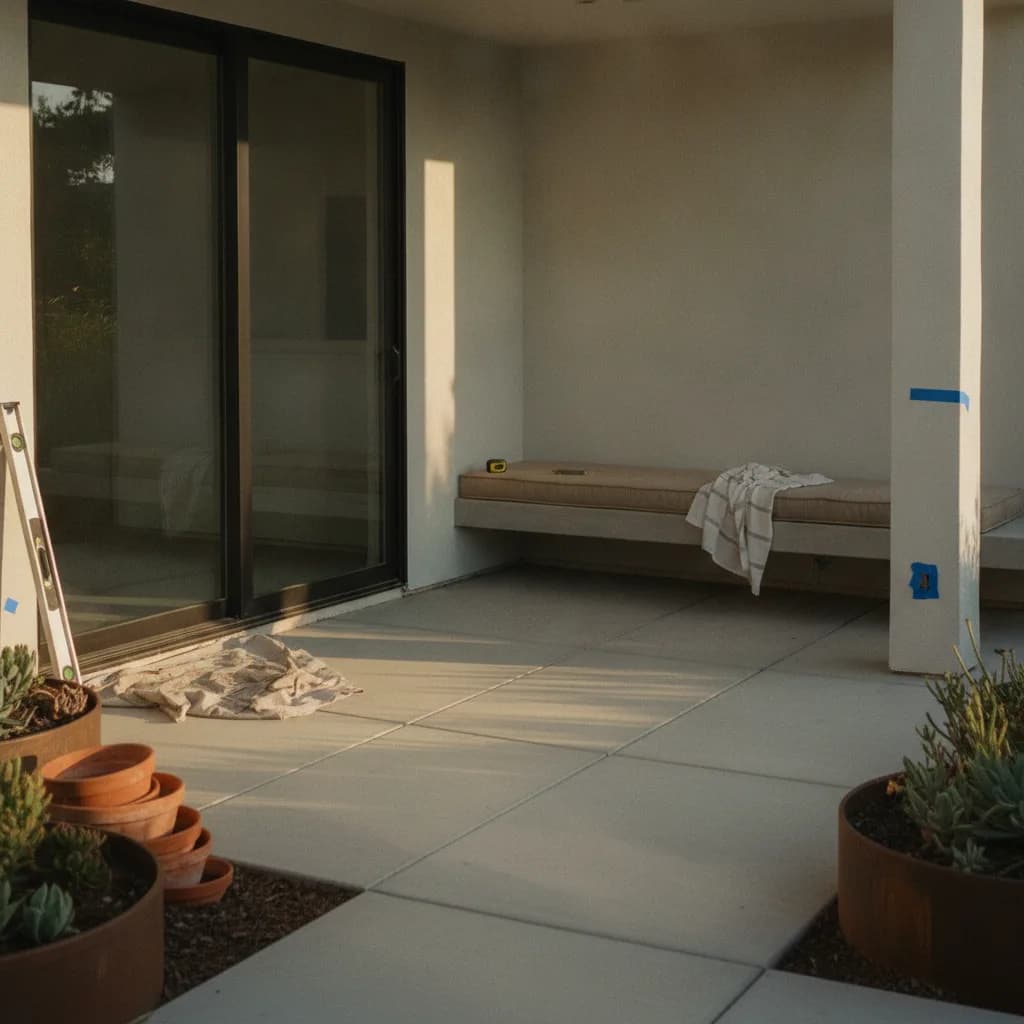
A new concrete patio in Santa Monica is realistically a six to ten-week project, from the day you sign a contract to the day the city signs off on the final inspection. While the timeline can start lower for a simple replacement slab on grade, a typical 600-square-foot project in a neighborhood like Ocean Park involves substantial groundwork. The single biggest delay unique to this city is navigating the plan check process, which often includes review by the California Coastal Commission for any property inside the coastal zone. This isn't just about pouring concrete; it’s about building a durable outdoor foundation that respects local codes and the marine environment.
In a Nutshell
- Total Project Timeline: Six to ten weeks is a realistic range for a standard concrete patio installation in Santa Monica.
- The Four Phases: Your project will move through four distinct stages: 1. Design and Permits; 2. Site Prep and Base; 3. Concrete Pour and Cure; and 4. Finishes and Final Inspection.
- Biggest Delay Risk: Unforeseen subgrade issues, like undocumented fill or a high water table, and permitting delays from the Santa Monica Planning and Community Development Department are the most common timeline killers.
- Budget Accordingly: A professionally installed concrete patio is a significant investment. The National Association of Home Builders advises holding a ten to fifteen percent contingency fund for unexpected costs.
Phase 1: Design and Permits (weeks 1, 3)
This initial phase is all about paperwork and planning, not dirt work. It sets the foundation for the entire project. First, a site survey confirms property lines and elevations, which informs the design. Your contractor or a designer will then draft plans showing the patio's dimensions, drainage strategy, and material specifications. These plans are submitted to the Santa Monica Planning and Community Development Department for review. For many Santa Monica properties, this is where the California Coastal Commission gets involved, scrutinizing any potential impacts on coastal resources or public access. This review can add weeks. A common holdup is an incomplete submittal, particularly regarding drainage plans that must show how water will be managed on-site to prevent runoff. Your job here is to make decisions quickly and sign off on the final plans so your contractor can get them into the city’s queue.
Phase 2: Site Prep and Foundation (weeks 3, 5)
Once you have an approved permit, the physical work begins. This phase is the most critical for the patio's longevity, and it’s all stuff you'll never see. The crew starts with demolition of any existing surfaces and excavation, typically digging down eight to ten inches. The exposed native subgrade is then compacted to a minimum of 95 percent of its maximum dry density, verified by a Modified Proctor test. In areas with Santa Monica's variable soils, a geotextile separation fabric is laid down to prevent the subgrade from mixing with the base. Next comes a four-inch layer of open-graded aggregate, usually #57 stone or a Caltrans Class 2 permeable base, which is spread in lifts and compacted. This creates a stable, free-draining foundation. Before any of this, a call to 811 is mandatory to locate underground utilities from providers like SoCalGas and Southern California Edison.
Phase 3: Construction Scope (weeks 5, 7)
Ready to compare vetted project options?
Use Project Match privately when your scope is clear enough for contractor conversations.
Start Project MatchWith the base prepared, the formwork is next. These temporary walls, typically made of lumber, define the shape of the patio. Inside the forms, a grid of steel reinforcement is placed. Given Santa Monica's corrosive salt air, the spec is clear: use epoxy-coated #4 rebar spaced 18 inches on center, supported by plastic chairs to keep it in the middle of the slab's thickness. This prevents rust that leads to spalling. Before the pour, a city inspector arrives to verify the formwork, base depth, and rebar placement, signing off on the inspection card. The concrete pour itself is a single, intense day. A truck delivers a 4000 PSI mix meeting ACI 332 residential concrete specifications. The crew works quickly to place, screed, float, and finish the surface. Within 12 to 18 hours, control joints are saw-cut to a depth of one-quarter the slab's thickness to manage where cracking occurs.
Phase 4: Finishes and Final Inspection (weeks 8, 10)
The concrete is hard to the touch within a day, but it's far from ready. It needs to cure, a chemical process that can take 28 days to reach its design strength. During the first week, it's critical to keep the surface moist to ensure a strong cure. After about a week, the wooden forms are stripped away. The crew then performs a final site cleanup, backfilling against the new slab and repairing any landscape damage. The last construction step is applying a sealer. In a coastal climate, a high-quality silane-siloxane penetrating sealer is the right call, as it repels water and chloride ions from the salt air. This should only be done after the concrete has cured for at least four weeks. The project concludes with the final inspection from the Santa Monica building official, who confirms the work matches the approved plans and that all drainage and safety requirements have been met before closing out the permit.
Three Representative Projects from 2026
Three representative California projects from 2026, scoped similarly, reconstructed from Golden Yards Magazine's invoiced project network and presented here in aggregate form:
- Ocean Park, Santa Monica: A 600-square-foot broom-finish patio with integral color and modern, linear drains. The project required Coastal Commission review due to its proximity to the beach, adding three weeks to the permit phase. Total Cost: $18,000. Total Time: 8 weeks.
- Mar Vista, Los Angeles: An 850-square-foot stamped concrete patio designed to mimic natural stone, including a low CMU block seat wall. The complexity of the drainage plan required two rounds of revisions with the city. Total Cost: $27,500. Total Time: 10 weeks.
- Culver City: A straightforward 450-square-foot concrete slab poured as the foundation for a prefabricated backyard studio. The permit was issued over-the-counter with standard plans, and the site had excellent access. Total Cost: $11,000. Total Time: 6 weeks.
What Can Compress This Timeline
While you can't rush concrete curing or city inspectors, homeowners control three key variables. First, finalize all design decisions and material selections before the project goes out to bid. Changing from a broom finish to a sand-blast finish mid-project means scheduling a different subcontractor and invites delays. Second, hire a concrete patio contractor in Santa Monica who has a deep portfolio of local work and ideally employs a permit expediter. These specialists know the nuances of the Santa Monica building department and the Coastal Commission, ensuring paperwork is filed correctly the first time. Third, simplify the scope. A standard-sized, rectangular patio with a broom finish and integral color is far faster to permit and build than a multi-level, freeform patio with complex finishes and built-in features that require additional engineering and inspections.
What Blows It Up
Three things reliably derail a concrete patio schedule. The most common is discovering poor soil conditions during excavation. Finding undocumented fill, expansive clay, or a surprisingly high water table requires a soils engineer to specify a remediation plan, stopping all work. Second, any change order initiated by the homeowner after the permit is issued. Deciding to add a gas line for a fire pit or alter the patio's footprint means revising the plans and resubmitting them to the city for review, which resets the clock. Third, underestimating the impact of the Coastal Commission. If your project requires their approval, the timeline is no longer in your or your contractor's hands; you are subject to their meeting schedules and review cycles. The National Association of Home Builders recommends a ten to fifteen percent contingency on renovations in homes over thirty years old.
What Should Be in Your Contractor's Schedule
Your contract should include a detailed, phased schedule. A vague timeline is a red flag. Insist on a document that includes specific line items and duration estimates for each. This creates accountability and clarifies expectations. A detailed schedule prevents scope creep and cost overruns. For a full breakdown of what to expect in your bid, review our Santa Monica concrete patio permit playbook for 2026. At a minimum, the schedule should include:
- Permit Submittal and Plan Check Period
- Demolition, Excavation, and Debris Haul-Away
- Subgrade Compaction and Testing
- Geotextile and Aggregate Base Installation
- Formwork and Rebar Installation
- Pre-Pour Municipal Inspection
- Concrete Pour, Finish, and Control Joint Cutting
- Curing Period (Minimum 7 Days Untouchable)
- Form Stripping, Site Cleanup, and Backfill
- Sealer Application (After 28-Day Cure)
- Final Municipal Inspection and Permit Closure
Golden Yards Take
A contractor's sales pitch might focus on a one-day pour, but the reality of a Santa Monica concrete patio is that 90 percent of the work happens before the concrete truck ever arrives. The weeks spent on permitting, excavation, and building a proper sub-base are what determine whether your investment lasts five years or thirty. In this coastal environment, fighting the corrosive salt air and managing water are paramount. That means specifying epoxy-coated rebar, installing a free-draining base, and sloping the slab correctly. The timeline is long because the steps are non-negotiable. A beautiful finish on an unstable base is a recipe for a callback. A patio that looks good on day one but is cracked and spalling by year five is a failure of process, not materials. The schedule is your insurance against that failure.
Frequently Asked Questions
How long does a concrete patio in Santa Monica really take?
A typical 500 to 800-square-foot concrete patio in Santa Monica takes six to ten weeks from signing the contract to final inspection. This timeline accounts for design, a multi-week permitting process, site preparation, the pour itself, and the required curing time before final finishing touches and city sign-off.
The total duration is heavily influenced by the complexity of the project and the property's location. If your home is within the California Coastal Commission's jurisdiction, expect the permitting phase alone to add several weeks. The physical work, from excavation to pouring, might only take two to three weeks, but it's bookended by significant administrative and curing periods that cannot be rushed.
Can I use my yard during construction?
Access to your yard will be significantly limited, especially during the excavation, base preparation, and pouring phases. The project area becomes an active construction zone with open trenches, piles of aggregate, form boards, and rebar. For safety reasons, you should plan for at least two to three weeks of major disruption where that part of the yard is completely off-limits.
Even outside the immediate work zone, expect noise, dust, and frequent contractor traffic. Your driveway may be partially blocked by material deliveries or a concrete truck. It's best to communicate with your contractor about their schedule so you can plan accordingly, especially if you have pets or children.
What's the longest single phase of a concrete patio installation?
The pre-construction phase, which combines design development and city permitting, is almost always the longest and most unpredictable part of the project. This stage can easily take two to five weeks, and often longer in Santa Monica. While the actual concrete pour is a single day, getting the approved plans from the city dictates the entire project's start date.
Plan check backlogs, requests for more information on drainage, or reviews by the California Coastal Commission can all extend this initial phase. In contrast, once the permit is in hand, a good contractor can move through the physical site work, from excavation to finishing, in a relatively predictable two to four-week timeframe.
Can I fast-track the permits for a concrete patio in Santa Monica?
It is very difficult to fast-track permits in Santa Monica. The most effective way to minimize delays is to submit a perfect application package from the very beginning. This means the plans must be complete, accurate, and fully compliant with all local building codes, zoning ordinances, and drainage requirements. Any error or omission will trigger a correction notice and send your application to the back of the queue.
Hiring a local architect or an experienced permit expediter who has a working relationship with the Santa Monica Planning and Community Development Department is your best strategy. They understand the specific submission requirements and can often anticipate a plan checker's questions, ensuring a smoother review process and avoiding unnecessary delays.
Why is a concrete patio in Santa Monica more expensive?
The higher concrete patio Santa Monica cost is driven by a combination of factors. Strict local building codes, specific coastal engineering requirements like epoxy-coated rebar, and challenging site access for equipment and material deliveries all add to the price., labor rates are a significant component of the total cost.
The California Department of Industrial Relations sets prevailing wage data for Los Angeles County, which ensures skilled concrete finishers and laborers are paid a competitive rate that gets factored directly into your project budget. Combined with higher disposal fees and the overhead of operating a licensed and insured business in a high-cost area, the price for a professional installation is justifiably greater than in other regions.
Sources & Methodology
Golden Yards reviews public permit and code signals, material pricing, climate and site constraints, contractor quote patterns, comparable projects, the Golden Yards Cost Index, and the Golden Yards Methodology. Cost references are planning ranges, not fixed bids.
- American Concrete Institute (ACI), "ACI 332-22: Residential Code Requirements for Structural Concrete"
- City of Santa Monica, "Planning and Community Development Department Building & Safety Guidelines," 2024
- California Coastal Commission, "Permit Application Guide," 2023
- National Association of Home Builders, "Remodeling Market Index," Q1 2026
- Interlocking Concrete Pavement Institute (ICPI), "Tech Spec 2: Construction of Interlocking Concrete Pavements"
- ASTM International, "ASTM C33 / C33M - 18 Standard Specification for Concrete Aggregates"
- California Department of Industrial Relations, "Los Angeles County Prevailing Wage Determinations," 2026
Ready to start your patio project?
Find My ProsFrequently Asked Questions
How long does a concrete patio in Santa Monica really take?
A typical 500 to 800-square-foot concrete patio in Santa Monica takes six to ten weeks from signing the contract to final inspection. This timeline accounts for design, a multi-week permitting process, site preparation, the pour itself, and the required curing time before final finishing touches and city sign-off. The total duration is heavily influenced by the complexity of the project and the property's location. If your home is within the California Coastal Commission's jurisdiction, expect the permitting phase alone to add several weeks. The physical work, from excavation to pouring, might only take two to three weeks, but it's bookended by significant administrative and curing periods that cannot be rushed.
Can I use my yard during construction?
Access to your yard will be significantly limited, especially during the excavation, base preparation, and pouring phases. The project area becomes an active construction zone with open trenches, piles of aggregate, form boards, and rebar. For safety reasons, you should plan for at least two to three weeks of major disruption where that part of the yard is completely off-limits. Even outside the immediate work zone, expect noise, dust, and frequent contractor traffic. Your driveway may be partially blocked by material deliveries or a concrete truck. It's best to communicate with your contractor about their schedule so you can plan accordingly, especially if you have pets or children.
What's the longest single phase of a concrete patio installation?
The pre-construction phase, which combines design development and city permitting, is almost always the longest and most unpredictable part of the project. This stage can easily take two to five weeks, and often longer in Santa Monica. While the actual concrete pour is a single day, getting the approved plans from the city dictates the entire project's start date. Plan check backlogs, requests for more information on drainage, or reviews by the California Coastal Commission can all extend this initial phase. In contrast, once the permit is in hand, a good contractor can move through the physical site work, from excavation to finishing, in a relatively predictable two to four-week timeframe.
Can I fast-track the permits for a concrete patio in Santa Monica?
It is very difficult to fast-track permits in Santa Monica. The most effective way to minimize delays is to submit a perfect application package from the very beginning. This means the plans must be complete, accurate, and fully compliant with all local building codes, zoning ordinances, and drainage requirements. Any error or omission will trigger a correction notice and send your application to the back of the queue. Hiring a local architect or an experienced permit expediter who has a working relationship with the Santa Monica Planning and Community Development Department is your best strategy. They understand the specific submission requirements and can often anticipate a plan checker's questions, ensuring a smoother review process and avoiding unnecessary delays.
Why is a concrete patio in Santa Monica more expensive?
The higher concrete patio Santa Monica cost is driven by a combination of factors. Strict local building codes, specific coastal engineering requirements like epoxy-coated rebar, and challenging site access for equipment and material deliveries all add to the price., labor rates are a significant component of the total cost. The California Department of Industrial Relations sets prevailing wage data for Los Angeles County, which ensures skilled concrete finishers and laborers are paid a competitive rate that gets factored directly into your project budget. Combined with higher disposal fees and the overhead of operating a licensed and insured business in a high-cost area, the price for a professional installation is justifiably greater than in other regions.