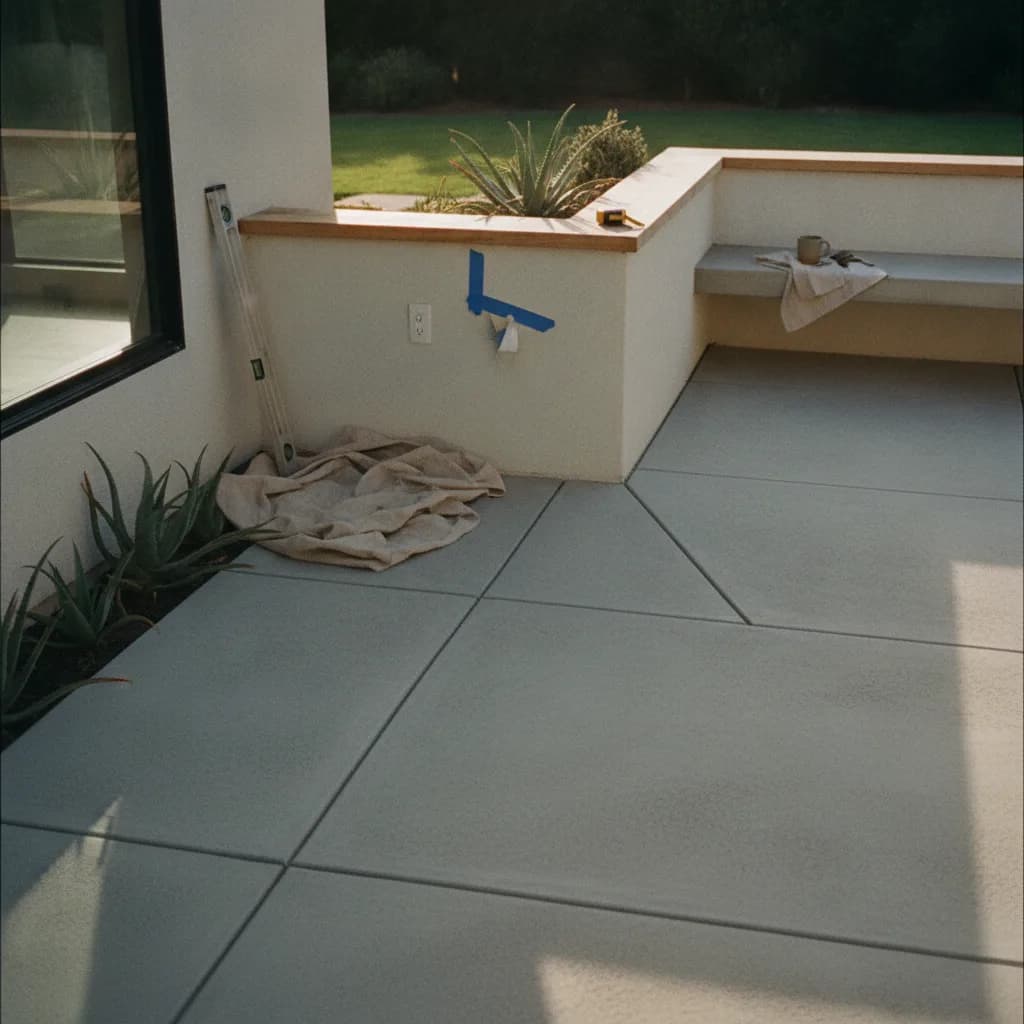
Expect a professionally installed concrete patio in Orange County to cost between $18 and $35 per square foot in 2026. For a typical 600-square-foot project, this puts the total investment between $10,800 and $21,000, with a median project landing around $15,000 or $25 per square foot. The price can start lower, around $15 per square foot, for a simple overlay on an existing slab or a small, easily accessible pour for an ADU, but that’s not the typical new installation most homeowners need.
In a Nutshell
- Total Cost Range (600 sq. ft. patio): $10,800, $28,000+
- Mid-Range Average Cost: Approximately $15,000, or $25 per square foot.
- Typical Project Timeline: Three to five weeks from demolition to final cure. The critical subgrade and base preparation can take up half that time.
- Biggest Surprise Line Item: Demolition and proper site preparation. Removing an old slab and correcting for Orange County’s expansive clay soil can add $3,000 to $6,000 before a single form is set.
What does a concrete patio actually cost in Orange County in 2026?
The final invoice for a concrete patio in Orange County depends on access, complexity, and finish level. A simple broom-finish slab in an open backyard will cost significantly less than a multi-level, stained-and-stamped patio on a sloped hillside lot in Laguna Beach. We've broken the costs into three tiers based on common project scopes.
| Tier | Cost per Square Foot | Common Features |
|---|---|---|
| Basic | $15 - $22 | Broom or salt finish, 4-inch slab depth, 6x6 wire mesh reinforcement, simple rectangular shape, minimal site prep. |
| Mid-Range | $23 - $32 | Single-pattern stamped concrete (e.g., Ashlar Slate), integral color, #3 rebar grid at 18-inch on center, integrated channel drains, moderate grading. |
| Premium | $33+ | Multi-pattern stamp, acid staining or custom coloring, saw-cut decorative patterns, thickened edges, integrated lighting, seat walls, complex curves. |
Here’s a typical cost breakdown for a mid-range, 600-square-foot stamped concrete patio project totaling $15,000:
- Labor (Demolition, Grading, Forming, Finishing): 45% ($6,750)
- Materials (Concrete, Base, Rebar, Sealant): 30% ($4,500)
- Site Prep & Equipment (Demo, Haul-Away, Pump Truck): 15% ($2,250)
- Permits & Overhead: 10% ($1,500)
The bottom-of-range projects, those under $18 per square foot, are almost always straightforward pours on perfectly flat, accessible lots with no existing hardscape to demolish. This scenario is uncommon for established properties in Orange County.
Why is it more expensive in Orange County than the Inland Empire?
Three factors drive the premium for hardscape work in Orange County: labor rates, logistical costs tied to property values, and demanding site conditions.
First, labor isn't cheap, and good finishers are worth their weight. According to the California Department of Industrial Relations prevailing wage data for Orange County, skilled construction labor rates are among the highest in Southern California. A reputable concrete patio contractor in Orange County invests in experienced crews who know how to manage a pour in coastal humidity or inland heat, which prevents costly mistakes like plastic shrinkage cracks.
Second, material delivery and logistics cost more. Supply yards in Irvine or Anaheim face higher land costs than those in Riverside or San Bernardino. Those operational costs, along with higher fuel prices and traffic delays for ready-mix trucks and aggregate haulers, are passed directly into your project quote. Everything from the #57 stone for the base to the concrete itself costs more to get to your driveway.
Finally, neighborhood premiums and difficult geology add costs. Building in coastal communities like Newport Beach or Dana Point often involves navigating strict HOA design review boards and potentially higher standards for materials, like epoxy-coated rebar to resist salt air corrosion., much of Orange County, from Irvine to Fullerton, is built on expansive clay soils that require significant over-excavation and engineered fill to prevent the ground from swelling and cracking the slab from below. This is a non-negotiable step that adds thousands to the site prep budget.
What do real Orange County homeowners spend in 2026?
Ready to compare vetted project options?
Use Project Match privately when your scope is clear enough for contractor conversations.
Start Project MatchThree representative projects from 2026, scoped similarly, reconstructed from Golden Yards Magazine's invoiced project network and used here in aggregate form:
- Anaheim Hills ($16,200): A 600-square-foot patio replacing an old cracked slab. The project required significant grading to improve drainage away from the foundation. The final patio featured a stamped Ashlar Slate pattern with a color hardener and two coats of high-solids acrylic sealer.
- Irvine ($18,500): A 700-square-foot patio extension in a newer tract home. The primary cost driver was dealing with highly expansive clay soil, which required 12 inches of over-excavation, a geotextile separation layer, and 8 inches of compacted Class 2 base. The finish was a simple, modern broom finish with decorative saw cuts.
- Huntington Beach ($14,400): A 500-square-foot patio in a coastal property. The spec called for a salt finish for slip resistance near a pool and #4 epoxy-coated rebar to prevent corrosion. The tight access required a concrete pump truck, adding $950 to the project cost.
Where does the money actually go?
A contractor's bid is more than just concrete and finishing. The items that ensure a patio lasts for twenty-five years are often hidden in the site preparation and materials specification. Here are the line items that separate a professional job from a callback-in-waiting.
- Demolition & Haul-Away: $3 - $7 per square foot to break up and dispose of an old patio or hardscape.
- Subgrade Compaction & Correction: $1,500 - $5,000. For Orange County's clay soils, this can involve scraping off the top layer and bringing in engineered fill, compacted in lifts to 95 percent Modified Proctor density.
- Engineered Base Rock: $1.50 - $3.00 per square foot. This is a 4-to-6-inch layer of clean, crushed rock like #57 stone or Class 2 aggregate base, which provides drainage and a stable platform.
- Reinforcement: $1.00 - $3.50 per square foot. Basic wire mesh is at the low end. A grid of #3 or #4 rebar, properly chaired to sit in the middle of the slab, is the professional standard and costs more.
- Concrete Pump Truck Rental: $750 - $1,200. If the ready-mix truck can't get within reach of the pour site, a pump is required. This is common in homes with narrow side yards or hillside settings.
- Drainage System: $1,000 - $4,000. Installing channel drains or French drains to manage water runoff is critical for protecting your home's foundation and is required by code.
- Permit & Inspection Fees: $800 - $2,000. This covers the city plan check, permit issuance, and the inspector's site visits to verify setbacks, grading, and rebar placement before the pour.
What stops an Orange County concrete patio from running over budget?
Three issues typically cause budget problems: undiscovered site conditions, scope creep, and inadequate planning.
First, the ground beneath your feet is the biggest unknown. Your contractor might discover buried irrigation lines, old foundations, or a patch of extremely unstable soil during excavation. These surprises require extra labor and materials to correct. The National Association of Home Builders recommends a ten to fifteen percent contingency on renovations in homes over thirty years old.
Second is scope creep. It starts with, "While you're here, can we add a small walkway to the side yard?" or "What would it cost to add a seat wall?" Each change order adds material and labor costs, and can disrupt the project schedule. Lock in your design before the first shovel hits the ground.
Third is a poor specification. A vague contract that just says "stamped concrete patio" is an invitation for disputes. A proper quote specifies the concrete PSI, the thickness of the base, the type and spacing of rebar, and the brand of color and sealer. Get it in writing. Compact in lifts. Test the base. Pull the permit before the pour.
How can I estimate my project costs?
While every project is unique, you can model different finishes and sizes using a tool like our concrete driveway cost calculator, which shares the same core material and labor inputs. This can help you understand the relative costs of choosing a stamped finish over a broom finish or increasing the project's square footage before you talk to a contractor.
What should your Orange County contractor include in the quote?
A professional bid is a detailed roadmap, not a one-page summary. It protects both you and the contractor. Insist on a quote that includes these 14 points:
- A detailed scope of work with square footage and a site plan.
- Proof of license, liability insurance, and worker's compensation insurance.
- A line item for demolition and debris disposal.
- Specification for subgrade preparation, including compaction standards.
- Type and depth of the aggregate base (e.g., "4 inches of compacted Class 2 base").
- Type, grade, and spacing of steel reinforcement (e.g., "#3 rebar at 18 inches on center").
- Concrete specification (e.g., "4,000 PSI mix with fiber mesh").
- Slab thickness (minimum 4 inches).
- Details on finish (e.g., "Scofield integral color, 'Stone Gray', with a 'Large Ashlar Slate' stamp pattern").
- Control joint plan showing where cuts will be made to manage cracking.
- Drainage plan, including slope and any specified drains.
- Curing and sealing procedure and products to be used.
- A clear payment schedule.
- A projected timeline and who is responsible for pulling the permit. For more on this process, see our Orange County concrete patio permit playbook.
Golden Yards Take
The calls our editors get about failed patios are never about a bad stamp pattern or a color that's slightly off. They're about cracks. Wide, ugly, structural cracks that appear by the third summer. Homeowners and too many contractors fixate on the surface, the part everyone sees. But a patio’s 25-year lifespan is determined entirely by the work done before the concrete truck arrives. The money you spend on over-excavating expansive soil, adding another two inches of base rock, and upgrading from thin wire mesh to a rigid rebar grid is the best investment you can make. A cheap job saves money on the base. A job that lasts invests in it. Pay for the prep work; the beautiful finish is just the reward for getting the foundation right.
Sources & Methodology
See the Golden Yards Methodology for how sources are reviewed, ranges are normalized, and planning-data limits are handled.
Cost ranges in this guide draw on the following named industry sources, public agency datasets, and Golden Yards Magazine editorial research.
- California Department of Industrial Relations, Prevailing Wage Determinations (2026)
- Orange County Public Works, Permitting Division (2026)
- National Association of Home Builders (NAHB) Home Building Geography Index (Q1 2026)
- American Concrete Institute (ACI) 332R-06, Guide to Residential Concrete (2024)
- California Contractors State License Board (CSLB), Licensee Survey Data (2025)
- Golden Yards Magazine Editorial Methodology (2026)
Ready to start your patio project?
Find My ProsFrequently Asked Questions
How long does a concrete patio last in Orange County?
A properly installed concrete patio in Orange County should last 25 to 30 years. Durability depends on quality subgrade preparation, a concrete mix for the local climate, and proper reinforcement. Failures like cracking often appear within five years and are almost always traced to poor installation, with considerations for areas like Dana Point or Yorba Linda.
Failures such as cracking and spalling, which often appear within five years, are typically caused by a poorly compacted base or an inadequate aggregate layer. Specific Orange County locations require different considerations. In coastal areas like Dana Point, using epoxy-coated rebar can prevent corrosion from salt air and extend the slab's life. Inland areas like Yorba Linda require careful water management during curing to prevent surface cracks from the dry heat.
Do I need a permit for a concrete patio in Orange County?
Yes, a permit is typically required for a new concrete patio in Orange County. Local city building departments usually require permits for any flatwork over 200 square feet or for any slab intended to support a structure like a patio cover. Always confirm specific requirements with your local jurisdiction before beginning work.
The permit process ensures your project complies with local safety and building codes, which cover important factors like grading, drainage, and setbacks from property lines. A qualified concrete patio contractor in Orange County will typically handle the entire permit application as part of their service.
Failing to obtain a required permit can lead to serious consequences. These may include fines from the city, orders to tear out the unpermitted work, and significant complications or disclosure issues when you eventually sell your home.
What's better for a patio, stamped concrete or pavers?
Pavers are generally better for patios on expansive clay soils, like those in Orange County, because they resist cracking and are easier to repair. Stamped concrete has a lower initial cost and offers many design options, but it requires resealing every two to three years and repairs can be difficult to blend.
Your specific site conditions and priorities determine the best option. While stamped concrete offers a solid surface with many designs, it requires resealing every two to three years to protect its color. Cracks can be a major issue, and repairs are difficult to match. In contrast, pavers are very resistant to cracking on Orange County's reactive soils. Their sand-filled joints need occasional refilling to stop weeds, but stained or shifted pavers can be replaced individually.
How thick should a concrete patio slab be?
A standard residential concrete patio slab should be a minimum of four inches thick. This depth is sufficient for foot traffic and furniture when combined with proper reinforcement. For heavier, concentrated loads like a hot tub or a built-in barbecue island, the slab should be thickened to five or six inches.
The American Concrete Institute's ACI 332 residential concrete specification provides the baseline for these thicknesses. A four-inch slab, when properly reinforced with wire mesh or rebar over a prepared subgrade, can handle typical outdoor living stresses without cracking. However, for concentrated heavy loads like a hot tub, a barbecue island, or posts for a large patio cover, the slab requires more support. In these specific zones, it should be thickened to five or six inches and include a heavier rebar grid. Your contractor should engineer the slab for its intended purpose.