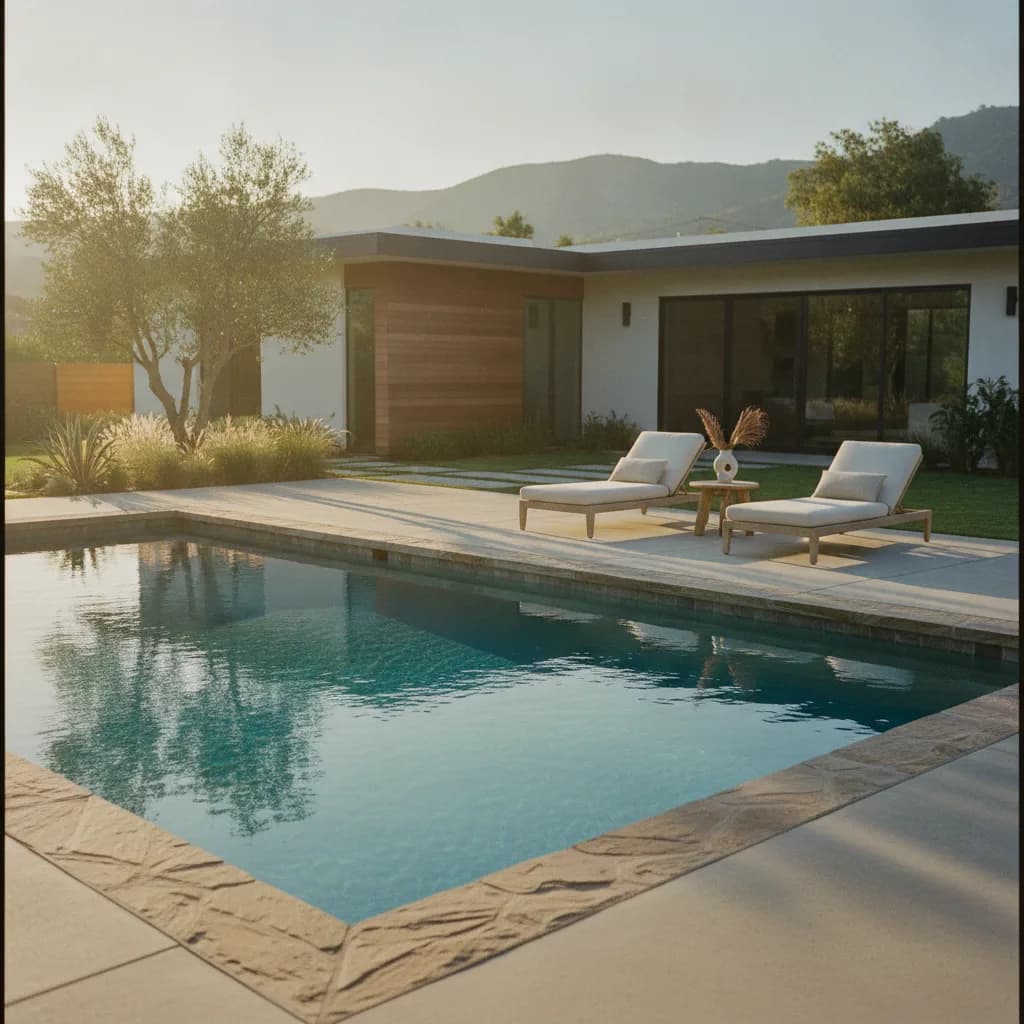
The dream of a sparkling backyard pool is a California classic. But turning that dream into reality involves a foundational choice: will your pool be built with gunite or a prefabricated fiberglass shell? While many conversations start with the initial price tag, the real story of pool ownership unfolds over years of maintenance, enjoyment, and long-term costs. Understanding the complete picture, from excavation to the ongoing chemical balance, is the key to a decision you’ll be happy with for decades.
This comparison focuses on the practical trade-offs. We will break down the project scope for each pool type, explore the installation process, and examine how design choices impact both your budget and your backyard. Instead of promising a single best answer, our goal is to equip you with the right questions for your property and your contractor, ensuring the pool you choose is the right fit for your lifestyle and budget expectations.
In a Nutshell
- Gunite Pools: Offer unlimited design customization as they are built on-site from a rebar frame and sprayed concrete. They generally have a higher initial cost and require a longer, more involved construction process.
- Fiberglass Pools: Are factory-molded shells delivered to your home, allowing for a much faster installation. They typically have a lower initial cost and require less routine maintenance, but offer limited shapes and sizes.
- Total Project Cost: The pool itself is only one part of the budget. Access, excavation, decking, fencing, landscaping, and utility hookups are significant additional costs for either type of pool.
- Long-Term Costs: Gunite pools require more chemicals and periodic resurfacing (replastering), which is a major expense. Fiberglass pools have a durable, non-porous surface that uses fewer chemicals and never needs resurfacing.
Understanding the Core Difference: Gunite vs. Fiberglass
Before comparing costs, it’s essential to understand what these two types of pools actually are. The materials and construction methods are fundamentally different, which explains the variations in price, timeline, and long-term care.
A gunite pool is a type of concrete pool built entirely on your property. The process begins with excavating the desired shape and installing a web-like framework of steel reinforcement bars (rebar). The construction crew then sprays a mixture of sand, cement, and water, known as gunite, onto the rebar cage to form the pool shell. This method is incredibly versatile, allowing for any shape, size, or depth imaginable. After the gunite cures for several weeks, an interior finish, such as plaster, pebble aggregate, or tile, is applied to waterproof the shell and provide a smooth surface. This on-site, custom construction is what gives gunite its reputation for design freedom.
A fiberglass pool, by contrast, is built in a factory. It arrives at your home as a single, massive, pre-formed shell, much like a giant bathtub. These shells are constructed from multiple layers of fiberglass woven together and finished with a durable, non-porous gelcoat. The installation process involves excavating a precise hole, preparing a gravel base, craning the shell into place, leveling it, and then backfilling the surrounding area while simultaneously filling the pool with water. While the manufacturing process is complex, the on-site installation is comparatively fast and straightforward.
Initial Installation Costs: Comparing Apples to Apples
When homeowners first look into building a pool, the initial sticker price is often the primary focus. While it's an important factor, it's crucial to understand what that initial number represents. According to data from PriceAPool, the average cost for a gunite pool installation in California is about $93,000, while a fiberglass pool averages around $71,000. These figures provide a useful starting point, but they represent an average project scope and don't capture the full financial picture.
The total cost of a pool project is best understood by breaking it down into three main categories: the pool shell and its installation, the essential equipment package, and the surrounding site work. The averages often reflect the first two items but can vary widely on the third. For a more complete view of what a backyard transformation entails, our comprehensive guide to backyard pools explores the entire process. The difference in the average gunite pool cost versus fiberglass is largely driven by the custom labor and extended timeline required for on-site construction.
Think of the quoted price as the core of the project. It typically includes the excavation, the gunite or fiberglass shell itself, basic plumbing, and a standard equipment package (pump, filter, and basic sanitation system). However, this price rarely includes the patio or deck surrounding the pool, safety fencing (which is required by law in California), landscaping, lighting, or any necessary utility upgrades. Therefore, when comparing quotes, it is vital to get a detailed list of inclusions and exclusions from each potential builder.
Hypothetical Budget Scenarios: Visualizing the Numbers
Ready to compare vetted project options?
Use Project Match privately when your scope is clear enough for contractor conversations.
Start Project MatchTo illustrate how costs can be structured, let's consider a hypothetical planning example for a medium-sized rectangular pool, approximately 15 by 30 feet. These are not documented projects or market averages; they are simplified examples to show how the total cost is assembled from different components. Your actual quotes will depend on your location, site conditions, and material choices.
Hypothetical Planning Example 1: Gunite Pool (15' x 30')
In this scenario, the higher cost reflects the extensive on-site labor, from forming the rebar to plastering the interior.
- Excavation & Site Prep: $12,000
- Rebar, Plumbing & Gunite Shell: $40,000
- Standard White Plaster Finish: $10,000
- Standard Equipment Package (Pump, Filter, Lights): $13,000
- Installation Labor & Project Management: $18,000
- Assumed Subtotal for Basic Pool: $93,000
Hypothetical Planning Example 2: Fiberglass Pool (15' x 30')
Here, the cost of the factory-made shell is a large component, but on-site labor and materials are reduced. The cost for crane rental is a unique factor for fiberglass.
- Excavation & Gravel Base Prep: $9,000
- Fiberglass Shell & Delivery: $42,000
- Standard Equipment Package (Pump, Filter, Lights): $13,000
- Crane Rental, Backfill & Installation Labor: $7,000
- Assumed Subtotal for Basic Pool: $71,000
These subtotals align with the sourced averages but demonstrate that the distribution of costs is very different. The gunite project involves more distinct stages of material and labor, while the fiberglass project has a large single expense for the shell itself. Neither of these hypothetical budgets includes the significant costs discussed in the next section.
Beyond the Pool Shell: Essential 'Hidden' Costs
The biggest mistake a homeowner can make is to budget only for the pool itself. The surrounding work is not optional; it is essential for a functional, safe, and legal swimming pool. These costs apply to both gunite and fiberglass projects and can easily add 50% to 100% of the initial pool cost to your total budget.
Let's expand our hypothetical scenario to include these necessary elements:
- Decking & Coping: A pool needs a hardscape surround. A simple concrete deck might cost $15-$20 per square foot, while pavers or natural stone can be $30-$50 or more. For 800 square feet of decking, this could add $12,000 to $40,000.
- Safety Fencing: California law requires an isolation fence with a self-latching gate around any new pool. Depending on the material (mesh, wood, aluminum), this can cost $5,000 to $15,000 or more.
- Electrical Work: A dedicated subpanel and trenching are needed to power the pump, lighting, and other equipment. This typically costs $4,000 to $8,000, and more if your main panel needs an upgrade.
- Gas Lines: If you want a gas heater, a line must be run from your meter to the equipment pad. This can cost $2,000 to $5,000, depending on the distance.
- Landscaping & Drainage: After construction, your yard will need repair. This can range from simple sod and irrigation repair ($3,000+) to extensive new planting and drainage systems ($20,000+). Proper drainage is critical to protect both your pool structure and your property.
- Permits & Engineering: Plans, soil reports, and municipal permits can easily total $3,000 to $7,000 before any work begins.
Adding a conservative estimate for these items ($15k deck + $8k fence + $5k electrical + $5k landscaping + $4k permits) to our hypothetical gunite pool's $93,000 subtotal brings the all-in project estimate to $120,000. The same additions would bring the fiberglass project from $71,000 to $108,000. This illustrates why it's so important to compare quotes that detail the full scope of work, not just the pool.
Construction Timeline and Disruption
The time it takes to build your pool is a major lifestyle consideration. This is where the difference between gunite and fiberglass is most dramatic. According to PriceAPool, a typical gunite pool construction takes 12 to 22 weeks, while a fiberglass pool can be installed in just 3 to 6 weeks.
The gunite process is long and sequential. After excavation, the crew must build the rebar skeleton, install plumbing, and then spray the gunite. The shell must then cure for about 28 days before the interior finish can be applied. Each of these steps is performed by a different specialized crew and can be delayed by weather. Your backyard will be an active construction zone for several months.
The fiberglass process is much more condensed. The majority of the construction happens in the factory. Once the shell is delivered, the on-site work is focused and quick. The main steps are excavation, setting the pool, backfilling, and connecting the plumbing and electrical. While weather can still cause delays, there are far fewer steps in the chain. For homeowners who want to minimize disruption and be swimming as soon as possible, the speed of fiberglass installation is a powerful advantage.
Design Flexibility and Aesthetics
If your vision for a backyard oasis includes a unique shape, a specific depth profile, or integrated features like a tanning ledge, waterfall, or vanishing edge, gunite is almost always the answer. Because it's a completely custom, on-site build, the design possibilities are virtually limitless. You can create a freeform lagoon that winds around existing trees, a geometric lap pool that fits a narrow side yard, or a complex multi-level design with an attached spa.
The interior finish of a gunite pool also offers a wide aesthetic palette. While standard white plaster is the most common, you can choose from a variety of colored plasters, polished aggregate finishes (like Pebble Tec), or all-tile surfaces for a high-end, custom look. This flexibility allows the pool to be perfectly integrated with the architectural style of your home and landscape design.
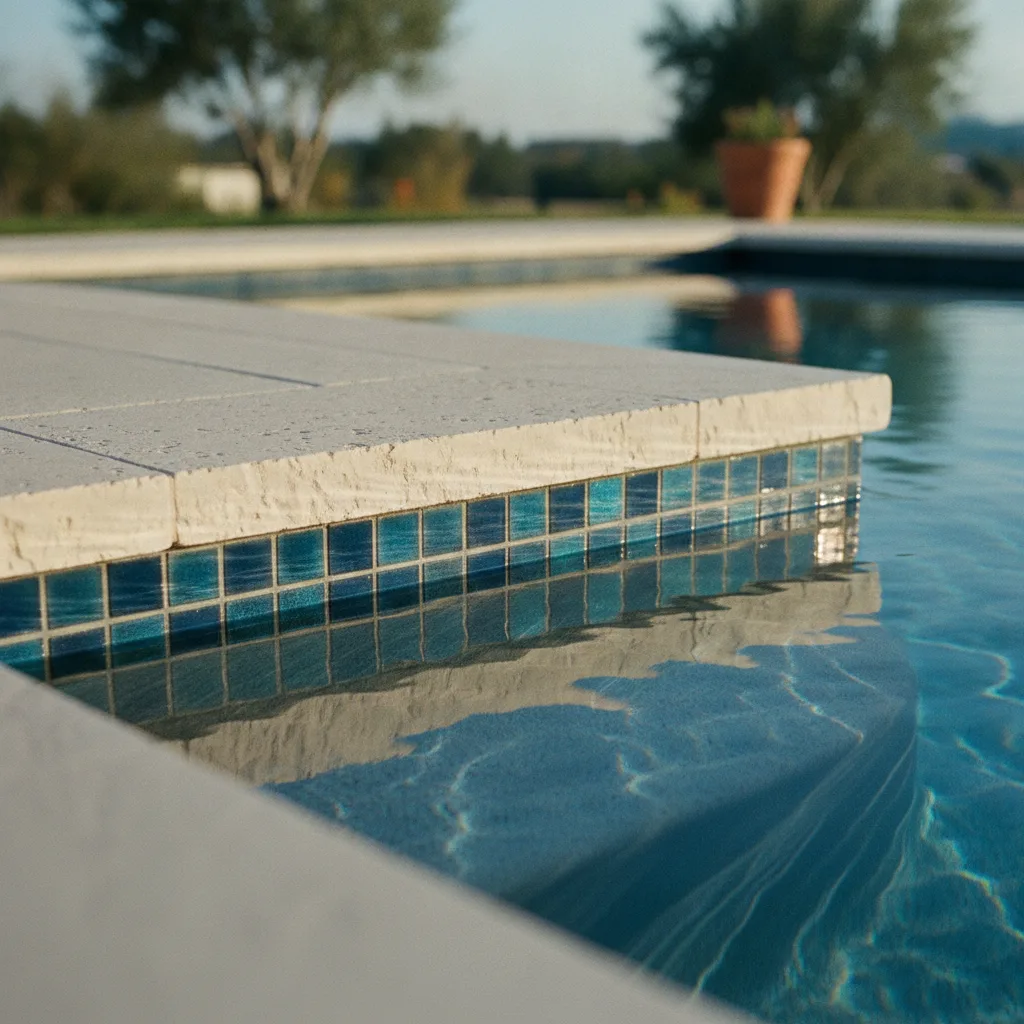
Fiberglass pools, while less flexible, have made significant strides in design. Manufacturers now offer a wide array of shapes, sizes, and colors. Many models include built-in features like benches, tanning ledges, and steps. However, you are ultimately limited to the molds the manufacturer produces. You cannot change the dimensions, and the maximum width is typically around 16 feet due to shipping restrictions on public roads. While the gelcoat finishes are beautiful and durable, they don't offer the same textural and color variety as the aggregate and tile finishes available for gunite pools.
Long-Term Care and Maintenance Costs
The initial build is a one-time cost, but pool maintenance is a recurring expense for the life of the pool. This is another area with significant differences between gunite and fiberglass.
Gunite pools are inherently higher maintenance. The plaster or aggregate surface is porous, meaning it has microscopic nooks and crannies where algae can take hold. To prevent this, gunite pool owners must be diligent about brushing the pool surface weekly and maintaining proper chemical levels. The cement-based surface also has a high pH, which constantly raises the pH of the water, requiring the regular addition of acid to keep it balanced. This translates to higher annual chemical costs.
, a gunite pool's surface requires major periodic renovation. Every 3 to 5 years, it will likely need an acid wash to remove stains and scale. More significantly, every 10 to 15 years, the pool will need to be drained and completely resurfaced (replastered), which is a major job that can cost $10,000 to $20,000 or more, depending on the pool size and finish type.
Fiberglass pools, on the other hand, are known for their low maintenance. The gelcoat finish is smooth, inert, and non-porous. This makes it highly resistant to algae growth and staining. While you still need to balance the water chemistry, fiberglass pools use significantly fewer chemicals, particularly acid, because the surface does not affect the water's pH. They do not require regular brushing like gunite. Most importantly, a fiberglass pool never needs to be resurfaced. Over a 15-year period, the savings from avoiding a replastering job alone can be substantial.
Repairs and Durability Considerations
Both pool types are engineered to be incredibly durable, but they have different vulnerabilities.
A gunite pool is a monolithic, steel-reinforced concrete structure. It is immensely strong and not susceptible to damage from sharp objects. The most common structural issue is cracking, which can occur due to ground movement or improper construction. Small surface cracks in the plaster are common and can be patched, but a structural crack that goes through the shell is a more serious repair. The surface finish, as mentioned, is the primary wear item and will degrade over time from chemical exposure and use.
A fiberglass pool shell is also very strong but has some flexibility, which can be an advantage in areas with soil movement. The gelcoat finish is tough, but it can be scratched or chipped by sharp objects. These cosmetic blemishes can be repaired. More serious are spider cracks in the gelcoat, which can result from stress during shipping or installation. Major structural damage to the shell itself is very rare but can be difficult and expensive to repair properly. The most critical factor for the longevity of a fiberglass pool is proper installation. The shell must be set on a stable, well-compacted base and backfilled correctly to ensure it is fully supported on all sides.
Questions to Ask Your California Pool Contractor
Choosing the right builder is as important as choosing the right pool type. Before signing any contract, make sure you have clear answers to these questions:
- Is this quote for the complete project or just the pool? Please provide a detailed breakdown of all included and excluded items (e.g., decking, fencing, electrical, landscaping, permits).
- What is your license number, and can you provide proof of liability insurance and workers' compensation?
- How many pools of this type have you installed in this area? Can you provide references from recent customers?
- What assumptions have you made about my property's access and soil conditions? What happens if you encounter rock or a high water table during excavation?
- What specific equipment (pump, filter, heater, sanitizer) is included in this quote? Are they variable-speed pumps that comply with California's Title 24 energy standards?
- What warranties do you provide on workmanship, and what are the manufacturer warranties on the pool shell and equipment?
- Who is responsible for filing the permits, and is that cost included in the quote?
- What is the payment schedule, and what are the milestones for each payment?
- What is the estimated start date and the projected timeline for completion? What are the common causes of delays?
Sources & Methodology
See the Golden Yards Methodology for how sources are reviewed, ranges are normalized, and planning-data limits are handled.
The links below are resources for checking project requirements. Their inclusion does not establish that scenario prices or timelines were observed in those sources. Hypothetical examples are planning assumptions, not documented projects.
- PriceAPool, 'How Much Do Inground Pools Cost in California?'
Golden Yards Magazine Take
The choice between gunite and fiberglass is a classic trade-off between customization and convenience. There is no universally superior option; the right choice depends entirely on your priorities, budget, and backyard vision. Gunite is the clear winner for homeowners who demand complete design freedom. If you have a specific, non-standard shape in mind, want an integrated spa or vanishing edge, or desire a high-end tile or aggregate finish, the higher gunite pool cost and longer construction time are the necessary price for achieving that custom result. You must also be prepared for a higher level of long-term maintenance and the eventual cost of resurfacing.
Fiberglass is the ideal choice for those who prioritize speed of installation, low maintenance, and long-term cost savings. If you find a shape and size that fits your yard and your needs, you can have a beautiful, durable pool in a fraction of the time and spend less time and money on upkeep over the years. The key is to work with a reputable installer who will ensure the shell is set and backfilled properly, as the quality of the installation is paramount to the pool's longevity. Before deciding, compare itemized quotes for the full project scope, not just the pool shell, and weigh the upfront investment against the lifetime cost of ownership.
Ready to start your pool project?
Find My ProsFrequently Asked Questions
Which pool type is better for California's seismic activity?
Both gunite and fiberglass pools can be safely installed in seismic zones, as modern engineering standards account for ground movement. The quality of the installation and adherence to local building codes are far more important than the material itself. A qualified pool builder will follow specific structural engineering requirements for your area.
Gunite's steel-reinforced concrete structure is incredibly rigid and strong, designed to move as a single unit. Fiberglass has inherent flexibility, which can allow it to better absorb minor ground shifts without damage. The most critical factor for either is proper site preparation and, for fiberglass, ensuring the backfill material provides complete support to the shell.
Is the higher gunite pool cost worth it in California?
The value of the higher gunite pool cost depends entirely on your design goals. If you desire a custom shape, a size larger than what can be shipped on a truck, or integrated features like a vanishing edge or built-in spa, then gunite is not just worth it, it's the only option.
For homeowners whose needs can be met by a standard shape and size, the extra cost for gunite may not provide a tangible benefit. In that case, the faster installation and lower long-term maintenance costs of a fiberglass pool might represent a better overall value for your family.
How much does it really cost to maintain a pool each year in California?
Annual maintenance costs vary based on pool size, usage, and equipment, but a hypothetical budget can show the differences. Expect to spend on chemicals, electricity, and saving for future repairs. Gunite pools typically have higher costs due to greater chemical usage and the need for eventual resurfacing.
A hypothetical annual budget for a medium-sized pool might include $800-$1,500 for electricity (less with a variable-speed pump) and $600-$900 for chemicals. A gunite pool owner should also budget an additional $1,000-$1,500 per year into a fund for the eventual $10,000-$20,000 replastering job needed every 10-15 years. A fiberglass owner avoids the resurfacing cost entirely.
Can I add a spa to both gunite and fiberglass pools?
Yes, you can add a spa to both pool types, but the method is different. With a gunite pool, the spa can be fully integrated into the design, sharing the same water and equipment. It can be built in any shape, raised with a spillover effect, or sit flush with the pool.
For a fiberglass pool, you typically install a separate, matching fiberglass spa shell adjacent to the pool. These can be installed at the same level or raised to create a spillover. While they look cohesive, they are structurally separate from the pool. This approach offers less design integration than a custom-built gunite spa.
What are the biggest 'surprise' costs when building a pool?
The most common unplanned expenses often relate to site conditions and access. If your backyard is difficult to reach, you may need to pay for a large crane to lift the pool shell or equipment over your house, which can cost thousands. Unexpectedly hard soil or large boulders can slow excavation and increase costs.
Other surprises include discovering a high water table that requires dewatering systems, or needing to upgrade your main electrical panel to support the new pool equipment. This is why it's wise to include a contingency fund of 10-15% of your total project budget to cover unforeseen challenges.